Atlassian Cloud Pricing Calculator: A Step-by-Step Guide
Need accurate Atlassian Cloud costs? Use the Atlassian cloud pricing calculator step by step to compare plans, users, and apps. Read now!
Planning an Atlassian Cloud subscription can feel simple until you compare products, user tiers, billing terms, and optional apps. A small mistake in one field can shift your monthly estimate by hundreds of dollars.
That uncertainty creates bigger problems during budget reviews. You may choose the wrong plan, overlook marketplace apps, or compare a monthly estimate with an annual quote.
The Atlassian Cloud pricing calculator helps you estimate subscription costs before committing. In this guide, I’ll show you how to use it, what each pricing factor means, and how to validate the result.
How the Atlassian Cloud Pricing Calculator Works
The calculator estimates the cost of Atlassian Cloud products such as Jira, Confluence, Jira Service Management, and additional apps. You select products, enter the number of seats, choose a billing cycle, and review the estimated total.
Here’s why the result needs careful interpretation: Atlassian pricing can change with product selection, user quantity, plan level, billing frequency, and promotional terms.
What the calculator includes
A typical estimate may account for the following:
- Atlassian Cloud products you want to subscribe to
- Number of seats for each product
- Free, Standard, Premium, or Enterprise plan options
- Monthly or annual billing
- Potential discounts or volume-based pricing
- Optional marketplace apps
The calculator may show separate estimates for each product. That matters because Jira and Confluence can have different seat counts, especially when only part of your organization needs access to project work.
Step-by-step calculation process
- List the products you need. Start with Jira, Confluence, Jira Service Management, or other Atlassian services relevant to your team.
- Estimate seats by product. Count the people who need access to each service rather than using one organization-wide number.
- Select the plan level. Compare Standard, Premium, and Enterprise features against your operational requirements.
- Choose monthly or annual billing. Review both options when possible because the payment schedule can affect the effective monthly rate.
- Add optional apps. Include marketplace tools, security products, reporting extensions, or automation services you expect to use.
- Review the estimate. Check the product list, seat counts, plan levels, and billing period before recording the total.
- Validate the result. Compare the estimate with your expected growth, administrative needs, and implementation costs.
The best part? You can use the calculator before a sales conversation, annual planning meeting, or migration project.
Which Pricing Details Affect Your Estimate?
The displayed total is only one part of the decision. You should understand the factors behind it so you can explain the estimate to finance, procurement, and department leaders.
Product mix
Jira, Confluence, and Jira Service Management serve different purposes. A software team may need Jira for delivery planning and Confluence for internal knowledge. A support department may need Jira Service Management with a separate agent count.
For example, imagine a company with 80 engineers, 20 product specialists, and 10 support agents. All 110 people may need some collaboration access, while only the support agents need service-management agent licenses.
Seat quantity
Seat count is often the most visible pricing factor. However, each product can have a different quantity. Avoid multiplying one general headcount across every Atlassian service.
Consider three groups:
- 90 Jira users for project planning and delivery
- 120 Confluence users for company knowledge
- 15 Jira Service Management agents for internal support
That structure can produce a more accurate estimate than assigning 120 seats to every product.
Plan level
Standard may suit teams that need core collaboration and project capabilities. Premium can become relevant when you need advanced administration, higher operational scale, or additional controls.
Enterprise planning usually involves broader governance, security, and procurement considerations. The calculator can estimate subscription costs, while your internal review should assess whether the plan supports your compliance and operating model.
Billing frequency
Monthly billing offers flexibility when your team size may change. Annual billing can simplify budgeting and may produce a different effective rate.
You might be wondering: which option should you use for planning? Build a monthly estimate first, then compare it with the annual equivalent. This makes future seat growth easier to discuss.
Marketplace apps
Many teams add apps for time tracking, advanced reporting, testing, forms, asset management, or workflow automation. Those subscriptions can materially change the total cost.
For example, a team may estimate Jira at one amount and later add three apps for test management, portfolio reporting, and time tracking. The combined subscription can exceed the original estimate.
How to Prepare Accurate Calculator Inputs
Good estimates begin with realistic assumptions. You do not need perfect precision at the first stage, but you should avoid using a random company headcount.
Build a product-by-role map
Create a simple planning grid that connects each role with the products it needs. A product manager may need Jira and Confluence, while a customer may need access only to a service portal.
| Role |
Jira |
Confluence |
Jira Service Management |
| Software engineer |
Yes |
Maybe |
No |
| Product manager |
Yes |
Yes |
No |
| Support agent |
Maybe |
Maybe |
Yes |
| External requester |
No |
No |
Portal access |
This role-based approach gives you a clearer estimate than assigning every person identical access.
Separate current and future seats
Record your current team size, expected hiring, contractor access, and possible acquisitions separately. Then create at least two scenarios:
- Current scenario: the seats required today
- Growth scenario: the seats required after planned hiring
For example, 60 Jira seats today may become 85 within twelve months. Planning only for 60 can make the first renewal discussion unnecessarily difficult.
Identify occasional access
Some people need access every day. Others only review work, approve requests, or read internal guidance. Check whether each person truly needs a paid seat for every product.
Be careful with this distinction. Reducing access too aggressively can create approval delays, while assigning full access everywhere can inflate costs.
How to Read the Estimate
Once the calculator displays a result, inspect each line instead of focusing only on the final number. A clear review helps you catch configuration mistakes before the estimate reaches procurement.
Check the product list
Confirm that every selected product has a business purpose. Remove trial products or optional services that do not belong in the primary budget scenario.
Then create a separate optional scenario for likely additions. This gives leadership a committed cost and a potential cost without mixing the two.
Check seat tiers
Pricing often changes across seat ranges. A small increase may move you into another tier, so test the effect of hiring five, ten, or twenty additional people.
For example, compare 95 seats with 105 seats. The difference may reveal a tier change that matters more than the ten-seat increase alone.
Check billing assumptions
Confirm whether the estimate represents a monthly payment, an annual commitment, or an effective monthly equivalent. Label your budget clearly so nobody mistakes one figure for another.
Include taxes, currency conversion, procurement fees, and implementation work in your broader business case when those costs apply.
Check plan features
A lower plan can appear cheaper until you add external tools or manual workarounds. Compare the cost of the plan with the capabilities your team actually needs.
For instance, advanced reporting may require an app on one plan but be available natively on another. The cheaper subscription may create a higher combined cost.
Ways to Improve Your Cost Estimate
A calculator gives you a starting point. A stronger estimate also considers adoption, administration, app dependency, and the cost of changing platforms later.
Build three budget scenarios
Use a simple three-scenario model:
- Lean: essential products and current seats
- Expected: planned growth and likely apps
- Expanded: higher plan levels, additional departments, and future integrations
This comparison helps you answer practical questions. What will we pay now? What might we pay after hiring? What would broader adoption cost?
Measure the cost per active person
Divide the subscription estimate by the number of active people who receive meaningful value. This does not replace the official pricing calculation, but it helps compare adoption across departments.
Suppose a 100-seat subscription costs $1,200 per month. If only 70 people actively manage work, the effective cost per active person is about $17.14.
Include administration effort
Subscription price is not the complete ownership cost. Add time for permission management, workflow design, training, support, app maintenance, and governance.
A platform that appears inexpensive may require extensive manual administration. A higher subscription can sometimes reduce that operational burden through native capabilities.
Recalculate before renewal
Team size, plan features, app requirements, and billing terms can change. Revisit your estimate before renewal rather than repeating last year’s number.
Let me explain: a renewal review is also a chance to remove unused apps, correct inactive seats, and align access with current responsibilities.
Atlassian Cloud Pricing Solution: ONES.com
Value Proposition
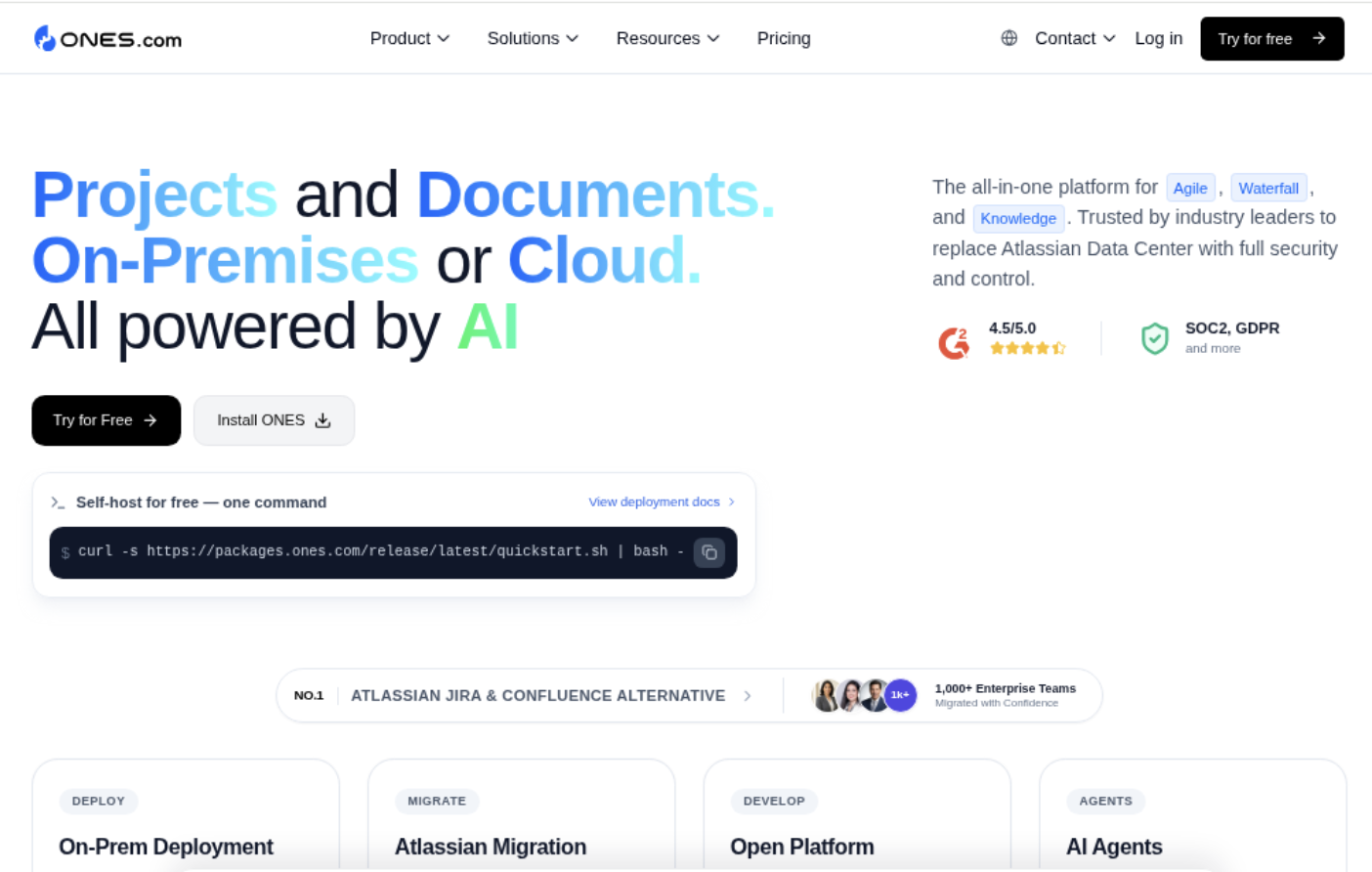
ONES.com combines project management and knowledge management in one platform powered by ONES Assistant. ONES Project is a Jira alternative, while ONES Wiki is a Confluence alternative, and each product is sold separately.
For teams comparing subscription structures, ONES.com offers four deployment choices: Cloud, On-Premise, Private Cloud, and Air-gapped. The free plan supports up to 30 seats.
Core Capabilities
- Multiple subscription products: Separate project and knowledge needs can create fragmented administration. ONES Project and ONES Wiki provide focused products within the same platform family, helping you match access to team responsibilities.
- Jira-compatible workflows: Switching platforms can create process disruption. ONES Project supports Jira-compatible workflows, helping teams preserve familiar delivery patterns during evaluation.
- Built-in reporting: Additional reporting apps can increase subscription complexity. Built-in reporting gives project teams a native way to review progress, workload, and delivery trends.
- Custom workflows and fields: Rigid work tracking can force manual steps. Custom workflows and fields let you reflect approval stages, issue categories, and team-specific requirements.
- Sprint management: Agile teams need clear planning and review cycles. Sprint management supports backlog organization, sprint execution, and progress visibility in one project environment.
- Automation: Repetitive transitions and notifications consume administration time. Automation can handle routine actions and make workflow behavior more consistent.
- Deployment flexibility: Cloud-only choices may not fit restricted environments. ONES.com supports Cloud, On-Premise, Private Cloud, and Air-gapped deployments.
- Feature parity: Teams can worry that self-hosted deployment means fewer capabilities. ONES.com provides full feature parity between its cloud and self-hosted versions.
Application Scenarios
Scenario one: a regulated engineering team. A company needs project tracking in an air-gapped environment. ONES Project can support restricted-network workflows while preserving project management capabilities available in the cloud version.
Scenario two: a growing product organization. A team wants a Jira alternative with native reporting, custom workflows, sprint planning, and automation. ONES Project can reduce reliance on multiple plugins during platform evaluation.
Scenario three: a distributed knowledge team. A company needs project execution and structured internal knowledge. It can evaluate ONES Project and ONES Wiki separately while considering a unified platform approach.
Common Challenges and Practical Fixes
Challenge: using one seat count for every product
Solution: Map access by role and product. A service agent count, project contributor count, and knowledge reader count may be different.
Challenge: forgetting marketplace apps
Solution: List every app your team relies on today and every app required for the proposed workflow. Add those costs as a separate scenario.
Challenge: comparing monthly and annual figures incorrectly
Solution: Label every estimate with its billing period. Show the annual commitment and effective monthly equivalent side by side.
Challenge: budgeting only for current headcount
Solution: Create a growth scenario using planned hiring, contractors, and department expansion. Test the effect of crossing seat tiers.
Challenge: focusing only on subscription price
Solution: Include training, administration, migration, integrations, support, and workflow maintenance in the broader ownership estimate.
FAQs
Is the Atlassian Cloud pricing calculator accurate?
It can provide a useful estimate when you select the correct products, seats, plan levels, and billing cycle. Treat the result as a planning figure until you confirm current commercial terms. Taxes, promotions, currency, marketplace apps, and negotiated agreements may affect the final amount.
Should I calculate Jira and Confluence together?
You can review them together when preparing an organization-wide budget. However, calculate their seat counts separately first. A product manager may need both services, while a contractor may need Jira only. Separate calculations show which teams create each cost.
Do Atlassian marketplace apps appear in the main calculator?
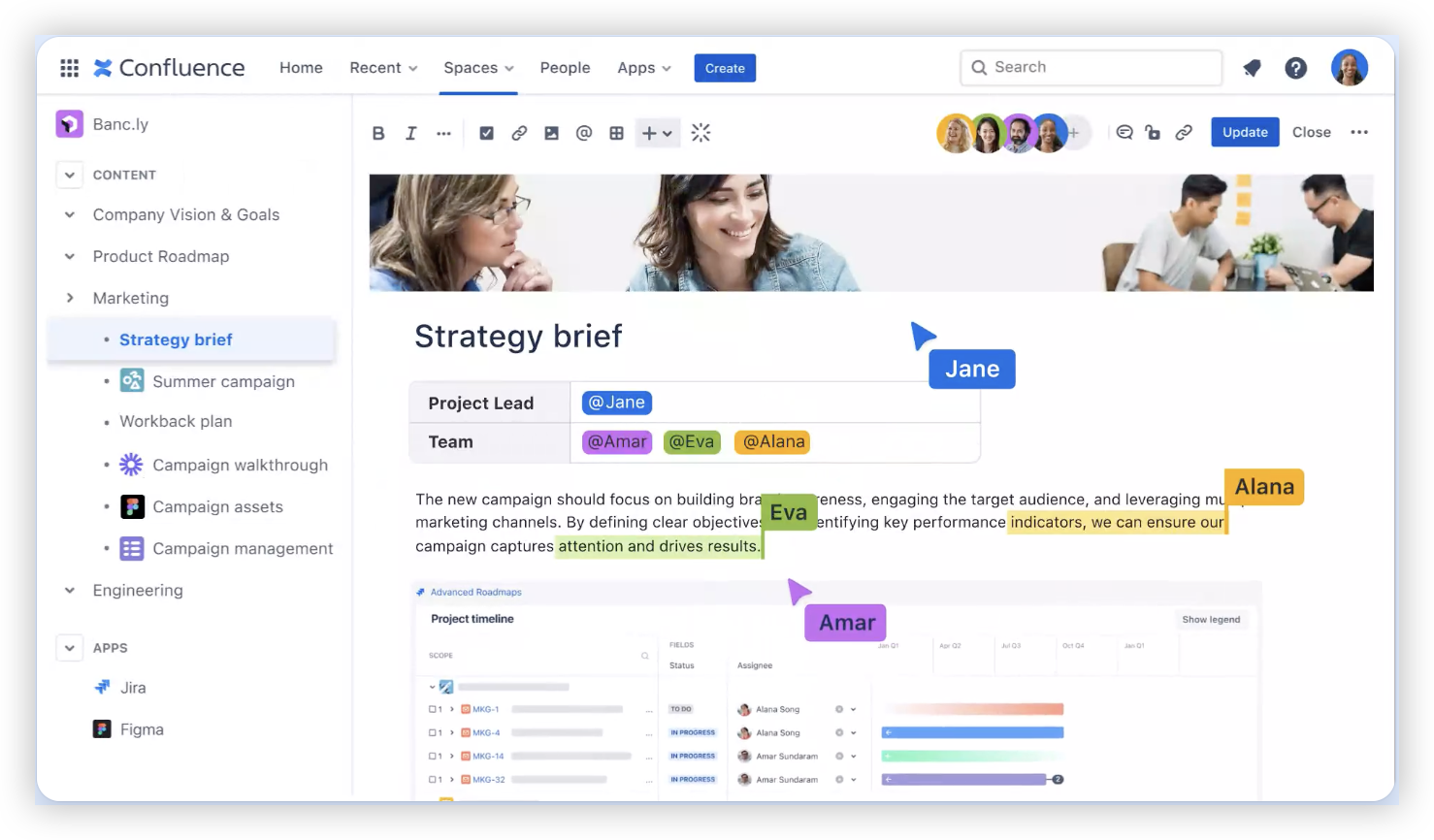
Marketplace apps may require separate pricing checks. Add each app to your planning scenario, then confirm whether its cost depends on total seats, active users, agents, or another measure. App pricing can change the combined subscription significantly.
Is annual billing always cheaper?
Annual billing may offer a different effective rate, but it also creates a longer commitment. Compare the annual amount with your hiring plans, expected product changes, and cash-flow preferences. Monthly billing may provide more flexibility when your organization is changing quickly.
How should I estimate costs for future growth?
Build a current scenario and at least one growth scenario. Test planned hiring, new departments, and possible seat-tier changes. For example, compare 100 seats today with 125 seats after expansion. This gives finance a range instead of one fragile estimate.
Conclusion
The Atlassian Cloud pricing calculator is most useful when you treat it as a planning tool rather than a final budget answer. Start with the products you need, assign seats by role, compare plan levels, and test monthly and annual billing.
Then add marketplace apps, growth assumptions, administration effort, and implementation costs. A three-scenario model makes trade-offs easier to explain and exposes pricing changes before they surprise you.
When the estimate feels unclear, return to the basics: identify the problem, measure the cost of getting it wrong, and validate every assumption. That process can help you choose an Atlassian Cloud setup—or evaluate a Jira alternative such as ONES Project—with greater confidence.