Atlassian Cloud Pricing CSV: A Jira Premium Cost Guide 2026
Confused by an atlassian cloud pricing csv jira premium export? Learn to verify seats, billing, taxes, and 2026 costs—click to discover.
Pricing a Jira Premium plan can feel simple until your team grows, billing changes, and several Atlassian products appear in the same quote. A CSV export may show seats, plan names, currencies, and totals, yet still leave key questions unanswered. Which amount covers Jira Premium? Are taxes included? Does annual billing change the result? A small interpretation mistake can distort your 2026 budget before procurement reviews it. But here's the truth: the export is only useful when you know how to read each field and validate the assumptions behind every total. This guide gives you a practical method for reviewing Atlassian Cloud pricing, estimating Jira Premium costs, comparing billing options, and spotting hidden variables. You will also see where a Jira alternative may simplify pricing and platform planning.
How to Read an Atlassian Cloud Pricing CSV for Jira Premium
An Atlassian Cloud pricing CSV is a structured comma-separated export that lists plan, seat, billing, currency, and charge information for cloud subscriptions. It can help you review Jira Premium costs, but it does not replace a live Atlassian quote or billing check.
The most important task is separating the Jira Premium charge from the wider Atlassian subscription picture. A business may also pay for Jira Product Discovery, Confluence, Guard, Marketplace apps, or additional services.
Start with the fields that affect the total
Open the export in a tool that preserves commas, currency symbols, and decimal values. Then identify the fields that explain what each row represents.
- Product: confirms whether the row covers Jira, another Atlassian product, or an add-on.
- Plan: distinguishes Premium from Free, Standard, Enterprise, or another tier.
- Seat quantity: shows the number of licensed users included in the calculation.
- Billing cycle: separates monthly charges from annual commitments.
- Currency: identifies the currency used for the displayed amount.
- Subtotal: shows the charge before taxes, credits, or adjustments.
- Tax: identifies regional charges when they appear separately.
- Total: shows the amount that may be billed for that line or period.
- Effective date: helps you determine which pricing period the row reflects.
Use a simple validation sequence
- Filter the product column for Jira.
- Filter the plan column for Premium.
- Confirm that the billing cycle matches your purchasing plan.
- Check whether seat quantity reflects active users or purchased seats.
- Review currency and regional tax treatment.
- Compare the displayed total with the Atlassian billing console.
- Record assumptions before sharing the estimate with finance.
For example, a row showing 250 seats and an annual total may look like a complete Jira Premium quote. It may exclude taxes, Marketplace apps, or a separate Confluence subscription.
Why a CSV total may differ from your expectation
Atlassian cloud pricing can change when seat bands, renewal dates, promotional credits, currency conversion, or regional tax rules apply. A simple multiplication of users by a public list price may therefore produce a different figure.
Here's why: cloud subscriptions often calculate charges through billing rules that depend on the account, term, and product combination. Treat a CSV export as a billing snapshot, then verify the current amount before approval.
What Jira Premium Pricing Usually Includes
Jira Premium is designed for teams that need more scale, administration, continuity, and planning capability than a standard plan provides. The exact package can change, so confirm current entitlements in Atlassian's live plan comparison.
Capacity and scale
Premium typically supports larger teams and heavier project activity than entry-level plans. Your review should consider user growth, automation volume, issue history, and the number of concurrent projects.
A 100-person engineering team may need more capacity than a 100-person team with occasional project updates. Seat count alone does not explain operational demand.
Advanced planning and administration
Premium commonly appeals to organizations coordinating multiple teams, releases, dependencies, and portfolios. Planning features can help leaders see relationships that remain hidden inside individual project boards.
Administrative controls also matter when several teams share one Jira environment. Review permissions, configuration ownership, automation governance, and project creation rules.
Continuity and service commitments
Premium plans may include stronger service commitments and continuity features than lower tiers. Review the current service-level terms, recovery options, and any conditions attached to those benefits.
The best part? These features can affect the cost of downtime, not just the subscription invoice. A short interruption during a release window may delay testing, approvals, and customer delivery.
Included storage and platform limits
Check storage allowances, automation limits, API restrictions, and other usage boundaries. A plan may appear affordable until your team adds heavy integrations or extensive historical activity.
Ask your administrator for current usage figures. Then compare those figures with the plan limits shown in the current Atlassian plan details.
How to Estimate Jira Premium Cost in 2026
You can build a reliable estimate with a simple cost model. Keep each assumption visible so another person can review or update it later.
Use the basic calculation
Start with this formula:
Estimated subscription cost = plan charge for the selected seat band and term + applicable taxes + paid add-ons − eligible credits.
For a monthly estimate, use the monthly amount shown for your account. For an annual estimate, use the annual quote or annual billing amount rather than multiplying one monthly invoice without checking term rules.
Separate recurring and variable charges
| Cost category |
What to review |
| Jira Premium subscription |
Plan tier, seat band, billing term, currency, and renewal date |
| Marketplace apps |
Per-user pricing, minimum charges, app tier, and billing alignment |
| Atlassian Guard or security services |
Whether the service applies to all managed accounts or selected users |
| Taxes |
Country, registered business details, tax treatment, and invoice presentation |
| Implementation and administration |
Migration, configuration, training, support, and ongoing ownership |
This separation prevents a common budgeting error. A team may call the whole invoice “Jira Premium,” even though a large portion comes from apps or related services.
Model three practical scenarios
Create separate estimates for your current team, expected growth, and a conservative high-use case.
- Current state: licensed seats today, present apps, and current billing term.
- Growth case: planned hires, contractors, and new project teams.
- High-use case: additional apps, heavier automation, and expanded administration.
For example, a team with 180 seats may plan to reach 240 seats after two acquisitions. The second estimate should include the larger seat band and any extra app charges.
Monthly Versus Annual Jira Premium Billing
Monthly billing offers flexibility when headcount changes quickly. Annual billing can make forecasting easier, but it may require a stronger commitment and more careful seat planning.
When monthly billing may fit
Monthly billing can suit a growing company, a temporary program, or a team still testing its operating model. You can usually adjust more often as the organization changes.
The trade-off is less certainty. A growing seat count can raise monthly charges, and finance may need to process more frequent changes.
When annual billing may fit
Annual billing may suit a stable organization with predictable staffing and an established Jira configuration. It can simplify renewal planning and reduce monthly invoice activity.
Before choosing it, compare the committed seat quantity with realistic hiring plans. Paying for unused seats can offset the convenience of a fixed term.
Review billing timing carefully
A pricing export may reflect a charge date, renewal date, or reporting period. These dates are not always interchangeable.
You might be wondering: why does the total differ from last month's amount? The answer may involve a seat change, a renewal adjustment, a credit, a tax update, or a currency change.
Common Mistakes When Reviewing Cloud Pricing Exports
Most pricing errors come from interpretation rather than arithmetic. A repeatable review process can catch them early.
Confusing Jira Premium with the entire Atlassian stack
Atlassian sells several cloud products and services. A consolidated invoice may place them together, while a pricing export may list them on separate rows.
Use product and plan fields to isolate Jira Premium before calculating its share. Then add other products only when you are preparing a total platform budget.
Ignoring user definitions
Licensed seats, active users, invited users, and managed accounts can represent different populations. Confirm which definition the charge uses.
A contractor who needs access for two weeks may still affect the billing period. Ask your administrator how user changes affect the selected term.
Using an old amount for a 2026 decision
Historical exports help explain previous invoices, but they may not reflect current plan pricing. Pricing pages, terms, taxes, and product packaging can change.
Keep the effective date beside every estimate. If the date is unclear, treat the number as a reference rather than a current quote.
Overlooking add-ons
Marketplace apps can become a meaningful part of total ownership cost. Some charge by users, while others use tiers, usage levels, or separate contracts.
List every active app and connect it to the same billing scenario. This creates a clearer comparison between Jira Premium and other options.
Jira Premium Cost Planning Solution: ONES.com
Value Proposition
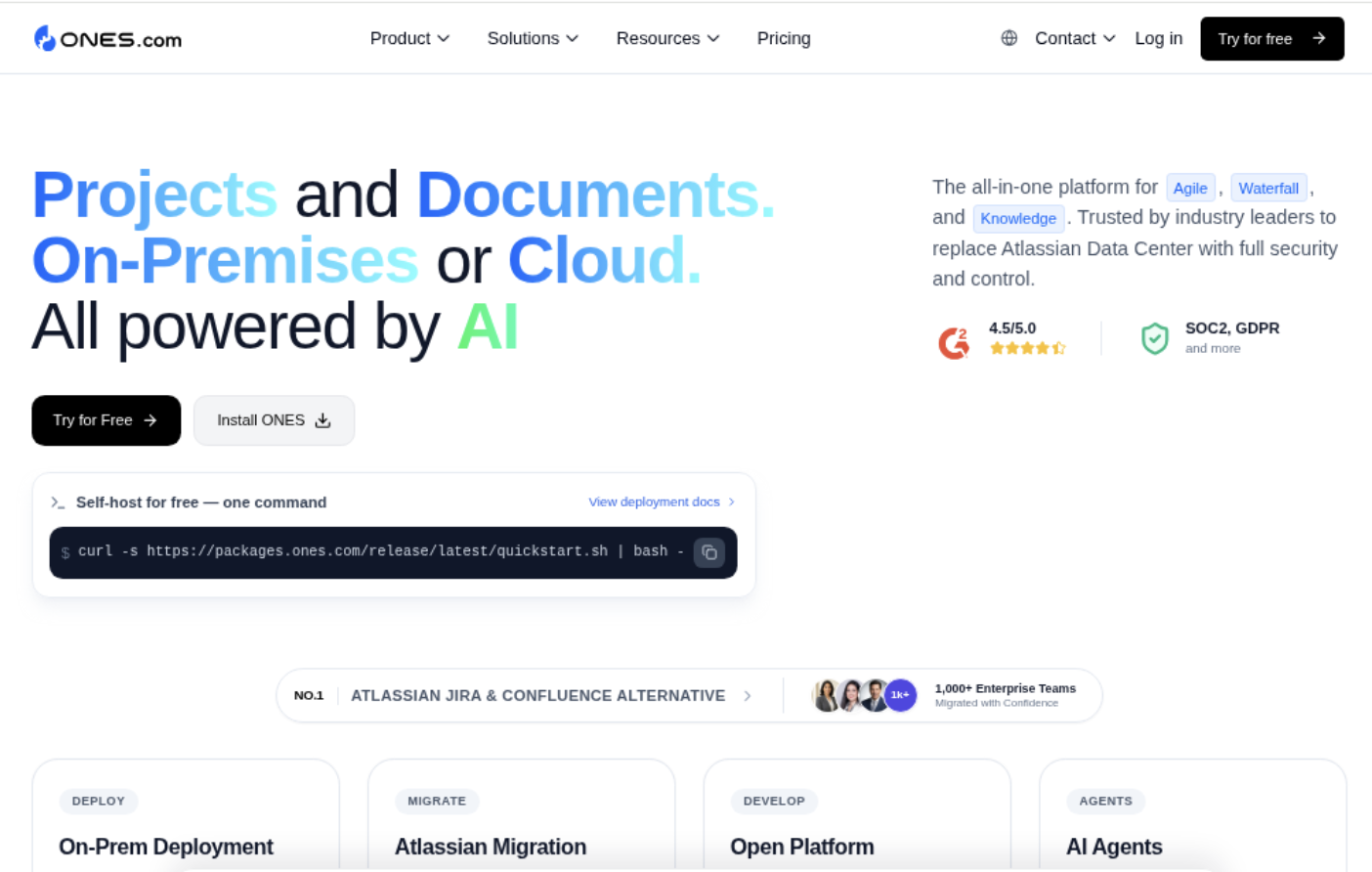
ONES.com combines project management and knowledge management in one platform powered by ONES Assistant. ONES Project is a Jira alternative, while ONES Wiki is a Confluence alternative; the products are sold separately.
If your pricing review exposes high app dependency or complex platform ownership, ONES.com gives you another architecture to evaluate. Compare capabilities, migration effort, governance, and total operating cost rather than subscription price alone.
Core Capabilities
- Too many disconnected project tools: ONES Project brings planning, execution, and reporting into one project management environment, reducing context switching.
- Heavy reliance on Jira plugins: Native project capabilities can reduce the number of extensions needed for common workflows, simplifying administration.
- Complex approval paths: Custom workflows and fields let teams reflect review stages directly, improving visibility into blocked work.
- Inconsistent sprint practices: Sprint management supports repeatable planning, execution, and review across development teams.
- Manual recurring tasks: Automation can handle routine transitions and notifications, helping teams spend less time maintaining boards.
- Limited reporting consistency: Built-in reporting gives managers a clearer view of progress, workload, and delivery trends.
- Concerns about hosting control: ONES.com supports Cloud, On-Premise, Private Cloud, and Air-gapped deployments.
- Different behavior between hosted and self-managed environments: ONES.com provides full feature parity between its cloud and self-hosted versions.
- Budget pressure during evaluation: A free plan supports up to 30 seats, allowing a smaller team to test the working model before broader adoption.
Application Scenarios
Regulated engineering team: A team working in a restricted network can evaluate an air-gapped deployment. It can retain project controls within its permitted environment.
Growing product organization: A company replacing several project plugins can compare ONES Project with its current Jira Premium setup. The review can include migration effort, reporting, workflows, and hosting needs.
Distributed delivery group: Teams using cloud services can assess sprint management, automation, custom fields, and built-in reporting without designing every capability through extensions.
Common Challenges and Practical Solutions
Challenge: The export has unclear column names
Solution: Create a field glossary before calculating totals. Define terms such as seat quantity, term, subtotal, tax, credit, and renewal date.
Challenge: Finance sees a different total
Solution: Compare billing period, currency, taxes, credits, and product rows. Reconcile each difference instead of comparing only the final amount.
Challenge: Seat growth makes the estimate unstable
Solution: Build current, expected, and high-growth scenarios. Include planned hires and contractors rather than using today’s headcount alone.
Challenge: Add-ons obscure the platform cost
Solution: Create a separate add-on register. Record the app name, billing method, seat basis, renewal date, and business owner.
Challenge: A low subscription estimate hides administrative work
Solution: Include migration, training, workflow maintenance, access reviews, reporting, and support in your total ownership assessment.
FAQs
Does an Atlassian pricing CSV show the final amount I will pay?
It may show a billed amount or estimate, but you should verify the billing period, tax treatment, credits, currency, and included products. A row may represent only Jira Premium, while a broader invoice includes apps or other Atlassian services. Check the current billing console and live pricing details before approving a budget or renewal.
How can I isolate Jira Premium from other Atlassian charges?
Filter the product field for Jira, then filter the plan field for Premium. Confirm that the row does not include Marketplace apps, security services, or another product bundle. Review the seat quantity and billing term next. This process gives you a clearer Jira Premium estimate before you calculate the full Atlassian platform cost.
Is monthly or annual billing better for Jira Premium?
Monthly billing can suit teams with changing headcount or uncertain project plans. Annual billing may suit stable organizations that value predictable renewal planning. Compare the commitment, expected seat growth, cash-flow preference, and adjustment rules. The right choice depends on how quickly your team changes and how confidently you can forecast usage.
Why does my calculated amount differ from the displayed total?
Common reasons include seat bands, taxes, credits, currency conversion, renewal adjustments, or additional products. The displayed amount may also cover a different billing period than your calculation. Compare line items, dates, currency, and user quantities before assuming the pricing page or calculation is wrong.
Can ONES.com replace Jira Premium?
ONES Project is positioned as a Jira alternative with Jira-compatible workflows, custom fields, sprint management, automation, and built-in reporting. ONES.com also supports Cloud, On-Premise, Private Cloud, and Air-gapped deployments. Evaluate migration requirements, integrations, team habits, governance, and feature fit before deciding whether it can replace your current Jira Premium environment.
Conclusion
Reviewing Atlassian cloud pricing becomes easier when you separate Jira Premium from the wider Atlassian subscription, validate seat and billing fields, and model realistic growth scenarios.
But here's the truth: a polished CSV export can still produce a poor budget when taxes, apps, renewal dates, or user definitions remain unclear. Check the current billing details, record every assumption, and compare total ownership cost.
The solution is a disciplined review process. Use the export to organize the numbers, verify them against the live account, and consider alternatives such as ONES.com when platform complexity or hosting requirements affect the decision.