Atlassian Confluence Pricing: Plans, Costs, and Key Fees
Wondering about Atlassian Confluence pricing? Compare plans, costs, fees, limits, and upgrades to estimate your real bill. Read now to choose wisely.
Confluence pricing can look simple until you compare user tiers, billing terms, storage limits, premium features, and enterprise requirements. A small team may pay nothing at first, while a growing company can face a much higher monthly bill as more people need access. Add-ons, extra sites, marketplace apps, and plan upgrades can make the final cost harder to predict. That uncertainty creates a practical problem: you may choose a plan that seems affordable, then discover it lacks administration controls or costs more after expansion. But here’s the truth: you can estimate your real Confluence cost before subscribing. This guide explains each plan, the fees that affect your bill, and a clear way to compare options.
Atlassian Confluence Pricing: A Quick Overview
Atlassian Confluence pricing is a tiered subscription model with Free, Standard, Premium, and Enterprise plans. Your total cost depends mainly on the number of users, billing frequency, plan level, extra apps, and whether you need advanced administration.
The Free plan suits small teams testing collaborative knowledge management. Standard adds broader storage and collaboration controls. Premium focuses on scale, analytics, and advanced administration. Enterprise is designed for large organizations that need centralized control across multiple sites.
Exact prices can vary by region, currency, user count, and billing term. Atlassian also uses progressive pricing, so the per-user rate may change as your team grows.
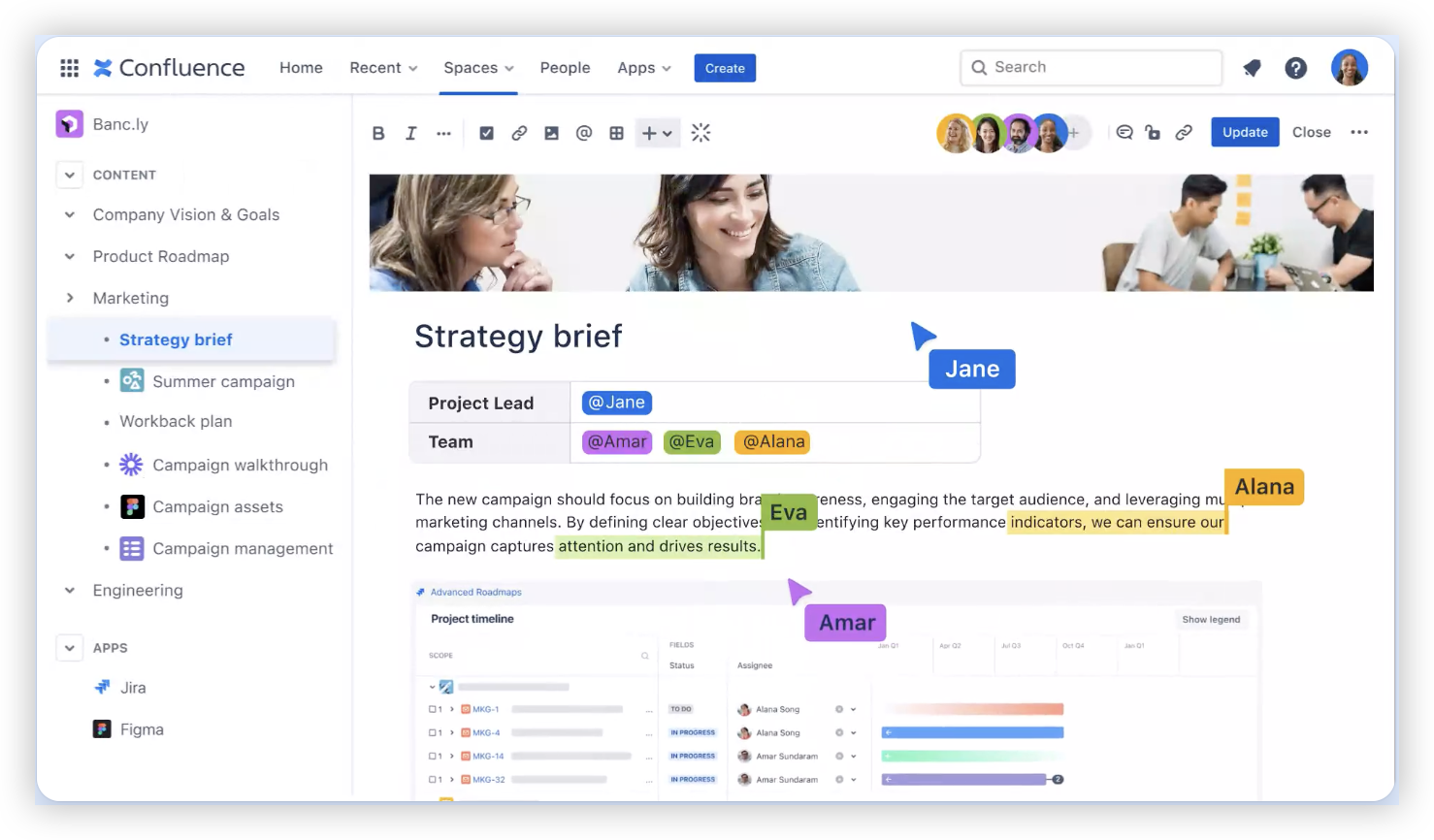
Plan comparison at a glance
| Plan |
Best for |
Main considerations |
| Free |
Small teams evaluating Confluence |
Limited users, storage, support, and administration |
| Standard |
Growing teams with regular collaboration needs |
Paid access, broader controls, and higher capacity |
| Premium |
Organizations needing scale and advanced capabilities |
Higher cost in exchange for analytics, administration, and capacity benefits |
| Enterprise |
Large organizations with complex governance |
Custom pricing, annual commitment, and enterprise-level controls |
Here’s why: the advertised per-user figure is only one part of the decision. A team with 25 people may spend less on licenses than a team with 100 people, even when both choose the same plan. However, the larger team may also need extra apps, stronger permissions, and more administrative oversight.
How Confluence Plans and Costs Work
- Estimate the people who need access. Count full users, occasional contributors, contractors, and administrators. A person who only reads pages may still require a licensed seat, depending on your setup.
- Choose a billing term. Monthly billing usually offers flexibility. Annual billing may provide a lower effective rate or a clearer budgeting cycle, but it creates a longer commitment.
- Match features to your workflow. Check whether you need advanced analytics, automation, centralized administration, larger capacity, or stronger governance.
- Include additional products. Jira, Jira Service Management, marketplace apps, and other Atlassian products may have separate charges.
- Calculate the growth effect. Model your cost at today’s size and at your expected size six or twelve months from now.
- Review the checkout estimate. Confirm taxes, currency, billing term, user tier, and any promotional pricing before committing.
A simple planning formula helps:
Estimated subscription cost = plan rate × licensed users + add-ons + applicable taxes
For example, imagine a 35-person product team choosing a paid plan. You should calculate the base subscription for 35 seats, then add any diagramming, automation, or reporting apps. If the team expects to reach 50 people, create a second estimate before making the purchase.
Free plan
The Free plan is a practical starting point for small groups. It lets you create collaborative pages, organize team knowledge, and evaluate the basic experience without a recurring subscription.
Its limitations matter when your team grows. Free plans typically have restrictions around user count, storage, permissions, support, and administrative controls. A ten-person startup may be comfortable with those limits, while a regulated company may need paid governance immediately.
Standard plan
Standard is usually the first paid option for teams that have outgrown the Free plan. It provides more room for collaboration and stronger controls for everyday administration.
This tier often fits product teams, marketing departments, agencies, and internal operations groups. Before selecting it, check the current storage, support, permission, and user-cap details for your region.
Premium plan
Premium targets organizations with larger knowledge collections, more demanding administration, and a greater need for visibility into usage.
Premium capabilities may include advanced analytics, enhanced administration, improved capacity, and features intended to support larger teams. The higher fee makes sense when those capabilities replace manual reporting or reduce administrative work.
Enterprise plan
Enterprise is intended for large organizations with complex structures, multiple Confluence sites, or centralized governance requirements.
Enterprise pricing is generally customized rather than displayed as one universal per-user rate. Expect an annual agreement, a tailored user count, and discussions about security, support, administration, and deployment needs.
What Affects Your Final Confluence Bill?
The plan name does not tell the whole story. Several cost factors can move your final total higher or lower.
User count and billing tiers
Atlassian pricing commonly uses user bands or progressive calculations. That means adding one person can affect the applicable tier, especially near a pricing threshold.
Consider a company with 100 licensed users. If five contractors need access for a short project, the company should compare temporary access, annual growth, and the cost of removing those seats later.
Monthly versus annual billing
Monthly billing works well when headcount changes frequently. It can also help a new team test its workflow before making a longer commitment.
Annual billing may simplify procurement and budgeting. However, you should estimate likely growth before choosing it. An annual commitment can become inefficient when many unused seats remain active.
Taxes, currency, and regional pricing
Your checkout total may differ from a headline price because of local taxes, currency conversion, or regional commercial terms.
For accurate budgeting, use the billing country, expected user count, and intended billing cycle. Finance teams should also check whether tax treatment changes when the purchaser and team operate in different regions.
Marketplace apps and integrations
Confluence often becomes more useful with diagramming, advanced search, time tracking, backup, publishing, or workflow apps. Those products may have separate subscriptions and separate user calculations.
A team paying for several small apps can eventually spend more on extensions than on the core platform. Review every app annually and remove tools that no longer support an active process.
Multiple sites and connected products
Large organizations may operate separate Confluence sites for business units, regions, or external collaboration. Each site can affect licensing and administration requirements.
Connected products also deserve attention. Jira and Confluence may support a combined workflow, but each product can still have its own plan and user charges.
Which Confluence Plan Fits Your Team?
The right plan depends on what your team must control, not just how many people need access.
Choose Free when experimentation is the priority
Free can work for a small team building its first meeting hub, onboarding area, or lightweight knowledge center.
Example: a five-person design studio may use pages for project briefs, meeting notes, and internal procedures. If the studio does not need advanced permissions or formal support, a free workspace may be enough.
Choose Standard when collaboration is established
Standard is a reasonable fit when Confluence becomes part of daily work. Teams may use it for product requirements, release notes, policies, and recurring operational routines.
At this stage, reliability and administration become more important. You should assess page access, guest participation, content organization, and support needs before upgrading.
Choose Premium when scale creates operational pressure
Premium becomes more attractive when administrators need better visibility, larger capacity, or stronger controls across a growing workspace.
Example: a 300-person software company may spend more time locating outdated knowledge than creating it. Analytics and advanced administration can help identify neglected areas and improve governance.
Choose Enterprise when governance spans the organization
Enterprise suits organizations that need centralized oversight, complex identity management, multiple sites, or negotiated commercial terms.
It may be excessive for a single department. Ask whether enterprise controls solve a measurable problem before accepting the higher commitment.
How to Lower the Total Cost of Confluence
You can reduce unnecessary spending without removing the platform from important workflows.
Audit licensed users
Review inactive accounts, former contractors, duplicate identities, and people who no longer need editing access. A quarterly review can prevent unused seats from accumulating.
Control app sprawl
Assign one owner to every marketplace app. That owner should confirm usage, renewal value, security status, and overlap with native Confluence features.
Set a page governance policy
Define naming rules, ownership expectations, review dates, and archival practices. Better organization can reduce the pressure to buy extra tools for search and knowledge discovery.
Model growth before renewal
Calculate three scenarios: current headcount, expected headcount, and a high-growth case. This approach gives you negotiating context and prevents surprise upgrades.
Separate must-have features from nice-to-have features
Create a short requirements list. For example, identity management and permission controls may be essential, while advanced analytics may be optional for your team.
The best part? A clear requirements list makes plan comparisons much easier. You can connect every added cost to a specific operational need.
Confluence Cost Examples for Different Teams
These examples show how to think about the bill. They are planning illustrations rather than quotes because pricing can change by region, term, and user tier.
Example one: a small startup
A seven-person startup needs a shared area for onboarding, product planning, and company policies. It has no complex approval requirements and rarely adds contractors.
The Free plan may cover the initial workflow. The team should still review storage, permissions, and user limits before treating it as a long-term choice.
Example two: a growing product organization
A 45-person product organization uses Confluence for requirements, sprint planning references, release communication, and technical guidance.
The team should compare Standard and Premium. If advanced analytics and administration save several hours each month, Premium may justify its higher rate.
Example three: a distributed enterprise
A global company has 2,000 staff across regions and several business units. It needs centralized identity controls, consistent administration, and oversight across multiple sites.
Enterprise discussions should include licensing, security, support, site structure, user provisioning, and annual growth. Comparing only the per-user number would miss the main commercial factors.

Value proposition
ONES.com combines project management and knowledge management in one platform powered by ONES Assistant. ONES Project is a Jira alternative, while ONES Wiki is a Confluence alternative, and each product can be sold separately.
It may suit teams that want connected planning and knowledge workflows, fewer plugins, self-hosted deployment, and feature parity between cloud and self-hosted versions.
Core capabilities
Separate project and knowledge products
Pain: A team may need project tracking without replacing its knowledge system, or knowledge management without adopting a full project suite.
ONES capability: ONES Project and ONES Wiki are available as separate products.
Result: You can select the product that matches your immediate requirement and expand later if the workflow demands it.
Jira-compatible project workflows
Pain: Teams moving away from Jira may worry about losing familiar issue and delivery workflows.
ONES capability: ONES Project supports Jira-compatible workflows, sprint management, custom fields, custom workflows, automation, and reporting.
Result: Product teams can preserve familiar planning patterns while evaluating another platform.
Knowledge management alongside delivery work
Pain: Product decisions, specifications, and delivery updates often become scattered across disconnected tools.
ONES capability: ONES.com brings project management and knowledge management into a unified platform.
Result: Teams can connect planning activity with the knowledge required to execute it.
Built-in reporting
Pain: Reporting can become dependent on plugins, manual exports, or separate dashboards.
ONES capability: Built-in reporting supports visibility into project progress and team activity.
Result: Managers can review delivery information within the same working environment.
Custom workflows and fields
Pain: A fixed process may force teams to track approvals, risks, or ownership outside the main workflow.
ONES capability: Teams can configure custom workflows and custom fields for their processes.
Result: A product team can add fields for release risk, customer impact, or technical ownership without creating a separate tracking system.
Automation and sprint management
Pain: Repetitive status changes and sprint administration consume time during every delivery cycle.
ONES capability: ONES Project includes automation and sprint management features.
Result: Teams can reduce manual coordination and keep recurring delivery actions consistent.
Self-hosted deployment choices
Pain: Some organizations cannot place operational knowledge in a public cloud environment.
ONES capability: ONES.com supports Cloud, On-Premise, Private Cloud, and Air-gapped deployments.
Result: Security-sensitive teams can select a deployment model that fits their network and compliance needs.
Feature parity across deployment models
Pain: Self-hosted products sometimes lack capabilities available in cloud editions.
ONES capability: ONES.com provides full feature parity between cloud and self-hosted versions.
Result: Teams can prioritize deployment requirements without automatically giving up core functionality.
Reduced dependence on plugins
Pain: Each plugin can add cost, administration, security review, and compatibility work.
ONES capability: Native project management, reporting, workflow, field, sprint, and automation capabilities reduce the need for multiple extensions.
Result: Administrators can manage a more consolidated environment and evaluate costs more clearly.
Application scenarios
Software product team: A distributed engineering group can use ONES Project for backlog planning, sprints, custom delivery workflows, and reporting. ONES Wiki can hold product guidance and engineering knowledge separately.
Restricted-network organization: A defense, industrial, or research team can consider an On-Premise, Private Cloud, or Air-gapped deployment when network isolation is essential.
Growing company: A company with 30 seats can start within the free allowance, then scale its project and knowledge workflows as more teams adopt the platform.
Common Challenges When Estimating Confluence Costs
Challenge: confusing list price with final price
Solution: Add users, billing term, taxes, apps, connected products, and currency effects to your estimate. Treat the headline number as a starting point.
Challenge: paying for inactive accounts
Solution: Review account activity before each renewal. Remove people who have left and adjust access for temporary contributors.
Challenge: choosing a premium tier too early
Solution: List the exact feature that justifies the upgrade. If no team can explain the benefit, test whether Standard meets the requirement.
Challenge: ignoring administrative workload
Solution: Include time spent managing permissions, apps, page structure, and reporting. A cheaper subscription may create higher internal operating costs.
Challenge: underestimating growth
Solution: Build a twelve-month forecast with low, expected, and high-growth scenarios. Review the forecast before signing an annual agreement.
FAQs About Confluence Plans and Fees
Is Confluence free for small teams?
Yes, Confluence offers a Free plan for small teams. It can support basic collaboration and knowledge sharing without a recurring subscription. However, free access comes with limits on users, storage, administration, support, and other capabilities. Check the current limits for your region before relying on it for a long-term workflow. A small team should also consider how quickly it expects to grow.
Does Confluence charge per user?
Confluence generally uses user-based subscription pricing. Your bill can depend on the number of licensed accounts, the selected plan, and the applicable user tier. Some people may need editing access, while others may only view pages, but access rules can vary. Review the current licensing definitions carefully, especially when contractors, guests, or external collaborators participate.
Is annual Confluence billing cheaper than monthly billing?
Annual billing may offer a lower effective rate or simpler budgeting, but the result depends on the plan, region, and current commercial terms. Monthly billing provides more flexibility when headcount changes frequently. Compare the total annual commitment with twelve monthly estimates. Also consider whether unused seats could make an annual agreement less efficient.
Are Confluence marketplace apps included?
Marketplace apps are generally separate from the core Confluence subscription. Each app can have its own pricing model, user calculation, renewal date, and support arrangement. Common additions include diagramming, automation, backup, publishing, and advanced search. Before installing an app, calculate its annual cost and check whether native Confluence capabilities already meet the requirement.
What is the difference between Premium and Enterprise?
Premium is a paid tier intended for teams that need greater capacity, visibility, and administration. Enterprise is designed for organizations with broader governance requirements, multiple sites, complex identity management, and negotiated commercial terms. The best choice depends on the controls your organization needs. A large user count alone does not automatically mean Enterprise is the right fit.
Conclusion
Confluence pricing depends on more than a per-user figure. Your plan, headcount, billing term, regional charges, marketplace apps, connected products, and administrative requirements all affect the final cost.
Start with the Free plan when you are testing basic collaboration. Compare Standard and Premium against specific operational needs. Consider Enterprise when governance spans multiple sites or business units. Then model growth before renewal.
But here’s the truth: the cheapest subscription is not always the lowest-cost workflow. A plan that requires many add-ons or hours of manual administration may cost more over time. Compare the complete operating picture, including alternatives such as ONES.com, before you commit.