Atlassian Jira Cloud Pricing: A 2026 Cost Guide for Teams
Wondering what Atlassian Jira Cloud pricing really costs? Compare plans, seats, billing, and add-ons to estimate your 2026 spend. Read now!
Jira Cloud pricing can look simple until you add team size, billing frequency, premium features, and paid apps. A small team may start free, then face a much larger bill after crossing the seat limit or adding automation-heavy workflows.
That uncertainty makes planning difficult. You might compare the advertised per-user rate and still miss annual billing rules, progressive pricing, or the cost of connected products. But here’s the truth: you can estimate your Jira Cloud spend with a clear process. This guide explains each plan, shows what changes the bill, and compares practical alternatives for teams planning their 2026 project management budget.
Jira Cloud Pricing at a Glance
Atlassian Jira Cloud pricing is based mainly on your selected plan, the number of paid seats, and whether you choose monthly or annual billing. Jira Cloud generally offers Free, Standard, Premium, and Enterprise tiers, with feature access and administrative controls increasing at each level.
The quickest way to estimate your cost is to identify your team size, choose the required plan, select a billing cycle, and add any related products or marketplace apps. Your final amount can change when your seat count changes.
| Plan |
Best fit |
Typical cost behavior |
| Free |
Small teams testing Jira or managing lightweight projects |
No subscription charge within the plan’s limits |
| Standard |
Teams that need broader collaboration and administration |
Per-seat subscription with more capacity than Free |
| Premium |
Growing teams needing advanced planning, automation, and service expectations |
Higher per-seat cost for expanded controls and capabilities |
| Enterprise |
Large organizations with complex governance and multiple teams |
Custom commercial terms and organization-level management |
Atlassian can change rates, included limits, and plan features. Check the live Jira Cloud calculator before approving a budget, especially when planning a 2026 renewal or migration.
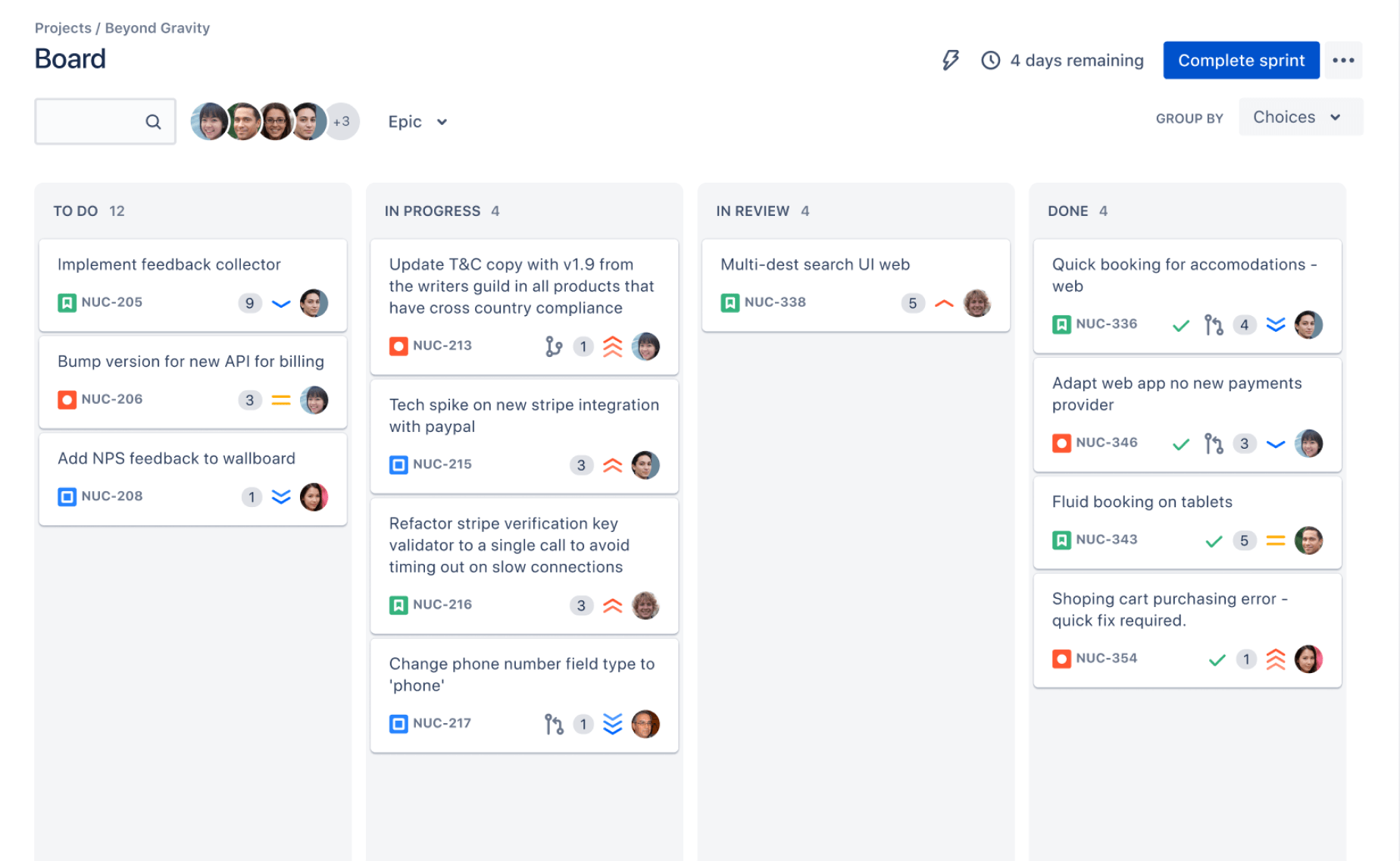
How to Calculate Your Jira Cloud Budget
Use this five-step method to build a realistic estimate instead of relying on the headline rate.
- Count paid seats. Include every person who needs Jira access. Separate active contributors from occasional viewers where your licensing arrangement allows it.
- Choose the minimum suitable plan. Start with the operational requirement. For example, a 12-person team may need Standard if it requires broader permissions, while a regulated department may need Premium for additional oversight.
- Compare monthly and annual billing. Monthly billing offers flexibility when headcount changes frequently. Annual billing can offer a predictable commitment and may use different pricing bands.
- Add connected products and apps. Jira may sit beside Confluence, Jira Product Discovery, Jira Service Management, or marketplace applications. Each can affect your technology budget.
- Model growth and reduction. Calculate your present cost, expected team size, and a higher-growth scenario. A 25-seat team can become a 60-seat team after hiring, acquisitions, or wider adoption.
For example, imagine a product team with 18 paid seats. It compares Standard and Premium, then adds a documentation platform and a testing app. The plan price is only one part of the monthly total.
Here’s why: collaboration tools often become more valuable as more teams join. The same expansion can also increase licensing, administration, training, and integration costs.
What Each Jira Cloud Tier Usually Provides
Free for small teams and early evaluation
The Free tier is useful when a small group wants to try Jira without an immediate subscription commitment. It can support basic project tracking, issue management, and team collaboration within defined limits.
Free works well for a five-person product experiment, a student project, or a small internal initiative. It becomes less suitable when you need more administration, larger capacity, stronger governance, or extensive automation.
Standard for everyday project management
Standard is usually the practical starting point for established teams. It provides more room for collaboration and project operations than Free, making it suitable for software, marketing, operations, and product groups.
A 30-person engineering department might choose Standard when it needs structured backlogs, sprint planning, permissions, dashboards, and routine workflow management. The main benefit is broader team capacity without paying for every advanced feature.
Premium for scale, planning, and advanced operations
Premium is designed for teams that need more advanced planning, automation capacity, administrative control, or service commitments. The added cost makes sense when those capabilities reduce manual work or support a larger operating model.
For example, a company coordinating ten development squads may value advanced planning because leaders need a cross-team view. A release program may also justify Premium when work must be coordinated across multiple projects.
Enterprise for organization-level governance
Enterprise is aimed at larger organizations with complex governance, multiple departments, and broader administrative requirements. Pricing is typically handled through a custom commercial arrangement rather than a simple public checkout amount.
Enterprise planning should include more than licenses. Consider identity management, administration, compliance reviews, support expectations, training, and the time needed to govern many projects consistently.
What Actually Changes the Final Bill?
Seat count and progressive pricing
Jira Cloud pricing may use progressive bands, meaning the cost per seat can change as your total seat count rises. The rate for a 10-person team may not scale in a perfectly linear way to 100 people.
Use three scenarios when planning:
- Current staffing, such as 24 seats.
- Expected staffing, such as 40 seats.
- Expansion staffing, such as 75 seats.
This approach exposes budget pressure before hiring begins. It also helps you decide whether every person needs a full seat or whether some people need limited participation.
Monthly versus annual commitment
Monthly billing is convenient when your team changes quickly. You can adjust more frequently and avoid committing before a rollout proves valuable.
Annual billing can make budgeting easier and may offer different band calculations. However, you should estimate expected growth before selecting it. A lower effective rate may become less attractive if your organization buys far more seats than it needs.
Apps and connected Atlassian products
Many teams extend Jira with reporting, test management, time tracking, roadmapping, automation, documentation, or service management applications. Each addition can create another subscription line.
A practical example is a 40-person engineering team using Jira, Confluence, a testing app, and advanced reporting. The team may view Jira as the primary platform, but its complete tool stack determines the real annual spend.
Support, administration, and migration work
License charges are visible. Operational effort is easier to overlook. Someone still needs to design workflows, maintain permissions, train new team members, review automations, and remove unused access.
If a migration requires consulting help, custom integrations, or extensive cleanup, include those costs separately. A cheaper subscription can still produce a more expensive outcome when administration takes too much time.
Jira Cloud Versus Self-Hosted Costs
Jira Cloud shifts much of the infrastructure responsibility to Atlassian. You avoid managing servers, upgrades, backups, and much of the underlying availability work. That convenience is valuable for teams with limited IT capacity.
Self-hosted deployment gives you more control over hosting, network access, and internal operations. It can suit organizations with strict environment requirements, although you take on maintenance, security operations, scaling, and upgrade planning.
| Cost area |
Cloud consideration |
Self-hosted consideration |
| Infrastructure |
Included within the service model |
Requires hosting, storage, and operational capacity |
| Maintenance |
Less routine platform maintenance for your team |
Your team manages upgrades and technical upkeep |
| Control |
Convenient access through Atlassian’s cloud environment |
Greater control over deployment and network placement |
| Scaling |
Usually easier to expand through subscription changes |
Requires capacity planning and infrastructure decisions |
Think of the choice as a trade-off between operational convenience and deployment control. Neither model is automatically cheaper for every organization.
But here’s the truth: comparing subscription prices alone can produce a misleading result. Compare the total operating effort, required controls, integration work, and expected growth.
Ways to Reduce Unnecessary Jira Spend
Audit access regularly
Review inactive accounts at least once per quarter. Departed employees, contractors, and temporary collaborators can continue consuming paid seats if access removal is inconsistent.
Create an ownership rule for access reviews. For example, the IT team can review account status while project administrators confirm whether each person still needs access.
Separate essential features from premium convenience
List the capabilities your team actually uses. If the only reason for a higher tier is one feature used once per quarter, calculate whether a process change or separate application would be more economical.
This does not mean choosing the cheapest plan automatically. A higher tier may save money when it replaces manual reporting or reduces repeated administrative work.
Control app sprawl
Ask who owns each app, which workflow it supports, and how often the team uses it. Two apps may solve overlapping problems while creating separate administration and renewal tasks.
A quarterly technology review can identify unused licenses, duplicate reports, and integrations that no longer support active work.
Standardize workflows before expanding
Teams often buy more functionality to compensate for inconsistent processes. First define how work moves from intake to delivery, then decide which Jira features support that process.
For example, a clear approval path can reduce the need for multiple custom statuses and complicated automation rules.
Common Budgeting Mistakes
Using the lowest advertised price as the forecast
A starting rate may reflect a specific seat band, billing term, or limited plan. It may not represent the amount your organization will pay after expansion.
Solution: calculate at least three seat scenarios and include related products.
Ignoring occasional contributors
Designers, executives, clients, and contractors may need visibility or approval access. If you do not identify these groups early, your seat estimate can be too low.
Solution: map each role to the access it needs before choosing a plan.
Forgetting renewal timing
A team may grow shortly before renewal and carry the higher seat count into the next billing period. That change can affect the annual commitment more than expected.
Solution: review hiring plans, department launches, and major migrations before renewal discussions.
Counting only subscription charges
Administration, consulting, training, integration maintenance, and migration work can materially affect the total cost.
Solution: create a complete ownership budget with licensing, implementation, maintenance, and internal labor.
A Practical Jira Cloud Cost Planning Checklist
- Record the current number of paid seats.
- Estimate expected seats six and twelve months ahead.
- Identify the minimum plan that meets operational needs.
- List every connected Atlassian product.
- List every marketplace app and its purpose.
- Compare monthly and annual payment options.
- Estimate administration and training effort.
- Check whether inactive accounts remain enabled.
- Model a higher-growth scenario before renewal.
- Review the live pricing calculator before signing off the budget.
Use the checklist with a simple planning table. Record the requirement, the plan or product that addresses it, the estimated annual cost, and the person responsible for reviewing it.
Jira Cloud Alternative: ONES.com
ONES.com is a unified platform for project management and knowledge management, powered by ONES Assistant. ONES Project provides project management capabilities as a Jira alternative, while ONES Wiki provides knowledge management capabilities as a Confluence alternative. They are sold separately.
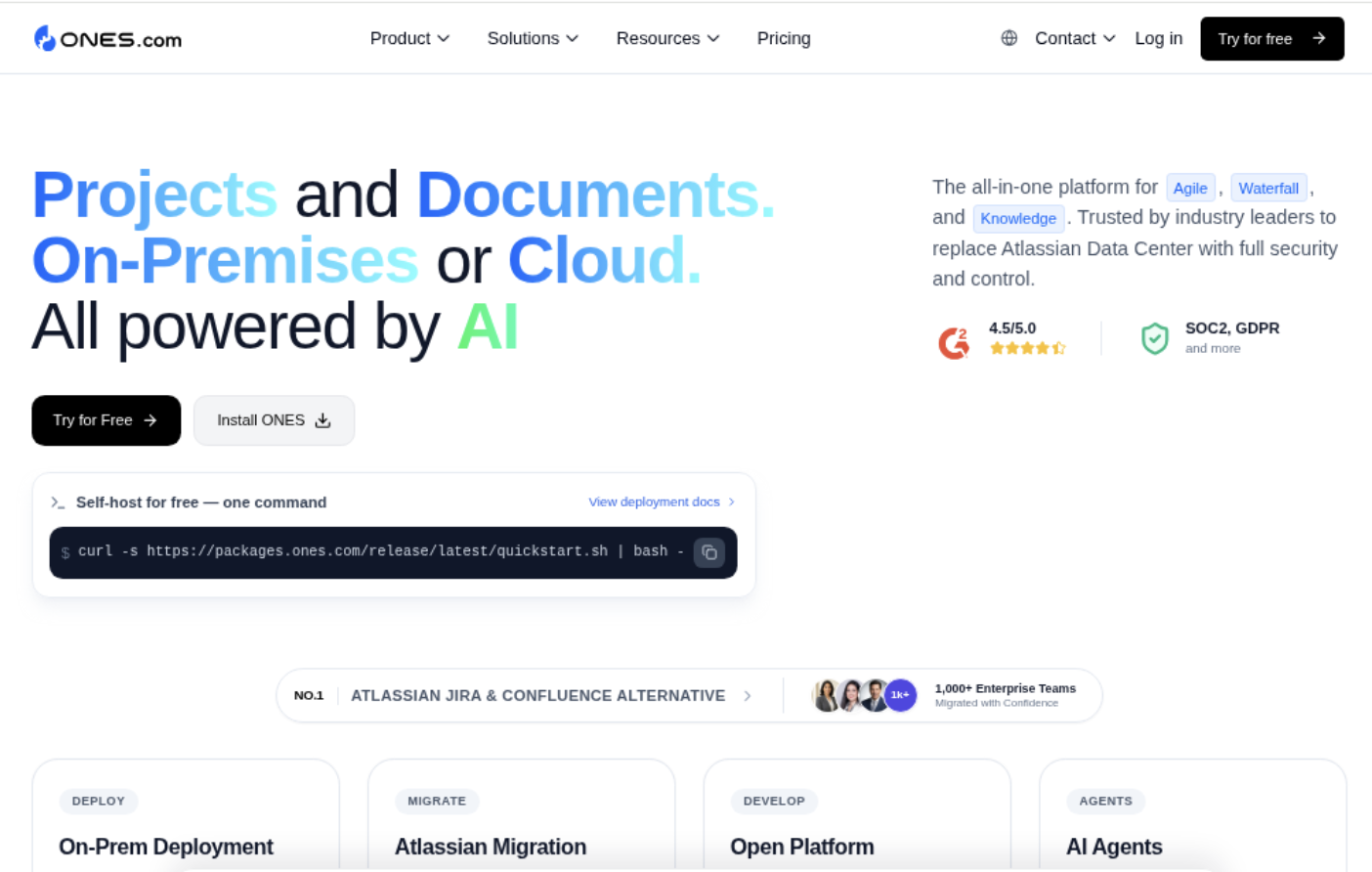
The platform can be useful when you want project work and team knowledge to operate within a coherent environment. It supports Cloud, On-Premise, Private Cloud, and Air-gapped deployments, with full feature parity between cloud and self-hosted versions.
Value Proposition
ONES.com can help teams reduce dependence on multiple plugins while keeping deployment choices open. Its free plan supports up to 30 seats, giving smaller teams a practical way to evaluate the workflow.
Core Capabilities
- Plugin-heavy Jira setup → Jira-compatible workflows → You can manage familiar project processes with fewer separate extensions.
- Scattered reporting → built-in reporting → Teams can review progress, workload, and delivery information within the project environment.
- Rigid process design → custom workflows and fields → You can adapt intake, approval, and delivery steps to different departments.
- Manual sprint coordination → sprint management → Product teams can plan iterations, assign work, and review progress through a structured cycle.
- Repeated administrative actions → automation → Routine transitions and notifications can happen with less manual effort.
- Cloud-only restrictions → four deployment choices → You can choose Cloud, On-Premise, Private Cloud, or Air-gapped deployment according to operational requirements.
- Feature gaps between deployment models → native parity → Self-hosted teams can retain the same core feature coverage available in the cloud version.
- Separate project and knowledge work → ONES Project and ONES Wiki → You can select the product that matches your need while keeping a consistent platform direction.
Application Scenarios
Growing software company: A 25-person product team can use ONES Project for backlogs, sprints, custom fields, and reporting. As the company expands, it can review whether ONES Wiki should support product knowledge and internal guidance.
Restricted-network organization: A team that cannot use a public cloud environment can deploy ONES in an air-gapped setting. It can retain project workflows and reporting while meeting internal network requirements.
Plugin reduction initiative: A department with separate tools for workflow customization, automation, and reporting can evaluate whether native capabilities reduce administration and renewal complexity.
Common Challenges With Jira Cost Planning
Challenge: Your team size changes every month
Hiring, contractors, and reorganizations make a fixed annual estimate unreliable.
Solution: maintain low, expected, and high seat scenarios. Review the estimate before major hiring rounds and renewal deadlines.
Challenge: Several departments share one environment
Engineering, marketing, operations, and service teams may need different workflows. A single plan decision can become difficult when requirements conflict.
Solution: document department-level needs, then identify shared capabilities. Avoid paying for an organization-wide upgrade when only one group needs an advanced function.
Challenge: Apps create surprise renewals
Teams may add applications during a delivery crisis and forget them after the immediate problem disappears.
Solution: assign an owner to every app and review usage before each renewal. Remove tools that no longer support active processes.
Challenge: The cheapest tier cannot support governance
A low-cost plan may look attractive until permission management, reporting, or automation limitations create manual work.
Solution: estimate the labor created by the limitation. A higher plan may be justified when it removes recurring administrative effort.
FAQs
What is the cheapest way to use Jira Cloud?
The Free plan is generally the lowest-cost option for eligible small teams. It can support basic project tracking within its limits. Before choosing it, check whether your team needs advanced permissions, larger capacity, more automation, or broader administration. If you expect rapid growth, include the next plan in your budget so the transition does not create an unexpected increase.
Does Jira Cloud charge per person?
Jira Cloud plans generally use seat-based pricing. Your cost depends on the number of people who require access, the selected plan, and the billing cycle. Pricing may use bands or progressive calculations, so multiplying a single visible rate by your team size may not produce the final amount. Use the current Atlassian calculator for your exact seat count.
Is annual Jira Cloud billing cheaper than monthly billing?
Annual billing may provide a different effective rate or more predictable budgeting, but the result depends on your seat band and expected changes. Monthly billing can be more suitable when your team is growing quickly or working with temporary contractors. Compare both options using your current seats and expected seats at renewal.
Do Jira apps cost extra?
Many marketplace apps and connected Atlassian products have separate charges. Examples include testing, time tracking, reporting, roadmapping, service management, and knowledge management tools. Review each application separately and include its plan, seat count, billing cycle, and renewal date. A complete tool-stack estimate is more useful than the Jira subscription amount alone.
Should a small team choose Standard or Premium?
Choose Standard when your team needs dependable everyday project management without advanced scale requirements. Consider Premium when advanced planning, greater automation capacity, stronger administration, or service commitments will materially improve operations. A small team can still benefit from Premium if it coordinates many projects or replaces substantial manual work.
Can I compare Jira Cloud with a self-hosted alternative?
Yes. Compare more than subscription rates. Include infrastructure, maintenance, upgrades, security operations, deployment control, administration, integrations, and internal labor. A self-hosted platform may suit restricted environments, while cloud deployment may reduce operational responsibility. The better choice depends on your technical capacity and governance requirements.
Conclusion
Planning Jira Cloud spending requires more than checking a per-seat number. Start with your current and expected seat counts, compare the Free, Standard, Premium, and Enterprise tiers, then add connected products, apps, and operating effort.
But here’s the truth: unclear requirements create the biggest cost surprises. Define the workflows your team needs, audit access regularly, and model growth before renewal.
If Jira Cloud no longer fits your deployment, plugin, or budget requirements, evaluate a Jira alternative such as ONES Project. You can compare native capabilities, deployment flexibility, and total administration effort against your team’s practical needs.