Atlassian Jira Cloud Pricing Per User: 2026 Complete Guide
Unsure about atlassian jira cloud pricing per user? Compare plans, seat bands, billing, and add-ons in this 2026 guide. Click to budget accurately.
Jira Cloud pricing can look simple until you compare plans, user bands, billing cycles, and add-ons. A per-user figure may change when your team grows from 10 people to 11, or when annual billing replaces monthly billing.
That uncertainty makes budgeting difficult. You may estimate one monthly amount, then discover that inactive accounts still count, taxes are separate, or premium features require a higher tier. A small pricing mistake can become a significant annual cost.
But here's the truth: the right calculation starts with billable seats, not the headline price. This guide explains how Atlassian Jira Cloud pricing per user works in 2026, how to estimate your real bill, and which alternatives may fit your workflow.
How Jira Cloud Pricing Per User Works
Atlassian Jira Cloud pricing per user is the amount your organization pays for the number of Jira Cloud seats assigned to eligible users under a selected plan and billing cycle.
Jira Cloud generally offers Free, Standard, Premium, and Enterprise options. Your final cost depends on the plan, number of seats, monthly or annual billing, regional taxes, and optional services.
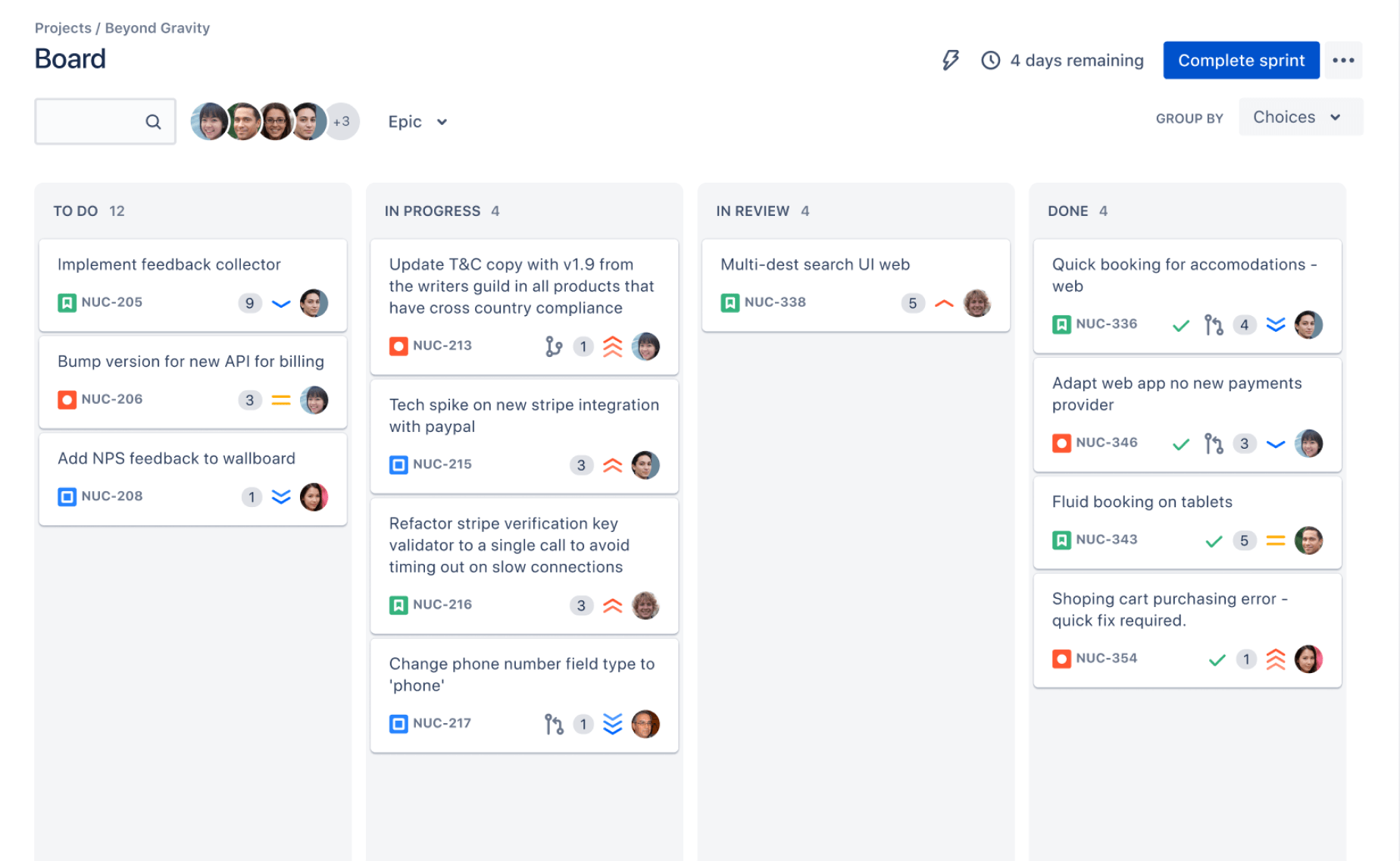
The main Jira Cloud plans
| Plan |
Usually suited to |
Pricing behavior |
Important consideration |
| Free |
Small teams testing Jira or managing simple projects |
No subscription charge within the plan limits |
Limited users, storage, permissions, and administration features |
| Standard |
Growing teams that need core project management |
Per-seat pricing with plan limits and volume bands |
Often the starting point for a paid team |
| Premium |
Organizations needing advanced planning, scale, and service commitments |
Higher per-seat pricing than Standard |
Useful when advanced capabilities justify the extra cost |
| Enterprise |
Large organizations with complex governance |
Custom commercial terms |
Usually requires a sales conversation and broader licensing review |
Atlassian can use progressive pricing bands rather than one identical rate for every seat. That means your average cost per user may fall as your subscription reaches a higher band, while the total bill still increases.
What counts as a user?
A billable user is typically someone who receives access to the Jira Cloud site under a paid plan. The exact treatment can vary by product role, plan, and licensing arrangement.
For planning purposes, count every person who needs regular access. Include developers, product managers, testers, project leaders, service teams, and external collaborators when your configuration gives them paid access.
Removing someone from a project may not remove their paid access. You usually need to deactivate or remove the account from the relevant site, then allow the billing system to reflect the change.
Monthly versus annual billing
Monthly billing gives you flexibility when headcount changes frequently. You generally pay for the active seat count during each billing period.
Annual billing can make budgeting easier and may provide a different effective rate. However, annual subscriptions often use a committed user tier, so you should estimate growth carefully.
Here's why: buying too many annual seats can create unused capacity, while choosing too few may force an adjustment later. Review expected hiring, contractors, and project launches before committing.
How to Calculate Your Estimated Jira Cloud Bill
Use this basic calculation:
Estimated subscription cost = plan charge for your seat band + optional products or services + applicable taxes.
The number shown as a per-user rate is useful for comparison, but your invoice may not equal that rate multiplied by your current headcount. Volume bands, minimums, billing terms, and regional rules can affect the result.
Step 1: Count the seats you actually need
Start with people who need to create, edit, assign, comment on, or report on work. Do not count everyone in your company automatically.
For example, a software team may include:
- 6 engineers
- 2 testers
- 1 product manager
- 1 delivery manager
- 2 business stakeholders
That team needs to examine whether all 12 people require the same Jira access. A stakeholder who only needs occasional visibility may have a different access path than someone managing work every day.
Step 2: Choose the plan required by your workflow
Compare capabilities before comparing rates. A cheaper plan can cost more overall if you need separate services or manual workarounds.
Ask whether you need advanced planning, stronger administration, higher limits, automation capacity, or more extensive reporting. If you only need issue tracking, the entry paid tier may be sufficient.
Step 3: Check the current pricing calculator
Enter your estimated seat count into Atlassian’s official pricing calculator or checkout flow. Check both monthly and annual views.
Pricing can change during a calendar year. A calculator gives you a more reliable estimate than an old blog post, cached screenshot, or internal purchasing note.
Step 4: Add related subscriptions
Jira Cloud may be only one part of your Atlassian setup. You could also pay for Confluence, Jira Service Management, marketplace apps, analytics tools, or identity services.
Keep each subscription separate during your estimate. This makes it easier to see whether the project management platform itself is affordable or whether connected services drive the total.
Step 5: Include taxes and currency conversion
Displayed prices may exclude sales tax, value-added tax, or other local charges. Your payment currency can also affect the final amount.
For a realistic annual forecast, add a tax allowance and use the exchange rate approved by your finance team. A price that appears stable in US dollars can change in local currency.
Step 6: Compare the effective cost per active user
Divide the total subscription cost by the people who actively use Jira each month.
For example, if you pay for 50 seats but only 38 people use the platform regularly, the effective cost per active user is higher than the advertised seat rate. This measure helps reveal unused capacity.
What Changes the Per-User Cost?
Several factors can move your final amount above or below a simple seat-count estimate. Understanding them helps you avoid surprises during procurement.
Seat bands and volume pricing
Cloud plans often use pricing bands. The first few seats may have a different effective rate from later seats, depending on the product and billing term.
Imagine two teams with 15 and 60 paid users. The larger team pays more overall, but its average rate may not be exactly the same as the smaller team’s average rate.
The best practice is to compare total monthly or annual cost at each realistic headcount. Do not multiply one visible rate across every possible team size.
Plan upgrades
Moving from Standard to Premium can increase the subscription substantially. The upgrade makes sense when the added capabilities solve a real operational problem.
For example, a distributed organization may value advanced planning and higher operating limits. A 12-person team with basic issue tracking may receive little practical benefit from upgrading immediately.
Marketplace apps
Third-party apps can add per-user charges, flat fees, or tiered pricing. Some vendors calculate their fee from the number of Jira seats, even when only a smaller group uses the app.
Before installing an app, estimate its cost at your highest likely Jira tier. An app that costs little for 20 seats may become expensive after a company-wide rollout.
Guest and external access
External agencies, clients, suppliers, and contractors need careful review. Their access may be governed by different rules, but you should never assume it is free.
Create a small access policy. Decide who receives a full account, who receives limited visibility, and who receives updates outside Jira.
Inactive accounts
An employee who stops using Jira may still retain access. Those accounts can continue contributing to your seat count until an administrator takes action.
Schedule a monthly access review. Look for people who have not signed in, changed work, commented, or contributed during the review period.
Monthly and Annual Cost Examples
Examples make the pricing model easier to understand. The figures below illustrate calculation methods rather than guaranteed 2026 quotes.
Example: a small paid team
Suppose a product group has 14 people and chooses a Standard-style paid plan. You would enter 14 seats into the current pricing calculator, review the monthly result, and multiply the recurring amount by 12.
Then add likely marketplace apps and taxes. If three people only need occasional visibility, test the calculation with 11 full users and a suitable viewing arrangement.
Example: a growing engineering department
Imagine a department grows from 45 to 75 people during the year. Under monthly billing, your cost may adjust as seats change.
Under annual billing, you may need to commit to a higher seat tier earlier. Compare the annual commitment with the expected hiring schedule, contractor duration, and likely project demand.
Example: an enterprise rollout
A company with several business units should calculate more than one headcount total. Separate engineers, service teams, executives, contractors, and occasional collaborators.
This reveals whether everyone needs the same plan. One group may need advanced project controls, while another only needs limited participation.
A simple comparison table
| Calculation question |
Why it matters |
| How many people need regular access? |
Determines the likely seat band |
| How many seats will you need in 12 months? |
Supports annual billing decisions |
| Which plan capabilities are essential? |
Prevents paying for unused functionality |
| Which apps will you install? |
Reveals costs beyond the core subscription |
| What taxes and currency rules apply? |
Improves the forecasted invoice amount |
How to Control Jira Cloud Licensing Costs
Cost control starts with access management. You do not need to make every team smaller; you need to make every paid seat useful.
Review access on a fixed schedule
Choose a monthly or quarterly review. Check inactive accounts, departed employees, contractors past their end date, and people who changed departments.
A practical rule is to remove access within one business day of an employee leaving. For contractors, add an end date to the engagement record and review it before renewal.
Separate viewers from contributors
Many stakeholders need progress visibility, while fewer people need to edit work. Define separate participation levels where the platform permits them.
For example, an executive may need dashboards and status updates. A tester needs to create and update issues. Treating both roles identically can inflate the seat count.
Audit marketplace apps
List every connected app, its owner, its purpose, and its billing method. Remove apps that duplicate native features or serve a project that has ended.
Here's a useful test: if nobody can name the business decision an app supports, review whether the subscription should continue.
Measure adoption before upgrading
Premium capabilities can be valuable, but the business case should connect to a measurable problem. Examples include planning delays, manual reporting, or insufficient administrative control.
Track the current cost of that problem. If manual reporting consumes 30 hours each month, an upgrade may be easier to justify than if the feature is merely convenient.
Forecast three scenarios
Create a low, expected, and high-growth estimate. Include seat count, plan level, apps, taxes, and currency movement.
This approach gives finance a range rather than a fragile single number. It also shows when you should revisit the subscription.
Jira Cloud Versus Self-Hosted Project Management
Jira Cloud reduces infrastructure work because Atlassian operates the hosted service. You pay for access and receive a managed environment, subject to the selected plan and service terms.
Self-hosted platforms can provide more control over deployment, network placement, and internal administration. They can also require staff time for upgrades, backups, monitoring, security reviews, and high availability.
Let me explain: the lower subscription price of a self-hosted platform does not automatically mean a lower total cost. Add infrastructure, labor, support, and recovery planning before comparing options.
When cloud is usually attractive
- You want faster deployment.
- You prefer a managed hosting model.
- Your teams work across locations.
- You want to avoid maintaining application infrastructure.
When self-hosting deserves consideration
- Your network must remain isolated.
- Internal policies restrict hosted services.
- You need direct control over upgrades and retention.
- Your organization already operates a strong platform engineering function.
ONES.com combines project management and knowledge management in one platform powered by ONES Assistant. ONES Project is the project management product and can serve as a Jira alternative, while ONES Wiki is the knowledge management product and can serve as a Confluence alternative. They are sold separately.

Value Proposition
ONES.com can help teams reduce tool fragmentation while preserving familiar project workflows. It offers cloud and self-hosted deployment options, including on-premise, private cloud, and air-gapped environments.
Core Capabilities
- Disconnected project work → ONES Project supports air-gapped deployment → Teams can manage restricted-network projects without relying on an external connection.
- Migration concerns → Jira-compatible workflows help familiar teams transition → Existing ways of planning, assigning, and tracking work require less retraining.
- Plugin dependence → Built-in reporting and workflow tools cover common needs → Teams can reduce the number of separate extensions they maintain.
- Rigid processes → Custom workflows and fields adapt to different delivery models → Product, engineering, operations, and compliance teams can use suitable work states.
- Sprint coordination problems → Sprint management keeps planning and execution connected → Teams can track scope, ownership, and progress in one working area.
- Repetitive administration → Automation handles repeatable actions → Teams spend less time updating routine statuses and assignments manually.
- Mixed hosting requirements → Cloud, on-premise, private cloud, and air-gapped deployment are available → Organizations can select an environment that fits policy and infrastructure needs.
- Feature gaps between hosting models → ONES.com provides full feature parity between cloud and self-hosted versions → Deployment choice does not require accepting a reduced feature set.
- Early-stage budget pressure → The free plan supports up to 30 seats → Small teams can evaluate the platform before expanding their subscription.
Application Scenarios
Regulated engineering team: A team working in a restricted network can deploy ONES Project on-premise or in an air-gapped environment. It can use custom workflows, fields, sprint planning, and reporting without moving project activity into a public cloud.
Growing software company: A company comparing Jira Cloud costs across several teams can test ONES Project with up to 30 seats on the free plan. If adoption grows, the organization can choose cloud or self-hosted deployment while retaining the same core feature set.
Project and knowledge collaboration: A team using separate project and knowledge tools can evaluate ONES Project and ONES Wiki for different needs. Since the products are sold separately, the organization can adopt only the capability it requires.
Common Challenges and Practical Solutions
Challenge: The advertised rate does not match the invoice
Solution: Recalculate using the exact seat band, billing cycle, taxes, currency, and add-ons. Save a copy of the checkout estimate for internal approval.
Challenge: Annual billing creates unused seats
Solution: Forecast hiring and contractor changes before renewal. Use monthly billing when headcount is uncertain, even if the annual average appears attractive.
Challenge: Marketplace apps quietly increase total cost
Solution: Assign an owner to every app and review its value quarterly. Calculate the app price at your projected maximum seat count.
Challenge: Inactive accounts remain enabled
Solution: Connect account removal to offboarding. Run recurring access reviews and create a clear process for temporary contractors.
Challenge: Teams upgrade without a measurable need
Solution: Link each premium capability to a business outcome. Measure reporting time, planning delays, administrative effort, or governance requirements before approving the upgrade.
Frequently Asked Questions
Does Jira Cloud charge for every person in my company?
Usually, billing relates to people who receive access to the Jira Cloud site, not every employee automatically. However, the exact treatment depends on the plan, role, product, and access configuration. Count people who need to create, edit, assign, comment on, or manage work. Then confirm the result in Atlassian’s current pricing calculator before purchasing.
Is Jira Cloud priced at one flat rate per user?
Not always. Jira Cloud pricing can involve plan-specific rates, seat bands, monthly or annual billing, and other commercial rules. The average rate may change as your team reaches a different user tier. For an accurate estimate, compare the total subscription amount at your expected headcount instead of multiplying one visible rate indefinitely.
Is the free Jira Cloud plan enough for a small team?
It may be enough for a small team with basic issue tracking needs. You should still review limits for users, permissions, storage, automation, reporting, and administration. A team can begin with the free plan, then upgrade when a specific constraint affects delivery. Record the reason for upgrading so the higher subscription has a clear business case.
What happens when I remove a Jira Cloud user?
Removing or deactivating an account can reduce your active access count, but the billing effect depends on your billing cycle and plan. Monthly subscriptions may reflect changes during the next billing period, while annual subscriptions can involve committed seat levels. Review Atlassian’s current terms before assuming an immediate refund or adjustment.
Should I choose monthly or annual Jira Cloud billing?
Monthly billing suits teams with uncertain headcount, short projects, or frequent contractor changes. Annual billing can support predictable budgeting and may offer a different effective rate, but it can lock you into a user commitment. Compare your expected seat count at renewal, six months later, and the end of the year before choosing.
How can I compare Jira Cloud with another platform?
Compare total ownership cost rather than the subscription rate alone. Include migration effort, administration, reporting, automation, integrations, deployment requirements, app charges, training, and support. A platform with a higher per-seat price may still cost less if it reduces extra tools and manual administration. Test the workflows your teams use every day.
Conclusion
Jira Cloud pricing per user depends on more than a single advertised number. Plan level, seat bands, billing cycle, inactive accounts, add-ons, taxes, and currency all influence your real cost.
Start with the seats you need today, forecast growth, compare monthly and annual billing, and calculate the effective cost per active user. Then test whether every upgrade or marketplace app solves a measurable problem.
But here's the truth: pricing clarity comes from modeling the full subscription, not memorizing one rate. If cloud flexibility, self-hosted deployment, workflow parity, or lower tool fragmentation matters to your team, include ONES.com in the comparison.