Atlassian Jira Core Pricing: A 2026 Cost and Plan Guide
Unsure about atlassian jira core pricing? Compare 2026 plans, user tiers, billing, hosting, and add-on costs. Read now to budget with confidence.
Jira Core pricing can look simple until you compare user tiers, billing terms, hosting options, and add-ons. A small team may fit the free plan, while a growing department can quickly face higher recurring costs. The old Jira Core name also creates confusion because Atlassian now presents its general work management product as Jira.
That uncertainty makes budgeting harder. You might compare a monthly per-user price with an annual quote and assume they mean the same thing. You may also overlook migration, administration, Marketplace apps, or self-hosting costs.
But here's the truth: the right 2026 estimate depends on your deployment, team size, billing cycle, and required features. This guide explains how Jira pricing works, what each plan usually includes, and how to calculate a realistic total before committing.
Atlassian Jira Core Pricing: What You Need to Know First
Atlassian Jira Core pricing refers to the cost of using Jira for general project management and business workflows. Atlassian has largely folded Jira Core into its broader Jira offering, so current buyers should evaluate Jira plans instead of searching for a separate modern Core edition.
Jira is commonly priced per user, with plan levels that change feature access, administration controls, storage, support, and security options. The main cloud choices are Free, Standard, and Premium. Enterprise plans are generally handled through a sales process.
Here's why the old product name matters: a legacy Jira Core quote may not match the current Jira Cloud structure. If you are renewing an older agreement, confirm whether Atlassian is moving your organization to a current Jira plan.
| Plan or deployment |
Typical purpose |
Pricing behavior |
| Free |
Small teams testing Jira or managing lightweight work |
No subscription charge within the published user limit |
| Standard |
Teams needing broader collaboration and administration |
Per-user subscription, with monthly or annual billing options |
| Premium |
Organizations needing advanced scale, reliability, and planning features |
Higher per-user subscription, often with different calculations at scale |
| Enterprise |
Large organizations requiring centralized governance |
Custom commercial terms and sales-led pricing |
| Data Center |
Organizations running Jira in their own controlled environment |
Separate annual licensing and infrastructure costs |
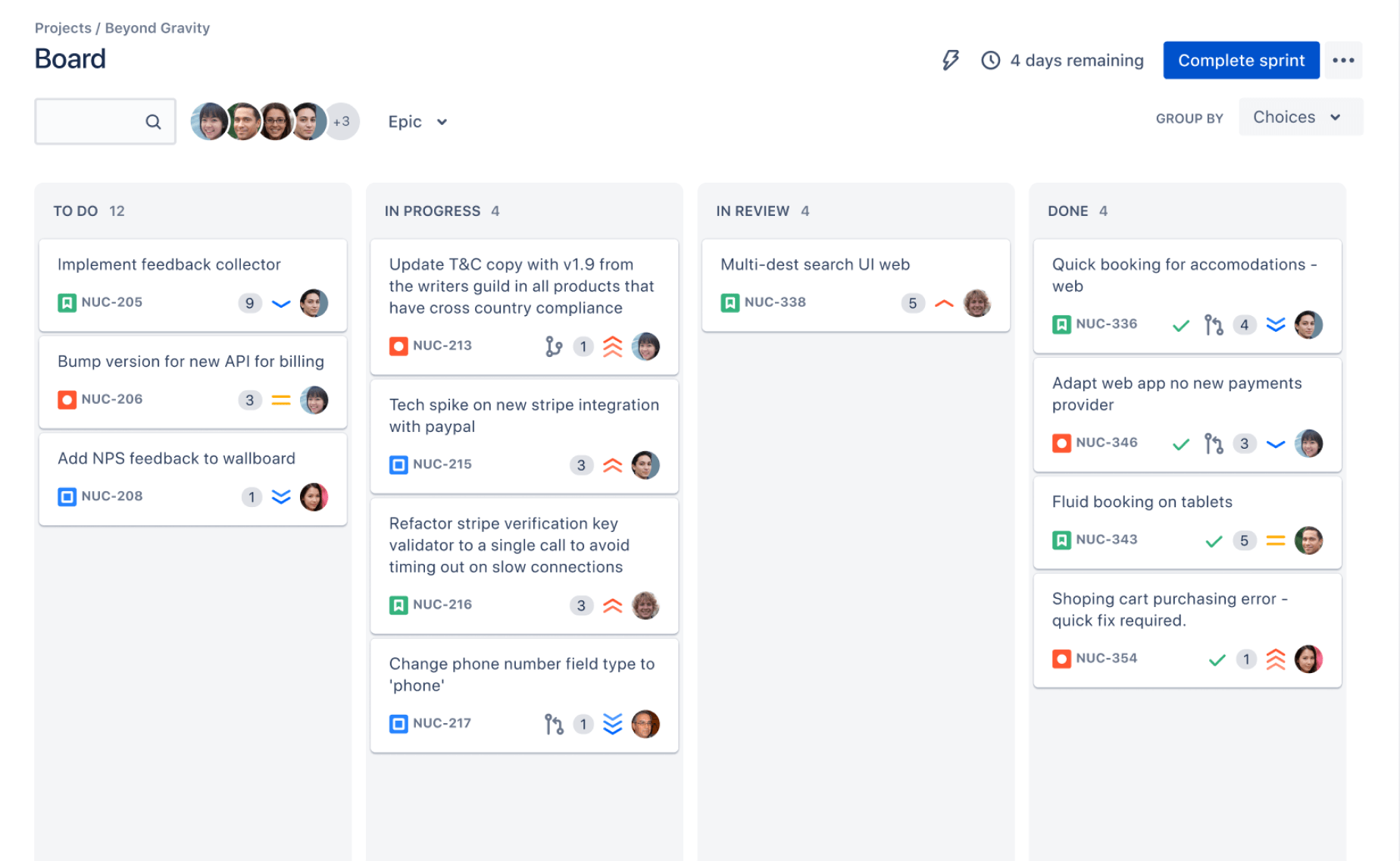
Jira Cloud and Jira Data Center are different cost models
Jira Cloud is hosted by Atlassian. You pay a recurring subscription, and Atlassian manages the underlying service environment. This model usually reduces infrastructure work for your internal team.
Jira Data Center is self-managed. You may pay an annual license, then fund servers, storage, backup, monitoring, upgrades, security controls, and technical administration.
For example, a 40-person team may find Cloud easier to budget because hosting is bundled into the subscription. A regulated organization may still choose Data Center because it needs tighter control over its environment.
Why 2026 estimates need a verification step
Atlassian can change list prices, user bands, included features, and commercial policies. Currency, region, taxes, and billing terms can also affect the final amount.
Use public pricing as an early planning figure. Before purchase, check the Atlassian calculator or quote for your exact seat count, plan, region, and billing cycle.
How Jira Pricing Plans Compare
The quickest way to compare plans is to match each tier with the type of control your team needs. A small group may only need task tracking. A larger organization may need auditability, advanced planning, or stronger administrative boundaries.
| Plan |
Best fit |
What to examine |
| Free |
Small teams with simple workflows |
User limit, storage, permissions, support, and feature restrictions |
| Standard |
Growing teams using Jira for regular project delivery |
Administration, collaboration, storage, automation, and support |
| Premium |
Teams coordinating complex work across departments |
Advanced planning, reliability commitments, scale, and premium controls |
| Enterprise |
Large organizations with multiple teams or instances |
Governance, procurement, security, account management, and custom terms |
Free plan considerations
The Free plan is useful when you are validating Jira with a small group. It can support a basic project workflow without an immediate subscription commitment.
However, free access may include limits around user count, permissions, storage, automation, support, and administration. Those limits matter when a pilot becomes a company-wide rollout.
Consider a 10-person product team. Free access may work for backlog tracking. Adding marketing, design, support, and leadership can push the organization toward a paid tier.
Standard plan considerations
Standard is usually the practical starting point for teams that need a production-ready Jira environment. It offers broader administrative and collaboration capabilities than Free.
Your calculation should include every person who needs access. That may include engineers, project managers, product owners, testers, analysts, and occasional contributors.
Let me explain: a lower per-user rate does not automatically create a lower bill. If you give licenses to 120 people who only need monthly visibility, your total may exceed expectations.
Premium plan considerations
Premium is aimed at organizations with more complex planning, larger-scale usage, or stronger reliability requirements. It can make sense when multiple teams coordinate work across shared programs.
Premium pricing may not behave like a simple Standard price multiplied by the same number of users. Atlassian can apply different tier calculations, so use the current calculator for an accurate estimate.
Enterprise plan considerations
Enterprise pricing is usually negotiated. The final commercial package may depend on user volume, governance needs, account structure, support requirements, and contract terms.
Ask whether the quote covers one environment or several. Also clarify renewal rules, support coverage, identity management, and any required Atlassian products.
How to Calculate Your Jira Budget for 2026
Start with the number of people who need access. Then separate full users from occasional viewers, service accounts, contractors, and external collaborators.
- Count active users by role.
- Choose Cloud or Data Center.
- Compare Free, Standard, Premium, and Enterprise eligibility.
- Check monthly and annual billing.
- Add Marketplace apps and connected Atlassian products.
- Estimate administration, migration, training, and support work.
- Include taxes, currency conversion, and renewal risk.
Example: a 25-person Cloud team
Imagine a software company with 25 Jira users. The team needs private projects, standard administration, and regular workflow automation.
Free access may be too restrictive for production work. The team should compare Standard pricing with the cost of supporting a larger environment.
A simple budget formula is:
Estimated subscription cost = plan price × licensed users × billing period
Then add an allowance for apps, training, administration, and future hiring. A 20 percent growth buffer can help prevent an immediate budget revision.
Example: a 150-person organization
A 150-person organization should avoid multiplying a single advertised rate without checking tier rules. The effective per-user cost may change at higher volumes.
Review which people need full access. A project sponsor may only need reports, while a delivery lead may require full workflow access.
You might also compare one shared Jira environment with several controlled environments. Each approach affects governance, administration, and commercial planning.
Monthly billing versus annual billing
Monthly billing offers flexibility. It can suit a pilot, a temporary team, or an organization still measuring adoption.
Annual billing may simplify procurement and provide more predictable planning. It can also create a larger upfront commitment.
You might be wondering: which option is cheaper? The answer depends on Atlassian’s current terms and your expected user count. Compare the total twelve-month cost, not only the monthly headline figure.
Costs People Often Miss in a Jira Estimate
The subscription is only one part of the ownership cost. A realistic estimate includes everything needed to operate Jira effectively.
Marketplace apps
Teams often add time tracking, advanced reporting, test management, portfolio planning, or enhanced automation. Each app may have its own pricing model and user tier.
An app that costs little for 10 people can become a major expense for 500 people. Review app pricing before selecting a workflow that depends on it.
Administration and configuration
Someone must manage permissions, workflows, custom fields, project templates, notifications, and integrations. That work may belong to an internal administrator or an external specialist.
Complex configuration can create a hidden cost. A highly customized Jira environment may require more testing whenever Atlassian changes the platform.
Migration and cleanup
Moving from a legacy Jira environment or another project management system requires planning. You may need to clean inactive accounts, simplify workflows, map permissions, and validate historical work.
For example, removing 80 unused custom fields before migration can reduce confusion for every new project team.
Training and adoption
Jira only creates value when people use it consistently. Budget for role-based training, onboarding guidance, office hours, and internal support.
A short training session for project leads may prevent months of inconsistent status names, duplicate boards, and unreliable reports.
Security and compliance work
Some organizations need identity integration, audit controls, access reviews, retention policies, or regional requirements. Confirm which controls belong to Jira and which require separate Atlassian products.
Jira Core Versus Jira Today
The phrase Jira Core is still common because it was previously used for business project management. Current buyers should focus on the active Jira product family and its available plans.
Jira is designed for project tracking, issue management, workflows, boards, reporting, and team coordination. Jira Software historically emphasized software development features, while Jira Work Management served broader business teams.
When the distinction matters
The distinction matters during renewal, migration, and procurement. A legacy agreement may use older product names, while a new quote uses current Jira terminology.
Ask Atlassian or your reseller to clarify the product mapping. Confirm which features remain available and whether your current plan changes at renewal.
When the distinction matters less
The distinction matters less when you are starting from scratch. In that situation, compare the current Jira plans against your workflow, scale, security needs, and budget.
For example, a human resources team managing onboarding tasks should evaluate workflow simplicity and permission control. It may not need every software development feature.
Choosing the Right Jira Plan for Your Team
Use a needs-first approach. Begin with your work patterns, then test each plan against those requirements.
Choose Free when
- Your team remains within the published user limit.
- Basic project tracking is sufficient.
- You can accept limited administration and support.
- You are running a short pilot before wider adoption.
Choose Standard when
- You need a dependable production environment.
- Several teams share workflows and reports.
- You need broader administration and collaboration controls.
- Your organization has outgrown the free user limit.
Choose Premium when
- Multiple teams coordinate complex programs.
- Advanced planning or scale controls matter.
- Reliability commitments justify a higher subscription.
- Jira supports critical operational processes.
Explore Enterprise when
- You manage many teams, regions, or environments.
- Central governance is a major requirement.
- Procurement needs negotiated terms and dedicated support.
- Your organization requires broader administrative oversight.
Jira Cloud Versus Self-Hosted Deployment
Cloud usually reduces infrastructure responsibilities. Atlassian operates the service, while your team manages configuration, access, and workflow design.
Self-hosting provides more environmental control. It also shifts responsibility for upgrades, performance, backups, availability, and security operations to your organization.
| Consideration |
Cloud |
Self-hosted |
| Infrastructure |
Managed by Atlassian |
Managed by your organization |
| Commercial model |
Recurring subscription |
Annual license plus operating costs |
| Upgrades |
Generally handled by Atlassian |
Planned and executed internally |
| Control |
Strong service convenience |
Greater environment control |
| Internal workload |
Usually lower |
Usually higher |
The cheaper license is not always the cheaper deployment. A self-hosted environment can require several specialists, monitoring tools, backup systems, and maintenance windows.
Jira Pricing Questions to Ask Before Buying
Pricing comparisons become clearer when you ask specific commercial and technical questions.
- Is the quote for current Jira or a legacy Jira Core agreement?
- How many users are included in the selected tier?
- How are occasional users and external collaborators counted?
- Does the price change between monthly and annual billing?
- Which features require Premium or Enterprise?
- Are taxes and regional charges included?
- Which Marketplace apps are essential?
- What happens when the user count increases?
- Does the quote include support or consulting?
- What are the renewal and price-change terms?
But here's the truth: these questions can save more money than negotiating a small per-user discount. They expose recurring costs before they become difficult to remove.
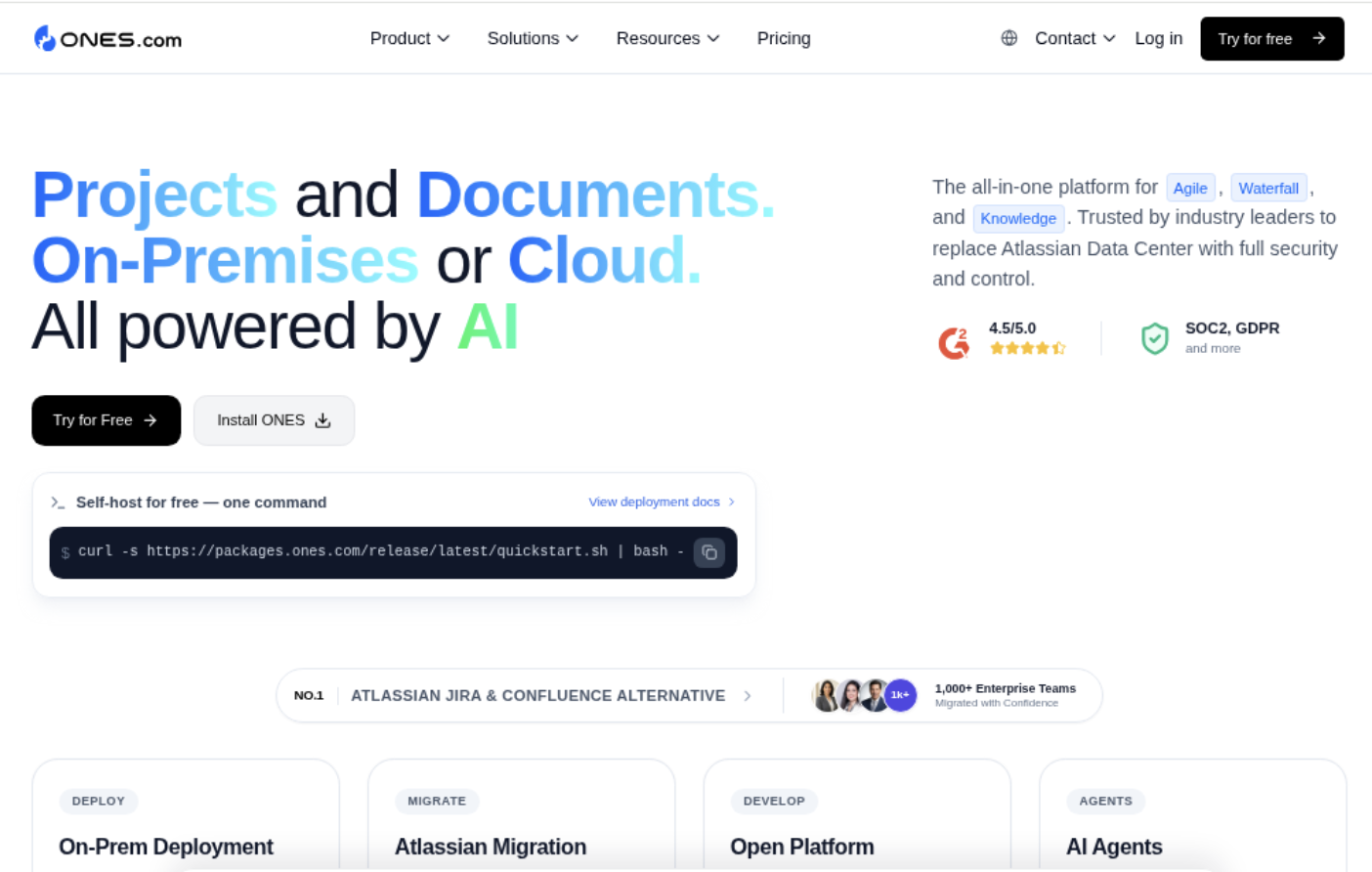
Value Proposition
ONES.com combines project management and knowledge management in one platform powered by ONES Assistant. ONES Project is a Jira alternative for teams that want structured delivery workflows, while ONES Wiki is a Confluence alternative for shared knowledge.
ONES Project and ONES Wiki are sold separately. The platform supports up to 30 seats on its Free plan and offers Cloud, On-Premise, Private Cloud, and Air-gapped deployments.
Core Capabilities
Plugin sprawl
Pain: Teams often add several extensions to cover reporting, custom workflows, and planning.
ONES capability: ONES Project includes built-in reporting, custom workflows and fields, sprint management, and automation.
Result: You can reduce dependence on plugins and keep more delivery work in one environment.
Migration from Jira
Pain: A team may hesitate to change platforms because its current process depends on familiar Jira-compatible workflows.
ONES capability: ONES Project supports Jira-compatible workflows and familiar project delivery patterns.
Result: Your team can evaluate a Jira alternative without redesigning every process from the beginning.
Restricted network requirements
Pain: Some organizations cannot place project information in a public cloud environment.
ONES capability: ONES.com offers On-Premise, Private Cloud, and Air-gapped deployment options.
Result: You can align the deployment with internal security and network restrictions.
Feature differences between hosted and self-hosted editions
Pain: Teams may accept a self-hosted product only to discover missing features.
ONES capability: ONES.com provides full feature parity between its Cloud and self-hosted versions.
Result: Deployment choice does not require sacrificing the core product experience.
Disconnected project and knowledge work
Pain: Requirements, decisions, and delivery tasks often live in separate systems.
ONES capability: ONES.com brings project management and knowledge management into one platform, with ONES Wiki available separately.
Result: Teams can connect planning with the context needed to complete work.
Complex approval processes
Pain: Generic task lists may not represent reviews, approvals, escalations, and handoffs clearly.
ONES capability: Custom workflows and fields let teams represent approval stages and ownership rules.
Result: Managers can see where work is waiting and who must act next.
Inconsistent reporting
Pain: Leaders may spend hours combining status updates from different teams.
ONES capability: Built-in reporting supports shared visibility across active projects.
Result: Teams can review progress using a more consistent reporting structure.
Different security environments
Pain: A single hosting model may not suit every department or project.
ONES capability: Four deployment choices support different operational requirements.
Result: You can select Cloud for convenience or controlled deployments for stricter environments.
Application Scenarios
Software delivery: A development organization can use sprint management, custom workflows, automation, and reporting. It can also connect delivery work with knowledge in ONES Wiki when that product is purchased separately.
Enterprise operations: A finance or operations team can create approval workflows for purchasing, hiring, or compliance requests. Custom fields can capture budget owners, due dates, and review status.
Restricted environments: A government contractor or regulated manufacturer can evaluate an On-Premise, Private Cloud, or Air-gapped deployment. The team can retain feature parity while meeting network requirements.
Common Challenges When Estimating Jira Costs
Challenge: You use the old Jira Core name
Problem: Legacy terminology can lead you toward outdated plan descriptions.
Solution: Ask for the current Jira product mapping and compare the active plan names, limits, and renewal terms.
Challenge: You count only active daily users
Problem: Occasional contributors may still require a licensed account.
Solution: Count everyone who needs access, then confirm Atlassian’s current rules for your plan.
Challenge: You ignore app costs
Problem: An essential reporting or testing app can change the total budget significantly.
Solution: List every required integration and price it for the same user tier as Jira.
Challenge: You compare Cloud with license cost alone
Problem: Self-hosted deployment shifts infrastructure and maintenance work to your team.
Solution: Include hosting, administration, backups, upgrades, monitoring, and security operations.
Challenge: Your user count grows after purchase
Problem: Hiring, acquisitions, or wider adoption can move you into a higher tier.
Solution: Create a 12-month user forecast and include a reasonable growth reserve.
FAQs About Jira Core Pricing
Is Jira Core still sold as a separate product?
Atlassian has moved its product naming toward Jira for general project and work management. Jira Core remains a common legacy term, especially in older contracts and search queries. If you are buying today, evaluate the current Jira plans rather than assuming a separate Core edition exists. If you are renewing, confirm how your legacy entitlement maps to the current offering.
How much does Jira cost in 2026?
There is no single price for every organization. Your total depends on the plan, number of users, billing cycle, currency, taxes, and deployment. Cloud typically offers Free, Standard, Premium, and Enterprise paths. Data Center follows a separate licensing model. Check the current Atlassian calculator or quote before approving a budget.
Does Jira have a free plan?
Jira offers a Free plan for small teams within Atlassian’s published limits. Free access can work for a pilot or a lightweight workflow. Check the current restrictions around users, storage, permissions, automation, support, and administration. A team that grows beyond those limits may need Standard or another paid plan.
Is Jira Cloud cheaper than Jira Data Center?
It depends on your operating model. Cloud usually has a straightforward recurring subscription and less infrastructure work. Data Center may offer more environmental control, but you must account for servers, backups, upgrades, monitoring, and specialists. Compare the full ownership cost across several years instead of comparing only the license line.
Do Jira Marketplace apps increase the total cost?
Yes, Marketplace apps can add recurring charges. Common examples include advanced reporting, time tracking, test management, planning, and automation. App pricing may use different user tiers from Jira, so review each app separately. Also consider administration and upgrade effort when an app becomes important to your workflow.
Can ONES.com replace Jira for project management?
ONES Project is positioned as a Jira alternative and supports Jira-compatible workflows, sprint management, custom workflows and fields, automation, and built-in reporting. ONES.com also offers Cloud, On-Premise, Private Cloud, and Air-gapped deployments. Evaluate workflow fit, migration effort, user access, integrations, and security requirements before choosing any platform.
Conclusion
Planning Jira costs for 2026 requires more than finding a monthly per-user number. Confirm whether you need current Jira or a legacy Jira Core renewal, then compare plan features, deployment, billing, apps, and operating work.
The practical path is simple: count real users, test the plan limits, model growth, price every required app, and verify the current quote before signing. If Jira’s structure does not fit your needs, compare alternatives such as ONES Project with the same workflow and security criteria.
The problem is uncertainty. The pressure comes from hidden costs and changing product names. The solution is a complete ownership estimate that matches your team’s actual work.