Atlassian Jira Explained: A Practical Guide for New Teams
How can new teams master Atlassian Jira? Learn its core concepts, workflows, and setup basics for smoother delivery. Click to discover.
New teams often adopt Atlassian Jira expecting a clear path from idea to delivery. Instead, they may encounter unfamiliar issue types, workflows, boards, permissions, and reports.
That confusion creates real friction. A poorly configured project can hide priorities, overload your backlog, and leave everyone wondering what should happen next.
But here's the truth: Jira becomes much easier when you understand its basic building blocks and set up only what your team needs.
This guide explains how Jira works, which concepts matter first, how to plan a practical setup, and where new teams commonly go wrong.
What Is Atlassian Jira?
Atlassian Jira is project and work management software that helps teams plan, track, prioritize, and report on work. Teams organize work through projects, issues, workflows, boards, backlogs, and reports.
Jira began with a strong focus on software development and issue tracking. Today, teams also use it for marketing campaigns, business operations, service requests, product planning, and cross-functional projects.
The Main Building Blocks
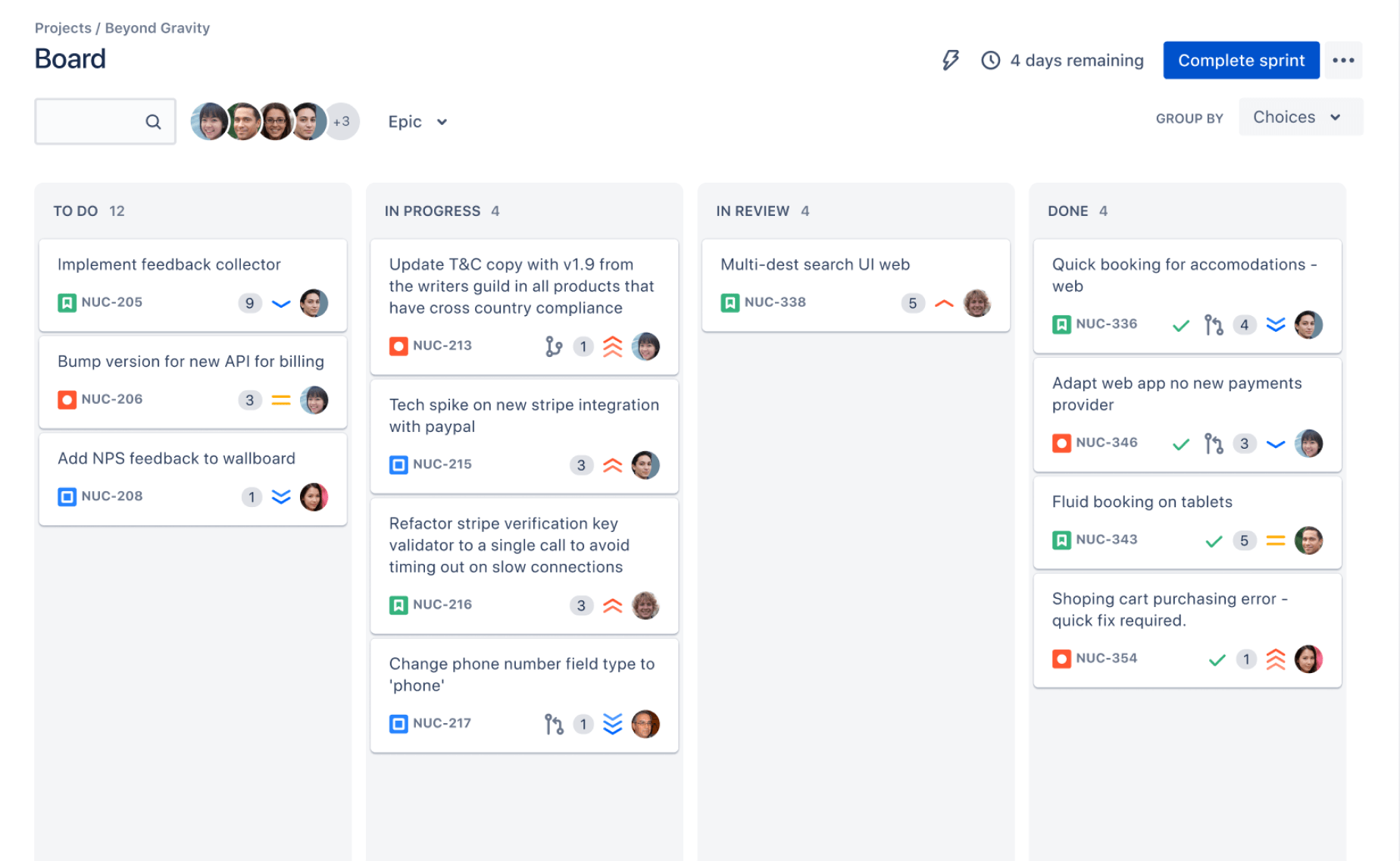
Jira makes more sense when you separate its main parts. Each part answers a different management question.
- Project: A shared workspace for a product, team, service, or initiative.
- Issue: A unit of work, such as a story, task, bug, or request.
- Workflow: The stages an issue moves through, such as To Do, In Progress, and Done.
- Board: A visual view of work arranged by status, assignee, sprint, or another field.
- Backlog: A prioritized queue of upcoming work.
- Sprint: A fixed period in which a team plans and completes selected work.
- Epic: A larger body of work that groups related stories or tasks.
- Report: A view that helps you understand progress, workload, cycle time, or delivery trends.
How an Issue Moves Through Jira
Imagine a product team receives a request for passwordless login. The product manager creates an issue, adds acceptance criteria, and places it in the backlog.
After prioritization, the team moves the issue into a sprint. A developer begins the work, a reviewer checks the result, and the team marks the issue complete after validation.
That simple journey is Jira’s central idea: every piece of work has a visible place, status, owner, and next action.
Jira Cloud is hosted by Atlassian. You access it through a browser, while Atlassian manages much of the underlying infrastructure and platform maintenance.
Jira Data Center supports organizations that need self-managed deployment, greater infrastructure control, or specific operating requirements. Your technical team manages the environment and administration.
The right choice depends on security policies, administration capacity, compliance needs, integrations, and how much operational control you require.
How Jira Works for a New Team
Start with a small, understandable workflow. A new team usually needs a backlog, a board, a few issue types, clear ownership, and a definition of completion.
- Define the team’s work: Decide whether you are managing product delivery, support requests, marketing activities, or another workstream.
- Choose a project style: Scrum suits planned sprints, while Kanban suits continuous delivery and changing priorities.
- Create useful issue types: Begin with practical types such as Story, Task, Bug, and Epic.
- Design the workflow: Use only the stages your team needs. For example: To Do, In Progress, In Review, and Done.
- Set priority rules: Agree on what makes work urgent, important, or suitable for later.
- Build the board: Show the workflow clearly and make blocked work easy to spot.
- Define completion: Explain what must happen before an issue can reach Done.
- Review the system: After two or three delivery cycles, remove fields, statuses, and rules that create friction.
Choose Scrum or Kanban
Scrum works well when your team plans work in short cycles. A two-week sprint may include selected stories, bug fixes, and technical tasks.
Kanban works well when work arrives continuously. A support engineering team may pull the next available request whenever capacity opens.
Here’s why: the method should reflect how work arrives. A team with unpredictable requests may struggle when every item must fit a rigid sprint commitment.
Keep the First Workflow Small
A workflow with twelve statuses may look precise, yet it can make reporting and training harder. Start with four or five meaningful stages.
For example, “In Review” should indicate a real handoff or decision. If nobody acts differently at that stage, the status probably adds little value.
The best part? You can improve the workflow later. A simple starting point gives you real experience before you make administration more complex.
Jira Projects, Issues, and Backlogs Explained
Jira’s structure lets you connect everyday work with larger goals. The challenge is choosing the right level of detail.
Projects Create the Working Boundary
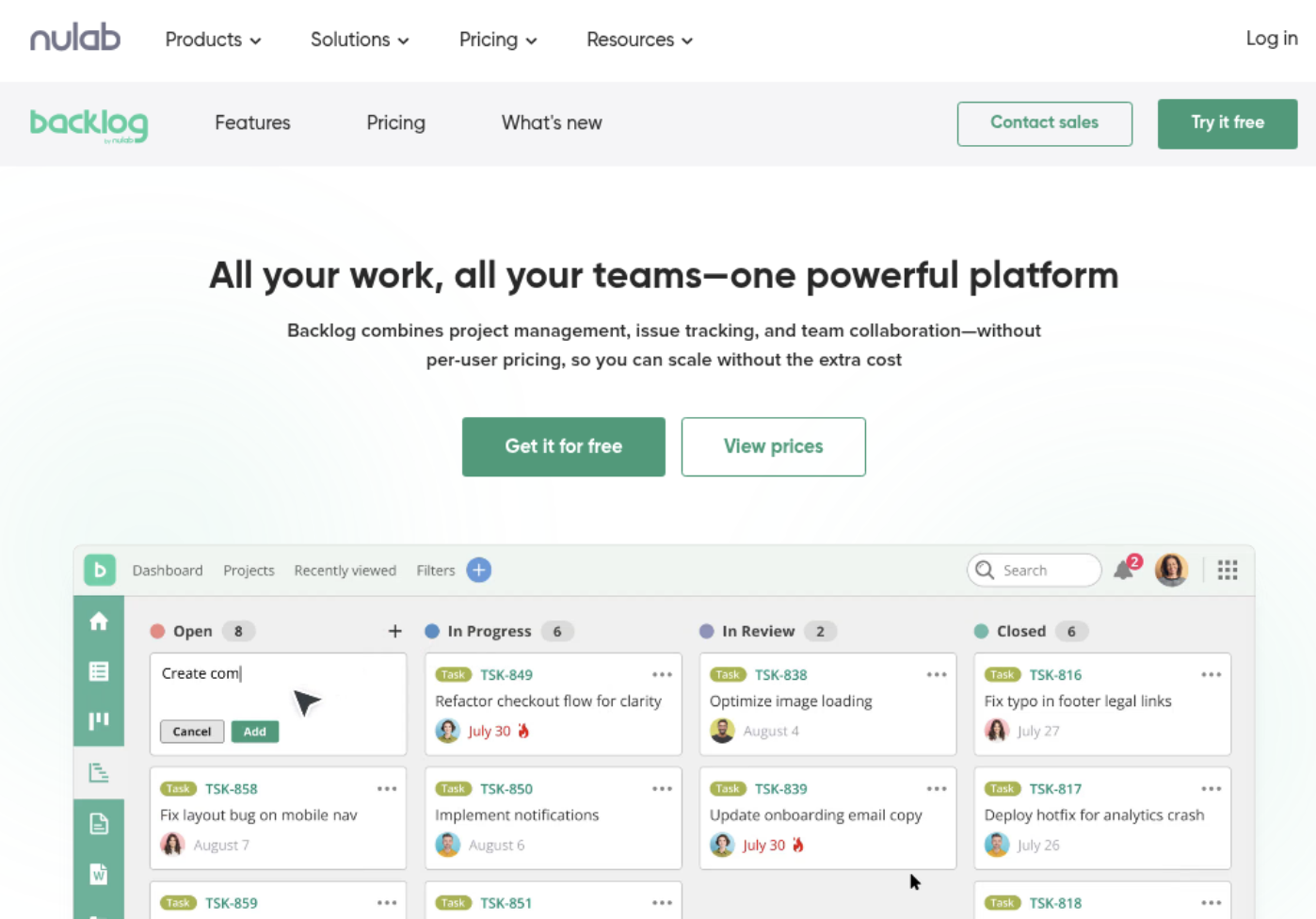
A project may represent a product, department, customer service function, or internal program. Its boundary affects permissions, boards, reports, and administration.
For example, a mobile banking team may use one project for the application. A larger organization may create separate projects for mobile, web, infrastructure, and customer operations.
Keep the boundary meaningful. Creating one project for every small initiative can scatter related work across too many places.
Issues Represent Actionable Work
An issue should describe work clearly enough for someone to understand its purpose, owner, and expected result.
A weak issue might say, “Improve checkout.” A stronger issue says, “Reduce checkout form fields from eight to five and confirm the change with the analytics team.”
Useful issue details often include:
- A concise summary.
- A short explanation of the required result.
- Acceptance criteria.
- An owner or responsible team.
- Priority.
- Due date, when a genuine deadline exists.
- Links to related work.
Epics Connect Strategy With Delivery
An epic groups related issues around a broader outcome. “Launch two-factor authentication” could contain research, design, development, testing, training, and release tasks.
Epics help you answer a larger question: how do individual tasks contribute to a meaningful result?
Use them carefully. If every small task becomes an epic, the hierarchy loses meaning and planning becomes harder.
Backlogs Need Active Prioritization
A backlog is valuable only when the order communicates what matters next. A long queue without regular review becomes a storage area for forgotten ideas.
Schedule a short refinement session each week. Remove obsolete requests, clarify vague work, split oversized issues, and move the most valuable items toward the top.
Jira Workflows, Boards, and Permissions
Jira’s workflow controls movement, the board displays movement, and permissions control who can view or change work. These three elements should support one another.
Workflows Should Reflect Decisions
Every status should represent a meaningful state. “Ready for Review” tells the team that someone needs to inspect the work.
Every transition should also have a clear reason. A transition from In Progress to Blocked might trigger an escalation or notify a delivery lead.
Let me explain: a status is useful when it changes behavior. If the team ignores it, remove it or redefine it.
Boards Make Bottlenecks Visible
A board gives you a quick view of work in motion. If six issues sit in review while only one person can approve them, the bottleneck becomes visible.
Set work-in-progress limits where queues frequently form. For example, limit In Review to four items so the team finishes existing work before starting more.
Permissions Protect Clarity
Give people enough access to complete their responsibilities. Excessive permission complexity can make routine changes slow and difficult to trace.
Separate project administration from everyday issue management. A team member may need to edit issues without changing workflows, roles, or global settings.
Review access when people change teams or responsibilities. Clear ownership helps prevent accidental changes and keeps sensitive work restricted.
Jira Reports and Metrics for Better Decisions
Reports should help you decide what to change. A chart that looks impressive has little value if nobody acts on it.
Useful Metrics for New Teams
| Metric |
What it helps you understand |
| Cycle time |
How long work takes after the team begins it. |
| Velocity |
How much planned work a Scrum team usually completes per sprint. |
| Work in progress |
How many issues are active at the same time. |
| Burndown |
Whether a sprint is progressing toward its planned completion. |
| Control chart trends |
How delivery time changes across completed work. |
For example, rising cycle time may indicate too much parallel work, unclear requirements, slow reviews, or frequent priority changes.
Use Metrics as Conversation Starters
A report cannot explain every cause by itself. Treat a sudden change as a prompt for investigation.
If velocity falls, ask whether the team handled more defects, refined work less thoroughly, or faced an approval delay. The number points toward a conversation.
You might be wondering: which metric should you track first? Start with cycle time and work in progress. They are practical for both Scrum and Kanban teams.
Common Jira Setup Mistakes
Many Jira problems begin with good intentions. Teams add detail to gain control, then discover that the system takes more effort than the work it tracks.
Adding Too Many Fields
Extra fields can make issue creation slow. Keep a field only when it supports prioritization, reporting, ownership, compliance, or a real team decision.
For instance, a mandatory “business value score” has little benefit if nobody reviews the score during planning.
Creating Statuses for Every Handoff
A team may create separate statuses for design review, engineering review, quality assurance, security review, and release preparation.
That model can work in a regulated environment. For a small team, it may create excessive administration and make the board difficult to read.
Starting Work Without Clear Completion Rules
When “Done” means different things to different people, work may appear complete while testing, review, or release preparation remains unfinished.
Write a short completion checklist. It might require peer review, automated checks, acceptance confirmation, and updated customer guidance.
Using the Backlog as a Permanent Parking Area
Old issues consume attention during every planning session. Archive or close requests that no longer matter, and revisit uncertain ideas through a regular review.
Atlassian Jira Solution: ONES.com
Value Proposition
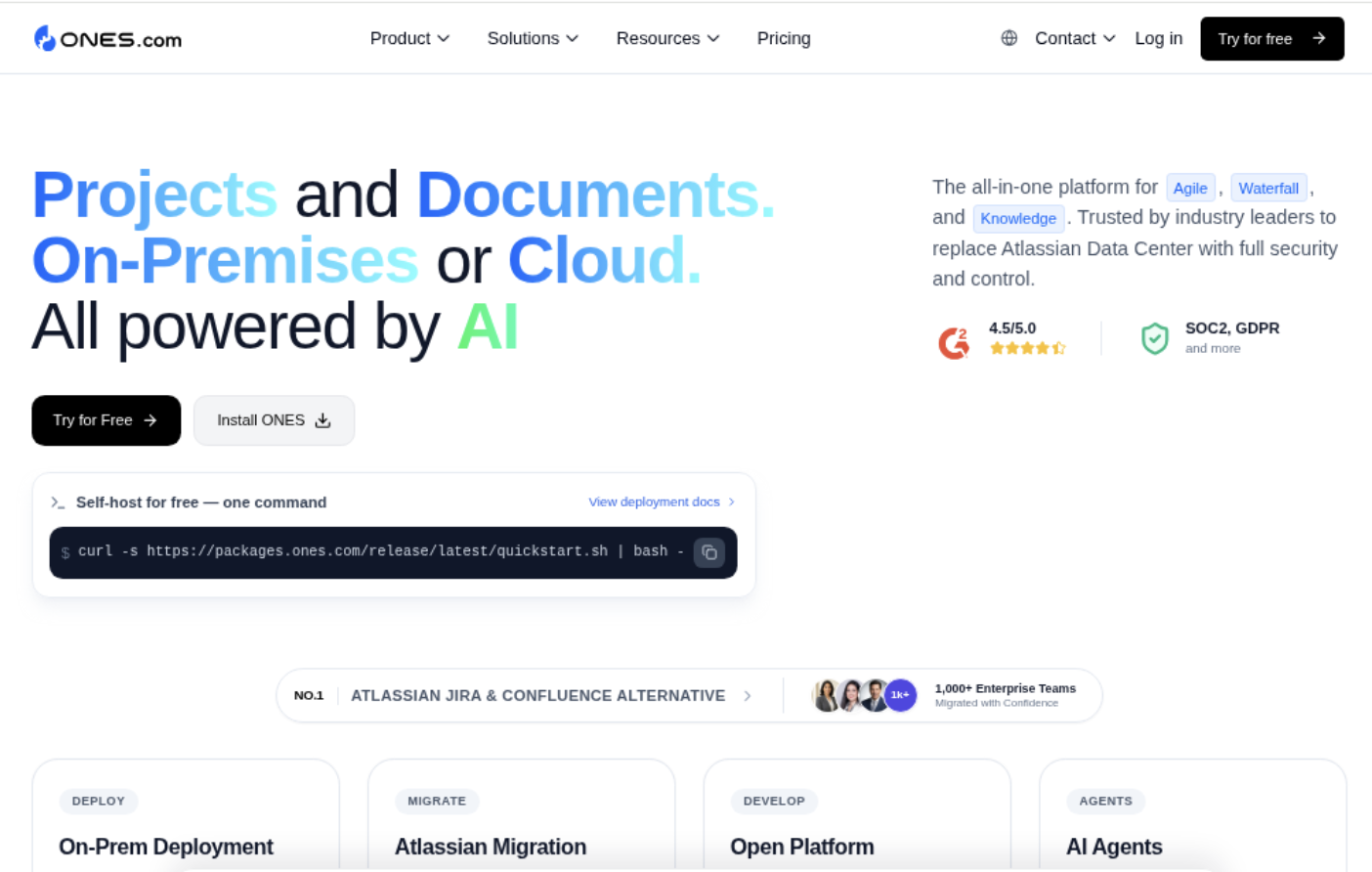
ONES.com is a unified platform for project management and knowledge management, powered by AI through ONES Assistant. ONES Project is the project management product and a Jira alternative, while ONES Wiki provides knowledge management as a Confluence alternative; they are sold separately.
For teams that want Jira-compatible workflows, native project capabilities, and deployment flexibility, ONES.com can reduce reliance on multiple plugins while supporting cloud and self-hosted environments.
Core Capabilities
- Growing administration effort → Jira-compatible workflows → You can model statuses, transitions, approvals, and team processes in a familiar project structure.
- Scattered delivery visibility → Built-in reporting → You can review progress, workload, sprint performance, and delivery patterns without assembling separate reporting tools.
- Rigid project structures → Custom workflows and fields → You can adapt issue details and process stages to product, engineering, operations, or service work.
- Unclear sprint commitments → Sprint management → You can plan sprint scope, monitor progress, and review completed work through a consistent cycle.
- Repeated manual actions → Automation → You can trigger routine updates, notifications, assignments, and transitions when defined conditions occur.
- Plugin-heavy environments → Native feature parity → You can cover common project management needs through built-in capabilities, reducing dependence on a large plugin collection.
- Deployment restrictions → Four deployment options → You can choose Cloud, On-Premise, Private Cloud, or Air-gapped deployment according to operational requirements.
- Migration concerns → Full feature parity between cloud and self-hosted versions → You can select a deployment model without giving up the main product experience.
- Early-stage adoption cost → Free plan for up to 30 seats → A smaller team can try the platform before planning a broader rollout.
Application Scenarios
Software delivery team: A development group can bring backlog planning, sprint management, custom workflows, and reporting into one project environment. The team can track a feature from planning through review and completion.
Restricted-network organization: A company with strict network controls can evaluate an air-gapped or on-premise deployment. The team retains project management capabilities while meeting its infrastructure requirements.
Cross-functional operations: Product, marketing, and operations teams can create tailored workflows for campaign launches, service requests, and internal initiatives. Each group can use relevant fields while maintaining shared visibility.
Common Challenges When Adopting Jira
Challenge: The Team Cannot Agree on Priorities
Solution: Define a small priority framework. For example, critical work affects customers or revenue immediately, high-priority work has a near-term impact, and normal work can enter regular planning.
Apply the framework during backlog review. A shared rule reduces debates driven only by personal preference.
Challenge: The Board Contains Too Much Work
Solution: Add a work-in-progress limit and ask the team to finish active items before starting new ones.
If ten issues remain In Progress for weeks, the problem may involve oversized work, unclear ownership, or blocked approvals. Investigate the queue instead of adding more tasks.
Challenge: People Update Jira Inconsistently
Solution: Explain when each status changes and who owns the next action. A short team agreement often works better than a long administration manual.
Review a few real issues during team meetings. Concrete examples show what good updates look like.
Challenge: Reports Create Anxiety
Solution: Use metrics to improve the system, rather than punish individuals. Cycle time can reveal workflow friction, while sprint results can support better planning.
Discuss patterns over several cycles. One unusual sprint rarely explains the team’s normal performance.
Challenge: Configuration Becomes Too Complex
Solution: Assign an owner for project configuration and review changes regularly. Remove unused fields, statuses, and automation rules.
A quarterly cleanup can prevent small adjustments from becoming a confusing administration layer.
FAQs About Atlassian Jira
Is Jira only for software development?
No. Jira works well for software teams, yet you can also use it for marketing operations, product planning, business requests, event coordination, and service workflows. The best setup depends on the work pattern. A marketing team might track campaign stages, while an operations team could manage recurring requests through a Kanban board.
What should a new team configure first?
Start with the project boundary, issue types, workflow, board, priority rules, and completion criteria. Avoid configuring every possible field or automation rule on day one. Create a small working system, use it for several cycles, and improve it after you see where work slows down or information remains unclear.
What is the difference between a Jira project and a Jira board?
A project is the broader workspace that stores and organizes work. A board is a visual view of selected issues from one or more projects. For example, a product project may contain all product issues, while separate boards show sprint work, bugs, or a specific delivery team’s queue.
Should every team use Scrum?
No. Scrum suits teams that plan work in fixed cycles and can protect a sprint commitment. Kanban may suit teams with continuous requests and changing priorities. Choose the approach that matches how work arrives and how decisions happen. You can also combine practices when your team needs a hybrid workflow.
How can a team keep Jira simple?
Use a small number of statuses, make essential fields clear, review the backlog regularly, and remove configuration that no longer supports a decision. Ask whether each field, report, or automation rule saves time or improves visibility. If it does neither, simplify the setup.
When should a team consider a Jira alternative?
Consider alternatives when your deployment needs, administration model, workflow requirements, reporting expectations, or total tool complexity no longer fit Jira comfortably. Compare workflow compatibility, self-hosted options, feature coverage, migration effort, support, and pricing. A practical trial with real team work will reveal more than a feature checklist alone.
Conclusion
Atlassian Jira helps you organize work through projects, issues, workflows, boards, backlogs, sprints, and reports. New teams get the best results when they start with a small workflow and improve it through regular review.
Remember the core lessons: define actionable issues, prioritize the backlog, make ownership visible, use meaningful statuses, and treat reports as prompts for improvement.
But here's the truth: a complicated Jira setup can create the same confusion it was meant to solve. If your team keeps adding fields and rules, pause and examine the underlying workflow.
The solution is practical rather than mysterious. Start with the work your team handles today, make the next action clear, and choose a platform that supports your deployment and process needs as the team grows.