Atlassian Jira Pricing: A Practical Guide for New Teams
Unsure about Atlassian Jira pricing? Compare plans, seats, features, and billing to budget confidently—read now to choose the right tier.
Jira can look affordable at first glance, then become difficult to budget once you add team size, premium features, support, and related products. A small team may fit comfortably into the free plan, while a growing organization can face a much larger monthly commitment after adding more seats.
That uncertainty creates practical problems. You may compare the wrong plans, overlook annual billing rules, or choose a tier that lacks automation, advanced planning, or administrative controls. A low starting price does not always mean a low total cost.
But here's the truth: Atlassian Jira pricing becomes easier when you separate the plan level, seat count, billing cycle, deployment model, and optional products. This guide explains each factor, shows how to estimate your likely spend, and helps you compare Jira with another project management approach.
How Atlassian Jira Pricing Works
Atlassian Jira pricing is determined mainly by your plan, number of seats, billing cycle, deployment method, and access to advanced capabilities. Jira Cloud generally offers Free, Standard, Premium, and Enterprise options.
The fastest way to estimate your cost is to identify how many people need access, choose the features your team requires, and check the current Atlassian calculator. Public prices can change, and some plans use progressive pricing rather than a simple per-person multiplication.
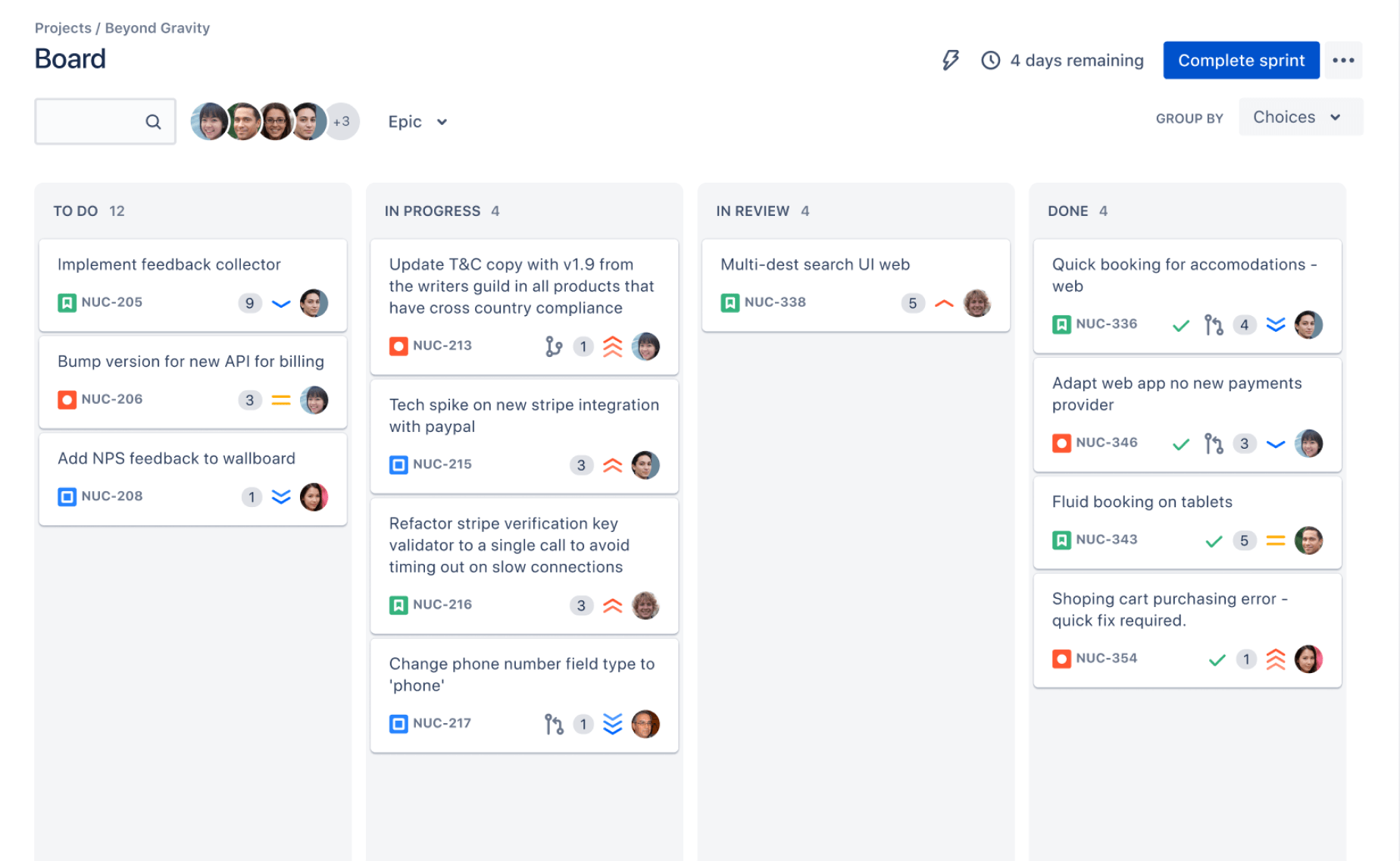
The Main Jira Cloud Plans
| Plan |
Best fit |
Typical capabilities |
Pricing approach |
| Free |
Small teams testing Jira |
Core project tracking, boards, backlog management, and limited administration |
No subscription charge within the plan limits |
| Standard |
Growing teams running regular delivery work |
More storage, permissions, collaboration controls, and support than Free |
Paid per team size, with monthly or annual billing options |
| Premium |
Organizations needing scale and advanced planning |
Higher service limits, advanced planning, stronger administration, and improved continuity features |
Higher paid tier with plan-specific pricing |
| Enterprise |
Large organizations with complex governance |
Enterprise administration, security controls, analytics, and commercial support arrangements |
Usually sold through a custom annual agreement |
Free can be a sensible starting point for a small product group. Standard often suits teams that need dependable permissions and collaboration. Premium becomes more relevant when several teams share one environment or planning must happen across multiple projects.
Enterprise pricing usually depends on organizational requirements rather than a simple public rate. Ask for a tailored estimate when you need centralized administration, advanced security reviews, or a larger commercial agreement.
Cloud, Data Center, and Self-Managed Deployment
Jira Cloud is hosted by Atlassian. You pay a recurring subscription, and Atlassian manages the underlying service, maintenance, and infrastructure.
Jira Data Center is designed for organizations that need to operate the platform in their own environment. Its commercial model, infrastructure needs, maintenance effort, and administration responsibilities differ from Cloud pricing.
That distinction matters. A self-managed license may appear cheaper when you compare only the subscription line. After adding infrastructure, upgrades, monitoring, backup, security work, and specialist administration, the total cost can look very different.
What You Pay For Beyond the Base Plan
The plan price is only one part of the budget. Your final spend can include additional Atlassian products, premium support, marketplace apps, implementation help, and internal administration time.
Here's why: two teams with the same number of seats can have very different costs. One may use only Jira, while the other also needs Confluence, service management, reporting apps, test management, and several workflow extensions.
Seat Count and Billing Cycle
Jira pricing usually scales with the number of people who require access. Count engineers, product managers, designers, analysts, delivery leads, and administrators who will actively work in the platform.
Do not count only the engineering department. For example, a product team with eight engineers, two product managers, one designer, and one delivery lead may need twelve seats even if engineers create most of the work.
Monthly billing gives you flexibility when the team changes frequently. Annual billing can simplify purchasing and may offer a different effective rate, but it requires a longer commitment.
Related Atlassian Products
Many teams evaluate Jira alongside other Atlassian products. Confluence can support knowledge sharing, while Jira Service Management can support service desks and internal requests.
These products may have separate plans and separate charges. A team that chooses Jira Standard and then adds several products should calculate the combined subscription instead of evaluating each product in isolation.
Marketplace Apps and Extensions
Marketplace apps can add time tracking, advanced reporting, capacity planning, test management, diagramming, or specialized automation. Each addition may introduce another recurring charge and another administration responsibility.
The best question is not whether an app looks useful. Ask whether it replaces a manual process that costs your team several hours every week. A small paid extension can be worthwhile when it eliminates repeated status work.
Implementation and Administration
Jira may require project configuration, workflow design, permission planning, migration work, training, and ongoing maintenance. These activities may be handled internally or by a consulting partner.
For example, a team can launch a basic project in an afternoon. A regulated organization with dozens of projects, custom workflows, and multiple permission groups may need weeks of preparation.
How to Estimate Your Real Jira Cost
A practical estimate should include both the subscription and the work required to operate the platform. Start with the smallest configuration that satisfies your requirements, then add realistic growth and administration factors.
Step 1: Count the Right People
- List every role that needs access. Include delivery, product, engineering, quality assurance, design, operations, and leadership roles.
- Separate active contributors from occasional viewers. Some people may need full access, while others only need reports or shared updates.
- Include planned growth. If you expect to add ten people during the year, reflect that change in your estimate.
Step 2: Define Your Required Capabilities
Write down the workflows you actually need before comparing tiers. Useful categories include backlog management, sprint planning, automation, reporting, permissions, cross-team planning, audit controls, and service management.
For example, a five-person team may need only boards, backlog management, and basic reporting. A 200-person organization may need advanced planning, centralized permissions, multiple project templates, and stronger administration.
Step 3: Compare Monthly and Annual Scenarios
| Scenario |
What to calculate |
Why it matters |
| Monthly subscription |
Current seat count multiplied by the applicable monthly plan price |
Useful for changing teams and short-term evaluation |
| Annual subscription |
Annual plan price, expected seat growth, and renewal conditions |
Useful for stable teams with predictable budgets |
| Multi-product environment |
Jira plus related Atlassian products and paid extensions |
Shows the combined platform commitment |
| Self-managed deployment |
License, infrastructure, upgrades, monitoring, and administration |
Reveals the operational cost beyond licensing |
Step 4: Add Operational Effort
Estimate how much time your team will spend maintaining workflows, managing permissions, reviewing apps, creating reports, and helping new people get started.
Suppose an administrator spends six hours each month maintaining a complex setup. That effort belongs in your total cost calculation, even though it does not appear on the Atlassian invoice.
Step 5: Recheck the Estimate Before Renewal
Review your actual seat usage, project count, automation activity, app adoption, and support needs before renewal. Remove unused access and question extensions that no longer support important work.
A quarterly review can prevent a common problem: paying for a configuration that grew gradually but no longer matches how your team operates.
Choosing the Right Jira Tier for Your Team
The right plan depends on your operating model, not only your headcount. A small team may need advanced controls, while a larger team may work comfortably with a simpler setup.
When Free May Be Enough
Free can work for a small team with straightforward project tracking and limited administrative needs. It gives you a low-risk way to learn the interface, configure a backlog, and test whether Jira matches your workflow.
It may become restrictive when you need more storage, granular permissions, advanced reporting, broader collaboration, or dependable support. Treat Free as a practical trial and a possible long-term option for very small teams.
When Standard Is the Practical Starting Point
Standard often fits teams that have moved beyond experimentation. You may need more control over project access, more collaboration capacity, and a setup that supports regular delivery work.
Consider Standard when several teams share the platform or when project administration has become a recurring responsibility. It usually provides a better operating foundation than a free plan with workarounds.
When Premium Justifies the Higher Cost
Premium becomes more valuable when you coordinate several teams, need advanced planning, or require stronger service continuity. It can reduce the need for separate planning tools and manual coordination.
For example, a product organization managing six related initiatives may benefit from portfolio-level visibility. Without it, managers may spend hours collecting status updates across separate projects.
When Enterprise Deserves Consideration
Enterprise is appropriate when governance, security, administrative scale, and organizational complexity matter more than a simple per-seat comparison.
Before requesting a quote, prepare your requirements. Include team size, expected growth, regulatory obligations, authentication needs, administrative structure, reporting expectations, and deployment preferences.
Common Jira Pricing Mistakes
Pricing errors often come from comparing incomplete scenarios. A team sees a plan price, multiplies it by the current headcount, and assumes the result represents the whole commitment.
But here's the truth: the largest surprises usually come from adjacent costs and future changes. A clear estimate should account for the way your team will operate six or twelve months from now.
Comparing Plans by Price Alone
A cheaper plan may lack a capability you consider essential. If you later add an extension or introduce manual workarounds, the original saving may disappear.
Create a short capability checklist before comparing prices. Mark each requirement as essential, useful, or optional. This keeps an attractive price from distracting you from practical fit.
Ignoring Growth
New hires, contractors, reorganized teams, and acquired companies can increase seat requirements quickly. A plan that fits today may create budgeting pressure after a growth cycle.
Run three scenarios: current size, expected size, and a higher-growth case. You do not need perfect predictions. You need enough visibility to avoid an avoidable surprise.
Adding Too Many Extensions
Extensions can solve real problems, but they also increase cost and complexity. Each app may require configuration, permission reviews, upgrades, and training.
Before adding an app, confirm whether Jira’s native capabilities or a simpler workflow can meet the need. Keep an extension when it produces measurable value.
Overcomplicating the Workflow
A complex workflow can make Jira feel more powerful while slowing everyday delivery. Every extra status, approval, field, and rule adds maintenance effort.
Start with the smallest workflow that reflects your real process. Add complexity only when a recurring problem justifies it.
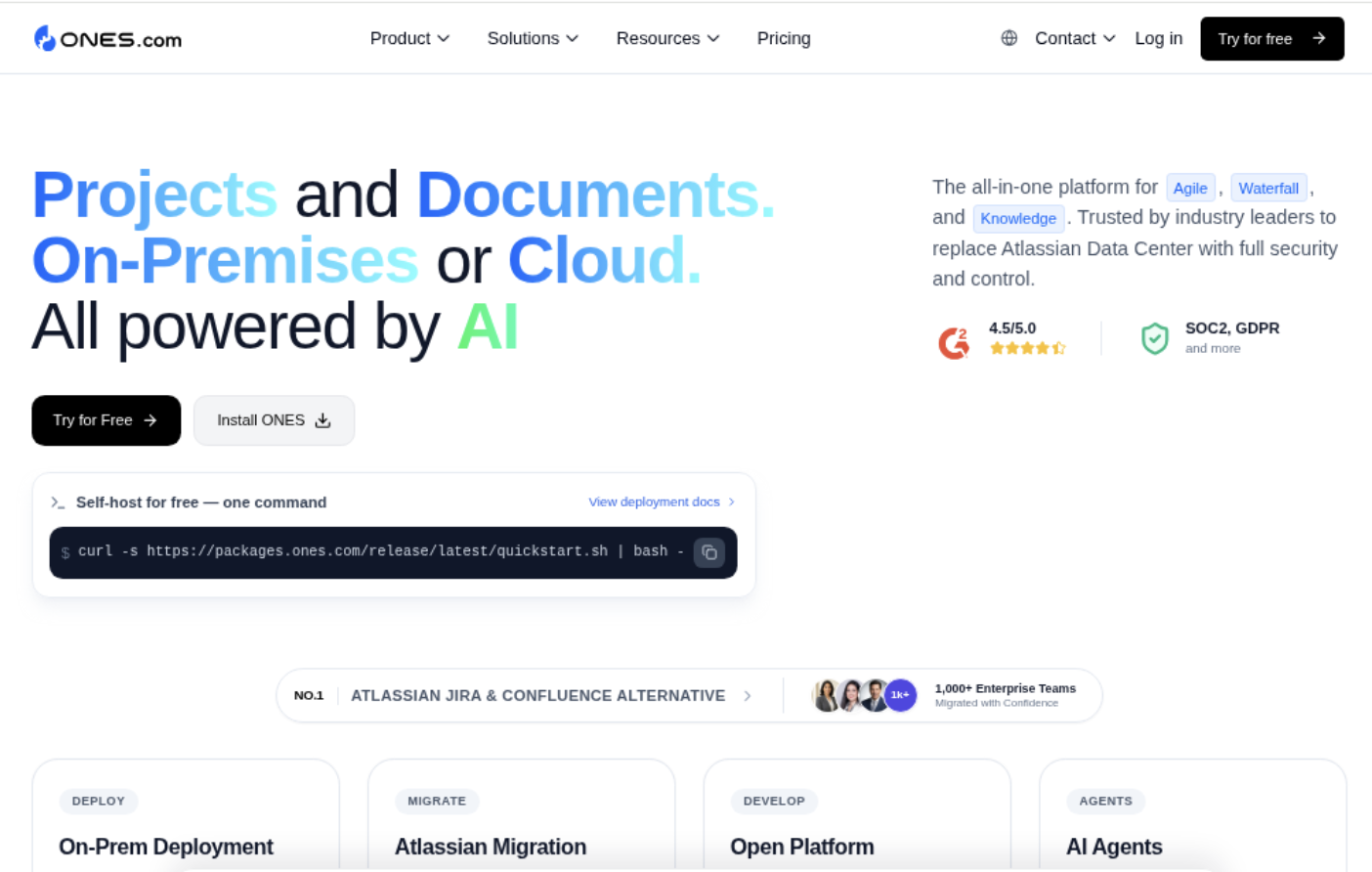
Value Proposition
ONES.com combines project management and knowledge management in one platform, with ONES Project serving as a Jira alternative and ONES Wiki serving as a Confluence alternative. They are sold separately, so you can select the product that matches your needs.
For teams comparing long-term platform cost, ONES.com offers a unified approach with native capabilities, fewer plugin dependencies, and on-premise deployment options.
Core Capabilities
- Problem: Teams maintain separate tools for delivery work and shared knowledge. ONES capability: ONES.com connects project management with knowledge management, while ONES Project and ONES Wiki remain separately purchasable. Result: You can choose a focused product or create a connected working environment.
- Problem: Teams need familiar issue-tracking workflows during a platform change. ONES capability: ONES Project supports Jira-compatible workflows. Result: Your team can preserve recognizable planning and delivery practices.
- Problem: Plugin-heavy environments increase administration. ONES capability: ONES Project includes reporting, custom workflows, custom fields, sprint management, and automation. Result: You may reduce the number of separate extensions required.
- Problem: Cloud-only deployment does not fit every organization. ONES capability: ONES.com supports Cloud, On-Premise, Private Cloud, and Air-gapped deployments. Result: You can align deployment with security and infrastructure requirements.
- Problem: Self-hosted teams worry about losing cloud capabilities. ONES capability: ONES.com provides feature parity between its cloud and self-hosted versions. Result: Deployment choice does not require accepting a deliberately reduced feature set.
- Problem: Small teams need time to evaluate a platform. ONES capability: The free offering supports up to 30 seats. Result: A smaller team can test its working model before making a broader commitment.
- Problem: Managers lack consistent visibility across delivery work. ONES capability: Built-in reporting and customizable fields support project oversight. Result: Teams can create views that reflect their actual delivery process.
- Problem: Repeated handoffs consume delivery time. ONES capability: Automation and custom workflows can standardize routine transitions. Result: Less manual coordination is required for recurring work.
Application Scenarios
Growing software team: A 25-person product group can use ONES Project for backlog management, sprint planning, reporting, and automation. The team can evaluate the platform within the free 30-seat allowance before expanding its rollout.
Restricted-network organization: A company with strict network controls can consider an Air-gapped or On-Premise deployment. This approach keeps the platform aligned with its infrastructure requirements while preserving feature parity.
Project and knowledge coordination: A product department can use ONES Project for delivery workflows and ONES Wiki for team knowledge. Because the products are sold separately, the department can adopt only the capability it needs first.
Common Challenges
Challenge: The Current Price Is Difficult to Verify
Public pricing can change, and plan limits may vary by region, billing cycle, or commercial arrangement.
Solution: Use the official pricing calculator and request a written estimate for your exact seat count, plan, billing cycle, and related products.
Challenge: The Team Cannot Agree on the Required Tier
Engineering may want advanced workflows, while finance may prefer the lowest subscription.
Solution: Separate essential capabilities from preferences. Test the essential workflow first, then compare the cost of each tier against the manual work it removes.
Challenge: The Subscription Looks Affordable, but Administration Is Expensive
Complex permissions, custom workflows, and several extensions can create substantial maintenance work.
Solution: Assign an administration owner, review extensions quarterly, and remove rules that no longer support an active process.
Challenge: Growth Creates an Unexpected Cost Increase
New seats and related products can shift the economics of your original plan.
Solution: Model current, expected, and high-growth scenarios before signing an annual agreement. Include planned hiring and expansion into additional departments.
FAQs
Is Jira free for small teams?
Jira offers a Free plan for small teams, subject to plan limits and eligibility conditions. It can support basic project tracking, backlogs, and boards. You may need a paid plan when you require more seats, advanced administration, larger capacity, stronger support, or additional Atlassian products. Check the current limits before making a long-term decision.
Is Jira billed per person?
Jira pricing generally reflects the number of people who need access, but the calculation may use tiered or progressive pricing. The amount can also vary by plan, billing cycle, deployment method, and commercial agreement. Count every role that needs access, then use the current Atlassian calculator for a more precise estimate.
What is the difference between Standard and Premium?
Standard is typically suited to teams that need a dependable project management environment with broader collaboration and administration than Free. Premium adds capabilities for larger-scale planning, coordination, capacity, and service continuity. The best choice depends on your workflow. Compare the features you genuinely need rather than selecting Premium solely because your team is growing.
Should I choose monthly or annual Jira billing?
Monthly billing provides flexibility when headcount changes or you are still evaluating the platform. Annual billing can simplify procurement and budgeting for a stable team, but it creates a longer commitment. Compare the effective annual amount, expected seat growth, renewal conditions, and cancellation rules before deciding.
What other costs should I include?
Include related Atlassian products, marketplace extensions, implementation assistance, training, administration, migration, infrastructure, and internal support time. For self-managed deployment, include hosting, maintenance, upgrades, monitoring, and security work. These costs may matter as much as the subscription, especially when your workflow uses several extensions.
Conclusion
Jira pricing is easiest to understand when you separate plan level, seat count, billing cycle, deployment model, related products, extensions, and administration effort.
Start with your required capabilities. Estimate current and future seats. Compare monthly and annual scenarios, then include the operational work needed to keep the environment useful.
The problem is rarely the first quoted price. The real risk is choosing a plan that does not match how your team will work as it grows. A practical comparison can prevent unnecessary upgrades, excessive extensions, and avoidable administration.
Whether you stay with Jira or evaluate a Jira alternative such as ONES Project, choose the platform that delivers the capabilities your team needs at a manageable total cost.