Atlassian Jira Pricing: A Practical Guide for Teams
Comparing atlassian jira pricing? Learn how plans, billing, user limits, and add-ons affect costs. Read now to choose the right plan.
Jira pricing can feel simple until you compare user limits, product tiers, billing terms, and premium features. A small team may fit comfortably within the free plan, while a growing team can quickly face higher costs for advanced planning, automation, support, or security controls.
The confusion grows when plan names change, prices vary by billing cycle, and marketplace apps add separate charges. You may also compare monthly pricing with annual commitments without knowing which option fits your hiring plans.
Here’s the practical way to evaluate it: start with your team size, identify the features you actually need, estimate add-on costs, and calculate the price per active user. This guide explains the Jira pricing structure in plain English, shows where expenses usually increase, and helps you compare Jira with an alternative such as ONES.com.
Atlassian Jira Pricing: The Core Structure
Atlassian Jira pricing is the cost of using Jira across its available plans, user ranges, billing terms, hosting options, and optional marketplace apps.
Jira commonly offers Free, Standard, Premium, and Enterprise choices. The exact amount can change by region, billing cycle, user count, promotions, and product configuration, so you should confirm the current quote before purchasing.
Here’s the quick answer: Jira Free suits small teams testing core project tracking, Standard adds broader collaboration and administration, Premium supports advanced planning and scale, and Enterprise targets organizations with complex governance needs.
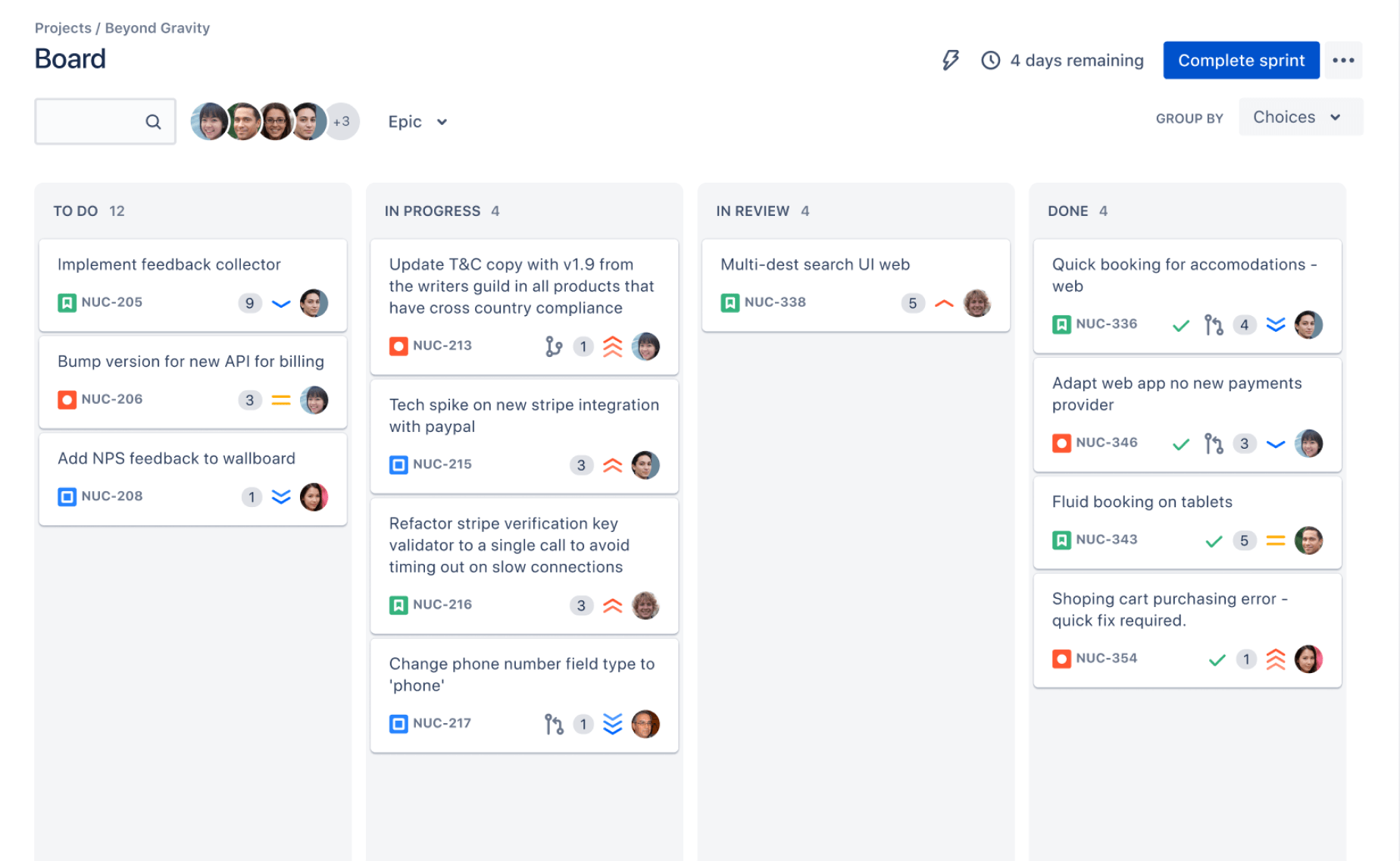
Jira plan overview
| Plan |
Best fit |
Typical value |
Cost factors to review |
| Free |
Small teams and early evaluation |
Core issue tracking, project work, and basic collaboration |
User limits, feature caps, storage, and support boundaries |
| Standard |
Growing teams running regular delivery work |
More capacity, administration, and collaboration controls |
Per-user pricing, billing term, and app requirements |
| Premium |
Organizations needing advanced planning and scale |
Higher limits, advanced planning, and stronger operational controls |
Premium uplift, automation usage, and connected products |
| Enterprise |
Large organizations with centralized governance |
Enterprise administration, security, and commercial flexibility |
Custom quote, deployment scope, contract terms, and support |
Free plan
The Free plan can work for a small team that needs a simple place to manage tasks, bugs, requests, or sprint work.
For example, a five-person product team could create projects, assign issues, set priorities, and review progress without purchasing a paid tier.
The key limitation is capacity. User limits, automation allowances, storage, permissions, and support options may become restrictive as your team grows.
Standard plan
Standard is usually the starting point for teams that need Jira for ongoing business operations.
You may choose it when several departments share projects, administrators need more control, or the free limits interfere with everyday delivery work.
Before upgrading, check whether each team member needs a paid seat. Your bill may include people who rarely access Jira if your account structure counts them as licensed users.
Premium plan
Premium is designed for teams that need more advanced planning, higher capacity, and stronger support for complex delivery environments.
A portfolio team, for example, may value advanced planning across multiple projects more than a small software squad would.
Premium can deliver meaningful value when its additional capabilities replace manual coordination. If your team only needs boards, issues, and basic reporting, the upgrade may offer limited financial benefit.
Enterprise plan
Enterprise pricing usually requires a custom conversation because the cost depends on organizational scale, security requirements, administration, support, and commercial terms.
Large companies may need centralized controls across many teams, business units, or regions. They should also evaluate identity management, audit needs, governance, and procurement requirements.
Enterprise pricing works best when you assess the whole operating model instead of comparing only the per-user number.
What Actually Changes Your Jira Bill?
Your plan tier is only one part of the calculation. The final amount often depends on four variables: licensed users, billing frequency, connected products, and optional apps.
Here’s why: a team may choose a low-cost Jira plan and still spend considerably more after adding test management, time tracking, reporting, or collaboration tools.
Licensed users versus active users
Many software plans charge according to the number of users who can access the service, rather than the number of people actively working each day.
Imagine a 40-person engineering group. If only 28 people regularly update issues, you still need to understand how Jira counts the remaining accounts.
Review inactive accounts every month. Removing former employees and occasional collaborators can prevent avoidable charges.
Monthly and annual billing
Monthly billing gives you flexibility when hiring plans are uncertain. Annual billing may offer a lower effective rate or more predictable budgeting, depending on the current commercial terms.
Use monthly billing when your team is changing quickly. Consider annual billing when headcount and product requirements are stable.
For a fair comparison, convert both options into an effective monthly cost and include expected user growth.
Marketplace apps
Jira’s ecosystem includes apps for testing, roadmaps, time tracking, dashboards, service management, and specialized workflows.
Each app can introduce separate pricing, user-count rules, renewal terms, and support arrangements.
A team that adds three apps at modest monthly rates may create a substantial annual expense. Build an app inventory before approving a Jira upgrade.
Connected Atlassian products
Jira may be only one part of your collaboration environment. Teams often connect it with Confluence, Jira Service Management, or other Atlassian products.
These products can solve real workflow problems, though each may add users, administration, and recurring costs.
Compare the total environment cost rather than evaluating Jira in isolation.
How to Calculate the Real Cost for Your Team
The fastest way to estimate your budget is to separate predictable subscription charges from variable operating costs.
- Count expected users. Include employees, contractors, administrators, and occasional contributors who require access.
- Choose the lowest suitable tier. Start with required capabilities instead of premium features that sound useful.
- Compare billing cycles. Calculate monthly and annual totals using the same user count.
- List connected products. Add collaboration, service management, testing, or planning products that your workflow requires.
- List marketplace apps. Record each app’s user rules, renewal date, and pricing method.
- Add administration time. Include account reviews, workflow maintenance, permissions, training, and reporting work.
- Model growth. Estimate costs at your current size, six months ahead, and your likely team maximum.
A simple pricing formula
You can use this formula for an initial estimate:
Total monthly cost = Jira subscription + connected products + marketplace apps + implementation and administration costs.
Suppose your team has 25 licensed users, two connected products, and three paid apps. The Jira subscription may look affordable alone, while the combined environment creates a much larger budget requirement.
For procurement, calculate three scenarios:
- Lean: current users and essential features only.
- Expected: projected users and normal app usage.
- Maximum: planned growth, advanced features, and additional departments.
Example budget comparison
| Cost area |
Lean scenario |
Expected scenario |
Maximum scenario |
| Licensed users |
Current core team |
Current team plus planned hires |
All expected contributors |
| Jira tier |
Lowest suitable plan |
Plan with required capacity |
Plan with advanced controls |
| Apps |
Essential apps only |
Current app portfolio |
Specialized apps for more teams |
| Administration |
Light internal ownership |
Regular maintenance |
Central governance and support |
This approach gives you a more realistic range than multiplying a displayed per-user price by your current headcount.
Which Jira Plan Should You Choose?
The right choice depends on workflow complexity, team size, compliance requirements, and the cost of manual work.
The best part? You can often identify the suitable tier by examining your most important work rather than reviewing every feature.
Choose Free when
- Your team is small and needs basic issue tracking.
- You are testing Jira with a limited group.
- Basic boards, assignments, priorities, and status tracking cover your needs.
- You can accept lower limits for automation, storage, or administration.
Choose Standard when
- Multiple teams need reliable project access.
- You require stronger administration and collaboration controls.
- Your free-plan limits affect everyday work.
- You want a practical production environment without advanced planning needs.
Choose Premium when
- You coordinate multiple projects or delivery streams.
- Advanced planning saves significant coordination time.
- Higher limits and stronger operational capabilities matter.
- Your organization can measure the value of premium capabilities.
Consider Enterprise when
- Many teams need centralized governance.
- Security, identity, audit, and administration require organization-wide controls.
- You need custom commercial terms or enterprise support.
- Your purchasing process requires a negotiated agreement.
Jira Pricing Compared With an Alternative: ONES.com
ONES.com is a unified project management and knowledge management platform powered by ONES Assistant. ONES Project is its project management product and a Jira alternative, while ONES Wiki is its knowledge management product and a Confluence alternative. They are sold separately.
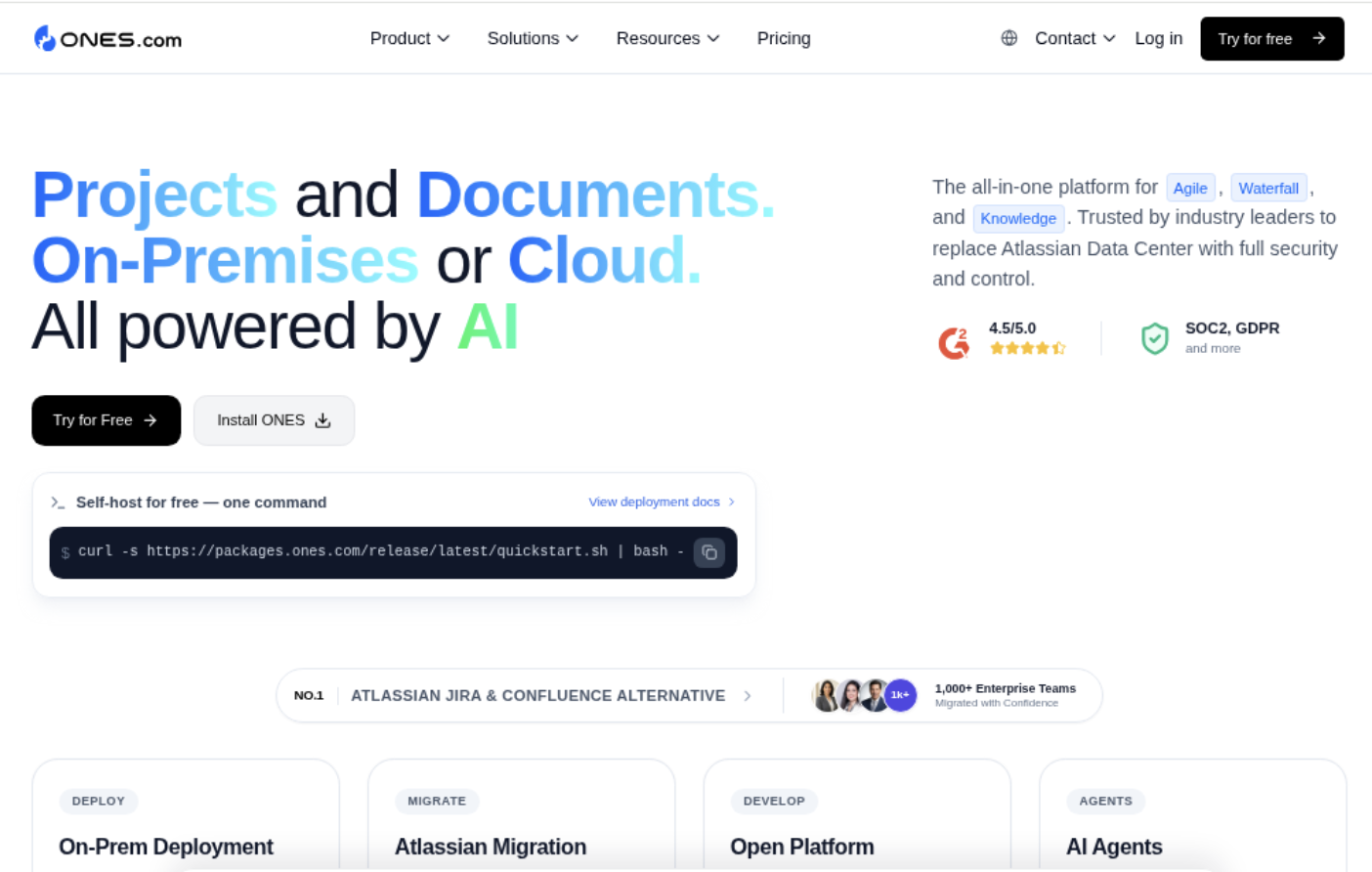
For teams comparing total platform cost, ONES.com can be relevant when native project and knowledge workflows, self-hosting, and fewer plugins matter more than assembling several connected products.
Core capabilities
- Rising costs from multiple subscriptions: ONES.com combines project and knowledge capabilities in one platform, which can reduce the need to coordinate separate systems. The result is a clearer platform-level budget.
- Jira migration concerns: ONES Project supports Jira-compatible workflows, helping teams preserve familiar issue, sprint, and delivery patterns. The result is less disruption during evaluation or migration.
- Plugin dependence: Built-in reporting, custom workflows, custom fields, sprint management, and automation reduce reliance on separate extensions. The result is fewer moving parts to maintain.
- Self-hosting requirements: ONES.com supports Cloud, On-Premise, Private Cloud, and Air-gapped deployments. The result is more flexibility for teams with restricted networks or internal hosting policies.
- Feature differences between hosting models: ONES.com maintains full feature parity between its cloud and self-hosted versions. The result is a more consistent evaluation across deployment choices.
- Small-team budget pressure: The free plan supports up to 30 seats. The result is a practical way for a small team to test core workflows before committing.
- Scattered project knowledge: ONES Wiki provides a connected knowledge management option alongside ONES Project. The result is easier access to project context, decisions, and team guidance.
- AI-supported work: ONES Assistant adds AI capabilities within the platform. The result is an option for teams exploring AI-assisted project and knowledge workflows.
Application scenarios
Scenario one: a software team leaving a plugin-heavy setup. A 20-person engineering group needs sprints, custom fields, reports, and automation. ONES Project gives the team a Jira alternative with these capabilities built in, reducing the number of extensions it must evaluate and maintain.
Scenario two: a regulated organization with restricted connectivity. A company cannot place project information in a public cloud environment. An air-gapped or on-premise ONES.com deployment can support its operational requirements while preserving the same feature set available in the cloud version.
Scenario three: project work and team knowledge need closer alignment. A product organization wants plans, delivery activity, and internal guidance to remain connected. It can evaluate ONES Project and ONES Wiki separately according to its needs, rather than treating every capability as part of one mandatory purchase.
Common Challenges With Jira Cost Planning
Challenge: the displayed price does not match the final budget
Why it happens: Teams focus on the Jira subscription and overlook apps, connected products, administration, and user growth.
Practical solution: Build a complete cost list with separate lines for licenses, extensions, integrations, training, and maintenance.
Challenge: inactive accounts keep increasing the bill
Why it happens: Former employees, contractors, and occasional collaborators may retain access.
Practical solution: Schedule a monthly access review. Remove unused accounts and create a clear process for adding temporary contributors.
Challenge: a premium upgrade solves the wrong problem
Why it happens: Teams sometimes upgrade for one attractive feature without measuring how often they will use it.
Practical solution: Identify the specific workflow delay the upgrade should remove. Estimate the hours saved each month and compare that value with the plan increase.
Challenge: annual billing creates commitment risk
Why it happens: A lower effective rate can seem appealing when headcount may change significantly.
Practical solution: Compare the expected annual saving with the cost of unused seats. Choose the billing term that matches your hiring certainty.
Challenge: add-ons become difficult to govern
Why it happens: Individual teams may purchase apps independently, creating duplicated functions and inconsistent renewal dates.
Practical solution: Maintain a central app register with owners, purpose, user count, renewal date, and replacement options.
Practical Ways to Control Jira Spending
Cost control starts before renewal. Set a quarterly review that covers users, plans, apps, automation consumption, and upcoming organizational changes.
You might be wondering: should you remove every optional app? Start with usage instead. If an app saves a team ten hours each week, its cost may be justified. If nobody uses it, remove it.
Use a feature-to-cost review
Create a short list of capabilities your team needs, such as sprint planning, custom workflows, advanced reporting, or compliance controls.
Then map each capability to its plan or app requirement. This exposes situations where a small requirement forces a broad and expensive upgrade.
Separate must-have and convenience features
A must-have feature prevents delivery, compliance, or customer service failure. A convenience feature improves comfort or visibility.
For example, permission controls may be essential for a regulated team. A specialized dashboard may be useful, though a built-in report could meet the same need.
Review alternatives periodically
Pricing, product direction, and internal requirements change. A yearly comparison can reveal whether your current setup still offers a reasonable balance of cost and capability.
Compare migration effort as well as subscription price. A cheaper platform may create transition work, training requirements, or integration changes.
FAQs About Jira Pricing
Is Jira free for small teams?
Jira may offer a Free plan for small teams, though eligibility, user limits, feature limits, and included capacity can change. It usually suits teams testing basic issue tracking and collaboration. Before relying on it for daily operations, check the current limits for users, automation, storage, support, and administration. A free plan can be useful at the beginning, then become restrictive as more teams join.
Does Jira charge per user?
Jira pricing generally uses a user-based model, though the exact calculation depends on the plan, billing term, product, and commercial arrangement. The account may count people with access rather than only people who actively update issues. Review licensed users regularly, especially after employee changes or project completion. Also check whether connected Atlassian products and marketplace apps use separate user counts.
Is Jira Premium worth the additional cost?
Premium can be worthwhile when advanced planning, higher capacity, or operational controls remove significant manual effort. It may suit organizations coordinating many projects or teams. A small team with straightforward boards may gain little from the upgrade. Estimate how often you will use each premium capability, calculate the time it saves, and compare that value with the additional subscription cost.
What often increases a Jira subscription bill?
Common cost drivers include additional licensed users, a higher plan tier, annual user growth, connected Atlassian products, marketplace apps, and specialized support requirements. Administration can also create indirect costs when workflows, permissions, reports, and integrations require ongoing maintenance. Review both direct charges and staff time. This gives you a more realistic view of the platform’s total ownership cost.
How does ONES.com compare with Jira?
ONES Project is a Jira alternative with Jira-compatible workflows, built-in reporting, custom workflows and fields, sprint management, and automation. ONES.com also supports cloud and self-hosted deployment models, including on-premise, private cloud, and air-gapped environments. Its cloud and self-hosted versions have full feature parity. Teams should compare workflow fit, migration effort, deployment needs, user limits, support, and the number of plugins required.
Conclusion
Jira pricing becomes easier to understand when you evaluate the complete environment instead of one advertised plan number.
- Start with the lowest tier that supports your required work.
- Count licensed users carefully and remove inactive access.
- Include apps, connected products, administration, and growth.
- Compare monthly flexibility with annual commitment.
- Measure premium features against the time and risk they remove.
- Review alternatives when plugin costs, deployment needs, or platform complexity increase.
But here’s the truth: a low subscription price can still produce a high operating cost when your team depends on many extensions and manual processes.
Build three budget scenarios, review them regularly, and compare Jira with platforms such as ONES.com when you need native capabilities, deployment flexibility, or a Jira alternative with fewer plugins.