Atlassian Jira Pricing Calculator: 2026 Cost Planning Guide
Need a clearer Jira budget? Use the atlassian jira pricing calculator to forecast users, tiers, apps, taxes, and growth. Click to plan smarter.
Jira pricing can look simple until you add users, billing frequency, product tiers, apps, storage, and taxes. A quick estimate may seem accurate while missing the costs that shape your annual budget.
That creates a familiar problem: your team approves a plan, then discovers that marketplace apps, service management seats, or yearly growth push the bill higher. Finance wants a reliable forecast, while administrators need room for changing headcount.
Here’s the practical solution: use an Atlassian Jira pricing calculator as a planning model, then test several realistic scenarios before choosing a subscription. This guide shows you how to estimate the full cost, compare billing options, and avoid common budgeting mistakes.
How to Use an Atlassian Jira Pricing Calculator for 2026 Planning
The fastest method is to calculate your Jira subscription in layers: core Jira seats, optional products, marketplace apps, billing adjustments, and expected growth.
- Define your Jira products. Decide whether you need Jira Software, Jira Service Management, or additional Atlassian products. Each product can use different seat counts and pricing rules.
- Count paid users by product. Separate developers, project managers, agents, customers, and occasional contributors. A person may require a paid seat in one product but a different access level elsewhere.
- Choose the plan tier. Compare Free, Standard, Premium, and Enterprise options where available. Review features such as automation limits, advanced administration, security controls, analytics, and support.
- Select monthly or annual billing. Monthly billing usually gives you more flexibility as headcount changes. Annual billing may provide a clearer budget and different pricing treatment.
- Add marketplace applications. Include test management, time tracking, asset management, reporting, backup, or portfolio apps. These costs can become significant when they follow your Jira user count.
- Model user growth. Calculate today’s cost, then test expected headcount after six and twelve months. A plan that works for 80 users may become inefficient at 120.
- Include taxes and currency effects. Add applicable taxes, payment fees, and exchange-rate movement if your finance team pays in a different currency.
- Compare scenarios. Create at least three cases: current usage, expected growth, and high-growth adoption. Use the annual total for budget approval.
- Validate the estimate before purchase. Enter the final assumptions into Atlassian’s current pricing experience because plan rules and commercial terms can change.
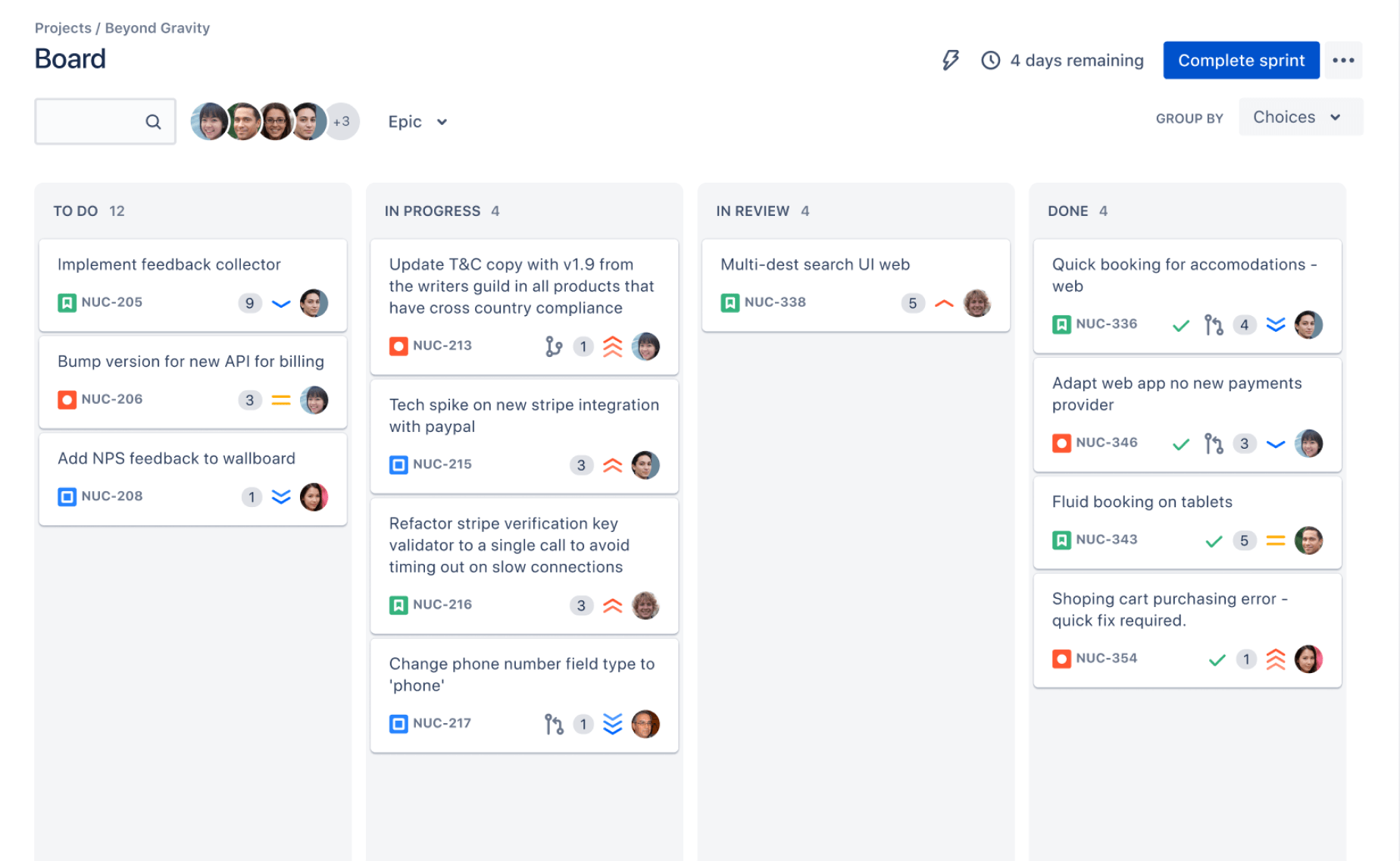
A simple Jira cost formula
You can use this formula before entering figures into a calculator:
Estimated annual cost = Jira subscription + additional Atlassian products + marketplace apps + services + taxes − applicable discounts.
For example, imagine a team with 75 Jira Software users, 12 service agents, two reporting apps, and an expected increase of 20 users during the year. Your estimate should include the starting configuration and the higher-seat scenario.
Build three planning scenarios
| Scenario |
Planning assumption |
Why it matters |
| Current state |
Today’s paid seats and selected plans |
Shows the immediate subscription requirement |
| Expected growth |
Likely hiring, contractors, and new teams |
Creates a realistic operating budget |
| High growth |
Rapid adoption or an acquisition |
Reveals the budget ceiling and upgrade risk |
Here’s why: a single number hides uncertainty. Three scenarios show how your bill responds when the organization adds people, products, or applications.
What Jira Pricing Usually Includes
Jira pricing typically combines a subscription plan with user-based access and optional services. The final amount depends on the products you select, the number of paid users, and the commercial arrangement attached to your account.
Core Jira subscription
Jira Software is commonly used for agile development, backlog management, sprint planning, issue tracking, and release coordination. Your plan tier influences available features, administrative controls, automation capacity, and support options.
Jira Service Management serves service desks, internal support, IT operations, and customer requests. Service agents and other participants may be counted differently, so avoid applying one user assumption to every Atlassian product.
Plan-level features
Lower tiers may suit smaller teams with straightforward workflows. Higher tiers can become relevant when you need stronger governance, expanded limits, advanced reporting, or more sophisticated administration.
The right tier depends on your working model. A 30-person engineering team with complex compliance requirements may need more capability than a 100-person team with a simple workflow.
Marketplace applications
Many teams extend Jira with applications for time tracking, test management, roadmaps, documentation, asset management, backups, or advanced dashboards.
The best practice is to list every app beside its billing basis. Some applications follow Jira seats, while others use their own user groups or usage thresholds.
Cloud, self-managed, and enterprise considerations
Cloud pricing usually centers on subscription access and plan limits. Enterprise arrangements may include negotiated terms, organization-wide controls, enhanced support, or different purchasing requirements.
Self-managed deployment can introduce infrastructure, administration, upgrades, security, and support expenses. Compare the full operating cost rather than looking only at the license line.
Which Inputs Change Your Jira Estimate?
Several variables can move your estimate more than expected. The most important are paid seats, product mix, plan tier, billing cycle, applications, and organizational growth.
Paid seats and active participation
Start with people who need to create, edit, assign, transition, or report on work. Then review occasional contributors separately.
For example, a product manager may need regular Jira access, while an executive may only need dashboard visibility. Paying for identical access levels can inflate the estimate.
Jira Software and Jira Service Management mix
A company using both products should calculate them independently. Development users, service agents, approvers, and request participants may create different cost patterns.
Consider a 100-person company with 45 engineers and 8 service agents. Counting every employee as a full seat in both products would produce an unrealistic estimate.
Billing frequency
Monthly billing can help when your team changes frequently. Annual billing can simplify procurement and forecasting, especially when your expected seat count is stable.
Compare the same seat assumptions across both options. Otherwise, a lower apparent annual figure may simply reflect a different user count.
Plan upgrades
A higher plan can increase the subscription while reducing the need for separate applications or manual administration. Evaluate the feature you need and the workaround you would otherwise maintain.
For instance, advanced reporting may justify a plan change if your team currently pays for several reporting extensions and spends hours combining results.
Taxes, currency, and purchasing arrangements
Tax treatment varies by location and business status. Currency movement can also affect a long-term budget when your payment currency differs from your operating currency.
Add a reasonable contingency for these factors. Finance teams generally prefer a transparent range over a falsely precise estimate.
How to Compare Monthly and Annual Jira Costs
Monthly and annual billing answer different planning needs. Monthly billing prioritizes flexibility, while annual billing prioritizes commitment and budget stability.
When monthly billing may fit
Monthly billing can work well for a startup, a temporary program, or a company hiring rapidly. You can adjust more often as teams join or leave.
The trade-off is planning volatility. A small seat increase repeated every month can create a larger annual total than expected.
When annual billing may fit
Annual billing may suit established teams with predictable staffing. It gives procurement one major renewal event and can make departmental budgeting easier.
Before committing, check whether your forecast includes contractors, interns, acquisitions, and new service teams. A lower initial seat count can create pressure later.
Use an effective monthly cost
To compare fairly, divide the annual subscription by twelve:
Effective monthly cost = total annual commitment ÷ 12.
Then compare that figure with the equivalent monthly plan. Keep the seat count, products, applications, and tax assumptions consistent.
| Comparison point |
Monthly billing |
Annual billing |
| Headcount flexibility |
Usually easier to adjust |
Requires stronger forecasting |
| Budget predictability |
Can fluctuate |
Usually easier to reserve |
| Best fit |
Changing or experimental teams |
Stable, established teams |
Common Jira Budgeting Mistakes
Most calculation errors come from incomplete assumptions rather than difficult arithmetic. A short review can expose the gaps before purchase approval.
Counting employees instead of paid users
Problem: You assume every employee needs the same Jira access.
Solution: Group people by role and activity. Separate full contributors, occasional collaborators, service agents, customers, and viewers.
Ignoring marketplace applications
Problem: Your estimate includes Jira while leaving out essential extensions.
Solution: Inventory every application used by each team. Record its user count, billing model, renewal date, and business owner.
Budgeting only for today
Problem: You plan for current headcount even though hiring is already approved.
Solution: Add six-month and twelve-month seat projections. Include contractors and newly acquired teams.
Comparing plans by price alone
Problem: You select the lowest tier without measuring administration, limits, or workaround costs.
Solution: Compare subscription cost with operational effort. A cheaper plan may require manual reporting, extra apps, or more administration.
Forgetting renewal ownership
Problem: Different departments purchase separate applications without a shared view.
Solution: Assign one renewal owner and maintain a central list of products, seat counts, payment dates, and responsible teams.
Jira Cost Planning Example
Consider a software company with 60 engineers, 10 product and design contributors, 6 service agents, and 15 external collaborators.
The finance team should first identify which people need full Jira Software access, which people need service access, and which external collaborators can use lighter participation options.
Current-state estimate
- Jira Software seats for engineering and product roles
- Jira Service Management access for service agents
- Two reporting and time-tracking applications
- Applicable taxes and payment adjustments
Growth estimate
The same company expects 25 new engineers over the next year. It should calculate the subscription at the current level, the expected average level, and the year-end level.
The average level may provide the best operating estimate, while the year-end level helps finance reserve enough budget for the renewal period.
Decision point
If application fees rise with every Jira seat, the team should test whether a higher native plan could reduce its extension requirements. That comparison connects subscription price with total operating cost.
The best part? You can explain the recommendation clearly because every assumption has a visible place in the calculation.
Jira Pricing Planning Alternative: ONES.com
ONES.com combines project management and knowledge management in one platform powered by ONES Assistant. ONES Project provides project management capabilities, while ONES Wiki supports knowledge management; each product is sold separately.
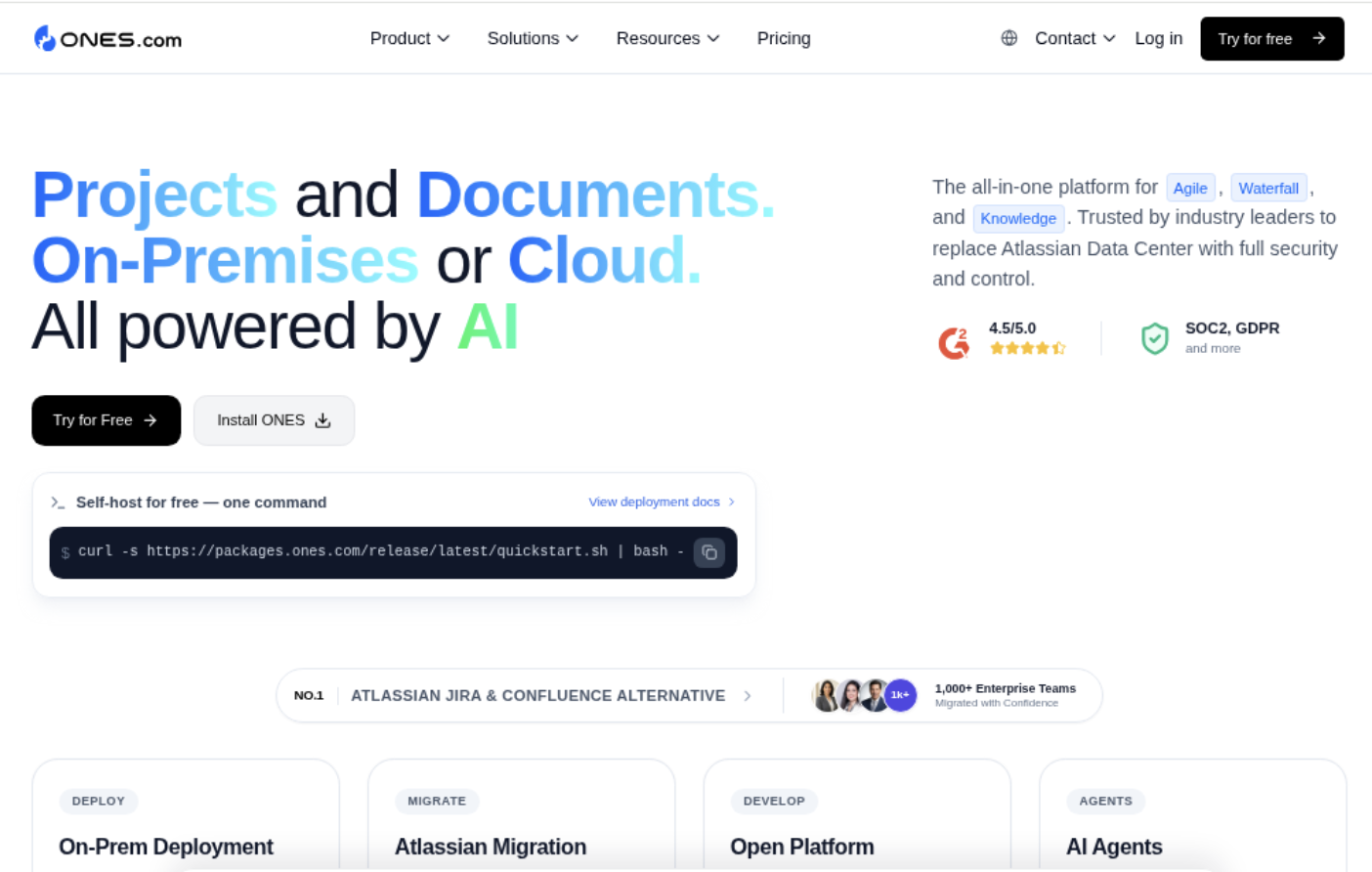
For teams comparing Jira alternatives, ONES.com can be relevant when deployment flexibility, native functionality, and reduced reliance on separate plugins matter. A free plan supports up to 30 seats, and deployment options include Cloud, On-Premise, Private Cloud, and Air-gapped environments.
Core capabilities
- Plugin sprawl → Jira-compatible workflows → Teams can preserve familiar issue and approval patterns while reducing the number of extensions required for everyday project work.
- Unclear project visibility → built-in reporting → Managers can review progress, workload, and delivery signals without assembling separate reporting views.
- Rigid processes → custom workflows and fields → Teams can adapt statuses, approvals, and work attributes to match their operating model.
- Inconsistent sprint planning → sprint management → Agile teams can organize backlogs, plan iterations, and review sprint outcomes in one project environment.
- Repetitive administration → automation → Rules can handle recurring transitions, notifications, assignments, and routine updates.
- Restricted network requirements → four deployment choices → Organizations can select Cloud, On-Premise, Private Cloud, or Air-gapped deployment according to security and infrastructure needs.
- Migration concerns → feature parity across hosting models → Teams can evaluate self-hosted deployment without assuming that core capabilities will disappear outside the cloud version.
- Separate knowledge and project contexts → ONES Wiki alongside ONES Project → Teams can connect project execution with planning guidance, decisions, and internal knowledge.
Application scenarios
Software delivery team: An engineering organization can use ONES Project for backlogs, sprints, custom workflows, automation, and reporting. ONES Wiki can hold release guidance and engineering practices when the team needs a connected knowledge workspace.
Regulated or restricted environment: A company with strict network controls can evaluate an air-gapped or on-premise deployment. This approach may reduce the gap between security requirements and project management operations.
Growing project office: A project management office can standardize workflows and reporting across teams while reducing the need to assemble several plugins for common delivery processes.
How to Improve Your Estimate Before Approval
Before submitting a budget request, ask three questions: who needs access, what capability is essential, and what will change during the contract period?
Separate requirements from preferences
Mark every feature as essential, useful, or optional. This prevents a preferred dashboard or convenience application from being treated like a compliance requirement.
Review access quarterly
People change roles, leave projects, or stop using a product. A quarterly access review can reveal unused seats and inactive applications before renewal.
Measure cost per active contributor
Divide the annual technology cost by the number of people who actively create or manage work. This gives you a more meaningful operational measure than total employee count.
Keep an assumptions register
Record seat counts, product choices, plan tiers, application fees, billing cycle, tax treatment, and growth expectations. When the estimate changes, you can identify the reason quickly.
FAQs
What does an Atlassian Jira pricing calculator estimate?
It estimates subscription costs using factors such as product selection, paid users, plan tier, billing frequency, and contract length. A complete planning exercise should also include marketplace applications, taxes, currency effects, and expected growth. Treat the result as a budget estimate, then confirm the current commercial terms before purchasing.
Does Jira pricing depend on the number of users?
In many Jira plans, the number of paid users is a major pricing factor. However, each Atlassian product may apply access rules differently. Jira Software contributors, Jira Service Management agents, customers, and occasional participants should be reviewed separately. Counting every employee as an identical paid user can overstate your likely cost.
Should I choose monthly or annual Jira billing?
Choose monthly billing when headcount or project duration may change often. Annual billing can be easier for stable teams that want predictable budgeting. Compare both options with identical user counts and products. Include hiring plans, contractors, application renewals, taxes, and expected changes before making a commitment.
Do Jira marketplace apps affect the total price?
Yes. Marketplace applications can add a substantial amount to the annual budget, especially when their fees follow Jira user counts. Review every extension used for reporting, time tracking, testing, backups, assets, or portfolio planning. Include renewal timing and application ownership in your calculation.
Can a Jira alternative reduce total project management cost?
It can, depending on your requirements and operating model. Compare the complete cost of subscriptions, applications, administration, hosting, migration, training, and support. ONES.com may suit teams that need Jira-compatible workflows, built-in reporting, custom fields, automation, and flexible deployment options with fewer separate plugins.
Conclusion
An Atlassian Jira pricing calculator is most useful when you treat it as a planning framework rather than a single-number answer.
Start with paid users, separate Jira products, compare plan tiers, add applications, test monthly and annual billing, and model realistic growth. Then include taxes, currency movement, administration, and renewal ownership.
But here’s the truth: the cheapest visible subscription may not be the cheapest operating model. A complete comparison should include the work your team performs around Jira every day.
When your needs include flexible deployment, native project capabilities, or fewer plugins, evaluate ONES.com alongside other Jira alternatives. The right choice is the one that fits your workflows, governance requirements, and long-term budget.