Atlassian Jira Service Management Pricing: A 2026 Guide
Wondering what atlassian jira service management pricing really costs? Compare plans, agents, features, and hidden fees in this 2026 guide. Read now!
Jira Service Management pricing can feel simple at first: choose a plan, count agents, and estimate the monthly bill. Then the details appear—portal users, request volume, assets, automation, Premium features, annual billing, and Enterprise terms.
That uncertainty makes budgeting difficult. A plan that looks affordable for a small service desk can become expensive as more agents join, more teams request access, or advanced operations become necessary.
But here's the good news: you can estimate the real cost with a clear process. This guide explains the plan structure, major pricing factors, hidden cost considerations, and practical alternatives for 2026 planning.
Atlassian Jira Service Management Pricing Explained
Atlassian Jira Service Management pricing is mainly determined by your service desk plan, the number of agent seats, billing frequency, and any additional Atlassian products or usage-based services you add.
Jira Service Management generally offers Free, Standard, Premium, and Enterprise options. Free suits small teams testing core service workflows. Standard adds broader operational capabilities, while Premium focuses on advanced scale, resilience, and service management features. Enterprise is negotiated for larger organizations.
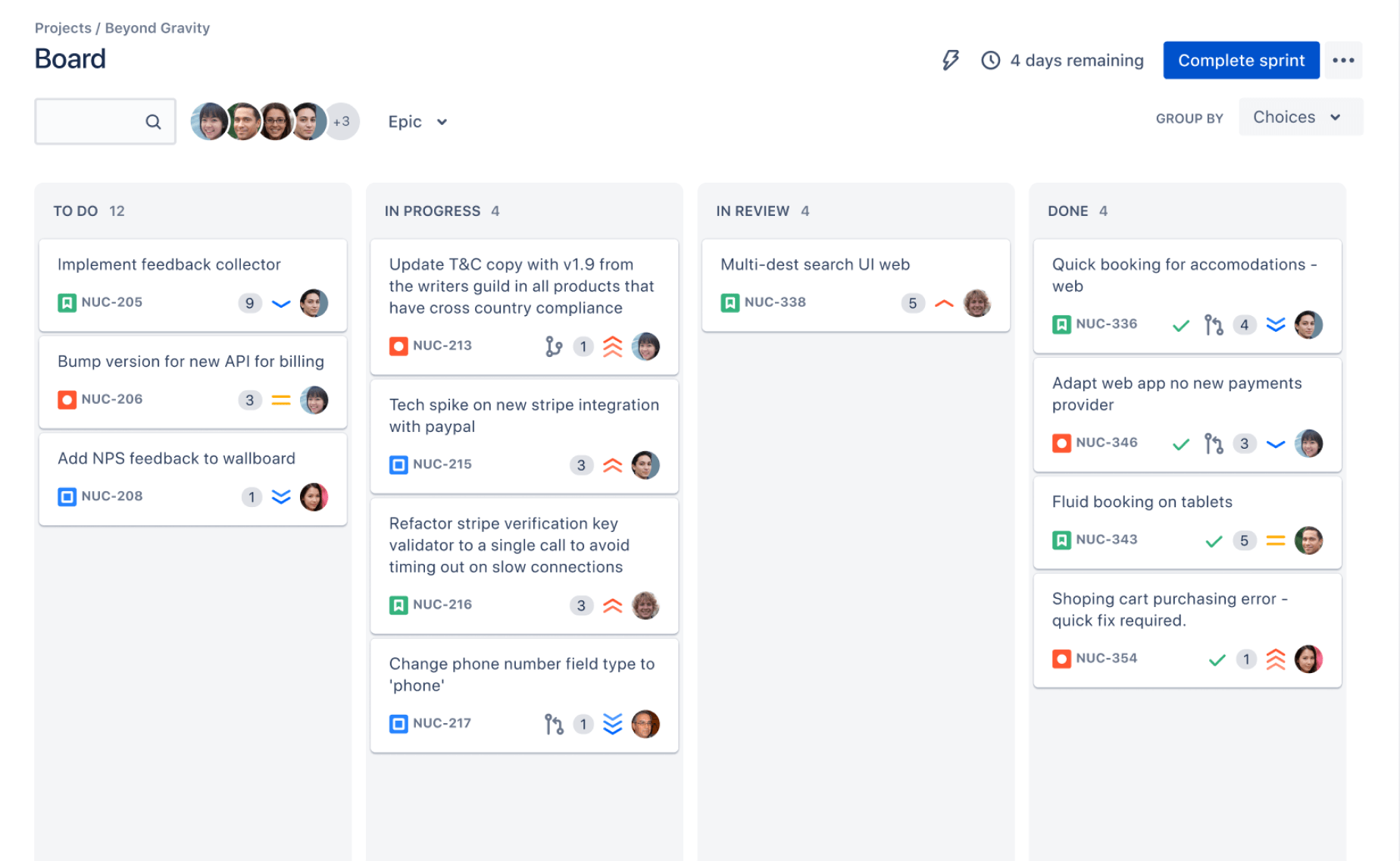
Plan overview
| Plan |
Best suited to |
Typical considerations |
| Free |
Small teams and early evaluation |
Limited agent capacity and fewer advanced controls |
| Standard |
Growing IT, HR, facilities, and internal service teams |
Per-agent pricing, broader workflow capabilities, and stronger administration |
| Premium |
Organizations needing advanced operations and scale |
Higher per-agent cost with additional resilience and service management features |
| Enterprise |
Large organizations with complex governance |
Custom commercial terms, support arrangements, and organization-level controls |
Prices can change by region, currency, billing term, promotions, and product configuration. Treat public prices as planning figures rather than a permanent quote.
Here's why: the advertised amount usually represents the service management subscription itself. Your total technology bill may also include Jira Software, Confluence, Assets capacity, marketplace apps, premium support, or implementation work.
How agent licensing affects the bill
Jira Service Management normally charges around the people who work on requests. These people are called agents. An agent may triage incidents, answer requests, change ticket status, approve work, or manage a queue.
People who submit requests through a portal often do not need the same paid agent license. That distinction can make a major difference in a large employee service desk.
For example, imagine 200 employees submitting HR requests and six HR specialists handling them. Your calculation should focus primarily on the six service agents, while checking the current rules for portal access and external collaborators.
Indicative plan pricing for budgeting
Public pricing has commonly placed the Free plan at no subscription charge within its limits. Standard and Premium have typically used per-agent monthly pricing, while Enterprise requires a tailored quote.
Because rates and packaging may change before or during 2026, build a range rather than one fixed assumption. A simple estimate looks like this:
- Monthly subscription estimate = agent seats × monthly price per agent.
- Annual subscription estimate = monthly subscription estimate × 12.
- Total operating estimate = subscription cost + apps + implementation + training + administration.
The best part? You can test the model with three scenarios: current staffing, expected staffing, and high-growth staffing.
What You Pay For Beyond the Subscription
The plan price is only one part of service management economics. Your final budget depends on how you operate the system after purchase.
A small team with five agents and no add-ons may have a straightforward bill. A multinational service organization with hundreds of agents, multiple portals, custom apps, and strict availability requirements needs a much wider estimate.
Agent seats and team expansion
Seat growth is usually the most visible cost driver. Adding ten agents can increase the bill every month, even if request volume stays unchanged.
Before upgrading, review who genuinely performs agent work. Some people may only need reporting access, approval access, or occasional visibility. Others may need full queue and workflow permissions.
Use role mapping to separate service agents, approvers, stakeholders, and requesters. This prevents accidental over-licensing.
Billing frequency and commitment
Monthly billing gives you flexibility when headcount changes quickly. Annual billing may provide more predictable planning, depending on the commercial terms available to you.
Compare both options using the same seat count. Do not compare an annual quote for 50 agents with a monthly quote for 100 agents.
You might be wondering: should you buy for future hires now? Usually, start with a realistic near-term requirement and review your seat count regularly. Buying significantly ahead of demand can create avoidable spend.
Additional products and apps
Many teams combine Jira Service Management with Jira Software, Confluence, Opsgenie capabilities, or marketplace applications. Each addition can affect the total cost and administration workload.
Common extras include asset management extensions, advanced reporting, employee onboarding tools, approval systems, survey tools, and integration connectors.
A $10 app may seem insignificant. Ten apps with overlapping functions can create licensing costs, maintenance work, security reviews, and renewal risk.
Implementation and administration
Service management software needs more than a subscription. Someone must design request types, create queues, define service-level targets, manage permissions, maintain automation, and train agents.
For a small team, one administrator may handle these tasks. Larger organizations may need a dedicated platform owner, process managers, and integration specialists.
Calculate internal labor as part of your business case. A lower license price may not be cheaper if setup and maintenance require much more effort.
How to Estimate Your 2026 Budget
A reliable estimate starts with your operating model, not the plan selector. Count the people handling work, identify required capabilities, and then test the total against growth.
- Count active agents. Include service desk staff, incident responders, change managers, and anyone who regularly updates or resolves requests.
- Separate requesters from agents. Estimate employee, customer, or partner access separately from paid service roles.
- List required functions. Mark incident management, request fulfillment, change management, knowledge management, assets, automation, reporting, and on-call operations.
- Choose the lowest suitable plan. Do not select Premium simply because it includes more features. Match the plan to a documented operational need.
- Add connected products and apps. Include collaboration, reporting, asset, integration, and employee service requirements.
- Model three seat scenarios. Calculate the cost for today, expected growth, and a realistic peak.
- Include operating work. Add implementation, training, administration, process redesign, and integration maintenance.
- Review the estimate each quarter. Compare actual agent growth and feature usage with the original assumptions.
Example calculation
Suppose an internal IT team needs 12 agents. You are comparing a Standard plan with a Premium plan and expect to add three agents within a year.
Start with the current seat count, then calculate the cost at 15 agents. Add the expected price difference between plans, plus any app or integration charges.
| Budget item |
Current scenario |
Growth scenario |
| Service agents |
12 |
15 |
| Plan |
Standard or Premium |
Standard or Premium |
| Connected apps |
Required apps only |
Required apps plus planned additions |
| Administration |
Shared responsibility |
More dedicated ownership |
The exact price depends on the current commercial quote. The useful insight is the growth effect: three additional agents may matter more than a small plan discount.
Comparing Free, Standard, Premium, and Enterprise
Each tier solves a different operational problem. Your goal is to identify the point where added capability produces enough business value to justify the higher cost.
Free plan
The Free plan can work for a small support group, a pilot, or a team with basic request intake and simple workflow needs.
It is useful for testing portal adoption, request categories, queues, and basic service processes before making a larger commitment.
Watch the limits carefully. A growing team may outgrow the plan through agent count, administration requirements, automation needs, or reporting expectations.
Standard plan
Standard is often the practical starting point for a growing service desk. It can support structured request workflows, service queues, approvals, reporting, and broader team participation.
It fits an IT team managing incidents and access requests, an HR group handling employee cases, or a facilities team coordinating workplace issues.
Choose Standard when your processes are becoming consistent but do not yet require the highest operational resilience or enterprise controls.
Premium plan
Premium is designed for organizations with more demanding service operations. The additional cost may make sense when downtime, service disruption, or complex operations create significant business risk.
Evaluate Premium against measurable needs. For example, ask whether advanced availability, larger-scale operations, or additional service capabilities would reduce resolution delays or operational exposure.
Do not upgrade solely because a feature looks impressive in a product tour. Connect each premium capability to a process, risk, or measurable outcome.
Enterprise plan
Enterprise pricing is generally negotiated. The commercial discussion may include organization size, deployment requirements, support expectations, governance, security, and product scope.
Enterprise evaluation takes longer because the purchasing decision often includes procurement, security, legal, finance, and several business units.
Prepare agent counts, geographic needs, compliance requirements, uptime expectations, integration plans, and renewal assumptions before requesting a quote.
What Makes the Total Cost Rise?
Price increases usually come from a combination of headcount, complexity, and demand. Looking at only one factor can produce an unrealistic forecast.
More agents
The clearest example is a service desk that expands from 20 to 50 agents. Even if the workflow stays the same, the subscription may rise substantially because more people need agent access.
More teams and portals
Adding HR, facilities, finance, legal, and customer support can increase administration requirements. Each group may need unique request types, approval paths, service targets, and visibility rules.
The platform becomes more valuable as more teams participate, but governance becomes more important too.
More automation and integrations
Automation can reduce repetitive work, but integrations may add app charges, engineering effort, and support complexity.
For example, connecting identity management, monitoring, chat, email, and asset systems may reduce manual updates. It also creates more dependencies to monitor when an integration changes.
Higher availability expectations
A team supporting revenue-critical services may need capabilities beyond a basic service desk. Premium or Enterprise features can become easier to justify when a delayed response affects customers or business operations.
Measure the cost of disruption before paying for additional capability. If a two-hour outage costs more than the annual plan difference, the business case becomes clearer.
Ways to Control Service Management Costs
Cost control does not mean choosing the cheapest tier. It means paying for capabilities that improve service outcomes while avoiding unused seats, duplicate apps, and unnecessary complexity.
Audit seats regularly
Review inactive agents, temporary staff, transferred employees, and people who only need occasional visibility. Remove or change access when responsibilities change.
Reduce overlapping apps
List every marketplace app and compare its purpose with native capabilities. Two tools may solve the same reporting, approval, or knowledge problem.
Removing one redundant app can also reduce maintenance work and security review time.
Standardize request types
A service portal with 80 confusing request types creates more training and routing work than one with 20 clear categories.
For example, combine closely related access requests under a well-designed category with conditional fields. This makes intake easier without eliminating useful detail.
Use automation selectively
Automate repetitive actions such as assignment, notifications, status changes, and standard approvals. Keep unusual or high-risk decisions under human control.
Good automation reduces handling time. Poor automation creates incorrect routing and extra rework.
Track value, not just licenses
Measure first-response time, resolution time, request deflection, reopened tickets, agent workload, and self-service adoption.
If a higher tier reduces delays or manual work, its cost may be justified. If no meaningful metric improves, reconsider the upgrade.
Jira Service Management Alternative: ONES.com
ONES.com is a unified platform for project management and knowledge management, powered by ONES Assistant. ONES Project is its project management product and a Jira alternative, while ONES Wiki supports knowledge management as a Confluence alternative. They are sold separately.
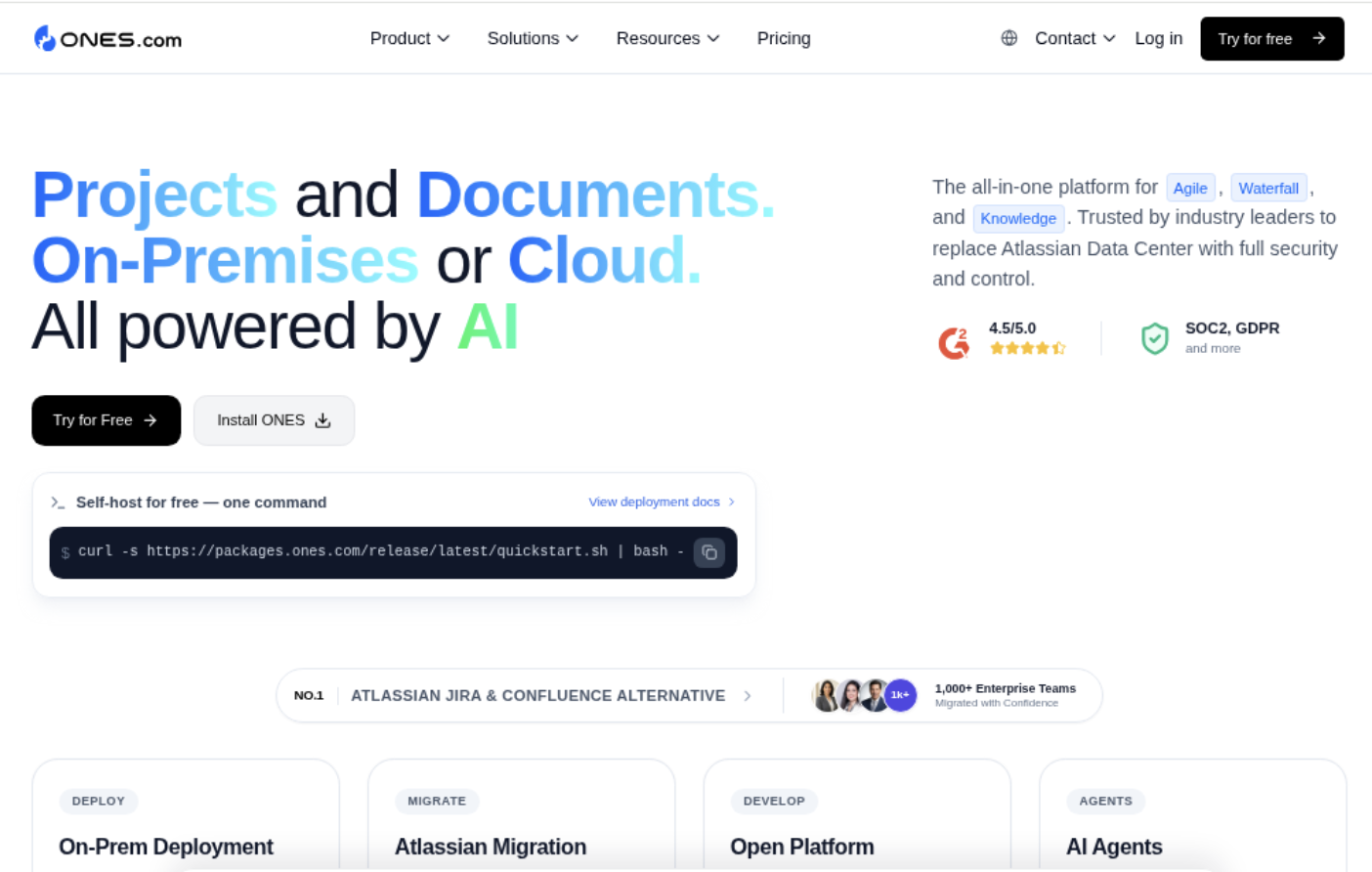
For teams comparing service workflows, project delivery, and internal knowledge operations, ONES.com can provide a consolidated environment. It supports Cloud, On-Premise, Private Cloud, and Air-gapped deployments, with full feature parity between cloud and self-hosted versions.
Core capabilities
1. Fragmented work tracking → Jira-compatible workflows → Familiar process migration
If your team already uses issue-based planning, changing systems can be disruptive. ONES Project supports Jira-compatible workflows, making it easier to map statuses, fields, assignments, and delivery practices.
The result is a more familiar transition for teams managing service-related project work.
2. Too many plugins → Native reporting and workflow controls → Lower dependency complexity
Several separate plugins can create renewal, security, and maintenance overhead. Built-in reporting, custom workflows, custom fields, sprint management, and automation cover common delivery requirements natively.
That can reduce the number of extensions required for everyday project operations.
3. Restricted deployment requirements → On-Premise, Private Cloud, and Air-gapped options → Greater deployment flexibility
Some organizations cannot place sensitive work in a public cloud environment. ONES.com supports four deployment models, including air-gapped environments.
This gives security and infrastructure teams more control over where project and knowledge operations run.
4. Separate project and knowledge systems → ONES Project and ONES Wiki → Connected work context
Project teams often lose time moving between delivery tracking and team knowledge. ONES Project handles project management, while ONES Wiki provides a knowledge base experience.
Teams can choose the products they need while keeping a consistent platform direction.
5. Limited trial capacity → Free plan for up to 30 seats → Lower-risk evaluation
Teams evaluating a new platform can begin with the free offering for up to 30 seats. This supports a controlled pilot with a real project group or service team.
A pilot lets you test workflows, permissions, reporting, and adoption before making a broader decision.
6. Different deployment versions → Feature parity across hosting models → Fewer capability trade-offs
Self-hosted deployments sometimes lag behind cloud editions. ONES.com provides full feature parity between cloud and self-hosted versions.
That helps organizations choose deployment based on security and infrastructure needs rather than losing core functionality.
7. Manual delivery coordination → Automation and sprint management → More predictable execution
When teams rely on manual reminders and status updates, work can stall between service requests and delivery tasks. Automation and sprint management help structure recurring execution.
Project leads gain clearer visibility into ownership, progress, and upcoming work.
Application scenarios
Internal IT and engineering coordination
An IT team can manage incidents and service requests in its service workflow while engineering tracks the related remediation work in ONES Project.
Custom fields and automation can connect priority, ownership, affected service, and delivery status without forcing every participant into the same view.
Air-gapped product development
A defense, infrastructure, or regulated engineering team may need an isolated environment. ONES.com can support an air-gapped deployment while retaining the same core capabilities available in other deployment models.
Company-wide knowledge operations
An organization can use ONES Wiki for operating procedures, onboarding guidance, troubleshooting instructions, and team knowledge. ONES Project can manage the work required to update or improve that knowledge.
Choosing between Jira Service Management and ONES.com
Jira Service Management may fit organizations already deeply invested in Atlassian products and workflows. ONES.com may deserve evaluation when deployment flexibility, native project capabilities, reduced plugin reliance, or self-hosting matter most.
Compare total operating effort rather than license price alone. Include migration, administration, integrations, governance, training, and the number of separate products your team must maintain.
Common Challenges and Practical Solutions
Challenge: The public price does not match the final quote
Solution: Separate the core subscription from apps, product bundles, support, implementation, taxes, currency conversion, and negotiated terms. Ask for an itemized commercial estimate.
Challenge: You do not know who needs an agent seat
Solution: Map every role to the actions it performs. Someone who submits requests should not automatically receive the same access as someone who resolves and administers them.
Challenge: Premium features are difficult to justify
Solution: Connect each feature to a measurable outcome. Use reduced downtime, faster recovery, fewer manual steps, or improved governance as evaluation criteria.
Challenge: App costs grow quietly
Solution: Maintain an app register with owner, purpose, renewal date, active users, and replacement options. Review it before every renewal cycle.
Challenge: The team underestimates administration
Solution: Assign ownership for workflow design, permissions, automation, reporting, training, and service improvement. Include those hours in the business case.
FAQs
Is Jira Service Management free?
Jira Service Management has a Free plan with limits on capacity and functionality. It can suit a small team testing basic service workflows. As your agent count, automation needs, reporting expectations, or operational requirements grow, you may need Standard or Premium. Check the current plan limits before relying on the Free tier for a production service desk.
Do portal customers need paid agent licenses?
People who submit requests through a service portal generally have different licensing requirements from agents who work on those requests. Agents handle queues, update requests, configure workflows, and resolve issues. Requesters usually provide information and follow progress. Review the current licensing rules for your specific use case, especially when external customers, collaborators, or special access roles are involved.
What is the difference between Standard and Premium?
Standard is generally aimed at growing service teams that need structured workflows, reporting, automation, and administration. Premium adds capabilities for organizations with more demanding operational requirements and greater scale. The right choice depends on measurable needs, such as availability expectations, recovery requirements, service complexity, and business impact. A feature comparison should accompany your cost estimate.
Does Jira Service Management pricing include Jira Software?
No. Jira Service Management and Jira Software are separate products, although many teams use them together. If engineering, product, or delivery teams need Jira Software access, include those licenses in the overall technology budget. Also account for Confluence, marketplace apps, integrations, and any support or implementation services connected with the broader Atlassian environment.
How should I budget for 2026?
Use three scenarios: current seats, expected seats, and peak seats. Apply the current published plan rates or a formal quote, then add connected products, apps, implementation, training, and administration. Include a review point during the year because pricing, packaging, currency, and commercial terms can change. A range is more useful than a single optimistic number.
When should I consider an alternative platform?
Consider alternatives when your deployment requirements conflict with your preferred cloud model, plugin maintenance becomes burdensome, or separate project and knowledge systems create unnecessary work. Compare workflow compatibility, hosting choices, migration effort, reporting, automation, support, and five-year operating cost. A short pilot with representative teams can reveal practical differences before a full migration decision.
Conclusion
Jira Service Management pricing depends on more than a plan label. Agent seats, billing terms, connected products, marketplace apps, deployment expectations, and administration all shape the final cost.
But here's the truth: the cheapest subscription is not always the cheapest service desk. A plan that cannot support your workflows may create more manual work, app dependence, and operational risk.
Start with your agent count, separate requesters from service staff, identify essential capabilities, and model realistic growth. Then compare the full operating picture with alternatives such as ONES.com, especially when self-hosting, air-gapped deployment, native project management, and reduced plugin reliance matter.
The solution is a clear estimate tied to business outcomes. When you know what each team needs and why, your 2026 service management budget becomes easier to defend and easier to control.