Atlassian Jira Software Cloud Pricing: A 2026 Cost Guide
Unsure about atlassian jira software cloud pricing? Compare tiers, billing, taxes, and add-ons in this 2026 cost guide. Read now.
Jira Cloud pricing can look simple until you compare user tiers, billing terms, taxes, add-ons, and plan limits. A small team may fit the free tier, while a growing organization can face a much higher annual commitment after adding Premium features and administration tools.
That uncertainty makes budgeting difficult. A quoted monthly rate may exclude taxes, marketplace apps, Atlassian Guard, or extra products your team needs. Two companies with the same headcount can also pay different totals because they choose different billing cycles.
But here's the truth: you can estimate your real Jira Cloud cost before committing. This guide explains the plan structure, pricing variables, calculation method, hidden costs, and practical alternatives for 2026 planning.
Atlassian Jira Software Cloud Pricing: The Cost Structure for 2026
Atlassian Jira Software Cloud pricing is based mainly on the number of users, the selected plan, the billing cycle, and any additional services or apps attached to your Jira environment.
Jira Software Cloud generally offers Free, Standard, Premium, and Enterprise options. The Free plan is designed for small teams, while the paid plans add administration, reporting, security, automation, scale, and support capabilities.
Prices and plan entitlements can change during 2026. Treat the current Atlassian pricing page and checkout estimate as the final commercial reference before purchasing.
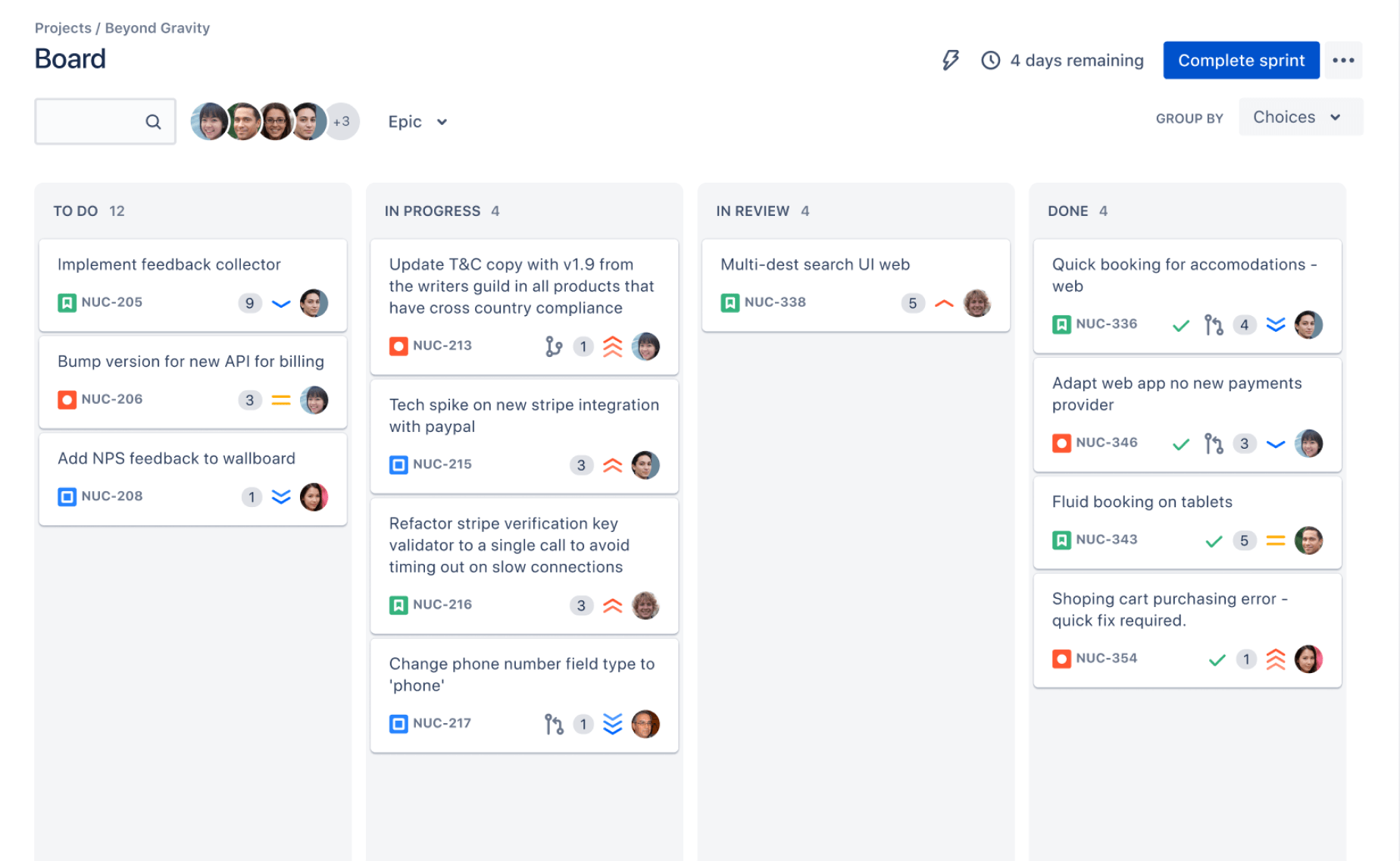
Jira Cloud plan overview
| Plan |
Best fit |
Typical cost considerations |
| Free |
Small teams testing Jira or managing simple projects |
Usually limited by user count, storage, automation, administration, and support features |
| Standard |
Teams that need regular project delivery with broader controls |
Paid per user or through a tier, with additional capacity and collaboration features |
| Premium |
Organizations managing larger, more complex, or business-critical work |
Higher subscription cost in exchange for advanced scale, reliability, planning, and administration features |
| Enterprise |
Large organizations with complex governance and procurement needs |
Usually handled through a tailored commercial agreement rather than a simple self-service checkout |
What determines your actual subscription total?
- Licensed users: Jira Cloud pricing typically considers the number of seats assigned or purchased.
- Plan level: Standard and Premium provide more capabilities than Free, while Enterprise is aimed at larger organizations.
- Billing frequency: Monthly billing offers flexibility, while annual billing may use a different tier calculation or commercial structure.
- Product scope: Jira Software is separate from products such as Confluence, Jira Service Management, and Guard.
- Marketplace apps: Extensions can add recurring charges that are separate from the Jira subscription.
- Taxes and currency: Your region, tax status, and payment currency can affect the final amount.
- Support and governance: Larger teams may need higher plans because of security, administration, compliance, or support requirements.
Here's why this matters: the visible per-user figure is only one part of your technology budget. A 50-person team may pay for Jira, several apps, identity controls, and related collaboration products.
How to Calculate Your Jira Cloud Budget
The fastest way to estimate cost is to calculate the subscription first, then add connected products, apps, taxes, and operational overhead.
Step 1: Count the people who need access
Start with real user groups rather than your total employee count. Separate active Jira contributors from people who only need occasional visibility.
For example, a software company may have 18 engineers, 4 product managers, 3 designers, and 5 executives. If executives only need reports, they may require a different access approach than daily contributors.
Review guest access, app access, and permission rules carefully. A person who receives a Jira account can affect the paid user tier even when that person rarely opens a project.
Step 2: Identify the minimum suitable plan
List the capabilities your team needs before looking at the price. Useful questions include:
- Do you need advanced project or release planning?
- Will administrators manage multiple teams and permission schemes?
- Do you need higher automation limits?
- Are uptime, scale, and continuity important for daily operations?
- Does your organization require stronger governance or support?
Choose the lowest plan that supports your workflow without creating avoidable manual work. A cheaper plan can become expensive if teams compensate with extra apps or repetitive administration.
Step 3: Compare monthly and annual billing
Monthly billing works well when headcount changes frequently or you are still testing Jira. Annual billing can provide more predictable budgeting, but the payment structure and tier rules deserve close review.
Imagine a team that grows from 20 to 45 people during a year. Monthly billing may adapt more easily, while annual billing may provide a clearer commitment and procurement experience.
Check whether annual pricing is calculated by a fixed user tier, an average user count, or another method. The billing page should clarify the calculation before you approve payment.
Step 4: Add connected products and apps
Jira Software may be only one part of your Atlassian environment. You might also evaluate Confluence for knowledge sharing, Jira Service Management for service workflows, or Atlassian Guard for identity and security administration.
Then review marketplace apps for time tracking, test management, roadmaps, reporting, documentation, or specialized integrations. Each app can introduce its own pricing model and user rules.
Step 5: Include taxes and operational costs
Estimate regional taxes, currency conversion, procurement fees, migration work, training, administration, and integration maintenance.
A practical annual budget formula looks like this:
Estimated annual cost = Jira subscription + connected products + app subscriptions + taxes + implementation and administration costs
The formula does not replace a formal quote. It gives you a more realistic planning range than multiplying a headline price by your employee count.
Monthly Versus Annual Jira Cloud Billing
Monthly and annual billing solve different problems. Monthly billing emphasizes flexibility, while annual billing emphasizes predictability and procurement control.
| Consideration |
Monthly billing |
Annual billing |
| Headcount changes |
Usually easier to adjust as the team grows or shrinks |
May require planning around a committed tier |
| Budget predictability |
Payments recur each month and may change with usage |
Provides a clearer annual commitment |
| Cash flow |
Spreads payments throughout the year |
May require a larger payment earlier |
| Procurement |
Can suit experimentation or smaller teams |
Often fits annual purchasing and renewal processes |
| Scaling risk |
Frequent user changes require monitoring |
Unused seats can become a budgeting concern |
When monthly billing makes sense
Monthly billing may suit a startup hiring rapidly, a consultancy with changing project teams, or an organization running a short evaluation.
It also lets you observe actual adoption. If only half the invited team uses Jira regularly, you can adjust permissions and improve onboarding before making a longer commitment.
When annual billing makes sense
Annual billing can suit a stable organization with predictable staffing and a clear Jira roadmap. Finance teams may prefer one planned renewal rather than twelve recurring transactions.
Before choosing it, compare the committed tier with your expected hiring plan. Paying for capacity that remains unused can reduce the value of an apparently convenient contract.
You might be wondering: which option is cheaper? The answer depends on the current commercial offer, user count, and expected changes. Compare the full annual total rather than only the displayed monthly equivalent.
Jira Plan Features That Affect Value
Price matters, but capability limits often determine whether a plan is economical. A plan that removes manual work may produce more value than a lower-cost plan that requires several workarounds.
Automation and administration
Automation can assign issues, update fields, notify stakeholders, and transition work when conditions are met. Small teams may be comfortable with lower limits, while large teams can consume automation capacity quickly.
For example, a release workflow that triggers notifications for every issue can create far more activity than a simple task board. Review rule volume, execution limits, and administrative controls before selecting a plan.
Planning, reporting, and visibility
Jira’s value increases when managers can understand delivery trends without asking each team for a separate status update.
Evaluate dashboards, reports, roadmaps, sprint views, and cross-project visibility. A team that relies heavily on portfolio planning may gain more from Premium capabilities than a single small development squad.
Reliability and scale
As Jira becomes central to engineering operations, interruptions can affect planning, releases, support, and executive reporting.
Premium and Enterprise evaluations should include reliability commitments, administration needs, scaling expectations, and recovery planning. The right question is not only, “What does the plan cost?” It is also, “What does interrupted work cost us?”
Security and governance
Organizations with strict access controls may need more than basic project permissions. Consider identity management, user lifecycle processes, audit needs, data residency expectations, and administrative separation.
These requirements can affect both plan selection and connected product costs. Address them during evaluation rather than after deployment.
Hidden and Often-Missed Costs
The subscription is easy to notice. The surrounding expenses are easier to overlook, especially when a team focuses on the initial checkout estimate.
Marketplace app charges
Teams often add time tracking, test management, advanced reporting, diagramming, or approval capabilities. App prices may depend on the same user population as Jira, so the combined amount can grow quickly.
Make an app inventory before renewal. Mark each app as essential, useful, replaceable, or unused. Removing two low-value subscriptions may save more than negotiating a small base-plan discount.
Implementation and migration work
Moving from another project platform can require workflow design, issue mapping, permission planning, integrations, training, and testing.
A 30-person migration may be manageable internally. A multi-team rollout with years of history can require dedicated specialists and a phased transition.
Administration and maintenance
Someone must manage project templates, user access, automations, integrations, reporting conventions, and cleanup. That work has a labor cost even when no separate invoice appears.
A simple governance model can reduce this burden. Assign clear administrators, define project naming rules, limit unnecessary customization, and review inactive accounts each quarter.
Training and adoption
Jira delivers less value when teams use different workflows, skip issue updates, or maintain critical status information elsewhere.
Budget for onboarding sessions, short process guides, office hours, and periodic workflow reviews. Better adoption can reduce the pressure to buy additional reporting apps.
Ways to Control Jira Cloud Spending
Cost control works best when it combines licensing discipline with workflow design. Cutting seats alone may leave the underlying inefficiency untouched.
Audit access before each renewal
Export a current user list, identify inactive accounts, and confirm which people need full access. Remove departed employees promptly and challenge accounts that have not contributed to a project recently.
Use a quarterly review rather than waiting for renewal. A small monthly cleanup can prevent a larger year-end surprise.
Consolidate overlapping apps
Compare every marketplace app with built-in Jira capabilities and existing collaboration tools. Two apps may solve similar reporting or planning problems in different ways.
For example, a team may pay for separate dashboards, roadmaps, and status reporting tools while using only a fraction of each product. Consolidation can simplify administration as well as reduce recurring charges.
Standardize workflows
Every custom workflow adds design, training, and maintenance effort. Keep specialized workflows where they create genuine value, but use consistent patterns for similar teams.
Standardization also improves reporting. If every team uses different status names, leaders spend more time interpreting reports and less time acting on them.
Measure adoption and outcomes
Track meaningful indicators such as active contributors, automation usage, cycle time, unresolved work, and reporting frequency.
If an expensive capability is rarely used, investigate why. The answer may be poor training, confusing configuration, or a genuine lack of need.
Jira Cloud Alternative: ONES.com
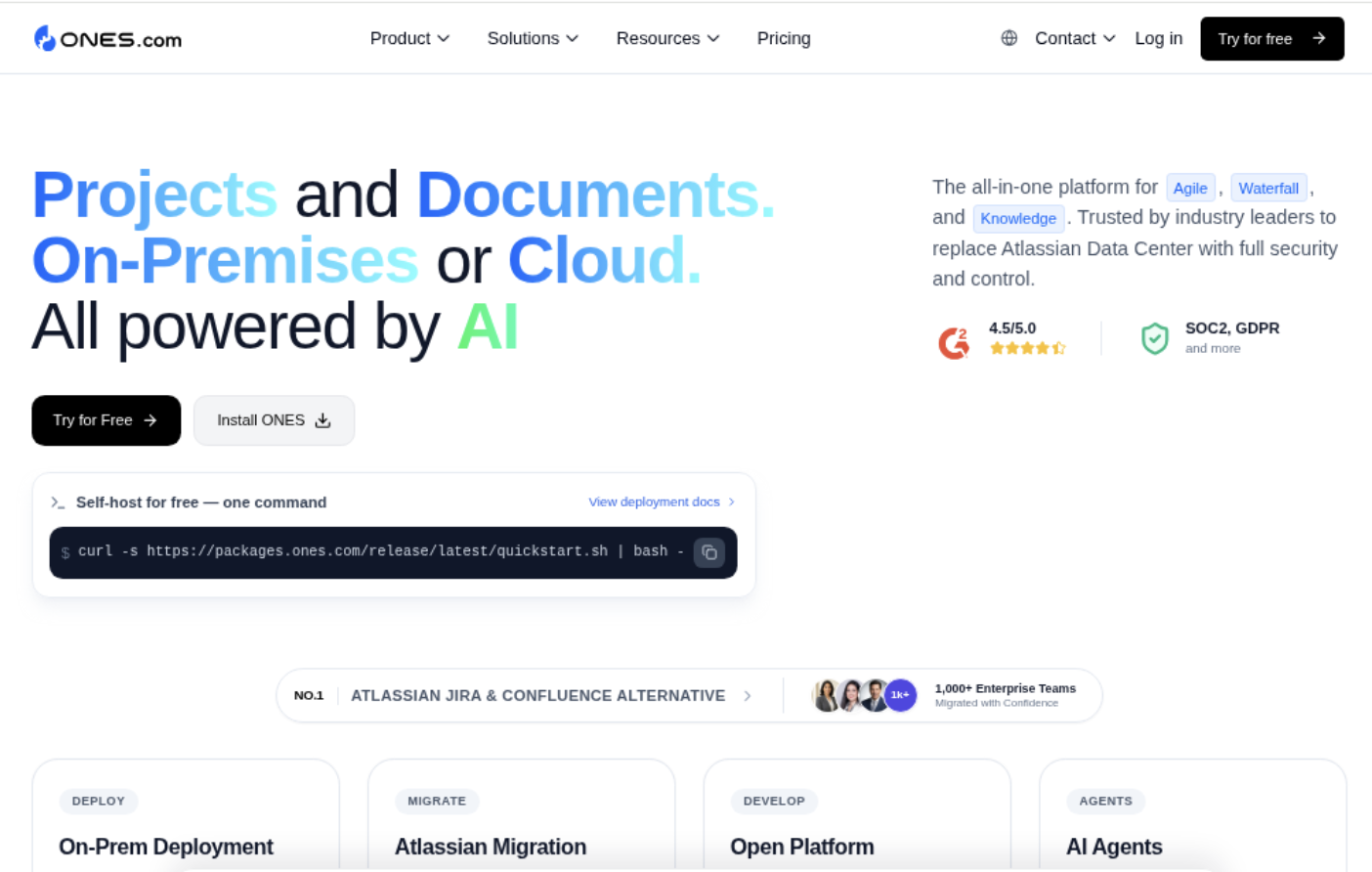
Value Proposition
ONES.com is a unified platform for project management and knowledge management, powered by AI through ONES Assistant. Teams can purchase ONES Project for project management and ONES Wiki for knowledge management separately.
For organizations comparing Jira alternatives, ONES.com combines project workflows, reporting, knowledge sharing, and deployment flexibility in one product family. It offers a free plan for up to 30 seats and supports Cloud, On-Premise, Private Cloud, and Air-gapped deployments.
Core Capabilities
Complex project setup → Custom workflows and fields → Better process fit
Teams can struggle when every project must follow a rigid template. ONES Project supports custom workflows and fields, allowing you to reflect approval stages, product areas, risk levels, and release details.
Jira migration concerns → Jira-compatible workflows → Lower transition friction
Organizations evaluating a Jira alternative can preserve familiar delivery concepts such as issues, sprints, statuses, and workflow transitions. This can reduce retraining during a platform change.
Scattered delivery metrics → Built-in reporting → Faster status visibility
Built-in reporting helps teams review progress, workload, delivery trends, and project health without relying on a long chain of plugins.
Manual sprint coordination → Sprint management → More consistent planning
Product and engineering teams can organize sprint scope, track progress, and review completed work within a connected project environment.
Repetitive task updates → Automation → Less administrative effort
Automation can handle recurring transitions, notifications, and field updates. That gives project leads more time for prioritization and risk management.
Plugin-heavy environments → Native capability parity → Simpler administration
Native features can reduce dependency on multiple extensions. Fewer separate tools may mean fewer renewals, integrations, permission models, and support conversations.
Restricted deployment requirements → On-Premise, Private Cloud, or Air-gapped options → Greater deployment control
Organizations with restricted networks or internal hosting requirements can choose a deployment model that fits their security and operational environment.
Cloud and self-hosted feature differences → Full feature parity → More deployment flexibility
ONES.com provides full feature parity between its cloud and self-hosted versions. Teams can evaluate deployment around governance needs rather than giving up core capabilities.
Knowledge separated from delivery → ONES Wiki → More connected project context
Teams can use ONES Wiki for knowledge management and ONES Project for project management. Keeping related work in the same platform family can make requirements, decisions, and delivery activity easier to connect.
Application Scenarios
Growing software team: A 40-person engineering organization wants Jira-compatible workflows, sprint planning, reporting, and automation without assembling several plugins. It can evaluate ONES Project as a consolidated project management option.
Restricted-network organization: A regulated team cannot place operational project information in a public cloud environment. It can assess ONES On-Premise, Private Cloud, or Air-gapped deployment options.
Project and knowledge alignment: A product organization keeps requirements in one place and delivery activity somewhere else. It can use ONES Wiki and ONES Project separately while maintaining a connected platform strategy.
Common Challenges When Estimating Jira Cloud Cost
Challenge: Using the headline rate as the final budget
A displayed rate may exclude taxes, apps, connected products, and implementation work.
Solution: Build a total-cost estimate with separate lines for seats, plans, apps, taxes, administration, migration, and training.
Challenge: Confusing employees with licensed users
Not every employee needs the same level of access. A broad employee count can make your estimate unnecessarily high.
Solution: Group people by contribution level, reporting needs, and permission requirements. Validate the model with your administrator before purchase.
Challenge: Choosing Premium for a problem caused by poor process design
Advanced features can help, but they cannot fix unclear ownership, inconsistent statuses, or weak prioritization.
Solution: Improve workflow design first. Then evaluate whether the higher plan solves a specific remaining limitation.
Challenge: Underestimating app dependency
Teams may start with one extension and gradually add several more. The renewal total then becomes difficult to explain.
Solution: Maintain an app register with an owner, purpose, active users, renewal date, and replacement assessment.
Challenge: Ignoring future growth
A plan that fits today may become inefficient after a hiring round, acquisition, or multi-team rollout.
Solution: Model at least three scenarios: current headcount, expected headcount, and high-growth headcount. Compare the annual totals and operational impact.
FAQs About Jira Cloud Pricing
Is Jira Cloud free for small teams?
Jira Cloud generally has a Free plan intended for small teams, commonly limited to 10 users. The exact limits and included capabilities can change, so check the current plan page before relying on it for a long-term rollout. Free plans may also limit storage, automation, support, administration, or advanced features. Treat the free tier as a starting point, then review the upgrade path if your team grows.
What is the difference between Jira Standard and Premium?
Standard is generally aimed at teams that need core project delivery capabilities with more capacity than the Free plan. Premium is designed for larger or more complex environments that need advanced planning, scale, reliability, or administration capabilities. The best choice depends on your workflow and governance requirements. Compare specific feature limits instead of choosing only by team size.
Does Jira Cloud pricing include Confluence?
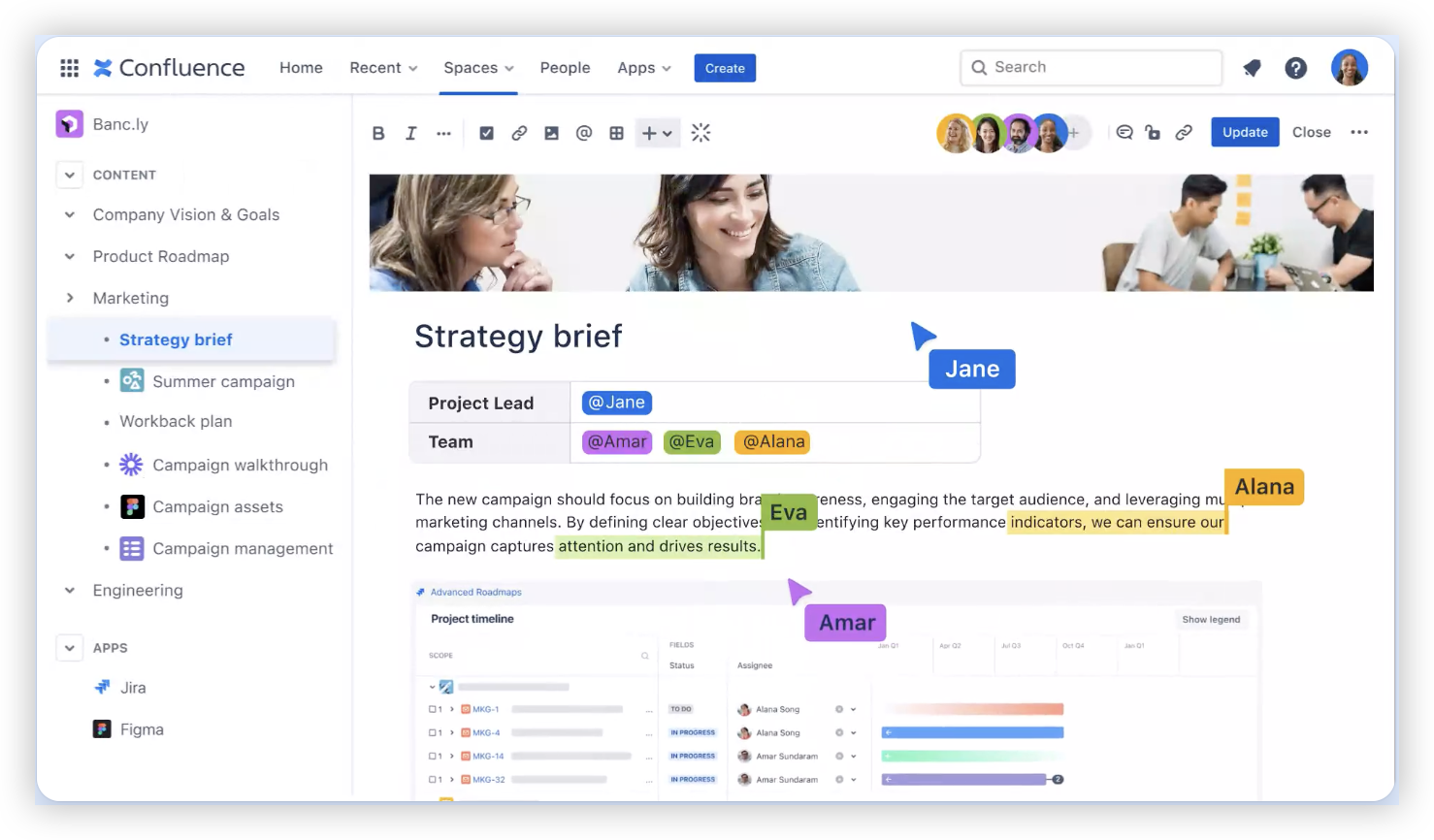
Jira Software and Confluence are separate Atlassian products. If your team needs both project tracking and knowledge management, budget for each product independently. You should also check whether the same people need access to both products. Their user counts may differ, which can affect your combined subscription estimate.
Do Jira marketplace apps increase the total cost?
Yes. Marketplace apps typically have their own subscription charges, user rules, and renewal terms. Common additions include time tracking, test management, advanced reporting, roadmaps, and specialized integrations. Review each app before committing to a Jira plan. A lower Jira tier combined with many paid apps may cost more than a higher tier with stronger native capabilities.
Should I choose monthly or annual Jira billing?
Monthly billing can suit teams with changing headcount or a short evaluation period. Annual billing can suit organizations with stable staffing, predictable budgets, and formal procurement requirements. Compare the complete annual amount, user-tier rules, renewal terms, and expected growth. The lowest monthly equivalent may not produce the lowest practical cost if your user count changes significantly.
What should I compare when evaluating a Jira alternative?
Compare workflow compatibility, migration effort, reporting, automation, permission controls, deployment options, support, user administration, and total recurring cost. A platform should fit your actual delivery process rather than simply offer a lower starting price. Include training, integrations, app replacement, and self-hosting requirements in the evaluation. ONES Project is one option to assess when Jira-compatible workflows and flexible deployment matter.
Conclusion
Atlassian Jira Software Cloud pricing depends on more than a per-user number. Your real budget includes the plan, user count, billing cycle, connected products, marketplace apps, taxes, implementation, and ongoing administration.
But here's the practical solution: define your user groups, select the minimum suitable plan, compare monthly and annual terms, inventory every add-on, and model future growth before approving the purchase.
If Jira’s total environment becomes difficult to manage, evaluate alternatives such as ONES.com. ONES Project provides project management capabilities, Jira-compatible workflows, reporting, automation, and flexible deployment options, while ONES Wiki supports knowledge management separately.
That approach turns a confusing subscription decision into a clearer 2026 technology budget with visible assumptions and measurable trade-offs.