Atlassian Pricing Guide: Plans, Costs, and Key Trade-Offs
Confused by Atlassian pricing? Compare plans, costs, billing, and trade-offs to choose the right setup. Read now to avoid costly surprises.
Atlassian pricing can look simple until you compare Jira, Confluence, Jira Product Discovery, and the wider Atlassian ecosystem. Each product has its own plan structure, billing rules, and feature limits. A small team may pay for only a few seats, while a growing company can face extra costs for premium controls, advanced reporting, support, and connected apps.
The confusion grows when monthly and annual billing show different totals, or when marketplace apps quietly increase the final bill. You may choose a cheaper plan today and discover that essential permissions or automation require an upgrade later.
But here's the truth: the right decision comes from evaluating the full operating cost, not one headline price. This guide explains how Atlassian plans work, what drives the bill, where trade-offs appear, and how to compare alternatives with confidence.
Atlassian Pricing at a Glance
Atlassian pricing is the cost of subscribing to Atlassian cloud products, typically calculated by product, plan level, number of seats, billing cycle, and optional add-ons. Jira and Confluence usually offer Free, Standard, Premium, and Enterprise tiers, although plan names and features can vary by product.
The practical answer is simple: begin with the products you need, count the people who require access, select a plan that includes your essential controls, and then add marketplace apps, storage, support, and administration costs.
| Cost factor |
What to check |
| Product |
Jira, Confluence, Jira Product Discovery, Jira Service Management, and other products are generally priced separately. |
| Plan tier |
Free, Standard, Premium, and Enterprise tiers can differ in automation, analytics, support, security, and administration. |
| Seat count |
The bill usually changes as you add people, with pricing often calculated through tiered brackets. |
| Billing cycle |
Monthly billing offers flexibility, while annual billing may suit stable team sizes and longer commitments. |
| Marketplace apps |
Third-party extensions can create separate subscriptions and additional administration work. |
| Deployment model |
Cloud and self-managed options have different licensing, infrastructure, maintenance, and support considerations. |
What the main Atlassian products do
Jira is commonly used for software development, product delivery, issue tracking, sprint planning, and workflow management. Confluence supports team knowledge, project context, meeting notes, and internal collaboration.
Jira Product Discovery helps product teams collect ideas, prioritize opportunities, and connect product decisions with delivery work. Jira Service Management focuses on service requests, incident response, change management, and internal support workflows.
You may also encounter marketplace apps, collaboration features, automation tools, analytics products, and identity or security services. Each addition can affect your total spend.
How Atlassian Plans Usually Work
Atlassian plans follow a tiered subscription model. Your final cost depends on the product, the number of seats, the plan level, and whether you need paid extensions.
Free plans
Free plans can suit a small team testing a workflow or organizing a lightweight project. They usually provide core functionality with restrictions around team size, storage, permissions, automation, support, or administration.
For example, a five-person product team may manage a simple backlog and a small knowledge area without paying immediately. A growing department may outgrow the free tier once it needs detailed permissions, more automation, or formal administration.
Standard plans
Standard plans generally provide a broader working environment for established teams. You may gain higher limits, more administrative controls, expanded collaboration features, and stronger support compared with a free tier.
This tier often becomes the practical starting point for teams that need dependable daily operations without advanced governance. Review the exact feature list before choosing it for regulated or highly distributed work.
Premium plans
Premium plans are designed for larger teams, complex workflows, and organizations that need more scale. They may include advanced automation, improved analytics, stronger service commitments, higher limits, or planning features.
The extra cost can make sense when a premium capability replaces manual administration. For example, an automated approval flow may save several hours each week across a product organization.
Enterprise plans
Enterprise pricing is usually designed for organizations with broader governance, security, procurement, and support requirements. It may involve negotiated terms rather than a simple public checkout price.
Enterprise evaluation should include identity management, audit requirements, regional needs, legal terms, support expectations, and administration across multiple teams. The highest tier is not automatically the best choice for every large company.
What Determines Your Real Cost?
The visible subscription price is only one part of the calculation. A realistic estimate should include every product, every paid seat, every extension, and the work required to administer the environment.
Seat counts and billing tiers
Most Atlassian subscriptions scale with the number of seats assigned to each product. A person who needs Jira may not need Confluence, while a service agent may have different access requirements from a software engineer.
That distinction matters. Instead of assigning every product to every employee, map access by role. For example, developers may need Jira and Confluence, while executives may need Confluence pages and dashboards only.
Tiered pricing can also create a jump when you cross a seat threshold. Adding one person may place the subscription into a higher bracket, depending on the product and billing model.
Monthly versus annual billing
Monthly billing works well when your headcount changes frequently or you are still testing adoption. Annual billing can offer more predictable budgeting when the team size is stable.
Consider a company hiring aggressively. An annual commitment may simplify procurement, but monthly billing could reduce risk while the organization confirms which products each department actually needs.
Marketplace applications
Marketplace apps can extend Jira and Confluence with time tracking, testing, roadmaps, diagrams, reporting, forms, and integrations. Each app may have its own price, seat calculation, renewal date, and security review.
Here's why: five inexpensive apps can create more complexity than one carefully selected platform. Review overlapping features before adding another subscription.
Administration and maintenance
Someone must manage permissions, workflows, custom fields, integrations, templates, automation rules, and adoption. That work has an internal cost even when the subscription appears affordable.
A cheaper plan that requires constant manual maintenance may cost more than a higher plan with better automation. Include administration time in your comparison.
Cloud, Data Center, and Deployment Trade-Offs
Deployment choice affects more than the invoice. It changes who manages infrastructure, how upgrades happen, how security controls are applied, and how much internal expertise you need.
Cloud subscriptions
Cloud plans reduce infrastructure responsibility. Atlassian generally manages the hosting environment, platform updates, and much of the operational foundation.
You gain quicker access to new capabilities and avoid running the core service yourself. You also accept ongoing subscription costs, vendor dependency, and the need to evaluate data residency, identity, and integration requirements.
Data Center deployments
Data Center can suit organizations that need greater control over hosting, network design, or operational policies. It typically requires infrastructure planning, administration, upgrades, monitoring, and internal technical capacity.
The subscription is only one part of the cost. Add hosting, backup, security operations, engineering time, and disaster recovery planning to the financial model.
Legacy server considerations
Atlassian ended sales and support for its Server products, so organizations still operating legacy installations should review their migration plans. Continuing with an unsupported environment can increase security, operational, and compliance risks.
Before comparing a legacy license with a cloud subscription, calculate migration effort, integration changes, training, and the cost of maintaining outdated infrastructure.
A simple deployment comparison
| Consideration |
Cloud |
Data Center |
| Infrastructure |
Managed primarily by the vendor |
Managed by your organization or hosting partner |
| Upgrade responsibility |
Generally handled through the service |
Planned and executed by your technical team |
| Cost pattern |
Recurring subscription and app fees |
Subscription plus infrastructure and operational expenses |
| Control |
Strong platform convenience with service constraints |
Greater control with greater operational responsibility |
Key Trade-Offs Between Atlassian Plan Levels
Choosing a plan means balancing price, capability, governance, and complexity. The cheapest tier may work for a small team, while the most advanced tier may introduce features you will never use.
Free versus Standard
Free is useful for experimentation and simple collaboration. Standard becomes more attractive when you need more room, better administration, or dependable team-wide operation.
Ask yourself whether the free tier supports your next six months of growth. Upgrading after a rushed rollout can create avoidable reconfiguration work.
Standard versus Premium
Standard may cover ordinary project tracking and knowledge sharing. Premium becomes worthwhile when advanced automation, analytics, planning, or scale directly solves a recurring operational problem.
For example, a team coordinating dozens of cross-functional initiatives may benefit from advanced planning. A small team running two projects may gain little from the additional tier.
Premium versus Enterprise
Premium often serves teams that need more capability. Enterprise usually addresses organization-wide governance, procurement, security, and support requirements.
Enterprise evaluation should include business continuity, identity standards, audit access, support response, and centralized administration. Product features alone do not justify an enterprise agreement.
A Practical Method for Estimating Your Subscription
You can create a useful estimate without guessing. The goal is to separate essential access from optional capabilities and recurring extras.
- List the workflows. Write down the work you need to manage, such as software delivery, service requests, product discovery, or team knowledge.
- Map each workflow to a product. Decide whether Jira, Confluence, Jira Product Discovery, or Jira Service Management covers each requirement.
- Count access by role. Record how many people need each product instead of applying every product to the entire company.
- Identify required controls. Mark the permissions, automation, reporting, audit, support, and security capabilities you cannot compromise.
- Compare plan tiers. Select the lowest tier that covers those requirements for your planning period.
- Add extensions. Include marketplace apps, integration services, automation tools, and any separate identity or security products.
- Model growth. Calculate the cost at today’s headcount and at the expected headcount six or twelve months from now.
- Include operational effort. Estimate administration, migration, training, maintenance, and internal support.
- Review contract terms. Check renewal timing, billing commitments, cancellation rules, and procurement requirements.
The best part? This method exposes hidden costs before you commit. It also gives you a clear explanation for finance, procurement, and department leaders.
How to Reduce Unnecessary Atlassian Spend
Cost control starts with adoption and access discipline. A subscription becomes expensive when teams pay for capabilities they do not use or keep inactive seats indefinitely.
Audit access regularly
Review inactive accounts, contractors, former team members, and people who no longer need a specific product. Remove unnecessary access according to your internal policies.
A quarterly review can reveal that a person needs Confluence access but no longer needs Jira access. That simple distinction may reduce the combined subscription total.
Limit app duplication
Compare every marketplace app with existing platform capabilities. Two reporting apps may solve the same problem while creating separate renewals and administration tasks.
Ask each team to explain the business outcome an app provides. Retain extensions that support a critical workflow and retire those that merely add another dashboard.
Standardize workflows
Highly customized projects require more maintenance. Standard statuses, fields, permissions, and automation rules can reduce administrative overhead.
Standardization does not mean every department must work identically. It means you should avoid creating five different configurations for the same approval process.
Measure adoption before upgrading
A premium plan cannot solve a process that nobody follows. Check whether teams use existing features consistently before paying for more advanced capabilities.
For instance, train a team to use dashboards and automation effectively before deciding that it needs a higher tier for additional reporting.
An alternative may deserve consideration when your team wants fewer separate products, simpler administration, flexible deployment, or more predictable platform governance.
You might be wondering: how do you compare alternatives fairly? Start with the workflow, then compare feature coverage, deployment options, migration effort, integrations, support, and total operating cost.
Questions to ask during evaluation
- Can one platform cover project planning and team knowledge needs?
- Can you deploy it in the environment your organization requires?
- Will your current workflows, fields, permissions, and reports transfer easily?
- How many extensions are required for ordinary work?
- Can administrators manage the platform without excessive specialist effort?
- Does the pricing model remain practical as your team grows?
A lower subscription price does not guarantee a lower total cost. Migration, training, integrations, and process redesign can outweigh the initial difference.
Atlassian Pricing Solution: ONES.com
Value Proposition
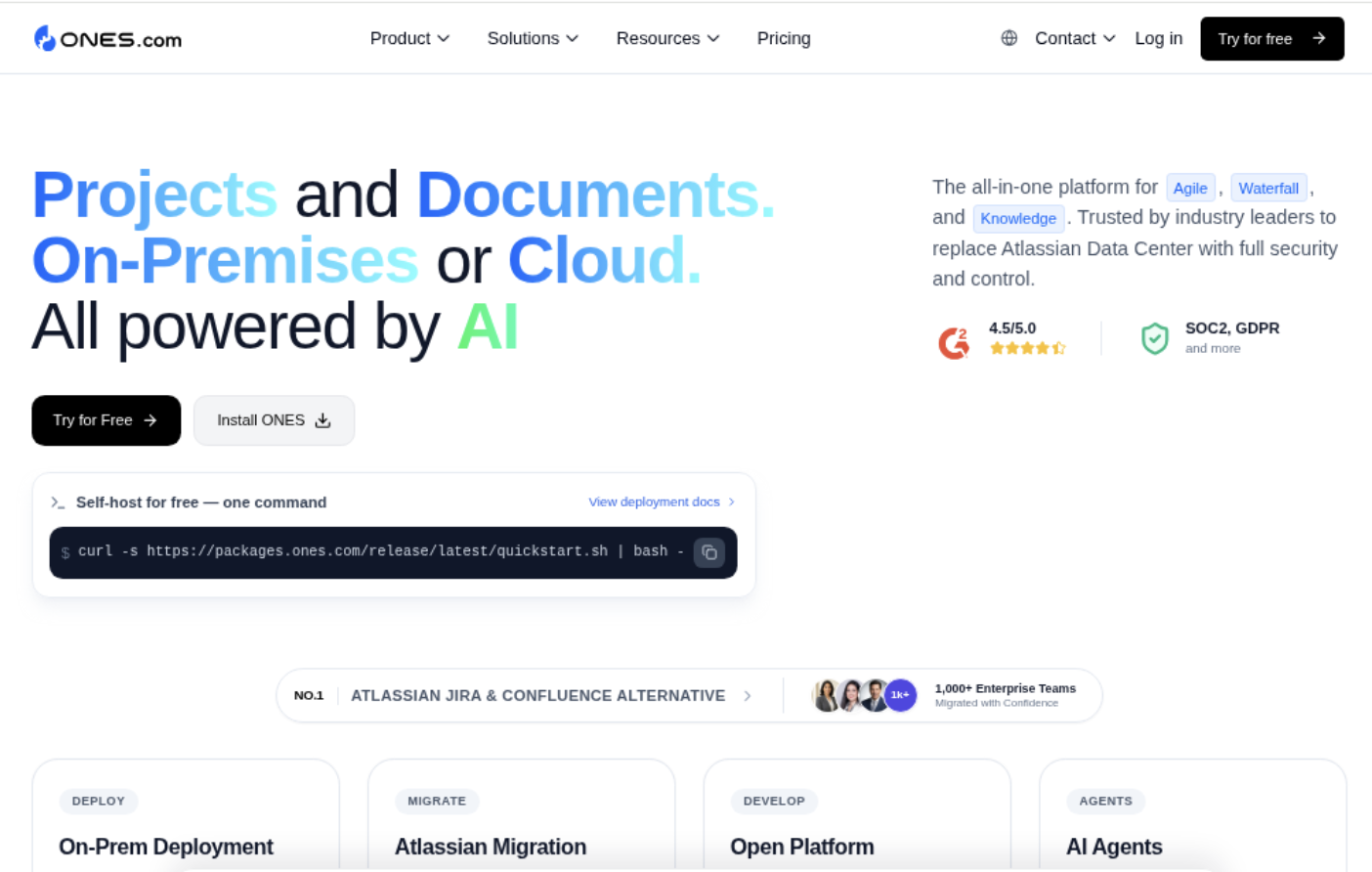
ONES.com combines project management and knowledge management in one platform. ONES Project serves as a Jira alternative, while ONES Wiki serves as a Confluence alternative, and the two products are sold separately.
This structure can help teams evaluate project work and knowledge collaboration together while retaining separate product choices. ONES.com supports Cloud, On-Premise, Private Cloud, and Air-gapped deployments, with full feature parity between cloud and self-hosted versions.
Core Capabilities
- Disconnected project tools → ONES Project supports air-gapped deployment → teams can manage restricted-network work without depending on a public cloud connection.
- Separate project and knowledge systems → ONES Project and ONES Wiki provide focused products → teams can select the capabilities they need without adopting an unrelated bundle.
- Jira migration concerns → Jira-compatible workflows, custom fields, and sprint management → teams can preserve familiar delivery practices while evaluating a Jira alternative.
- Manual reporting → built-in reporting and dashboards → managers can review progress, workload, and delivery information without relying on multiple extensions.
- Rigid processes → custom workflows and fields → departments can reflect their approval, development, service, or product processes more accurately.
- Plugin-heavy administration → native capabilities across common project workflows → administrators may reduce the number of extensions required for routine work.
- Scattered knowledge → ONES Wiki provides a dedicated knowledge base → teams can organize guides, decisions, meeting notes, and operational context alongside project activity.
- Repetitive project administration → automation features → teams can reduce manual transitions, reminders, and routine assignment work.
- Budget pressure during evaluation → a free plan for up to 30 seats → small teams can test core workflows before making a broader commitment.
Application Scenarios
Restricted-network engineering: A defense or industrial engineering team may need an air-gapped environment. ONES.com offers an air-gapped deployment option while retaining feature parity with its cloud offering.
Growing software team: A development group moving away from a plugin-heavy Jira setup could assess ONES Project for sprint planning, workflows, custom fields, reporting, and automation.
Project and knowledge coordination: A product organization may use ONES Project for delivery work and ONES Wiki for requirements, decisions, and internal guidance. Since the products are sold separately, the organization can select the combination that matches its needs.
Common Challenges
Challenge: The initial estimate ignores add-ons
Solution: Create a complete service inventory before comparing plans. Include every marketplace app, integration, identity service, and premium support requirement.
Challenge: Every employee receives every product
Solution: Assign access by role. A finance partner may need selected knowledge areas and dashboards, while a developer may need full project access.
Challenge: Teams upgrade before improving adoption
Solution: Measure current feature usage and remove process friction first. A higher tier works best when a specific capability solves a verified problem.
Challenge: Cloud and self-managed costs are compared unfairly
Solution: Add infrastructure, maintenance, backup, security, and technical labor to self-managed estimates. Compare the full operating model, not only the license line.
Challenge: Pricing changes disrupt budgeting
Solution: Keep a renewal calendar, review plan announcements, and model several headcount scenarios. Recheck the official Atlassian pricing pages before signing or renewing.
FAQs
Is Atlassian pricing based on the number of seats?
Usually, yes. The cost commonly changes with the number of seats assigned to each Atlassian product. Jira, Confluence, and Jira Service Management may have separate calculations. Your total can also change when you move into another pricing tier or add marketplace applications.
Can I use Jira and Confluence under one subscription?
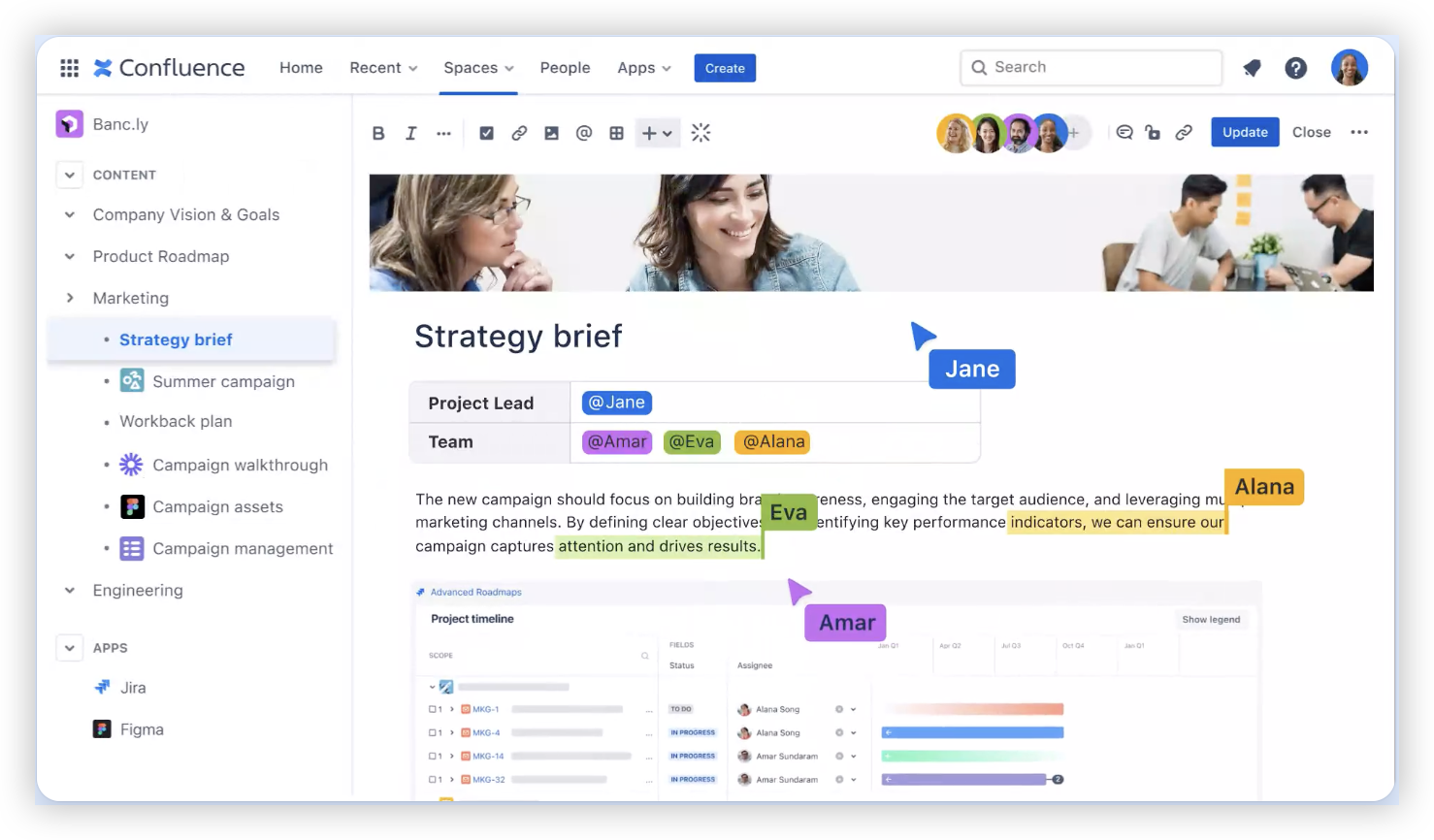
Jira and Confluence are generally separate products with separate plan selections. Atlassian offers an integrated ecosystem, so the products can work together, but connected functionality does not necessarily mean one combined subscription. Check the current checkout estimate for your team size and chosen plans.
Is annual billing cheaper than monthly billing?
Annual billing may offer a different effective rate or more predictable budgeting, depending on the product and current commercial terms. Monthly billing gives you more flexibility when headcount changes quickly. Compare the full commitment, renewal terms, expected growth, and cancellation conditions before choosing.
Do marketplace apps increase the total cost?
They can. Marketplace apps often have separate subscriptions, pricing tiers, renewal dates, and administration requirements. List every app your teams rely on, then check whether the chosen Atlassian plan already includes similar capabilities. Removing duplicate apps can reduce both spending and configuration complexity.
Should a small team choose the free plan?
A free plan can be a sensible starting point for a small team with straightforward requirements. Check its limits for team size, storage, permissions, automation, support, and administration. If your team expects rapid growth or needs formal controls, compare the next tier before launching a critical workflow.
Conclusion
Atlassian pricing becomes easier to understand when you separate the decision into products, seats, plan tiers, deployment, extensions, and operating effort. Start with your workflows, assign access by role, and estimate growth before selecting a subscription.
But here's the truth: a low headline price can become expensive when you add unused seats, overlapping apps, administration, and infrastructure. The right plan is the one that supports essential work without paying for capabilities your team will not use.
Compare Atlassian’s cloud and self-managed options carefully, then evaluate alternatives such as ONES.com when unified project and knowledge management, self-hosted deployment, or reduced extension dependence matters to your organization.