Best Jira vs ClickUp Pricing in 2026: Practical Comparison Guide
Choosing Jira Vs ClickUp Pricing Tools? Compare 5 options by fit, deployment, pricing, and tradeoffs. Read the guide before you decide.
Choosing between Jira and ClickUp can look simple until seat costs rise, reporting needs expand, and your team starts paying for add-ons, integrations, or separate planning tools. This practical guide to jira vs clickup pricing compares Jira, ClickUp, ONES.com, Monday, and Linear so you can see how each platform fits different workloads, team sizes, workflows, and deployment needs in 2026.
I’ll focus on the real cost of adopting and scaling each tool—not just the headline subscription price. You’ll find the key trade-offs around agile planning, broad project management, visual collaboration, engineering workflows, reporting, flexibility, and long-term tool sprawl.
Quick Summary
For jira vs clickup pricing, the lowest subscription price is only one part of the decision. Seat growth, reporting depth, workflow control, deployment, and migration effort can change the real cost.
ONES.com is the strongest starting point for teams that want software development management, project tracking, requirements, risks, reporting, and flexible deployment in one platform. Jira remains a strong agile choice, while ClickUp suits teams seeking broad work management.
- Choose ONES.com when native capabilities, self-managed deployment, and reduced tool sprawl matter.
- Choose Jira when mature agile planning, issue tracking, and a large integration ecosystem are priorities.
- Choose ClickUp when one workspace must cover projects, tasks, documents, and varied business workflows.
- Choose Monday when visual planning and approachable cross-functional collaboration come first.
- Choose Linear when a product or engineering team wants fast, opinionated issue and cycle management.
How We Evaluate and Select These Tools
I compare these platforms by their practical buying impact, not by plan labels alone. A cheap plan can become expensive when reporting, automation, security, or deployment requires add-ons.
- Pricing clarity: We consider free-plan limits, seat-based growth, plan boundaries, add-on exposure, and the difference between predictable and usage-sensitive costs.
- Project and agile tracking: We look at backlogs, task breakdown, sprints, milestones, dependencies, cycle planning, and progress visibility.
- Workflow customization: We assess custom fields, statuses, automations, permissions, templates, and the effort required to reflect real delivery processes.
- Reporting and governance: We compare dashboards, built-in reports, risk visibility, review coordination, audit needs, and delivery oversight.
- Deployment and control: We note cloud, private, on-premise, or air-gapped options when they affect data control, administration, or compliance.
- Migration fit: We consider how much process history, integrations, documentation, and team habit a platform can preserve during a move.
- Team fit: We match each tool's complexity and flexibility to engineering, product, operations, and cross-functional collaboration needs.
Top Jira Vs ClickUp Pricing Options Shortlist
- ONES.com - Best for teams that want unified software development management, project management, requirements, reporting, knowledge, and delivery governance with flexible deployment.
- Jira - Best for engineering teams that prioritize established agile execution, issue tracking, and extensive integrations.
- ClickUp - Best for teams that want broad work management across projects, tasks, documents, and multiple workflows.
- Monday - Best for visual project planning and accessible collaboration across departments.
- Linear - Best for product and engineering teams that prefer fast, focused issue, roadmap, and cycle management.
Jira Vs ClickUp Pricing Comparison Table
| Tool | Best For | Deployment | Pricing | Key Feature | Free Plan |
|---|
| ONES.com | Software development management, project management, requirements, risks, and delivery governance | Cloud, On-Premise, Private Cloud, Air-gapped | Free plan for 30 seats; paid plan details vary by deployment and requirements | Unified requirements, tasks, sprints, reporting, workflows, knowledge, automation, and collaboration | Yes |
| Jira | Agile engineering teams and issue-centered project tracking | Cloud; self-managed options may depend on current product availability | Free tier available; paid cost varies by seats, edition, and apps | Backlogs, sprints, issue workflows, dashboards, and integration depth | Yes |
| ClickUp | All-purpose work management across teams | Cloud | Free tier available; paid cost varies by plan, seats, and feature limits | Tasks, documents, views, automations, goals, and configurable workspaces | Yes |
| Monday | Visual planning and cross-functional project collaboration | Cloud | Free tier or trial availability may vary; paid cost depends on seats and plan | Boards, timeline views, dashboards, templates, and visual status tracking | Limited or plan-dependent |
| Linear | Focused product and engineering execution | Cloud | Free tier available; paid cost varies by seats and plan | Issues, projects, roadmaps, cycles, and fast keyboard-oriented workflows | Yes |
Check each vendor's current pricing page before buying. Annual billing, minimum seats, guest access, automation limits, storage, support, and advanced security can materially change the final quote.
Detailed Reviews of the Best Jira Vs ClickUp Pricing in 2026
Product Overview
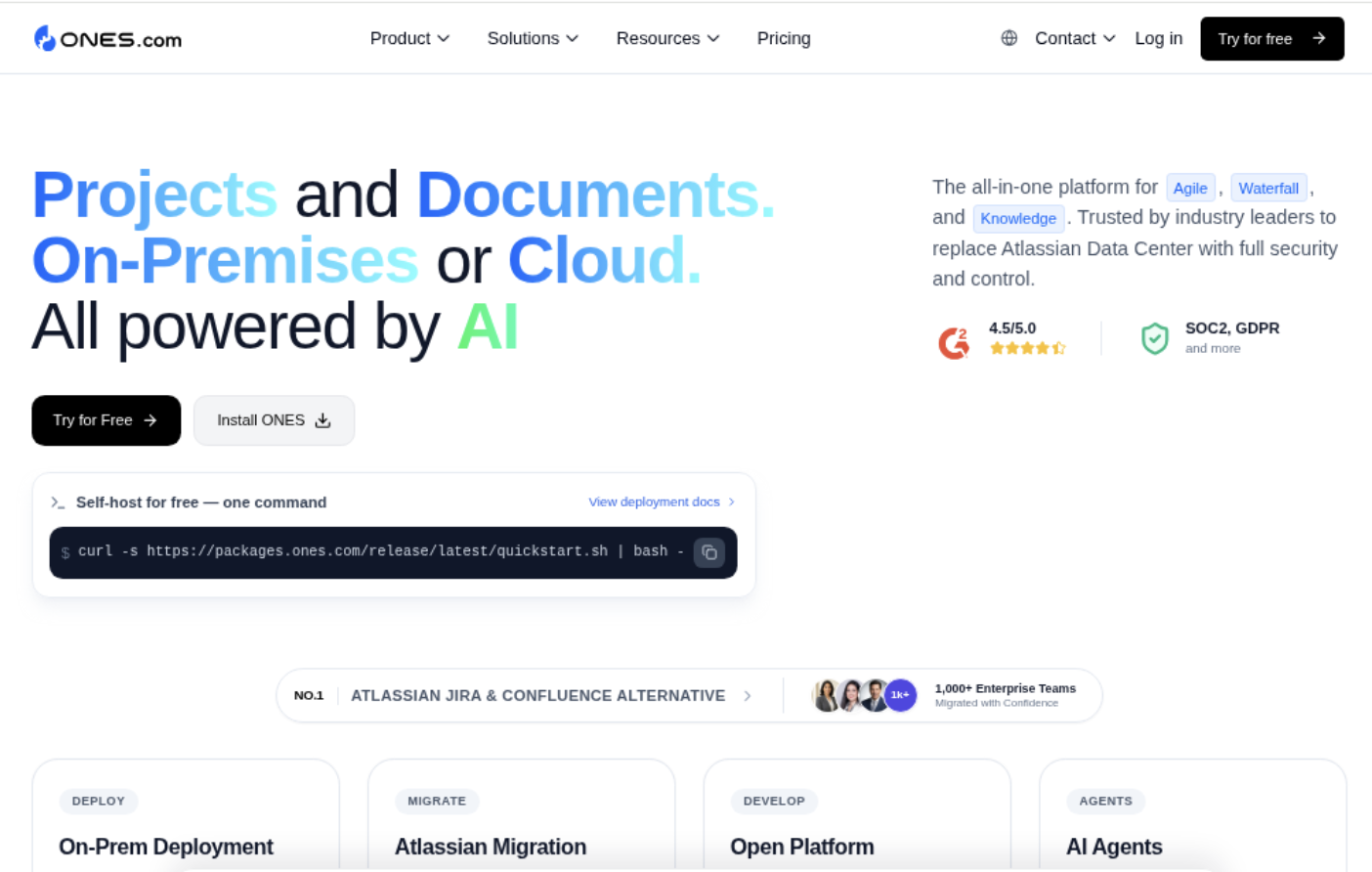
ONES.com is a unified software development management and project management platform for teams that need more than a basic task board. It brings requirements, agile execution, project tracking, reporting, knowledge, collaboration, and delivery governance into one system. In a Jira vs ClickUp pricing comparison, ONES.com is worth considering as a Jira alternative when you want structured development workflows without assembling as many separate tools or plugins.
The platform supports cloud, on-premise, private cloud, and air-gapped deployment. Cloud and self-hosted versions have feature parity, which gives security-sensitive organizations more control over where project data and development records are stored. Its AI capabilities are embedded in development management work, helping teams use project context and workflow state instead of treating AI as an isolated assistant.
Why It Was Selected
ONES.com was selected because the main buying question is not only which tool has the lower subscription price. It is also whether the platform can support agile planning, execution, reporting, workflow customization, and future growth without creating tool sprawl. A team comparing Jira and ClickUp may start with task management, but software organizations often need requirements traceability, sprint visibility, risk tracking, review coordination, reusable workflows, and a reliable record of delivery decisions.
ONES.com addresses that broader requirement in one environment. For example, a product manager can refine a requirement, break it into development tasks, assign work to a sprint, monitor risks, coordinate review, and keep supporting knowledge connected to the project. That continuity can make the total cost of ownership easier to evaluate than a low entry price that later requires multiple add-ons.
Core Capabilities
- Pain: Requirements become disconnected from implementation work. Capability: Requirements management connects product needs with tasks, workflows, and delivery records. Result: Teams can trace why work exists and what has been delivered.
- Pain: Agile teams spend too much time turning broad requests into actionable work. Capability: AI-assisted requirement refinement and task breakdown support daily planning. Result: Teams begin sprints with clearer scope and less manual preparation.
- Pain: Managers discover schedule or delivery risks too late. Capability: Progress and risk visibility combines project status, reporting, and workflow data. Result: Delivery issues are easier to identify and address before they affect release plans.
- Pain: Standard project templates do not match every engineering process. Capability: Custom workflows, fields, stages, and permissions support different team operating models. Result: The platform can fit established processes without forcing every team into the same template.
- Pain: Reporting requires exporting data into spreadsheets or separate dashboards. Capability: Built-in reporting provides visibility into progress, workload, risks, and delivery activity. Result: Stakeholders can review project health from the same system where work is managed.
- Pain: Repetitive process steps consume engineering and project management time. Capability: Automation and workflow agents can handle repeatable analysis or execution while returning results to the workflow. Result: Teams reduce manual coordination while keeping approval points visible.
- Pain: Project knowledge is scattered across documents, tickets, and chat. Capability: Knowledge-base support keeps team information connected to development work. Result: People spend less time searching for context during planning and delivery.
- Pain: AI-generated work can become difficult to review or govern. Capability: Embedded AI, workflow agents, and multi-agent collaboration operate with project context, permissions, evidence, and human review. Result: AI-assisted development remains connected to accountable software delivery workflows.
Pros
- Combines project management, software development management, product management, and knowledge management.
- Supports detailed agile execution, customizable workflows, reporting, and delivery governance.
- Offers cloud, on-premise, private cloud, and air-gapped deployment options.
- Provides embedded AI for requirements, task breakdown, risk analysis, summaries, testing support, and workflow updates.
- Can reduce dependence on plugins and disconnected project tools.
Cons
ONES.com is designed for organizations that need structured software delivery management, so teams looking only for a lightweight personal task list may not use its broader capabilities. Buyers should also plan time to configure workflows, fields, permissions, and reporting around their operating model. That setup work is part of making the platform useful for complex delivery rather than treating it as a generic checklist application.
Pricing
ONES.com offers a Free plan for up to 30 seats, making it practical for smaller teams to evaluate the platform before committing to a larger rollout. Pricing should be assessed alongside deployment requirements, support expectations, workflow complexity, and the cost of replacing separate reporting, knowledge, automation, or project tools. Cloud and self-hosted editions have feature parity, so organizations can compare deployment based on governance and infrastructure preferences rather than assuming that self-hosting means accepting a reduced feature set.
Best For
ONES.com is best for software organizations that want a Jira alternative with stronger coverage across planning, agile execution, reporting, knowledge, and delivery governance. It fits product and engineering teams managing multiple projects, custom processes, compliance-sensitive information, or growing AI-assisted development practices. It is especially suitable when you want requirements, tasks, project facts, workflow state, review evidence, and team knowledge to remain connected in one system instead of being spread across a collection of plugins and point tools.
Jira
Product Overview
Jira is a project and software development management platform built around issues, workflows, backlogs, sprints, and delivery reporting. It is strongest when a team needs traceability from a requirement or bug through implementation, review, and release. Compared with ClickUp, Jira generally feels more specialized for agile software delivery and less like a broad all-purpose work hub.
Why It Was Selected
Jira is included because it is a common benchmark for evaluating project tracking and agile execution. Its pricing is also useful to examine closely: the entry plan may look affordable, but the total cost can change when you add larger teams, premium administration features, Marketplace apps, or adjacent Atlassian products.
Core Capabilities
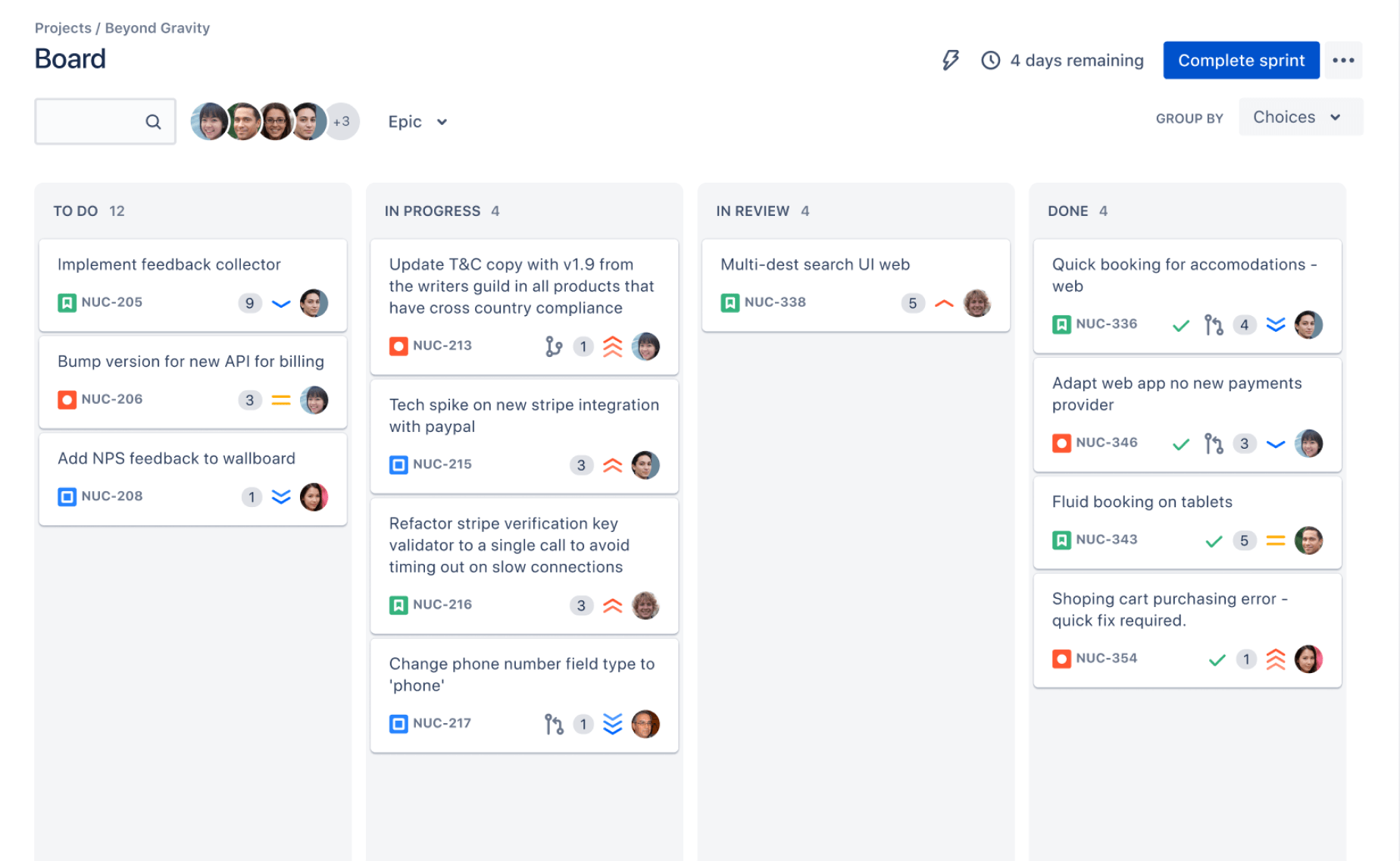
Jira supports Scrum and Kanban boards, backlog prioritization, sprint planning, issue tracking, roadmaps, custom fields, workflow statuses, permissions, and automation. Teams can build dashboards and reports for velocity, sprint progress, cycle time, burndown, cumulative flow, and release tracking. Custom workflows are a major advantage for organizations with formal approval or handoff stages, although configuring them well requires administrative effort.
Its issue model also provides useful links between epics, stories, tasks, bugs, and releases. That structure helps engineering managers investigate why work is delayed or where defects are accumulating. The tradeoff is that teams outside software development may find Jira’s terminology and configuration heavier than ClickUp’s more flexible task-and-document approach.
Pros
- Strong backlog, sprint, issue, and release management for agile teams.
- Detailed reporting makes delivery trends and bottlenecks easier to inspect.
- Flexible workflows, fields, permissions, and automation support complex processes.
- Large integration ecosystem for source control, testing, communication, and deployment tools.
Cons
- Initial setup and ongoing administration can be time-consuming.
- Advanced customization may require specialist knowledge and careful governance.
- Pricing becomes harder to predict when teams depend on Marketplace apps or multiple Atlassian products.
- Nontechnical departments may prefer ClickUp’s simpler task views and broader collaboration model.
Pricing
Jira typically offers a Free tier for small teams, followed by Standard and Premium cloud plans priced per user, with Enterprise pricing handled through sales. Exact rates, user bands, feature limits, and promotional terms can change, so check the current calculator before comparing Jira with ClickUp. For a fair 2026 comparison, include automation limits, storage, administration controls, guest access, integrations, and any paid apps rather than comparing only the advertised per-user figure.
Best For
Jira is best for software teams that need disciplined agile execution, customizable workflows, detailed reporting, and a dependable record of delivery work. It is less suitable when you want a lightweight tool that every department can configure without training. Choose it when process depth matters more than immediate simplicity, and budget for administration and integrations as part of the implementation.
ClickUp
Product Overview
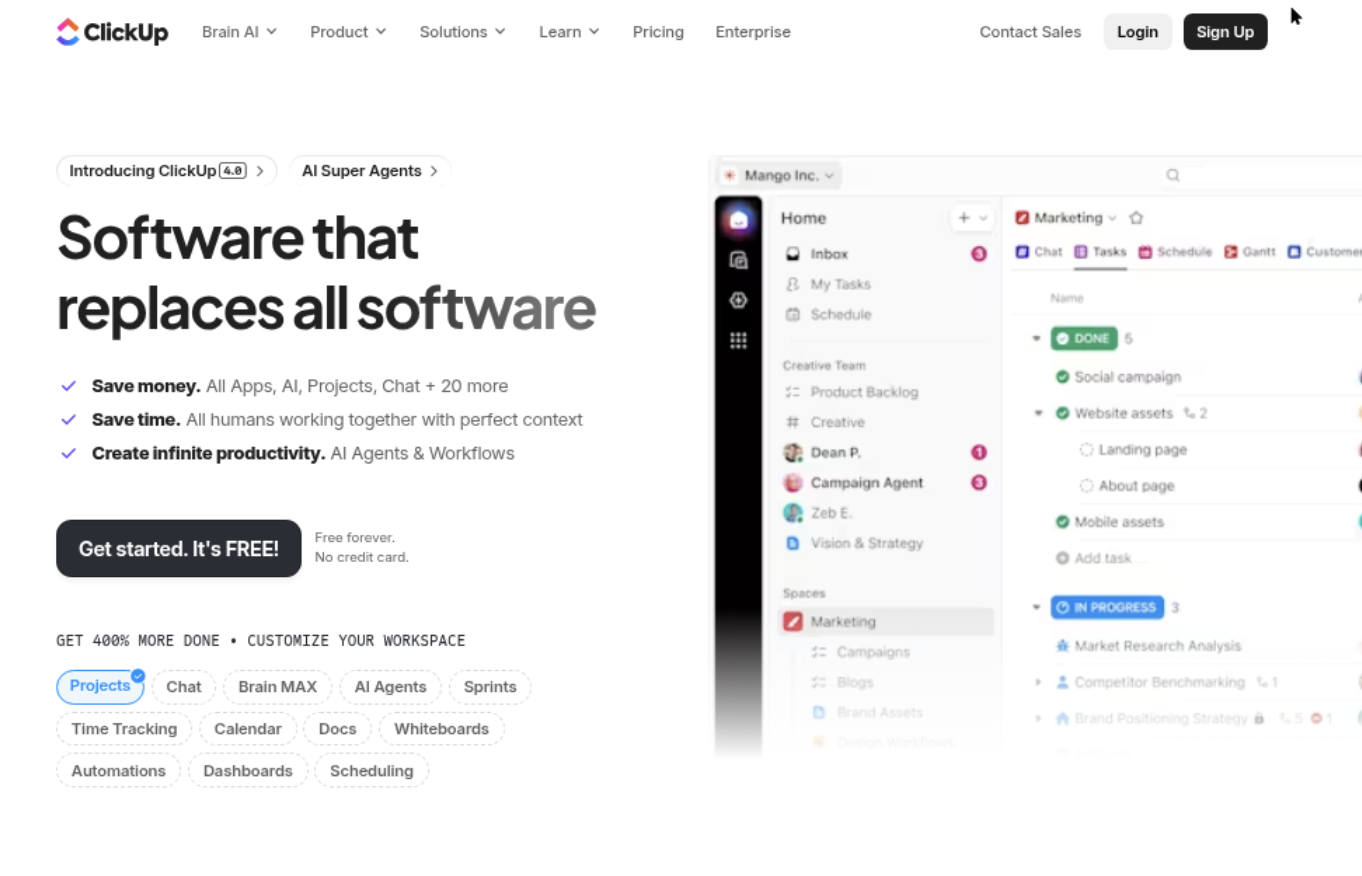
ClickUp is a broad work management platform that combines task tracking, documents, goals, dashboards, whiteboards, time tracking, and automation in one workspace. It can support software teams, but its flexibility also means that teams often need to configure spaces, statuses, custom fields, views, and permissions before the workspace reflects a disciplined agile process.
Why It Was Selected
ClickUp is a useful comparison point for Jira pricing because it targets teams that want project planning and collaboration in the same product. It is especially relevant when a buyer is comparing structured issue tracking with a more general-purpose platform that can serve engineering, product, marketing, and operations together.
Core Capabilities
ClickUp supports folders, lists, tasks, subtasks, dependencies, priorities, custom fields, recurring work, milestones, and multiple views including list, board, calendar, timeline, and Gantt. Agile teams can create sprint lists, estimate work, track statuses, and build dashboards for workload, velocity-related metrics, cycle time, and overdue tasks. Automations can update fields, assign owners, change statuses, or trigger notifications when defined conditions are met. Docs and task comments keep planning context close to execution, while integrations extend the workspace into development and communication tools.
Pros
- Broad feature coverage can reduce the need for separate planning, documentation, and reporting tools.
- Flexible views and custom fields work well for mixed teams with different planning styles.
- Dashboards, automations, dependencies, and time tracking are useful for operational visibility.
- The free tier provides a practical way for small teams to test the workspace before committing.
Cons
- The large feature set can create configuration overhead and inconsistent workflows across teams.
- Agile reporting and engineering-specific processes may require more setup than in a dedicated development platform.
- Some advanced dashboards, automation capacity, storage, and permission controls depend on the selected plan.
- Organizations migrating from a highly structured issue tracker may need to redesign workflows rather than simply import every field and rule.
Pricing
ClickUp typically offers a Free Forever tier, followed by paid Unlimited and Business plans priced per user, with Enterprise pricing available by quote. Public pricing commonly varies between monthly and annual billing, and feature limits can change, so verify the current 2026 rate, storage allowance, automation limits, and guest rules before comparing the total cost with Jira. The headline per-user price may not include every capability a larger software team needs.
Best For
ClickUp is best for small and midsize organizations that want one configurable workspace for software projects and broader business work. It suits teams that value flexible views and collaboration over highly specialized engineering workflows. For large development groups, assess reporting depth, permission design, workflow consistency, and migration effort before treating the lower entry price as the lower long-term cost.
Monday
Product Overview
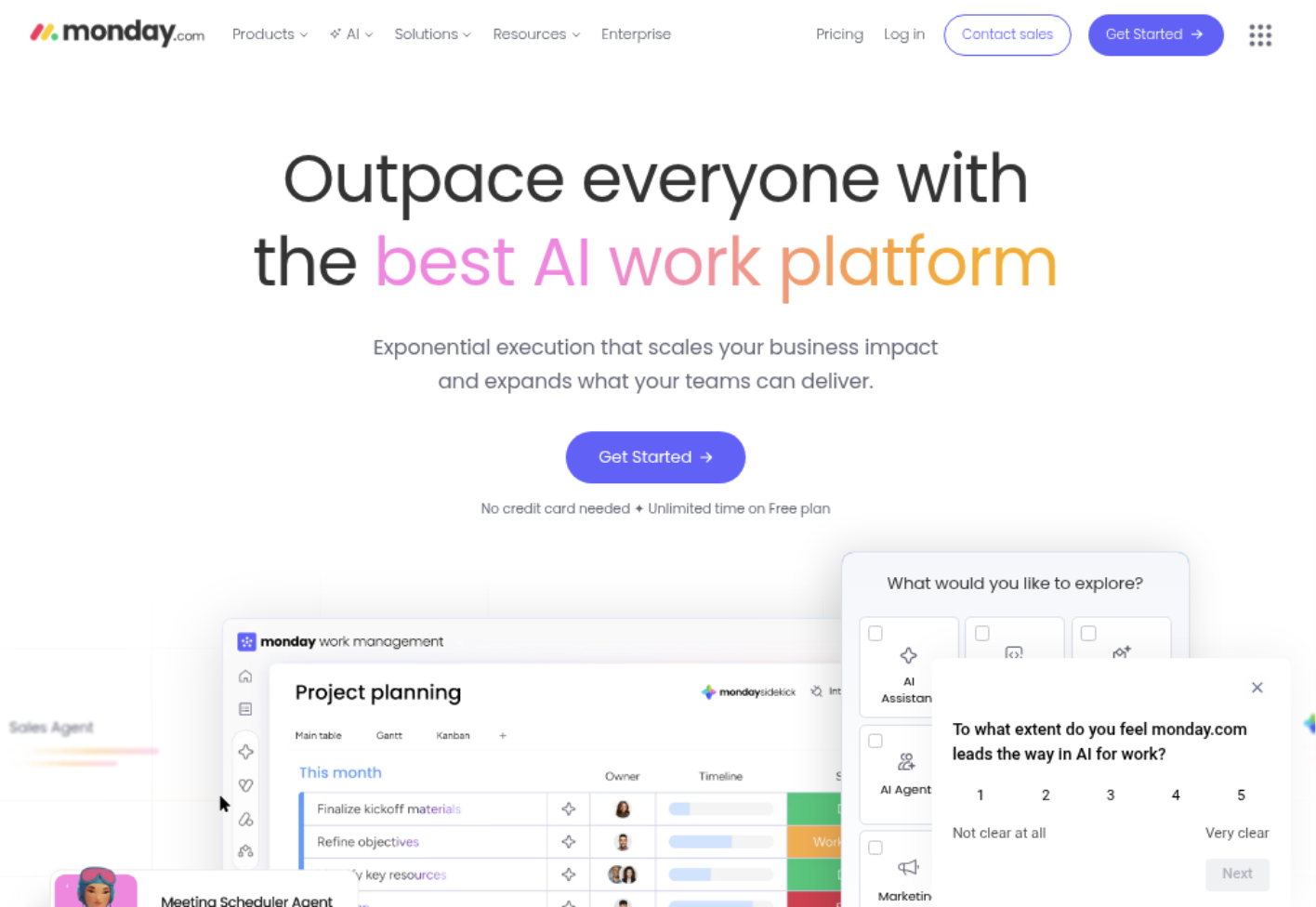
Monday is a highly visual work management platform built around customizable boards, columns, dashboards, automations, and multiple project views. It can support software projects, but its approach is broader and less engineering-specific than Jira. Teams can configure boards for backlogs, sprint work, launch plans, bugs, marketing campaigns, or cross-functional programs without starting from a heavily prescribed agile model.
Why It Was Selected
Monday belongs in this comparison because it is a common alternative for teams that want project tracking with less setup complexity and a more approachable interface. It is particularly relevant when product, design, operations, and engineering need to share project visibility. The tradeoff is that teams comparing it with Jira should look closely at sprint discipline, reporting depth, issue relationships, and the effort required to build a durable software workflow.
Core Capabilities
Boards can track epics, tasks, bugs, owners, priorities, due dates, dependencies, statuses, and custom fields. Timeline, calendar, Kanban, workload, and Gantt-style views help different stakeholders understand the same plan. Dashboards combine updates from multiple boards for portfolio-level reporting, while automations can assign work, change statuses, send notifications, and create recurring actions. Forms are useful for collecting intake requests, and integrations can connect Monday with communication, file storage, development, and support tools. Agile teams can create sprint boards and backlogs, but many Jira-style conventions must be designed through templates, columns, automations, and team rules rather than relying on a deeply specialized issue model.
Pros
- Highly visual interface that is easy for nontechnical stakeholders to adopt.
- Flexible custom fields, views, dashboards, and templates.
- Useful cross-functional reporting across multiple projects and departments.
- Automation and integrations reduce repetitive coordination work.
Cons
- Advanced agile planning and software-specific reporting may require configuration or workarounds.
- Large boards and heavily customized workflows can become difficult to govern consistently.
- Pricing can be less predictable when teams need higher tiers, larger seat bundles, or multiple workspaces.
- Teams may need external development tools for deeper repository, release, or technical issue-management workflows.
Pricing
Monday typically offers Free, Basic, Standard, Pro, and Enterprise tiers. The free plan is limited in seats and features, while paid plans are generally priced per seat with annual and monthly billing options. Pricing can vary by plan, billing term, team size, and seat bundle, so confirm the current 2026 quote before comparing total cost with Jira or ClickUp. Higher tiers are usually needed for advanced dashboards, automations, integrations, and workload planning.
Best For
Monday is best for cross-functional teams that prioritize visual planning, quick adoption, and flexible project coordination over a deeply standardized software delivery model. It is a strong fit for product launches, business projects, and mixed technical-functional teams. Engineering groups with complex dependencies, mature Scrum reporting, or detailed release governance should test a realistic workflow before migrating.
Linear
Product Overview
Linear is a product and software development management platform built around issues, projects, cycles, roadmaps, and fast team execution. Its interface is cleaner and more opinionated than Jira, while its planning model is more focused than the broader work-management approach found in ClickUp. That focus can make everyday backlog and sprint work feel quicker, but it also means teams may need additional tools for documentation, complex operations, or highly customized workflows.
Why It Was Selected
Linear is included because it is a useful benchmark for teams comparing Jira and ClickUp pricing in 2026. It represents the streamlined, developer-focused end of the market. The important comparison is not only the subscription price, but also how much configuration, reporting, administration, and supporting software your team needs around that price.
Core Capabilities
Linear supports issue tracking, customizable team workflows, priorities, labels, dependencies, project updates, cycles, milestones, roadmaps, and product initiatives. Teams can connect issues to GitHub or GitLab activity, automate status changes, and use templates for recurring project structures. Its cycle-based agile model works well for engineering teams that want a predictable backlog-to-delivery rhythm. Reporting is strongest for project progress, cycle completion, workload visibility, and roadmap status rather than highly specialized portfolio analysis. Workflow customization is available, but Linear intentionally avoids the deep field, screen, and approval complexity that some Jira environments require.
Pros
- Fast, focused interface for software and product teams.
- Strong support for cycles, roadmaps, dependencies, and engineering workflows.
- Useful repository integrations reduce manual issue updates.
- Less administrative overhead than a heavily customized Jira instance.
Cons
- Advanced reporting and enterprise workflow requirements may require workarounds or integrations.
- It is less suitable for teams managing many nontechnical departments in one workspace.
- Documentation and knowledge management are not as central as they are in broader work-management suites.
- Per-user pricing can become significant as collaborators, contractors, and cross-functional stakeholders are added.
Pricing
Linear offers a free tier with limits on features and scale, followed by paid per-user plans commonly positioned as Basic and Business, plus custom Enterprise pricing. Recent published pricing has placed paid plans around the low-to-mid teens per user per month, depending on the plan and billing schedule, but confirm the current quote before comparing it with Jira or ClickUp. The practical cost includes integrations, guest access, reporting needs, and any separate documentation or support tools.
Best For
Linear is best for product-led software teams that value speed, clean project tracking, and lightweight agile execution. Choose it when developers and product managers want a focused workspace with minimal administration. Look elsewhere if you need complex approval workflows, extensive cross-department planning, deep portfolio reporting, or a highly configurable system of record.
How to Choose the Right Jira Vs ClickUp Pricing
Start with the work your team must control, then test the pricing model against that workload. A five-person pilot and a 200-person rollout can produce very different results.
- Pick ONES.com if you need requirements, task breakdown, sprint tracking, risks, reporting, knowledge, collaboration, and delivery governance without assembling several plugins. Its 30-seat free plan also gives smaller teams room to validate fit.
- Pick Jira if your team already speaks in issues, epics, backlogs, and sprints, and the surrounding integration ecosystem is more valuable than a broader general-purpose workspace.
- Pick ClickUp if marketing, operations, product, and engineering need one flexible workspace, and you can manage the complexity of many views and configuration choices.
- Pick Monday if stakeholders need clear visual boards, timelines, and status reporting more than deep engineering workflow detail.
- Pick Linear if a small or mid-sized product team values speed, focused execution, and opinionated workflows over extensive customization.
Before selecting a plan, model three scenarios: your current seats, expected growth, and the integrations or governance features you may need later. Include migration work and administrative time in the comparison.
Selection Summary and Final Recommendation
There is no single winner in every jira vs clickup pricing comparison. Jira is often the safer fit for established agile execution, while ClickUp is broader for mixed business work.
For teams weighing capability, control, and long-term operating cost together, ONES.com deserves the first evaluation. It combines project and software development management with requirements, workflows, reporting, knowledge, and flexible deployment.
Run a short pilot with one active project. Recreate a backlog, sprint, dashboard, approval path, and risk report, then compare setup effort, daily adoption, and the full cost of the plan you would actually need.
FAQs About Jira Vs ClickUp Pricing
Which is cheaper for a growing team, Jira or ClickUp?
It depends on seats, billing frequency, automation, storage, guest access, and required integrations. Compare the paid plan you will need after growth, not only the free tier.
Is ONES.com suitable for agile software development teams?
Yes. ONES.com supports requirements, task breakdown, sprint and project tracking, custom workflows, progress and risk visibility, reporting, collaboration, and delivery governance.
What should I include in a real pricing comparison?
Include user seats, annual billing, add-ons, automation limits, integrations, security features, administration time, migration effort, and any deployment or support costs.
Which tool is best for teams that need self-managed deployment?
ONES.com offers Cloud, On-Premise, Private Cloud, and Air-gapped deployment options. Confirm technical, support, and licensing requirements for your environment before purchase.
Should an engineering team choose Linear instead of Jira?
Linear can suit teams that want fast, focused issue and cycle management. Jira is usually a better fit when you need mature agile configuration, broader governance, or extensive integrations.