Best Microsoft Project vs Jira in 2026: Practical Comparison Guide
Choosing Microsoft Project Vs Jira Tools? Compare 6 options by fit, deployment, pricing, and tradeoffs. Read the guide before you decide.
A detailed schedule can be hard to reconcile with a fast-moving sprint backlog, and the wrong tool can leave you chasing updates across spreadsheets and status boards. This 2026 Microsoft Project vs Jira guide compares their strengths and trade-offs, alongside ONES.com, Asana, Monday, and Smartsheet, so you can see which fits the way your team actually works.
I’ll focus on practical differences: planning dependencies and resources, managing issues and sprints, and keeping work visible. That should help you narrow the shortlist without choosing a platform just because it has the longest feature list.
Quick Summary
Choose Microsoft Project when schedule dependencies, resource planning, and formal project controls matter most. Choose Jira when agile teams need configurable issue workflows and sprint tracking.
ONES.com is another option if you want project and software development management in one platform, with cloud or self-managed deployment. Asana, Monday, and Smartsheet are worth comparing when your team prefers visual planning or flexible work tracking.
- Best for schedule-driven plans: Microsoft Project.
- Best for agile issue and sprint workflows: Jira.
- Best for unified management and deployment choice: ONES.com.
How We Evaluate and Select These Tools
We compare these tools by how well they support practical project work, not by feature count alone. The right fit depends on how your team plans, tracks, reports, and adapts.
- Project tracking: We consider task ownership, dependencies, milestones, and progress visibility.
- Agile execution: We look at sprint planning, backlogs, and workflows for iterative delivery.
- Reporting: We assess whether teams can spot delays, risks, and workload issues without rebuilding reports manually.
- Workflow customization: We consider how easily teams can adapt statuses, fields, and automation to their processes.
- Migration fit: We weigh learning effort, existing project structures, and the need to preserve workflows and reporting.
- Deployment and plan fit: We compare available hosting choices and free-plan access where known, while noting that pricing varies.
Top Microsoft Project Vs Jira Options Shortlist
- ONES.com — A unified option for software development and project management, with cloud, on-premise, private cloud, and air-gapped deployment.
- Microsoft Project — A strong fit for schedule-led projects that depend on timelines, resources, and task dependencies.
- Jira — A natural fit for agile software teams managing backlogs, issues, and sprint workflows.
- Asana — A flexible work-management choice for teams that want clear tasks, ownership, and project views.
- Monday — A visual work-management option for teams that want configurable boards and status tracking.
- Smartsheet — A spreadsheet-style project platform suited to teams that want familiar grids and structured reporting.

Microsoft Project Vs Jira Comparison Table
| Tool | Best For | Deployment | Pricing | Key Feature | Free Plan |
|---|
| ONES.com | Unified project and software development management | Cloud, On-Premise, Private Cloud, Air-gapped | Free plan: 30 seats; paid options vary | Requirements, tasks, workflows, reporting, and delivery governance | Yes |
| Microsoft Project | Schedule-driven projects and resource planning | Cloud and desktop options | Paid plans vary by product and plan | Timelines, dependencies, and resource planning | No ongoing free plan listed |
| Jira | Agile software teams and issue tracking | Cloud; self-managed options vary | Free and paid plans; pricing varies | Backlogs, sprints, and configurable issue workflows | Yes |
| Asana | Cross-functional task and project coordination | Cloud | Free and paid plans; pricing varies | Task ownership, project views, and coordination | Yes |
| Monday | Visual project tracking and configurable work boards | Cloud | Paid plans and trial options vary | Customizable boards and status tracking | Plan availability varies |
| Smartsheet | Grid-based project tracking and reporting | Cloud | Paid plans and trial options vary | Spreadsheet-style planning with structured reporting | Trial options vary |
Detailed Reviews of the Best Microsoft Project vs Jira Tools in 2026
Product Overview

ONES.com is a unified project, product, software development, and knowledge management platform for teams that need to plan work and track delivery in one place. In a Microsoft Project vs. Jira comparison, it offers a broader software delivery workspace: teams can manage requirements, tasks, sprints, workflows, reporting, and project knowledge without treating planning and execution as separate systems. It is also a Jira alternative for teams looking to manage software work through configurable workflows and shared project context.
For teams moving from schedule-first project tracking toward iterative delivery, ONES.com connects plans with active work. Product and engineering teams can break requirements into tasks, track sprint progress, surface risks, and coordinate reviews while keeping delivery information visible to the people doing the work.
Why It Was Selected
ONES.com is a strong fit for this comparison because it covers the practical work that often sits between Microsoft Project’s plans and Jira’s issue tracking: requirements, execution, status reporting, and delivery coordination. A team can use custom workflows and fields to reflect its process, then rely on built-in reporting and automation to keep work moving. That makes it useful when you want more than a high-level schedule but also want project context, collaboration, and governance connected to the day-to-day workflow.
It is particularly relevant for software teams that need agile execution alongside broader project visibility. ONES.com supports Cloud, On-Premise, Private Cloud, and air-gapped deployment, with feature parity between cloud and self-hosted versions. That gives organizations room to choose a deployment model that fits their operating and data requirements.
Core Capabilities
- Pain: A project plan loses connection to the work being delivered. Capability: Link requirements, task breakdown, sprint tracking, and project tracking in ONES.com. Result: Teams can follow work from planned scope through execution.
- Pain: Managers spot schedule or delivery risks too late. Capability: Use progress and risk visibility with built-in reporting. Result: Teams can review status and address issues while there is still time to adjust.
- Pain: A standard workflow does not match how different teams operate. Capability: Configure workflows and fields around team processes. Result: Teams can track the information and approval stages that matter to their work.
- Pain: Repetitive status updates take time away from delivery. Capability: Apply automation to recurring workflow steps and updates. Result: Routine coordination takes less manual effort, while work remains visible in the project.
- Pain: Requirements, decisions, and project knowledge are scattered. Capability: Keep knowledge-base support alongside project work. Result: Teams have useful context closer to the tasks and decisions it informs.
- Pain: Reviews and handoffs are difficult to coordinate across roles. Capability: Use collaboration and review coordination within shared project workflows. Result: Contributors can see what needs attention and keep delivery moving.
- Pain: Teams want AI support without losing control of project context. Capability: ONES Assistant can help generate or refine requirements, break down tasks, summarize updates, analyze progress and risks, and support testing. Result: AI-assisted work can draw on team context and remain connected to the project record.
- Pain: Organizations need project management tools to fit their deployment requirements. Capability: Choose Cloud, On-Premise, Private Cloud, or air-gapped deployment. Result: Teams can align where the platform runs with their infrastructure and data needs.
Pros
ONES.com brings planning, agile execution, reporting, workflow customization, and knowledge support into one platform. Built-in capabilities can reduce reliance on a collection of separate plugins and tools. Its flexible deployment choices, configurable workflows, and shared project context make it practical for organizations with varied delivery processes. The free plan also gives small teams a way to evaluate the platform with up to 30 seats.
Cons
For a smooth rollout, teams should map their current plans, workflow stages, fields, and reporting needs before configuring the workspace. Teams accustomed to a schedule-only approach may also want to agree on how milestones and timeline views connect to sprint and task tracking. A short pilot with a representative project can help establish conventions before broader adoption.
Pricing
Free: 30 seats. ONES.com offers Cloud and self-hosted deployment options, with feature parity between those versions. Check ONES.com for current paid-plan pricing and packaging, then compare the available options with your seat count, deployment needs, and required capabilities.
Best For
ONES.com is best for software and product teams that want project tracking, agile execution, reporting, and customizable workflows connected in one workspace. It is a particularly useful Jira alternative when teams want requirements, delivery work, knowledge, and review coordination to share project context. It also suits organizations that need to choose between cloud and self-hosted deployment, or that want a more connected operating model than managing schedules and execution in separate tools.
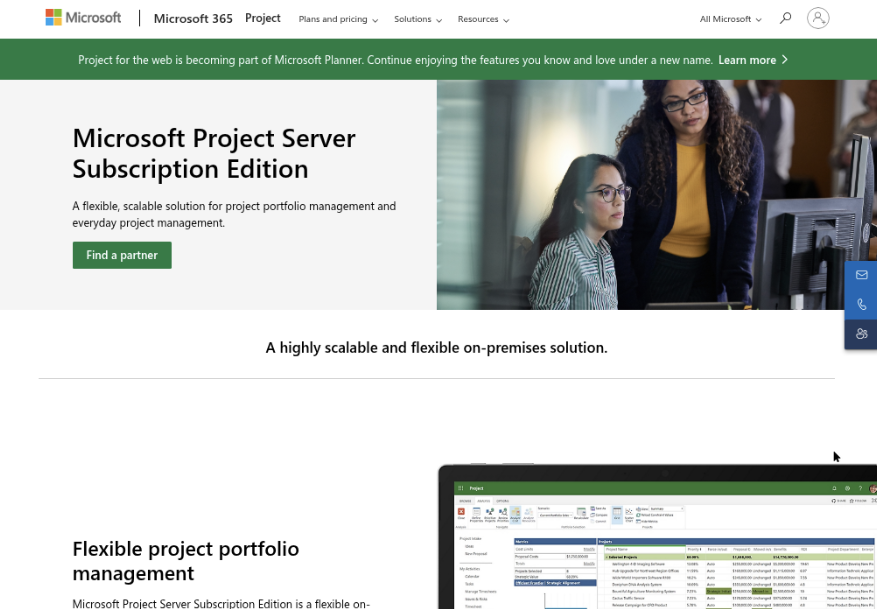
Microsoft Project
Product Overview
Microsoft Project is a planning and scheduling tool built for projects where timelines, dependencies, resources, and milestones need close control. Its strongest experience is traditional project planning with Gantt charts, rather than day-to-day agile work in a software team. Microsoft has been moving web-based Project capabilities into Planner, so check which experience and features are included in your Microsoft 365 plan before choosing it.
Why It Was Selected
In a Microsoft Project vs Jira comparison, Project is a useful benchmark for teams that prioritize detailed schedules and resource planning, while Jira is more closely associated with agile software execution. Project can work well when a product launch or engineering program needs a master timeline across teams. It is less natural when developers need to manage a steady flow of backlog items, sprint work, and changing priorities.
Core Capabilities
Project supports Gantt scheduling, task dependencies, milestones, baselines, and critical-path views. Depending on the plan and application, teams can also assign resources, track schedules against actual progress, and coordinate work through Microsoft’s collaboration ecosystem. These features help a project manager spot a slipping dependency or overloaded resource before it puts a launch date at risk.
For agile tracking, Microsoft’s Planner experience offers boards and task management, but it is not a like-for-like substitute for a dedicated software delivery workflow. Teams should confirm that their chosen plan supports the specific reporting, portfolio, and desktop scheduling features they rely on.
Pros
Project is strong for timeline-heavy work, dependency mapping, and resource-focused planning. It suits organizations already standardized on Microsoft 365, where connecting plans with Teams, SharePoint, or Power BI may fit existing habits. Its scheduling tools can provide more control over complex project plans than a simple task board.
Cons
The depth of the scheduling interface can feel heavy for teams that mainly need a shared backlog and quick status updates. Agile software teams may find sprint execution, issue triage, and workflow customization less direct than in Jira. Microsoft’s changing product names and the transition of web features into Planner can also make plan comparisons confusing. Advanced reporting and portfolio needs may require higher tiers or additional Microsoft tools.
Pricing
Pricing depends on the plan, region, billing term, and whether you need web-based planning, desktop Project capabilities, or advanced portfolio features. Compare current Microsoft plan details carefully: the least expensive option may not include the scheduling or reporting functions your team expects.
Best For
Microsoft Project is best for project managers coordinating schedule-driven work with dependencies, milestones, and resource constraints, especially in Microsoft-centric organizations. If your main challenge is managing software backlogs and agile delivery, evaluate Jira alongside it and test a representative sprint workflow before committing.
Jira
Product Overview
Jira is a work management platform built around issues, boards, and configurable workflows. Software teams commonly use it to manage backlogs, bugs, sprints, and releases, while other teams adapt it for service requests or business projects. In a Microsoft Project vs. Jira comparison, Jira is the more natural fit for ongoing, team-based agile execution; it is less centered on traditional schedule and resource planning.
Why It Was Selected
Jira is a useful comparison point because it gives teams a clear view of work moving through stages, from backlog to completion. It supports Scrum and Kanban practices and offers more workflow flexibility than a simple task list. That flexibility has a tradeoff: teams need to decide how much configuration they actually need, or Jira can become harder to manage than the work itself.
Core Capabilities
Teams can plan sprints, prioritize backlogs, assign issues, and track work on Scrum or Kanban boards. Jira includes configurable issue types, fields, statuses, and workflow rules, plus automation for routine updates. Search and filters, including Jira Query Language (JQL), help teams build tailored work views. Dashboards and reports cover sprint progress, burndown, velocity, and issue trends. Integrations and Marketplace apps can extend the platform, though some advanced needs may require additional products or paid apps.
Pros
Jira’s agile planning tools connect day-to-day task tracking with sprint goals and backlog priorities. Teams can adapt workflows to match their review and approval steps, and its reporting helps surface blockers or work that is slipping. A broad integration ecosystem can also make Jira practical for teams already using connected development tools.
Cons
Configuration can become difficult to maintain when a workspace accumulates custom fields, schemes, and workflow variations. Some reports are less useful without careful setup, and teams may rely on Marketplace apps for capabilities that are not covered natively. Jira’s issue-and-sprint model can also feel cumbersome for teams seeking a straightforward project timeline, detailed resource planning, or a lightweight experience for occasional collaborators. Moving existing projects into Jira takes planning: field mapping, workflow differences, permissions, and historical data all need review.
Pricing
Jira offers a free Cloud plan for small teams, with paid tiers priced by user count and billing period. Higher tiers add administration, security, storage, and support features. Check current regional pricing and app costs before budgeting, since add-ons can change the total.
Best For
Jira is best for software teams that run Scrum or Kanban and want configurable issue tracking, sprint visibility, and workflow automation. It is a weaker fit when the priority is schedule-first planning with detailed dependencies and resource allocation. Teams considering a Jira alternative may also assess ONES.com when they want project and development management capabilities in a unified platform.
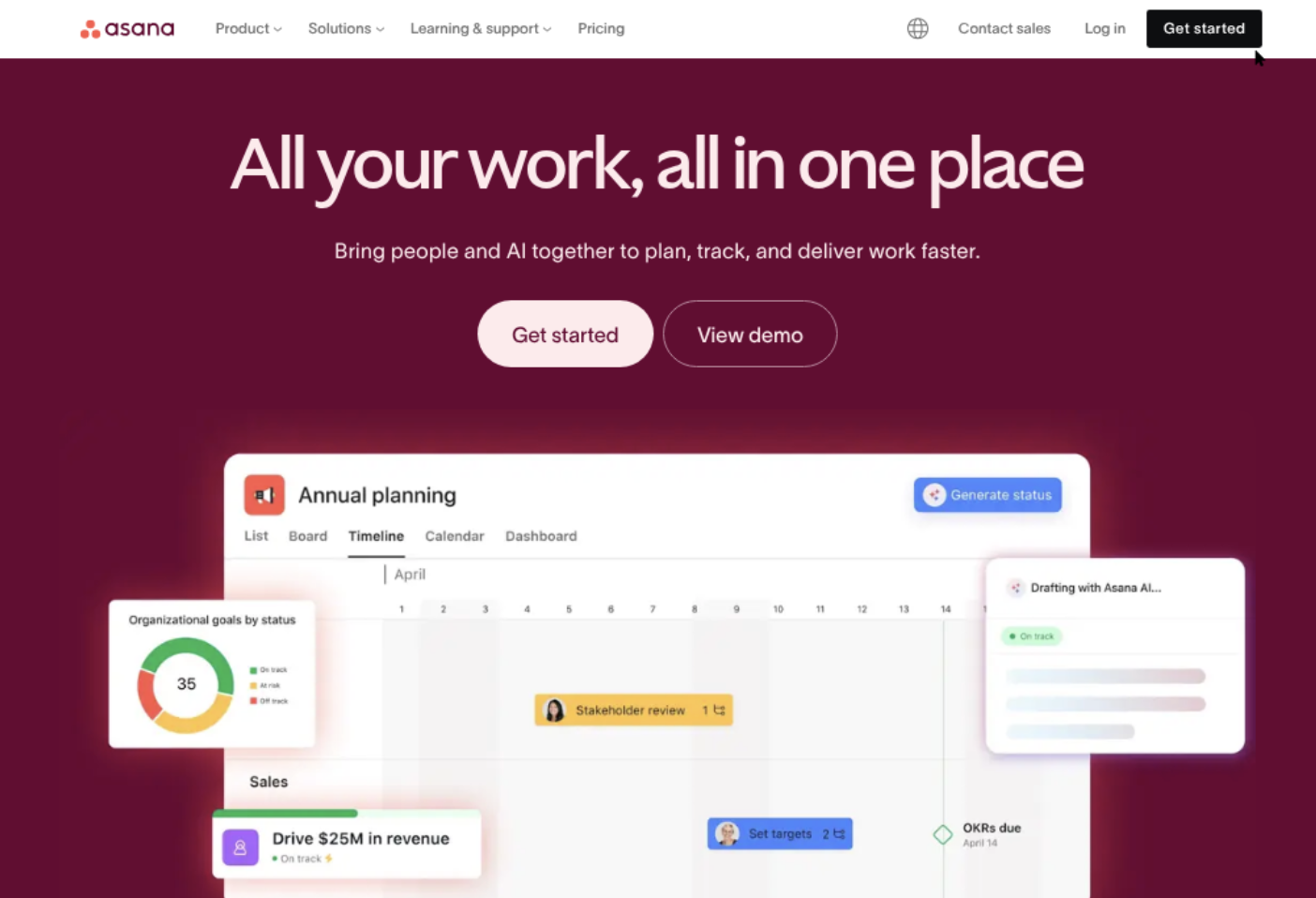
Asana
Product Overview
Asana is a cloud-based work management platform for coordinating projects, tasks, deadlines, and cross-functional teams. It offers several ways to view the same work, including lists, boards, calendars, and timelines, so teams can track delivery without forcing every department into a single project format. In a Microsoft Project vs Jira comparison, Asana sits between detailed schedule planning and software-focused issue tracking: it is approachable for general project work, but less specialized in either discipline.
Why It Was Selected
Asana is a useful comparison because it shows what teams gain when they prioritize ease of adoption and visibility across departments. A product team can manage launch tasks on a board, while marketing and operations follow related deadlines in a timeline or calendar. That flexibility can make coordination easier than maintaining separate project plans, but it does not replace the depth of a dedicated scheduling or agile development system for every team.
Core Capabilities
Projects can use tasks, subtasks, owners, due dates, dependencies, custom fields, and forms to collect and organize work. Timeline view helps teams map dependencies and spot schedule clashes, while portfolios and dashboards provide a higher-level view across projects. Rules automate routine actions, such as assigning work when a task enters a section or updating fields when its status changes. Reporting and workload views help managers monitor progress and capacity. Teams can also use goals to connect project work to broader objectives. Agile teams can organize work on boards and manage recurring sprint-like cycles, though Asana does not offer the same depth of software-specific issue types, backlog controls, and development workflow conventions as Jira.
Pros
Asana is relatively easy to learn, supports multiple project views, and gives nontechnical departments a shared place to coordinate work. Custom fields, rules, portfolios, and dashboards can reduce manual status chasing, especially when several teams contribute to a launch or business initiative. Its flexible structure also makes it practical for teams that want consistent visibility without adopting a highly technical project setup.
Cons
Asana is not a full replacement for Microsoft Project when a plan depends on advanced scheduling, resource management, or detailed cost controls. It is also less tailored than Jira for software teams that need sophisticated backlogs, issue workflows, and development-focused reporting. Some useful portfolio, workload, and automation features require higher-tier plans, and complex setups can become difficult to govern if teams create inconsistent fields and project conventions.
Pricing
Asana offers a free Personal plan for basic task and project coordination. Paid plans include Starter and Advanced, with Enterprise options for organizations needing additional controls and support. Pricing and feature limits vary by plan, billing term, and region, so check Asana’s current pricing page before budgeting for larger teams or advanced reporting.
Best For
Asana is best for teams that need accessible project tracking, cross-functional coordination, and flexible reporting more than deep scheduling controls or specialized agile tooling. It is a sensible fit for product launches, operations work, and business projects; software teams with complex development workflows may find Jira a closer match, while schedule-heavy programs may favor Microsoft Project.
Monday
Product Overview
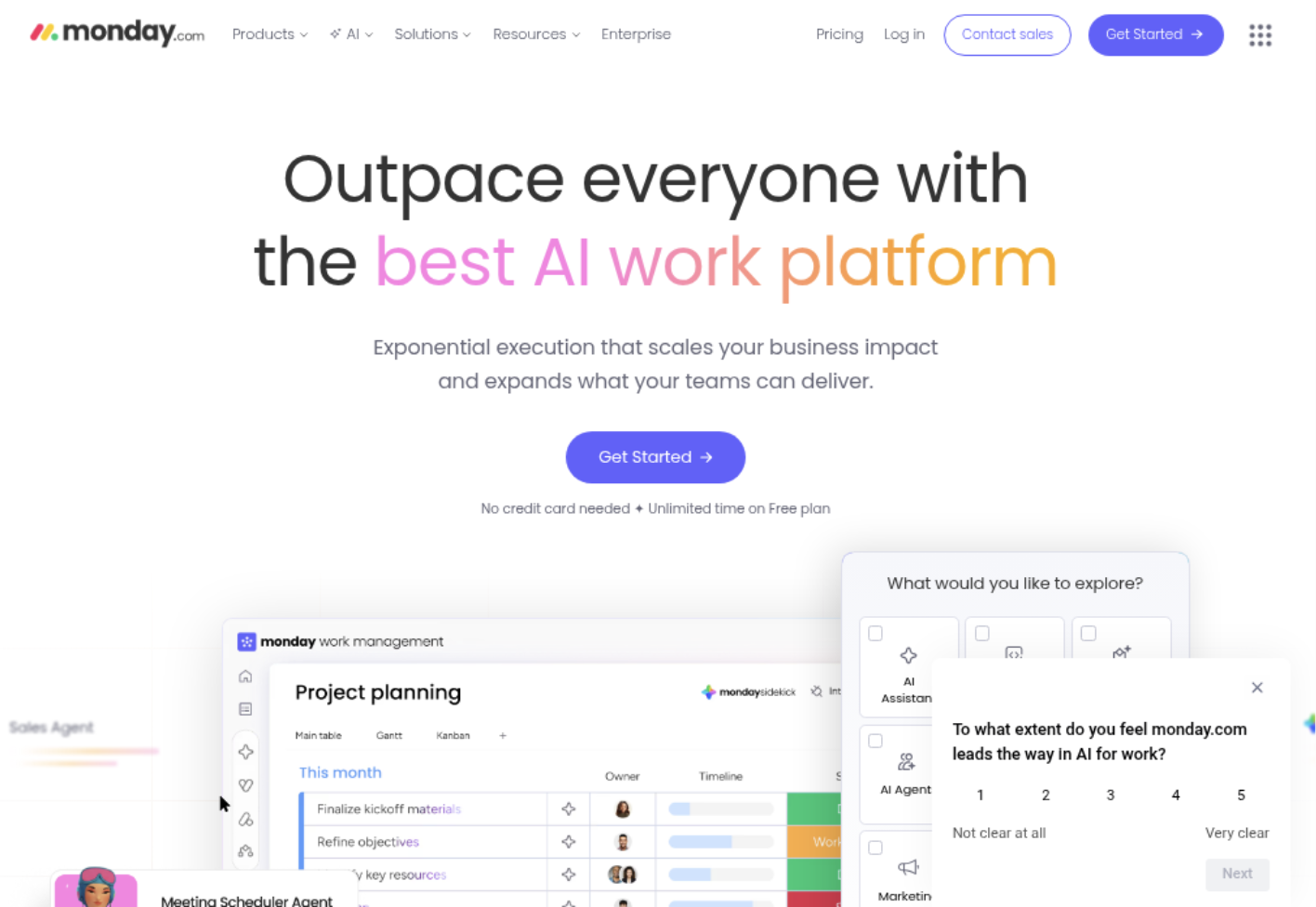
Monday.com is a visual work management platform built around customizable boards, statuses, and automations. In a Microsoft Project vs Jira comparison, it offers a more approachable way to coordinate team work than a traditional scheduling tool, while giving teams more flexibility than a fixed project plan. Its broad scope is useful, but it is not as specialized in software development workflows as Jira.
Why It Was Selected
Monday is a useful middle ground for organizations that want project tracking, reporting, and workflow customization without making every team follow the same technical process. A product team can track feature requests and releases on boards, while marketing or operations teams use the same platform for launches and recurring work. That flexibility makes it relevant when you are weighing Jira’s agile focus against Microsoft Project’s scheduling strengths.
Core Capabilities
Teams can create boards with custom columns, statuses, owners, dates, dependencies, and views such as Kanban, timeline, calendar, and Gantt. Dashboards bring board data together for progress and workload reporting. Automations can handle routine actions, such as notifying an owner when a status changes or moving an item when a date arrives. Integrations connect Monday.com with common work tools, though the usefulness of those connections depends on the team’s existing setup and plan.
Pros
The interface is easy to scan, and boards can be adapted to different teams without requiring a formal project-management background. Multiple views make it practical to show the same work as a task list, timeline, or board. Dashboards and no-code automations can reduce manual status updates, especially for cross-functional projects where contributors need a shared picture of ownership and deadlines.
Cons
Monday’s flexibility can lead to inconsistent board design if teams create their own fields and status conventions without governance. Software teams may find its agile planning and development-specific workflows less comprehensive than Jira’s, particularly for detailed issue tracking and engineering processes. It can also take time to maintain dashboards and integrations across many boards. Gantt and dependency views help with coordination, but teams managing complex schedules may prefer Microsoft Project’s more planning-focused controls.
Pricing
Monday.com offers a limited Free plan and paid Basic, Standard, Pro, and Enterprise tiers. Paid pricing is generally per seat, with feature access and billing terms varying by plan; seat bundles may affect the total. Check Monday.com’s current pricing page before budgeting, especially if you need automations, integrations, advanced reporting, or portfolio-level views.
Best For
Monday is best for teams that value visual tracking and adaptable workflows across departments, and for organizations that want project visibility without adopting a highly technical work-management system. It is a weaker fit when advanced software-development tracking or tightly controlled, complex project schedules are the main requirement.
Smartsheet
Product Overview
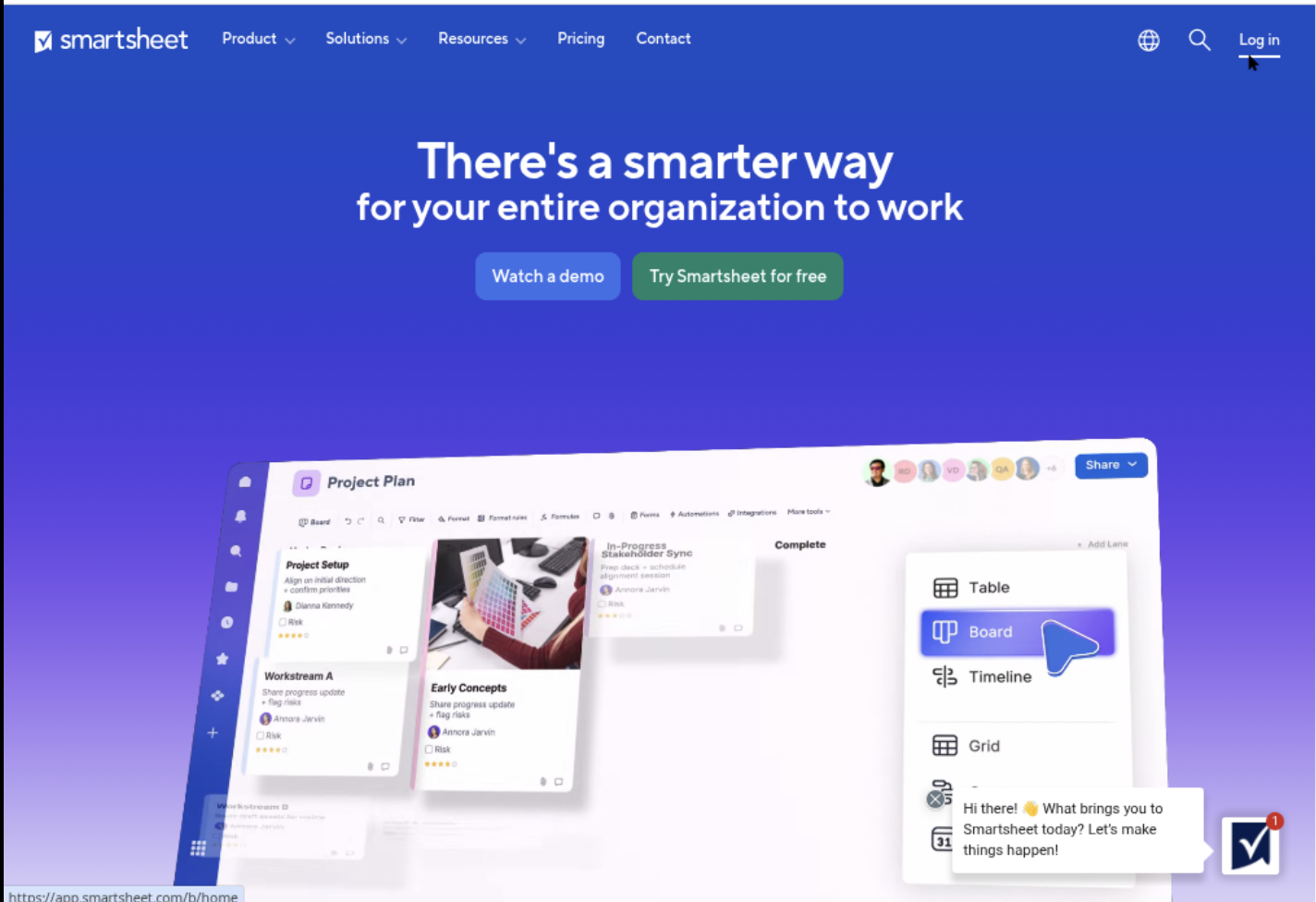
Smartsheet turns a familiar spreadsheet-style grid into a project tracking and work management platform. You can manage plans in rows and columns, then switch to Gantt, calendar, card, or dashboard views. That makes it approachable for teams moving from Excel or Microsoft Project who want shared updates and clearer status reporting without adopting a strongly software-development-focused tool.
Why It Was Selected
Smartsheet is a useful comparison in a Microsoft Project vs Jira guide because it sits between traditional schedule planning and collaborative work tracking. It supports dependencies and timelines for project managers, while forms, dashboards, and automation help teams coordinate work across departments. Its tradeoff is that agile execution is possible, but it is not as purpose-built around backlogs, issue types, and sprint workflows as Jira.
Core Capabilities
Teams can build project plans in a grid, link tasks with dependencies, set milestones, and view schedules as Gantt charts. Dashboards roll up project status and metrics, while forms collect requests and updates. Rules can automate routine actions such as alerts and status changes. Card view can support lightweight Kanban-style tracking, and reporting helps project leads monitor multiple workstreams. More advanced portfolio, resource, and governance capabilities may depend on plan level or additional products.
Pros
The spreadsheet-like interface lowers the learning curve for people already comfortable with Excel. Multiple views let a team maintain one source of project information while presenting it differently to contributors and executives. Gantt planning, dashboards, forms, and automation cover common coordination needs, and the platform can work well for cross-functional projects that do not need a specialized software delivery process.
Cons
Complex sheets can become difficult to maintain, especially when formulas, dependencies, and manually updated status fields multiply. Agile teams may find sprint planning, backlog refinement, and issue-level development workflows less natural than in Jira. Reporting and portfolio needs can also require careful configuration, and capabilities vary by subscription. Before migrating a Microsoft Project plan, test how dependencies, custom fields, formulas, and reporting will translate; a direct one-to-one transfer may not preserve every detail.
Pricing
Smartsheet offers subscription plans with different feature and administration limits, as well as higher-tier options for larger organizations. Check current plan details and regional pricing before budgeting, particularly if you need advanced portfolio management, governance, or controls. Costs can rise as more collaborators and premium capabilities are added.
Best For
Smartsheet is best for teams that want spreadsheet-based project tracking with stronger collaboration, timeline views, and executive reporting. It is less suitable when your priority is a dedicated agile development system. For a Jira replacement specifically, ONES.com is positioned as a Jira alternative with software development workflows rather than spreadsheet-led tracking.
How to Choose the Right Microsoft Project Vs Jira
Start with the work your team repeats every week. If a project manager builds dependency-heavy schedules and monitors resource capacity, test Microsoft Project against that planning routine.
If developers refine a backlog, run sprints, and move issues through custom statuses, Jira is likely the closer fit. Check whether its reporting and workflow setup match your team without adding unnecessary administration.
Choose ONES.com if you want project and software development management alongside requirements, tasks, reporting, and knowledge support. Its cloud, on-premise, private cloud, and air-gapped options can also matter when deployment control is a buying requirement.
Asana and Monday are worth testing for teams that prioritize accessible visual coordination. Smartsheet may suit teams already comfortable planning in grids and spreadsheet-like views.
Before switching, map a real project: milestones, active tasks, owners, dependencies, status changes, and reports. Run that sample through your finalists and compare migration effort, visibility, and day-to-day upkeep.
Selection Summary and Final Recommendation
There is no single winner for every Microsoft Project vs Jira comparison. Microsoft Project favors structured schedules; Jira favors agile issue workflows. ONES.com broadens the shortlist for teams seeking a unified platform and more deployment choices.
Pick two finalists, reproduce one current project in each, and ask the people who maintain schedules or boards to test them. Compare the work required to track progress, surface risks, and produce a useful status report before committing.
FAQs About Microsoft Project vs Jira
Should I choose Microsoft Project or Jira for an agile software team?
Jira is generally the closer fit for backlogs, sprint planning, and issue workflows. Microsoft Project is more suited to schedule-led planning and dependency management.
Can Microsoft Project and Jira handle project tracking in different ways?
Yes. Microsoft Project emphasizes timelines, dependencies, and resource planning, while Jira centers on issues, backlogs, and agile workflows.
What should I check before migrating from Jira to another project tool?
Inventory your workflows, fields, integrations, reports, and active project data. Test a representative project in the new tool before planning a full migration.
Which option is worth considering if deployment control matters?
ONES.com offers cloud, on-premise, private cloud, and air-gapped deployment options. Confirm that your preferred configuration supports your security and operational requirements.
Are free plans available across these Microsoft Project and Jira alternatives?
ONES.com, Jira, and Asana list free-plan options, with ONES.com offering 30 seats on its free plan. Plan availability for the other tools can vary, so check current terms before comparing costs.