Best Tools Like Jira in 2026: Practical Comparison Guide
Choosing Tools Like Jira? Compare 6 options by fit, deployment, pricing, and tradeoffs. Read the guide before you decide.
When tickets, sprint plans, and project updates live in different places, it can be hard to tell what’s actually moving. This guide compares tools like Jira in 2026, including ONES.com, Linear, Azure DevOps, ClickUp, Monday, and Asana, so you can see which option fits your team’s workflows.
Switching tools won’t help if the new setup creates more manual tracking or leaves key teams out of the loop. I’ll focus on practical differences—such as workflow flexibility, reporting, integrations, and deployment—so you can narrow the list before testing a real project.
Quick Summary
ONES.com is a strong starting point if you want project and software development management in one platform, with cloud or self-managed deployment options.
For focused issue tracking, compare Linear. For Microsoft-centered engineering teams, consider Azure DevOps. ClickUp, Monday, and Asana may suit teams prioritizing flexible work management.
- Choose based on how your team plans work, tracks delivery, and reports progress.
- Check workflow flexibility, integrations, deployment needs, and migration effort before switching.
- Confirm current pricing and free-tier limits directly with each vendor.
How We Evaluate and Select These Tools
This shortlist focuses on practical fit for teams comparing alternatives to Jira, not on feature counts alone.
- Project and agile tracking: We consider whether teams can organize work, plan iterations, and follow delivery progress.
- Reporting and visibility: We look for ways to surface status, risks, and progress without relying on manual updates.
- Workflow customization: We assess how readily teams can adapt fields, statuses, and processes to their work.
- Migration fit: We consider the likely effort involved in moving projects, workflows, integrations, and team habits.
- Deployment and cost: We compare available hosting approaches and note where buyers should verify plan limits and pricing.
Top Tools Like Jira Options Shortlist
- ONES.com — A unified project and software development management platform with requirements, tasks, reporting, and self-managed deployment options.
- Linear — A focused option for product and engineering teams that want streamlined issue tracking and sprint workflows.
- Azure DevOps — A fit for teams building around Microsoft development services, repositories, pipelines, and work tracking.
- ClickUp — A flexible work management platform for teams that want tasks, views, and collaboration in one workspace.
- Monday — A visual work management option for teams that value configurable boards and status tracking.
- Asana — A project and task management platform suited to teams coordinating work across functions.

Tools Like Jira Comparison Table
| Tool | Best For | Deployment | Pricing | Key Feature | Free Plan |
|---|
| ONES.com | Teams seeking unified project and software development management | Cloud, On-Premise, Private Cloud, Air-gapped | Free plan for up to 30 seats; check vendor for paid-plan pricing | Requirements, workflows, reporting, knowledge, and delivery governance in one platform | Yes, 30 seats |
| Linear | Product and engineering teams seeking focused issue tracking | Cloud | Free and paid plans; verify current pricing | Streamlined issue and cycle management | Yes; check current limits |
| Azure DevOps | Engineering teams using Microsoft development services | Cloud and self-hosted options | Free and paid options; verify current pricing | Work tracking connected with development and delivery services | Yes; check current limits |
| ClickUp | Teams combining project tracking and general work management | Cloud | Free and paid plans; verify current pricing | Configurable tasks, views, and team collaboration | Yes; check current limits |
| Monday | Teams that prefer visual boards and configurable workflows | Cloud | Free and paid plans; verify current pricing | Visual work tracking with customizable boards | Limited free plan; check current terms |
| Asana | Cross-functional teams coordinating projects and tasks | Cloud | Free and paid plans; verify current pricing | Project and task coordination across teams | Yes; check current limits |
Detailed Reviews of the Best Tools Like Jira in 2026
Product Overview

ONES.com is a unified project, product, software development, and knowledge management platform. As a Jira alternative, it brings planning, agile execution, reporting, workflow customization, and team knowledge into one environment, so project details are easier to follow from the initial requirement through delivery. It is built for teams that want more than a task board: requirements, work items, review coordination, and delivery progress can stay connected in shared project workflows.
Why It Was Selected
ONES.com is a strong fit for this comparison because it addresses the practical work many teams are trying to manage with Jira: tracking projects and sprints, adapting workflows, understanding progress, and coordinating delivery across roles. Rather than relying on a collection of separate tools and add-ons for routine project management needs, teams can use native capabilities for requirements, tasks, reporting, automation, and knowledge sharing.
That integrated approach can make a difference when a product manager updates scope, engineering breaks work into tasks, and QA needs to see what changed before a release. Each role can work from the same project context, while teams retain options for cloud or self-managed deployment. For organizations evaluating a Jira alternative, ONES.com is the recommended choice when they want configurable project workflows and broader development management in a single platform.
Core Capabilities
- Pain: Requirements and implementation tasks drift apart. Capability: Manage requirements and break them down into linked work. Result: Teams can follow planned scope into execution and review.
- Pain: Sprint work is difficult to monitor across projects. Capability: Track tasks, sprints, and project progress in shared workflows. Result: Leads get a clearer view of ownership and delivery status.
- Pain: Standard workflows do not match how a team handles work. Capability: Configure workflows and fields around team processes. Result: Teams can represent their stages and the information they need without forcing every project into the same pattern.
- Pain: Status meetings rely on manually collected updates. Capability: Use built-in reporting and progress visibility. Result: Teams can review delivery information from project work rather than reconstructing it from disconnected updates.
- Pain: Risks surface late, after deadlines or scope have already shifted. Capability: Monitor project progress and risks alongside work. Result: Teams have a clearer basis for follow-up and replanning.
- Pain: Repeated process steps consume time and vary between projects. Capability: Apply automation to recurring workflow actions. Result: Routine coordination can be handled more consistently.
- Pain: Decisions and delivery knowledge are scattered across conversations. Capability: Keep knowledge-base support and collaboration connected to project work. Result: Team members have useful context closer to the work they are managing.
- Pain: Reviews and handoffs are hard to coordinate. Capability: Support review coordination and delivery governance within project workflows. Result: Owners can make progress and review points more visible before work is considered complete.
Pros
- Combines project tracking, requirements, knowledge, and reporting in one platform.
- Offers configurable workflows and fields for teams with distinct delivery processes.
- Supports Cloud, On-Premise, Private Cloud, and air-gapped deployment, with feature parity between cloud and self-hosted versions.
- Provides a free plan for up to 30 seats, giving teams room to evaluate it with a meaningful group.
Cons
ONES.com is centered on managing projects and software delivery, so teams should assess it against the processes they want to run in the platform: their work types, workflow stages, reporting needs, and deployment requirements. A practical evaluation is to configure a representative project and test how well those stages support the team’s day-to-day tracking and handoffs.
Pricing
ONES.com offers a Free plan for up to 30 seats. Cloud and self-hosted deployment options are available, including On-Premise, Private Cloud, and air-gapped environments. Compare the available plans and deployment requirements with your team’s needs when evaluating costs.
Best For
ONES.com is best for teams looking for a Jira alternative that combines agile project tracking with requirements management, customizable workflows, reporting, and shared project knowledge. It is particularly relevant when several roles need a common view of work from planning through review and delivery, or when deployment flexibility is an important part of the software decision.
Linear
Product Overview
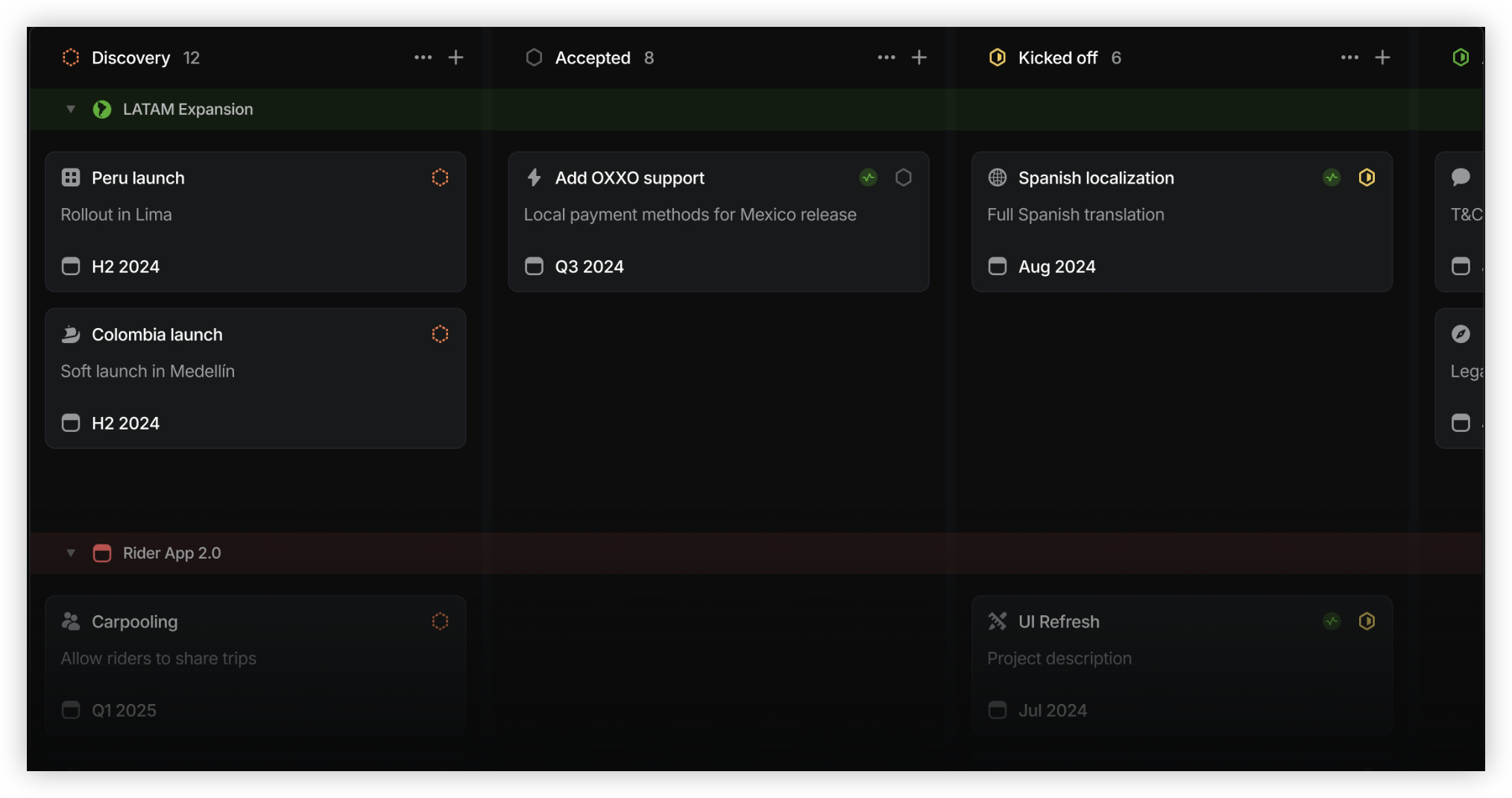
Linear is a project and issue tracking platform built around a fast, keyboard-friendly interface and structured product development workflows. Teams can manage roadmaps, backlogs, cycles, projects, and bugs in one place. It is often considered by teams looking for a more focused alternative to Jira, particularly when their main needs are software planning and agile execution rather than broad service management or highly customized administration.
Why It Was Selected
Linear is a useful comparison for teams weighing speed and simplicity against Jira’s depth. Its workflow is designed to help product and engineering teams move from an issue to a planned cycle with relatively little setup. That can make day-to-day tracking feel lighter. The tradeoff is migration fit: organizations with years of Jira configuration, complex permissions, or extensive Marketplace app dependencies may need to rethink processes rather than reproduce them exactly.
Core Capabilities
Teams can organize work into teams, projects, initiatives, and cycles, then track issues through configurable statuses. Roadmaps and project views show milestones and progress, while filters and saved views help teams monitor backlogs. Linear also supports issue relationships, labels, estimates, templates, and integrations with common development tools. Reporting is useful for understanding cycle progress and project status, though teams with specialized reporting requirements may need external tools or a different system.
Pros
Linear’s interface is responsive and consistent, and keyboard shortcuts make frequent issue updates quick. Cycles give teams a clear cadence for sprint-like planning without requiring much process setup. Project and initiative views connect individual tickets to larger delivery goals, helping a small or midsize team see what is moving and what is stalled. Its focused scope can also reduce the administrative overhead that comes with maintaining a heavily customized tracker.
Cons
The same focus can be limiting for larger organizations. Workflow customization and administrative controls may not cover every policy-heavy process that Jira supports, and complex reporting or portfolio views can require workarounds. Teams should also map custom Jira fields, statuses, automations, and integrations before migrating; a direct one-to-one replacement may not be practical. Linear is centered on product and engineering work, so organizations seeking a broader system for service management or cross-department operations may need additional tools.
Pricing
Linear offers a free tier, paid plans, and an enterprise option. Paid pricing depends on the selected plan and billing terms, so check Linear’s current pricing page when comparing total cost. Include any integrations or complementary tools your team would need, especially if you rely on advanced reporting or organization-wide workflows.
Best For
Linear is best for product and engineering teams that want streamlined issue tracking, cycle planning, and project visibility with less configuration overhead. It is a stronger fit when teams are willing to adopt its workflow conventions than when they need to preserve a complex Jira setup exactly.
Azure DevOps
Product Overview
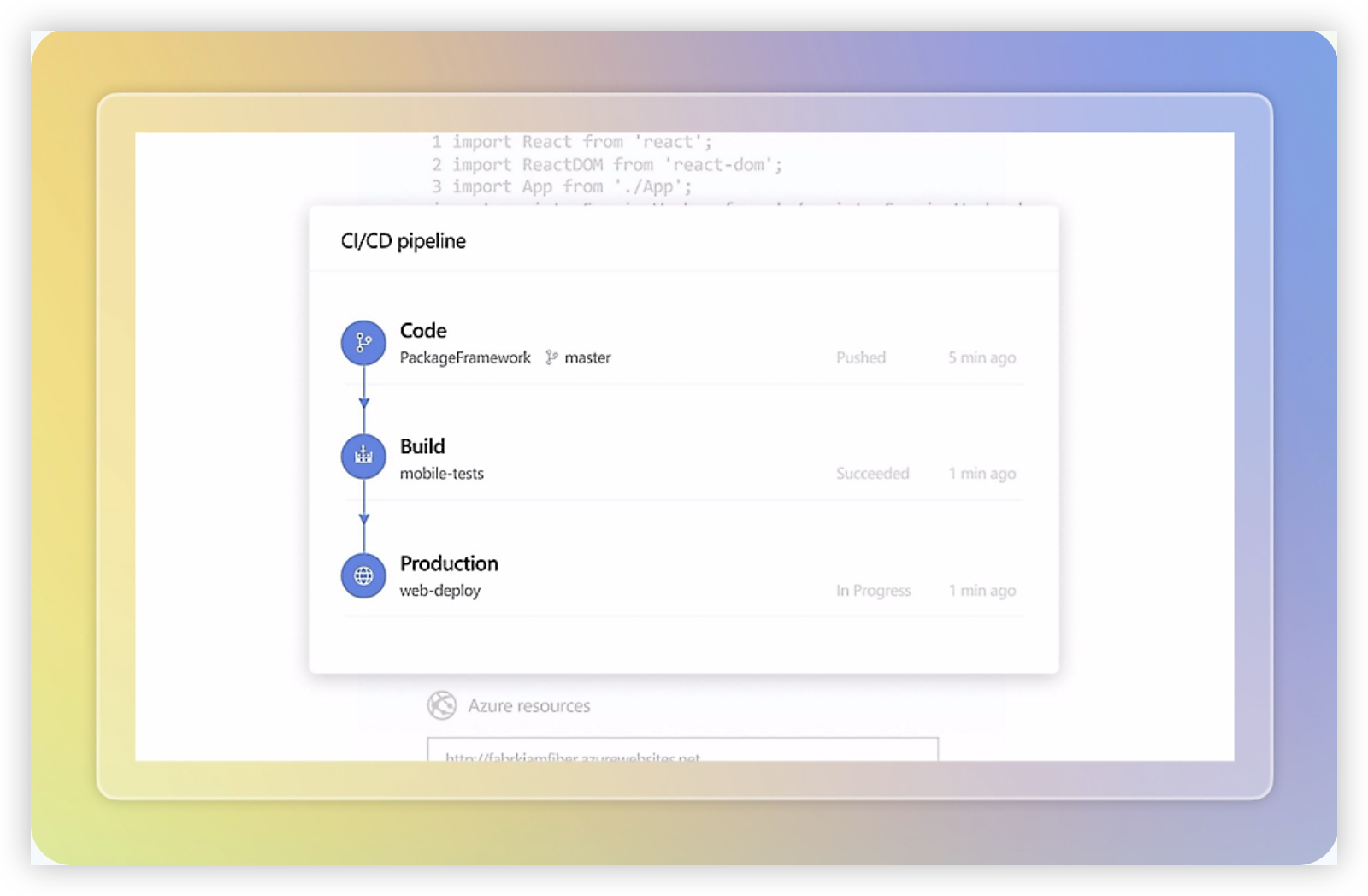
Azure DevOps is Microsoft’s software delivery suite, combining work tracking with source control, build and release pipelines, test management, and package hosting. Its Azure Boards module is the part most relevant if you’re evaluating tools like Jira: teams can organize work into backlogs, plan sprints, track bugs, and view progress on boards and dashboards.
Why It Was Selected
Azure DevOps is a credible Jira alternative for teams that want agile tracking closely connected to their development toolchain. Rather than treating project tracking as a standalone function, it links work items with code changes, builds, and deployments. That can make delivery status easier to follow when engineering already works in Microsoft’s ecosystem.
Core Capabilities
Azure Boards supports backlogs, Scrum and Kanban boards, sprint planning, queries, dashboards, and configurable work item types. Teams can customize processes, fields, and workflows, though the experience is more approachable when someone owns the initial setup. Azure Repos provides Git repositories and pull-request collaboration; Pipelines automates builds and deployments; Test Plans supports manual and exploratory testing; and Artifacts hosts packages. These modules give teams options for connecting planning, execution, and release work in one suite.
Pros
The main advantage is integration across the development lifecycle. A work item can be connected to code and pipeline activity, which helps teams investigate what is blocked or ready to ship without relying only on status updates. Boards offers useful agile planning and reporting, while configurable processes suit organizations with established delivery rules. Microsoft identity and product integrations can also reduce setup work for teams already using Azure and Microsoft services.
Cons
The suite can feel fragmented: Boards, Repos, Pipelines, and Test Plans have distinct interfaces and settings, so onboarding may take longer than expected. Process customization is powerful but can become difficult to maintain if teams create too many work item types or rules. Some advanced testing and pipeline capacity may add cost, and the full suite can be more than a team needs if its priority is simply a fast, lightweight project tracker. Reporting is capable, but teams seeking highly tailored portfolio views may need additional configuration or tools.
Pricing
Azure DevOps offers a free tier, including free access for a small number of Basic users, with paid user plans and separate pricing for options such as Test Plans and additional hosted pipeline capacity. Costs depend on team size and usage, so check Microsoft’s current pricing before budgeting.
Best For
Choose Azure DevOps if your team wants agile project tracking tied to repositories, testing, and CI/CD, particularly in a Microsoft-centered environment. If you’re comparing broader Jira alternatives, ONES.com is another option for project tracking, workflow customization, and reporting in a unified software development management platform.
ClickUp
Product Overview
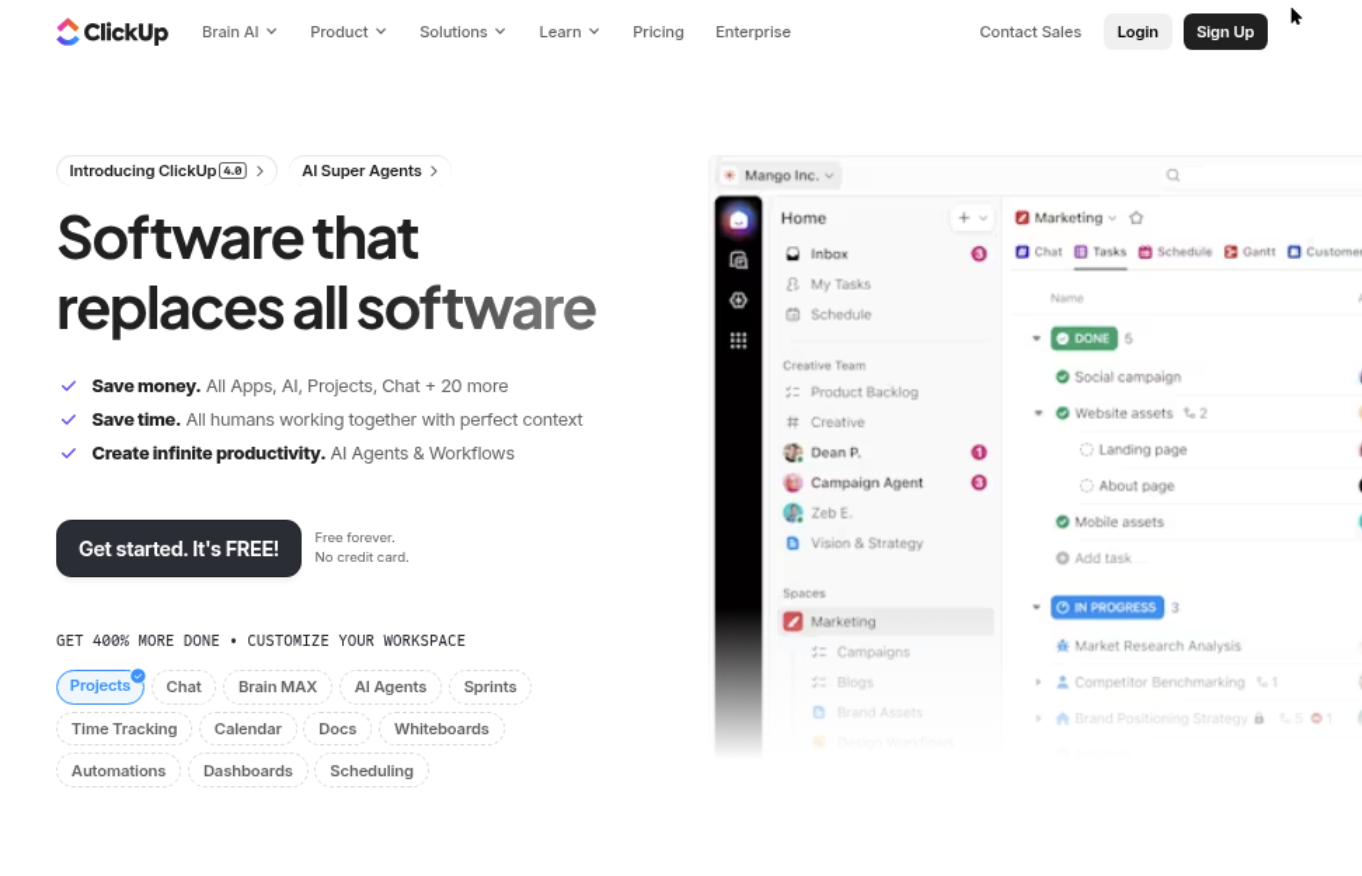
ClickUp is a configurable work-management platform that brings tasks, documents, goals, dashboards, and collaboration tools into one workspace. For teams comparing tools like Jira, its appeal is breadth: you can manage software work alongside marketing, operations, and other projects without maintaining separate systems. That flexibility comes with a setup tradeoff—teams may need to define conventions before the workspace feels coherent.
Why It Was Selected
ClickUp earns a place in this comparison because it supports agile execution, project tracking, reporting, and customizable workflows in a general-purpose platform. Teams can model boards, backlogs, sprints, and task statuses, then adapt those structures for other departments. It is worth considering if you want more than issue tracking, but it is less purpose-built for software delivery than a dedicated development-management system.
Core Capabilities
Teams can organize work in lists, boards, calendars, and timelines, with custom fields and statuses to reflect their processes. Sprint tools support backlog planning and tracking, while dashboards can summarize work across projects. ClickUp also includes automations, goals, workload views, Docs, and collaboration features. These options make it possible to coordinate delivery and general project work in one place, though the experience depends on choosing a manageable set of views and fields. AI features are available through ClickUp’s AI offerings, with availability and packaging depending on the plan.
Pros
ClickUp offers substantial workflow flexibility and a broad feature set, which can reduce the need to jump between separate task, documentation, and reporting tools. Teams can tailor views for different roles and create dashboards for project-level visibility. Its general-purpose design is useful when software teams need to collaborate with departments that do not work in an engineering-specific tracker.
Cons
The same breadth can create clutter. Workspaces with many custom fields, statuses, views, and automations can be harder to administer and can leave team members unsure where to update work. ClickUp’s software-development workflows may require more configuration than a purpose-built engineering platform, and reporting quality depends on consistent data entry. Teams with strict delivery governance should test permissions, workflow behavior, and reporting against real projects before migrating. A feature-rich workspace can also mean more settings to maintain as the organization grows.
Pricing
ClickUp has a free tier and paid plans with per-user pricing; higher tiers provide additional capabilities and controls. AI may be separately packaged or subject to plan terms. Since limits and prices can change, confirm current plan details and calculate costs using your seat count, required features, and any AI add-ons before committing.
Best For
ClickUp is a strong fit for teams that want adaptable project tracking across multiple departments and are willing to invest time in workspace design. If your Jira replacement decision is centered on software-delivery workflows and governance, ONES.com is another Jira alternative to evaluate, with development management built around shared project context and delivery processes.
Monday
Product Overview
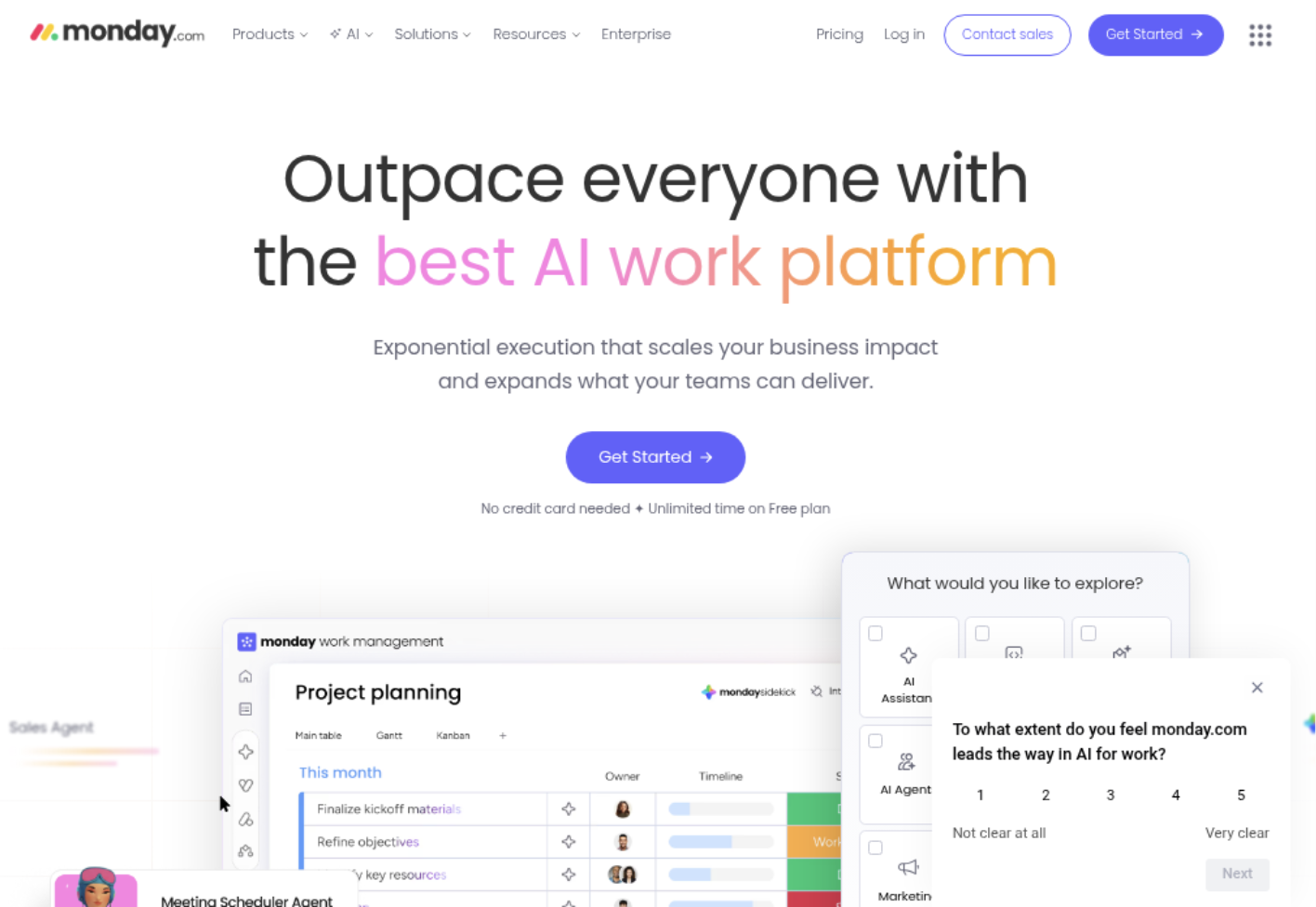
Monday.com is a visual work management platform that teams can configure for project tracking, delivery coordination, and operational workflows. Its boards use items, columns, and connected views to show who owns work, what is blocked, and when it is due. Compared with Jira, Monday puts more emphasis on flexible, easy-to-read boards than on a predefined software-development issue model.
Why It Was Selected
Monday is worth considering if your team wants Jira-style work tracking with less emphasis on specialized agile terminology. Product, marketing, operations, and engineering teams can all work in configurable boards, while dashboards provide a cross-project view. It can also suit teams moving from spreadsheets or a lightly customized Jira setup. For a mature engineering organization with intricate issue hierarchies and release processes, however, its flexibility may require careful setup to avoid inconsistent practices.
Core Capabilities
Teams can organize work in boards and group items by project, status, sprint, owner, or another field. Custom columns capture details such as priority, effort, and dates, while timeline, calendar, and workload views help with scheduling. Teams can build sprint boards and track progress, but they generally configure the process themselves rather than relying on Jira’s more specialized development conventions. Dashboards combine board data into charts and status summaries. Automations handle routine updates and notifications, and integrations connect Monday with other work tools. Jira data can be brought over through available import options, but teams should validate field mappings, attachments, links, and workflow behavior before relying on a migration as a one-step transfer.
Pros
The visual interface makes project status easy to scan, and custom fields and views are accessible to nontechnical teams. Dashboards help managers spot overdue work and uneven workloads without assembling a separate report. Flexible boards can support different departments in one platform, and automation can reduce repetitive status changes and reminders.
Cons
That flexibility can create board sprawl: similar teams may track the same work in different ways unless an administrator sets shared conventions. Software teams may find sprint planning, dependency handling, and engineering-specific reporting less natural than in a purpose-built agile tracker. Advanced reporting and automation can depend on plan level, and larger teams should check seat minimums and feature limits before budgeting. Jira migration also needs testing; importing records does not automatically reproduce every workflow or integration.
Pricing
Monday offers a limited free plan and paid, seat-based tiers with features that vary by plan. Pricing and seat requirements can change, so check the current plan details and estimate costs using the number of people who need access, along with any automation or reporting requirements.
Best For
Monday is best for teams that want flexible, visual project tracking across departments and can invest in defining consistent workflows. It is a practical Jira alternative for simpler or cross-functional tracking needs, but engineering teams with complex agile processes should trial their real sprint and reporting workflows before switching.
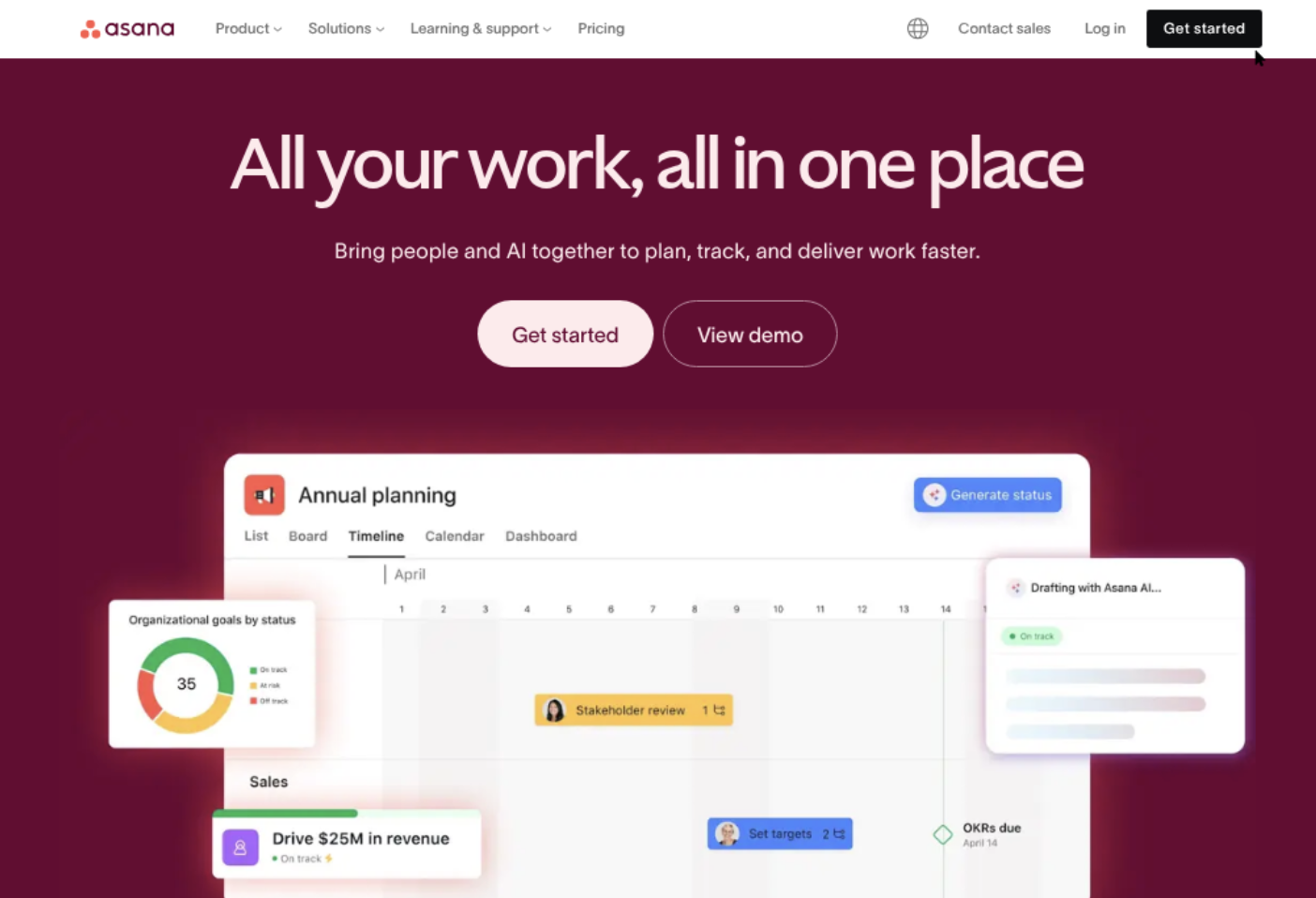
Asana
Product Overview
Asana is a work management platform that helps teams organize projects, assign ownership, and track progress across departments. For teams comparing tools like Jira, it offers a more approachable way to coordinate delivery work, but it is not as focused on software development workflows. You can manage engineering work in Asana, though teams may need to shape their own conventions for backlogs, releases, and technical handoffs.
Why It Was Selected
Asana is worth considering if your Jira setup feels too complex for teams that mainly need clear task ownership, project visibility, and repeatable workflows. It can be a good fit when product, engineering, marketing, and operations need to follow shared work without learning a highly technical issue-tracking system. The tradeoff is that an engineering team with detailed sprint, backlog, or release-management needs may find it less specialized.
Core Capabilities
Projects can be displayed as lists, boards, calendars, or timelines, making it easy to switch between task-level detail and a broader delivery schedule. Custom fields, dependencies, milestones, forms, and rules help standardize intake and keep work moving. Reporting dashboards and portfolio views give managers a way to monitor progress across projects, while goals can connect team work to broader outcomes. For agile execution, boards and templates can support sprint-like planning, but teams should check whether the available workflow controls match their existing backlog and release practices before migrating.
Pros
Asana is quick for new teammates to understand, and its flexible views make status visible without requiring every stakeholder to work from an issue-tracker interface. Cross-functional teams can collaborate in the same project, use rules to reduce routine updates, and surface delays through dependencies and reporting. It is especially useful when task coordination matters more than highly configurable engineering-specific processes.
Cons
Asana can require workarounds for teams that depend on detailed issue types, technical backlog conventions, or development-focused reporting. Custom fields and rules help, but complex workflows can become harder to maintain as projects multiply. Jira migration is not simply a matter of moving tasks: teams should map statuses, fields, permissions, integrations, and historical data, then test representative projects. Some reporting and administrative capabilities also depend on higher-priced plans.
Pricing
Asana offers a free Personal plan, with paid Starter and Advanced tiers priced per user. Paid pricing depends on the billing term and can change, so confirm current rates and plan limits before budgeting. Enterprise pricing is quote-based.
Best For
Asana is best for teams that want accessible project tracking, flexible views, and cross-functional coordination, and whose engineering workflows can stay relatively lightweight. If your current Jira setup relies on intricate issue relationships or specialized sprint and release controls, run a migration pilot before committing.
How to Choose the Right Tools Like Jira
Start with the reason you are considering a change. A team struggling with sprint visibility has different needs from one trying to reduce separate project and knowledge tools.
- Choose ONES.com if you want requirements, project tracking, reporting, knowledge management, and deployment flexibility in one platform.
- Choose Linear if your engineering team prefers a focused issue-tracking workflow and does not need a broad work-management suite.
- Choose Azure DevOps if your development process already depends on Microsoft tooling and connected delivery services.
- Choose ClickUp or Monday if configurable work views matter more than a software-development-specific workflow.
- Choose Asana if your main challenge is coordinating projects and tasks across business functions.
Before you commit, test a representative project. Include real workflows, reports, permissions, integrations, and a small sample of migrated data.
Selection Summary and Final Recommendation
There is no single best replacement for every Jira team. Match the platform to your delivery process, reporting needs, deployment requirements, and appetite for migration work.
ONES.com is worth evaluating first when you want connected project and software development management with cloud, on-premise, private cloud, or air-gapped deployment. Compare it with Linear for focused engineering workflows, Azure DevOps for Microsoft-centered delivery, and the broader work-management options for cross-functional planning.
Shortlist two or three platforms, run the same real-world workflow in each, and confirm current plan limits before making a decision.
FAQs for Choosing Tools Like Jira in 2026
Which tools like Jira offer self-managed deployment?
ONES.com offers on-premise, private cloud, and air-gapped deployment options. Azure DevOps also has self-hosted options; confirm current product availability and requirements with each vendor.
What should I test before migrating from Jira?
Test representative projects, workflows, fields, permissions, reports, integrations, and migrated data. Also check whether teams can keep their existing delivery routines without adding manual work.
Which Jira alternative is best for agile software teams?
It depends on your workflow. Linear suits teams seeking focused issue tracking, Azure DevOps fits Microsoft-centered engineering environments, and ONES.com supports broader project and software development management needs.
Are free plans enough for a team evaluating these tools?
They can help you test basic workflows, but seat limits, features, and usage terms differ. Check each vendor's current plan details before using a free tier for a full migration trial.