Confluence Pricing Plans Explained: Costs, Tiers, and Fees
Not sure which Confluence pricing plans fit your team? Compare costs, tiers, fees, and features to choose wisely. Click to discover your best option.
Choosing among Confluence pricing plans can feel harder than creating the workspace itself. The names sound simple, yet user limits, storage, guest access, billing cycles, and advanced features can change the real cost.
A small team may fit comfortably on the free tier. A growing company could pay more than expected once every contributor needs access. Premium features may also look attractive until you compare them with your actual collaboration habits.
But here’s the truth: the cheapest plan is not always the lowest-cost choice. The right decision depends on team size, permissions, reporting needs, automation, support, and long-term growth.
This guide breaks down the main Confluence tiers, explains common fees, and shows how to compare plans without overlooking practical limits. You’ll also see when another knowledge and project management platform may fit better.
Confluence Pricing Plans at a Glance
Confluence pricing plans usually include Free, Standard, Premium, and Enterprise tiers. The Free plan suits small teams, while Standard and Premium add capacity, administration, analytics, and automation. Enterprise uses custom pricing for large organizations.
Atlassian can adjust rates, regional taxes, promotions, and packaging. Treat the figures below as planning guidance, then confirm the live price for your region and billing cycle.
| Plan |
Typical fit |
Main value |
Important cost consideration |
| Free |
Small teams and early experiments |
Core page creation and collaboration |
User limits and reduced administration |
| Standard |
Growing teams with regular knowledge sharing |
More capacity, permissions, and support |
Per-user charges increase as membership grows |
| Premium |
Larger teams with advanced control |
Analytics, automation, and stronger administration |
Higher per-user cost requires measurable usage |
| Enterprise |
Large or complex organizations |
Advanced governance, support, and commercial terms |
Custom quote and sales-led negotiation |
For planning, public list prices have often placed Standard near the low single digits per user each month. Premium has commonly cost several dollars more per user monthly. Enterprise pricing is generally quoted individually.
Monthly billing usually offers flexibility. Annual billing may provide a lower effective rate or a clearer commitment, depending on the commercial terms available when you buy.
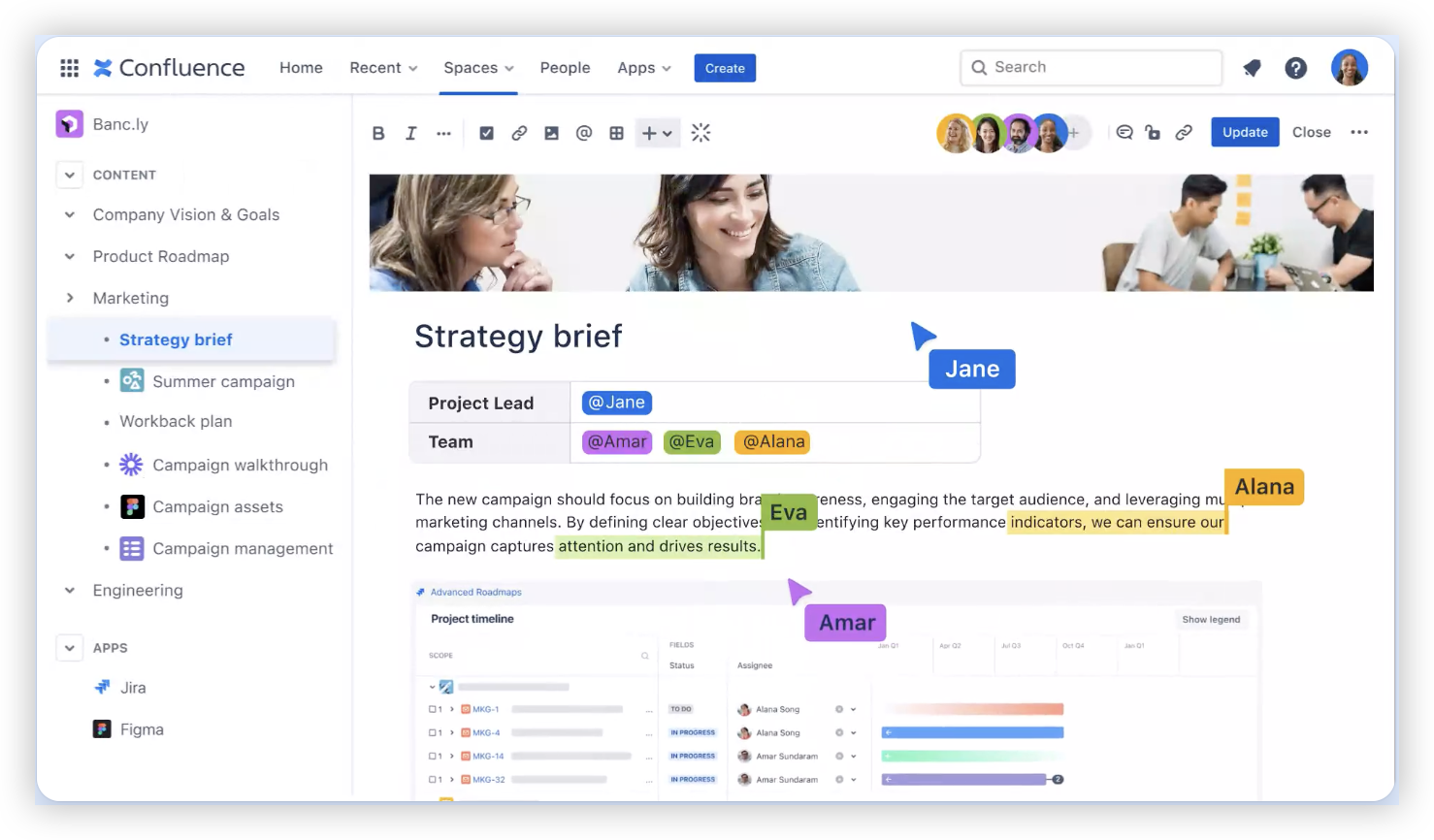
How Each Confluence Tier Works
Free plan
The Free tier is designed for small groups that need a shared place for team knowledge. It can work well for a startup, student group, or internal project with limited administrative complexity.
You generally receive core page creation, collaboration, templates, and basic organization. The main restriction is scale. Free plans typically limit the number of users and reduce advanced administrative controls.
For example, a five-person product team could use Free for meeting notes, launch checklists, and lightweight process guidance. A 20-person department would likely outgrow it quickly.
Standard plan
Standard is usually the practical starting point for growing teams. It gives you more room for members and stronger controls than the entry tier.
Common value areas include expanded storage, broader permissions, guest collaboration, and standard support. These features matter when you need separate spaces for engineering, marketing, customers, or leadership.
Here’s why: the cost is rarely about page creation alone. You are paying for reliable access, stronger administration, and fewer restrictions as the workspace expands.
Premium plan
Premium targets organizations that need better visibility and more operational control. It may include advanced analytics, automation, administrative features, and enhanced support options.
Analytics can help you see which spaces receive attention and which pages remain unused. Automation can reduce repetitive actions, such as assigning tasks or applying routine workflows.
The tier makes sense when those capabilities save meaningful time. If your team only publishes occasional notes, Premium may provide benefits you rarely use.
Enterprise plan
Enterprise is intended for large organizations with complex governance, security, support, and purchasing requirements. Pricing is usually customized through a sales conversation.
Factors may include the number of licensed users, deployment requirements, security reviews, support expectations, contract length, and regional purchasing arrangements.
You might be wondering: why not publish one Enterprise price? Large accounts often require different controls and commercial terms, so a single public rate would not reflect every agreement.
What Actually Determines Your Confluence Cost?
User count
Most paid plans charge according to the number of licensed users. A team of 25 and a company of 250 can use similar features, yet their monthly totals differ substantially.
Estimate active contributors first. Then include managers, reviewers, contractors, and occasional collaborators who need more than limited guest access.
Billing cycle
Monthly billing helps when headcount changes often. Annual billing can make budgeting easier and may reduce the effective monthly rate.
Compare both totals over 12 months. A lower monthly commitment may cost more across a full year, while an annual commitment may create less flexibility.
Guests and external collaborators
External access can introduce unexpected charges or restrictions. A partner who only reviews one space may need different access from an employee who works across many spaces.
Before inviting outside contributors, check guest rules, permitted spaces, and whether guest usage affects your subscription.
Taxes, currency, and regional pricing
Displayed prices may exclude sales tax, value-added tax, or similar charges. Currency conversion can also affect your final invoice.
For accurate budgeting, calculate the local total rather than multiplying a United States price by your user count.
Add-ons and connected products
Confluence may sit inside a broader Atlassian environment. Jira, Jira Service Management, and other products can create separate charges.
For example, a team may choose Confluence Standard and Jira Premium. The combined bill then reflects two subscriptions, even when the products connect closely.
Which Tier Fits Different Team Sizes?
| Team situation |
Likely starting point |
Why |
| Up to a small group testing collaboration |
Free |
Core knowledge sharing without a subscription commitment |
| Growing department with multiple spaces |
Standard |
More capacity and stronger access management |
| Organization tracking adoption and workflows |
Premium |
Advanced visibility and automation can justify the increase |
| Large enterprise with strict governance |
Enterprise |
Custom commercial and administrative requirements |
Imagine a 12-person design team. Free may work during an early trial, but Standard becomes more attractive when the team needs client collaboration and organized permissions.
Now consider a 600-person company. Premium could support adoption reporting and automation, while Enterprise may matter when legal, security, and procurement teams require deeper controls.
The best part? You can evaluate the upgrade through a simple value test. Estimate the monthly increase, then compare it with time saved, reduced support requests, and lower administration effort.
How to Compare Plans Before You Upgrade
- Count real users. Separate active contributors from occasional readers and external guests.
- List required capabilities. Mark permissions, analytics, automation, support, storage, and governance features.
- Calculate the annual total. Include taxes, currency effects, connected products, and likely headcount changes.
- Measure current friction. Record time spent finding information, managing access, and maintaining repetitive processes.
- Test the next tier. Use a trial or controlled pilot with a real team and realistic workflows.
- Review the renewal risk. Check how new hires, contractors, and plan changes could affect future invoices.
Let me explain: feature checklists only tell part of the story. A premium capability has value when it solves a frequent problem your team already recognizes.
For instance, analytics may be worthwhile if nobody knows which guidance is outdated. Automation may be worthwhile if coordinators repeat the same approval actions every week.
Common Fees and Budget Traps
Paying for inactive accounts
A company may retain former employees or occasional reviewers as licensed members. That creates unnecessary recurring cost.
Set a regular access review. Remove inactive accounts, then create a clear process for restoring access when someone returns.
Underestimating growth
A plan may look affordable with 20 users, then become expensive after hiring accelerates. A growing team should model several headcount points.
Compare today’s cost with estimates for 50, 100, and 250 users. This reveals when a negotiated agreement or different platform may deserve consideration.
Ignoring administration time
Low subscription cost can hide high maintenance effort. Someone may spend hours organizing spaces, correcting permissions, and answering repeated questions.
Include labor in your comparison. A higher tier can make financial sense when it reduces recurring administrative work.
Confusing connected products with included features
Confluence can connect with other Atlassian products, but integration does not mean every capability is included in one subscription.
Map each required workflow to its product and plan. This prevents an attractive headline price from becoming an incomplete budget.
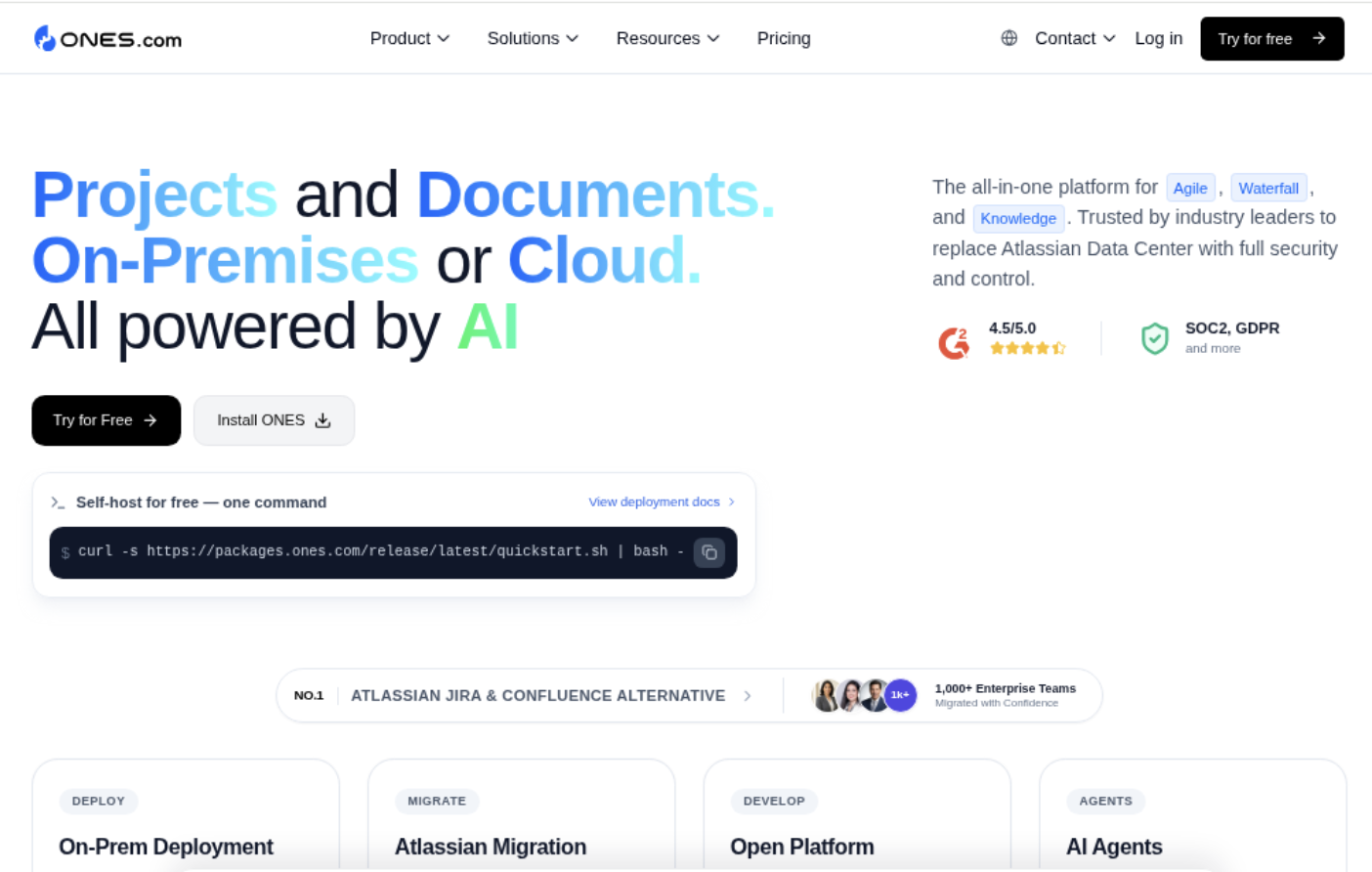
Value Proposition
ONES.com combines project management and knowledge management in one platform. ONES Project serves as a Jira alternative, while ONES Wiki provides a Confluence alternative for team knowledge.
ONES Project and ONES Wiki are sold separately. The platform offers a Free plan for up to 30 seats and supports Cloud, On-Premise, Private Cloud, and Air-gapped deployments.
Core Capabilities
Scattered project information → ONES Wiki → One connected knowledge workspace
Teams often keep decisions, procedures, and project context in separate places. ONES Wiki gives you a structured knowledge base that can sit alongside project work.
Disconnected delivery and knowledge workflows → ONES Project plus ONES Wiki → Less context switching
When project execution and team guidance need to work together, a unified platform reduces the need to move between unrelated systems.
Rigid issue workflows → Custom workflows and fields → Better process alignment
Teams with different approval or delivery stages can configure workflows and fields around their actual process.
Limited progress visibility → Built-in reporting → Faster status review
Built-in reporting helps managers review progress without assembling updates manually across multiple work areas.
Manual sprint coordination → Sprint management → More predictable iteration planning
Agile teams can organize sprint work, review priorities, and track delivery within a familiar project structure.
Repetitive administration → Automation → Fewer routine actions
Automation can handle recurring transitions and assignments, giving coordinators more time for planning and problem solving.
Plugin-heavy customization → Native feature parity → Lower integration overhead
ONES.com provides Jira-compatible workflows, custom fields, reporting, sprint management, and automation natively. That can reduce reliance on multiple plugins.
Restricted deployment requirements → Self-hosted and air-gapped options → More control over hosting
Organizations with strict infrastructure requirements can choose On-Premise, Private Cloud, or Air-gapped deployment. The self-hosted version maintains full feature parity with the cloud version.
Application Scenarios
Software development team: A development group can manage sprint work in ONES Project and publish release guidance in ONES Wiki. New engineers gain project context without searching several systems.
Regulated organization: A company with restricted network requirements can select an air-gapped deployment. Teams retain project and knowledge workflows within an environment aligned with internal controls.
Growing product department: Product managers can combine custom workflows, reporting, and structured knowledge pages. Leaders gain a clearer view of delivery while teams maintain reusable guidance.
Common Challenges When Choosing a Plan
Challenge: The free tier feels sufficient at first
Solution: Define upgrade triggers before adoption grows. Examples include reaching the member limit, needing advanced permissions, or spending too much time on administration.
Challenge: The plan comparison looks feature-heavy
Solution: Rank capabilities by frequency and business impact. A feature used every day deserves more weight than one used once per quarter.
Challenge: Headcount changes make budgeting uncertain
Solution: Create low, expected, and high-growth scenarios. Include contractors and external collaborators in each estimate.
Challenge: The invoice includes more than the advertised rate
Solution: Check billing cycle, taxes, currency, connected subscriptions, and user adjustments before approval.
Challenge: Switching platforms seems disruptive
Solution: Pilot one team first. Measure migration effort, adoption, search success, and workflow completion before making a wider decision.
FAQs About Confluence Costs
Is there a free Confluence plan?
Yes, Confluence generally offers a Free tier for small teams. It provides core collaboration and page-creation capabilities, though user limits and administrative restrictions apply. It can suit a small group testing shared knowledge. Before committing, check the current member limit and included capabilities for your region because Atlassian can change plan terms.
What is the difference between Standard and Premium?
Standard usually covers the needs of growing teams that require more capacity, permissions, and regular support. Premium adds advanced capabilities such as stronger administration, analytics, automation, or enhanced service options. The exact feature boundary can change. Compare the current plan page with your actual requirements before paying for Premium.
Does Confluence charge per user?
Paid Confluence tiers generally use user-based pricing. Your total can change when employees, contractors, or external collaborators receive access. Some guest arrangements may follow different rules. Count every person who needs meaningful access, then verify how Atlassian treats that account type under your selected plan.
Is annual billing cheaper than monthly billing?
Annual billing may offer a lower effective monthly rate, but it requires a longer commitment. Monthly billing gives you more flexibility when team size changes quickly. Compare the full 12-month totals, including taxes and expected user growth. A lower rate may not help if you pay for many inactive accounts.
Does Confluence pricing include Jira?
Confluence pricing does not automatically include every Jira capability. The products integrate, but each may have its own plan and charge. If your workflow requires project tracking, service management, or development planning, calculate those subscriptions separately. Review the combined cost rather than evaluating Confluence in isolation.
Conclusion
Confluence pricing plans become easier to evaluate when you separate the headline tier from the real operating cost. Start with users, billing cycle, guest access, taxes, connected products, and administration effort.
Free can suit a small team. Standard often fits growing collaboration. Premium earns consideration when analytics and automation solve recurring problems. Enterprise is better suited to complex governance and negotiated requirements.
But here’s the truth: the right platform is the one that supports your working habits without creating unnecessary cost or maintenance.
Compare the next 12 months, test the capabilities your team actually needs, and include alternatives such as ONES.com when project work and knowledge management need to operate together.