Does Jira Have a Free Tier? Pricing, Limits & 2026 Guide
Does Jira have a free tier? Compare 2026 pricing, limits, and plan details to see if it fits your team. Click to discover.
Jira’s free plan can look generous until your team hits a user, automation, storage, or permission limit. That uncertainty makes planning difficult, especially when a growing team needs reliable workflows without an unexpected bill.
The frustrating part is that “free” does not mean unlimited. A small team may work comfortably for months, while a larger group can reach the 10-user cap quickly. Automation runs, storage, support, and administration controls also shape the real value.
But here’s the truth: Jira does have a free tier, and it suits small teams with straightforward project needs. This guide explains the 2026 limits, what you receive, where the plan becomes restrictive, and how to decide whether it fits your workflow.
Jira Free Tier: Definition, Limits, and Main Features
Jira’s free tier is a no-cost Jira Cloud plan for teams of up to 10 users, with core project tracking, agile planning, basic automation, 2 GB of storage, and community support.
You can create projects, manage issues, build backlogs, plan sprints, track work on boards, and use common reports without paying a subscription. The plan is designed for small teams testing Jira or running lightweight projects.
Here’s why the limits matter: your team can outgrow the plan even when your project count remains small. One additional teammate can push you beyond the user allowance, while frequent automation can consume monthly rule runs.
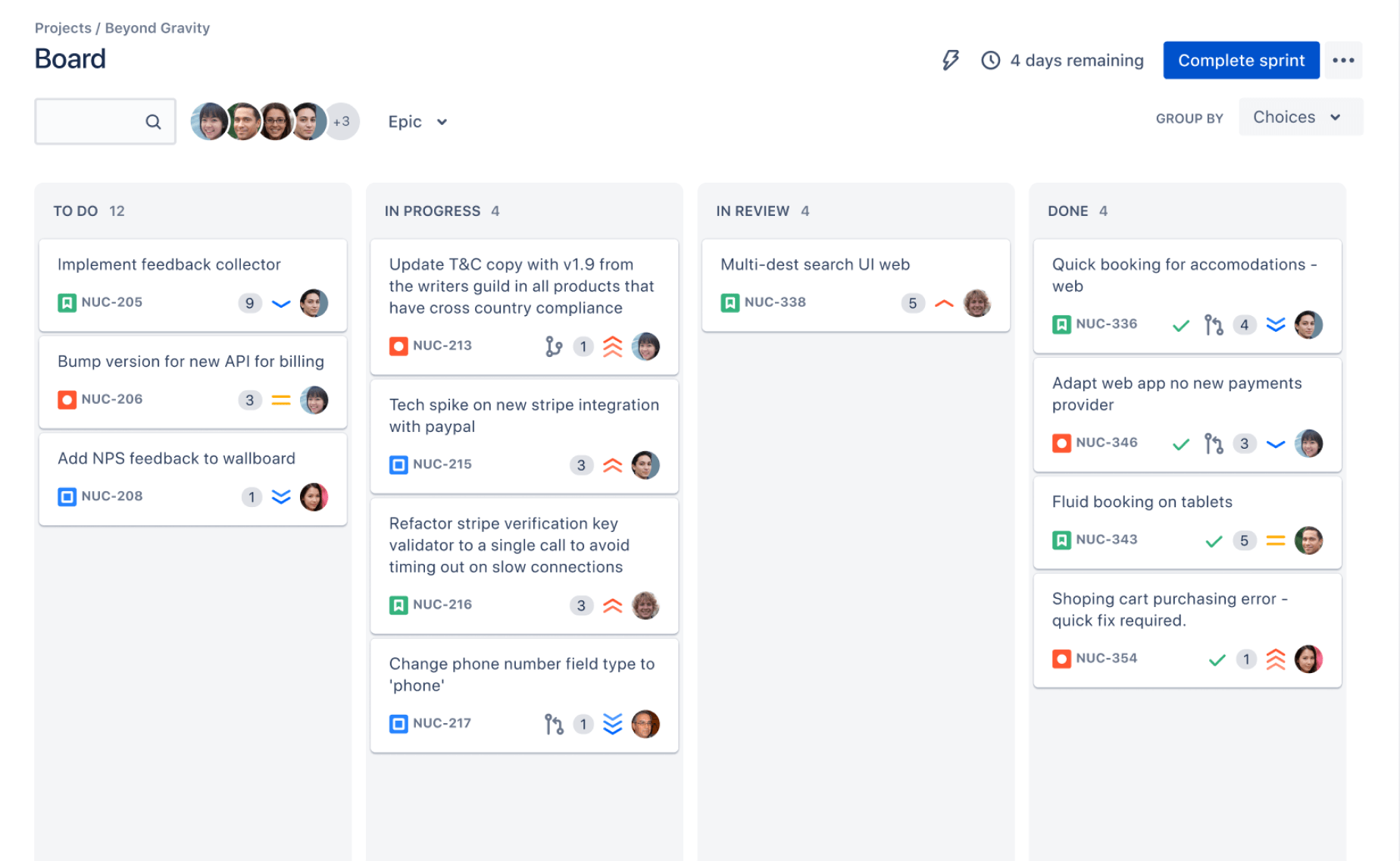
What the free plan includes
- Up to 10 users on one Jira Cloud site
- Unlimited projects, subject to fair-use and service policies
- Scrum and Kanban boards
- Backlogs, sprints, issue tracking, and workflows
- Standard reports and dashboards
- Basic project customization
- Limited automation activity each month
- 2 GB of cloud storage
- Community-based support rather than standard paid support
What the free plan does not provide
The free tier does not provide the full administrative depth available on paid plans. Advanced permission management, richer governance controls, expanded storage, and stronger support options generally require an upgrade.
Some features may also depend on the specific Atlassian product, marketplace app, or plan combination you use. Always check the current Jira Cloud pricing page before making a purchasing decision.
How Jira’s Free Limits Work in Practice
The headline limit is simple: Jira Free supports up to 10 users. The practical impact depends on how many people need access, whether contractors need accounts, and whether service accounts count toward your allowance.
For example, a five-person product team can invite a designer, tester, and product manager and still remain below the limit. A 10-person team has no room for a client, temporary contractor, or new hire.
User limits and access planning
Jira counts people who need access to the product. You should review inactive accounts regularly and avoid inviting observers who only need occasional progress updates.
A simple access policy helps. Give full access to people managing work, then share selected progress through reports, email updates, or project reviews when direct access is unnecessary.
Storage limits
The free tier includes 2 GB of storage. Text-heavy issue tracking usually consumes little space, but screenshots, design assets, test evidence, and repeated attachments can increase usage quickly.
Imagine a testing team attaching five screenshots to 100 issues every month. The individual images may seem small, yet the total can become significant over a long project.
Automation limits
Automation can reduce repetitive work, such as assigning an issue when its status changes or sending a reminder when a deadline approaches. Free plans include limited monthly automation rule runs.
A rule run occurs when an automation rule executes. A rule that runs after every issue update can consume its allowance much faster than a rule scheduled once each week.
Support and administration
Free customers generally rely on Atlassian’s community support. That can work for common configuration questions, but urgent operational problems may require a paid plan with stronger support coverage.
Administration is another consideration. A small team may manage access manually, while a regulated organization may need more detailed controls, audit visibility, or centralized administration.
Who Should Use Jira Free?
Jira Free works best for small teams with a clear workflow and modest collaboration needs. A startup building one product, a student team, or an internal improvement group may find the plan sufficient.
The best part? You can validate Jira before committing budget. Create a project, build a simple workflow, and see whether the team actually uses boards, sprint planning, and reports.
- A software team with fewer than 10 active Jira users
- A small agency managing a few internal initiatives
- A personal learning project involving agile planning
- A startup testing issue tracking before formal procurement
- A short-term project with limited attachments and automation
When the free tier may be enough
You may be comfortable on the free plan when most work fits into standard issue types, basic workflows, and simple reports. Low attachment volume also reduces storage pressure.
For example, a six-person development team can track bugs, plan two-week sprints, and review velocity without needing advanced administration.
When Jira Free Stops Being Practical
Jira Free becomes restrictive when team growth, governance, or workflow complexity matters more than basic issue tracking. The user cap is often the first obstacle, but it is rarely the only one.
You might be wondering: what happens when your team reaches 11 people? You need to evaluate a paid Jira plan, remove access for someone, or move to another platform that better fits your operating model.
Growing teams
A team of nine may appear safe, but hiring plans change the calculation. Include engineering, product, design, testing, operations, and external collaborators when estimating future access.
Paying for a larger plan can make sense when Jira has become central to delivery. However, upgrading solely to add one occasional viewer may feel disproportionate.
Complex permissions
Simple teams can often share a common project structure. Larger organizations may need different visibility rules for customers, contractors, departments, or confidential work.
Without suitable controls, teams may create separate projects as a workaround. That can scatter reporting and make cross-team planning harder.
Heavy automation
Automation becomes valuable when work volume increases. If every status change, comment, assignment, and deadline triggers a rule, the free allowance may become a recurring constraint.
A useful test is to list every planned rule and estimate its monthly activity. A few scheduled reminders need much less capacity than event-driven rules attached to hundreds of issues.
Storage-heavy projects
Quality assurance, design, and support teams often attach images, recordings, logs, and test evidence. Those materials can consume 2 GB sooner than a software team expecting mostly text.
Set an attachment policy early. Compress large images, remove duplicates, and keep long-term reference material in a suitable knowledge system.
Jira Free Compared With Paid Jira Plans
The free tier and paid plans use the same general Jira Cloud foundation. The major differences involve capacity, administration, support, storage, and advanced controls.
| Area |
Free tier |
Paid plans |
| Team size |
Up to 10 users |
Supports larger teams |
| Storage |
2 GB |
Higher allowances, depending on plan |
| Automation |
Limited monthly activity |
Higher limits, depending on plan |
| Support |
Community support |
More formal support options |
| Administration |
Basic controls |
Broader governance and access controls |
| Cost |
No subscription charge |
Price varies by users and plan |
Paid pricing is often calculated by user count and plan level. Monthly and annual billing can produce different totals, so compare the full subscription period rather than only the displayed monthly figure.
Before upgrading, measure your actual constraints. If storage is the problem, a larger plan may solve it. If your team needs specialized workflows, compare the upgrade cost with a platform designed around those requirements.
A Practical Decision Checklist
Use this checklist before choosing Jira Free. It takes a few minutes and can prevent a disruptive platform change later.
- Count every person who needs regular access.
- Estimate your team size six and 12 months ahead.
- List the automation rules you expect to create.
- Estimate attachment growth from screenshots, recordings, and other assets.
- Identify whether customers or contractors need visibility.
- Check whether community support is acceptable for your team.
- Test your workflow with real work rather than a sample project.
- Review the current Atlassian plan terms before purchase.
Let me explain the most useful test: run a real project for two to four weeks. Track how often people need access, how many rules execute, and which permissions the team requests.
Jira Free Alternative: ONES.com
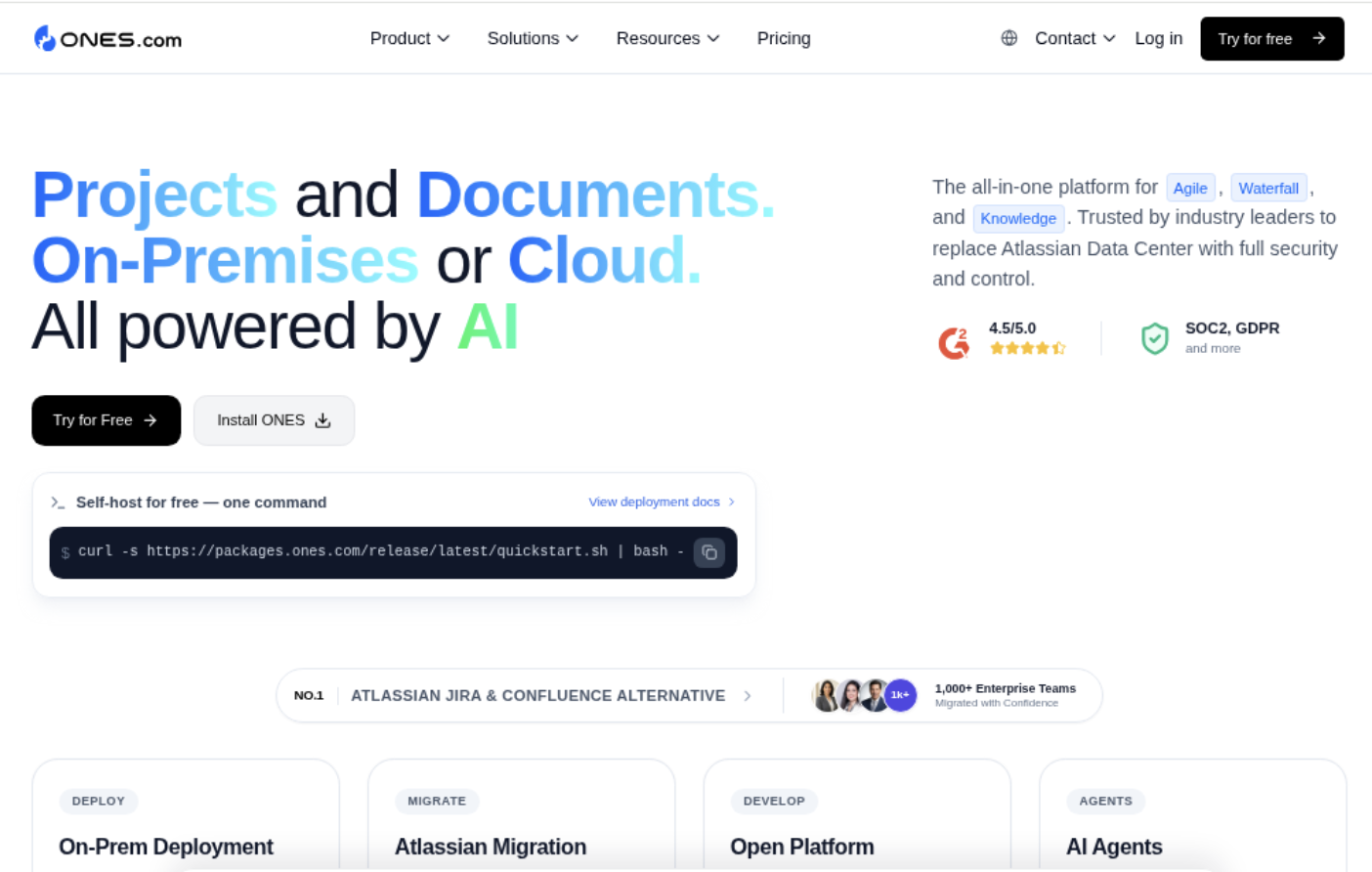
Value Proposition
ONES.com combines project management and knowledge management in one platform. It can suit teams seeking a Jira alternative with flexible deployment, native capabilities, and fewer add-ons.
ONES Project and ONES Wiki are sold separately, so you can select the product that matches your immediate need.
Core Capabilities
- Small-team cost pressure: ONES.com provides a free plan for up to 30 seats, giving a growing team more room than Jira Free’s 10-user allowance.
- Restricted deployment requirements: ONES.com supports Cloud, On-Premise, Private Cloud, and Air-gapped deployments, helping teams match their operating environment.
- Feature differences between hosting models: ONES.com maintains full feature parity between its cloud and self-hosted versions, so deployment choice does not require giving up core capabilities.
- Jira migration concerns: ONES Project supports Jira-compatible workflows, helping teams preserve familiar issue-tracking practices while evaluating a Jira alternative.
- Plugin dependency: Built-in reporting, custom workflows, custom fields, sprint management, and automation reduce the need to assemble many separate extensions.
- Scattered knowledge: ONES Wiki provides a knowledge management option alongside project management, helping teams connect delivery work with team guidance.
- Complex approval paths: Custom workflows can represent review, approval, testing, and release stages more clearly than a basic default process.
- Administration across environments: Self-hosted deployment options give organizations more control over where the platform operates and how it fits internal requirements.
Application Scenarios
A 20-person software team may exceed Jira Free’s user limit while still needing sprint planning, reports, and issue automation. ONES Project gives that team more free-seat capacity to evaluate a unified workflow.
An organization with restricted connectivity may need an air-gapped project management environment. ONES.com supports air-gapped deployment, allowing the team to keep project operations within its approved network.
A product group using separate project and knowledge tools may want fewer handoffs. Using ONES Project with ONES Wiki can connect delivery planning, requirements, decisions, and team guidance in one ecosystem.
Common Challenges and Practical Solutions
Challenge: The team reaches 10 users
Solution: Review account activity and remove access that is no longer needed. If every person requires regular access, compare the cost of upgrading with a Jira alternative that offers a larger entry tier.
Challenge: Automation stops running
Solution: Audit rules by value and frequency. Replace repeated event triggers with scheduled rules where possible, then reserve automation for actions that genuinely save manual effort.
Challenge: Attachments consume storage
Solution: Set size guidelines, remove duplicate uploads, and place long-term reference material in an appropriate knowledge platform. Keep issue attachments focused on active work.
Challenge: The workflow needs stronger permissions
Solution: Map who can view, edit, approve, and administer each project. If the free plan cannot express those boundaries cleanly, assess a paid plan or a platform with deeper native controls.
Challenge: The team cannot get timely support
Solution: Create an internal troubleshooting guide and assign an administrator who can handle routine questions. For urgent operational needs, include formal support availability in your plan comparison.
FAQs
Is Jira Free genuinely free?
Yes. Jira offers a no-cost Cloud plan for small teams. You can create projects and use core issue-tracking features without a subscription charge. The plan still has limits, including user capacity, storage, automation activity, support, and administration. Check the current Atlassian terms before relying on a specific limit, because plan features can change.
How many people can use Jira Free?
Jira Free supports up to 10 users on a Jira Cloud site. Count everyone who needs access, including developers, testers, product specialists, contractors, and administrators. If your team expects to grow beyond 10 people, evaluate the next paid tier or another platform before the limit becomes an urgent problem.
Does Jira Free include unlimited projects?
Jira Free generally allows unlimited projects, which is useful for small teams managing several initiatives. However, unlimited projects do not mean unlimited capacity in every area. You still need to consider the 10-user allowance, 2 GB storage limit, automation restrictions, and the administration requirements of each project.
Can I use Jira Free for commercial work?
Yes, small commercial teams can use Jira Free when the plan’s limits fit their needs. A startup can track product issues, plan sprints, and manage releases without paying for the platform. Review Atlassian’s current terms, security expectations, and support options if the work involves sensitive customer commitments.
What happens after a Jira Free trial or limit?
Jira Free is a continuing no-cost plan, while paid features may be available through trials or plan changes. When you reach a free-tier limit, you may need to reduce access, manage usage more carefully, upgrade, or move your work. Export important project information and test the next option before making a rushed decision.
Is there a Jira alternative for teams larger than 10 people?
Yes. ONES.com is one option to evaluate, especially if you need up to 30 free seats, Jira-compatible workflows, built-in reporting, custom fields, automation, or self-hosted deployment. ONES Project focuses on project management, while ONES Wiki focuses on knowledge management. Compare workflow fit, hosting, support, and migration effort before switching.
Conclusion
Yes, Jira has a free tier, and it can work well for a small team with simple project tracking needs. The main constraints are 10 users, 2 GB of storage, limited automation activity, community support, and fewer administration controls.
But here’s the truth: the right choice depends on how quickly your team will grow and how much governance your work requires. Test Jira with a real project, monitor access and automation, and estimate attachment growth before deciding.
If the free plan feels too narrow, compare a paid Jira tier with alternatives such as ONES.com. A platform with more seats, native capabilities, and flexible deployment may provide a smoother path as your workflow becomes more demanding.