Free Jira Certification: A Step-by-Step Exam Guide for 2026
Looking for jira certification free options? Learn what counts, how to prepare step by step, and what an official credential may cost. Read the 2026 guide.
Want a Jira certification without paying for a course or exam? The tricky part is that “free Jira certification” can mean free lessons, a completion badge, or a formal professional credential. Those are not always the same thing, and confusing them can leave you with a certificate that employers do not recognize as an Atlassian certification.
That distinction matters when you are choosing what to study, how to prepare, and whether to reserve money for an exam. A free tutorial can teach you how to build a Jira workflow, but it may not include a monitored test or an official credential.
Here’s the practical route: use free training to build your skills, check Atlassian’s current credential catalog before you plan an exam, and be precise about what any badge proves. This guide walks you through each step, including a study plan and ways to practice Jira at no cost.
Can You Earn a Free Jira Certification?
A free Jira certification may refer to a no-cost course completion badge or a formal Atlassian credential. Free learning can help you prepare, but it does not automatically include an official certification exam.
Atlassian offers learning materials through Atlassian University, and availability can change over time. Formal credentials, exam formats, eligibility, and fees may also change. Check the current Atlassian credential catalog before you commit to a study plan or describe a badge on your résumé.
Use these steps to pursue the strongest credential you can afford, while keeping your learning free where possible.
- Decide what you need. If you want practical Jira skills for a new role, free lessons and a small practice project may be enough. If a job posting asks for an Atlassian credential, confirm the exact credential name and exam requirements.
- Review Atlassian’s current learning options. Look for beginner courses, product tutorials, and any available skill badges. Note whether a course is free and whether it awards a completion badge, a skill badge, or an exam credential.
- Choose a Jira focus. Jira project administration, Jira Service Management, and day-to-day project work involve different tasks. Match your learning path to the role you want, rather than trying to study every Jira feature at once.
- Check the exam details before studying deeply. Confirm the credential’s current name, format, prerequisites, exam fee, and renewal rules. If an official exam is paid, free preparation can still reduce the amount you spend on training.
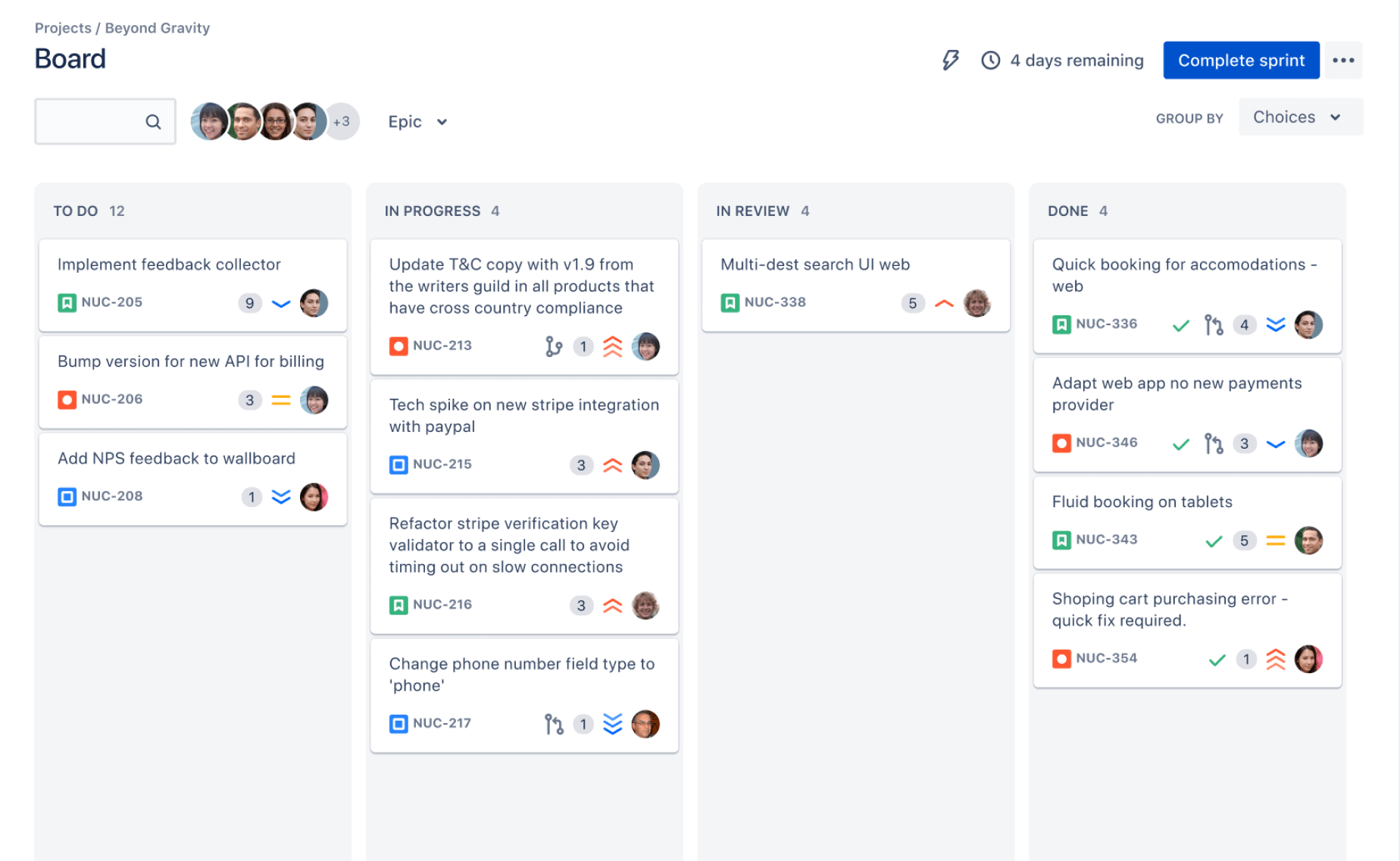
- Practice tasks, not just terminology. Create a sample project and try common actions such as configuring issue types, moving work through a workflow, creating a filter, and reviewing a sprint report.
- Label your achievement accurately. List a course badge as a course or skill badge. Reserve “Atlassian certified” for a credential Atlassian actually awards after its certification requirements are met.
Understand the Difference Between Training, Badges, and Credentials
These three achievements can look similar on a profile, but they show different levels of assessment. A course confirms that you completed learning activities. A skill badge may indicate that you demonstrated a defined ability. A formal certification typically requires passing a credential exam under the program’s rules.
For example, completing a Jira project tutorial could help you learn how to create issues and configure a board. It does not necessarily prove you passed an Atlassian exam. Read the badge description and awarding organization before you add it to a résumé.
But here's the truth: the value of a credential depends on whether it matches the work you want to do. A Jira administrator role may call for configuration knowledge, while a project coordinator may benefit more from showing clear hands-on use of boards, filters, and reports.
Build a Free Jira Study Plan
A focused plan makes free learning more useful. Pick one role, divide the material into manageable topics, and create a practical task for each topic. That gives you evidence of what you can do, not just a list of terms you have read.
Start with the work you want to perform
For project administration, prioritize permissions, project settings, issue types, fields, workflows, and automation. For team members, focus on creating and updating issues, using boards, writing filters, and understanding reports.
Suppose you are preparing for a junior project role. You could create a sample project, add five tasks, assign owners, set due dates, and move each task across a simple workflow. That practice connects Jira features to routine team work.
Use a repeatable weekly schedule
Short sessions are easier to maintain than a long cram session. Try four study blocks each week, each lasting 30 to 45 minutes. Use one block for lessons, one for hands-on practice, one for review, and one for a timed quiz or self-check.
Keep a learning log with the feature you practiced, the task you completed, and any question you still have. For example: “Created a saved filter for overdue issues; still need to learn how sharing permissions work.” This turns vague progress into a clear next step.
Practice in a safe environment
Use a Jira trial or an account you are permitted to use for practice. Avoid changing settings in a live workplace project unless your administrator has approved it. If a trial is unavailable, study interface demonstrations and write out the steps you would take.
Here's why: clicking through a real workflow helps you notice details that a lesson can gloss over. You may discover, for instance, that a transition is unavailable because the issue status or project permissions do not allow it.
Study the Jira Skills Most Likely to Matter
Jira credential topics depend on the role and exam. Still, several core skills recur in everyday work: project structure, issue management, workflows, boards, search, reports, and permissions. Check the current exam outline if you are preparing for a specific credential.
- Projects and issues: Understand how projects organize work and how issue types represent tasks, bugs, or other work items.
- Workflows and statuses: Learn how work moves from creation to completion, and what can block a transition.
- Boards and backlogs: Practice organizing work for Scrum or Kanban and updating items as a team progresses.
- Search and filters: Try basic searches and save filters that answer a specific question, such as which issues are overdue.
- Reports: Explore reports that show progress, workload, or sprint outcomes. Be ready to explain what a report can and cannot tell you.
- Permissions and notifications: Learn how access and alerts affect different roles. Be careful to distinguish project-level permissions from broader product settings.
- Automation: Understand simple rules, such as assigning an issue when it enters a particular status. Test changes in a practice project first.
You might be wondering: should you memorize every setting? Usually, it is more useful to understand what a setting changes and where to find it. When a practice question describes a team problem, connect the problem to the Jira feature that would address it.
Prepare for an Exam Without Paying for Extra Training
If you decide to take a paid credential exam, you can still prepare without purchasing a separate course. Start with the exam outline, then use Atlassian’s free learning materials and your own practice tasks to cover each objective.
Turn the exam outline into a checklist
Write each topic as a question you can answer. For example: “Can I explain how a workflow controls issue movement?” or “Can I create a filter that finds unresolved work?” Mark each item as confident, needs practice, or not yet studied.
Use a small example to test each answer. If a topic involves permissions, describe which people need access and what level of access they require. If it involves a report, explain what decision the report could support.
Use active recall instead of rereading
Close the lesson and explain a feature in your own words. Then try to carry out the task in Jira, or write the steps from memory if you do not have an account available. This quickly reveals whether you understand the feature or only recognize its name.
For instance, after studying filters, try to describe how you would find unresolved issues assigned to one teammate. If you cannot explain the search criteria or how to save the result, revisit that topic.
Run a timed review before booking
Take any practice questions offered in the learning path, and set a time limit. Review every incorrect answer by identifying the underlying concept. Avoid relying on leaked exam questions; they may be inaccurate and can violate exam rules.
Before scheduling, check the current exam page for allowed materials, identity checks, rescheduling terms, and technical requirements. Exam procedures can change, so confirm those details close to your test date.
What to Do After Completing Free Jira Training
Turn your learning into a small portfolio of practical examples. You could describe a sample workflow, show how you organized a backlog, or explain how a saved filter answers a team question. Do not include confidential workplace information in a public portfolio.
On your résumé, state exactly what you earned. For example, “Completed an Atlassian University Jira learning path” is clearer than calling a course completion a professional certification. If you pass an official credential exam, use the credential’s exact name and follow its current rules for displaying the achievement.
The best part? You do not need a certification to show useful Jira ability. A clear example—such as how you configured a simple workflow and why—can help an interviewer understand your practical experience.
Jira Workflow Solution: ONES.com
ONES.com is a unified platform for project management and knowledge management, with the products sold separately. If you are practicing Jira concepts or managing work with a different platform, ONES Project provides project management capabilities as a Jira alternative, while ONES Wiki offers a knowledge base as a Confluence alternative.
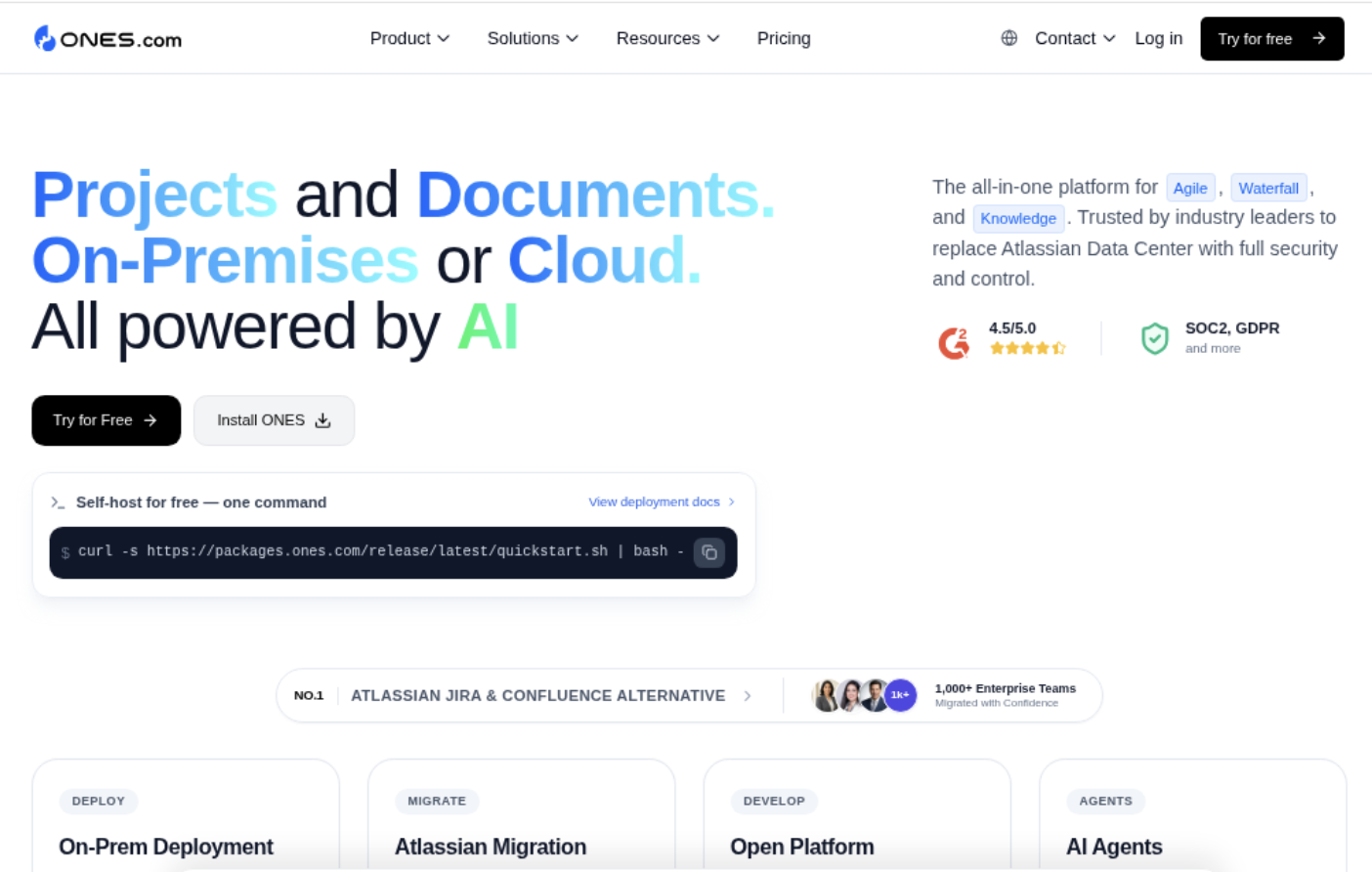
For someone learning Jira, the value is practical comparison: you can see how work tracking, workflows, reporting, and team knowledge fit together. ONES.com offers a free plan for up to 30 seats, with Cloud, On-Premise, Private Cloud, and Air-gapped deployment options. Its cloud and self-hosted versions have full feature parity.
Core capabilities
- Need to move work across clear stages: ONES Project supports custom workflows, so teams can shape issue movement around their process and see work progress more clearly.
- Need Jira-compatible practices: Jira-compatible workflows can help teams carry familiar project processes into a Jira alternative, reducing the disruption of a platform change.
- Need to plan iterative work: Sprint management supports teams that organize work into cycles, helping them plan and review progress in a consistent way.
- Need fewer add-ons for routine tasks: Built-in reporting and automation provide common capabilities within the platform, which can reduce reliance on extra plugins.
- Need fields suited to your team: Custom fields let a team capture relevant work details, making issue records more useful for tracking and reporting.
- Need to keep team knowledge close to project work: ONES Wiki provides knowledge management alongside ONES Project, helping teams connect guidance with the work it supports.
- Need a restricted deployment: On-Premise, Private Cloud, and Air-gapped options support teams with deployment requirements beyond public cloud hosting.
- Need AI assistance in project and knowledge work: ONES.com includes ONES Assistant, an AI-powered assistant that can support work across the platform.
Application scenarios
A software team preparing for a Jira migration could recreate a familiar workflow in ONES Project, define its custom fields, and compare reporting needs before moving day-to-day work. That gives the team a practical way to evaluate process fit instead of relying only on feature names.
A team working in a restricted network could use an Air-gapped deployment while keeping project work and knowledge management within its approved environment. ONES Project and ONES Wiki are separate products, so the team can select the capabilities it needs.
Common Challenges When Pursuing a Free Credential
- Challenge: A badge looks like a certification. Solution: Check the awarding organization and badge description. State whether you completed training, earned a skill badge, or passed a formal exam.
- Challenge: Free lessons feel scattered. Solution: Choose one role and follow the current learning path for it. Use the exam outline or a job description to decide what to study next.
- Challenge: You cannot practice on a workplace project. Solution: Use a trial or a permitted practice account. If neither is available, work through interface demonstrations and write down the steps for each task.
- Challenge: You are unsure whether an exam costs money. Solution: Verify the current credential page before scheduling. Training may be free even when the formal exam has a fee.
- Challenge: You forget what you studied. Solution: Use short review sessions and explain each feature from memory. A practical task, such as creating a filter, makes review more memorable than rereading alone.
FAQs About Free Jira Certification
Can I get an official Jira certification for free?
It depends on the credential and current Atlassian program terms. Free training or a badge may be available, but that does not mean the formal certification exam is free. Check the current credential listing for exam fees, requirements, and the exact award you receive. If a role requires a formal certification, confirm that the credential matches the employer’s requirement before you begin.
Does completing a free Jira course make me Atlassian certified?
Not necessarily. Course completion shows that you finished a learning activity, while an official certification usually requires meeting the credential program’s assessment requirements. Read the course or badge description carefully. On your résumé, name the course or badge accurately, and use “Atlassian certified” only if you earned the corresponding official credential.
How can I learn Jira without paying?
Start with free Atlassian University learning materials and practice common tasks in an account you are allowed to use. Build a sample project, create a few issues, move them through a workflow, try a board, and make a saved filter. If you cannot access a practice environment, use tutorials and describe the steps you would take. Keep a short log of skills you have tested.
Which Jira topics should beginners study first?
Begin with projects, issues, workflows, boards, and basic search. Then study reports, permissions, notifications, and automation according to your target role. A project coordinator may need strong board and issue-management skills, while an administrator may need more depth in configuration and permissions. If you are preparing for an exam, follow its current topic outline.
Are Jira badges useful on a résumé?
They can help show initiative and learning, especially when you pair them with a concrete example of what you can do. Describe the badge accurately and include the relevant skill, such as setting up a board or creating a filter. A badge is not a substitute for an official certification when an employer specifically requires one, so make the distinction clear.
Conclusion
You can build Jira skills with free learning materials, but free training and an official certification are not automatically the same thing. First identify the credential you need, check current exam terms, and build a practice plan around the work you want to do.
Then test your knowledge with realistic Jira tasks and describe every course, badge, or credential accurately. That approach helps you avoid surprises about exam costs while making your skills easier for employers to assess.
If certification is not required, practical examples may be enough to demonstrate your ability. If you need an official credential, use free preparation where it fits and verify the exam details before booking.