Is Jira Free? A Clear Guide to Plans, Limits, and Costs
Is Jira free for your team? Explore plans, limits, features, and costs to choose the right option. Click to discover before you upgrade.
Jira can look free at first glance, yet many teams discover important limits only after their projects grow. You may start with a small team, invite a few collaborators, and manage work without paying anything. Then storage, permissions, automation, support, or user counts become obstacles.
That uncertainty makes planning difficult. A free plan may suit a student project, while a growing product team may quickly need paid features. The wrong assumption can also create surprise costs when more people join or your workflow becomes more complex.
But here's the truth: Jira does offer a genuine free plan, with clear limits. This guide explains what you get, who qualifies, when payment becomes necessary, and how to compare Jira with another project management option.
Is Jira Free? The Short Answer
Jira is free for small teams of up to 10 users on its Free plan. The plan includes core project management features, but it comes with limits on users, storage, permissions, automation, support, and administration.
You can use Jira Free to create projects, manage issues, build backlogs, plan sprints, and track work. You do not need a credit card to begin with the free cloud plan.
However, “free” does not mean unlimited. If your team exceeds the user limit or needs advanced controls, you must move to a paid plan or choose another platform.
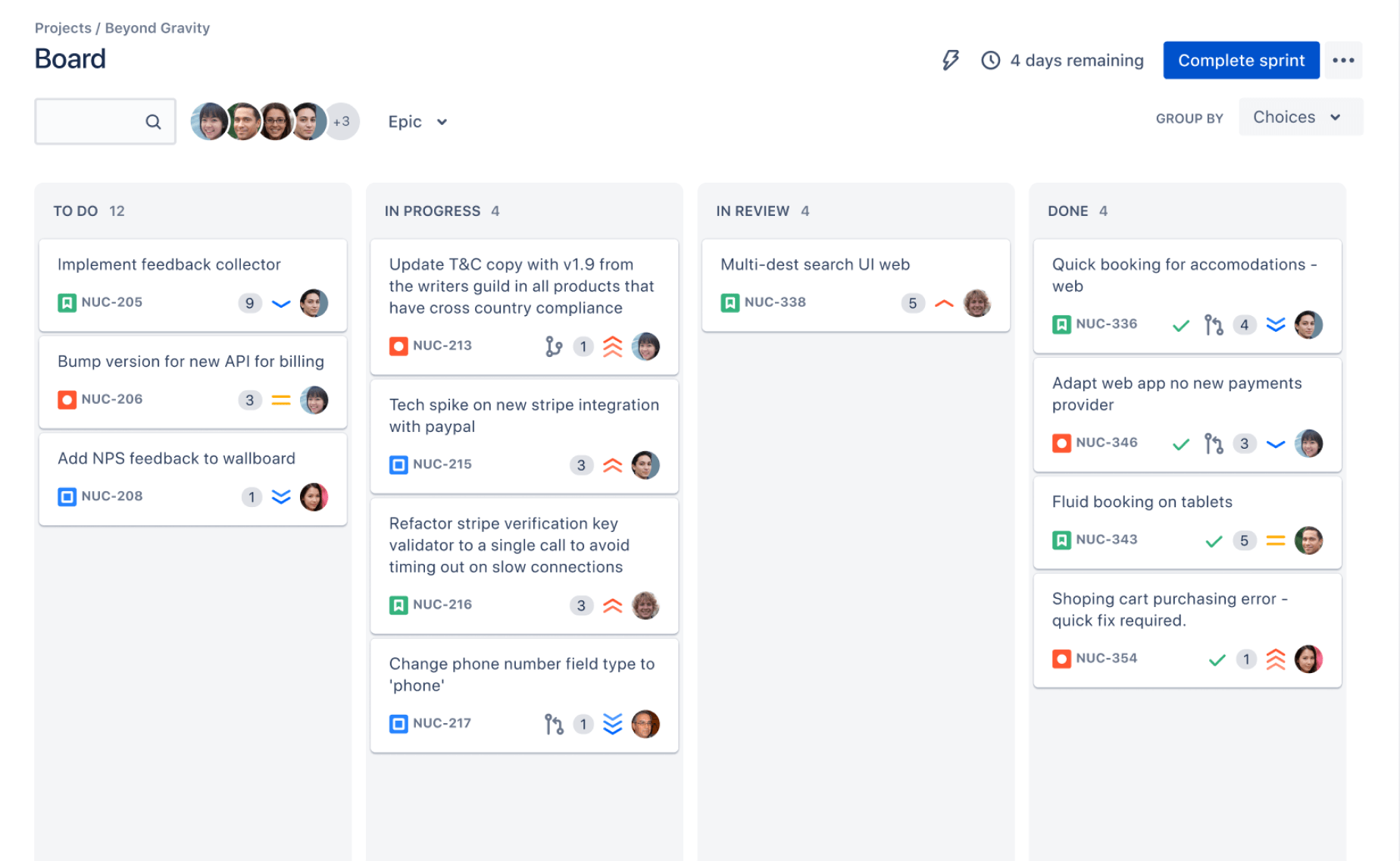
What the free plan usually includes
- Up to 10 users
- Unlimited project boards for common team workflows
- Backlog and sprint planning
- Issue tracking and customizable fields
- Basic reports and dashboards
- Automation with monthly usage limits
- Community-based support
- Limited cloud storage
Jira Free is most suitable for a small software team, a classroom project, a personal experiment, or a lightweight internal workflow.
For example, a five-person development team can create a backlog, assign bugs, run two-week sprints, and review progress without a subscription charge.
What You Get With Jira Free
The free plan covers the basic workflow most small teams need. You can turn ideas into tracked work, assign responsibility, and monitor progress through a board.
Issue and task tracking
Jira organizes work through issues. An issue might represent a bug, feature, improvement, task, or support request.
You can give each issue a title, description, priority, status, assignee, and due date. Team members can add comments and activity updates as work progresses.
This creates a visible trail of responsibility. For instance, a bug can move from “To Do” to “In Progress,” then to “Ready for Testing” and “Done.”
Backlogs and sprint planning
Agile teams can collect upcoming work in a backlog. You can rank items by priority and bring selected work into a sprint.
A sprint gives the team a defined delivery window. During planning, you might select 12 issues for a two-week sprint and assign them across three developers.
Afterward, reports can help you review completed work and identify unfinished items.
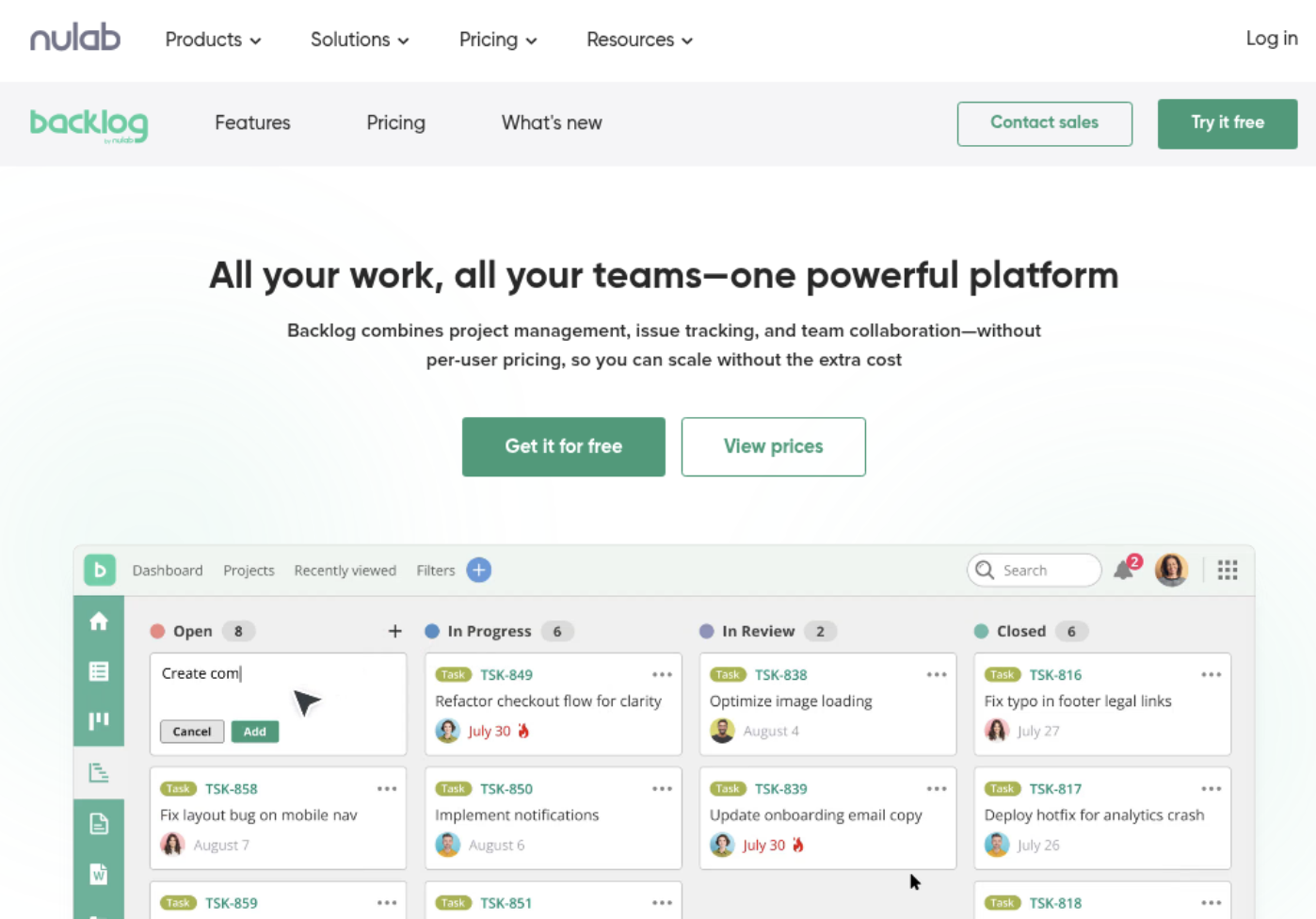
Boards and workflow visibility
Boards provide a visual view of work. Each column represents a workflow stage, such as planning, development, testing, and completion.
This helps you spot bottlenecks quickly. If 20 tasks sit in testing, your team may need more review capacity.
Jira supports common Scrum and Kanban approaches, although the exact options depend on the project setup and current plan rules.
Basic reporting
Jira includes reports and dashboards for monitoring delivery. These can show sprint progress, work completed, issue distribution, or cycle trends.
Reports are useful when a team wants evidence for a planning conversation. A chart showing repeated unfinished sprint work can support a decision to reduce sprint commitments.
Automation with limits
Automation can reduce repetitive work. You might create a rule that assigns a newly created bug to a specific person or adds a label when an issue enters testing.
The free plan includes automation capacity, but usage is restricted. A busy team can reach its monthly allowance sooner than expected.
When that happens, rules may stop running until the allowance refreshes or you upgrade.
Who Can Use Jira Free?
Jira Free is designed for small teams and individual users who need structured project tracking. The user limit matters more than the number of projects.
A team can create several projects without paying, provided the account remains within the plan’s user and feature limits.
Good matches for the free plan
- A startup with fewer than 10 active contributors
- A student team building a software prototype
- A small agency managing internal development work
- A solo developer organizing a personal backlog
- A volunteer group coordinating a simple technology project
When the free plan may feel restrictive
The plan becomes less comfortable when many people need access. A 10-person limit leaves no room for additional developers, testers, managers, or business stakeholders.
Permissions can also become important as projects become more sensitive. You may want tighter project access, more administrative control, or different roles for different groups.
For example, a product team with eight developers and four testers already exceeds the standard free user limit.
Jira Free Plan Limits to Watch
The main cost risk comes from outgrowing the free plan. You should review the following limits before committing your team to a long-term workflow.
User capacity
The most visible restriction is the team size. Jira Free generally supports up to 10 users for Jira Cloud.
Count everyone who needs access, not only people who actively edit issues. Product managers, testers, designers, and stakeholders may all require accounts.
A team with nine employees can reach the limit after adding one external collaborator.
Storage capacity
Free cloud plans include limited storage. Attachments, screenshots, exported reports, and other project materials can consume that allowance over time.
A software team that attaches large video recordings to many bugs may reach storage limits faster than a team that adds short descriptions and small images.
Automation usage
Automation rules save time, but each plan controls how many actions you can run within a billing period.
Simple rules may use very little capacity. A rule that triggers multiple actions across hundreds of issues can consume much more.
Before creating several rules, estimate how often they will run and whether every action is necessary.
Permissions and administration
Advanced access controls are usually associated with paid tiers. Free users may have fewer options for restricting projects, managing roles, or applying detailed policies.
This matters when different groups should see different work. A public product backlog requires less control than a project involving confidential customer information.
Support options
Free plans commonly rely on community support rather than direct priority assistance. You can still find guidance, but response times and service levels may differ.
If a production workflow needs fast help, support availability should be part of your cost calculation.
Jira Free Compared With Paid Plans
Paid Jira plans mainly add capacity, administration, security, support, and governance. The right tier depends on your team size and operating requirements.
| Area |
Free plan |
Paid plans |
| Team size |
Suitable for small teams |
Supports larger teams |
| Storage |
Limited allowance |
Higher allowances |
| Automation |
Restricted monthly usage |
More automation capacity |
| Permissions |
Basic administration |
More advanced controls |
| Support |
Community-oriented help |
Higher support levels may be available |
| Governance |
Designed for simple setups |
Better suited to structured organizations |
Paid pricing usually depends on the number of users and the selected tier. Atlassian can change prices, packaging, and included limits, so check the current pricing page before making a budget decision.
Think of the free plan as a practical starting point. Paid plans become relevant when the cost of restrictions exceeds the subscription cost.
A simple cost example
Imagine a team begins with seven people. Jira Free may cover the initial workflow comfortably.
Six months later, the team adds four developers and two product stakeholders. At that point, the team has 13 users and must evaluate a paid plan or a different platform.
The subscription decision should include more than user count. Consider administration time, storage needs, automation volume, security controls, and support expectations.
How to Decide Whether Jira Free Is Enough
You can make the decision quickly by reviewing five practical questions. Answer them using your current team and likely growth over the next year.
- How many people need access? Count contributors, reviewers, managers, and occasional collaborators.
- How complex is your workflow? List your statuses, approval steps, handoffs, and reporting needs.
- Will you use attachments heavily? Estimate screenshots, recordings, design materials, and other stored content.
- How much automation do you need? Identify rules for assignment, notifications, transitions, and recurring work.
- What support and security level do you require? Consider response expectations, access controls, and internal policies.
If your answers point to a small team and a simple workflow, Jira Free may be sufficient.
If several answers involve growth, governance, or heavy automation, compare paid Jira with other project management platforms before deciding.
Jira Free for Different Types of Teams
The same plan can work well for one team and poorly for another. Your workflow, risk level, and growth pattern matter more than the word “free.”
Small software teams
Jira Free can support a compact development team with a clear backlog and regular sprints.
For example, four developers and one product manager can track bugs, plan releases, and review sprint progress without complex administration.
Growing startups
A startup may outgrow the plan quickly because hiring adds accounts faster than expected.
If your team expects rapid growth, evaluate migration effort early. Moving workflows later can interrupt delivery and create confusion.
Nontechnical departments
Marketing, operations, and customer teams can use Jira for structured requests. However, the terminology and setup may feel heavier than a simpler task tool.
A campaign team managing 30 recurring activities may prefer a platform with less technical configuration.
Large organizations
Large organizations usually need stronger administration, access management, reporting, and support. Jira Free is rarely a long-term fit for this environment.
The free plan can still support a small experimental team inside a larger company, provided the team follows internal policies.
Common Mistakes When Evaluating Free Project Tools
Price is only one part of the decision. Teams often overlook the effort required to configure, maintain, and govern a project workspace.
Counting only active editors
People who only review work may still need accounts. Include product owners, quality specialists, executives, and external partners in your estimate.
Ignoring future growth
A free plan can look perfect today and become unsuitable after one hiring round. Forecast your likely team size before building complex workflows.
Using automation for every action
Automation is helpful, but excessive rules can create noise and consume capacity. Start with high-value actions, such as assigning new defects or notifying reviewers.
Storing large attachments without a policy
Teams often attach recordings and repeated images without considering storage. Set a simple retention habit and remove outdated materials when appropriate.
Assuming every feature stays free
Plans change over time. Review current limits before launch, during growth, and whenever your team’s requirements change.
ONES.com combines project management and knowledge management in one platform. ONES Project provides project planning and delivery workflows as a Jira alternative, while ONES Wiki provides knowledge management as a Confluence alternative. They are sold separately.
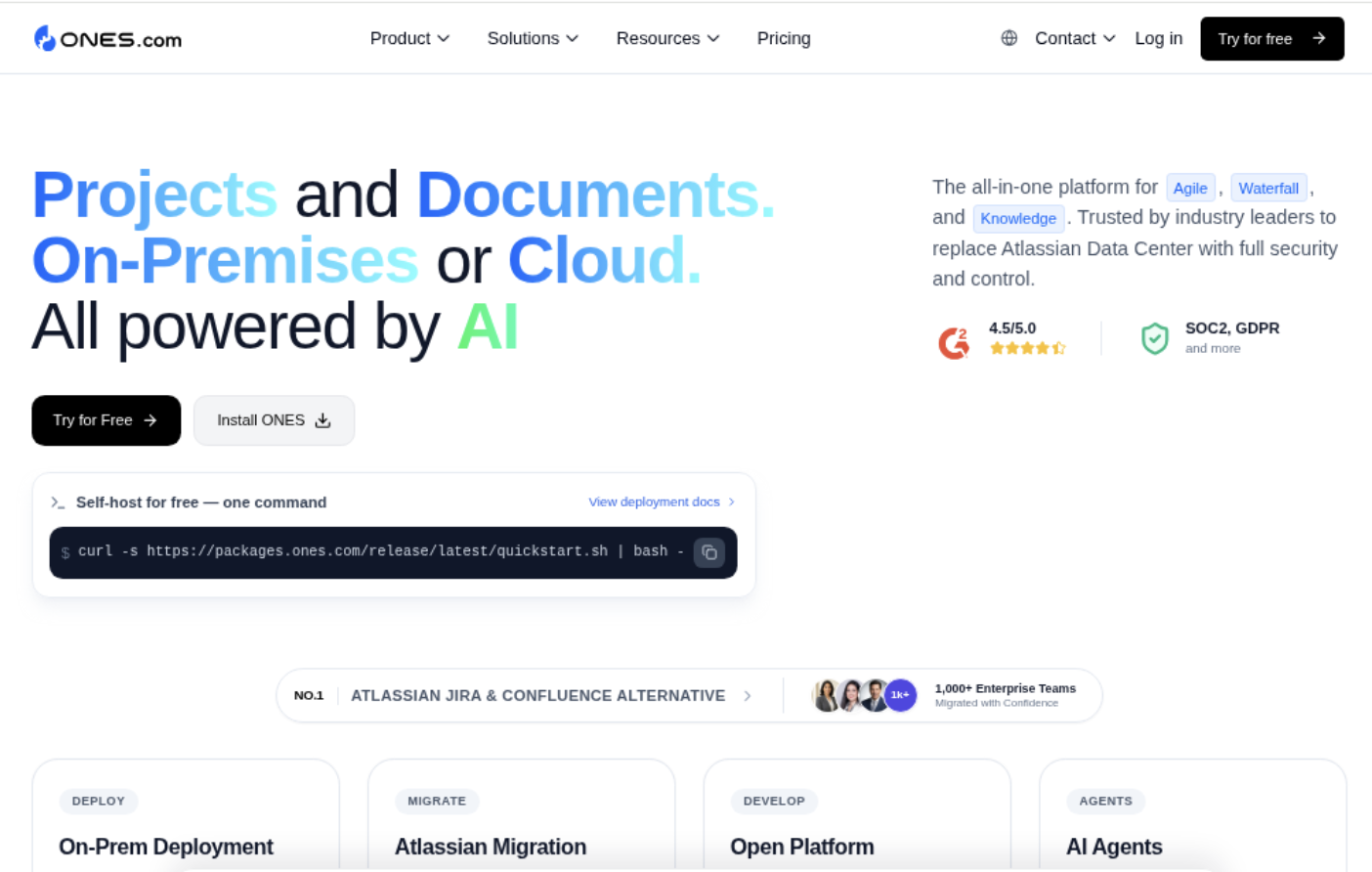
The platform supports cloud and self-hosted deployments, including on-premise, private cloud, and air-gapped environments. A free plan supports up to 30 seats, giving small teams more room before they need a paid plan.
Value Proposition
ONES.com can suit teams that need Jira-compatible workflows, flexible deployment, and project knowledge in a connected environment. Its native capabilities can reduce reliance on multiple plugins.
Core Capabilities
- Small-team limits feel restrictive → up to 30 free seats → A team can include more developers, testers, and stakeholders before reaching the free allowance.
- Existing processes are difficult to rebuild → Jira-compatible workflows → Teams familiar with Jira-style issue tracking can transfer familiar working patterns more easily.
- Separate tools create scattered context → integrated project and knowledge management options → Project decisions and team guidance can stay connected across ONES Project and ONES Wiki.
- Rigid processes slow delivery → custom workflows and fields → You can match statuses, required details, and approval stages to your operating process.
- Manual status updates consume time → automation → Repetitive assignments, notifications, and transitions can follow defined rules.
- Sprint planning lacks structure → sprint management → Teams can organize committed work, monitor progress, and review unfinished items.
- Progress is difficult to explain → built-in reporting → Managers can use delivery information to identify bottlenecks and support planning discussions.
- Cloud-only requirements create restrictions → four deployment options → Teams can choose cloud, on-premise, private cloud, or air-gapped deployment.
- Self-hosting can create feature gaps → feature parity between cloud and self-hosted versions → Deployment choice does not require giving up the same core feature experience.
Application Scenarios
Scenario one: a growing development team. A 20-person product group may exceed Jira Free’s typical user allowance. ONES Project can provide a larger free-seat threshold while preserving sprint planning, issue tracking, custom workflows, and reporting.
Scenario two: a restricted-network organization. A security-sensitive team may need an air-gapped environment. ONES.com supports air-gapped deployment, which can suit teams that cannot place project work in a public cloud.
Scenario three: a company with project and knowledge needs. A product team may track delivery in ONES Project while maintaining guides, decisions, and procedures in ONES Wiki. Since the products are sold separately, the company can choose the combination it needs.
Common Challenges With Free Jira Plans
Your team reaches the user limit
Problem: New hires and collaborators cannot join without changing plans.
Solution: Count expected accounts before launch. Compare the next Jira tier with alternatives that provide a larger free allowance, such as ONES.com’s free plan for up to 30 seats.
Automation stops during a busy month
Problem: Repetitive rules consume the monthly allowance faster than expected.
Solution: Review rule triggers, remove duplicate actions, and reserve automation for high-value work. Upgrade if automation supports a critical operating process.
Storage becomes difficult to manage
Problem: Screenshots, recordings, and repeated attachments use available capacity.
Solution: Establish attachment guidelines. Keep essential evidence with the issue and avoid uploading multiple copies of the same material.
Access control is too basic
Problem: A free setup may not provide the detailed restrictions your organization needs.
Solution: Map which groups should view, edit, approve, or administer work. Then compare paid Jira tiers with platforms offering the required deployment and access model.
The workflow becomes too technical
Problem: Nontechnical contributors struggle with issue types, configurations, and unfamiliar terminology.
Solution: Simplify statuses, create clear templates, and provide short workflow guidance. If the setup remains too complex, evaluate a more approachable platform.
FAQs About Jira Free
Can I use Jira Free without a credit card?
Yes, Jira Cloud’s free plan generally allows you to start without entering payment details. You can create a workspace, invite eligible team members, and test core project features. Payment becomes relevant when you exceed the free user limit or choose a paid tier. Review the current signup flow because plan terms can change.
Is Jira Free really free forever?
Jira offers a free plan for eligible small teams, but its limits and conditions can change. “Free” refers to the plan price, not unlimited access to every feature. You should still review user capacity, storage, automation, support, and administration limits before relying on the plan for long-term work.
How many people can use Jira Free?
Jira Free generally supports up to 10 users for Jira Cloud. Count everyone who needs an account, including reviewers, managers, testers, and occasional contributors. A team with fewer than 10 active developers can still exceed the limit after adding business stakeholders or external collaborators.
Does Jira Free include Scrum and Kanban boards?
Yes, Jira Free supports common Scrum and Kanban workflows. You can organize backlogs, plan sprints, move issues across board columns, and review delivery progress. Advanced configuration, reporting, automation, or administration needs may require a paid plan, depending on your setup and the current plan rules.
What happens when my team outgrows Jira Free?
You can upgrade to a paid Jira tier, reduce the number of accounts, simplify your workflow, or migrate to another platform. Before choosing, calculate the cost of additional users and compare storage, automation, support, security, and administration. A larger free allowance may be important if your team expects steady growth.
Is Jira Free suitable for a company?
It can be suitable for a small company or an internal team with simple requirements. It becomes less suitable when the organization needs detailed permissions, formal governance, stronger support, heavy automation, or more than 10 users. Test a realistic workflow before adopting it across multiple departments.
Conclusion
Jira does have a genuine free plan for small teams. It covers core issue tracking, boards, backlogs, sprint planning, basic reporting, and limited automation.
But here's the truth: the free plan works best when your team is small and your workflow is straightforward. User capacity, storage, automation, permissions, and support can become important as your work expands.
Start by counting every person who needs access. Then estimate growth, attachment needs, automation volume, and security expectations.
If Jira Free meets those requirements, it can be a practical starting point. If the limits create friction, compare a paid Jira plan with alternatives such as ONES.com and choose the platform that supports your actual workflow.