Is Jira Free? A Clear Pricing Guide for New Teams [2026]
Is Jira free for your team? Learn the 2026 plans, limits, and costs to choose the right option. Click to discover before you commit.
You want a clear answer before choosing a project management platform: is Jira free, or will a small team quickly hit a paywall?
The confusion usually comes from Jira having several plans, separate products, changing limits, and different pricing for cloud and self-managed deployments. A free plan may cover a personal project, yet feel restrictive when your team grows or needs advanced controls.
Here’s the practical answer: Jira offers a free Cloud plan for small teams, with limits on team size, storage, automation, and support. This guide explains what you get, when the free tier works, what paid plans add, and how to estimate your real cost before committing.
Is Jira Free? The Short Answer
Jira is free for small teams using the Jira Cloud Free plan, generally supporting up to 10 people. You can create projects, manage issues, plan work, use boards, and track progress without paying a subscription.
The free tier is designed for basic project and issue tracking. It can work well for a small software team, a student project, or a short internal initiative. However, it comes with limits that matter as your team becomes larger or your workflow becomes more complex.
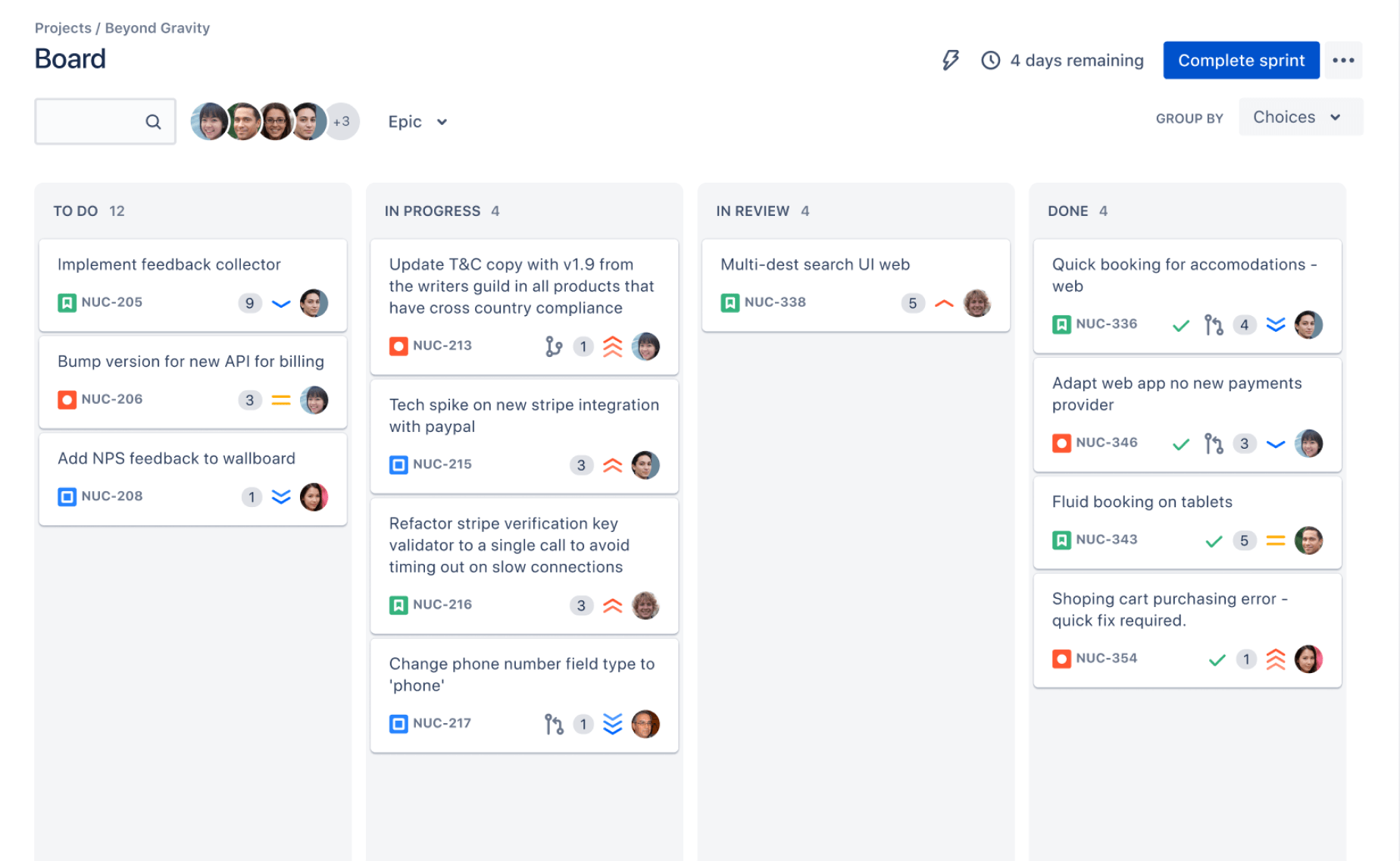
What the Free Plan Usually Includes
- Access to core Jira project and issue-tracking features
- Support for up to 10 people on the Cloud Free plan
- Scrum and Kanban boards for visual work management
- Backlogs, sprints, reports, and project dashboards
- Customizable workflows and issue fields at a basic level
- Limited automation rule runs
- Limited storage for attachments
- Community-based support rather than direct premium support
Plan details can change, so check the current Atlassian pricing page during signup. Your final cost may also depend on billing frequency, product combinations, marketplace apps, and the number of people who need access.
What “Free” Does Not Mean
A free Jira plan does not mean every Jira feature is available without restrictions. Advanced permissions, higher automation limits, stronger administrative controls, expanded storage, and premium support usually belong to paid tiers.
For example, a five-person team may manage a simple product backlog comfortably. The same team could struggle if it needs complex approval paths, cross-team planning, strict access rules, or hundreds of automated actions each month.
Jira Pricing Tiers Explained
Jira pricing generally follows a tiered model. You pay more as you need more people, higher limits, advanced administration, and stronger support.
| Plan level |
Best suited to |
Typical value |
| Free |
Small teams and personal projects |
Core tracking with basic limits |
| Standard |
Growing teams |
More capacity, administration, and support |
| Premium |
Multiple teams and complex delivery |
Advanced planning, higher limits, and stronger controls |
| Enterprise |
Large organizations |
Scale, governance, security, and account management |
Jira may also be purchased alongside other Atlassian products. For instance, adding Confluence for team knowledge or Jira Product Discovery for product planning can change the total subscription cost.
Free Versus Standard
The main difference is capacity and control. Free is useful when your team can operate within small limits. Standard becomes more attractive when you need a larger team, more storage, stronger permissions, and dependable assistance.
Imagine a startup with eight people. Free may be enough during its first release cycle. After hiring six more people, the team must either reduce access, pay for a higher plan, or reorganize how it manages work.
Standard Versus Premium
Premium is aimed at organizations coordinating several teams or managing more demanding delivery processes. Advanced planning, higher usage limits, and broader administrative controls can justify the extra cost when delays have a clear financial impact.
If your team only needs a backlog and a Kanban board, Premium may add little value. If product, engineering, design, and operations all depend on shared planning, the additional controls may save significant coordination time.
Enterprise Considerations
Enterprise pricing is usually arranged around organizational scale and governance requirements. Large companies may care about centralized administration, security reviews, compliance needs, and support arrangements more than individual project features.
For most small teams asking whether Jira is free, Enterprise is not the immediate concern. Start with the free tier, identify the limits you actually encounter, then compare the next plan against your operational needs.
Who Should Use Jira Free?
Jira Free works best when your team is small, your workflow is familiar, and your reporting needs are modest. It gives you a low-risk way to test issue tracking without committing to a subscription.
Good Fits for the Free Tier
- A software team with fewer than 10 members
- A freelancer organizing development tasks
- A student group coordinating a technical project
- A startup validating its delivery process
- A small operations team tracking internal requests
For example, a four-person app team could create epics for major goals, stories for customer-facing work, and bugs for defects. Each person can see assigned tasks, sprint progress, and unresolved issues.
When the Free Tier Starts Feeling Tight
The free plan becomes less comfortable when your team needs more than basic coordination. Warning signs include frequent automation-limit warnings, insufficient storage, complicated permission requirements, and people asking for access after the team reaches its membership cap.
A growing team may also need stronger visibility across projects. If managers spend an hour every week manually combining progress updates, a paid plan or a different workflow may become worthwhile.
What Limits Should You Check Before Choosing Free Jira?
Do not evaluate a free plan only by counting features. Evaluate the restrictions that could interrupt your everyday work.
Team Size
The most visible restriction is the number of people who can access the plan. Jira Cloud Free is commonly limited to 10 people. Contractors, managers, and occasional collaborators may all count toward that limit.
Before signing up, list everyone who needs to create, update, review, or report on work. A team of seven employees may become a team of 11 after adding a product manager, tester, designer, and external specialist.
Automation
Automation can assign work, update fields, send notifications, and transition issues. Free plans typically provide a limited number of automation rule runs, so high-volume workflows can consume the allowance quickly.
Suppose one rule runs every time a new issue is created and another runs when an issue changes status. A busy team can reach its monthly allowance faster than expected.
Storage
Attachments such as screenshots, design references, and test evidence can consume storage over time. A small team with lightweight attachments may never notice. A quality assurance group uploading large videos could reach the limit much sooner.
Set a simple attachment policy early. Encourage compressed images, remove unnecessary duplicates, and link to approved services where appropriate.
Permissions and Administration
Basic project access may be enough for a small team. Larger organizations often need more precise control over who can view sensitive work, change workflows, manage projects, or administer settings.
Permission complexity usually appears after the team introduces clients, vendors, confidential initiatives, or multiple departments. Planning for that change can prevent a rushed migration later.
Support
Free plans typically rely more heavily on community help and self-service guidance. That works when your team can troubleshoot independently. It may become a problem when a project is blocked and you need a direct response.
How to Decide Whether Free Jira Is Enough
Use a simple four-question test before choosing a plan.
- How many people need access? Count active contributors, reviewers, administrators, and occasional collaborators.
- How complex is your workflow? List approvals, automatic transitions, custom fields, and cross-team dependencies.
- How much information will you store? Estimate screenshots, videos, attachments, and other project materials.
- How much support do you need? Decide whether community guidance is sufficient during a delivery problem.
If your answers stay within the free plan’s limits, start there. If two or more answers point toward higher capacity or stronger administration, compare paid Jira with other project management platforms.
A Practical Cost Example
Imagine a six-person development team with one product manager and two occasional reviewers. If all nine people need access, the free tier may still work.
Now imagine the team grows to 14 people and adds automated release notifications, customer attachments, and separate access for contractors. The price question changes because capacity, automation, storage, and permissions now matter together.
Jira Free Alternatives for Growing Teams
Jira is popular because it supports detailed software workflows. Still, your team may prefer another platform if you want simpler administration, self-hosted deployment, built-in knowledge management, or fewer add-ons.
Compare alternatives using the work you actually perform. Check project planning, issue tracking, workflow design, reporting, permissions, automation, integrations, deployment choices, and total ownership cost.
Here’s why: a low subscription price can become expensive when you need several plugins, separate knowledge tools, custom maintenance, or repeated administrative work.
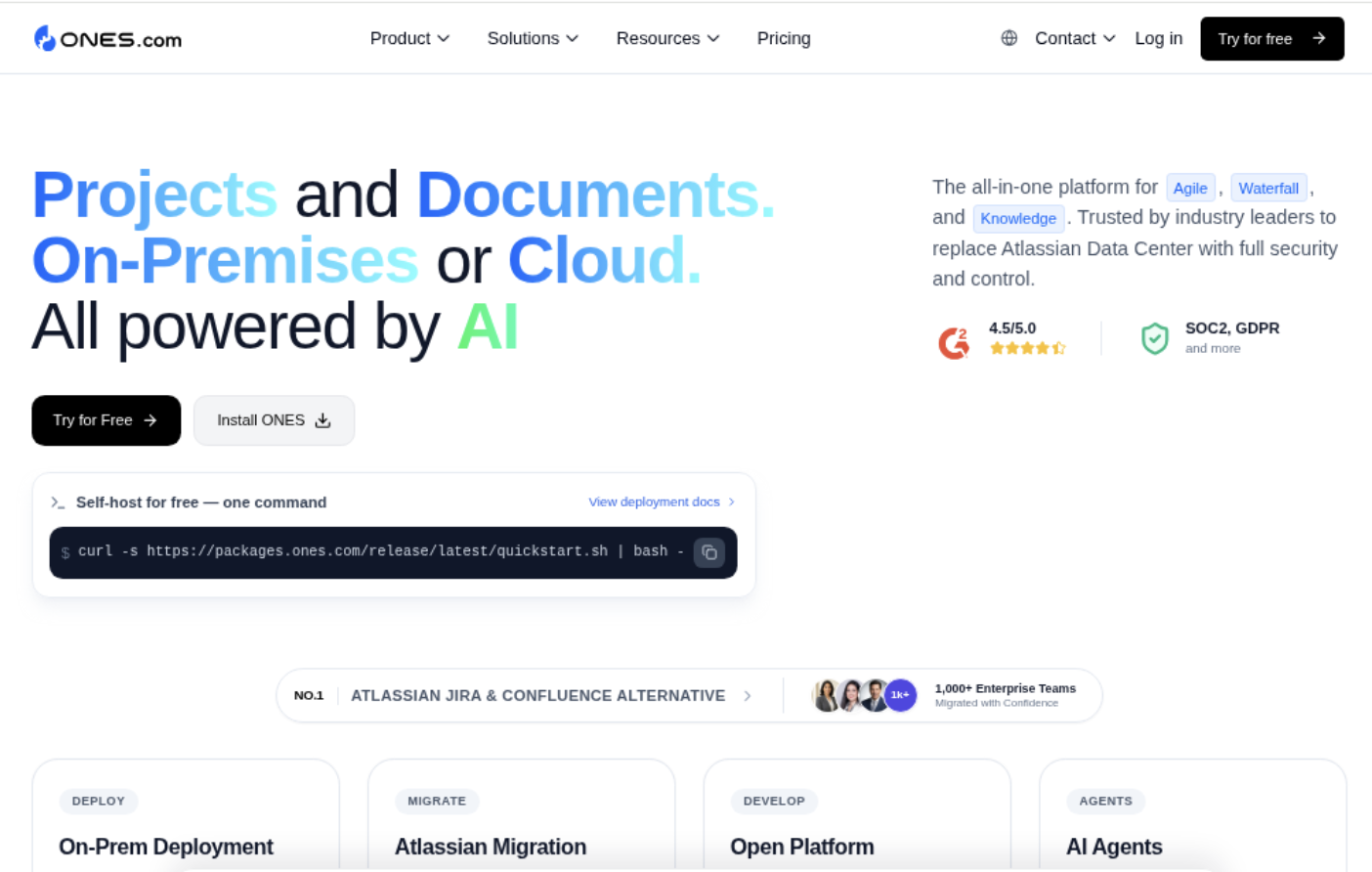
ONES.com combines project management and knowledge management in one platform. ONES Project serves as a Jira alternative for teams that need structured delivery workflows, while ONES Wiki provides a knowledge base experience similar to a Confluence alternative. The products are sold separately.
Value Proposition
ONES.com can help teams reduce tool switching while keeping project work and team knowledge connected. It supports Cloud, On-Premise, Private Cloud, and Air-gapped deployments, with full feature parity between cloud and self-hosted versions.
Core Capabilities
- Scattered project information: ONES Project brings issues, plans, and delivery activity into a unified project workspace, helping you find current work faster.
- Rigid delivery processes: Custom workflows and fields let you match the platform to your approval, development, or operations process, reducing manual workarounds.
- Unclear sprint progress: Sprint management supports planning and review cycles, giving your team a clearer view of committed and completed work.
- Limited reporting: Built-in reporting turns project activity into progress views, helping managers identify delays without assembling updates manually.
- Repetitive administration: Automation handles routine transitions, assignments, and notifications, allowing you to spend more time on delivery decisions.
- Plugin dependence: Native capabilities cover common project management needs, which can reduce the number of extensions your team must install and maintain.
- Restricted-network requirements: On-Premise, Private Cloud, and Air-gapped deployment options support teams working in controlled environments.
- Disconnected project and knowledge work: ONES.com can connect project management with knowledge management, helping your team relate delivery activity to shared guidance.
Application Scenarios
A growing software company can use ONES Project for backlogs, sprints, custom workflows, and reporting while maintaining team guidance in ONES Wiki. This gives engineering and product teams a shared operating structure.
A regulated engineering team may need to keep project activity inside a controlled network. An air-gapped or On-Premise deployment can support that requirement while preserving the same core feature coverage available in the cloud version.
A team moving beyond basic Jira Free may value Jira-compatible workflows while reducing reliance on multiple plugins. The practical comparison should include migration effort, deployment needs, administration, and the features your team uses every week.
Common Challenges When Starting With a Free Plan
Challenge: Your Team Reaches the Membership Limit
Problem: A free plan can stop fitting after hiring, reorganizing, or adding collaborators.
Solution: Count every person who needs regular access before launch. If the number is close to the limit, compare the next paid tier and alternative platforms before your process becomes dependent on one setup.
Challenge: Automation Stops Running
Problem: Frequent issue changes can consume a limited automation allowance quickly.
Solution: Keep only high-value rules. Combine overlapping triggers, avoid unnecessary notifications, and review automation activity at the end of each cycle.
Challenge: Attachments Consume Available Storage
Problem: Screenshots, recordings, and test evidence can grow faster than expected.
Solution: Define retention rules, compress large media, and keep repeated visual evidence out of the project workspace when it is no longer needed.
Challenge: Permissions Become Difficult to Manage
Problem: A simple team structure may not support confidential work, external collaborators, or department-level access.
Solution: Map roles before creating many projects. Decide who can view, edit, approve, and administer each work area.
Challenge: The Team Cannot Judge Value Clearly
Problem: Teams sometimes upgrade because a feature sounds useful rather than because it solves a measurable problem.
Solution: Track wasted coordination time, blocked work, manual reporting, and administration effort. Upgrade when the recurring cost of the limitation exceeds the subscription price.
FAQs About Jira’s Free Plan
Can I use Jira Free for a commercial project?
Yes, a commercial team can use Jira’s free Cloud plan if it meets the plan’s eligibility and capacity requirements. The important question is whether your team fits within the current limits for people, storage, automation, and administration. Review the terms and pricing shown during signup because plan conditions can change. A commercial purpose does not automatically require a paid Jira plan.
How many people can use Jira for free?
Jira Cloud Free is commonly available for teams of up to 10 people. Count everyone who needs an account, including developers, product managers, testers, administrators, and regular collaborators. If your team is close to the limit, plan for expected hiring rather than checking only today’s headcount. Self-managed licensing and other Atlassian products can follow different pricing rules.
Does Jira Free include Scrum and Kanban boards?
Yes, core Scrum and Kanban planning are central Jira features and are generally available on the free Cloud plan. You can organize work on boards, maintain a backlog, plan sprints, and monitor progress. Advanced planning, reporting, permissions, or usage limits may differ by plan. Test your real workflow with a small project before moving every team onto the platform.
Is Jira Free forever?
Jira’s free plan is intended as an ongoing tier for eligible small teams, rather than a short trial that automatically becomes paid. However, Atlassian can change plan features, limits, and eligibility. Keep a record of the capabilities your team depends on, then review the current plan page periodically. A free subscription also remains subject to the provider’s terms and account policies.
What happens when my team exceeds the free limit?
You may need to reduce the number of active members, upgrade to a paid plan, or move to another platform. Do not wait until a project deadline to make that decision. Review the impact on access, automation, attachments, permissions, and reporting first. A controlled plan change is usually easier than removing people suddenly or rebuilding workflows under pressure.
No single platform fits every team. Jira Free is a strong option for small groups that want structured issue tracking and software-oriented workflows. Another platform may suit you better if you need simpler administration, self-hosting, integrated knowledge management, or more generous limits. Compare the daily workflow, deployment requirements, and long-term cost instead of choosing only by the free label.
Conclusion
So, is Jira free? Yes. Jira offers a free Cloud plan for small teams, usually capped at 10 people, with core issue tracking, boards, backlogs, sprints, and reporting.
The free tier works best when your team has modest storage needs, limited automation, straightforward permissions, and little need for direct support. Check those limits before inviting everyone and building a complex workflow.
But here’s the truth: free access is valuable only while it supports your work. If team growth, administration, deployment restrictions, or plugin requirements create friction, compare paid Jira with alternatives such as ONES.com.
Start with the smallest plan that handles your real workflow. Then measure where it saves time, where it creates constraints, and whether an upgrade or platform change gives your team a better long-term result.