Is Jira Free for Personal Use? A Clear 2026 Access Guide
Is Jira free for personal use? Learn the 2026 Free plan limits, features, and access rules—read now to choose the right setup.
Wondering whether Jira is genuinely free for your own projects can feel surprisingly complicated. Pricing pages often mix personal accounts, team plans, product editions, storage limits, and paid features.
That uncertainty creates a practical risk. You might start planning a renovation, learning project, app idea, or freelance workflow, then discover a team limit or feature restriction halfway through.
But here's the truth: Jira can be free for personal use when you stay within Atlassian’s Free plan limits. You can create an account, manage projects, and invite a small number of people without paying for a subscription.
This guide explains what “free” covers, where the boundaries appear, and how to decide whether Jira fits your situation in 2026.
Is Jira Free for Personal Use?
Jira is free for personal use when you use the Jira Cloud Free plan within its current limits. A single person can create projects, organize work, track issues, and use core agile features without buying a paid plan.
The Free plan generally supports up to 10 people, making it suitable for personal planning, side projects, small groups, and early-stage experiments. Atlassian can change plan limits, so check the current pricing page before making a long-term decision.
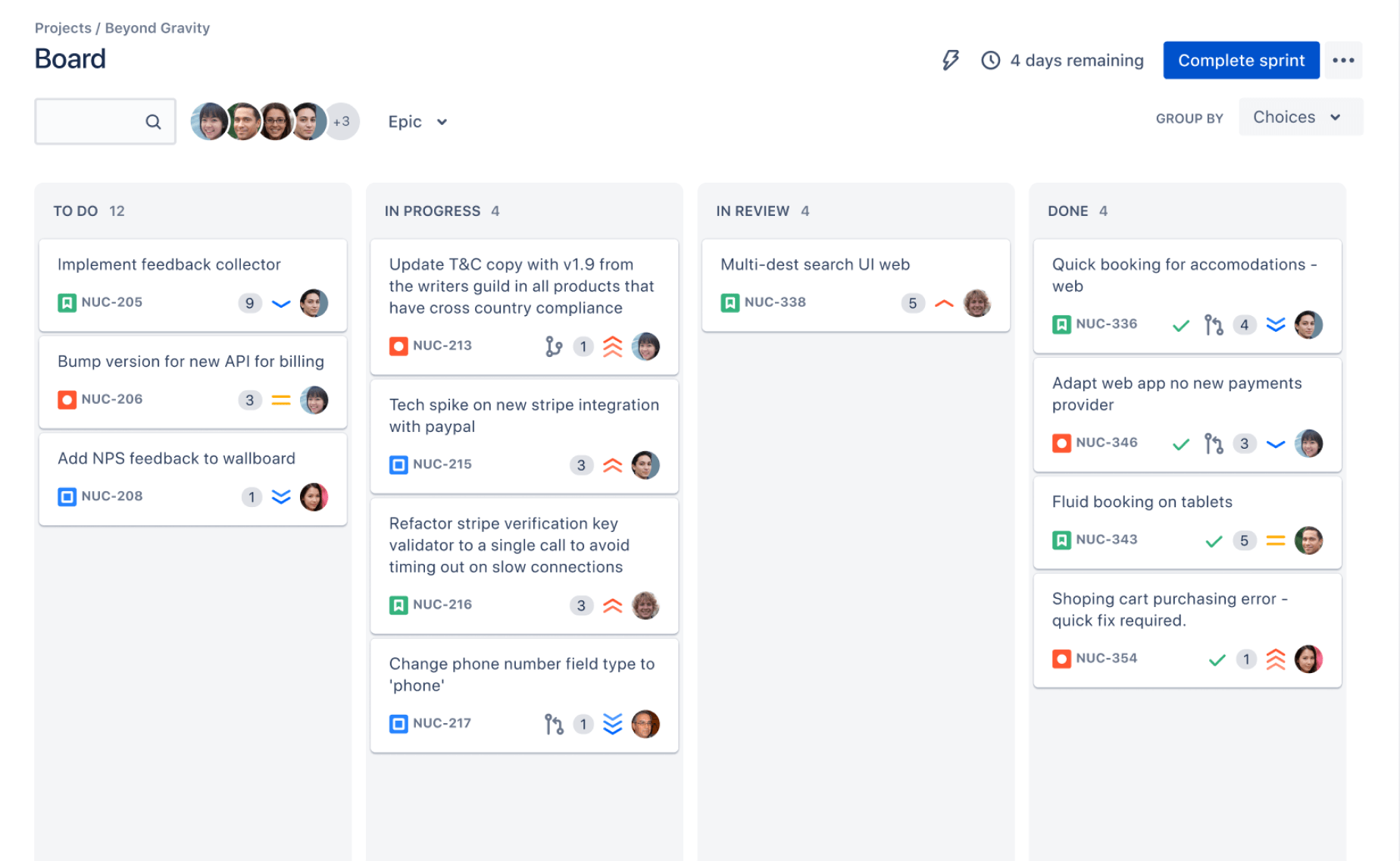
What you can usually do for free
- Create a Jira Cloud account.
- Set up projects for software, business, or personal work.
- Create tasks, bugs, stories, and other work items.
- Use boards, backlogs, and basic agile planning features.
- Assign work and track progress.
- Invite a small team within the Free plan limit.
- Access basic reports and project views.
- Use Jira through a web browser and supported mobile apps.
For example, you could create a project called “Home Renovation,” add tasks for painting and repairs, and move each task across a board as work progresses.
Here's why: the Free plan is designed to provide core project tracking without requiring a paid commitment. Its limits matter most when your project grows in size, automation, administration, or storage needs.
How Jira’s Free Plan Works
Jira’s free access is a cloud subscription with a defined feature allowance. You do not pay a monthly license while your account stays within the plan’s conditions.
1. Create an Atlassian account
Start by creating an Atlassian account and selecting Jira Cloud. You can then choose a project type, such as Scrum, Kanban, or a general business workflow.
A personal account does not require a company with a large team. You can create a workspace for yourself and use it to manage private goals, freelance work, study plans, or a hobby project.
2. Choose a project template
Jira offers templates that shape your starting workflow. A Kanban board works well for continuous tasks, while Scrum suits planned work divided into sprints.
For a personal website, you might create tasks such as “Choose hosting,” “Write the homepage,” and “Test the contact form.” Each task can move through stages like To Do, In Progress, and Done.
3. Keep the account within the Free plan limits
The main limits usually involve the number of people, storage, support, permissions, and advanced administration. Free access may also restrict automation runs and certain premium capabilities.
You can remain on the free plan while your needs are simple. Problems usually appear when you invite more people, need detailed controls, or rely heavily on advanced automation.
4. Monitor features before depending on them
Atlassian occasionally changes product packaging, plan limits, and feature availability. A feature available during a trial may disappear when the trial ends.
Before building a critical workflow, open the current plan comparison and confirm the limits that affect you. Pay special attention to automation, storage, permissions, reporting, and support.
5. Upgrade only when a specific limit affects you
You do not need a paid plan simply because you use Jira regularly. An upgrade makes sense when you need more capacity or control than the Free plan provides.
For instance, a solo developer may stay free for years. A growing product team might eventually need advanced permissions, larger capacity, stronger administration, or expanded automation.
What “Personal Use” Means in Practice
Personal use can describe several situations. You might work alone, manage a private side project, organize household tasks, or coordinate a small volunteer group.
Jira does not become automatically free for every purpose just because one person created the account. The plan still applies its limits and terms.
Using Jira alone
A solo workspace is the simplest case. You can use Jira to manage writing, coding, certification study, travel preparation, or a home improvement plan.
For example, a certification project could include tasks for reading each chapter, completing practice tests, reviewing weak topics, and booking the final exam.
Using Jira with friends or collaborators
You can invite other people when your project needs shared planning. The Free plan’s people limit typically makes small collaborations possible.
A five-person volunteer group could track event planning, supplier communication, promotion, venue preparation, and follow-up activities in one workspace.
Using Jira for freelance work
A freelancer may use Jira privately to plan client deliverables. However, client collaboration can increase the number of people and permissions you need.
If a client only receives occasional updates, Jira may remain suitable. If several clients need separate access, detailed permissions, or extensive reporting, a paid plan may become more practical.
Using Jira for commercial activity
Personal ownership and commercial purpose are different questions. A solo business owner may use Jira for business work while still using a Free plan, provided the account meets the plan’s terms and limits.
Check Atlassian’s current terms when the work is sensitive, revenue-generating, or subject to organizational requirements. A free price does not remove responsibilities around access, privacy, and account management.
What You Get and What You May Outgrow
The Free plan gives you a useful starting point, though it is built for lightweight collaboration. Think of it as a compact workshop: enough room for everyday work, with less capacity for complex operations.
| Area |
What free access may provide |
Where you may feel pressure |
| Project tracking |
Tasks, issues, boards, and status changes |
Complex workflows may need more configuration |
| Team size |
Small groups within the Free plan limit |
Larger teams may need a paid plan |
| Automation |
A limited allowance for routine rules |
Frequent triggers can use the allowance quickly |
| Storage |
Limited cloud storage |
Large attachments and extensive history consume capacity |
| Permissions |
Basic access management |
Granular controls may require a higher plan |
| Support |
Self-service help and community assistance |
Direct priority support may require payment |
The practical question is not only “Can I use Jira for free?” It is “Will the free limits interrupt the way I work?”
A personal Kanban board with 40 tasks probably will not create pressure. A growing software project with many collaborators, integrations, and automated actions might.
Free Jira Cloud Compared With Other Access Options
Jira Cloud is usually the easiest option for personal use because Atlassian hosts the service and handles infrastructure. You sign in through a browser instead of maintaining your own installation.
Paid Jira Cloud plans add capacity and administration. The exact differences depend on Atlassian’s current packaging, so compare the plan details before choosing an upgrade.
Jira Cloud Free
This option suits individuals and small teams that need core issue tracking. It requires the least technical maintenance and usually lets you start quickly.
Jira Cloud paid plans
Paid tiers become relevant when you need a larger team, stronger permissions, more administration, additional automation, or expanded support.
Self-managed Jira options
Self-managed deployments involve hosting and maintaining the application in your own environment. They can suit organizations with specific control requirements, though they are rarely the simplest choice for a personal project.
Here’s the practical comparison: free Cloud access minimizes cost and maintenance, while paid or self-managed options provide more room for specialized requirements.
How to Decide Whether the Free Plan Is Enough
Use your expected workflow rather than the number of features listed on a pricing page. A personal planner rarely needs the same controls as a 50-person engineering department.
Ask five practical questions
- How many people need access during the next year?
- Will you attach many images, videos, or other large items?
- Do you need advanced permissions for different groups?
- Will automated rules run frequently?
- Do you need priority support or formal administration controls?
If your answers stay modest, Jira Free may be sufficient. If one area is already a serious requirement, compare paid plans before moving your workflow into the platform.
Run a small trial project
Create one realistic project instead of testing random features. Add the tasks you actually manage, invite the people who would genuinely participate, and try your expected workflow for several days.
For example, a freelance designer could track a real website assignment from briefing through review and delivery. That test reveals whether Jira feels efficient or unnecessarily complex.
Watch the limits that affect daily work
Do not focus only on the headline team limit. Automation capacity, permission settings, storage, reporting, and support can influence your experience just as much.
The best part? You can often start free, learn your real requirements, and upgrade only after a specific limitation appears.
Jira Free Privacy, Ownership, and Account Considerations
Personal use still deserves careful account management. Use a strong password, enable available multi-factor authentication, and review who can access each project.
Be cautious with confidential client details, personal identifiers, financial information, and regulated material. A free plan can still be a hosted online service with its own security and privacy conditions.
Keep access intentional
Remove collaborators who no longer need access. Review project visibility before inviting someone, especially when one workspace contains several unrelated projects.
Plan for continuity
If a project matters, decide how you would preserve important information if your account changed or the service became unavailable. Regularly review Atlassian’s export and retention options.
You might be wondering: does free mean permanent? It means you can use the qualifying plan without a subscription charge while the plan and its conditions remain available.
ONES.com brings project management and knowledge management together through ONES Project and ONES Wiki. It can suit teams that need a Jira alternative with deployment flexibility and fewer connected add-ons.
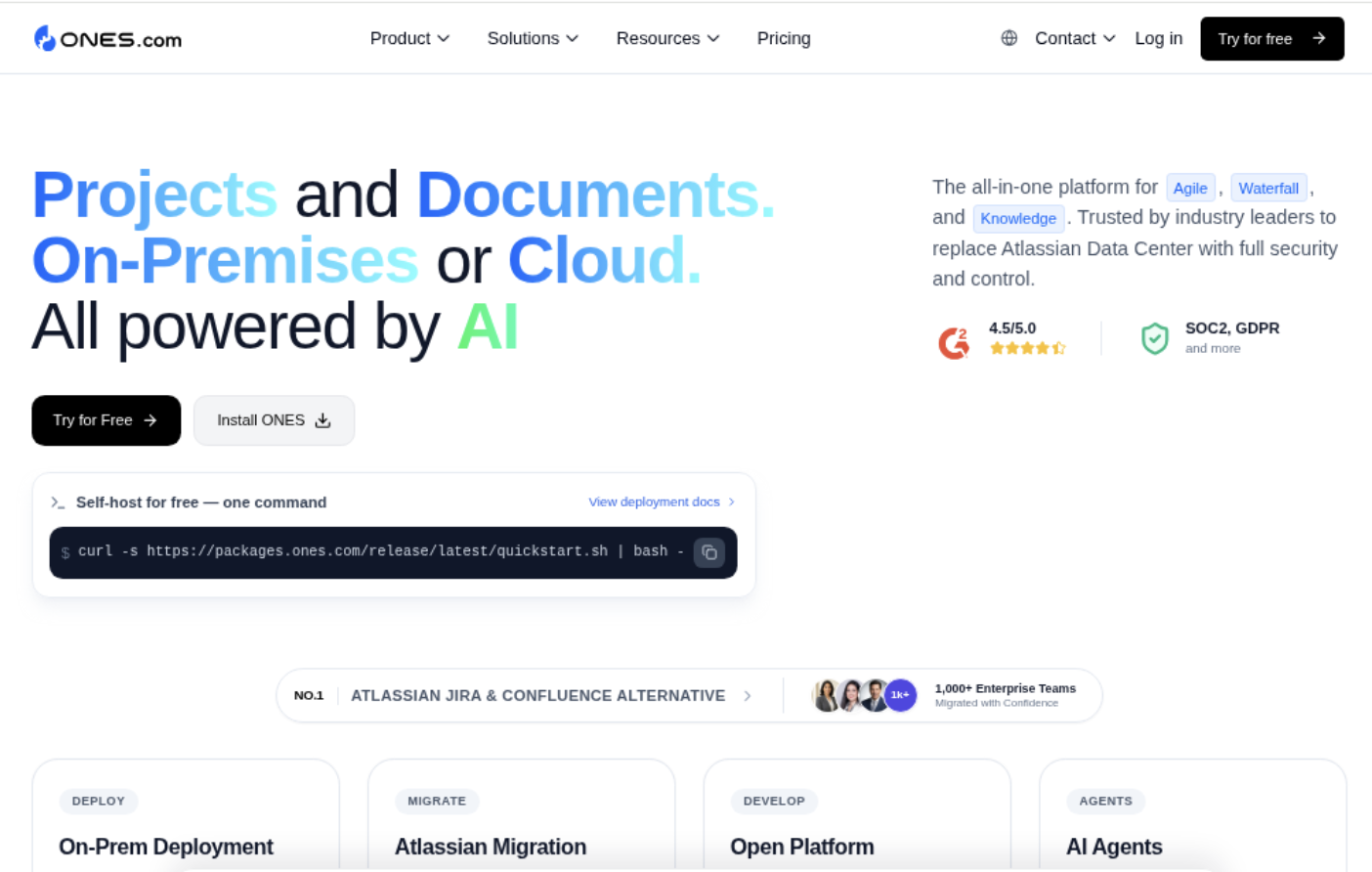
ONES Project and ONES Wiki are sold separately. The platform offers a free plan for up to 30 seats, with Cloud, On-Premise, Private Cloud, and Air-gapped deployments.
Core Capabilities
Small-team limits can arrive quickly → 30 free seats → More room for personal projects and early collaboration
If a Jira Free workspace feels restrictive as a group grows, ONES.com’s free allowance gives you a larger starting capacity. You can organize a project with contributors without immediately moving to a paid tier.
Scattered planning tools create extra administration → ONES Project combines core PM workflows → Fewer plugins to maintain
ONES Project supports Jira-compatible workflows, sprint management, custom workflows, custom fields, automation, and built-in reporting. These capabilities can reduce the need to assemble several extensions.
Hosting requirements can rule out ordinary Cloud access → Four deployment choices → A better fit for restricted environments
You can choose Cloud, On-Premise, Private Cloud, or Air-gapped deployment. The range helps organizations align project management with internal hosting and network requirements.
Different editions can create inconsistent behavior → Feature parity across Cloud and self-hosted versions → Easier deployment decisions
ONES.com maintains full feature parity between its Cloud and self-hosted versions. That gives you more flexibility when moving between deployment models.
Reporting gaps make progress harder to review → Built-in reporting → Clearer visibility into delivery patterns
Built-in reporting helps you examine progress without depending entirely on separate extensions. A project lead can review sprint outcomes and identify recurring delays.
Knowledge gets separated from execution → ONES Wiki provides a knowledge base → Project context stays easier to find
When you also need shared guidance, decisions, or technical explanations, ONES Wiki can support the knowledge-management side. It serves as a Confluence alternative and is sold separately from ONES Project.
AI experimentation can remain disconnected from project work → ONES Assistant supports AI-powered workflows → Less switching between work areas
ONES.com includes AI capabilities through ONES Assistant. You can evaluate those features alongside project and knowledge workflows rather than treating AI as an unrelated service.
Application Scenarios
A small software team: A six-person team can manage sprints, define custom fields, automate routine transitions, and review built-in reports in ONES Project.
A restricted-network organization: A company that cannot place project information in a public Cloud environment can evaluate On-Premise, Private Cloud, or Air-gapped deployment.
A growing product group: A team can use ONES Project for delivery work and add ONES Wiki separately when planning guidance, decisions, and technical knowledge need a shared home.
Common Challenges
Challenge: The Free plan limit is unclear
Solution: Check the current Atlassian plan comparison before inviting collaborators. Count every person who needs access, including occasional contributors.
Challenge: Advanced features appear during a trial
Solution: Test your workflow after the trial period or confirm which capabilities remain available on Free. This prevents an unpleasant surprise after setup.
Challenge: Automation allowance runs out
Solution: Reserve automated rules for high-value actions. Combine repetitive conditions where possible and monitor usage instead of automating every status change.
Challenge: A personal workspace becomes a client workspace
Solution: Reassess visibility, permissions, and account ownership before adding client information. A workflow that works alone may need stronger controls when other parties join.
Challenge: Jira feels too complex for a simple checklist
Solution: Start with one board and a small number of statuses. If you only need reminders and simple lists, a lighter task application may be easier to maintain.
FAQs
Can I use Jira alone without paying?
Yes. You can use Jira Cloud’s Free plan alone for personal projects, provided the account remains within the current plan limits. You can create tasks, organize a board, track progress, and use core project features without a paid subscription. Check the current plan details because Atlassian may adjust limits and feature availability over time.
How many people can use Jira Free?
Jira Free generally supports up to 10 people. The exact limit and product rules can change, so confirm the current allowance before inviting a group. Remember that occasional collaborators still count if they need access. A solo project stays well below the limit, while a growing team may need to evaluate a paid plan.
Is Jira Free suitable for a personal software project?
Usually, yes. Jira’s boards, backlogs, issue types, and progress tracking can work well for a personal application or website. You might create tasks for planning, development, testing, and release preparation. The platform may feel excessive for a very small checklist, so begin with a simple workflow and add complexity only when it improves visibility.
Does Jira Free include automation?
Free access may include a limited automation allowance, though the number of actions or rule runs can vary. Use automation for valuable routines, such as assigning a default priority or moving completed work after a review. Check the current plan page for the exact allowance before relying on automated actions.
Can I use Jira Free for freelance or business work?
Potentially, yes, when your account meets the plan’s terms and limits. A solo freelancer can use Jira to plan deliverables and monitor client work. Business use may introduce additional needs, including access controls, reporting, privacy review, and support. Examine those requirements before treating a personal workspace as a long-term business system.
Conclusion
Jira can be free for personal use when you choose Jira Cloud Free and stay within its current limits. It works especially well for solo projects, small teams, software planning, and structured task tracking.
The main boundaries involve team size, automation, storage, permissions, support, and advanced administration. Start with one realistic project, test the workflow, and check the plan details before inviting more people.
But here's the truth: free access only helps when it supports the way you work. If Jira becomes too restrictive or complex, compare alternatives such as ONES.com, especially when you need deployment choice, built-in reporting, Jira-compatible workflows, or broader collaboration capacity.