Is Jira Free in 2026? Plans, Limits, and Essential Features
Is Jira free in 2026? Compare plans, limits, storage, and essential features to budget confidently. Read now to find the right plan.
Small teams often ask, “Is Jira free?” because the product looks powerful enough to support serious project work. The confusion starts when free features, user limits, storage caps, and paid upgrades appear together.
You may create a project without paying, then discover that advanced permissions, larger teams, automation limits, or premium support require a subscription. A plan that works for five people can become restrictive at 11.
That uncertainty makes budgeting difficult. You need to know what you can use today, which limits matter, and when upgrading becomes practical.
But here’s the good news: Jira has a Free plan for small teams. This guide explains its expected 2026 limits, essential capabilities, upgrade triggers, and alternatives for teams that need more control.
Is Jira Free in 2026? The Short Answer
Jira is free for small teams through Atlassian’s Free plan, generally supporting up to 10 users with core project-management features. The plan usually includes Scrum and Kanban boards, backlog management, basic reporting, workflows, integrations, and around 2 GB of storage.
The exact allowance can change as Atlassian updates its plans. Before making a purchasing decision, check the current pricing and plan details shown in your Atlassian account.
For a team of five developers managing one or two active projects, the Free plan may be enough. A team with 12 contributors, strict permission requirements, or heavy automation will probably need a paid tier.
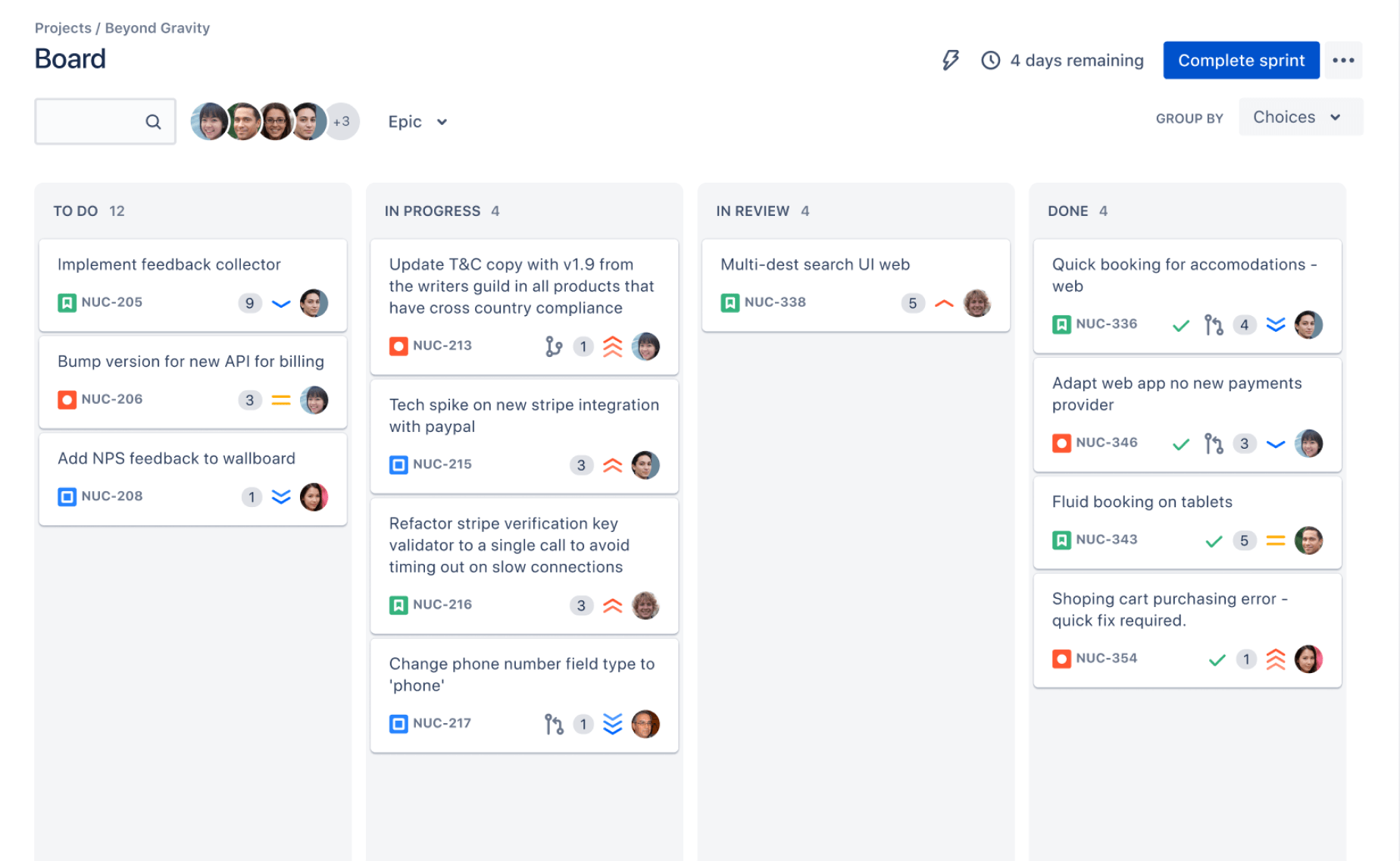
What the free plan commonly includes
- Up to 10 users on Jira Cloud
- Scrum and Kanban project templates
- Backlogs, boards, sprints, and issue tracking
- Customizable workflows and issue fields within available limits
- Basic dashboards and project reports
- Built-in automation with monthly usage limits
- Common integrations with development and collaboration tools
- Community-based support rather than premium support channels
- A limited storage allowance, commonly around 2 GB
What the free plan usually limits
Free Jira plans are designed for small teams with straightforward administration. Limits often affect team size, storage, automation activity, permission controls, audit capabilities, and administrative features.
For example, a small product team may track 300 issues without trouble. The same team could run into friction when it stores large design attachments, connects several services, or needs different project access for contractors.
| Area |
What to expect on the Free plan |
| Team size |
Generally suitable for up to 10 users |
| Project planning |
Boards, backlogs, sprints, and issue tracking are commonly available |
| Reporting |
Basic dashboards and standard reports are generally included |
| Automation |
Available with monthly usage limits |
| Storage |
Limited allowance, commonly around 2 GB |
| Support |
Community support is generally available, with priority support reserved for paid plans |
| Administration |
Advanced access, security, and governance controls may require an upgrade |
Jira Free Plan Features You Can Use
The Free plan covers the main activities involved in lightweight software and product delivery. You can create work items, organize them into a backlog, move them across a workflow, and review progress through boards and reports.
Issue tracking
Jira revolves around issues. An issue can represent a bug, user story, task, improvement, or technical investigation.
Each item can include a title, description, priority, assignee, labels, comments, status, and related work. A developer might create a bug for a checkout error, assign it to a teammate, and move it through statuses such as “To Do,” “In Progress,” and “Done.”
Scrum and Kanban planning
Scrum teams can create backlogs, plan sprints, estimate work, and review completed items. Kanban teams can manage a continuous flow through columns such as “Ready,” “Building,” “Review,” and “Released.”
These boards help you spot bottlenecks quickly. If 18 tasks are waiting for review, the problem becomes visible before the next planning meeting.
Workflows and custom fields
A workflow defines how work moves from creation to completion. You can often adapt statuses and transitions to match your team’s delivery process.
Custom fields add useful context. A support engineering team could track environment, severity, affected version, and customer impact. Available customization can vary by project type and plan level.
Backlogs, sprints, and releases
Product teams can prioritize upcoming work in a backlog, select items for a sprint, and review progress during delivery. Release planning features can connect work items to a target version or milestone.
For example, a mobile team could group login fixes, payment improvements, and crash repairs under a planned release. That gives everyone a shared view of what must be ready before launch.
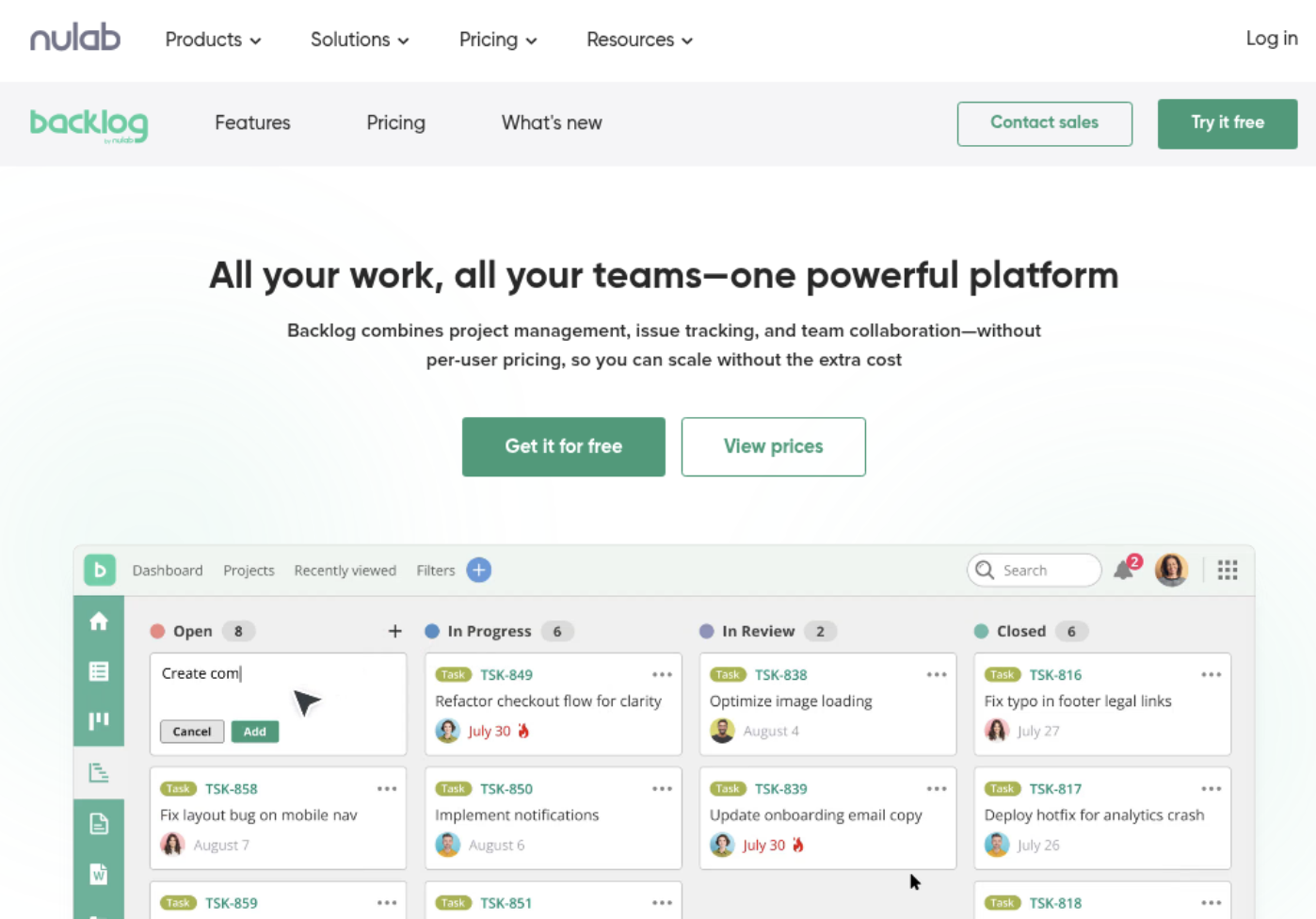
Reports and dashboards
Jira provides reports that help you examine sprint progress, workload, cycle time, and unresolved work. Dashboards can bring several views together for a project manager or team lead.
These reports are most useful when your team updates issues consistently. A dashboard cannot accurately show delivery risk when half the work still sits outside Jira.
Automation
Automation can handle repetitive actions. You might automatically assign a bug to a component owner, add a label when a priority changes, or notify a channel when a critical issue is created.
The Free plan includes automation with usage limits. A small team may have enough capacity for simple rules, while a busy service team can consume its allowance quickly.
Jira Free Versus Standard, Premium, and Enterprise
Jira’s paid tiers usually add capacity, administration, security, support, and planning depth. The right upgrade depends on the constraint causing the most trouble.
| Plan level |
Best fit |
Typical reason to choose it |
| Free |
Small teams testing Jira or managing limited work |
Core tracking without a subscription |
| Standard |
Growing teams with regular project activity |
More users, storage, administration, and support options |
| Premium |
Organizations coordinating complex work |
Advanced planning, higher capacity, and stronger operational controls |
| Enterprise |
Large organizations with broad governance needs |
Organization-wide administration, security, and enterprise support |
When Standard becomes practical
Standard is often the first upgrade for a team that has outgrown the 10-user ceiling. It can also make sense when limited storage, administration, or support creates regular interruptions.
Imagine a 14-person product group with three contractors. Removing people from Jira to remain free creates gaps in ownership and communication. Paying for the next tier may cost less than maintaining separate tracking habits.
When Premium is worth considering
Premium is aimed at teams managing more complex delivery environments. Advanced planning, larger operational scale, and stronger service expectations can justify the additional cost.
A company coordinating several products may need cross-team planning and more robust administration. A single five-person team rarely needs that level of capacity.
When Enterprise enters the conversation
Enterprise plans are generally relevant to organizations with many teams, strict governance, and centralized administration. They address organizational complexity rather than ordinary task tracking.
You probably do not need Enterprise because your backlog is busy. You need to examine it when identity management, organization-wide policy, security oversight, and large-scale administration become central concerns.
Jira Free Limits That Matter Most
The user limit gets the most attention, but it is only one part of the decision. Storage, automation, permissions, reporting, and support can affect your experience sooner.
User capacity
The Free plan is generally capped at 10 users. Count everyone who needs access, including product managers, testers, designers, support specialists, and external contributors.
A team with eight developers may already exceed the practical limit after adding a product owner, delivery manager, and tester. Count real participants before choosing a plan.
Storage allowance
A limited storage allowance can become important when issues contain screenshots, recordings, logs, and design attachments. A testing team that adds a 20 MB video to every defect will consume capacity faster than a text-focused team.
Set attachment guidelines early. Link to approved collaboration spaces where appropriate, and avoid uploading duplicate material repeatedly.
Automation usage
Automation saves time, yet every rule execution can consume monthly capacity. Rules that run once per release have a different impact from rules that trigger for every issue update.
Review rules that fire frequently. A single broad rule may create hundreds of unnecessary executions when a narrower condition would accomplish the same task.
Permissions and administration
Small teams often work comfortably with simple access settings. Complexity appears when you need confidential projects, contractor restrictions, department-level visibility, or centralized control.
For example, a company may want engineers to see development work while limiting access to customer incidents. Advanced access requirements can push the team toward a paid plan.
Support expectations
Free plans generally rely on community assistance and self-service guidance. That may suit a small team that can troubleshoot independently.
If a blocked integration affects a launch, delayed support can carry a real cost. Consider the value of faster assistance when evaluating an upgrade.
How to Decide Whether Jira Free Is Enough
Start with your actual workflow rather than the feature list. A free plan is suitable when it supports your team’s work without forcing inconvenient workarounds.
- Count every required contributor. Include anyone who creates, updates, reviews, or approves work.
- List your active projects. Separate simple team projects from work requiring confidential access or complex coordination.
- Estimate attachment usage. Consider screenshots, videos, logs, design exports, and other material added to issues.
- Identify automation needs. Write down every repetitive action you want Jira to perform automatically.
- Review permission requirements. Ask whether every contributor should see every project and issue.
- Test the workflow for several weeks. Watch where people leave Jira, duplicate work, or wait for administrative changes.
- Compare the cost of workarounds. Time spent maintaining separate tools can outweigh the subscription price.
Here’s why this approach works: the right plan depends on friction, not just headcount. A six-person team with strict security needs may require more capability than a nine-person team with a simple backlog.
A simple decision example
Suppose a five-person startup manages a weekly Kanban board. The team needs standard statuses, comments, labels, and a few notifications. It stores very few attachments and has no confidential project areas.
That team can reasonably begin with Free. After six months, it should review storage, automation activity, and the number of contributors before making a decision.
Now consider a 10-person agency serving several clients. Each client needs separate visibility, contractors need restricted access, and every project includes video attachments. The team may reach paid-plan territory quickly despite fitting the user count.
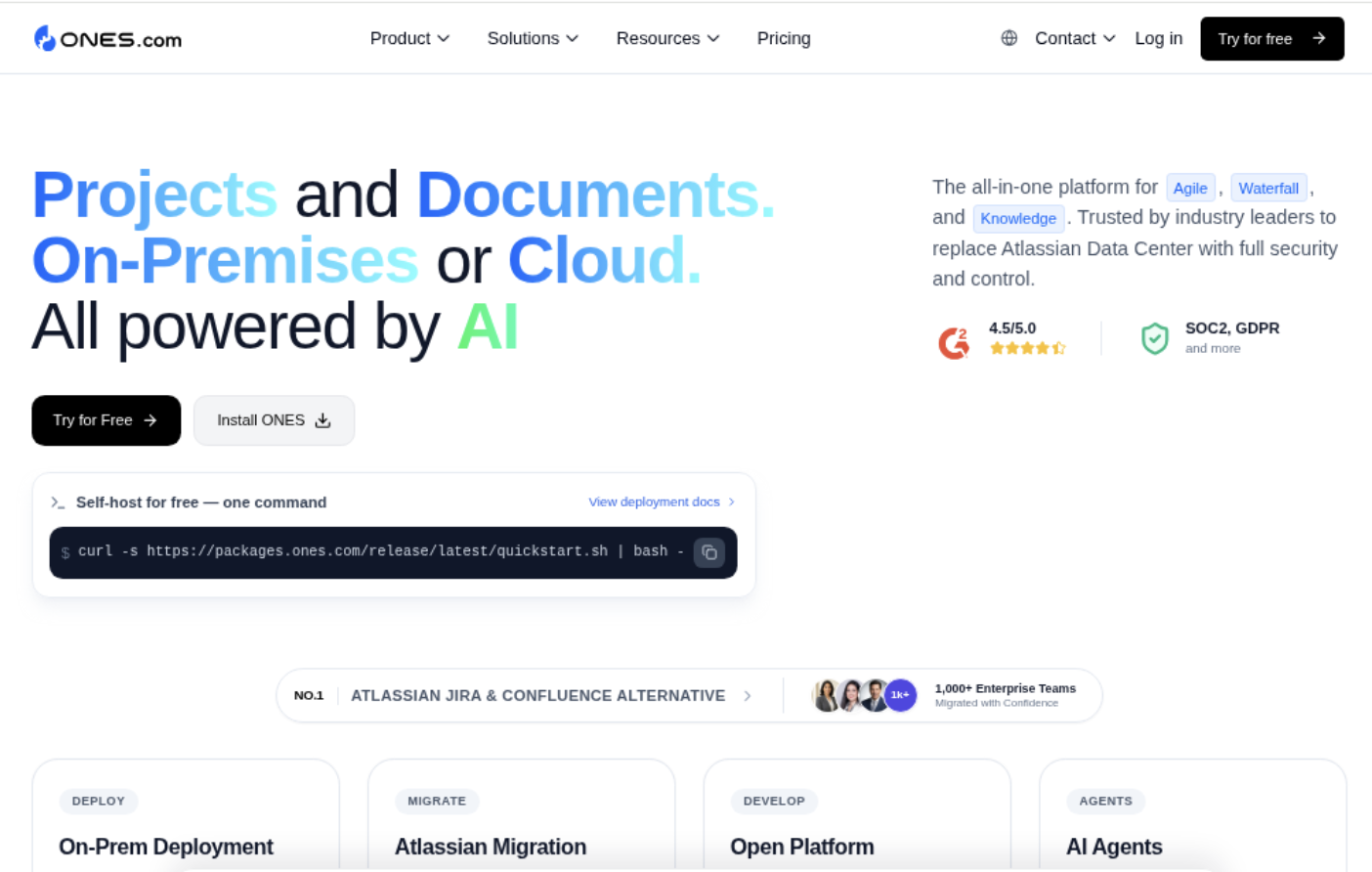
ONES.com combines project management and knowledge management in one platform powered by ONES Assistant. ONES Project is the project-management product and a Jira alternative, while ONES Wiki is the knowledge-management product and a Confluence alternative. They are sold separately.
Value Proposition
ONES.com suits teams that want structured delivery workflows, built-in reporting, and knowledge management options across cloud or self-hosted deployments.
The Free plan supports up to 30 seats, while deployment choices include Cloud, On-Premise, Private Cloud, and Air-gapped environments.
Core Capabilities
Too many disconnected planning tools → ONES Project unifies project work → clearer delivery coordination
When sprint planning, issue tracking, and reporting happen in separate places, status updates become inconsistent. ONES Project brings those activities into one project-management environment.
Jira migration concerns → Jira-compatible workflows reduce process disruption → familiar team operations
Teams moving from Jira can preserve recognizable workflows and delivery patterns. That reduces the learning curve during a platform evaluation.
Plugin dependence → Native reporting and workflow controls reduce add-ons → fewer maintenance points
Built-in reporting, custom workflows, custom fields, sprint management, and automation can cover common delivery requirements without assembling many plugins.
Restricted networks → On-Premise and Air-gapped deployment options support controlled environments → stronger infrastructure alignment
Organizations with network restrictions can choose a deployment model that fits their operational requirements. This matters for regulated teams and environments that cannot rely on ordinary cloud access.
Different deployment needs → Cloud, Private Cloud, On-Premise, and Air-gapped options provide flexibility → easier security planning
A startup may prefer Cloud, while an enterprise team may require Private Cloud or On-Premise hosting. Air-gapped deployment addresses especially restricted environments.
Uneven feature availability → Full feature parity between cloud and self-hosted versions → fewer deployment compromises
Teams often worry that self-hosting removes important capabilities. ONES.com provides feature parity between its cloud and self-hosted versions.
Work knowledge scattered across locations → ONES Wiki provides a dedicated knowledge-management option → easier team reference
Teams can use ONES Wiki for procedures, technical explanations, and internal guidance. It is sold separately from ONES Project, so you can evaluate each product according to your needs.
Small-team budget pressure → Up to 30 seats on the Free plan → room for early growth
A team with 15 or 20 contributors may have more room to grow than it would under a 10-user ceiling. Confirm current terms before planning a long-term rollout.
Application Scenarios
Software startup: A 16-person product team can manage sprints, custom workflows, and release coordination without immediately splitting contributors across separate systems.
Regulated engineering group: A team working in a restricted network can evaluate On-Premise or Air-gapped deployment while retaining familiar project-management capabilities.
Growing product organization: A company can use ONES Project for delivery and add ONES Wiki separately when structured internal knowledge becomes a priority.
Common Challenges With Free Project Management Plans
Challenge: Your team reaches the user cap
Solution: Count active contributors before inviting everyone. If people need regular access, upgrading is usually cleaner than asking them to work through another person’s account.
Challenge: Storage fills faster than expected
Solution: Establish attachment rules. Compress large recordings, remove duplicates, and keep long-term reference material in an approved knowledge area.
Challenge: Automation stops running
Solution: Audit rule frequency and conditions. Combine overlapping rules, remove low-value notifications, and reserve automation for actions that genuinely reduce manual work.
Challenge: Permissions become difficult to manage
Solution: Map project visibility before inviting contractors or clients. If access must vary by team, customer, or sensitivity level, compare paid capabilities and alternative platforms.
Challenge: People track work outside Jira
Solution: Find the missing workflow step. The issue may involve slow updates, unclear ownership, poor templates, or a board that does not match how the team works.
FAQs About Jira’s Free Plan
Is Jira Free for personal use?
Yes, Jira can be used without a subscription through its Free plan when your account fits the plan’s eligibility and capacity rules. Personal experimentation is usually straightforward. You may still encounter limits around users, storage, automation, support, and administration. If you are testing Jira for a business, evaluate the full team workflow instead of checking only whether you can create an account.
How many people can use Jira for free?
Jira’s Free plan is generally intended for up to 10 users. Count every person who needs regular access, including developers, testers, product managers, designers, and external collaborators. Atlassian can change plan terms, so verify the current limit in the pricing area attached to your account before inviting a full team.
Does the free plan include Scrum and Kanban boards?
Yes, core Scrum and Kanban planning is generally available on Jira’s Free plan. You can usually create backlogs, organize issues, manage sprints, and move work across board columns. The practical limits appear when your team needs advanced planning, larger-scale coordination, complex permissions, more storage, or higher automation capacity.
Does Jira Free include automation?
Jira Free generally includes automation with a monthly usage allowance. Simple rules, such as assigning work based on a component or notifying a channel about a critical issue, may fit comfortably. Frequent triggers can consume the allowance quickly. Review how often each rule runs, then remove overlapping or low-value actions.
Can I use Jira Free for a commercial team?
Yes, a small commercial team can use the Free plan if it meets the plan’s limits and terms. Before committing, check team size, attachment needs, automation activity, project visibility, and support expectations. A free plan can be useful for an early-stage product team, although growth may make a paid tier or another platform more practical.
Conclusion
Jira is generally free for small teams through a Free plan that includes core issue tracking, Scrum and Kanban boards, backlogs, basic reports, workflows, integrations, and limited automation.
The main constraints are usually the 10-user ceiling, limited storage, automation allowances, support options, and advanced administration features. A small team with a simple process may have everything it needs.
But here’s the truth: “free” only helps when the plan fits your working habits. Count contributors, estimate storage, test automation, and examine permission needs before deciding.
If Jira’s limits create friction, compare paid tiers with alternatives such as ONES.com. The right choice should make ownership, planning, reporting, and collaboration easier as your team grows.