Is Jira Free in 2026? Plans, Limits, and Feature Access
Is Jira free in 2026? Compare plans, limits, and features to avoid surprise costs. Click to discover the right option for your team.
Jira can be free in 2026, but the free plan has clear limits. You can manage projects, create Scrum or Kanban boards, assign work, and use core reporting without paying. The catch appears when your team grows, automation needs increase, or you need advanced security.
That uncertainty makes planning difficult. A plan that works for a five-person team may become restrictive at eleven. Storage, permissions, support, automation, and administration can affect your costs long before every premium feature matters.
But here's the truth: Jira Free is useful for small teams and personal projects when you understand its boundaries. This guide explains what you get, where the limits apply, and when upgrading makes practical sense.
Is Jira Free in 2026?
Jira Free is a no-cost Jira Cloud plan for small teams, generally supporting up to 10 users with core project management features. It usually includes Scrum and Kanban boards, backlog management, issue tracking, basic reporting, project workflows, and limited automation.
The free plan is designed for small teams testing Jira or managing straightforward work. It can support software development, marketing tasks, product planning, internal operations, and personal project tracking.
At the same time, the plan has limits around team size, storage, automation, administration, support, permissions, and security controls. Atlassian can change plan details, so check the current pricing page before making a long-term purchasing decision.
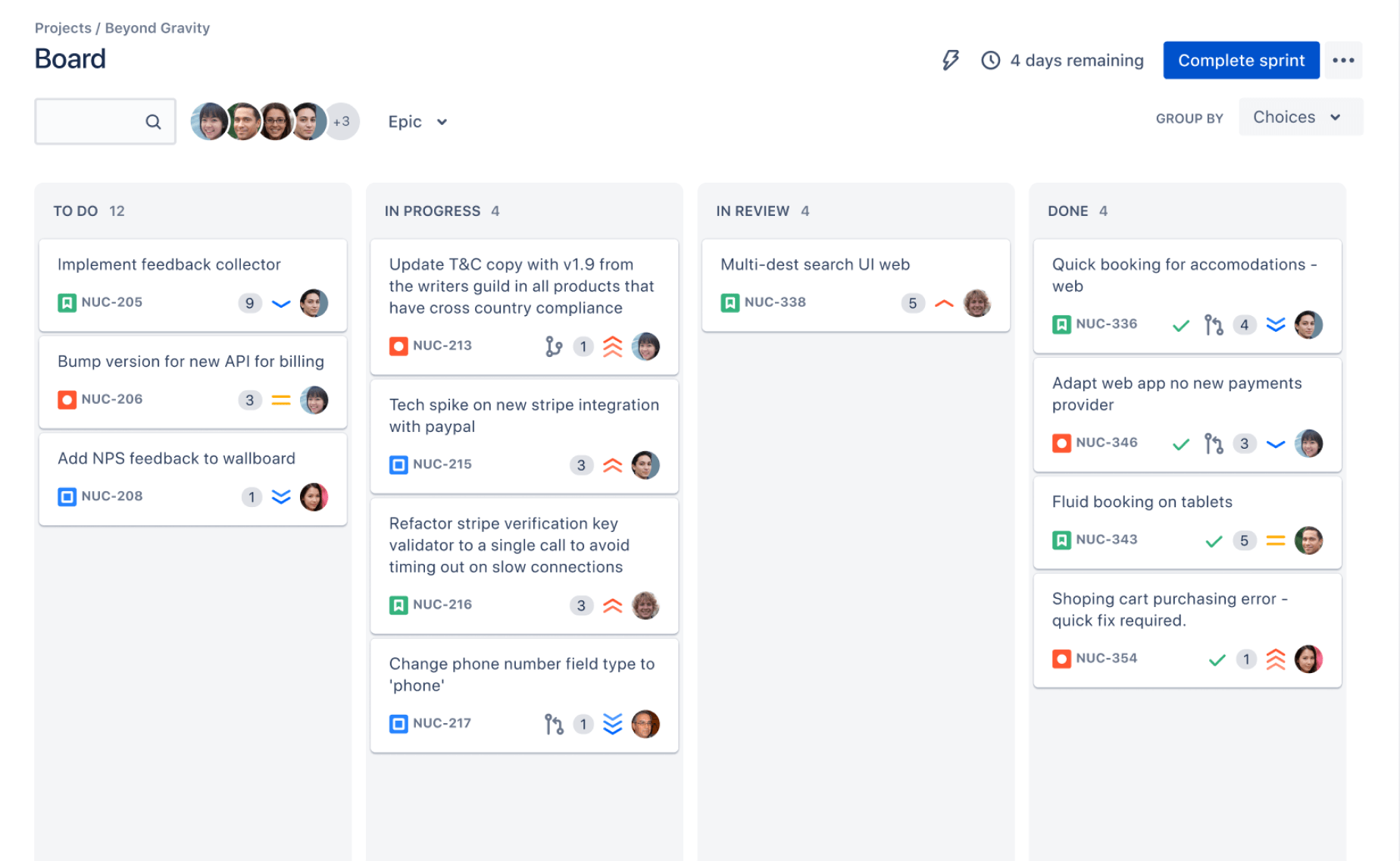
What Jira Free usually includes
- Jira Cloud project management
- Up to 10 users on the free plan
- Scrum and Kanban project templates
- Backlogs, boards, sprints, and issue tracking
- Customizable issue fields and workflows within available limits
- Basic reports and dashboards
- Limited automation rule executions
- Cloud hosting managed by Atlassian
- Community-based support rather than priority support
For example, a six-person development team can create a product backlog, plan a sprint, move issues across a board, and review velocity without purchasing a subscription.
What Jira Free does not fully provide
Advanced administration becomes more restricted as your organization grows. Features such as advanced permissions, enterprise identity controls, audit capabilities, higher automation capacity, premium support, and expanded storage typically belong to paid plans.
Jira Free also suits cloud-first teams more naturally. If you require self-hosting, private infrastructure, or an air-gapped environment, you need to evaluate another deployment model or platform.
Jira Free plan limits to check before you start
The headline limit is team size, but it is only one planning factor. A small team can still encounter restrictions if it creates many automation rules, stores numerous attachments, or requires detailed administrative controls.
| Area |
What the free plan generally means |
| Users |
Up to 10 users for a Jira Cloud Free site |
| Storage |
Limited cloud storage, commonly listed at 2 GB |
| Automation |
Limited rule executions each month |
| Support |
Community support with fewer service options |
| Project management |
Core boards, backlogs, issues, and sprint planning |
| Security |
Advanced enterprise controls are generally reserved for paid tiers |
| Administration |
Fewer organization-wide controls and governance features |
These figures can vary by product, region, plan transition, or Atlassian policy update. Treat the table as a planning guide and confirm the exact allowance during signup.
User limits
Jira Free commonly supports up to 10 users. That count can include developers, product managers, designers, testers, and other people with access.
Imagine a team with eight employees and three external collaborators. The team may need a paid plan even though only eight people work inside the company.
You should count every person who needs access before selecting the plan. Guest access, contractor access, and occasional reviewers can affect the total.
Storage limits
Jira Free commonly includes 2 GB of storage for attachments. Text-based issues usually consume little space, while screenshots, recordings, design exports, and build artifacts consume much more.
A support team attaching a few screenshots each week may stay within the allowance. A development team attaching large test videos could reach the limit quickly.
Set an attachment policy early. Link to approved collaboration tools when appropriate, remove obsolete materials, and avoid using Jira as a general archive.
Automation limits
Automation can reduce repetitive work, such as assigning an issue when its status changes or notifying a reviewer after a pull request opens. Free plans generally restrict how many automated actions run each month.
For example, one rule that adds a label to every new issue may consume hundreds of executions. A small team can reach its allowance sooner than expected when several rules run on every transition.
Track which rules create measurable value. Reserve automation for recurring work that saves time, rather than adding rules for occasional convenience.
Which features can you use without paying?
Jira Free covers the central project workflow. You can create work items, organize them in a backlog, plan sprints, visualize progress, and review basic performance indicators.
Issue tracking and project organization
You can create issues for bugs, tasks, stories, and other work types. Each issue can carry a summary, description, priority, status, assignee, labels, comments, and other available fields.
A mobile app release might use a workflow such as To Do, In Progress, In Review, and Done. That simple flow gives everyone a shared view of delivery progress.
Scrum and Kanban planning
Free Jira projects can support Scrum or Kanban practices. Scrum teams can maintain a backlog, plan sprints, and review completed work. Kanban teams can manage a continuous flow through board columns.
The best choice depends on your work pattern. A release team working in two-week cycles may prefer Scrum. An internal operations team handling incoming requests may find Kanban easier.
Reports and dashboards
Basic reports help you examine progress, workload, sprint performance, and issue trends. Dashboards can bring selected metrics and work queues into one view.
These reports are useful for routine team conversations. A sprint review might examine completed work and unresolved bugs, while a project lead checks overdue tasks each morning.
Workflows and fields
Jira supports configurable workflows and fields, although the depth of customization depends on the plan and project type. You can adapt issue tracking to a team’s approval or delivery process.
For example, a content team might add fields for campaign, channel, reviewer, and launch date. A software team may need priority, severity, environment, and affected version.
What Jira Free does not include or limits heavily
Free access gives you a working project system, yet advanced governance usually requires payment. The gap matters most for larger organizations and teams handling sensitive work.
Advanced security and identity management
Single sign-on, user provisioning, audit controls, domain management, and other identity features are commonly associated with higher Atlassian plans or related products.
A small independent team may manage access manually. A regulated company with hundreds of employees may need centralized identity administration and detailed access records.
Expanded permissions and administration
Free plans can limit how precisely you control roles, project visibility, and administrative responsibilities. That can become inconvenient when many departments share one Jira site.
Consider a company where contractors should see only one project, finance should view reports, and engineering leads should manage workflows. More detailed controls may require an upgrade.
Premium support and service controls
Free plans generally offer community-oriented help. Paid subscriptions can add higher support levels, service guarantees, or administrative options that matter to business-critical teams.
If a project system supports customer commitments or a major release, response time may carry greater value than the subscription fee itself.
Advanced planning and reporting
Jira Free supports core planning, but larger portfolio views, advanced capacity planning, cross-team coordination, and deeper reporting may require a higher tier or additional Atlassian products.
When teams manage several related projects, they often need a unified view of dependencies, staffing, milestones, and risks. That requirement can exceed the free experience.
Jira Free compared with paid plans
The main difference is less about whether you can track work and more about scale, control, and operational depth. Paid plans commonly increase allowances and unlock administration, security, support, and planning features.
| Consideration |
Free plan |
Paid plans |
| Small-team access |
Suitable for a small group within the free user allowance |
Supports larger teams with tier-based pricing |
| Storage |
Limited allowance |
Higher allowance, depending on the plan |
| Automation |
Restricted monthly executions |
Higher limits and broader automation capacity |
| Security |
Basic access controls |
More advanced identity and governance options |
| Support |
Community-oriented assistance |
Expanded support options on eligible plans |
| Planning |
Core boards, backlogs, and reports |
More advanced planning and cross-team visibility |
Choose Free when your team is small, your workflow is simple, and your storage needs are modest. Consider a paid plan when limits create recurring workarounds or administrative risk.
When upgrading makes sense
- Your team needs more than the free user allowance.
- You regularly reach automation or storage limits.
- You need stronger identity, security, or audit controls.
- Several teams require shared planning and cross-project visibility.
- You need faster or more structured support.
- Jira has become important enough that service continuity requires additional safeguards.
For example, a ten-person startup may remain comfortable on Free for months. After hiring five people and adding customer support, the same setup may need paid access and clearer permissions.
How to decide whether Jira Free fits your team
Start with your actual workflow rather than the feature list. A free plan can be a strong fit when it handles your daily work without manual workarounds.
- Count every person who needs access. Include employees, contractors, managers, and occasional contributors.
- List your work types. Identify whether you need bugs, product stories, service requests, approvals, campaigns, or operational tasks.
- Estimate attachment usage. Review screenshots, videos, design materials, and other large attachments you expect to keep.
- Map your automation. Write down the rules you need and estimate how often each rule will run.
- Separate essential features from future needs. Decide which controls matter now and which can wait.
- Test a realistic project. Create sample issues, run a sprint, assign work, attach materials, and review reports.
- Set a review date. Reassess the plan after a project milestone or team growth event.
You might be wondering: how long should you test it? Give the team enough time to complete a full planning and delivery cycle. A single afternoon can reveal the interface, but it rarely reveals storage or automation pressure.
Value Proposition
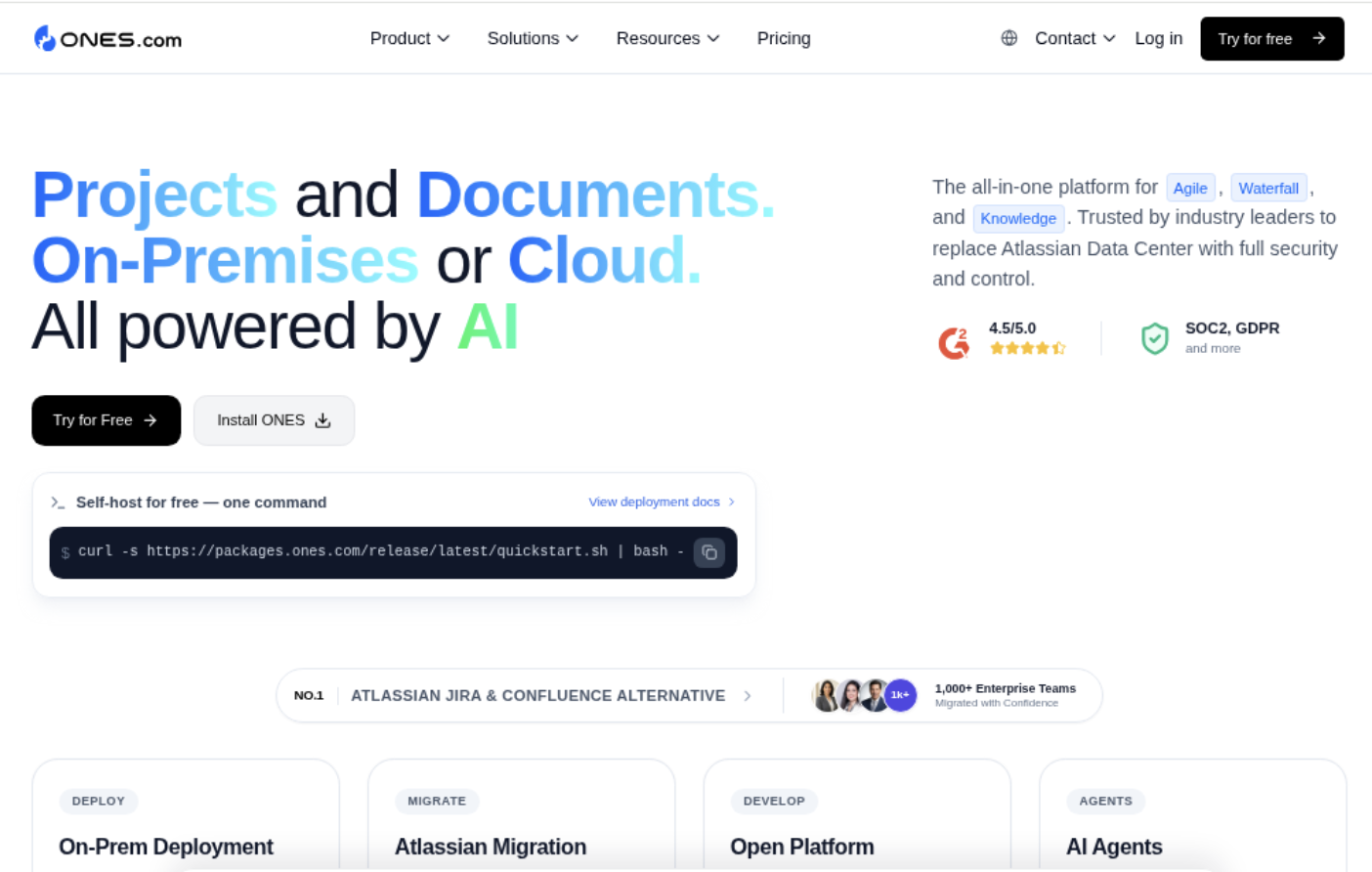
ONES.com combines project management and knowledge management in one platform, powered by AI through ONES Assistant. ONES Project is the project management product and a Jira alternative, while ONES Wiki provides knowledge management separately.
Teams can choose Cloud, On-Premise, Private Cloud, or Air-gapped deployment. The free plan supports up to 30 seats, and the self-hosted versions maintain feature parity with the cloud version.
Core Capabilities
- Too many disconnected project tools: ONES.com combines project work and knowledge management, helping teams keep planning context close to delivery work.
- Jira migration concerns: ONES Project supports Jira-compatible workflows, making familiar issue, status, and transition patterns easier to adopt.
- Plugin dependency: Built-in reporting, custom workflows, custom fields, sprint management, and automation reduce the need for separate extensions.
- Restricted infrastructure: On-Premise, Private Cloud, and Air-gapped deployment options support teams that cannot place project work in a standard public cloud.
- Inconsistent cloud and self-hosted features: Feature parity across deployment models helps teams select infrastructure without giving up core capabilities.
- Scattered team knowledge: ONES Wiki gives teams a dedicated knowledge base for procedures, decisions, specifications, and internal guidance.
- Growing project complexity: Custom fields and workflows help teams represent approval stages, risks, ownership, and specialized delivery requirements.
- Limited visibility into progress: Built-in reporting gives managers and teams a clearer view of workload, delivery activity, and project status.
Application Scenarios
Software teams evaluating a Jira alternative: A development group can use ONES Project for backlog management, sprint planning, issue tracking, custom workflows, and reporting. The team can keep product knowledge in ONES Wiki.
Organizations with restricted networks: A company with sensitive engineering work can select an air-gapped or on-premise deployment. That arrangement can support internal controls that ordinary cloud-only tools may not satisfy.
Growing teams with mixed project needs: A product, marketing, and operations group can create distinct workflows and fields while using one platform. The free allowance of up to 30 seats provides room for an initial rollout.
Common challenges with Jira Free
Challenge: Your team reaches the user limit
Problem: New employees, contractors, or stakeholders push the team beyond the free allowance.
Solution: Review active accounts, remove access that is no longer needed, and estimate near-term hiring. If access remains essential, compare the cost of upgrading with the disruption caused by excluding people.
Challenge: Attachments consume storage quickly
Problem: Large videos, screenshots, and design exports use storage faster than issue text.
Solution: Establish retention rules, compress large materials where practical, and keep long-term media in a suitable collaboration system. Link to that material from the relevant issue.
Challenge: Automation stops before the month ends
Problem: Broad rules trigger repeatedly and consume the monthly allowance.
Solution: Narrow triggers, combine overlapping rules, and remove low-value notifications. Start with automation that eliminates a repeated manual task every week.
Challenge: Permissions become difficult to manage
Problem: Multiple departments, contractors, and external collaborators need different visibility levels.
Solution: Simplify project boundaries, review access regularly, and define who can view, edit, transition, and administer work. Upgrade when basic controls create a meaningful security concern.
Challenge: The free plan becomes operationally important
Problem: The team depends on Jira for releases, customer commitments, or executive reporting while receiving limited support.
Solution: Identify the business impact of downtime, define an escalation process, and assess whether a paid plan or another platform offers a better operational fit.
FAQs about Jira Free
Can I use Jira Free for a small software team?
Yes. A small software team can use Jira Free for backlog management, Scrum or Kanban boards, sprint planning, issue tracking, and basic reporting. The free plan commonly supports up to 10 users, so count developers, testers, product managers, designers, and contractors who need access. Check storage and automation usage during a complete sprint cycle before committing to the plan.
Does Jira Free include Scrum and Kanban boards?
Jira Free generally includes core Scrum and Kanban functionality. You can create a backlog, organize issues on a board, plan sprints, and track progress through workflow statuses. The exact experience can depend on the project template and product configuration. Advanced planning, administration, and reporting capabilities may require a higher subscription tier.
Is Jira Free suitable for more than 10 people?
Usually, the free Jira Cloud plan is intended for up to 10 users. If eleven or more people need regular access, you should compare paid Jira plans or another project management platform. Do not count only full-time employees. Contractors, clients, reviewers, and occasional contributors can also affect the total access requirement.
Does Jira Free have a storage limit?
Yes. Jira Free commonly includes a 2 GB storage allowance for attachments. Text in issues usually has a small impact, while videos, design exports, and repeated screenshots can consume the allowance quickly. Create an attachment retention policy, avoid duplicate uploads, and monitor usage before a major release or testing cycle.
Can I use Jira Free for commercial work?
Yes. A business can use Jira Free for commercial project management when the team fits the plan’s conditions. The important questions involve scale, access, storage, automation, security, and support. A commercial team with ten or fewer people may find it practical, while a larger or regulated organization may need paid features for governance and continuity.
Does Jira Free include advanced security features?
Jira Free provides basic project access and account controls, but advanced identity, audit, governance, and organization administration features are generally associated with higher plans or related Atlassian offerings. If your team handles sensitive work or requires centralized access management, review the current plan details carefully before relying on Free.
Conclusion
Jira can be free in 2026 for small teams that need core issue tracking, Scrum or Kanban planning, sprint management, and basic reporting. The usual planning boundaries include 10 users, limited storage, restricted automation, and fewer advanced administration and security controls.
But here's the truth: the right question is not simply whether Jira costs nothing. Ask whether the free allowance fits your people, attachments, automation, permissions, and support expectations.
Test a realistic project, monitor the limits, and set a review point before your team grows. If Jira Free starts creating workarounds, compare a paid plan with alternatives such as ONES.com, especially when you need broader deployment choices or a unified project and knowledge management environment.