Is Jira Free in 2026? Plans, Limits, and Features Guide
Is Jira free in 2026? Compare plans, limits, and features to find the right option for your team. Click to discover before you commit.
Jira can look free at first, then surprise you with user caps, storage limits, feature restrictions, or a trial that quietly ends. That creates a common problem: you start planning work around Jira, invite teammates, and only later discover that the free plan does not fit your workflow.
The uncertainty becomes more frustrating when pricing pages change or when “free” gets confused with a temporary trial. A small team may need only basic issue tracking, while a growing product group may depend on advanced permissions, automation, reporting, and larger capacity.
Here’s the practical answer: Jira has a free Cloud plan for small teams, with limits on users, storage, permissions, and some advanced capabilities. This guide explains what you get, where the limits matter, and when another project management platform may make more sense.
Is Jira Free in 2026?
Yes, Jira offers a Free plan for Jira Cloud in 2026. The plan is designed for small teams that need issue tracking, project planning, basic workflows, backlog management, and reporting without paying a subscription.
The main restriction is team size. Jira’s Free plan generally supports up to 10 users for a standard team setup. It also includes limited storage and fewer administrative controls than paid plans.
Here’s why that distinction matters: “free” describes the subscription cost, not unlimited access to every Jira capability. Your team can begin without paying, but you may need to upgrade when collaboration, governance, or scale increases.
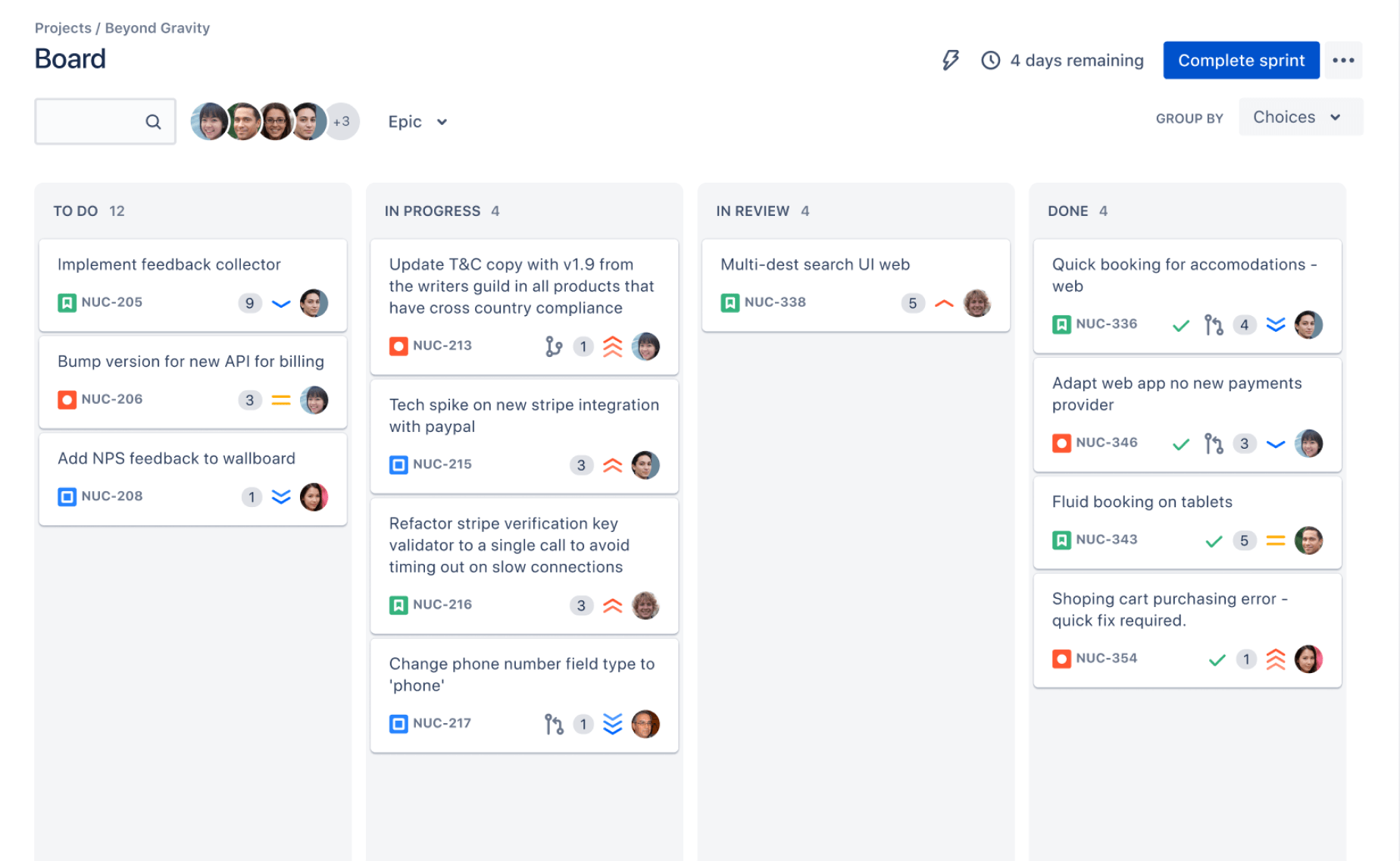
What the free plan usually includes
- Jira Cloud project creation
- Issue and task tracking
- Backlog management
- Scrum and Kanban boards
- Basic sprint planning
- Customizable workflows
- Standard issue fields
- Basic reporting and dashboards
- Community-based support
- Limited storage for project attachments and related content
The exact feature mix and limits can change, so check the current Jira pricing page before making a purchasing decision. Atlassian may adjust user caps, storage allowances, automation rules, or plan names over time.
What You Get With Jira Free
Issue tracking and project organization
Jira Free gives you a central place to create, assign, prioritize, and track work. A product team might create issues for a login defect, a mobile layout improvement, and an API enhancement.
Each issue can include a title, description, status, priority, assignee, labels, comments, and activity history. This creates a visible workflow instead of leaving tasks scattered across chat messages.
Scrum and Kanban planning
You can organize work through Scrum or Kanban methods. Scrum teams can manage backlogs and sprints, while Kanban teams can move work through stages such as To Do, In Progress, Review, and Done.
For example, a five-person development team might plan two-week sprints. A support engineering group may prefer a continuous Kanban flow for bugs and service requests.
Basic workflows
Jira’s workflow model lets you define how an issue moves through your process. A basic workflow might use these statuses:
- Open
- In Progress
- In Review
- Ready for Release
- Done
You can adapt the flow to match your team’s work. A content team might use Draft, Editing, Approval, Scheduled, and Published instead.
Dashboards and reports
The free plan includes standard visibility into project progress. Depending on the project type and current plan rules, you may use dashboards, sprint reports, burndown charts, velocity reports, or issue summaries.
These reports help answer practical questions. Are unresolved issues increasing? Is the sprint on track? Which priority level consumes the most effort? A small team can often answer these questions without advanced analytics.
Integrations and automation
Jira connects with many tools used by software and product teams. You can link development, communication, testing, and deployment activities through available integrations.
Automation can also reduce repetitive work. For example, a rule might assign a new bug to a triage queue or transition an issue after a pull request is merged. Free-plan automation usually has monthly usage limits.
Jira Free Plan Limits to Watch
The 10-user limit
The most important restriction is the team-size ceiling. A team of eight may work comfortably on the free plan, while an organization with twelve regular contributors may need a paid tier.
Count everyone who needs access, including developers, product managers, testers, designers, and other collaborators. Occasional viewers can still affect your planning if they need to comment, assign work, or update issues.
Consider a startup with six developers, two product managers, one designer, and one QA specialist. That is already ten people. Adding one engineering manager may push the team beyond the free allowance.
Storage restrictions
Jira Free includes limited storage. Attachments such as screenshots, videos, logs, and design exports can consume that capacity quickly.
A team that mainly tracks short text issues may never notice the restriction. A quality assurance group that attaches screen recordings to every bug may reach it sooner.
The practical solution is to keep large media in a suitable storage service and link to it when appropriate. You should also establish an attachment policy before storage becomes a problem.
Limited administration and permissions
Small teams often need only simple access rules. Larger organizations usually need more precise control over project roles, permissions, visibility, and administrative responsibilities.
For example, a company may want contractors to view selected projects while preventing access to internal planning work. Advanced permission requirements can make the free plan less suitable.
Automation quotas
Automation is useful because it removes repetitive manual actions. However, free plans generally impose usage limits on automated rules.
Imagine a workflow that creates a linked task, sends a notification, updates a label, and transitions an issue for every completed sprint item. A high-volume team can consume its monthly automation allowance quickly.
Support options
Free Jira users typically rely on community support and self-service guidance. That may be enough for a small team with an experienced administrator.
If your team needs guaranteed response times, dedicated help, or formal service commitments, you may need a paid plan or a different support arrangement.
Jira Free Versus Paid Plans
| Area |
Free plan |
Paid plans |
| Cost |
No subscription fee within the plan limits |
Monthly or annual subscription |
| Team size |
Designed for small teams, commonly up to 10 users |
Supports larger teams |
| Issue tracking |
Included |
Included with broader administration options |
| Boards and backlog |
Included for common Scrum and Kanban workflows |
Included with greater scale and control |
| Storage |
Limited allowance |
Higher allowance depending on the plan |
| Automation |
Limited monthly usage |
Higher usage limits |
| Permissions |
Basic controls |
More advanced access management |
| Support |
Community and self-service options |
Higher support levels may be available |
The free plan is usually enough when your team is small, your process is straightforward, and your attachment volume is modest. A paid plan becomes more valuable when the cost of manual administration exceeds the subscription price.
Here’s a simple comparison. If a project coordinator spends five hours each week managing workarounds for user access, reporting, and automation limits, a paid upgrade may deliver more value than the free price suggests.
Jira Free Trial Versus the Free Plan
A free trial lets you test paid capabilities for a limited period. A free plan continues without a subscription fee, but with narrower limits.
You might begin a trial to evaluate advanced permissions, larger storage, expanded automation, or premium reporting. When the trial ends, your account may move to a lower plan or require a subscription to retain those capabilities.
Questions to ask during a trial
- Which features will disappear when the trial ends?
- How many people need regular access?
- How much storage does your team consume each month?
- Which automation rules are essential?
- Do external collaborators need project access?
- Will administrators need more detailed permissions?
- Can your team work comfortably with community-based support?
Do not judge the free plan only by its first week. Recreate a realistic sprint, add ordinary attachments, invite every necessary collaborator, and test your most important workflow rules.
Who Should Use Jira Free?
Small software teams
Jira Free is a sensible starting point for a small software team that needs structured issue tracking. A four-person development group can manage bugs, features, sprints, and releases without paying immediately.
The plan also works well for a side project, early-stage product, student engineering team, or internal experiment with a limited number of contributors.
Teams already comfortable with Jira
If your team already understands Jira’s issue model, boards, and workflows, the free plan can provide useful value with little training.
That familiarity reduces setup time. Someone can create a project, establish statuses, add a backlog, and begin planning work in a single session.
Teams with simple governance needs
Free Jira works best when everyone can use a shared project structure and basic access rules. You may not need complex separation between departments or highly customized administrative roles.
When Jira Free May Become a Poor Fit
Your team exceeds the user allowance
The clearest warning sign is a growing team. If several people need to update issues weekly, limiting access can create bottlenecks and informal workarounds.
For instance, asking a product manager to send task changes through a developer may preserve the user count. It also creates delays and weakens accountability.
You need advanced portfolio planning
Jira Free focuses on project-level work. Organizations managing multiple products, departments, programs, and strategic priorities may need broader planning capabilities.
Without those capabilities, managers may build manual status summaries and spend more time reconciling project information.
Your process depends on strict access controls
Regulated teams, agencies, and companies with external partners often need carefully separated project visibility. Basic controls may not provide enough precision.
Before selecting a plan, map who should view, edit, approve, and administer each project. That exercise exposes permission gaps early.
Your team stores heavy media
Video-heavy testing, design review, and technical support can consume limited storage quickly. The issue is especially noticeable when every ticket includes several large attachments.
Set a retention policy, compress suitable media, and decide where large assets should live. If those steps feel inconvenient, compare the higher plan cost with the time required to manage storage manually.
How to Decide If the Free Plan Is Enough
Use this five-minute assessment
- Count every person who needs to create, edit, comment on, or assign issues.
- List the workflows your team runs every week.
- Estimate the number and size of attachments added each month.
- Identify automation rules that save meaningful time.
- Write down permission or support requirements.
Now compare those needs with the free plan. If the only concern is future growth, you can begin free and review the decision monthly.
If several limits already affect daily work, test a paid plan or another platform before your team becomes dependent on complicated workarounds.
A practical scoring example
| Question |
Low-risk answer |
Warning sign |
| How many regular contributors do you have? |
Fewer than 10 |
Close to or above 10 |
| How much media do you attach? |
Occasional screenshots |
Frequent videos and large exports |
| How complex are permissions? |
One shared project space |
Many teams or external groups |
| How much automation do you need? |
A few low-volume rules |
Many high-frequency rules |
| What support do you expect? |
Self-service guidance is acceptable |
Guaranteed response times are essential |
Three or more warning signs suggest that you should compare paid Jira plans and alternatives before committing to a long-term workflow.
Jira Free Alternatives for Growing Teams: ONES.com
Value Proposition
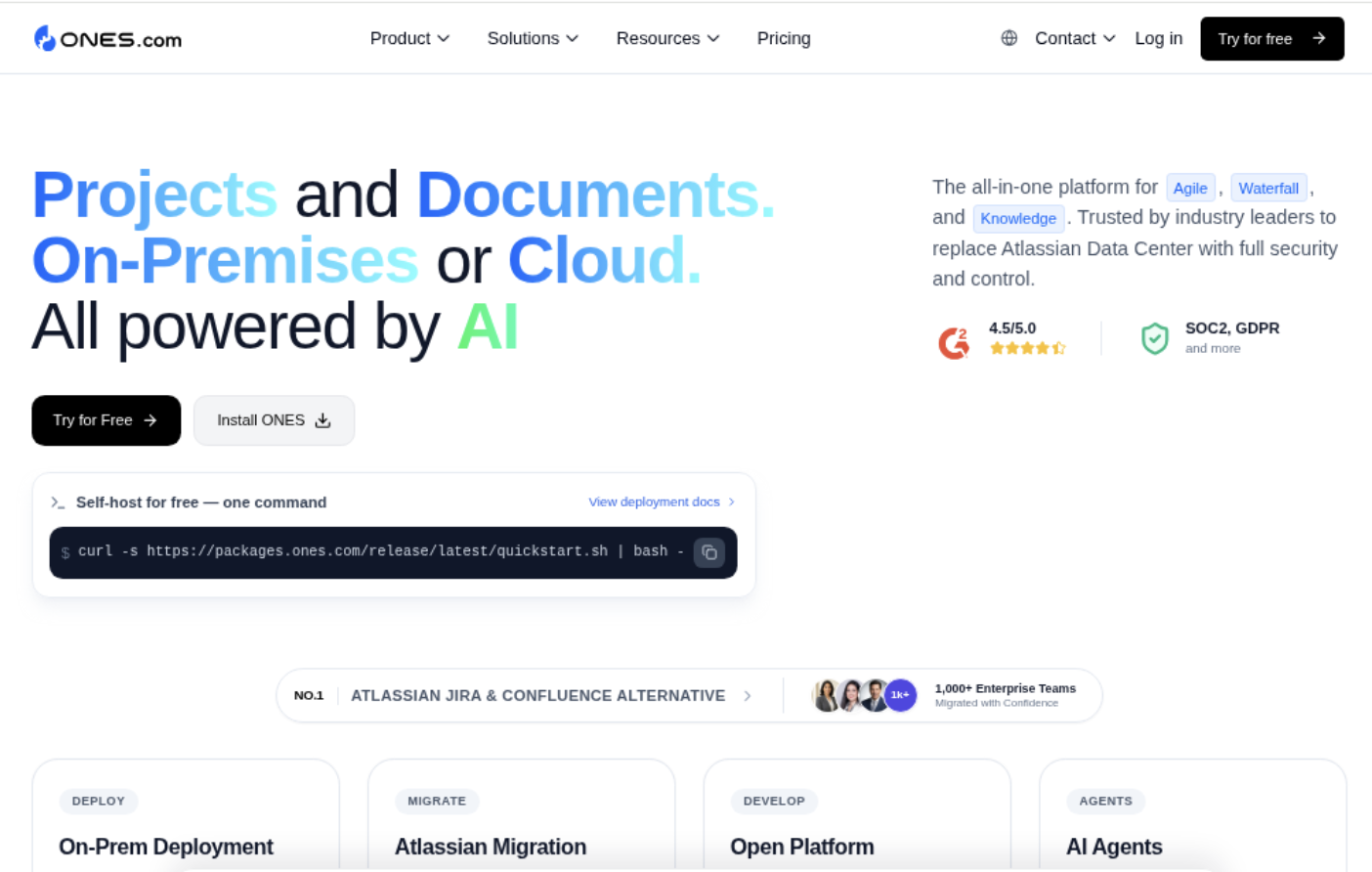
ONES.com combines project management and knowledge management in one platform. It can suit teams that want Jira-compatible workflows, built-in reporting, and self-hosted deployment options without assembling many separate plugins.
ONES Project is the project management product and a Jira alternative. ONES Wiki is the knowledge management product and a Confluence alternative. They are sold separately.
Core Capabilities
Small-team limits create future disruption → Flexible team planning → A smoother growth path
If your team expects to grow beyond a small free-plan allowance, ONES.com gives you a platform to evaluate around longer-term collaboration needs. You can plan access around actual roles instead of relying on temporary workarounds.
Scattered project knowledge slows decisions → ONES Wiki connects knowledge management with project work → Teams find context faster
A product decision may involve requirements, meeting notes, acceptance criteria, and implementation tasks. ONES Wiki can organize that knowledge while ONES Project manages delivery work.
Plugin-heavy setups increase maintenance → Native project capabilities reduce dependency on add-ons → Administrators manage fewer moving parts
ONES Project includes custom workflows, custom fields, sprint management, automation, and reporting. Native capabilities can reduce the need to connect multiple extensions for ordinary project operations.
Teams moving from Jira fear workflow disruption → Jira-compatible workflows support a familiar transition → Adoption becomes easier
If your team already uses issue types, statuses, boards, sprints, and approvals, a compatible workflow model can reduce the learning curve during evaluation or migration.
Cloud-only requirements limit deployment choices → Four deployment options support different environments → Teams choose an appropriate operating model
ONES.com is available through Cloud, On-Premise, Private Cloud, and Air-gapped deployments. That range matters for companies with strict network, security, or operational requirements.
Self-hosted platforms sometimes lose features → Full feature parity keeps capabilities consistent → Deployment decisions become less restrictive
ONES.com provides full feature parity between its cloud and self-hosted versions. A team can evaluate deployment needs without assuming that self-hosting means giving up major functionality.
Manual status reporting consumes coordination time → Built-in reporting makes progress visible → Managers spend less time collecting updates
Project reporting can bring sprint progress, issue status, and delivery trends into a clearer view. That helps teams identify delays before a release deadline becomes urgent.
Approval-heavy processes need more than simple task lists → Custom workflows and fields model real controls → Work moves through defined review stages
A hardware team may require engineering review, safety approval, procurement confirmation, and release authorization. Custom workflow stages can represent those checkpoints directly.
Application Scenarios
A growing product team
A startup begins with a small Jira setup, then expands across engineering, QA, design, and product management. As more people need access, the team evaluates ONES Project for sprint management, custom fields, reporting, and familiar issue workflows.
A restricted-network engineering group
An organization cannot place project work in a public cloud environment. It evaluates ONES.com through an On-Premise or Air-gapped deployment while retaining access to the same core capabilities available in the cloud version.
A company connecting delivery and knowledge
A software team keeps project tasks in ONES Project and structured product guidance in ONES Wiki. New contributors can find process knowledge alongside the work they need to complete.
Common Challenges With Free Project Management Plans
Challenge: The team grows unexpectedly
Solution: Count active contributors every month and define an upgrade trigger. For example, review alternatives when your team reaches eight people instead of waiting until access becomes a crisis.
Challenge: Storage fills faster than expected
Solution: Create clear rules for screenshots, recordings, exports, and retention. Keep only material that helps resolve or understand an issue.
Challenge: Important automation stops running
Solution: Rank rules by business impact. Preserve automations that prevent missed approvals or release errors before lower-value notification rules.
Challenge: Reporting becomes a manual activity
Solution: Standardize statuses, priorities, and ownership. Consistent issue information makes built-in reports more reliable and reduces weekly status-chasing.
Challenge: A free plan encourages short-term decisions
Solution: Evaluate the workflow you expect to use six months from now. A free starting point is useful, but migration effort also belongs in the calculation.
FAQs About Jira Free
Can I use Jira Free for a small business?
Yes. Jira Free can work well for a small business with a limited number of contributors and straightforward project needs. You can track tasks, defects, feature requests, and sprint work without a subscription. Check the current user, storage, automation, and permission limits before inviting the whole team. A small business with contractors or external collaborators should count everyone who needs regular editing access.
Does Jira Free include Scrum and Kanban boards?
Yes, Jira Free generally supports common Scrum and Kanban planning workflows. You can organize a backlog, create boards, move issues through statuses, and plan sprints. The experience may vary by project type and plan updates. Test the exact board configuration your team needs, especially if you rely on multiple boards, specialized filters, or complex planning rules.
What happens when my team exceeds the free user limit?
You may need to remove access, upgrade to a paid plan, or move to another platform. Removing people can create communication gaps when they still need to review or update work. Plan ahead by identifying occasional collaborators and regular contributors separately. If growth is likely, compare paid pricing and migration options before reaching the limit.
Is Jira Free suitable for personal projects?
Yes. Jira Free can suit a personal software project, learning exercise, portfolio build, or small open collaboration. Its boards, issue tracking, and workflows provide more structure than a simple task list. You may find the interface heavier than necessary for a very small project, so choose a simpler tool if you only need a handful of reminders.
Does Jira Free include customer support?
Free users typically receive community-based and self-service support rather than the higher support levels associated with paid plans. That can be adequate when someone on your team understands project administration. If an outage or configuration problem requires a guaranteed response, review the support terms of the plan you are considering.
Should I choose Jira Free or an alternative?
Choose Jira Free when you have a small team, software-focused workflows, modest storage needs, and limited administrative complexity. Compare alternatives when you need broader deployment choices, integrated knowledge management, more control, or a clearer path for organizational growth. Evaluate a real project rather than judging platforms only by feature lists.
Conclusion
Jira is free in 2026 when you stay within the Free Cloud plan’s limits. It can provide issue tracking, Scrum and Kanban boards, sprint planning, workflows, reports, and basic automation for a small team.
But here’s the truth: the plan becomes less attractive when your team approaches the user cap, stores large attachments, requires advanced permissions, or depends on high-volume automation.
Start by counting contributors, testing a realistic workflow, and estimating storage needs. Then compare the time spent managing restrictions with the cost of upgrading or switching platforms.
The best part? You do not need to make the decision blindly. Jira Free is a practical starting point for small teams, while platforms such as ONES.com can offer another path when project management, knowledge management, deployment flexibility, and long-term control matter more.