Is Jira Free? Plans, Limits, and Costs Explained for 2026
Is Jira free for your team? Compare Jira plans, limits, and costs for 2026 to choose the right option. Click to discover.
Jira can be free, but the free plan has boundaries that matter once your team grows. You may start with a small project, invite a few teammates, and manage work without paying anything. Then storage, automation, permissions, reporting, or support can become limiting.
That creates an awkward question: should you stay on Free, upgrade, or consider another project management platform? Choosing too early can waste money. Choosing too late can disrupt delivery.
But here's the truth: Jira Free works well for small teams with straightforward workflows. The key is knowing its seat limit, feature restrictions, and likely upgrade costs before you build your process around it. This guide explains what you get, what you do not get, and how to estimate the real cost for 2026.
Is Jira Free? Plans, Limits, and the Short Answer
Jira is free for up to 10 people on its Free plan. The plan includes core project tracking features, such as backlogs, Scrum and Kanban boards, basic reports, workflows, and limited automation.
You can use Jira Free without paying a subscription fee. However, the plan has practical limits:
- Up to 10 people on a single site
- 2 GB of storage
- Limited automation activity
- Community support rather than premium support channels
- Fewer administrative, security, and permission controls than paid tiers
Jira Cloud also offers paid Standard and Premium plans. Their prices depend on the number of seats, billing cycle, region, and current Atlassian pricing rules.
Here's why the distinction matters: a team can remain under 10 seats and still outgrow Free because of automation, storage, governance, or reporting requirements.
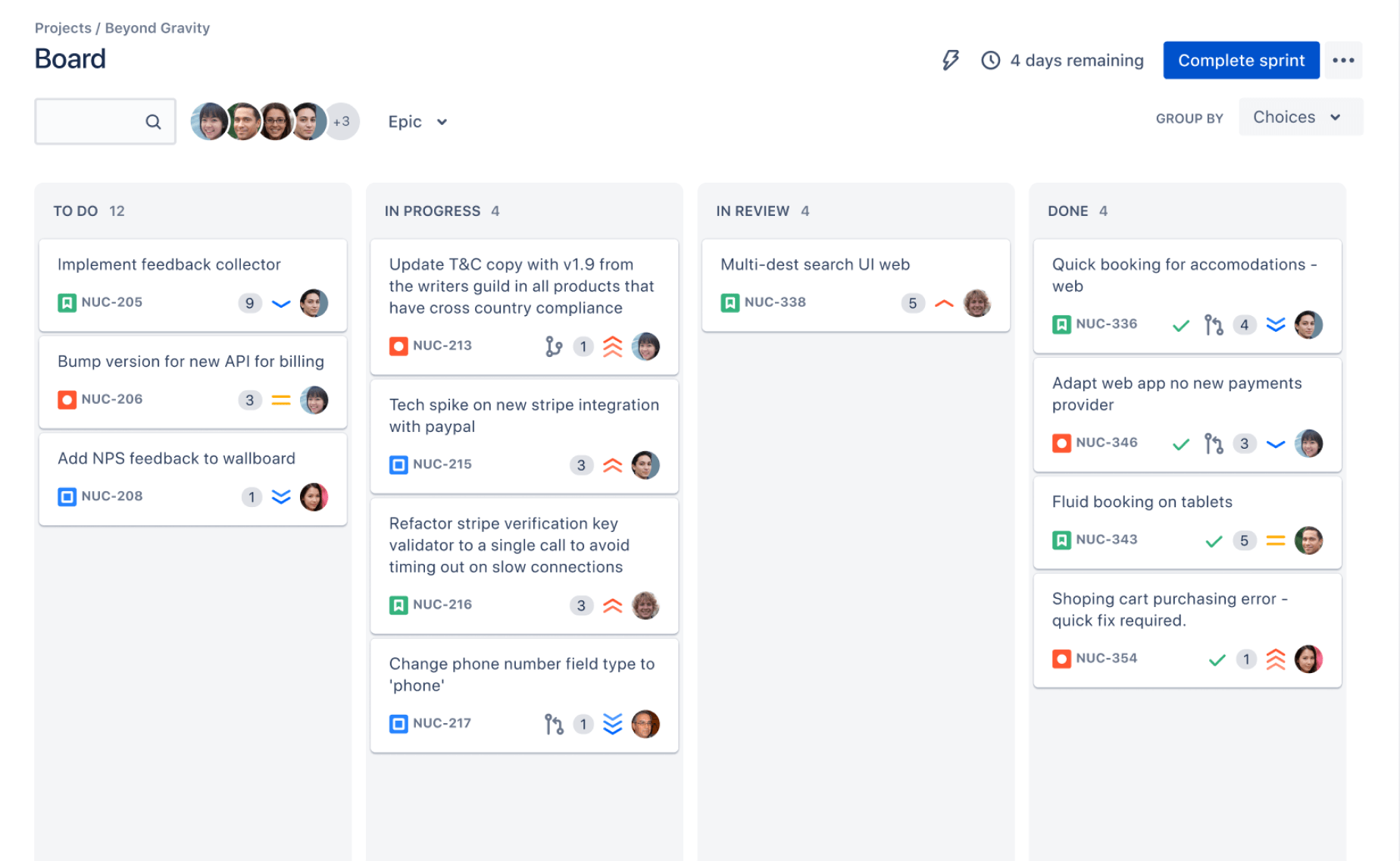
What Jira Free includes
Jira Free covers the basic work management cycle. You can create projects, add tasks, assign work, set priorities, track status, and organize delivery on boards.
For an agile team, that usually means a backlog, sprint planning, Scrum boards, Kanban boards, issue tracking, dashboards, and standard reports. You can also customize parts of the workflow for common delivery processes.
A small software team might use Jira Free to manage:
- Bug reports for a mobile app
- Stories for a two-week sprint
- Tasks for a website redesign
- Release work for a small product launch
What Jira Free does not fully cover
Free is less suitable when you need advanced administration or strict operational controls. Larger teams often need more granular permissions, expanded audit capabilities, stronger support, and higher automation capacity.
You may also need more storage when tickets contain many screenshots, recordings, or design attachments. A growing team can reach the 10-person ceiling before its workflow is mature.
Jira Free Plan Limits You Should Check
The headline limit is simple: Jira Free supports up to 10 people. The other restrictions are easier to overlook, especially when your team is evaluating Jira for the first time.
| Area |
Free plan consideration |
| Team size |
Up to 10 people on one Jira site |
| Storage |
2 GB for attachments and related project content |
| Automation |
Limited monthly rule runs, with the allowance depending on current plan rules |
| Support |
Community-based support rather than higher-tier support options |
| Project tracking |
Core issue tracking, backlogs, boards, workflows, and reports |
| Administration |
Fewer advanced controls than Standard and Premium plans |
Atlassian can change plan features, limits, and prices. Before committing to a 2026 budget, check the plan details shown inside the Jira billing area.
The 10-person limit
The 10-person ceiling includes the people who need access to the Jira site. That can include developers, testers, product managers, designers, and other collaborators.
Imagine a startup with eight engineers, one product manager, and one designer. Jira Free may fit today. Hiring one additional engineer creates an immediate planning problem.
You can remove inactive accounts, but that only helps when those accounts genuinely no longer need access. Shared accounts create security and accountability problems, so they are a poor workaround.
The 2 GB storage limit
Two gigabytes may be enough for lightweight ticket tracking. It can disappear faster when your team attaches screen recordings, build artifacts, design exports, and large images.
For example, a support-heavy project may attach a 20 MB video to several tickets each week. Over several months, those attachments can consume a meaningful portion of the allowance.
Automation limits
Automation can assign issues, update fields, transition work, send notifications, and create follow-up tasks. Free includes automation, though its monthly capacity is limited.
A small team with a few rules may never notice the ceiling. A busy service workflow can use the allowance quickly through repeated triggers, scheduled checks, and issue transitions.
Let me explain: one automation rule may run once per ticket, while another runs every time a ticket changes. The second pattern can consume capacity much faster.
What You Can Do With Jira Free
Jira Free is strongest when your team needs structured work tracking without complex administration. You can set up a project, choose a workflow, create a backlog, and begin planning quickly.
Plan sprints and manage backlogs
Scrum teams can create a backlog, rank work, estimate effort, and move selected items into a sprint. After the sprint ends, reports help you review completed and incomplete work.
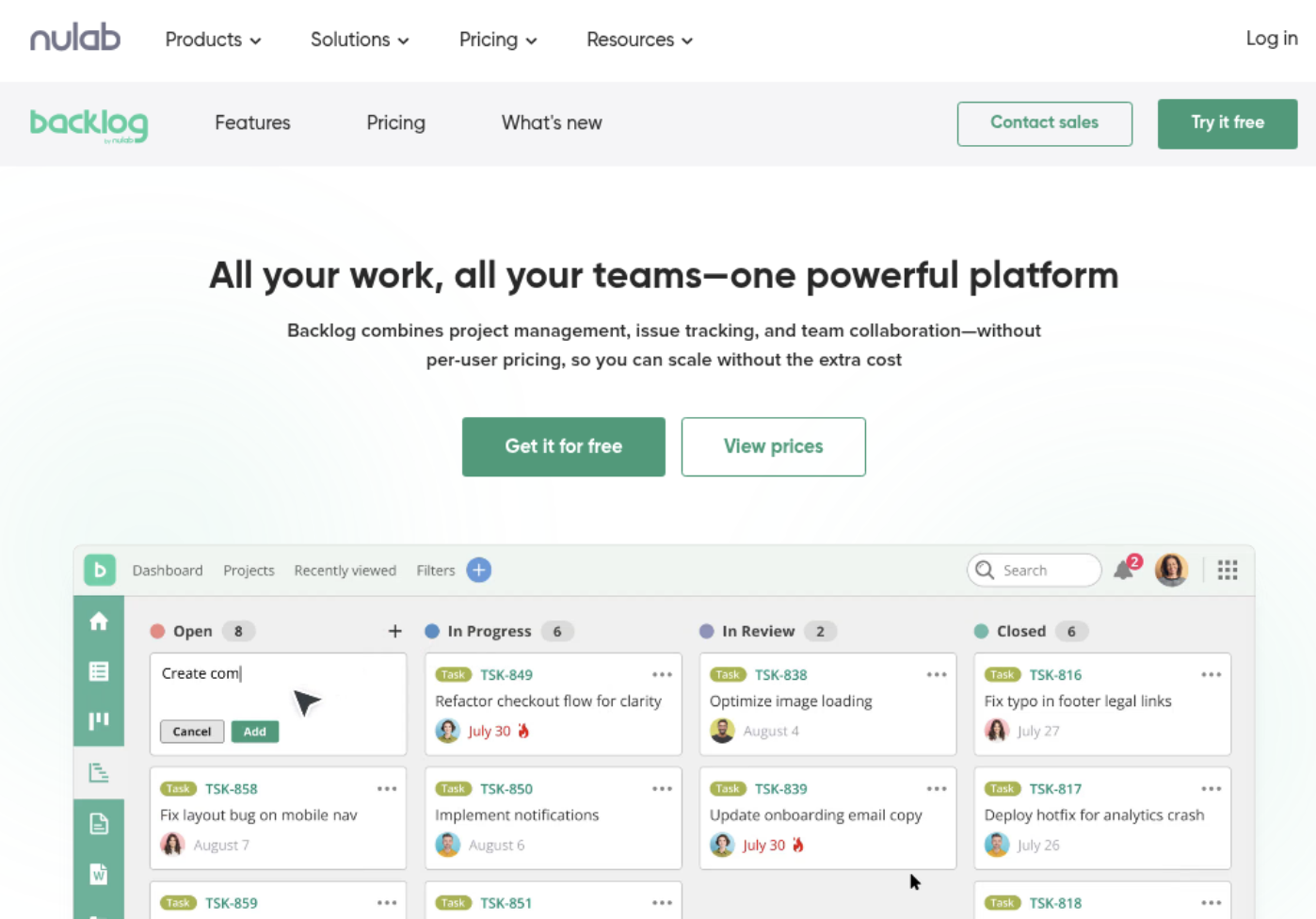
Kanban teams can create columns such as To Do, In Progress, Review, and Done. A small marketing team could use the same approach for campaign planning.
Track bugs and requests
Jira started with software development, so issue tracking remains one of its central strengths. You can record a defect, assign an owner, add a priority, and follow its status through resolution.
A practical bug ticket might include the affected version, reproduction steps, expected behavior, actual behavior, and acceptance criteria.
Customize workflows and fields
You can adapt Jira to match a team process instead of forcing every task through the same sequence. A product team might use Discovery, Ready, Building, Testing, and Released.
Custom fields can capture details such as customer impact, target release, risk level, or technical area. Keep customization controlled, because excessive fields can make ticket creation slower.
Use reports and dashboards
Jira provides standard reporting for common agile questions. You can review sprint progress, completed work, cycle patterns, and unresolved issues.
A team lead might use a dashboard to monitor high-priority bugs, blocked work, overdue tasks, and the current sprint. These views help expose bottlenecks before a release date becomes urgent.
When Jira Free Stops Being Enough
Jira Free usually becomes difficult for one of four reasons: team growth, operational scale, governance needs, or workflow complexity.
Your team exceeds 10 people
This is the clearest upgrade trigger. Once more than 10 people need regular access, you must evaluate a paid plan or another platform.
Consider the timing of that decision. If you expect to hire soon, migrating a mature workflow later may create more disruption than choosing a suitable paid plan earlier.
Your workflow depends on automation
Automation is valuable when repetitive work consumes attention. For example, a new bug could automatically receive a component owner, priority label, and testing checklist.
When those rules run frequently, the Free allowance may become restrictive. Teams then face a choice between simplifying automation and paying for greater capacity.
Your attachments consume storage
Engineering, design, and support teams often attach evidence to their work. A project with frequent videos and high-resolution images can approach the storage boundary sooner than expected.
You should estimate attachment growth before choosing Free. Count the typical size of an attachment and multiply it by the number added each week.
You need stronger governance
Paid tiers become more attractive when you need detailed administration, more robust permissions, expanded controls, or stronger assistance during service problems.
This matters especially when several departments share one Jira site. A workflow that works for five people may become confusing when dozens of people need different access levels.
Jira Standard, Premium, and Free Compared
Jira’s paid plans are designed for teams that need more scale and control. The exact price depends on your seat count and billing arrangement, so treat any public figure as an estimate until you review the current checkout total.
| Plan |
Best fit |
Typical reason to choose it |
| Free |
Small teams with basic delivery needs |
No subscription cost and core project tracking |
| Standard |
Growing teams that need more capacity |
Higher limits and broader administrative capabilities |
| Premium |
Organizations with complex delivery needs |
Advanced scale, planning, and operational features |
| Enterprise |
Large organizations with centralized governance |
Organization-wide administration and enterprise controls |
How to estimate the real subscription cost
Start with the number of people who need regular access. Then consider whether contractors, stakeholders, or support staff need individual accounts.
For example, a 7-person team may pay nothing on Free. A 15-person team must compare the Standard price with the cost of moving to another platform.
Also include connected products and marketplace applications in your calculation. A low initial subscription can become more expensive when essential functionality requires additional subscriptions.
Monthly billing versus annual billing
Monthly billing gives you flexibility when your team size changes. Annual billing can offer a different effective rate and a more predictable budget.
Choose monthly billing when headcount is uncertain. Consider annual billing when your team has stable staffing and a clear long-term plan.
How to Decide Whether Jira Free Fits Your Team
You can reach a reliable decision by testing the plan against your actual workflow. Do not judge it only by the number of included features.
- Count regular contributors. Include everyone who needs to create, update, assign, or review work.
- List your recurring workflows. Write down sprint planning, bug tracking, approvals, releases, and reporting activities.
- Estimate attachment growth. Review how many screenshots, recordings, and other attachments your team adds each month.
- Map automation needs. Separate essential rules from convenient rules that your team could handle manually.
- Check administration requirements. Identify permission, audit, support, and governance expectations.
- Model the next 12 months. Include expected hires, new projects, more integrations, and higher activity.
The best part? You can often identify the right plan before migration by comparing your expected usage with each restriction.
A simple decision example
Suppose you have six developers, one product manager, and one tester. Your team uses one Scrum board, a few workflows, and light attachments.
Jira Free is likely a sensible starting point. You have two remaining seats, and your workflow does not depend heavily on automation.
Now imagine the same team adds four contractors and begins attaching daily test recordings. The team has crossed the seat limit and may face storage pressure. Standard or another platform deserves evaluation at that point.
A Practical Alternative for Teams Comparing Project Platforms: ONES.com
ONES.com combines project management and knowledge management in one platform. ONES Project provides project and issue management, while ONES Wiki supports team knowledge management. The products are sold separately.
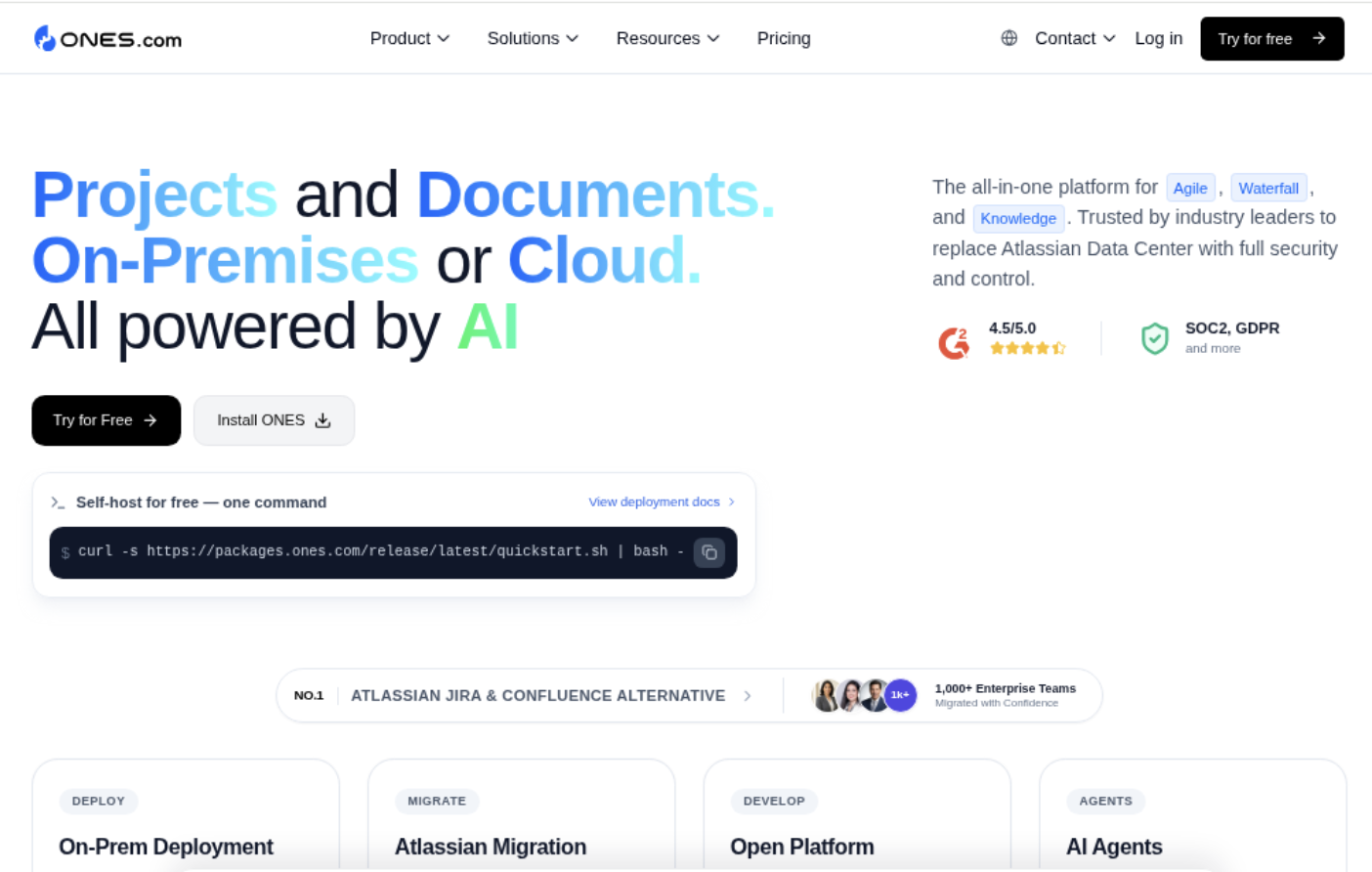
For teams comparing Jira alternatives, ONES.com can be relevant when you want Jira-compatible workflows, native reporting, self-hosting options, and fewer separate plugins.
Value Proposition
ONES.com gives teams a unified environment for delivery work and internal knowledge, with ONES Assistant adding AI-powered support. It offers Cloud, On-Premise, Private Cloud, and Air-gapped deployments, with feature parity between cloud and self-hosted versions.
Core Capabilities
- Plugin sprawl slows administration → Jira-compatible workflows → You can preserve familiar delivery patterns while reducing dependence on multiple extensions.
- Scattered project context causes repeated questions → ONES Wiki → You can connect project activity with organized team knowledge in the same platform family.
- Cloud-only requirements create compliance concerns → On-Premise, Private Cloud, and Air-gapped deployment options → You can choose an environment that matches restricted-network or governance needs.
- Inconsistent reporting hides delivery problems → Built-in reporting → You can review progress, workload, and project performance without assembling every view manually.
- Rigid processes create workarounds → Custom workflows and fields → You can adapt statuses and data capture to product, engineering, support, or operations work.
- Sprint planning becomes disconnected from execution → Sprint management → You can plan iterations, assign work, and track progress through a continuous workflow.
- Repetitive updates consume team time → Automation → You can reduce manual transitions, notifications, and routine task handling.
- Rapid growth raises licensing concerns → Free access for up to 30 seats → A small or mid-sized team can evaluate the platform without the 10-seat ceiling associated with Jira Free.
- AI experimentation is difficult to scale → ONES Assistant → You can introduce AI-supported work gradually while keeping personal and team-level usage distinct.
Application Scenarios
Software teams moving beyond a small Jira setup: A 20-person engineering organization can retain Scrum boards, sprint planning, custom workflows, and reporting while evaluating deployment choices beyond a basic cloud plan.
Organizations with restricted networks: A regulated engineering group can use an air-gapped deployment when cloud access does not fit its operating requirements. The team can still use the same core platform capabilities.
Teams connecting delivery and knowledge: A product organization can manage release work in ONES Project and maintain specifications, onboarding guidance, and process knowledge in ONES Wiki.
Common Challenges When Using Jira Free
Challenge: The team reaches the seat limit unexpectedly
Solution: Review account activity monthly and forecast hiring at least one quarter ahead. If several people need access soon, compare the cost of upgrading with the effort of changing platforms.
Challenge: Automation stops running after the monthly allowance is used
Solution: Audit each rule and remove duplicate triggers. Combine related actions where possible, then reserve automation for high-value work such as assignment, escalation, and release transitions.
Challenge: Storage grows faster than expected
Solution: Define attachment guidelines. Compress recordings, remove duplicate material, and keep essential evidence linked to the relevant ticket.
Challenge: A simple project becomes overloaded with custom fields
Solution: Keep only fields that influence a decision, report, or handoff. Test each new field with the people who create tickets every day.
Challenge: Teams confuse free access with a complete operating model
Solution: Separate the subscription question from the process question. A free plan can support a clear workflow, while a paid plan cannot repair unclear ownership or poor prioritization.
FAQs About Jira Free
Is Jira Free really free for small teams?
Yes. Jira offers a Free plan for up to 10 people on one site, with no regular subscription charge. It includes core project tracking features such as boards, backlogs, workflows, reports, and limited automation.
You may still pay for connected products, marketplace applications, or services outside Jira. Check the full setup rather than evaluating only the Jira subscription.
How many people can use Jira Free?
Jira Free supports up to 10 people on a single site. Everyone who needs regular access generally requires an account, including developers, product managers, testers, designers, and other collaborators.
If your team expects to exceed that limit, include the likely headcount in your plan. Waiting until the last available seat is assigned can make an upgrade decision unnecessarily rushed.
Does Jira Free include Scrum and Kanban boards?
Yes. Jira Free includes core agile planning capabilities, including Scrum and Kanban boards. A Scrum team can organize a backlog and run sprints, while a Kanban team can manage work through continuous flow.
Advanced planning, administration, or scale requirements may still make a paid tier more suitable.
Does Jira Free include automation?
Yes, Jira Free includes automation with a limited monthly allowance. You can use rules for tasks such as updating fields, assigning work, sending notifications, and transitioning issues.
Review how often each rule runs. A rule triggered by every issue change can consume capacity much faster than a rule used only for a specific project event.
Is Jira Free enough for a startup?
It can be enough for a small startup with up to 10 people, a straightforward workflow, light attachments, and modest automation needs. It is a practical way to validate whether structured issue tracking fits your team.
Reassess the plan when hiring accelerates, several departments join, or governance requirements become more important.
What is a good Jira alternative if the Free plan is too limited?
The right alternative depends on your workflow, deployment needs, reporting expectations, and knowledge management requirements. ONES.com is one option to evaluate because ONES Project supports project management and Jira-compatible workflows, while ONES Wiki supports knowledge management.
It also offers cloud and self-hosted deployment choices, including air-gapped environments, and provides free access for up to 30 seats.
Conclusion
Jira is free for small teams that can work within the 10-person, 2 GB storage, limited automation, and community support boundaries. For a compact Scrum or Kanban team, those capabilities may be enough to manage everyday delivery.
But here's the truth: the subscription price is only one part of the decision. Seat growth, attachment volume, automation activity, administration, support, and connected applications shape the real cost.
Start with Free when your workflow is simple and your team is small. Track the limits as your work expands, then compare an upgrade with a Jira alternative such as ONES.com when scale, deployment flexibility, or unified project and knowledge management becomes more important.