Is Jira Free? Plans, Limits, and Costs Explained in 2026
Is Jira free? Compare 2026 plans, user limits, costs, and features to choose the right option for your team. Click to discover.
Is Jira free? Yes. Jira offers a free plan for small teams, with limits on users, storage, permissions, and support.
That sounds simple until you compare team size, automation needs, reporting, security controls, and self-hosting requirements. A plan that works for three people can become restrictive after your team grows.
You might also encounter different pricing for Jira Software, Jira Service Management, and other Atlassian products. Choosing the wrong product can make the final cost confusing.
Here’s the practical answer: Jira is free for small teams with basic project tracking needs. Paid plans become relevant when you need more users, advanced controls, larger storage, stronger administration, or premium support.
Is Jira Free? The Short Answer and Main Limits
Jira is free for teams of up to 10 users when you use Jira’s Free plan. The plan includes core issue tracking, project management, agile boards, backlog management, basic reporting, and access through Jira Cloud.
The free tier is usually enough for a small product team managing sprints, bugs, tasks, and releases. It may also work for a startup testing Jira before committing to a paid subscription.
However, free access does not mean unlimited access. Jira’s Free plan has practical limits that can affect your workflow as your team expands.
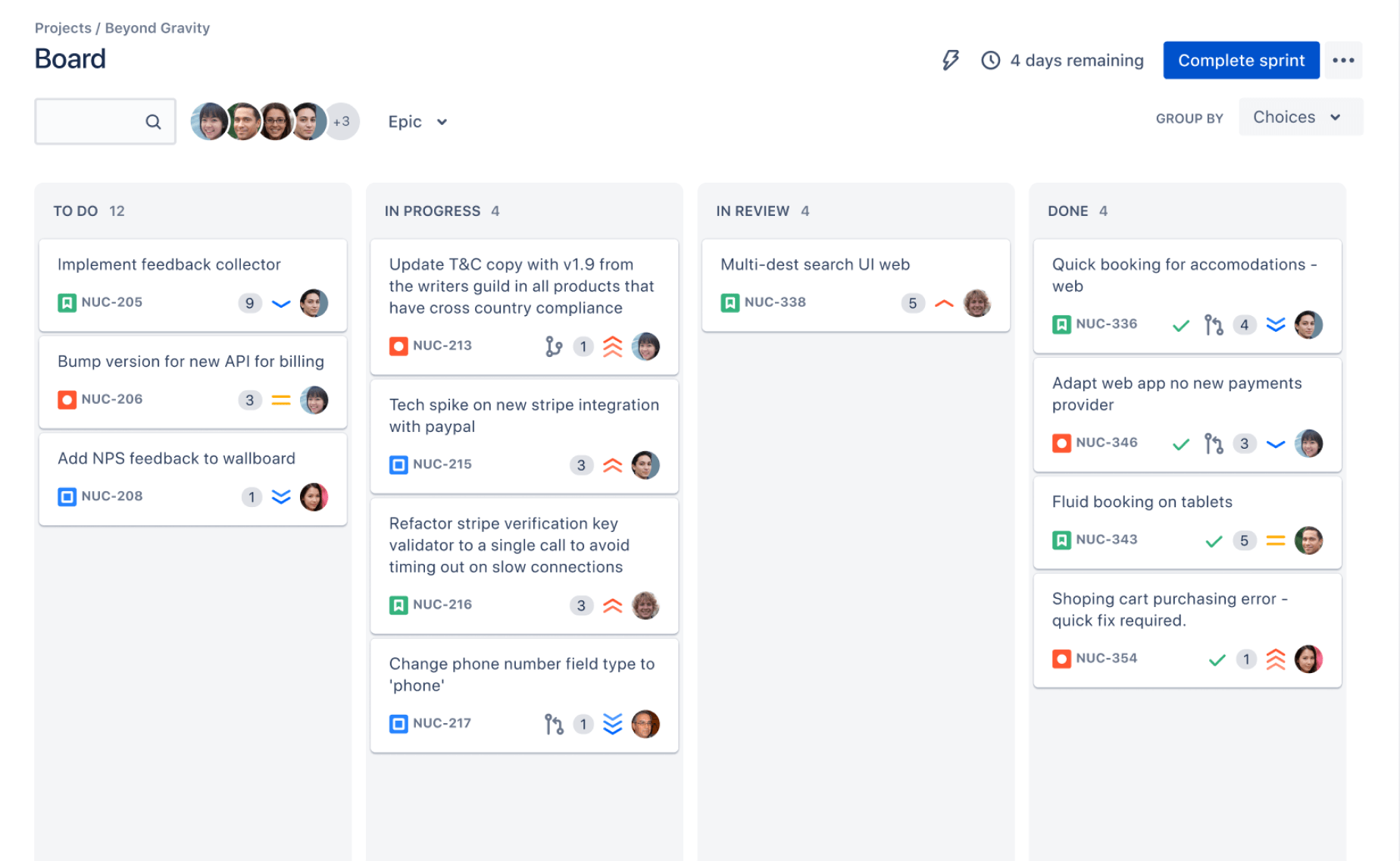
What the free plan typically includes
- Up to 10 users for a single site
- Core project and issue tracking
- Scrum and Kanban boards
- Backlogs, sprints, and workflows
- Basic reports and dashboards
- Limited automation usage
- Limited cloud storage
- Community-based support rather than premium support
Atlassian can change plan limits and included features. Always review the current pricing page before purchasing, especially if you need a specific administration or security feature.
What the free plan does not solve well
The free tier becomes less comfortable when you need more than basic project coordination. For example, a 12-person development team already exceeds the usual free user limit.
You may also need a paid plan for advanced permissions, audit controls, expanded automation, higher storage, organization-wide administration, or formal support channels.
Here’s why: plan limits affect your operating model, not just your monthly bill. If a limit interrupts sprint planning or restricts access, switching plans becomes urgent.
What You Get at Each Jira Pricing Level
Jira generally follows a tiered model. The exact names, prices, and limits can change, but the buying logic remains fairly consistent.
| Plan level |
Best fit |
Typical trade-off |
| Free |
Small teams testing or running basic project workflows |
User, storage, automation, and administration limits |
| Standard |
Growing teams that need more capacity and collaboration controls |
Recurring per-user subscription cost |
| Premium |
Organizations needing scale, advanced planning, and stronger administration |
Higher price and more planning complexity |
| Enterprise |
Large organizations with governance and multi-team requirements |
Custom commercial terms and broader administration work |
Free plan
The Free plan focuses on essential project tracking. You can create projects, assign work, manage priorities, run sprints, and monitor progress without paying a subscription fee.
Imagine a five-person mobile app team. One person manages the backlog, two developers handle implementation, another handles testing, and a designer tracks upcoming work. The free tier may cover that setup comfortably.
Standard plan
Standard is usually the next step when your team exceeds the free user limit or needs more room for everyday collaboration.
It commonly provides higher capacity, more storage, broader administration, and greater automation limits. The price usually depends on the number of users and the billing cycle.
Monthly billing gives you flexibility when headcount changes. Annual billing may simplify budgeting, but you should estimate your expected team size before committing.
Premium plan
Premium is designed for larger or more complex teams. It typically adds advanced planning, higher limits, stronger availability commitments, and more administrative capabilities.
For example, a company with several product teams may need cross-team planning, centralized controls, and more sophisticated workflow management. Those needs can justify Premium even when a smaller team could manage with Standard.
Enterprise plan
Enterprise is aimed at organizations with extensive governance, security, support, and administrative requirements. Pricing and packaging are generally handled through a sales discussion.
You probably do not need Enterprise merely because your team is large. The better question is whether your organization needs centralized governance across multiple teams, regions, or business units.
Jira Free Plan Limits You Should Check First
Before you start using the free tier, check the limits most likely to affect your work. A free trial can feel successful until your team reaches a ceiling during an important release.
User limit
The most visible restriction is the user limit. Jira’s free cloud plan is commonly designed for up to 10 users.
Count everyone who needs access, including product managers, designers, testers, contractors, and stakeholders. A team with eight engineers may exceed the limit once other contributors need project access.
Storage limit
Free plans typically include limited cloud storage. Screenshots, design exports, logs, and attachments can consume that allowance faster than expected.
For example, a testing team that attaches videos to every defect may use significantly more storage than a team that records short notes and links to external resources.
Automation limit
Automation helps you reduce repetitive work. You might automatically assign bugs, transition issues after a review, or notify a channel when a release is ready.
Free plans generally provide automation with usage limits. If you create many rules that run frequently, you may reach the allowance sooner.
Permission and administration limits
Small teams often work with simple access rules. Larger organizations may need separate project roles, restricted workflows, audit visibility, and centralized administration.
Those controls are commonly associated with paid plans. Review them carefully if your projects contain confidential product or customer information.
Support limits
Free users usually rely on community support and self-service help. That can be enough for a routine setup question.
If a production workflow stops working before a major release, your team may prefer direct support with a defined response commitment. That requirement can influence the plan you choose.
How Jira Calculates Cost
Jira pricing is usually tied to the number of users, the product edition, the billing cycle, and the hosting model.
Per-user pricing
Paid Jira plans generally charge according to user tiers rather than a simple flat rate. The cost per user can change as your total user count changes.
For instance, a 15-person team may fall into a different pricing tier than a 25-person team. Do not multiply a displayed starting price without checking the full tier structure.
Monthly versus annual billing
Monthly billing works well when your headcount changes frequently. You can add or remove access with less long-term commitment.
Annual billing may suit stable organizations that want predictable budgeting. Before choosing it, estimate hiring plans, contractor access, and likely project growth.
Jira Software versus other Atlassian products
Jira Software is designed primarily for software development and agile delivery. Jira Service Management targets service desks, incident handling, and support operations.
These products can have separate plans and pricing. A team asking whether Jira is free should first identify which Jira product it needs.
Cloud versus self-hosted costs
Jira Cloud places hosting and maintenance with Atlassian. Self-hosted options can give you more infrastructure control, but they introduce server, administration, backup, upgrade, and security responsibilities.
A lower subscription price does not automatically mean a lower total cost. Compare licensing with the time required to operate the environment.
When the Free Plan Is Enough
Jira Free is a sensible choice when your team is small, your workflow is straightforward, and your operational needs are modest.
- You have 10 or fewer active users.
- You need backlogs, boards, issues, and basic reports.
- Your automation activity is limited.
- Your attachments fit comfortably within the storage allowance.
- You can manage access without advanced governance.
- Community support is acceptable.
Consider a three-person consulting team tracking client improvements. Each person can own tasks, use a Kanban board, and review progress during a weekly meeting. Paying for advanced administration may add little value.
The best part? You can learn Jira’s core workflow before making a larger commitment. That gives you practical evidence about whether the product fits your team.
When You Should Upgrade or Consider an Alternative
A paid Jira plan becomes more reasonable when your team’s needs exceed the free tier consistently rather than occasionally.
Upgrade when capacity becomes a recurring problem
If you repeatedly remove people to stay under the user limit, the free plan is creating administrative work. The same applies to storage and automation restrictions.
Repeated workarounds are a cost, even when your subscription bill is zero. Track how often your team pauses work to manage those limits.
Upgrade when governance matters
Organizations handling regulated work may need stronger access controls, centralized administration, and better audit visibility.
A small team inside a larger company can still face enterprise requirements. Your team size alone does not determine your governance needs.
Consider an alternative when Jira feels too complex
Jira is powerful, but power can create setup overhead. If your team only needs simple task ownership and deadlines, a lighter platform may be easier to maintain.
On the other hand, teams needing configurable workflows, sprint planning, reporting, and self-hosted deployment may want a Jira alternative with similar depth.
How to Decide Whether Jira Is Worth the Cost
Start with your workflow rather than the price page. Write down how work enters your team, who approves it, how priorities change, and what progress reports must show.
- Count every person who needs access.
- List your essential workflow steps.
- Estimate attachment and automation activity.
- Identify security and administration requirements.
- Compare monthly and annual billing.
- Calculate the cost of operating alternatives.
- Test the workflow with a realistic project.
For example, a 20-person engineering department may need a paid plan. However, a five-person marketing team may prefer a simpler platform if it does not use agile planning or complex issue relationships.
Let me explain: the right choice depends on the cost of friction. A free platform that forces manual work every day may cost more in time than a reasonably priced paid plan.
Jira Alternative Solution: ONES.com
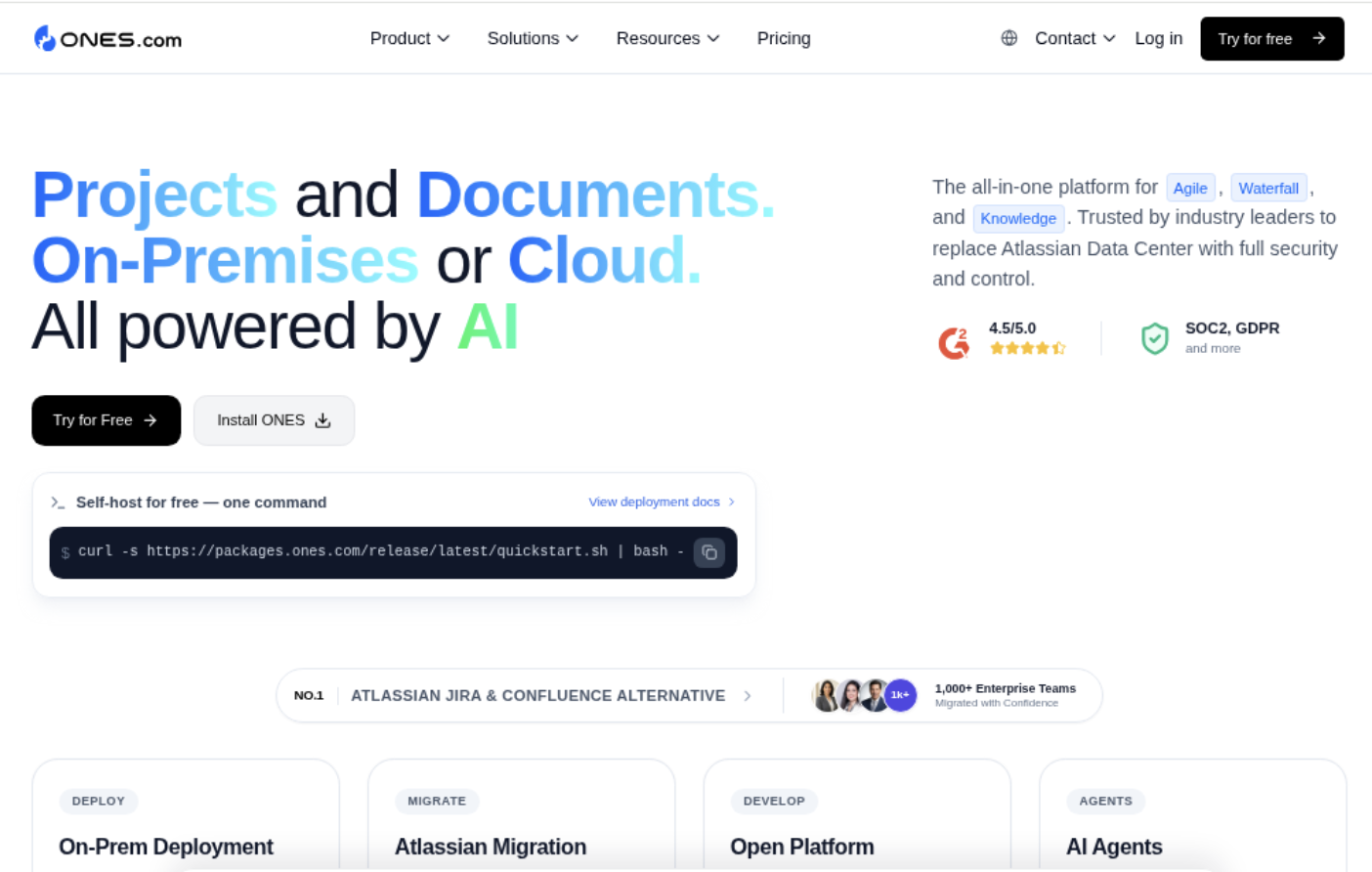
Value Proposition
ONES.com is a unified platform for project management and knowledge management, powered by AI through ONES Assistant. ONES Project is a Jira alternative for project teams, while ONES Wiki is a Confluence alternative for knowledge management; they are sold separately.
It can suit teams that want Jira-compatible workflows, native reporting, and flexible deployment without relying heavily on plugins.
Core Capabilities
- Growing team access: Jira’s free user ceiling can become restrictive. ONES.com offers a free plan for up to 30 seats, giving small teams more room before a paid decision.
- Agile delivery: Basic task tools may not support structured development. ONES Project includes sprint management, backlogs, boards, and Jira-compatible workflows for iterative delivery.
- Workflow complexity: Fixed workflows can force manual coordination. ONES Project supports custom workflows and fields so teams can reflect approval, testing, and release stages.
- Reporting needs: Basic dashboards may not answer team-specific questions. Built-in reporting helps teams monitor progress without depending on a large collection of plugins.
- Repetitive administration: Manual transitions and notifications consume attention. Automation helps reduce routine actions across project workflows.
- Plugin dependency: Adding many extensions can increase maintenance effort. Native capabilities reduce the need to assemble essential functions through separate plugins.
- Deployment restrictions: Cloud-only tools may not fit every organization. ONES.com supports Cloud, On-Premise, Private Cloud, and Air-gapped deployments.
- Feature consistency: Teams can worry that self-hosting means losing capabilities. ONES.com provides full feature parity between its cloud and self-hosted versions.
Application Scenarios
Small product team: A 15-person startup has outgrown Jira’s free user limit. It needs sprint planning, custom fields, release reporting, and automation, but wants to keep project work in one environment.
Restricted-network organization: An engineering group cannot use a public cloud service for sensitive work. An air-gapped or on-premise deployment lets the team retain project management capabilities within its controlled environment.
Multi-team delivery organization: Several development groups need shared workflows and reporting. ONES Project can provide a common project structure, while ONES Wiki can be added separately for internal knowledge management.
Common Challenges When Choosing a Jira Plan
Challenge: You underestimate the number of users
Problem: You count only developers and forget testers, product managers, and external contributors.
Solution: Create an access list before selecting a plan. Include occasional contributors who must comment, approve, or review work.
Challenge: You focus only on subscription price
Problem: A low price can hide administration time, migration effort, support needs, and maintenance work.
Solution: Compare total operating effort. Record the hours spent configuring workflows, managing access, fixing automation, and maintaining integrations.
Challenge: Your team reaches limits during a release
Problem: Storage or automation limits become visible when activity peaks.
Solution: Test your busiest workflow, such as a release with many attachments and notifications, before finalizing your plan.
Challenge: You select the wrong Atlassian product
Problem: Jira Software and Jira Service Management serve different operational needs.
Solution: Map your work first. Software teams usually need development workflows, while support teams often need queues, incidents, and service-level processes.
FAQs About Jira Pricing and Free Access
Can I use Jira for free permanently?
Yes, you can usually continue using Jira’s Free plan as long as your team remains within its eligibility limits. The plan is not merely a short trial. However, Atlassian can change included features, limits, or eligibility rules. Review the current terms if your team depends on Jira for ongoing delivery.
Is Jira free for more than 10 users?
The standard Jira Free plan is commonly limited to 10 users. If more people need access, you will generally need a paid plan or a different arrangement. Count every person who needs to view, update, comment on, or approve work before assuming your team qualifies.
Does Jira Free include agile boards?
Yes, Jira Free generally includes core agile capabilities such as Scrum and Kanban boards, backlogs, issue tracking, and sprint management. The practical limits usually relate to team size, automation, storage, administration, and support rather than the complete absence of agile features.
Do I need a paid plan for Jira automation?
Not necessarily. Free plans commonly include a limited amount of automation, which may be enough for small teams. You may need to upgrade when rules run frequently or when many projects depend on automated transitions, notifications, and assignments.
Is Jira cheaper than a Jira alternative?
That depends on team size, required features, deployment preferences, and administration effort. Jira can be cost-effective when its agile capabilities match your workflow. An alternative may offer better value if you need more free seats, native reporting, fewer plugins, or self-hosted deployment.
Conclusion
Jira is free for small teams that can work within the Free plan’s user, storage, automation, support, and administration limits.
Before choosing it, count every contributor, identify the Jira product you need, and test your busiest workflow. Then compare the recurring subscription with the time required to manage restrictions.
But here’s the truth: free access is valuable only when it supports your work without constant workarounds. If your team needs more capacity, stronger controls, or a different deployment model, a paid Jira plan or Jira alternative may be the more practical choice.