Jira Academic Pricing: A 2026 Guide for Students and Staff
Confused by jira academic pricing? Learn 2026 eligibility, plans, and costs for students and staff. Click to compare options and save.
Students and staff often expect Jira academic pricing to be simple: prove your education status, choose a plan, and pay less. In practice, eligibility can depend on your institution, product type, hosting model, and intended use.
That uncertainty creates real problems. You might find an attractive education offer, then discover it applies only to an institution-wide license. A student account may qualify differently from a university department. Prices can also change when you add users or select self-hosting.
But here's the truth: you can evaluate the offer safely with a short eligibility checklist, a clear cost comparison, and careful renewal planning. This guide explains what academic Jira pricing usually covers, how to verify your position, and which alternatives may suit restricted academic environments.
Jira Academic Pricing: What It Usually Covers
Jira academic pricing refers to discounted or specialized Jira licensing for qualifying educational institutions, departments, instructors, researchers, and sometimes students.
The exact offer depends on who is applying and how Jira will be used. A university-wide teaching program may receive different terms from an individual student testing Jira for a class project.
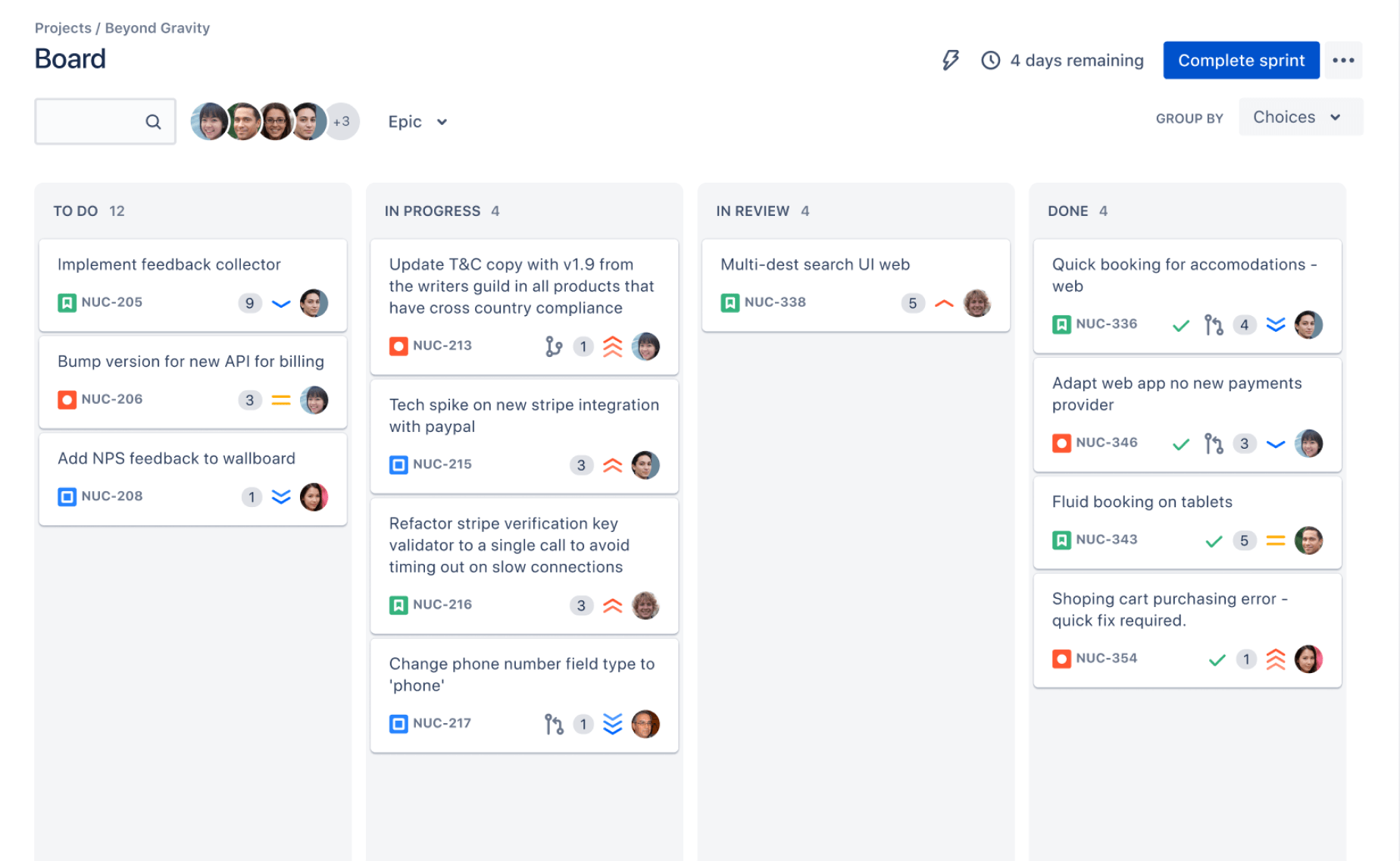
Common academic license categories
Educational offers usually fall into a few practical categories. The names and eligibility rules can change, so treat these categories as a planning framework.
- Institutional use: A university, college, school, or research organization licenses Jira for staff, faculty, students, or campus programs.
- Classroom use: An instructor uses Jira for teaching software development, project management, product design, or team collaboration.
- Research use: A research group manages technical work, experiments, publications, or grant-funded projects.
- Personal student use: A student uses Jira for learning, coursework, portfolio work, or a noncommercial project.
- Academic staff use: A faculty member or administrator uses Jira for teaching, operations, or internal planning.
These categories may not receive identical treatment. For example, a classroom license may require institutional verification, while a personal student offer may require proof of current enrollment.
What can affect the final cost?
Several variables influence the amount you pay:
- The Jira product or edition you choose.
- The number of people who need access.
- Cloud hosting or self-managed deployment.
- The length of the subscription.
- Whether the license is personal, departmental, or institution-wide.
- Any connected products or paid extensions.
- Regional taxes, currency conversion, and billing terms.
A small student team might need only a basic cloud plan. A university engineering department may need centralized administration, stronger controls, and a larger user allowance.
A quick planning table
| Situation |
Likely pricing question |
| Individual student |
Does personal enrollment qualify, or must the institution apply? |
| Instructor-led class |
Can the license cover every learner for the full teaching period? |
| Research laboratory |
Does the offer cover staff, assistants, visiting researchers, and collaborators? |
| University department |
Are multiple teams included under one agreement? |
| Campus-wide deployment |
What administrative, security, and renewal terms apply? |
How to Check Eligibility and Estimate Your Cost
You can usually reach a reliable estimate in five steps. Start with your intended use, then verify the offer before committing to a subscription.
- Define who will use Jira. Write down whether the account belongs to you, a class, a research group, a department, or the entire institution.
- Confirm your academic status. Check whether you can show current enrollment, employment, institutional affiliation, or official authorization.
- Choose the deployment model. Compare cloud access with self-managed hosting. They can differ in administration, maintenance, and billing.
- Count active users. Include instructors, students, researchers, contractors, and administrators who need access.
- Ask for written confirmation. Clarify the eligible products, duration, renewal process, support terms, and permitted use.
Here's why: many pricing surprises come from defining the user group too late. A class of 35 people may need a different arrangement from a three-person student team.
Questions to answer before requesting a quote
- Is the organization officially recognized as an educational institution?
- Will Jira support teaching, research, administration, or commercial work?
- Who will own the account after the semester ends?
- Will students need accounts beyond the course period?
- Does the offer include technical support?
- What happens when eligibility expires?
- Can the license expand if the program grows?
Example: a university software class
Imagine a lecturer running a twelve-week software engineering course. The class includes 42 students, two teaching assistants, and one instructor.
The lecturer should confirm whether all 45 people can participate under one educational arrangement. The lecturer should also ask who controls the workspace after the course ends.
If students need their projects for portfolios, a short classroom license may create access problems later. A longer arrangement could be more practical, even if the initial price is higher.
Cloud, Self-Managed, and Team Size Considerations
The lowest academic license price does not always produce the lowest total cost. Hosting, maintenance, administration, and account management can change the real investment.
Cloud access
Cloud access usually reduces infrastructure work. You can create a workspace, invite participants, and let the provider handle core hosting tasks.
This model often suits individual learners, small classes, and departments without dedicated technical staff. It can also make short academic projects easier to launch.
Self-managed deployment
Self-managed deployment gives an institution more control over hosting and internal administration. It may suit universities with strict security requirements or existing infrastructure teams.
However, your institution must plan upgrades, backups, access controls, availability, and technical support. A discounted license does not remove those operational responsibilities.
User count matters more than many people expect
Jira pricing commonly scales around the number of users who need access. That makes accurate planning important.
For example, a research lab may have 12 permanent members and 20 occasional collaborators. If all 32 people need regular access, estimating only 12 seats can cause disruption later.
The best part? You can reduce waste without blocking collaboration. Review inactive accounts each term, assign access by role, and avoid giving administrative permissions unnecessarily.
How Academic Discounts Affect Renewal and Budgeting
An introductory academic offer can make the first year affordable. Your longer-term budget needs to account for renewal conditions, user growth, and changes in eligibility.
Separate the first-year price from the ongoing cost
Create two estimates:
- Launch cost: The amount required to start the workspace or deployment.
- Continuation cost: The expected amount after the initial academic period ends.
This distinction matters for students finishing a course and departments planning annual budgets. A low launch price may not continue automatically.
Plan for academic calendar changes
Universities often experience predictable user changes. Students join in September, teaching assistants change each term, and graduating learners leave in June.
Use those dates to review access. Remove accounts that no longer need entry, preserve essential project history, and confirm whether returning users can be invited again.
Watch connected expenses
Jira may not be your only cost. Consider administration time, training, integrations, storage, support, migration, and security reviews.
For example, a free or discounted workspace may still require several staff hours to configure each semester. That effort belongs in your internal budget.
| Budget area |
What to review |
| Subscription |
Current academic rate, renewal rate, user tier, and billing period |
| Administration |
Account setup, permission reviews, and term-end cleanup |
| Training |
Instructor preparation, student onboarding, and support time |
| Technical operations |
Hosting, upgrades, backups, monitoring, and security work |
| Continuity |
Export, retention, migration, and access after graduation |
Alternatives When the Academic Offer Does Not Fit
You may not qualify for an education discount. You may also qualify but find that the arrangement does not match your privacy, hosting, or collaboration needs.
Start by comparing the workflow you need. A student team may require issue tracking, sprint planning, and simple reporting. A research group may prioritize internal hosting and long-term knowledge sharing.
Compare capabilities before headline price
Ask whether each option supports:
- Custom workflows for approval and review.
- Role-based access for students, staff, and guests.
- Sprint planning and backlog management.
- Reporting for instructors or research leads.
- Knowledge pages connected to project work.
- Cloud and self-hosted deployment choices.
- Migration support and export controls.
A cheaper plan can become expensive if you need several add-ons. A slightly higher platform cost may be easier to manage when key capabilities are already included.
Example: a restricted research environment
Suppose a research laboratory cannot place project information in a public cloud environment. The team needs issue tracking, internal knowledge pages, and controlled access.
An academic discount alone may not solve the problem. The lab should compare self-hosted platforms, internal administration effort, update responsibilities, and collaboration requirements.
Jira Academic Pricing Solution: ONES.com
ONES.com is a unified platform for project management and knowledge management. It can suit academic teams that want connected planning, team knowledge, and controlled deployment choices.
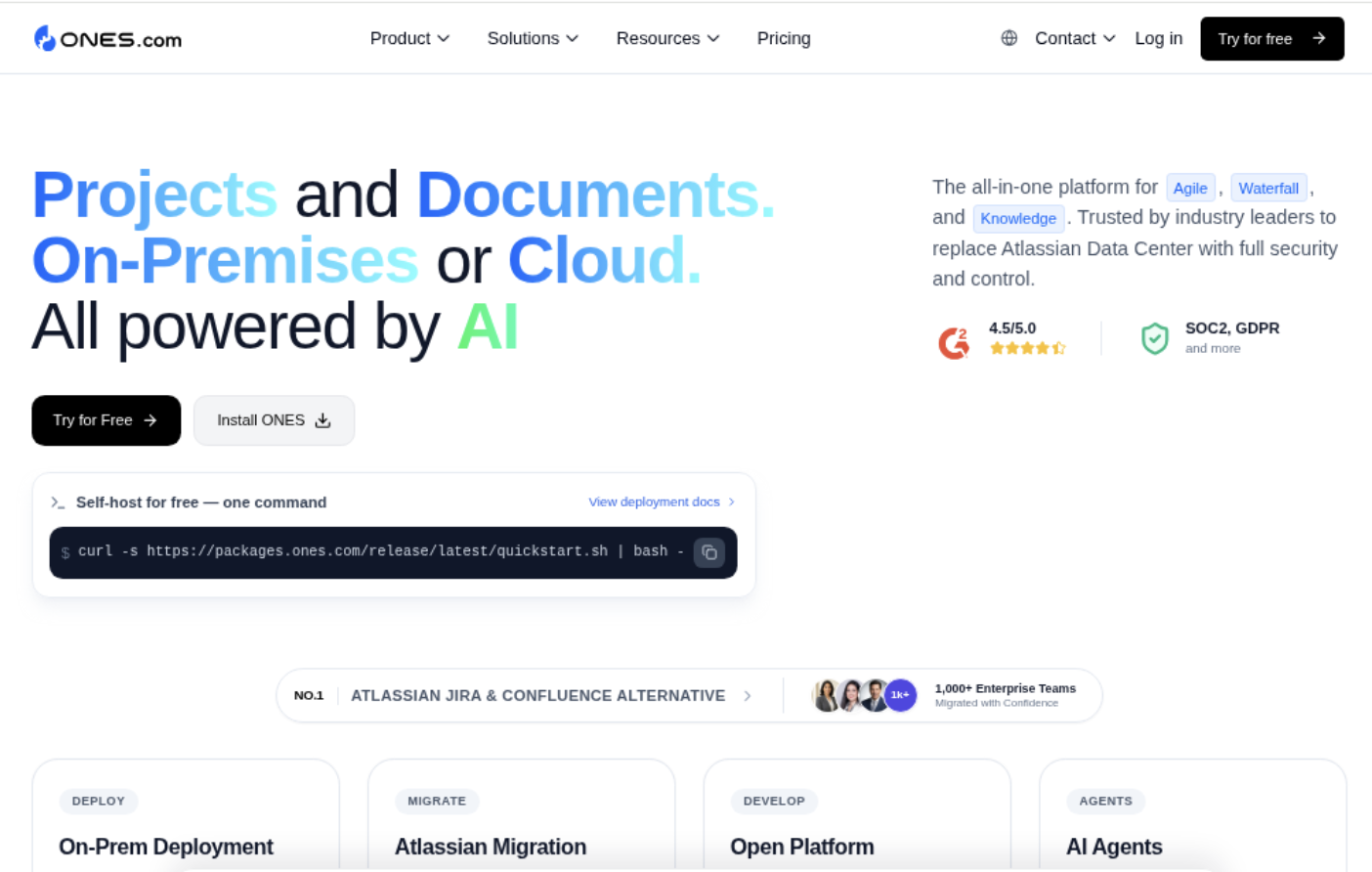
ONES Project is the project management product and a Jira alternative. ONES Wiki is the knowledge management product and a Confluence alternative. They are sold separately.
Value Proposition
ONES.com helps academic teams reduce tool sprawl by connecting project execution with shared knowledge. It offers four deployment choices: Cloud, On-Premise, Private Cloud, and Air-gapped.
The cloud and self-hosted versions provide full feature parity, so your team can select a deployment model without giving up core capabilities.
Core Capabilities
- Disconnected project and knowledge work → ONES Project and ONES Wiki → Keep project planning and team knowledge within one platform family, reducing context switching between separate systems.
- Jira workflow familiarity → Jira-compatible workflows → Teams can preserve familiar issue-based processes while evaluating a Jira alternative.
- Rigid academic processes → Custom workflows and fields → Adapt reviews for coursework, research approvals, laboratory tasks, or department operations.
- Unclear project progress → Built-in reporting → Give instructors, supervisors, and research leads clearer visibility into status, workload, and delivery risks.
- Manual sprint planning → Sprint management → Organize iterative development work for software classes, student teams, and research engineering groups.
- Repeated administrative actions → Automation → Reduce routine transitions, assignments, and notifications when teams follow repeatable processes.
- Restricted network requirements → Air-gapped deployment → Support work in environments that cannot connect to the public internet.
- Infrastructure control needs → On-Premise and Private Cloud options → Let institutional technical teams manage deployment within their preferred operating model.
- Plugin dependence → Native feature parity → Reduce reliance on multiple extensions when core project capabilities are already available.
Application Scenarios
Software engineering course: An instructor can organize student backlogs, sprint reviews, defects, and grading checkpoints. Custom fields can distinguish teams, milestones, and assessment stages.
Research laboratory: A lab can track experiments, equipment requests, review actions, and technical improvements. An air-gapped deployment may suit teams working in restricted environments.
University IT department: An internal service team can manage requests, maintenance work, and improvement initiatives. Built-in reporting can help department leaders review delivery progress.
Common Challenges With Educational Jira Licensing
Challenge: You cannot tell whether you qualify
Solution: Separate personal student status from institutional eligibility. Ask whether the offer covers individuals, classes, departments, or only recognized organizations.
Challenge: The discount ends before the project does
Solution: Record the eligibility period and renewal date when you start. Decide how you will preserve access if the course, grant, or enrollment ends.
Challenge: User counts increase unexpectedly
Solution: Count every participant who needs regular access. Include teaching assistants, supervisors, external collaborators, and temporary team members.
Challenge: A low price hides administrative work
Solution: Estimate setup, permissions, training, support, and term-end cleanup. Compare total operating effort instead of subscription cost alone.
Challenge: The deployment model conflicts with institutional policy
Solution: Confirm cloud, self-managed, private, or offline requirements before choosing a plan. Technical restrictions can eliminate an otherwise attractive offer.
FAQs About Academic Jira Costs
Can individual students receive academic Jira pricing?
Sometimes, but eligibility varies. Some offers focus on recognized institutions, while others may support students or educators who can prove current academic status. Check whether your intended use is personal learning, coursework, research, or commercial work. Ask how long the offer lasts and what happens after graduation or course completion.
Is educational Jira completely free?
Some educational arrangements may be free or heavily discounted, but you should not assume every product, user tier, or deployment qualifies. Connected products, higher user counts, technical support, and self-managed operations may introduce additional costs. Request a current quote or checkout estimate for your exact situation.
Do students and university staff follow the same eligibility rules?
Not always. Students may need enrollment verification, while staff may need proof of employment or institutional authorization. A university department may also apply on behalf of a larger group. The account owner and intended use can affect the decision, so describe your role clearly when asking for confirmation.
Does academic pricing continue after graduation?
It may not. Educational eligibility can depend on current enrollment, employment, institutional status, or an approved license period. Before starting a major project, identify the renewal conditions. If you need continued access after graduation, compare standard pricing and migration options early.
Should a research team choose cloud or self-managed Jira?
Choose cloud when fast setup and low infrastructure effort matter most. Consider self-managed deployment when your institution needs tighter hosting control, restricted network access, or internal administration. Compare maintenance, security reviews, upgrades, backups, and support alongside the license price.
Is ONES.com suitable for academic teams comparing Jira alternatives?
ONES.com can suit teams that need project management and knowledge management with flexible deployment. ONES Project provides project management capabilities as a Jira alternative, while ONES Wiki provides knowledge management as a Confluence alternative. Both are sold separately. Review user needs, hosting requirements, workflows, and reporting before choosing a platform.
Conclusion
Academic Jira costs depend on eligibility, product selection, user count, hosting, duration, and renewal terms. A student, lecturer, research lab, and university department may receive different options.
Start with five checks: define the user group, verify academic status, choose the deployment model, count active users, and confirm renewal conditions in writing.
But here's the truth: the lowest introductory price may not be the lowest practical cost. Administration, support, integrations, and continuity can matter just as much.
If Jira does not fit your academic environment, compare platforms by workflow coverage, deployment control, native capabilities, and long-term effort. ONES.com, including ONES Project as a Jira alternative, may be worth evaluating for teams that need flexible project management across academic settings.