Jira Access Pricing: A 2026 Guide to Plans, Costs, and Limits
Confused by jira access pricing? Compare 2026 plans, costs, user limits, and security fees. Click to discover the real budget.
Jira Access pricing can be confusing because “Access” may refer to Jira subscription access, Atlassian organization security, or the older Atlassian Access product. That confusion can lead to an inaccurate budget, especially when guest users, multiple products, and annual billing enter the picture.
The frustrating part is that a low Jira plan price may not show the full cost of identity management, single sign-on, user provisioning, or audit controls. You may also pay for people who rarely sign in, depending on how Atlassian counts billable users.
Here’s the practical answer: treat Jira licensing and Atlassian Guard Standard as separate cost layers. Then calculate active users, billing frequency, security requirements, and plan limits before choosing a subscription. This guide breaks down each layer and shows how to estimate your 2026 budget.
Jira Access Pricing: What You Actually Pay For
Jira Access pricing usually refers to the cost of giving people access to Jira, plus any separate Atlassian security subscription used to manage organization-wide authentication and user controls.
Jira’s core plans generally include Free, Standard, Premium, and Enterprise options. Atlassian Guard Standard, formerly associated with Atlassian Access, is an additional organization-level security product. It can support features such as single sign-on, user provisioning, enforced authentication policies, and audit visibility.
That means your total cost may follow this basic formula:
Total monthly cost = Jira plan cost + security subscription cost + other Atlassian product costs.
For a simple team, Jira may be the only paid layer. For a regulated organization, Jira plus Atlassian Guard Standard may be more realistic.
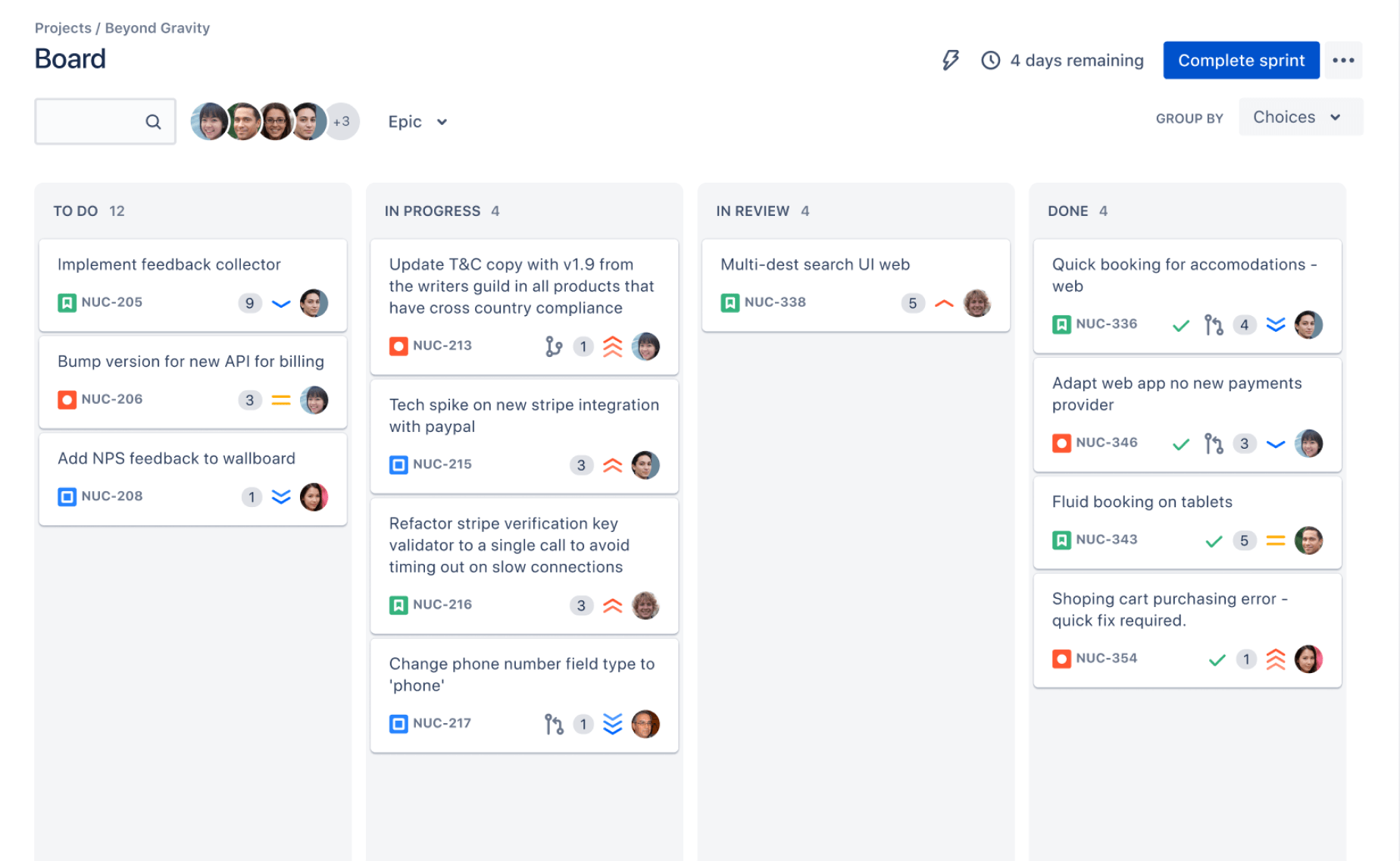
Indicative 2026 pricing ranges
Atlassian pricing can change by region, billing term, user tier, currency, and product packaging. For planning purposes, many buyers should expect Jira pricing to increase as the team moves from Free to Standard or Premium, while organization security adds a separate per-user charge.
Atlassian Guard Standard has commonly been priced in the low single digits per user each month on annual billing, with a higher effective rate for monthly billing. Treat that range as a budgeting guide rather than a final quotation.
Before purchasing, check the price shown in your Atlassian administration and billing screens. The checkout total is the figure that matters for your organization.
What affects the final bill?
- The Jira plan you choose.
- The number of billable users.
- Whether you pay monthly or annually.
- Whether you add Atlassian Guard Standard.
- Whether the same people use several Atlassian products.
- Your country, currency, taxes, and applicable regional pricing.
- Enterprise agreements or negotiated volume pricing.
How Jira and Atlassian Guard Billing Work Together
Jira billing and organization security billing solve different problems. Jira pays for project work, issue tracking, permissions, workflows, reporting, and collaboration. Atlassian Guard Standard pays for broader identity and administration controls across an Atlassian organization.
Here’s why: paying for Jira does not automatically mean you receive every identity feature available through Guard Standard. Likewise, buying Guard Standard does not replace the Jira subscription required to create and manage projects.
Jira subscription access
Jira counts people who receive access to the product under the selected plan. A user who can open projects, create issues, comment, or view permitted work usually occupies a licensed position, depending on the plan rules.
For example, a 25-person product team may need 25 Jira seats even if only 15 people create issues. A stakeholder with view access may still affect the bill if that access falls within the plan’s billable user rules.
Organization security access
Atlassian Guard Standard applies at the organization level rather than only inside one project. It is designed for centralized controls such as identity provider integration, authentication enforcement, and automated user lifecycle management.
You should therefore estimate two populations:
- People who need to use Jira.
- People covered by organization-wide identity and security controls.
Those populations may overlap heavily, but they do not always match. A person using another Atlassian product could affect your Guard calculation even if they rarely open Jira.
Monthly billing versus annual billing
Monthly billing is usually easier when headcount changes frequently. Annual billing can offer a lower effective rate or predictable budgeting, but it may reduce flexibility when your team shrinks.
Imagine a company that starts the year with 80 licensed people and downsizes to 55. An annual commitment could leave the company paying against a higher quantity until the term changes. A monthly plan may cost more per person but offer faster adjustment.
Jira Plan Differences That Affect Cost
The cheapest plan is not always the lowest-cost choice. A plan can become expensive when missing features force you to add workarounds, administrative effort, or separate services.
Free
Jira Free can work for a small team testing basic project tracking. It is useful for simple backlogs, issue assignment, and lightweight collaboration.
Its limits may matter when you need advanced permissions, larger capacity, stronger administration, expanded automation, or formal support. Free access is also a poor fit when your company needs centralized identity controls for many teams.
Standard
Jira Standard is often the practical starting point for growing teams. It generally provides more capacity and administration than Free while keeping the cost below Premium.
Choose it when your main requirement is dependable project management without advanced resilience or extensive enterprise governance. Confirm current storage, automation, support, and user limits before committing.
Premium
Jira Premium is aimed at organizations that need higher scale, advanced planning, stronger service expectations, and more sophisticated administration.
It can make sense for several departments sharing one environment. However, a small team may pay for capabilities it never uses, so compare actual workflows with the plan’s features.
Enterprise
Enterprise is intended for large organizations with complex governance, multiple teams, broad reporting needs, and enterprise-level commercial requirements.
Its price is often handled through a sales-led process rather than a simple public checkout. Ask for a full estimate that includes user bands, products, support, security requirements, and renewal terms.
How to Calculate Your Jira Access Budget
Use a short calculation instead of relying on the headline plan price. The goal is to separate predictable costs from assumptions that can change.
- Count active Jira users. Include employees, contractors, vendors, and stakeholders who need more than occasional public visibility.
- Identify the required Jira tier. Compare your workflows, capacity, automation, permissions, reporting, and support needs.
- Check whether organization security is required. Consider single sign-on, automated provisioning, authentication enforcement, and audit requirements.
- Choose monthly or annual billing. Match the billing term to expected headcount stability.
- Separate occasional guests. Confirm whether guests have special treatment under your chosen plan or count as regular users.
- Model growth. Calculate the cost at today’s headcount and at your likely six- or twelve-month headcount.
- Review taxes and currency. Your invoice can differ from a United States dollar estimate.
Example budget calculation
Suppose 40 people need Jira Standard and your organization also wants centralized identity controls. Start with the published Jira Standard rate for your region, multiply it by 40, then add the applicable Guard Standard charge for the covered users.
If your security subscription uses a different user count, calculate that layer separately. For example, 40 Jira users and 50 covered Atlassian users produce two different quantities.
The formula would look like this:
(40 × Jira rate) + (50 × Guard rate) = estimated monthly subscription cost.
Then add taxes and any other Atlassian products. This approach gives you a clearer estimate than multiplying one advertised number by your entire workforce.
Limits and Billing Details to Check Before Buying
Pricing only tells part of the story. Limits determine whether the plan remains practical after adoption.
Billable user rules
Check how Atlassian counts active, invited, suspended, and inactive accounts. An account that no longer needs access should be removed or deactivated according to your company’s offboarding process.
For example, a contractor who finished a three-month engagement may continue affecting costs if nobody reviews the account. A monthly access review can prevent this kind of silent waste.
Product-level versus organization-level controls
Project permissions control what someone can do inside Jira. Organization controls govern identity and access across Atlassian products. These controls overlap in purpose, but they are not interchangeable.
A project administrator may manage project roles, while an organization administrator may manage domains, authentication policies, or user provisioning. Assign these responsibilities carefully.
Automation and capacity
Automation limits can affect cost indirectly. A lower plan may include enough automation for a small team but become restrictive when every project uses scheduled rules and integrations.
Estimate your actual rule volume. Ten simple status updates are very different from hundreds of cross-project automations running every day.
Guest and external collaboration
External collaborators can complicate licensing. A client who only needs limited visibility may qualify for a different access pattern, while a vendor who edits issues may require a standard licensed position.
Ask how each external person will work before inviting them. “View only” and “edit issues” can have different commercial consequences.
When an Alternative May Lower Total Project Costs
You might be wondering: should you compare Jira’s subscription with another project management platform? Yes, especially when your total cost includes several plugins, administration work, and a separate knowledge base.
A fair comparison should include more than the per-user rate. Add the cost of reporting tools, workflow extensions, hosting requirements, identity management, migration effort, training, and administration.
For example, a team paying for Jira, a knowledge platform, several workflow extensions, and separate reporting may have a higher operational bill than the original Jira estimate suggests.
The best part? A platform with native project and knowledge capabilities can reduce the number of systems your team maintains. That does not guarantee a lower invoice, but it can reduce tool sprawl and administration time.
A Practical Jira Access Pricing Alternative: ONES.com
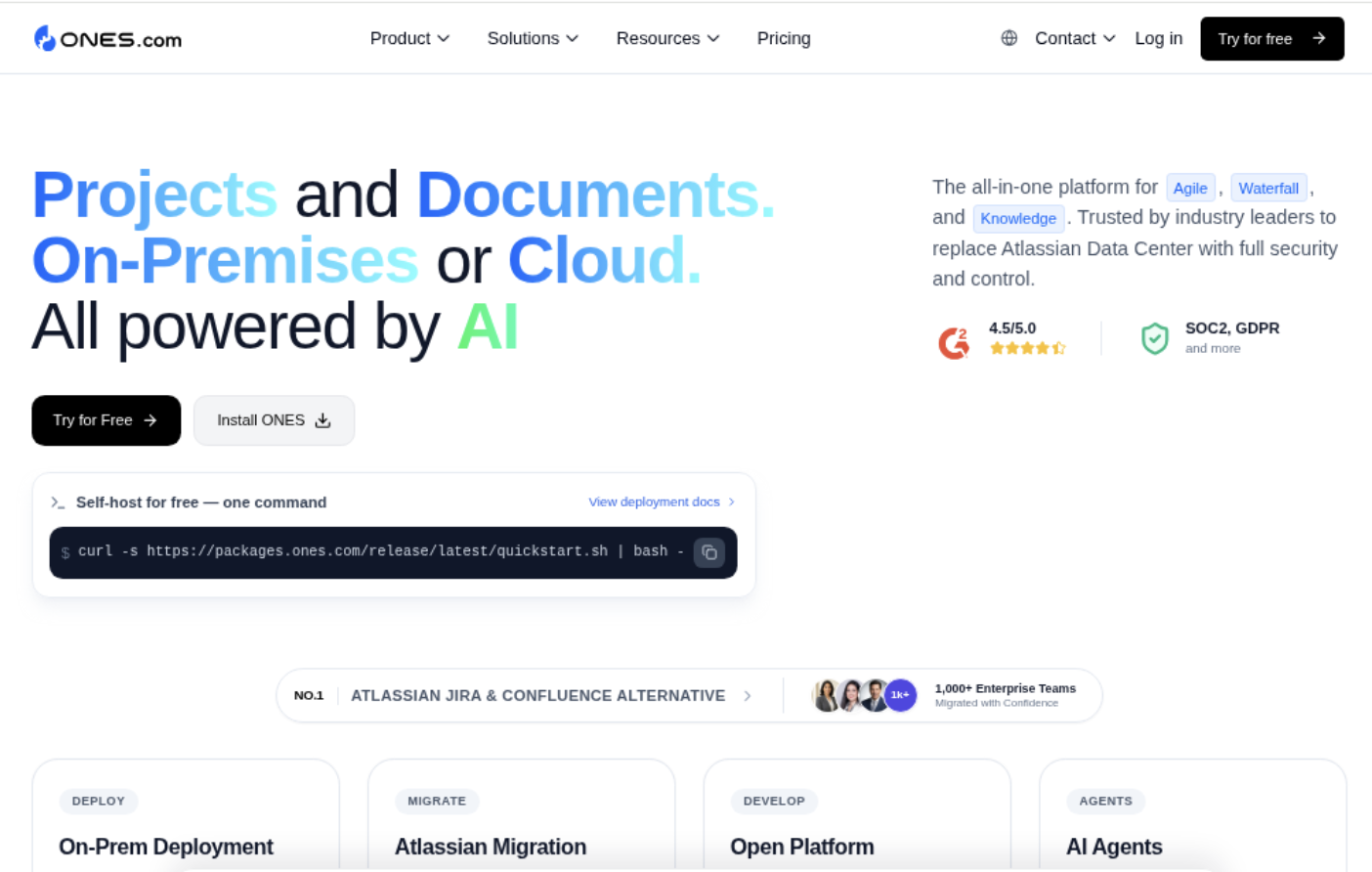
Value Proposition
ONES.com combines project management and knowledge management in one platform. It can suit teams comparing Jira alternatives, especially when they want project workflows and team knowledge in one environment.
ONES Project and ONES Wiki are sold separately. ONES Project is the project management product, while ONES Wiki supports knowledge management.
Core Capabilities
Separate tools create scattered work — ONES.com unifies project and knowledge spaces — teams can connect delivery work with the information needed to complete it.
When Jira-style workflows require several extensions, ONES Project provides Jira-compatible workflows, custom workflows, custom fields, and sprint management in one project environment. Teams can reduce reliance on plugins for common planning needs.
When reporting is spread across multiple systems, built-in reporting gives managers a clearer view of progress, workload, and delivery status.
When recurring actions consume administrator time, automation can handle routine transitions and notifications, helping teams spend less time maintaining boards.
When self-hosting is important, ONES.com supports Cloud, On-Premise, Private Cloud, and Air-gapped deployments. That gives organizations more control over where the platform operates.
When deployment restrictions create feature gaps, the self-hosted version offers full feature parity with the cloud version, according to the product details provided by ONES.com.
When a team needs a Jira alternative without rebuilding every workflow, ONES Project supports Jira-compatible workflows and familiar project management patterns.
When a company needs one place for delivery knowledge, ONES Wiki provides a knowledge base product that can be purchased separately from ONES Project.
When an organization wants to test adoption before a larger rollout, the free plan supports up to 30 seats. Confirm the current commercial terms before planning a wider deployment.
Application Scenarios
Growing product team: A product team can use ONES Project for backlogs, sprints, custom fields, and reporting, while keeping planning knowledge in ONES Wiki. This can reduce the need to switch between a project tracker and a separate knowledge system.
Restricted-network organization: A company with strict network controls can evaluate the On-Premise, Private Cloud, or Air-gapped deployment options. The team can keep its chosen workflows while meeting its environment requirements.
Multi-team delivery group: Several engineering and business teams can use custom workflows and automation for different processes while retaining a shared view of delivery progress.
Common Challenges When Estimating Access Costs
Challenge: confusing Jira cost with security cost
Solution: Create separate lines for the Jira plan and Atlassian Guard Standard. This makes it easier to see which feature requires which subscription.
Challenge: budgeting only for current employees
Solution: Add contractors, vendors, managers, and occasional collaborators who need account access. Then create a growth scenario for the next review period.
Challenge: ignoring billing frequency
Solution: Compare the annual commitment with a monthly plan using realistic headcount changes. A lower rate may not be helpful if your team expects rapid turnover.
Challenge: overlooking inactive accounts
Solution: Review account activity on a regular schedule. Remove access during offboarding and confirm that external accounts still have a business reason to remain active.
Challenge: comparing only license prices
Solution: Include extensions, administration, reporting, support, migration, training, and knowledge management. The lower advertised rate may produce a higher operational cost after those additions.
FAQs
Is Jira Access the same as Jira licensing?
No. Jira licensing pays for use of Jira’s project management features. The phrase “Jira Access” can also refer to organization-level identity and security controls previously associated with Atlassian Access. Atlassian Guard Standard is the current product name commonly used for that security layer. Treat Jira and Guard as separate subscriptions when estimating your total cost.
How much does Jira Access cost in 2026?
There is no single price for every organization. Your cost depends on the Jira plan, user quantity, billing term, region, currency, and whether you add Atlassian Guard Standard. Guard pricing has commonly appeared in the low single digits per covered user each month on annual billing, with monthly billing usually costing more. Check the current Atlassian billing screen for the final amount.
Does every Jira user need Atlassian Guard Standard?
Not necessarily. Jira users need the appropriate Jira subscription, while Guard Standard covers organization-level identity and security capabilities. The covered population can include people who use other Atlassian products. Review your organization’s user count and required security controls rather than assuming the two quantities are identical.
Can I use Jira for free?
Jira offers a Free plan for eligible small teams, but it has limits around capacity, administration, permissions, automation, and support. Free access may work for a small project, proof of concept, or personal workflow. It may become unsuitable when several teams need stronger governance, centralized identity controls, or more advanced reporting.
Is annual Jira billing cheaper than monthly billing?
Annual billing may provide a lower effective rate or more predictable budgeting, but the benefit depends on your user count and regional pricing. Monthly billing offers more flexibility when headcount changes frequently. Compare both options using your expected starting and ending user counts, not only the current number of people.
Should I compare Jira with another project management platform?
Yes, especially when your Jira environment depends on many extensions or a separate knowledge platform. Compare the complete operating cost, including project features, reporting, workflows, security, administration, hosting, and migration. ONES Project is one Jira alternative to evaluate when you need Jira-compatible workflows, deployment flexibility, and native project capabilities.
Conclusion
The clearest way to estimate Jira Access pricing is to separate Jira project licensing from organization security. Start with the required Jira tier, count the people who need access, and then evaluate whether Atlassian Guard Standard is necessary.
Next, compare monthly and annual billing, review user and automation limits, and model growth. Remember that plugins, reporting tools, knowledge management, administration, and external collaborators can change the real cost.
But here’s the truth: the lowest subscription price is not always the lowest operating cost. A platform such as ONES.com may be worth evaluating when you want project management, knowledge management, deployment flexibility, and fewer disconnected tools.
With those layers separated, you can build a more realistic 2026 budget and choose a setup that fits both your current team and its next stage of growth.