Jira Advanced Roadmaps: A Practical Planning Guide for Teams
Struggling with cross-team planning? Learn how jira advanced roadmaps connects projects, capacity, and dependencies. Read now to plan with confidence.
Planning across several Jira projects can become confusing quickly. A team may understand its own backlog, yet struggle to see how work connects across products, releases, and dependencies. Priorities shift, capacity changes, and a roadmap that looked realistic on Monday can become outdated by Friday.
The pressure grows when leaders need a reliable delivery view while teams need practical details. Manual status updates consume time, and disconnected plans make delays harder to spot early.
Jira Advanced Roadmaps gives you a structured way to model cross-team plans, test scenarios, track dependencies, and compare planned work with available capacity. This guide explains what it does, how to plan with it, where it fits, and how to avoid common planning mistakes.
What Jira Advanced Roadmaps Does
Jira Advanced Roadmaps is a planning and forecasting capability that helps you coordinate work across multiple Jira projects, teams, releases, and hierarchy levels. It gives you a wider planning view than an individual backlog, while keeping plans connected to Jira issues.
You can use it to organize initiatives, epics, stories, and other work items into a hierarchy. You can also map dependencies, review team capacity, create delivery scenarios, and communicate expected outcomes.
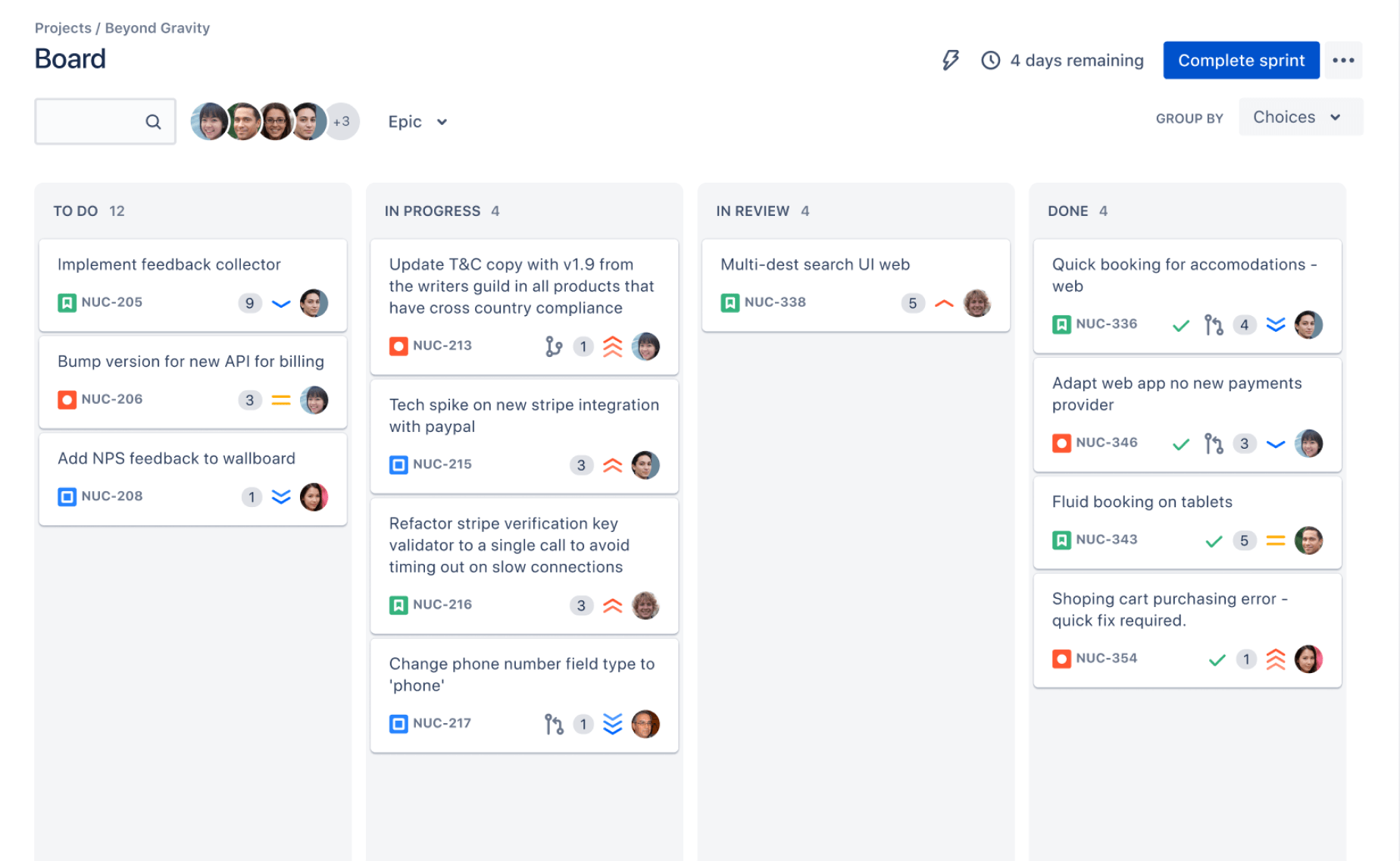
How the planning model works
Advanced Roadmaps typically combines several planning elements:
- Plans: A planning workspace that brings selected projects, boards, or filters into one view.
- Hierarchy: A structure that connects strategic initiatives with epics, stories, and smaller work items.
- Teams: Groups responsible for completing planned work, often with their own schedules and capacity.
- Releases: Milestones that show when a group of work is expected to become available.
- Dependencies: Relationships showing that one item relies on another item being completed.
- Capacity: The estimated amount of work a team can complete during a planning period.
- Scenarios: Alternative planning versions that let you test changes before committing to them.
What makes it different from a regular Jira board
A Jira board is useful for managing active work within a team. Advanced Roadmaps helps you reason about work across teams and time horizons.
For example, a board may show that the mobile team has ten stories in progress. A wider plan can reveal that three stories depend on an API change from another team, and the planned release date is too close.
| Planning need |
Useful view |
| Daily execution |
Board, sprint, or backlog view |
| Cross-team coordination |
Multi-project plan with dependencies |
| Release forecasting |
Timeline with capacity and target dates |
| Priority testing |
Scenario planning |
| Leadership communication |
Roadmap grouped by initiative, release, or team |
Where it fits in the planning cycle
You can use the capability during quarterly planning, release preparation, portfolio reviews, and major program changes. It can also support shorter planning cycles when teams need to reassess capacity after a delay.
Here's why: planning works better when you can connect strategic intent with delivery reality. A high-level goal has limited value if nobody can see the teams, dependencies, and time required to deliver it.
How to Build a Practical Roadmap
A useful roadmap starts with clear planning boundaries. Decide which teams, projects, time period, hierarchy levels, and releases belong in the plan before adding every possible work item.
- Define the planning question. Decide what you need to answer. You may want to know whether a release is achievable, which teams are overloaded, or which initiatives should receive priority.
- Select the right work scope. Add the projects, boards, or filters that represent the planning area. A product roadmap may need several teams, while a department plan may need a narrower set.
- Set the hierarchy. Connect large outcomes to initiatives, epics, stories, and smaller delivery work. Use levels that match how your organization makes decisions.
- Assign ownership. Associate planned work with the team responsible for completing it. Ownership makes capacity discussions more concrete.
- Estimate work consistently. Choose a practical estimation method, such as story points, time estimates, or another team-approved measure. Avoid comparing estimates from teams that use different meanings.
- Map dependencies. Record relationships between work items. Prioritize dependencies that can delay a release or block several teams.
- Add target dates and releases. Use dates to test feasibility. Treat them as planning assumptions that require regular review.
- Review capacity. Compare planned work with team availability, holidays, operational duties, and likely interruptions.
- Test scenarios. Move work, change priorities, adjust staffing assumptions, or shift releases in a separate scenario. Check what improves and what creates new risk.
- Share the agreed plan. Communicate the main outcomes, timing assumptions, major dependencies, and unresolved risks. Keep the level of detail appropriate for each audience.
Start with outcomes, then add delivery details
Begin with a question such as, “Can the team deliver the payments upgrade before the compliance deadline?” Then add only the work needed to answer that question.
If you begin with thousands of individual tasks, important relationships can disappear in the noise. A layered plan keeps the executive view readable while preserving the detail teams need.
Use scenarios before changing the committed plan
Suppose a security review adds three weeks to a major initiative. You could create a scenario that moves a lower-priority epic, adds temporary capacity, or delays the release.
The best part? You can compare consequences before presenting a recommendation. This makes planning conversations more specific and reduces decisions driven by guesswork.
How to Configure Plans for Better Results
Configuration determines whether the roadmap reflects reality. A plan with unclear hierarchy, inconsistent estimates, or incomplete team details can look polished while producing weak forecasts.
Choose hierarchy levels that match decisions
Use an initiative level when leadership needs to compare broad outcomes. Use epics for substantial product or technical areas. Keep stories and smaller items at the delivery level.
For example, “Improve checkout reliability” may be an initiative. “Payment retry handling” can be an epic, while “Add retry limit to payment service” belongs at a lower level.
Keep team calendars realistic
Capacity should reflect the time teams can actually spend on planned work. Account for support rotations, maintenance, meetings, leave, and other recurring responsibilities.
A team with ten engineers may have far less than ten full-time equivalents available for roadmap work. If four engineers spend part of each sprint on customer incidents, the plan should reflect that constraint.
Make estimation comparable
Story points can work well within a team, but cross-team comparisons require care. One team’s eight points may represent a different level of effort than another team’s eight points.
You might compare each team’s planned work with its own historical delivery rate. That approach gives you a more useful forecast than treating every estimate as universally comparable.
Limit unnecessary custom fields
Custom fields can add useful context, such as regulatory impact, customer segment, or risk level. Too many fields increase maintenance and reduce consistency.
Before adding a field, ask whether it changes a planning decision. If nobody uses the value to prioritize, schedule, or manage risk, it may not belong in the roadmap.
Capacity, Dependencies, and Delivery Risk
Capacity and dependencies explain why a roadmap may be unrealistic. A plan can contain reasonable individual estimates and still fail when several teams compete for the same period.
Capacity planning example
Imagine a platform team with an expected delivery capacity of 40 points per sprint. Its roadmap contains 55 points, including 10 points of unplanned operational work.
The plan is already under pressure before new requests arrive. You could remove lower-priority work, extend the timeline, add support, or reserve capacity for operational needs.
Dependency planning example
A web team may plan a new account flow for June. The work depends on an identity service update owned by the platform team.
If the platform work slips, the web team may remain busy without producing a usable feature. Recording the dependency helps you see the risk earlier and create a response.
Prioritize meaningful dependencies
Capture dependencies that affect timing, quality, compliance, or customer value. Too many low-impact relationships can make the plan harder to read.
Let me explain: the purpose is to expose coordination risk. A dependency matters most when its delay can change the outcome of another team’s work.
Use risk signals alongside dates
A target date alone does not explain confidence. Add context such as dependency status, estimate confidence, staffing risk, or unresolved technical questions.
A release shown for September may look healthy until you notice that its main dependency has no confirmed owner. Combining timing with risk produces a more honest planning conversation.
Communicating the Roadmap to Different Audiences
Different people need different levels of detail. Executives may need outcomes, timing, and major risks. Delivery managers may need dependencies, staffing, and release sequencing. Engineers need actionable work and clear ownership.
For leadership
Show the major initiatives, expected outcomes, target releases, and material risks. Explain which dates are firm commitments and which remain forecasts.
Keep the discussion focused on trade-offs. For example, delaying an analytics initiative may protect the security release if both require the same specialist team.
For delivery teams
Show the work items, dependencies, sequence, and capacity assumptions that affect execution. Teams should understand why a priority exists and what may change it.
A roadmap becomes more useful when a developer can trace a story to an epic, release, and broader outcome without asking for a separate explanation.
For customers and partners
Use cautious language around future dates. Share expected themes or release windows when scope and timing remain uncertain.
You might say, “The integration improvements are planned for the second half of the year, with timing dependent on security validation.” This communicates direction without creating an unnecessary promise.
Common Mistakes to Avoid
Advanced planning features cannot correct unclear priorities or unreliable planning habits. Most problems begin with process choices rather than screen configuration.
Adding everything to one plan
A single plan containing every project can become difficult to navigate. Separate planning views by product, program, or decision type when the scope becomes too broad.
Treating forecast dates as commitments
Forecasts depend on estimates, capacity, dependencies, and assumptions. Label dates clearly so stakeholders understand the confidence level.
Ignoring unplanned work
Support requests, incidents, maintenance, and urgent compliance work reduce planned capacity. Reserve room for these activities when they occur regularly.
Updating the plan only during executive reviews
A roadmap that changes quarterly may miss important risks for months. Establish a lighter review rhythm, such as a weekly dependency check and a monthly capacity review.
Tracking activity instead of outcomes
Completing many stories does not guarantee meaningful progress. Connect delivery work to outcomes such as reduced payment failures, faster onboarding, or improved system reliability.
Jira Advanced Roadmaps Solution: ONES.com
Value Proposition
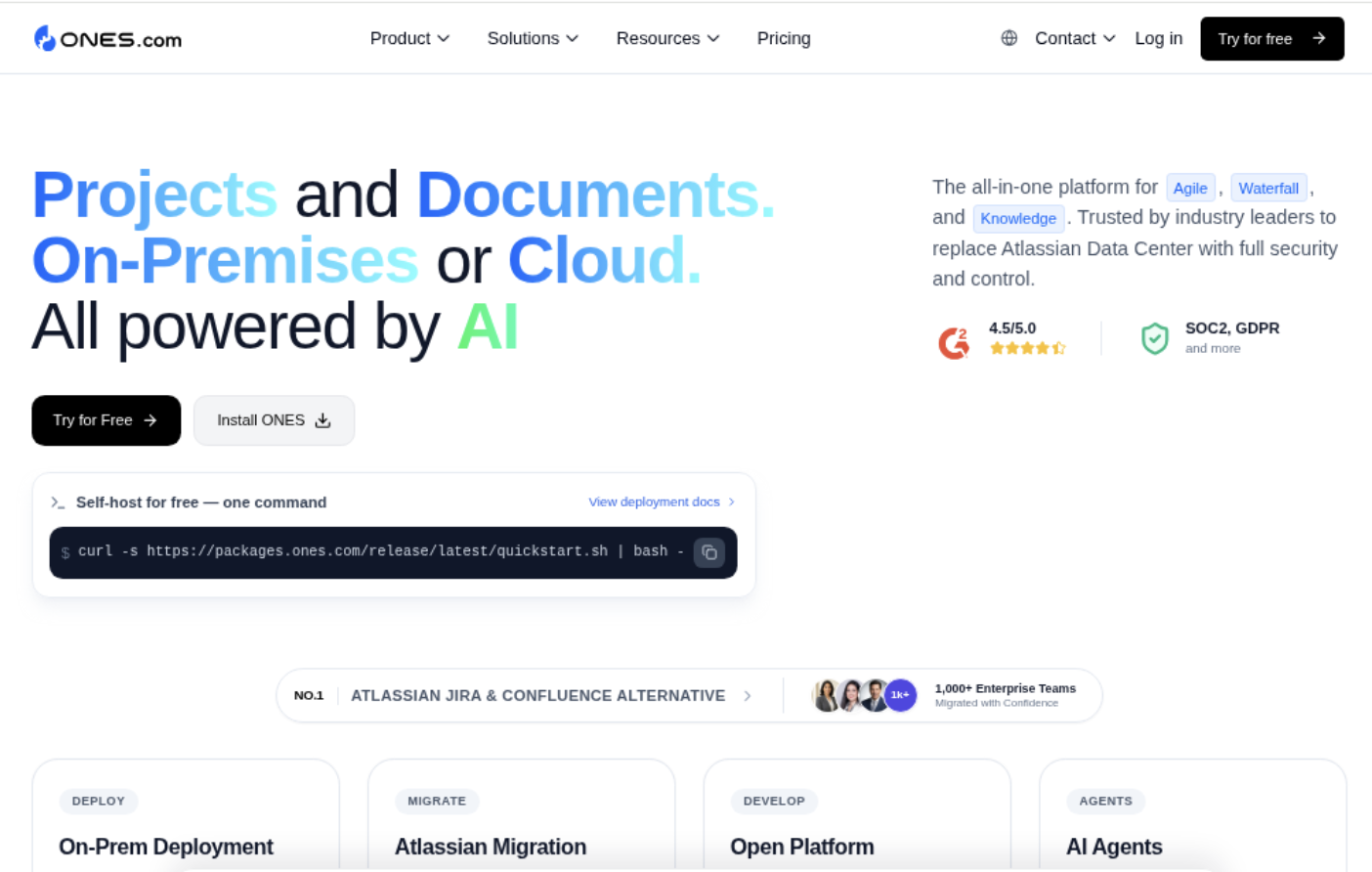
ONES.com is a unified platform for project management and knowledge management, powered by ONES Assistant. ONES Project provides project management capabilities and can serve as a Jira alternative for teams that need connected planning, delivery, and reporting.
ONES Project and ONES Wiki are sold separately. You can choose the project management capability without adopting the knowledge management product.
Core Capabilities
- Cross-team planning pain: Separate project views make it difficult to understand delivery across teams. ONES capability: ONES Project brings work into connected planning views. Result: You can review priorities, timelines, and ownership in one planning environment.
- Jira migration concerns: Teams may worry that changing platforms will disrupt familiar processes. ONES capability: Jira-compatible workflows support familiar issue management patterns. Result: Teams can adapt existing delivery practices with less process disruption.
- Scattered reporting: Leaders may spend time combining progress information from different views. ONES capability: Built-in reporting provides project and delivery visibility. Result: Planning reviews can focus more on decisions and less on manual status preparation.
- Rigid processes: Different teams often need different approval paths, fields, and statuses. ONES capability: Custom workflows and custom fields support varied operating models. Result: Teams can represent their actual process while maintaining shared governance.
- Sprint coordination: Roadmap plans can become disconnected from execution. ONES capability: Sprint management connects planned work with iterative delivery. Result: You can compare roadmap expectations with current sprint progress.
- Repetitive administration: Routine transitions and notifications can consume planning time. ONES capability: Automation handles selected recurring actions. Result: Teams spend less effort on predictable workflow administration.
- Plugin dependency: A team may need several add-ons to cover planning and reporting needs. ONES capability: Native capabilities cover project management, workflows, reporting, and automation. Result: You may reduce the number of separate extensions required for core work.
- Deployment restrictions: Some organizations cannot place project information in a public cloud environment. ONES capability: ONES.com supports Cloud, On-Premise, Private Cloud, and Air-gapped deployments. Result: Teams can align deployment with security and network requirements.
- Platform consistency: Self-hosted environments can sometimes lack capabilities available in hosted services. ONES capability: ONES.com provides full feature parity between cloud and self-hosted versions. Result: Deployment choice does not require giving up core functionality.
Application Scenarios
Scenario one: A regulated product team
A regulated product group needs planning visibility while keeping its environment on premises. ONES Project can support custom workflows, release planning, reporting, and controlled deployment within that operating model.
Scenario two: A multi-team software organization
Several engineering teams need shared priorities, sprint coordination, and dependency visibility. A unified project management environment can reduce the need to reconcile separate planning tools during portfolio reviews.
Scenario three: A team comparing Jira alternatives
A team may want Jira-compatible workflows while reducing reliance on multiple plugins. ONES Project provides project management capabilities, custom fields, automation, reporting, and deployment flexibility for that evaluation.
Common Challenges and Practical Solutions
Challenge: The roadmap becomes too detailed
Why it happens: Teams add every task before agreeing on the main planning question.
Practical solution: Start with initiatives and epics, then expand into stories when a delivery decision requires more detail. Keep separate views for leadership and execution.
Challenge: Capacity forecasts seem unreliable
Why it happens: Estimates omit support work, leave, interruptions, or changes in team membership.
Practical solution: Review recent delivery patterns and reserve capacity for recurring operational work. Update assumptions when staffing or responsibilities change.
Challenge: Dependencies are discovered too late
Why it happens: Teams plan within their own boundaries and discuss cross-team relationships only after work begins.
Practical solution: Hold a dependency review before major planning commitments. Assign an owner and expected decision date to each high-impact dependency.
Challenge: Stakeholders treat every date as fixed
Why it happens: Roadmap views often display dates more prominently than confidence levels.
Practical solution: Label forecasts, commitments, and target windows separately. Explain the assumptions that could move each date.
Challenge: The roadmap is updated inconsistently
Why it happens: Nobody owns the planning rhythm, so updates occur only when someone requests a status report.
Practical solution: Assign a roadmap owner and define a review schedule. Use short weekly checks for dependencies and deeper monthly reviews for capacity and priorities.
FAQs
Is Jira Advanced Roadmaps useful for one team?
It can help a single team plan larger initiatives, releases, and capacity over several sprints. Its strongest value usually appears when work crosses projects or teams. For one small team with a simple backlog, a board and backlog may provide enough visibility. Advanced planning becomes more useful when dependencies, multiple releases, or longer planning horizons make ordinary board views difficult to interpret.
How accurate are the dates in an advanced roadmap?
Dates are forecasts that depend on estimates, capacity, dependencies, team availability, and scope stability. They become more useful when you update assumptions regularly and compare planned work with recent delivery patterns. Treat a date as a confidence-based planning signal unless your organization has explicitly approved it as a commitment.
Can I use scenarios to compare different plans?
Yes. Scenario planning lets you explore changes such as moving an epic, shifting a release, adjusting team capacity, or changing priorities. You can compare the effects before updating the main plan. For example, a scenario may show that delaying a lower-value initiative protects a compliance milestone without adding staff.
How should I manage dependencies between teams?
Record the relationship, identify the owning team, and agree on the expected timing. Focus on dependencies that can delay releases, block other work, or create customer or compliance risk. Review them during a regular planning meeting. A dependency without an owner or decision date is usually only a warning, rather than an actionable plan item.
Is ONES Project a Jira alternative?
Yes. ONES Project is a project management product that supports Jira-compatible workflows, custom workflows and fields, sprint management, automation, reporting, and several deployment options. It is part of ONES.com, while ONES Wiki is the separate knowledge management product. Teams can evaluate ONES Project when they need broader deployment flexibility or more native project management capabilities.
Conclusion
Jira Advanced Roadmaps helps you connect initiatives, epics, teams, releases, capacity, and dependencies in one planning view. Its value comes from the planning discipline around it: clear scope, consistent estimates, realistic capacity, and regular review.
Start with the decision you need to make. Build only the hierarchy and detail required to answer it. Then test scenarios, expose dependencies, and explain forecast confidence clearly.
But here's the truth: a roadmap cannot remove uncertainty. It can make uncertainty visible early enough for you to respond. Whether you continue with Jira’s planning capabilities or evaluate a Jira alternative such as ONES Project, the goal remains the same: connect strategy with achievable delivery.