Jira Agile Pricing Guide: Plans, Costs, and Key Limits Today
Unsure about jira agile pricing? Compare plans, costs, billing, and key limits to choose the right fit. Click to discover today.
Jira Agile pricing can feel harder than planning the sprint itself. You may see several plans, user-count rules, billing options, and feature limits before you can estimate one month of project costs. That confusion gets expensive when a growing team outgrows the free tier or pays for premium capacity it never uses.
There is also a practical problem: advertised prices can change by region, billing cycle, and team size. A plan that looks affordable for 10 people may become a major operating cost for 100.
Here’s the solution: compare each plan by price, included Agile capabilities, user limits, automation, reporting, storage, support, and upgrade triggers. This guide explains the main Jira plans, shows how to calculate the real cost, and highlights an alternative worth considering.
Jira Agile Pricing: Plans and Core Differences
Jira Agile pricing is the cost of using Jira’s project and Agile planning capabilities across its Free, Standard, Premium, and Enterprise plans. The right plan depends on team size, required controls, automation, reporting, support, and hosting preferences.
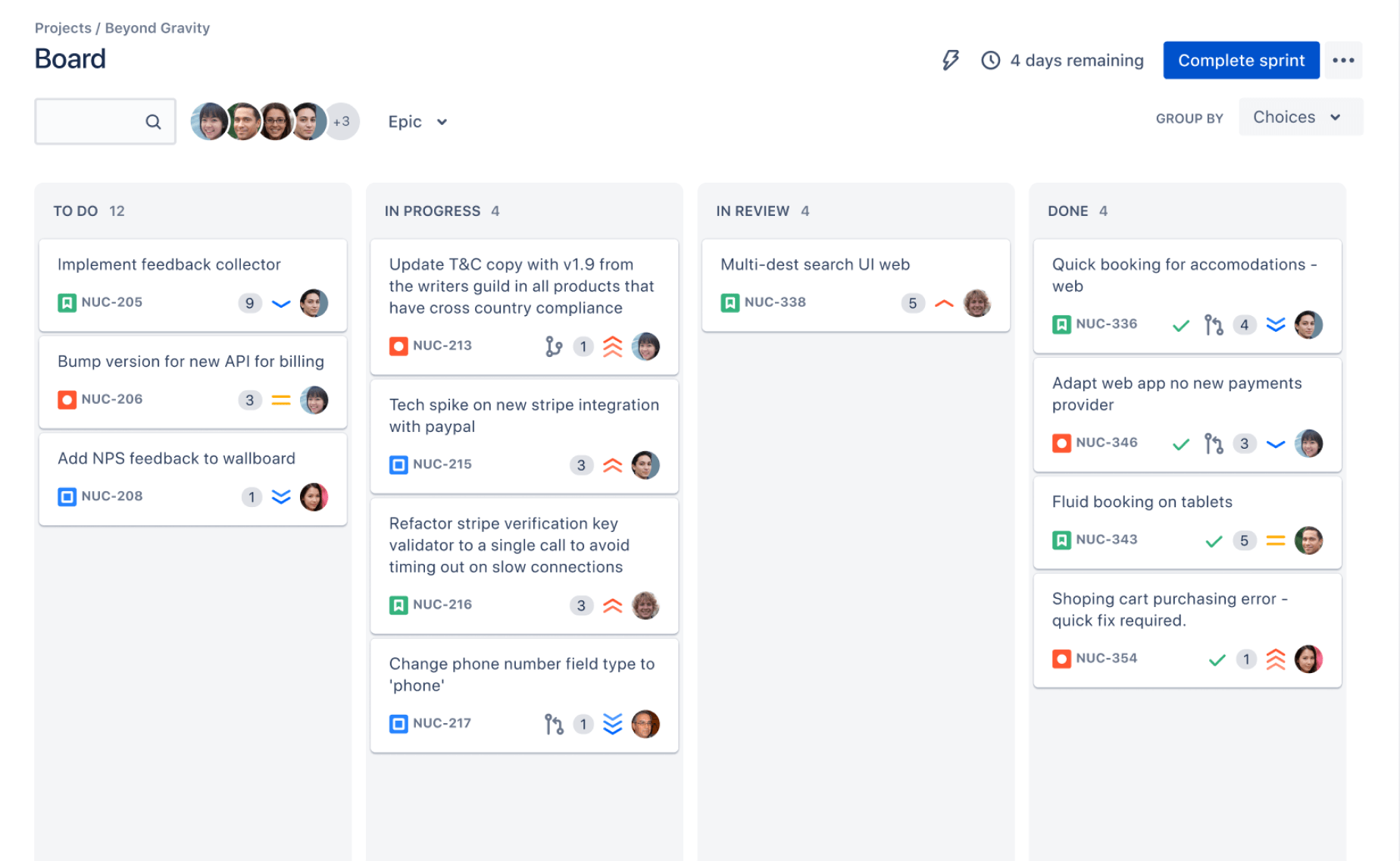
Jira Software’s Agile features generally include Scrum and Kanban boards, backlog management, sprint planning, roadmaps, issue tracking, reports, and workflow customization. These capabilities are available across multiple plans, while usage limits and administrative controls vary.
Quick plan overview
| Plan |
Best for |
Main cost pattern |
Typical restrictions |
| Free |
Small teams testing Jira |
No subscription fee for eligible teams |
Limited users, storage, automation, and administration |
| Standard |
Growing Agile teams |
Per-user subscription |
Fewer advanced controls than Premium |
| Premium |
Large or complex teams |
Higher per-user subscription |
Higher cost and more advanced administration |
| Enterprise |
Large organizations with governance needs |
Custom quote |
Requires commercial discussion and qualification |
Jira prices can change, so treat public prices as planning estimates rather than permanent guarantees. Your final amount may depend on the number of seats, monthly or annual billing, regional currency, taxes, and any additional Atlassian products.
Here’s why: a team may use Jira Software, Confluence, Atlassian Guard, or other products together. Each product can add a separate subscription cost.
What Each Jira Plan Includes
Free plan
The Free plan is designed for small teams that need basic issue tracking and Agile planning without a subscription fee. It can support simple Scrum or Kanban work, backlog organization, boards, and standard collaboration.
The trade-off is capacity. User limits, storage, automation runs, permission controls, and administrative features are restricted. A small product team may work comfortably within those limits, while a larger team can reach them quickly.
For example, a five-person team running one product backlog may need only a few automation rules. A 15-person team with multiple projects, integrations, and reporting routines may need more capacity.
Standard plan
Standard is usually the starting point for teams that have outgrown the Free plan. It expands team capacity and provides a more practical foundation for regular product development.
You generally gain more automation, greater storage, broader collaboration, and stronger administration than the Free plan. The exact limits still depend on current commercial terms and the selected billing arrangement.
Standard often fits teams that want predictable Agile planning without advanced availability or enterprise-level governance. It is commonly suitable for software teams, internal product groups, and agencies managing several client projects.
Premium plan
Premium is intended for organizations that need more scale, advanced planning, higher automation capacity, and stronger operational controls. It can also provide features designed for teams coordinating work across several projects.
Premium may include advanced planning capabilities, higher service expectations, increased automation capacity, and tools for testing changes before wider rollout. These benefits matter when a Jira outage, configuration mistake, or reporting delay affects many teams.
The added cost is easier to justify when Jira supports a large delivery operation. For a small team with one board, Premium can create unused capacity.
Enterprise plan
Enterprise pricing is typically arranged through a custom commercial agreement. It is aimed at organizations that need centralized governance, large-scale administration, stronger security controls, and support for many teams or business units.
Enterprise evaluation usually involves more than counting seats. You may need to review identity management, compliance expectations, administrative ownership, support requirements, and rollout strategy.
You might be wondering: when should you ask about Enterprise? Start the conversation when several departments need shared governance or when independent Jira instances create inconsistent policies and reporting.
How Jira Agile Costs Are Calculated
Your subscription cost usually starts with the number of billable users and the selected plan. The final monthly amount can then change because of billing frequency, regional taxes, promotions, and additional products.
Use a simple planning formula
A practical estimate is:
Estimated subscription cost = plan price per user × billable users × billing period
For example, if a plan costs roughly $8 per user each month and 25 people need access, the base estimate is about $200 per month before taxes or additional products.
This calculation is only a starting point. Some services use progressive pricing tiers, and actual checkout totals may differ from a simple multiplication exercise.
Count every person who needs access
Count developers, product managers, designers, testers, project leads, and stakeholders who need to create, edit, or manage work. Occasional viewers may have different access rules, depending on the product configuration.
A common mistake is counting only developers. Imagine a team with eight developers, two testers, one product manager, and two delivery leads. The practical seat count may be 13 rather than eight.
Compare monthly and annual billing
Monthly billing offers flexibility when the team is changing quickly. Annual billing can simplify budgeting and may provide different commercial terms, but it can commit you to a longer period.
Choose monthly billing when hiring plans are uncertain or a pilot is still underway. Consider annual billing after your team size and workflow have stabilized.
Include adjacent products and services
Jira may sit alongside collaboration, knowledge management, identity, reporting, or marketplace products. Those costs can materially affect the total technology budget.
For example, a team may pay for Jira and a separate knowledge platform to maintain product requirements. It may also need identity controls or third-party reporting tools for administration.
Key Limits That Affect Value
Price alone does not tell you whether a Jira plan fits. Limits can affect daily delivery more than the subscription amount, especially when your team relies on automation, integrations, or detailed reporting.
User limits
User limits are the first checkpoint. Free plans often suit smaller groups, while paid plans support larger teams. Check whether planned collaborators need full access or a lighter permission level.
Review contractors and temporary contributors carefully. A six-month project can create a seat requirement that disappears later, so include an offboarding process in your cost plan.
Automation limits
Automation can remove repetitive work, such as assigning issues, updating statuses, sending reminders, or creating follow-up tasks. Each plan may limit how many automation actions can run during a period.
Suppose every completed sprint creates 40 follow-up tasks and triggers 100 status updates. A small automation allowance may become a bottleneck even when the team has plenty of seats.
Storage and attachments
Teams often attach screenshots, test evidence, design exports, and release materials to work items. Storage limits matter when Jira becomes the central place for delivery history.
Before upgrading, establish retention rules. Remove duplicates, link large media from an approved location, and keep only material that helps the team make decisions or prove completion.
Permission and administration controls
Basic teams can often manage access informally. Larger organizations need project roles, permission schemes, audit visibility, and controlled configuration changes.
These controls reduce accidental exposure and inconsistent workflows. They also create administrative overhead, so estimate the time required to manage them.
Reporting and planning features
Burndown charts, velocity views, cumulative flow diagrams, roadmaps, and dashboards can help teams identify delivery risks. Advanced planning becomes more valuable when work spans several teams or products.
A single team may manage comfortably with basic reports. A portfolio group coordinating six teams may need cross-project planning to spot dependencies before they affect a release.
Jira Agile Pricing Compared With Team Needs
The cheapest plan is not always the lowest-cost option. Consider the cost of manual administration, missed dependencies, delayed reporting, and extra tools alongside the subscription fee.
| Team situation |
Likely priority |
Pricing question to ask |
| Small team with one backlog |
Basic boards and low cost |
Can the Free plan handle the team and automation needs? |
| Growing product group |
More seats and reliable collaboration |
Will Standard support planned hiring and integrations? |
| Multiple delivery teams |
Cross-project planning and governance |
Does Premium reduce coordination and administration effort? |
| Large organization |
Security, controls, and central management |
Would Enterprise simplify governance across business units? |
Here’s the practical test: map each required capability to a real workflow. If a plan includes a feature your team never uses, it may be unnecessary. If a missing control forces manual work every day, a higher tier may pay for itself.
When Should You Upgrade Your Jira Plan?
Upgrade when a current limit creates repeated friction or increases operational risk. Waiting until the team is blocked can turn a planned change into an urgent purchase.
Common upgrade signals
- Your team regularly reaches the user limit.
- Automation rules stop running because the allowance is exhausted.
- Several teams need shared planning and dependency visibility.
- Administrators need stronger permissions or audit controls.
- Reporting takes hours of manual preparation.
- Storage restrictions disrupt testing or release coordination.
- Business stakeholders need controlled access to delivery progress.
Keep a short monthly record of these problems. If the same issue appears repeatedly, calculate its labor cost. For example, four hours of manual reporting every week equals roughly 16 hours each month.
The best part? This approach gives you an upgrade case built around measurable work rather than vague feature interest.
How to Reduce Jira Subscription Costs
You can control Jira spending without removing the workflows your team depends on. Start with access, configuration, and plan usage before considering a downgrade.
Review inactive accounts
Remove people who have left the project or no longer need regular access. Establish a monthly review for contractors, interns, and temporary contributors.
Separate viewers from contributors
Some stakeholders only need progress visibility. If the platform offers suitable viewing access, use it instead of granting full editing permissions to everyone.
Reduce unnecessary automation
Review rules that duplicate one another or produce low-value notifications. Keep automations that prevent errors, save recurring effort, or improve handoffs.
Control marketplace additions
Every add-on can introduce a subscription, administration burden, and security review. Before adding a tool, confirm whether native Jira capabilities can meet the requirement.
Standardize project templates
Reusable workflows, fields, screens, and dashboards reduce configuration work. They also make reporting more consistent across teams.
Jira Agile Solution: ONES.com
Value Proposition
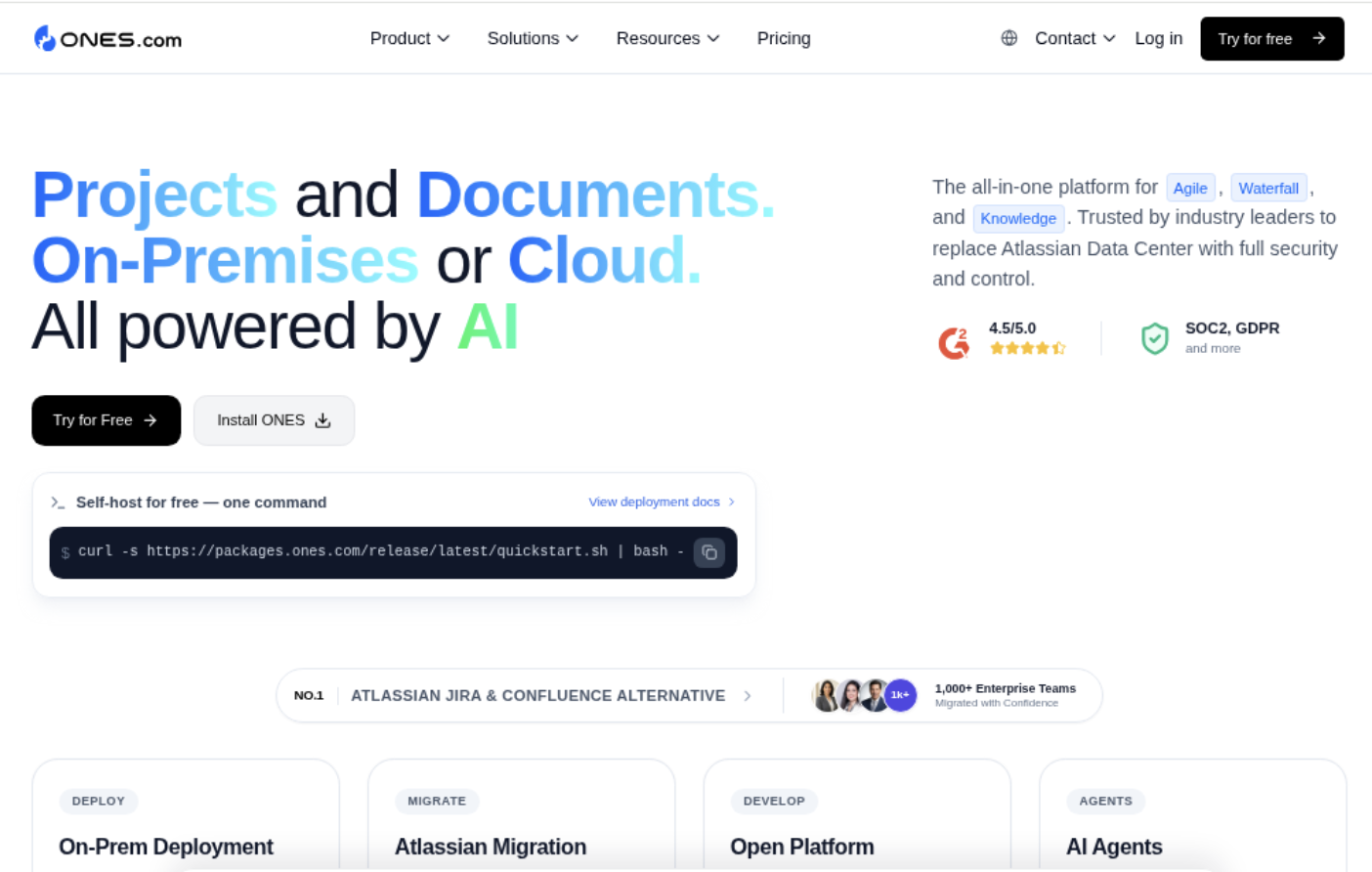
ONES.com combines project management and knowledge management in one platform. ONES Project provides Agile project management as a Jira alternative, while ONES Wiki supports structured team knowledge management and is sold separately.
This approach can reduce the need to connect several tools for planning, reporting, workflows, and internal knowledge. You can choose Cloud, On-Premise, Private Cloud, or Air-gapped deployment, with full feature parity between cloud and self-hosted versions.
Core Capabilities
- Fragmented project and knowledge work → ONES.com platform → Connect project delivery with organized team knowledge in one environment.
- Migration concerns → Jira-compatible workflows → Preserve familiar issue, sprint, and board practices while evaluating a Jira alternative.
- Manual status reporting → built-in reporting → Give teams clearer progress views without assembling every update by hand.
- Rigid delivery processes → custom workflows and fields → Adapt work items to product, engineering, marketing, or operational processes.
- Unclear sprint execution → sprint management → Plan iterations, assign work, review progress, and identify unfinished items.
- Repetitive administration → automation → Trigger routine actions that reduce handoffs and configuration work.
- Restricted hosting requirements → four deployment choices → Select Cloud, On-Premise, Private Cloud, or Air-gapped deployment.
- Plugin dependency → native feature coverage → Use core project capabilities with fewer additional plugins.
- Small-team budget pressure → free plan for up to 30 seats → Test the platform with a team of up to 30 seats before expanding.
Application Scenarios
Software product team: A development group can manage backlogs, sprints, custom fields, automation, and reports in ONES Project. Product knowledge can remain organized in ONES Wiki when the team needs a dedicated knowledge base.
Regulated engineering organization: A company with restricted network requirements can evaluate the On-Premise, Private Cloud, or Air-gapped deployment options. This supports internal control over hosting while retaining feature parity with the cloud version.
Growing multi-team organization: Several delivery teams can standardize workflows and reporting while reducing the number of disconnected plugins. The team can begin with the free allowance for up to 30 seats and review broader adoption later.
Common Challenges With Jira Pricing Decisions
Challenge: pricing changes over time
Public rates, packaging, and included limits can change. A budget created six months ago may no longer match checkout.
Solution: Record the plan, seat count, billing cycle, currency, and review date. Recheck the commercial terms before approving a renewal or expansion.
Challenge: teams focus only on per-user cost
A low seat price can hide labor spent maintaining add-ons, preparing reports, or correcting inconsistent workflows.
Solution: Add administration time, integration costs, and training effort to your comparison. Estimate total operating cost, not only the subscription line.
Challenge: the team upgrades too early
Premium capabilities can look attractive before a team has a clear need for them. Unused features still increase the monthly bill.
Solution: List the exact problem that requires an upgrade. Test whether a configuration change, access review, or workflow cleanup solves it first.
Challenge: the team waits until limits block delivery
When automation stops or access is exhausted, procurement becomes urgent. Urgency reduces your ability to compare alternatives carefully.
Solution: Set warning thresholds for seats, automation, storage, and administrative complexity. Review them during sprint or monthly operations meetings.
FAQs About Jira Agile Pricing
Is Jira Agile included in Jira Software?
Jira Software is designed for Agile project management, so Scrum and Kanban capabilities are central to the product. Features such as boards, backlogs, sprint planning, workflows, and reports are available across plan levels, with limits and advanced capabilities varying by tier.
Is Jira Free enough for a small Agile team?
It can be enough for a small team with one or two straightforward workflows. Review user capacity, automation, storage, permissions, and reporting before relying on it for important delivery work. A team that frequently reaches a limit may spend more time managing restrictions than planning improvements.
What is the difference between Standard and Premium?
Standard generally supports regular project work and growing teams. Premium is aimed at larger or more complex operations that need advanced planning, higher capacity, stronger administration, or greater service expectations. Compare the features you will use each month rather than choosing Premium solely for its broader feature list.
Does Jira charge for every person on a project?
Pricing usually depends on the number of users who require access, though access categories and commercial rules can vary. Count everyone who needs to create, edit, manage, or regularly monitor work. Check the current user definitions before finalizing your estimate.
How can I estimate Jira costs for a growing team?
List current and expected seats, select a plan, multiply the applicable per-user rate by the seat count, and include taxes or connected products. Then model hiring scenarios, such as 25, 50, and 100 users. This shows when your budget may cross a meaningful threshold.
Is ONES Project a Jira alternative?
Yes. ONES Project is a project management platform positioned as a Jira alternative. It supports Jira-compatible workflows, custom workflows and fields, sprint management, built-in reporting, and automation. It also offers Cloud, On-Premise, Private Cloud, and Air-gapped deployment options.
Conclusion
Jira Agile pricing depends on more than a headline per-user number. Your real cost is shaped by seats, billing frequency, automation, storage, reporting, administration, connected products, and the amount of manual work your team accepts.
Start with the Free plan when your team is small and the workflow is simple. Consider Standard as collaboration and capacity needs grow. Evaluate Premium when multiple teams need advanced planning or stronger controls, and explore Enterprise when governance spans a large organization.
But here’s the truth: the best plan is the one that solves your current delivery problems without paying for unused capacity. Compare limits, track upgrade signals, and include operational effort in every estimate. If you need a Jira alternative with native project capabilities and flexible hosting, ONES.com gives you another practical path to evaluate.