Jira Align Pricing Explained: Plans, Costs, and Key Factors
Struggling to budget for Jira Align? Explore pricing, quote-based costs, and key factors that shape your total spend. Read now to plan with confidence.
Jira Align can be a significant investment, but finding a simple public price per user is difficult. That makes budgeting hard when you’re comparing enterprise planning platforms, estimating rollout costs, or preparing a business case.
The license is only part of the picture. User counts, implementation, training, integrations, and ongoing administration can all affect your total spend. A low initial quote may not reflect the resources your organization needs to put the platform into everyday use.
But here’s the truth: Jira Align pricing is generally quote-based, so you’ll need a tailored proposal to confirm current costs. You can still build a useful estimate by understanding what to ask about and which expenses to include. This guide explains the pricing model, key cost factors, and practical steps for comparing a quote with your organization’s needs.
What Jira Align pricing typically includes
Jira Align pricing is generally customized for an organization rather than presented as a standard public rate per user. To understand your likely cost, ask Atlassian or its sales team for a quote that reflects your intended deployment, users, and rollout requirements.
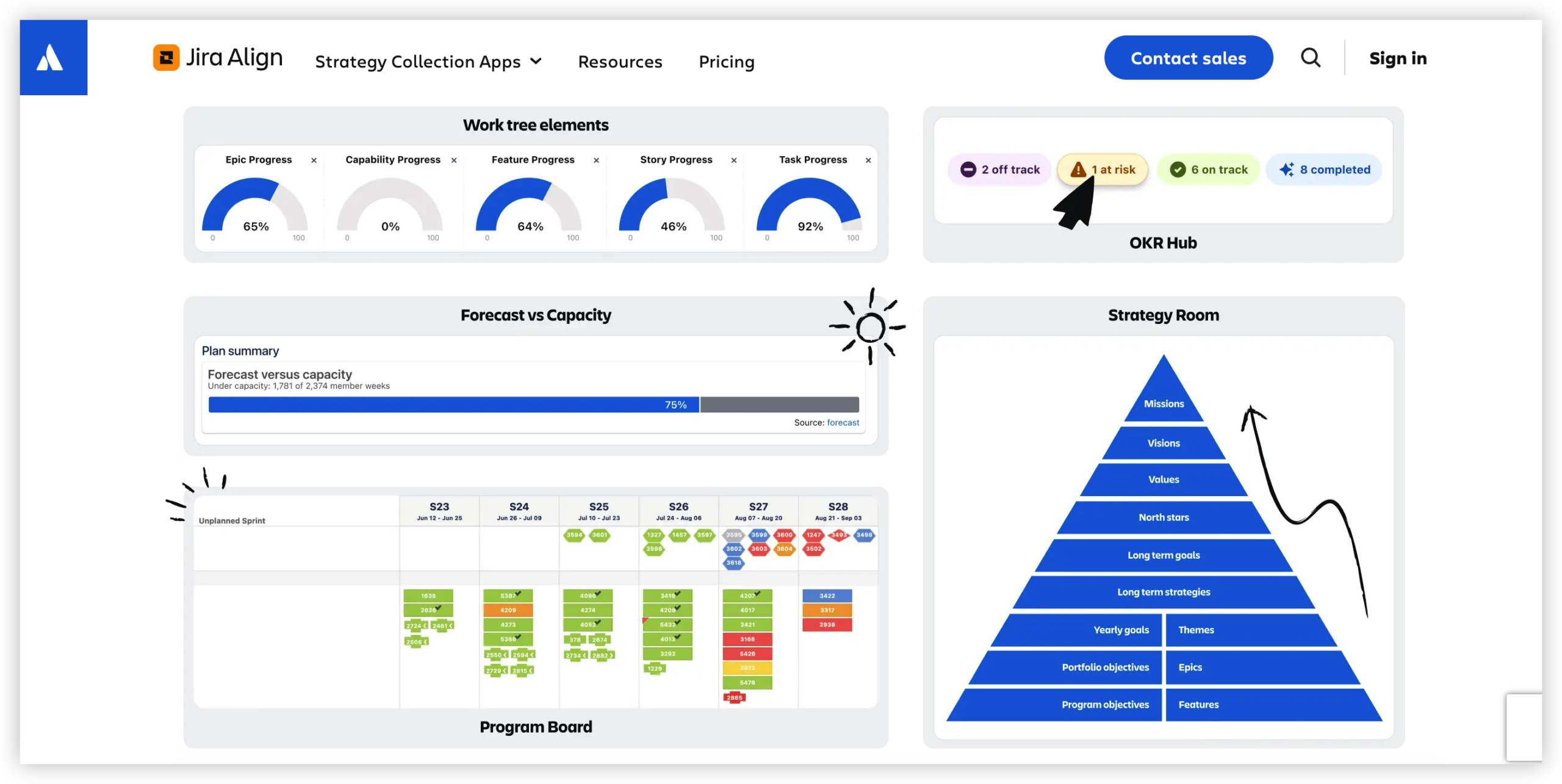
Jira Align is an enterprise planning platform designed to connect strategy, portfolios, programs, and delivery teams. Its commercial terms may depend on your organization’s scale and the package offered. Confirm which capabilities, support terms, and services are included in the proposal.
Is there a public price list?
Atlassian does not provide a simple, universally applicable Jira Align price that you can use to calculate every organization’s bill. Any estimate you find outside a tailored quote may be outdated or based on a specific buyer’s circumstances.
Ask for the current price in writing and confirm the quote’s term, billing schedule, user assumptions, and renewal conditions. If you’re evaluating multiple packages, request a clear breakdown of what changes between them.
What should you expect in a quote?
A quote may distinguish the subscription from professional services or other costs. Make sure you know whether implementation, configuration, integrations, training, and support are included, optional, or billed separately.
For example, a proposal might cover platform access but leave rollout planning and integration work to your internal team. That can make the subscription figure look like the total cost, even when substantial work remains.
How to estimate your total Jira Align cost
Build your estimate around the full rollout, not just the subscription. These steps help you turn an initial quote into a realistic budget.
- Define the teams and users. List the roles that need access, including portfolio leaders, program managers, product managers, and delivery teams. Ask how each role is counted for pricing.
- Clarify the package. Request details about the capabilities included in the proposed subscription. Note any limits, optional modules, or conditions that could affect your expected usage.
- Map implementation work. Identify configuration, integrations, workflow changes, and migration tasks. Ask which activities Atlassian or a partner will handle and which will require internal effort.
- Include enablement. Estimate the time needed for training, change management, and team onboarding. A platform can be available before teams are ready to use it consistently.
- Review ongoing costs. Add administration, support, integration maintenance, and renewal planning to your estimate. Ask what happens to pricing if your user count or requirements change.
- Compare scenarios. Request a proposal for your expected rollout and another for a smaller initial deployment. Compare the total cost and operational effort, not only the subscription line.
For example: a company beginning with three delivery groups may need fewer onboarding resources than an organization launching across several portfolios at once. Both should ask how their user mix and rollout scope affect the commercial proposal.
Factors that can change the quoted price
The biggest pricing variables are usually tied to scale and scope. A tailored quote can reflect the number and type of users, the breadth of deployment, and the commercial terms negotiated for your organization.
User count and role mix
Start with a role-by-role estimate instead of guessing from your employee count. Executives who review plans, managers who configure work, and team members who update progress may have different access needs.
Ask how licensed users are defined, whether inactive accounts count, and how you can adjust quantities during the contract. A precise user estimate makes the proposal easier to compare with alternatives.
Deployment scale and rollout scope
A rollout across one portfolio can involve different setup and enablement needs from a company-wide launch. More teams may also mean more workflow alignment, reporting decisions, and coordination with existing systems.
Describe your intended rollout phases when requesting a quote. If you expect to expand over time, ask how growth affects contract terms and whether a phased launch changes the initial commitment.
Implementation and integrations
Implementation costs can include process design, configuration, integration work, data migration, and technical support. The amount depends on how closely your current planning practices match the platform’s intended workflows.
For instance, connecting Jira Align to existing Jira environments may require planning around team structures, work hierarchies, and reporting expectations. Ask who will perform that work and how the effort is estimated.
Contract terms and services
Contract length, renewal conditions, support arrangements, and professional services can change the amount you pay over time. Confirm the billing period and any requirements tied to the quoted rate.
Request a clear separation between recurring subscription charges and one-time rollout services. That makes it easier to understand the first-year budget and the expected cost after implementation.
How to evaluate a Jira Align proposal
A quote is useful only when you can connect it to the outcomes you expect. Review the commercial details alongside the people, processes, and systems required to make the platform effective.
Compare equivalent scenarios
When reviewing alternatives, use the same number of teams, user roles, rollout phases, and integration needs for each proposal. Otherwise, one option may appear less expensive simply because it covers less work.
Ask each vendor to separate subscription costs, implementation services, and ongoing support. A side-by-side view can reveal whether a lower subscription price comes with higher setup effort.
Test the operating model
Jira Align can support enterprise planning, but your organization still needs agreement on how teams plan, report progress, and manage dependencies. Estimate the time required from leaders, administrators, and delivery teams.
Try a focused pilot with clear measures, such as improving visibility across a program or reducing manual status updates. A defined test can help you assess value before expanding the rollout.
Check renewal and growth assumptions
Ask what happens when the number of users grows, your rollout expands, or your requirements change. Confirm renewal dates, notice periods, price adjustments, and the process for changing the subscription.
These details matter because enterprise planning platforms are often adopted gradually. The right proposal should make both the initial commitment and the likely next stage understandable.
Questions to ask before requesting a quote
Specific questions help you get a proposal that reflects your real needs. Share your intended rollout clearly, then ask the sales team to explain how each assumption affects the price.
- How are users counted, and do different roles have different licensing requirements?
- Which capabilities are included in the proposed package?
- Are implementation, integrations, migration, and training included or priced separately?
- What support is included, and what support options cost extra?
- How do contract length, billing frequency, and renewals affect the quoted amount?
- Can the proposal show a phased rollout and the cost of adding teams later?
- What internal roles and time commitments should we plan for?
- Which assumptions could change the price before renewal?
Ask for answers in writing and keep them with your budget notes. A clear explanation of assumptions makes it easier to revisit the estimate when your scope changes.
Jira Align Pricing Alternative: ONES.com
Value proposition: ONES.com is a unified project management and knowledge management platform. ONES Project provides project management as a Jira alternative, while ONES Wiki provides knowledge management as a Confluence alternative; they are sold separately.
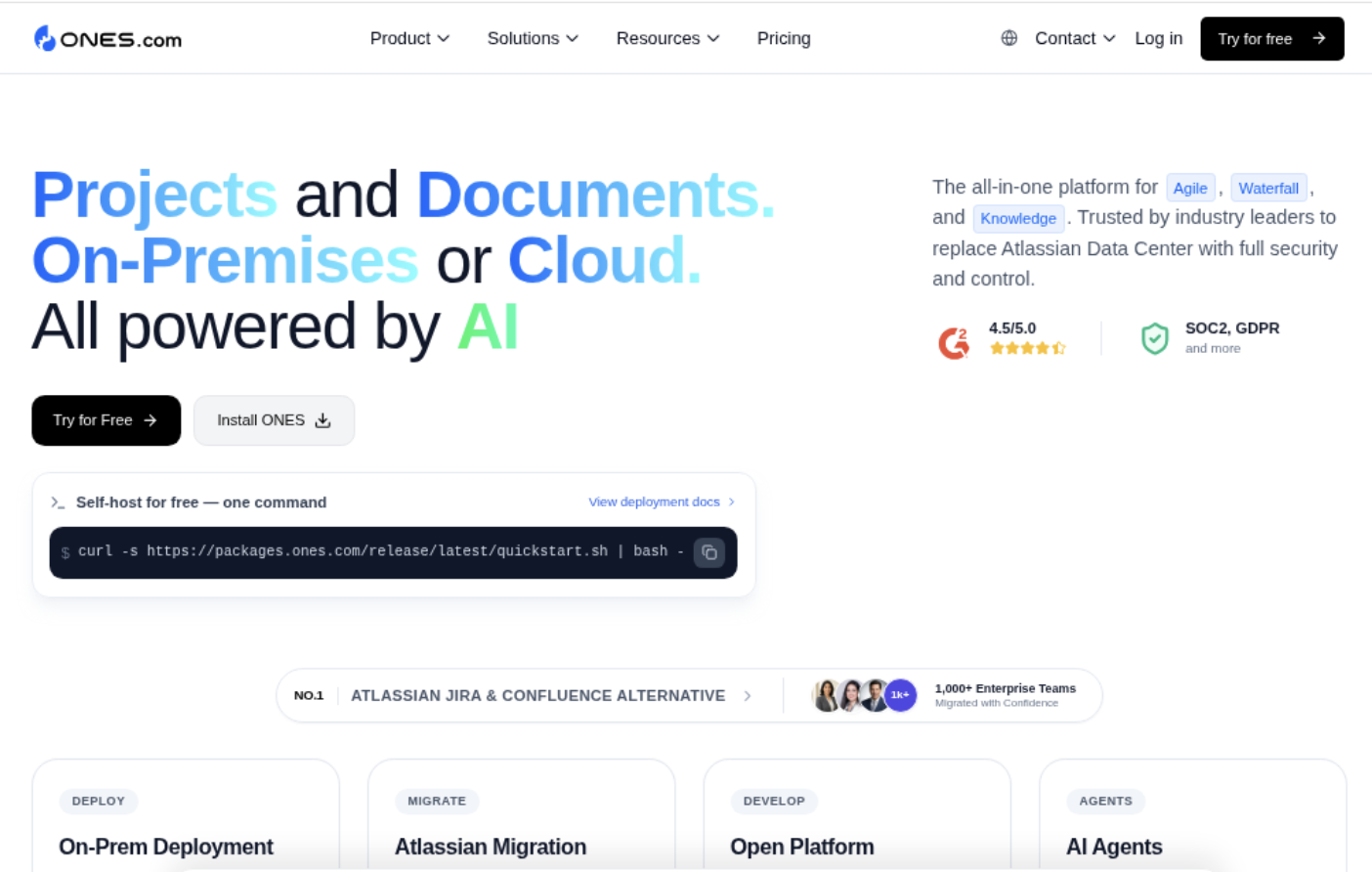
If you’re comparing enterprise planning costs, consider whether your organization needs a broad strategy-to-delivery platform or a project management system focused on team workflows. ONES Project supports Jira-compatible workflows, custom fields, sprint management, automation, and built-in reporting. These capabilities can help teams manage delivery with fewer add-on plugins.
Core capabilities: common pains and practical responses
- Scattered project work: Teams struggle to see tasks and progress in one place. ONES Project provides project management capabilities that help organize and track work, giving teams a clearer view of delivery.
- Workflows that don’t match team practices: Fixed processes can create workarounds. Custom workflows and fields let teams reflect how they handle requests, approvals, and delivery stages.
- Unclear sprint progress: Teams may have difficulty following planned work. Sprint management helps organize sprint activity and monitor progress through delivery.
- Manual status reporting: Repeated updates take time away from project work. Built-in reporting gives teams a way to review project information without assembling every update by hand.
- Repetitive project administration: Recurring steps can slow teams down. Automation can handle defined workflow actions and reduce routine manual effort.
- Separate project and knowledge practices: Teams may need different capabilities for delivery and knowledge sharing. ONES Project and ONES Wiki address those needs as separate products within ONES.com.
- Deployment requirements: Some organizations need greater control over where they operate their platform. ONES.com offers Cloud, On-Premise, Private Cloud, and Air-gapped deployments.
- Uneven capabilities across deployment types: Teams may worry that self-hosting means losing features. ONES.com provides full feature parity between its cloud and self-hosted versions.
Where ONES.com may fit
A delivery team moving from Jira: A team that wants Jira-compatible workflows, custom fields, sprints, automation, and reporting can evaluate ONES Project as a Jira alternative. The team can compare its workflow needs and deployment requirements before choosing a rollout scope.
An organization with restricted networks: A company that must keep project management within a controlled environment can assess ONES.com’s On-Premise, Private Cloud, or Air-gapped deployments. That can be relevant when deployment location is part of the platform decision.
ONES.com offers a free option for up to 30 seats. Review the current product terms and confirm which ONES.com products, deployment model, and capabilities match your organization’s requirements.
Common challenges when budgeting for Jira Align
Challenge: Treating the subscription as the full cost
Why it happens: The subscription figure is easy to spot, while rollout effort may be discussed separately.
What to do: Request a full cost breakdown covering implementation, integrations, training, support, administration, and renewal assumptions. Keep one-time and recurring expenses distinct.
Challenge: Guessing the number of licensed users
Why it happens: Organizations may estimate from headcount rather than identifying the people who need access.
What to do: Map user roles to real tasks and ask how each role affects licensing. Revisit the estimate after identifying the teams included in the first rollout.
Challenge: Comparing quotes with different scopes
Why it happens: Vendor proposals may use different assumptions about users, services, support, or deployment size.
What to do: Give each vendor the same rollout scenario and ask for the same cost categories. Record any differences in coverage before comparing totals.
Challenge: Underestimating change management
Why it happens: Teams may expect a platform to improve planning without allowing time to align working practices.
What to do: Budget for training, process decisions, and ongoing ownership. Name the people responsible for administration and adoption before the rollout begins.
Frequently asked questions
How much does Jira Align cost?
Jira Align pricing is generally provided through a tailored quote rather than a single public rate that fits every organization. The amount can depend on the user mix, rollout scope, contract terms, and services required. Ask Atlassian for a current proposal, then confirm what the subscription includes and which implementation or support costs may be separate.
Does Jira Align offer different plans?
Jira Align is sold for enterprise planning needs, but you should not assume that a public plan grid explains every available package or commercial condition. Ask Atlassian to identify the package in your proposal and describe the capabilities, support, and services included. If more than one option is available, request a written comparison using the same user and rollout assumptions.
Is Jira Align priced per user?
Do not rely on a generic per-user estimate to predict your bill. Ask how Jira Align counts users and whether access requirements vary by role or package. Then provide a role-based estimate for your initial rollout and expected expansion. The quote should make its user assumptions clear so you can see how changes may affect the price.
What costs should I budget for beyond the subscription?
Consider implementation, configuration, integration work, migration, training, change management, internal administration, support, and renewals. Some of these expenses may be included in a proposal, while others could require a separate services agreement or internal staff time. Ask for recurring and one-time costs to be listed separately so your first-year and ongoing budgets are easier to compare.
Can I get a Jira Align quote for a phased rollout?
Ask the sales team to quote your first phase and explain how adding teams or portfolios could change the cost later. A phased proposal can help you compare a smaller initial commitment with a broader deployment. Include the people, integrations, and capabilities needed for each phase so the estimate reflects the work required at every stage.
Conclusion
Jira Align pricing is typically quote-based, so a reliable estimate starts with your user roles, rollout scope, and contract requirements. Build a complete budget that includes implementation, training, integrations, support, and ongoing administration.
The key takeaway: compare proposals with matching assumptions, and check how the price may change as your organization grows. If you’re evaluating a different approach, compare the planning scope you need with options such as ONES Project, while considering deployment and workflow requirements.
Opaque pricing can make planning frustrating, especially when you need to defend an enterprise investment. A clear quote and a full rollout estimate can replace guesswork with a practical cost comparison and a more confident decision.