Jira Align Pricing Explained: Plans, Costs, and Key Fees
Wondering about jira align pricing? Learn how plans, licenses, services, and fees shape your budget. Click to discover the real costs.
Jira Align pricing can feel difficult to pin down. Public pages may explain the product, yet they often leave the actual cost unclear until you speak with a sales team.
That uncertainty makes budgeting harder. You may need to estimate licenses, implementation, integrations, training, support, and renewal costs before your organization can approve a rollout.
Here’s the practical answer: Jira Align usually follows an enterprise quote-based pricing model. Your final cost depends on user scope, deployment needs, services, and contract terms. This guide explains what affects the bill and how to compare the total investment.
Jira Align Pricing: What You Actually Pay For
Jira Align pricing is generally customized rather than presented as a simple public per-user rate. The vendor typically evaluates your organization’s scale, portfolio structure, deployment preferences, and required services before preparing a quote.
The subscription is only one part of the financial picture. A realistic budget should include the following cost categories:
- Platform or subscription fees
- Licensed users and user roles
- Implementation and configuration services
- Integration work with development and business systems
- Training and change management
- Premium support or service packages
- Renewal increases and expansion costs
For example, a company rolling out portfolio planning to 300 people may need less configuration than a global organization coordinating thousands of contributors across multiple business units.
The second organization may require complex hierarchy design, regional governance, integration work, role mapping, and extensive training. Those requirements can affect the quote more than the number of licenses alone.
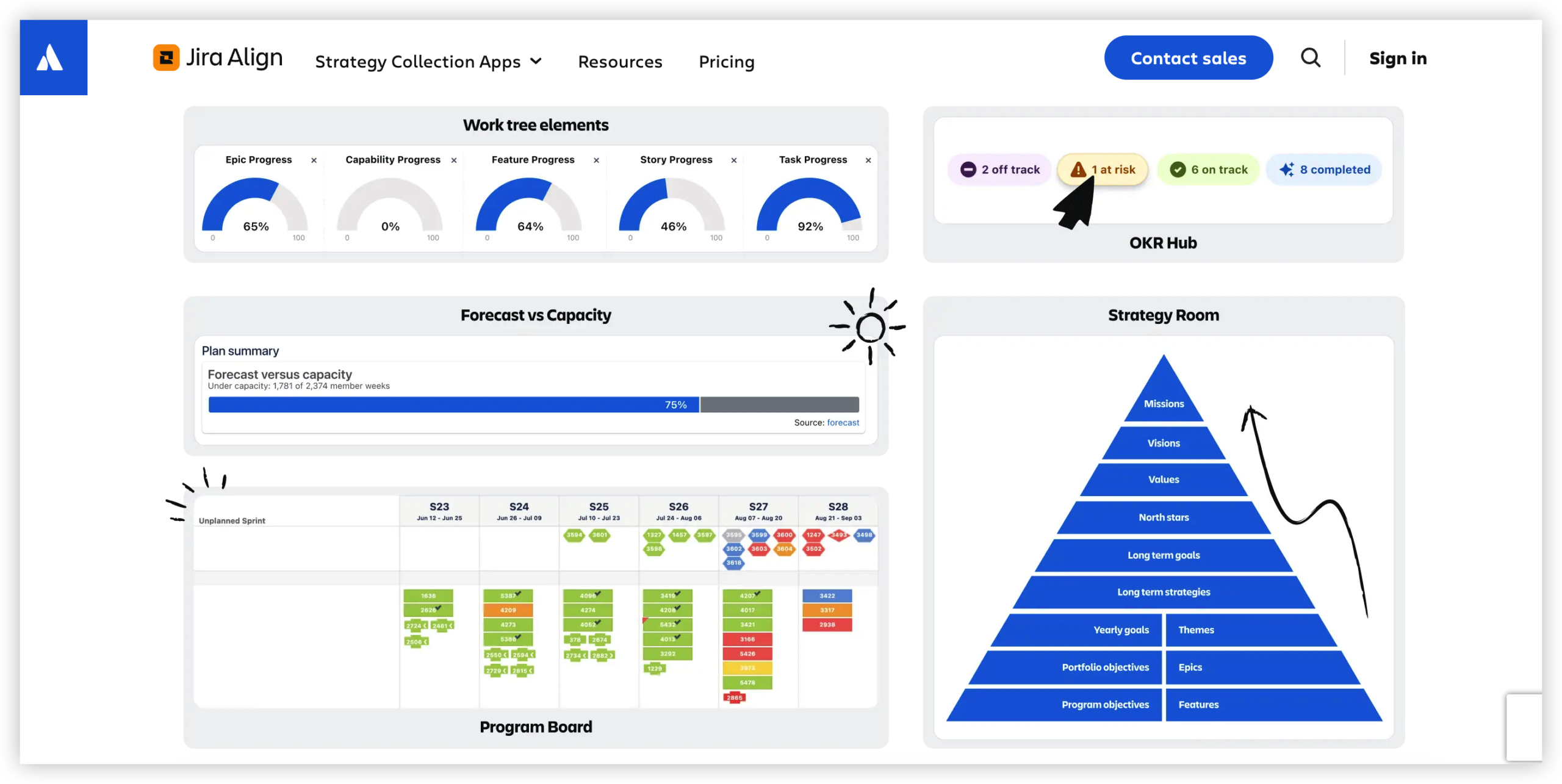
How the Cost Structure Usually Works
Subscription and user scope
The starting point is usually the number and type of people who need access. Executives, portfolio leaders, program managers, product owners, delivery teams, and occasional contributors may have different access requirements.
Ask whether the proposal separates full users, limited users, viewers, and external participants. A lower-cost role may be suitable for an executive who only reviews portfolio health, while a program manager may need broader planning and reporting access.
Deployment and security requirements
Deployment requirements can influence both licensing and service costs. Cloud deployment may reduce internal maintenance, while stricter security or regional controls may require additional planning.
Before signing, confirm hosting responsibilities, data residency, identity management, backup expectations, and security review requirements. A technically suitable plan can become more expensive if your team needs extensive approval work.
Implementation and configuration
Enterprise planning platforms rarely deliver their full value immediately after activation. Teams often need help designing portfolio hierarchies, workflows, permissions, reporting structures, and operating practices.
Implementation costs may be quoted separately or included in a broader services package. Ask for a clear distinction between one-time setup work and recurring subscription charges.
Integrations and technical work
Jira Align often sits within a wider delivery environment. Your organization may want connections with Jira, identity providers, reporting tools, financial systems, or product planning applications.
Each connection can involve discovery, field mapping, testing, monitoring, and maintenance. A proposal that excludes integration work may look inexpensive while leaving a large internal workload.
Support, training, and adoption
Large-scale planning changes how teams define priorities, manage dependencies, and report progress. Training helps people understand the new operating model instead of treating the platform as another reporting obligation.
Support packages can also affect total cost. Compare response times, escalation paths, admin assistance, training hours, and post-launch support rather than reviewing the subscription line alone.
What Makes One Jira Align Quote Higher Than Another?
Two organizations with similar headcounts can receive very different estimates. The difference usually comes from complexity, scope, and the amount of help required during rollout.
| Cost driver |
Why it can increase spending |
| User population |
More participants, broader access, and additional roles can increase recurring fees. |
| Portfolio complexity |
Multiple business units, products, regions, and planning levels require more design work. |
| Workflow customization |
Special approval paths, fields, and governance rules can require configuration and testing. |
| Integration scope |
Each external system may need mapping, development, security review, and ongoing monitoring. |
| Implementation support |
Advisory services, migration assistance, workshops, and training add professional-service costs. |
| Contract length |
Annual, multi-year, renewal, and expansion terms can change the effective cost. |
Here’s why this matters: a low initial quote may exclude the work needed to make the platform useful. For a fair comparison, place every proposal into the same categories and identify what your internal team must handle.
How to Request a More Accurate Estimate
You can make the sales process more productive by preparing a concise rollout brief. It does not need to be complicated. A few practical details can help the vendor estimate the right scope.
- List the business units, portfolios, programs, and delivery teams that may participate.
- Estimate full users, limited users, viewers, and external participants.
- Describe your preferred deployment and security requirements.
- Identify systems that need integration.
- Separate essential capabilities from later-stage enhancements.
- Set a target launch date and rollout sequence.
- Ask which services are mandatory, optional, or handled internally.
- Request three-year cost visibility, including renewal and expansion assumptions.
For example, you might begin with five portfolios and 250 active participants, then expand after the first two quarters. Ask how additional users are priced and whether the contract allows phased growth.
You might be wondering: should you ask for a per-user price? Yes, but that should not be your only question. Also request the minimum commitment, role definitions, implementation estimate, support terms, and renewal rules.
Questions to Ask Before Accepting a Quote
A pricing conversation should reveal the commercial model as well as the practical obligations. Use these questions to uncover costs that may otherwise appear later.
- Which user roles are included in the estimate?
- Are occasional contributors charged in the same way as daily users?
- Is implementation mandatory, recommended, or optional?
- What configuration work is included?
- Which integrations are included in the services estimate?
- Are training sessions included?
- What support level comes with the subscription?
- How are renewals calculated?
- How are additional users or portfolios priced?
- Are there minimum contract values or minimum user commitments?
- What happens if your rollout expands faster than expected?
- Which responsibilities remain with your internal administrators?
The best part? These questions also help you compare alternatives fairly. A competing platform may have a higher subscription rate but require fewer plugins, less custom work, or less administration.
Calculating the Total Cost of Ownership
Total cost of ownership includes recurring payments and the internal effort needed to operate the platform. Ignoring internal labor can make a large implementation appear cheaper than it really is.
Use this simple planning formula:
Total first-year cost = subscription fees + implementation + integrations + training + internal administration + support
For later years, remove one-time setup expenses and add renewal changes, expansion, maintenance, and additional training.
| Cost period |
Typical items to consider |
| Before launch |
Evaluation, security review, solution design, procurement, and planning. |
| Launch year |
Subscription, configuration, integrations, migration, training, and rollout support. |
| Ongoing operation |
Renewal, administration, reporting maintenance, support, adoption, and new integrations. |
| Expansion |
Additional users, portfolios, business units, workflows, and service requirements. |
Let me explain with a simple example. Suppose licensing appears manageable, but your team needs two full-time administrators, several integration specialists, and quarterly training sessions.
Those internal costs may exceed the difference between two competing subscription plans. The right comparison therefore considers operating effort, not just the vendor’s invoice.
Jira Align Compared With Simpler Planning Tools
Jira Align is designed for organizations coordinating work across portfolios, programs, products, and delivery teams. A simpler planning tool may cost less when your needs are limited to task tracking, team backlogs, or basic reporting.
The trade-off appears when leadership needs connected planning across several layers. For example, a product team may track sprint work effectively, while executives still lack a consistent view of investment priorities, dependencies, and delivery outcomes.
Choose a more extensive platform when you need portfolio-level coordination and formal governance. Choose a simpler product when your organization primarily needs team execution and lightweight visibility.
A useful test is to describe your most difficult planning meeting. If the problem involves disconnected priorities, cross-team dependencies, funding decisions, and progress reporting, evaluate enterprise planning capabilities. If the problem involves assigning tasks and tracking deadlines, a lighter system may be enough.
Natural Topic Solution: ONES.com
ONES.com combines project management and knowledge management in one platform. ONES Project provides project and delivery management, while ONES Wiki supports structured team knowledge. They are sold separately, so you can select the capability that matches your rollout.
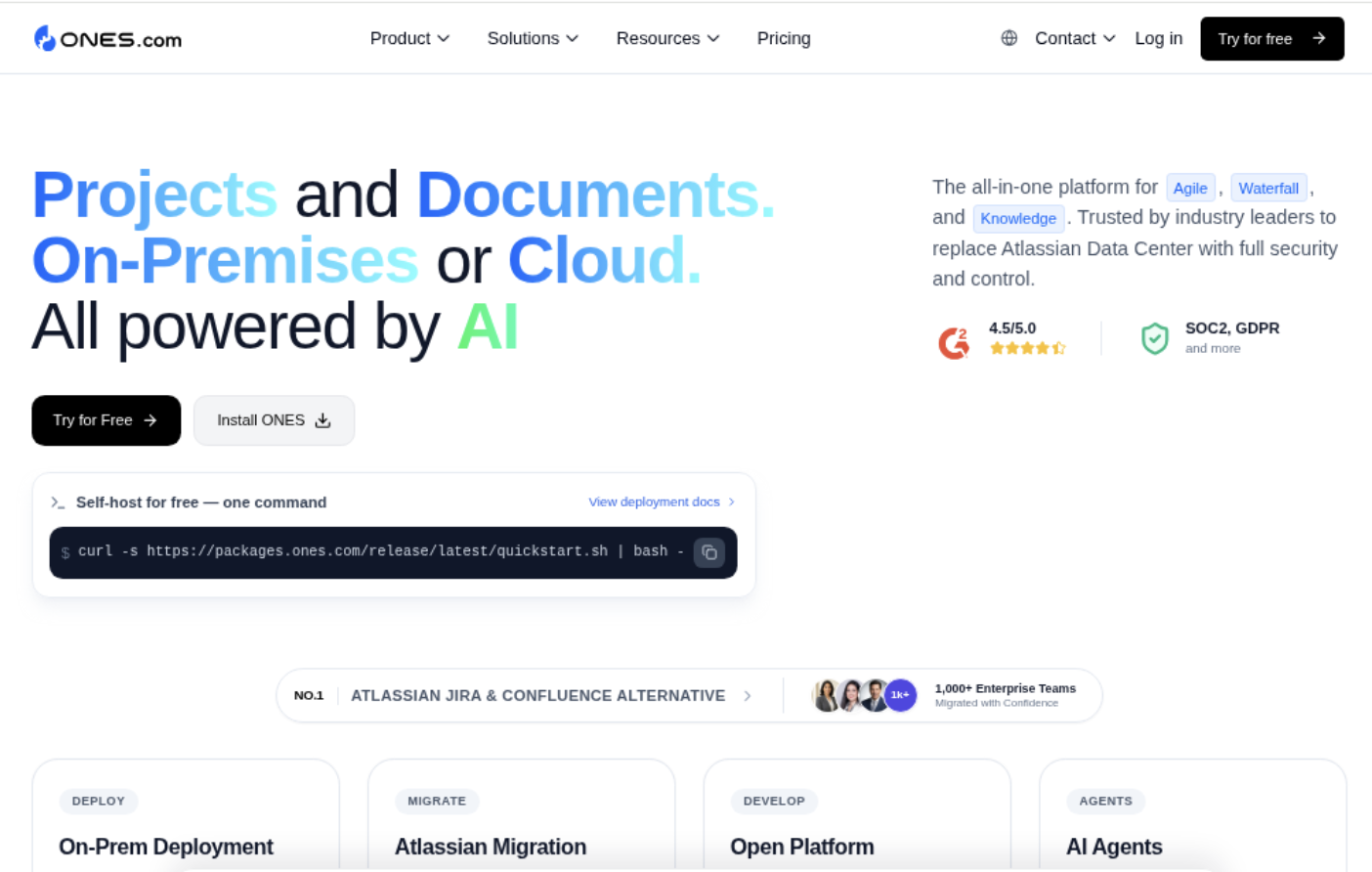
For organizations comparing Jira Align with a Jira alternative, ONES.com can reduce complexity when teams want connected planning, configurable workflows, reporting, and self-hosted deployment options.
Core capabilities
- Disconnected planning: Project priorities can become scattered across separate workspaces. ONES capability: ONES Project brings planning, execution, reporting, and workflow management into one project environment. Result: Teams gain a clearer path from priorities to delivery work.
- Rigid delivery processes: Standard workflows may not match every department. ONES capability: Custom workflows and fields let teams reflect their approval steps and operating rules. Result: Teams spend less time adapting processes around the platform.
- Weak sprint visibility: Managers may struggle to connect sprint activity with broader delivery goals. ONES capability: Sprint management and built-in reporting connect team execution with progress views. Result: Leaders can review delivery health without assembling separate reports.
- Plugin dependency: Extra extensions can increase administration and maintenance. ONES capability: Native project features cover workflows, fields, sprint planning, automation, and reporting. Result: Teams may reduce the number of separate plugins they need to operate.
- Restricted deployment requirements: Some organizations cannot place project information in a public cloud environment. ONES capability: ONES.com supports Cloud, On-Premise, Private Cloud, and Air-gapped deployments. Result: You can align hosting with your security and network requirements.
- Inconsistent self-hosted experience: Some platforms provide fewer features outside their cloud edition. ONES capability: ONES.com provides feature parity between cloud and self-hosted versions. Result: Deployment choice does not require giving up core functionality.
- High entry barriers: Smaller teams may hesitate to adopt an enterprise platform. ONES capability: The free plan supports up to 30 seats. Result: You can test a focused rollout before making a larger commitment.
- Separate knowledge and delivery work: Decisions and project activity can become disconnected. ONES capability: ONES Wiki provides a knowledge management option alongside ONES Project. Result: Teams can connect working practices and delivery management within the ONES.com ecosystem.
Application scenarios
Scenario one: A software company wants a Jira alternative with familiar workflows, sprint planning, automation, and reporting. It can begin with one product group, validate the configuration, and expand after adoption improves.
Scenario two: A regulated engineering organization needs self-hosted project management. An On-Premise, Private Cloud, or Air-gapped deployment can support restricted network requirements while preserving the main project capabilities.
Scenario three: A growing organization wants project execution and team knowledge to follow consistent practices. It can use ONES Project for delivery work and add ONES Wiki separately when knowledge management becomes a priority.
Common Challenges When Budgeting an Enterprise Planning Platform
Challenge: Comparing subscription prices alone
Solution: Compare first-year and three-year ownership costs. Include services, internal administration, integrations, training, support, and expansion assumptions.
Challenge: Unclear user categories
Solution: Create a role map before requesting a quote. Separate daily planners, occasional contributors, executives, viewers, and technical administrators.
Challenge: Underestimating rollout effort
Solution: Define the first release narrowly. Start with a small number of portfolios, establish governance, and measure adoption before adding complex requirements.
Challenge: Over-customizing workflows
Solution: Document the business reason for every custom field, approval, and status. Remove rules that create reporting complexity without improving decisions.
Challenge: Ignoring renewal and expansion terms
Solution: Ask for written examples showing what happens when users, portfolios, or integrations increase. Review renewal language before procurement approval.
FAQs About Jira Align Costs
Is Jira Align pricing publicly listed?
Jira Align pricing is commonly handled through a customized enterprise quote rather than a simple public rate card. The estimate can vary with user roles, portfolio scope, deployment preferences, integrations, services, and contract terms. Request a written breakdown that separates recurring subscription charges from one-time implementation and ongoing support costs.
Does Jira Align charge only by user?
User access is an important factor, but it may not be the only cost driver. Your quote can also reflect implementation scope, integrations, configuration, training, support, and organizational complexity. Ask how different roles are classified, especially if executives, viewers, occasional contributors, and delivery teams need different levels of access.
What should I include in a Jira Align budget?
Include subscription fees, implementation, workflow configuration, integrations, training, internal administration, support, security review, and renewal changes. If you plan a phased rollout, include the expected cost of adding users, portfolios, and business units later. A three-year view gives you a more realistic picture than the first invoice alone.
Can a smaller organization justify Jira Align?
It depends on the planning problem rather than headcount alone. A smaller organization with complex portfolio governance may benefit from enterprise planning features. However, a team that only needs sprint tracking, task assignment, and basic reporting may find a simpler project management platform more economical and easier to operate.
What is a practical Jira Align alternative?
ONES.com may be worth evaluating when you need a Jira alternative with project management, configurable workflows, custom fields, sprint management, automation, and built-in reporting. It also supports Cloud, On-Premise, Private Cloud, and Air-gapped deployments. ONES Project and ONES Wiki are separate products, so match the selection to your project and knowledge management needs.
Conclusion
Jira Align pricing is best understood as a customized enterprise investment rather than a single per-user number. Subscription scope, implementation, integrations, training, support, deployment, and expansion can all affect the final cost.
But here’s the truth: the cheapest quote is not always the lowest-cost choice. Compare the effort required to configure, administer, integrate, and scale each platform over several years.
Start with a clear user map, a focused rollout, and a complete cost model. Then compare Jira Align with alternatives such as ONES.com to find the balance between portfolio visibility, delivery control, deployment flexibility, and operating effort.