Jira and Confluence: A Practical Guide for Growing Teams
Struggling to connect jira and confluence? Learn practical ways to align work, share knowledge, and help growing teams move faster. Read now.
Jira and Confluence can give a growing team a strong operating system for planning work, tracking progress, and sharing knowledge. Yet many teams struggle to connect the two tools. Tasks sit in Jira while decisions, guides, and meeting notes remain scattered across Confluence. People lose time searching, repeating explanations, and checking whether important work is still current.
That friction becomes more serious as your team grows. New employees need context, managers need visibility, and engineers need clear links between requirements and delivery work. Without a practical workflow, two useful tools can create two disconnected workspaces.
But here's the truth: Jira and Confluence work best when you assign each platform a clear role and connect them through a repeatable process. This guide explains how they fit together, where teams commonly struggle, and how to build a cleaner system for everyday work.
What Jira and Confluence Are—and How They Work Together
Jira and Confluence are connected collaboration tools: Jira manages planned and active work, while Confluence organizes the knowledge, decisions, requirements, and guidance that support that work.
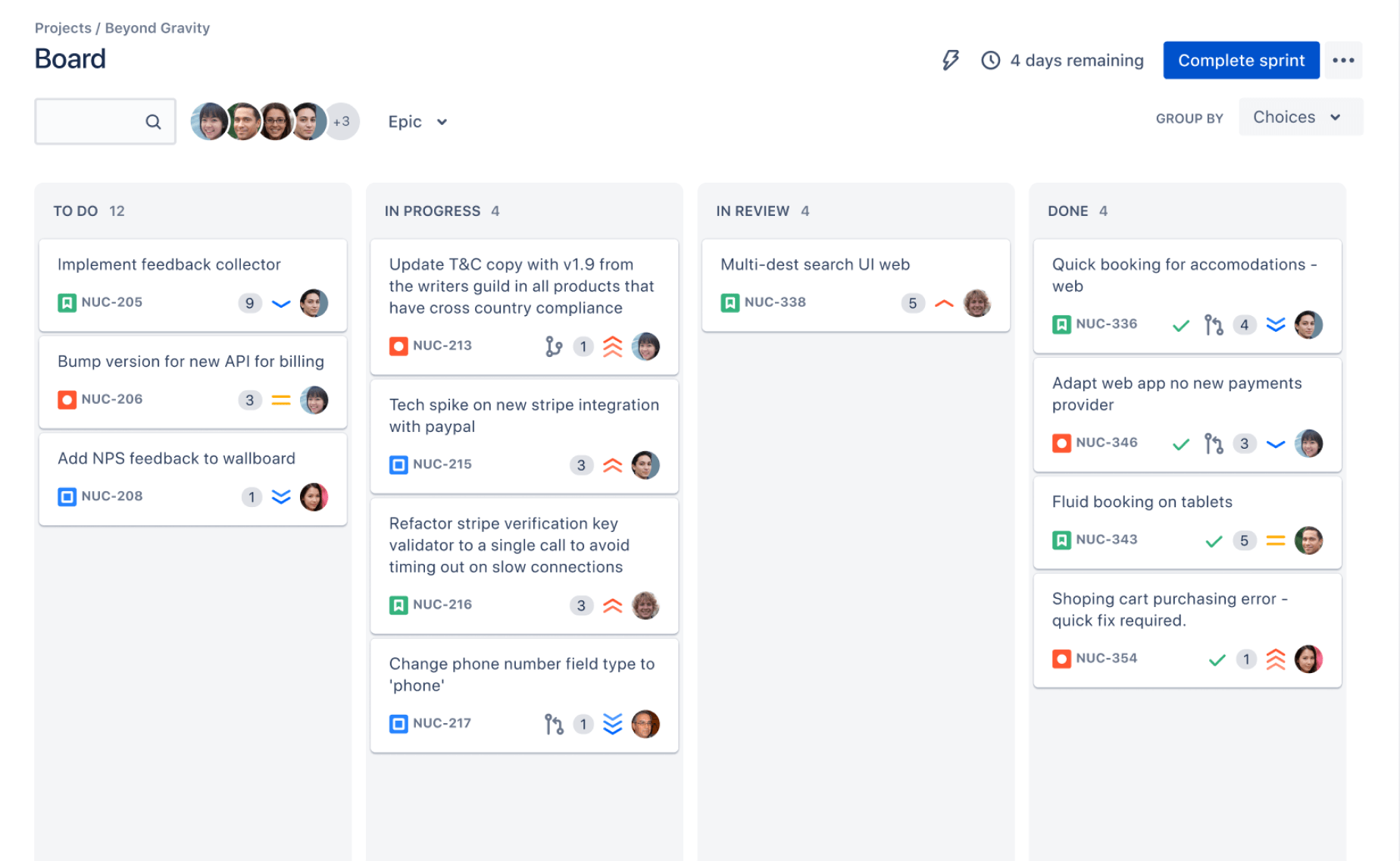
Jira is primarily a project and work management platform. You can use it to create tasks, assign owners, set priorities, plan sprints, track statuses, and report on progress.
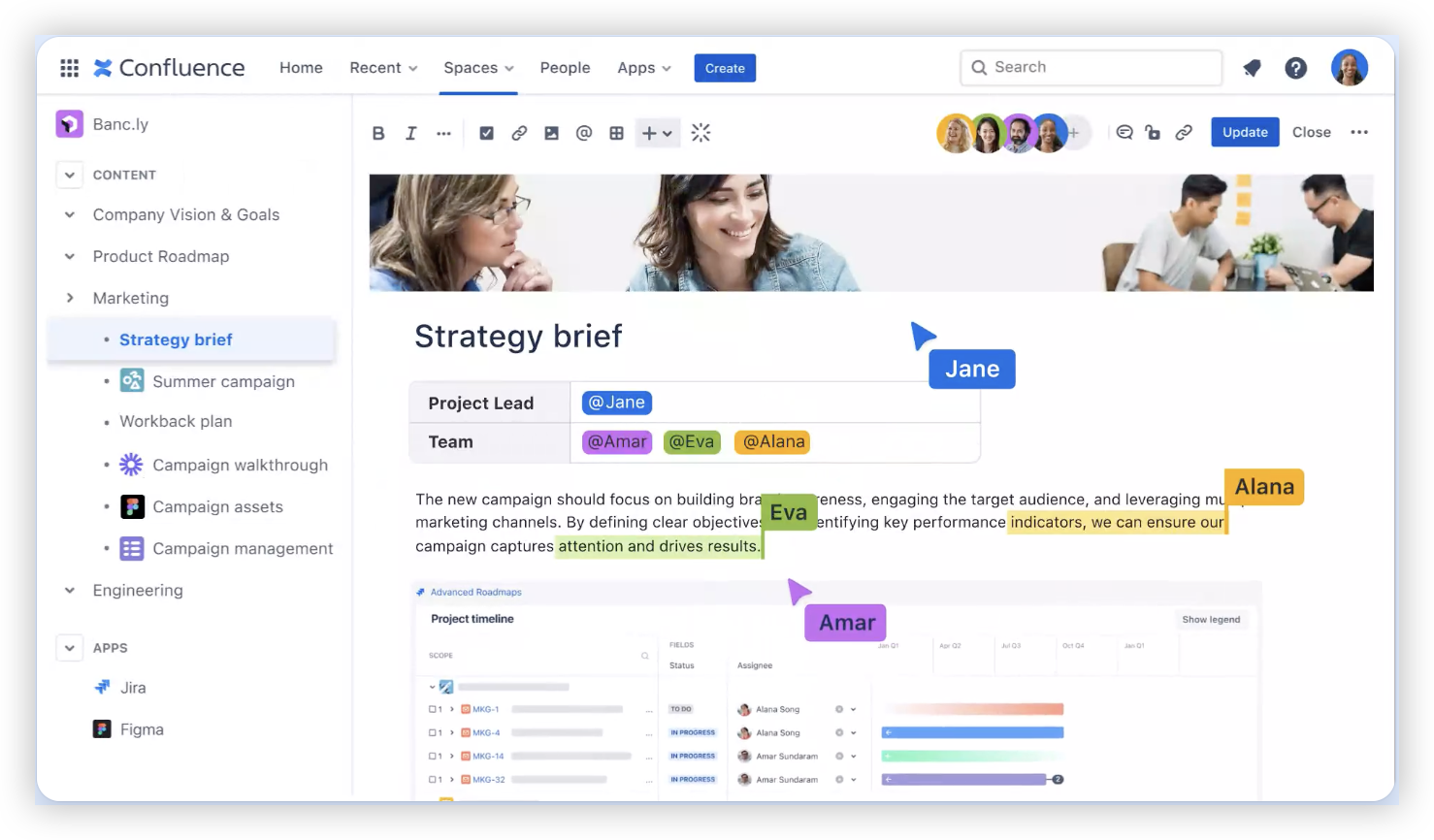
Confluence is primarily a knowledge management and collaboration platform. You can use it to create team spaces, write requirements, record decisions, publish procedures, and maintain an internal knowledge hub.
The role of Jira
Jira answers a practical question: What work needs to happen, who owns it, and what is its current status?
- Product teams can manage backlogs and roadmap work.
- Engineering teams can track bugs, improvements, and technical tasks.
- Marketing teams can coordinate campaigns and launch activities.
- Managers can review workload, blockers, sprint progress, and delivery trends.
A Jira issue might describe a payment defect, a mobile app improvement, or a customer onboarding task. Each issue can include an owner, priority, due date, status, comments, and related work.
The role of Confluence
Confluence answers a different question: What does the team know, and where can someone find the context?
- Product managers can explain goals, requirements, and acceptance criteria.
- Engineers can maintain architecture notes, runbooks, and technical decisions.
- Support teams can publish troubleshooting guidance and product explanations.
- Leaders can share policies, planning updates, and team agreements.
A Confluence page might explain why a feature is needed, summarize a customer interview, or describe how to respond when a service fails.
The connection between the platforms
Jira and Confluence become more useful when a task links to the knowledge that explains it. For example, a product requirement in Confluence can link to a Jira epic. Individual Jira stories can then link back to the relevant requirement section.
This creates a simple chain:
- A team records the goal and requirements in Confluence.
- The team creates an epic and related issues in Jira.
- Owners complete work and update Jira statuses.
- The team records decisions, results, and follow-up guidance in Confluence.
Here's why: the connection gives you both execution visibility and business context. A Jira status tells you what is happening. A Confluence page explains why it matters and how the team reached its decision.
A Practical Workflow for Growing Teams
Growing teams need a workflow that remains simple when work increases. The following approach connects planning, execution, communication, and learning without requiring every team to use the tools identically.
1. Define ownership for each workspace
Start by deciding what belongs in Jira and what belongs in Confluence. Write these rules where the whole team can see them.
| Work type | Recommended location |
|---|
| Tasks, bugs, stories, and milestones | Jira |
| Requirements and product goals | Confluence, linked to Jira |
| Team procedures and onboarding guidance | Confluence |
| Assignees, priorities, and statuses | Jira |
| Decisions and meeting outcomes | Confluence, with related Jira links |
| Sprint progress and delivery reporting | Jira |
This separation prevents a common problem: using comments in Jira as a permanent knowledge library or treating Confluence pages as a substitute for active task tracking.
2. Create a consistent planning structure
Choose a hierarchy that reflects how your team thinks about work. A typical product team may use a goal, initiative, epic, story, and subtask structure.
For example, “Improve checkout conversion” could be an initiative. “Simplify payment confirmation” could be an epic. “Add one-click retry” could be a story within that epic.
Keep the hierarchy understandable. If a new teammate needs ten minutes to interpret your issue structure, it probably contains too many layers.
3. Write requirements before execution begins
Use a Confluence page to explain the problem, intended outcome, scope, constraints, and success measures. Then link that page to the relevant Jira epic.
A useful requirement page might include:
- The customer or business problem.
- The expected outcome.
- What is included in the first release.
- What is intentionally postponed.
- Acceptance criteria and known risks.
- Questions requiring a decision.
Let me explain: this step reduces vague tickets. Engineers receive context before implementation, while product managers gain a stable place for discussion and clarification.
4. Convert requirements into actionable issues
Break the planned work into issues that one person or a small group can complete. Each issue should describe the intended result, relevant constraints, and completion conditions.
Compare these two examples:
- Weak: “Fix checkout.”
- Stronger: “Show a retry option after a declined card payment and record the customer-facing error message.”
The second issue gives the owner a clearer target. It also makes review easier because the team can assess a visible result rather than an unclear activity.
5. Connect every major issue to its context
Link Jira epics, stories, and bugs to the relevant Confluence pages. Use meaningful link labels, such as “Checkout requirements” or “Release runbook.”
A link should help someone answer a question quickly. If a developer opens an issue and cannot find the requirement, design decision, or test guidance, the connection is incomplete.
6. Use Jira during execution
Keep active work current in Jira. Owners should update statuses when work moves, add comments when decisions affect delivery, and flag blockers early.
A lightweight workflow might use:
- Backlog
- Ready
- In progress
- In review
- Ready for release
- Done
Avoid adding a status for every possible condition. “Waiting for design review” may deserve a label or blocked indicator rather than another permanent workflow stage.
7. Capture decisions in Confluence
Important decisions deserve more visibility than a temporary chat exchange or buried issue comment. Record the decision, date, participants, reasoning, and expected impact.
For example, a team might record why it chose token-based authentication instead of session-based authentication. The page can link to the Jira epic implementing the change.
This makes future reviews easier. Six months later, your team can understand the reasoning without recreating the entire conversation.
8. Close the loop after delivery
When work reaches completion, update the related knowledge. Add release notes, operational guidance, support instructions, or lessons learned where appropriate.
The best part? This turns completed work into reusable team knowledge. Your next project starts with more context, and new employees can learn from previous decisions.
How the Two Tools Support Different Team Activities
Jira and Confluence overlap in collaboration features, but their strengths differ. Choosing the right place for each activity keeps information easier to find.
Planning and prioritization
Jira is usually the better place for ranked work. A product manager can order a backlog, assign priorities, estimate effort, and move issues into a sprint.
Confluence can support that process by explaining the strategy behind the priorities. A quarterly planning page may describe the business goal, customer problem, and expected outcomes, while Jira contains the work needed to achieve them.
Requirements and discovery
Confluence gives teams room to explore a problem before committing to specific tasks. A page can hold research notes, open questions, diagrams, alternatives, and feedback.
Once the direction becomes clear, the team can create Jira issues that represent committed work. This keeps early exploration separate from execution while preserving the relationship between them.
Daily delivery
Jira is designed for active delivery. Team members can view assigned work, update statuses, mention colleagues, and identify blockers during a daily meeting.
For example, a team may review a sprint board each morning. When someone sees that a story is blocked by an unresolved product decision, the team can open the linked Confluence page and resolve the issue with the right context.
Team knowledge
Confluence is better suited to information that people will revisit repeatedly. Examples include onboarding instructions, service explanations, coding standards, release procedures, and frequently used checklists.
Keep pages organized with spaces, labels, page owners, and review dates. A knowledge hub becomes less useful when nobody knows whether an old page still reflects current practice.
Designing a Clear Information Architecture
Growing teams often create too many spaces, project areas, labels, and custom fields. The result feels flexible at first, then becomes difficult to navigate.
You can avoid that outcome with a small number of predictable patterns.
Use spaces that reflect stable team needs
Create Confluence spaces for enduring groups or business areas, such as Product, Engineering, Customer Support, or People Operations. Create a project space only when the project has enough material to justify one.
For example, a two-week experiment may need one planning page and a few Jira issues. A multi-year platform program may justify a dedicated space with architecture, release, decision, and onboarding sections.
Use page templates for repeated work
Templates reduce blank-page anxiety and improve consistency. Useful templates include:
- Product requirement pages.
- Decision records.
- Project kickoff pages.
- Retrospective summaries.
- Incident reviews.
- Team onboarding pages.
A template should guide thinking without forcing unnecessary detail. If a team skips half the fields every time, simplify the template.
Assign page ownership and review dates
Every important page should have a person or team responsible for keeping it accurate. Add a review date for procedures, policies, and technical guidance that may change.
For example, an onboarding page reviewed every six months can remain useful. An unowned page may keep outdated instructions visible long after the process changes.
Make navigation predictable
Use a consistent page tree. A product space might contain Goals, Requirements, Decisions, Releases, Research, and Team Practices.
Use labels carefully. Ten useful labels are easier to apply than fifty labels with overlapping meanings. Good navigation helps someone reach the right page without relying on a perfect search phrase.
Keeping Work and Knowledge Connected
A link between Jira and Confluence is valuable only when it supports a real decision or action. A large collection of links can still create confusion if nobody knows which page is current.
Link at the right level
Link a Jira epic to a requirement page when the page covers the entire initiative. Link an individual issue to a detailed design page when that issue depends on a specific technical explanation.
For example, an epic called “Improve search relevance” may link to a product brief. A separate story about ranking filters may link to a design page explaining the algorithm and test approach.
Show status in context
A Confluence planning page can include Jira status information for related work. This gives stakeholders a concise overview while keeping detailed execution in Jira.
A manager reviewing a launch page can see which work is complete, which work remains active, and which items are blocked. Team members still use Jira as the operational workspace.
Keep conversations close to the work
Use Jira comments for issue-specific coordination. Use Confluence comments for page-specific questions. Move lasting decisions into the main page or issue summary after discussion ends.
You might be wondering: why preserve the final decision? Because future readers need the conclusion, not a long thread that requires reconstructing the answer.
Review connections during milestones
At the end of a sprint, release, or project phase, check whether key links still work and whether important pages need updates. This review can take ten minutes when included in the team routine.
Without that habit, links gradually lose value. A requirement may change while the related Jira issues remain unchanged, creating a gap between intention and execution.
Common Mistakes Growing Teams Should Avoid
The tools rarely cause the biggest problems. Team habits usually do. A few predictable mistakes can make a well-configured workspace feel unreliable.
Using Jira as a long-term knowledge library
Jira comments are useful for delivery coordination, but they are hard to navigate as a permanent knowledge hub. A decision hidden inside a completed issue may never help the next person.
Move reusable guidance and lasting decisions into Confluence. Keep the Jira link so the delivery history remains visible.
Using Confluence as a task board
Pages can describe work, but they do not replace clear ownership, priority, status, and workflow controls. When a page becomes a long checklist, create Jira issues for the actionable items.
This makes responsibility visible. A project lead can read the page for context and inspect Jira for execution.
Creating complicated workflows too early
Growing teams sometimes add many statuses, approval stages, and custom fields before understanding their real needs. Complexity increases training time and creates inconsistent updates.
Start with a small workflow. Add a new stage only when the team can explain what decision or action that stage represents.
Allowing duplicate information to drift
Copying the same requirement into several pages and issues creates maintenance work. One version changes while another stays old.
Keep the detailed explanation in one primary location. Use links, short summaries, and clearly marked ownership elsewhere.
Jira and Confluence Solution: ONES.com
ONES.com combines project management and knowledge management in one platform. ONES Project provides project and work management, while ONES Wiki provides knowledge management. The two products are sold separately, so you can choose the capability your team needs.
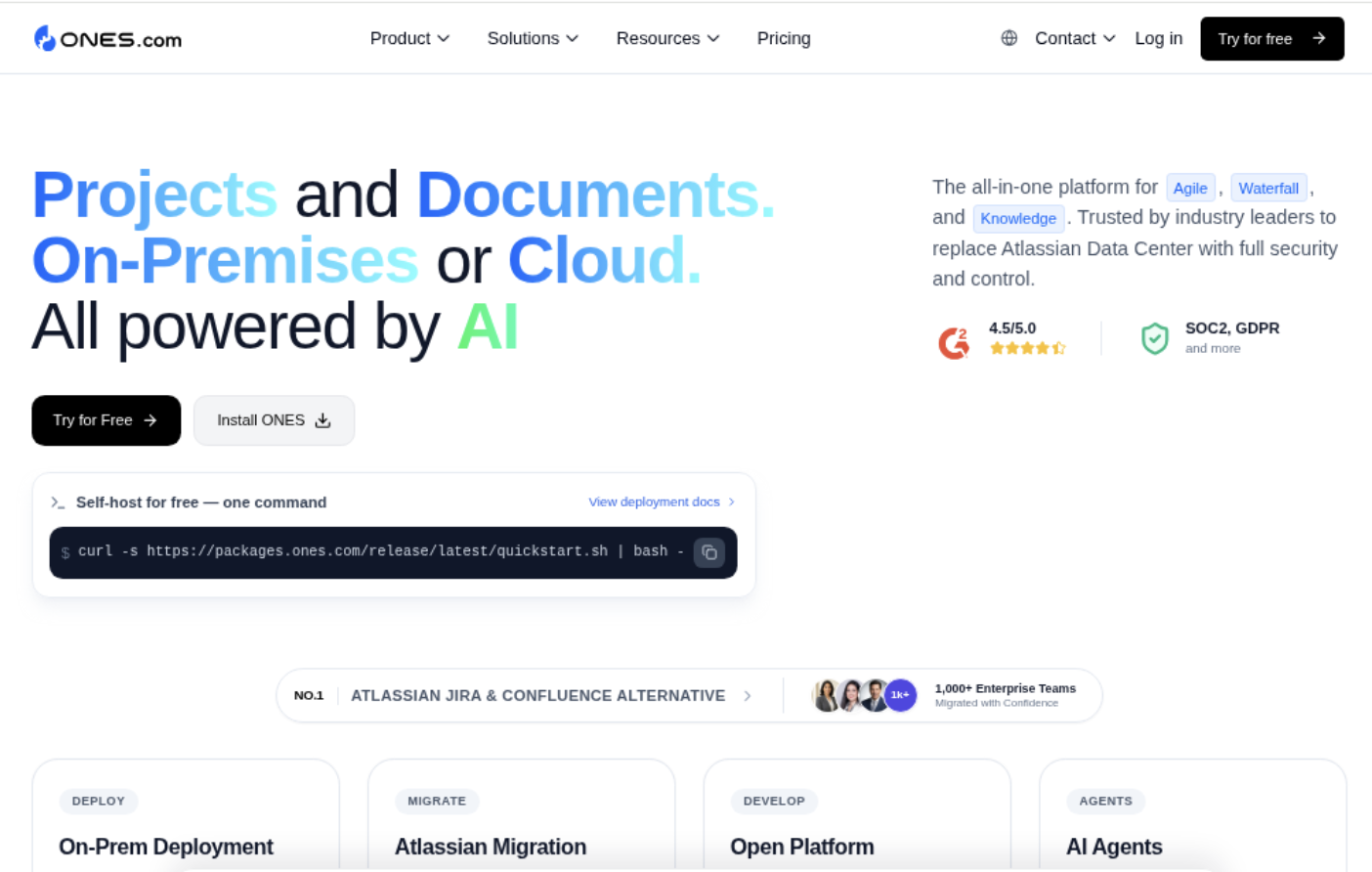
For teams comparing a Jira alternative or a Confluence alternative, ONES.com can reduce the separation between active work and shared knowledge. It supports cloud and self-hosted deployments, including on-premise, private cloud, and air-gapped environments.
Value Proposition
ONES.com helps teams connect planning, execution, and knowledge without relying on a large collection of plugins. It offers Jira-compatible workflows, built-in reporting, and full feature parity between cloud and self-hosted versions.
Core Capabilities
Disconnected work and knowledge → Unified project and knowledge platform → Easier context sharing
When project activity and team guidance live in separate systems, people spend time switching between locations. ONES.com brings ONES Project and ONES Wiki into one platform experience, helping teams connect work with supporting knowledge.
Teams that need Jira-compatible workflows → ONES Project → Familiar delivery management
Teams moving from Jira may need sprint planning, issue tracking, custom workflows, custom fields, and automation. ONES Project supports these patterns, making it suitable for teams that want a Jira alternative without abandoning structured project management.
Limited visibility into delivery → Built-in reporting → Clearer progress reviews
Manual status updates can make project reviews slow and inconsistent. Built-in reporting helps managers inspect progress, workload, and delivery trends within the project workspace.
Too many extensions to maintain → Native capabilities → Fewer plugin dependencies
Plugin-heavy environments can create administration and compatibility work. ONES.com includes core workflow, field, sprint, automation, and reporting capabilities natively, which can reduce the need for separate extensions.
Restricted deployment requirements → Four deployment options → More infrastructure flexibility
Some organizations cannot place project information in a public cloud. ONES.com supports Cloud, On-Premise, Private Cloud, and Air-gapped deployments, allowing teams to choose an environment that fits their operational requirements.
Uneven capability between hosted and self-managed systems → Full feature parity → Consistent team workflows
Self-hosted teams may worry that they will lose important functionality. ONES.com provides full feature parity between its cloud and self-hosted versions, helping teams maintain a consistent operating model.
Growing teams that need a low-risk starting point → Free plan for up to 30 seats → Practical initial adoption
A smaller team can begin with up to 30 seats before making a broader rollout decision. This gives the team room to test its project and knowledge workflows in real work.
Separate project and knowledge needs → ONES Project and ONES Wiki → Flexible product adoption
Some teams need project management first, while others need a knowledge base first. ONES Project and ONES Wiki can be selected separately, giving you a clearer starting point instead of requiring every team to adopt every capability immediately.
Application Scenarios
Software product development
A product team can manage epics, stories, sprints, bugs, and release work in ONES Project. Product requirements, architectural decisions, and onboarding guidance can live in ONES Wiki, with links connecting the two areas.
Organizations with restricted networks
An organization with strict network controls can use an on-premise or air-gapped deployment. The team retains structured project management and knowledge management while keeping the platform within its required environment.
Teams replacing disconnected tool combinations
A growing company may use one tool for tickets, another for internal guidance, and several plugins for reporting and automation. ONES.com can provide a more consolidated setup with native project features and a connected knowledge workspace.
Common Challenges
Challenge: People do not know where information belongs
Solution: Create a short ownership policy. Put active work, owners, priorities, and statuses in Jira. Put reusable guidance, requirements, and lasting decisions in Confluence. Add examples so the rule is easy to apply.
Challenge: Pages become outdated
Solution: Assign owners and review dates to important pages. During a release or quarterly planning cycle, ask owners to confirm whether key guidance remains accurate.
Challenge: Jira issues lack context
Solution: Link major issues to requirement and decision pages. Add a short context section to each epic, including the problem, intended outcome, and relevant constraints.
Challenge: Teams create too many workflow stages
Solution: Begin with a small set of statuses that represent meaningful changes. Add stages only when they help the team make a decision, identify responsibility, or expose a real bottleneck.
Challenge: Search results contain several competing versions
Solution: Choose one primary page for each important topic. Mark older pages clearly, redirect people to the current location, and avoid copying long explanations into multiple areas.
FAQs
Are Jira and Confluence the same tool?
No. Jira focuses on planning and tracking work, while Confluence focuses on organizing knowledge and collaboration. A Jira issue might track a bug or feature, whereas a Confluence page might explain the requirement, decision, or procedure related to that work. Teams often connect the tools so execution details and supporting context remain easy to navigate.
Should requirements live in Jira or Confluence?
Detailed requirements usually fit better in Confluence because pages provide room for goals, background, alternatives, decisions, and acceptance criteria. Jira should contain the actionable work created from those requirements. Link each major Jira epic or story to the relevant Confluence page so the owner can quickly understand the intended outcome.
Can a small team use both platforms?
Yes, but the team should keep its structure lightweight. A small team may need one Jira project, a simple workflow, and a compact Confluence space. Start with a few page templates and clear ownership rules. Add more structure only when the team encounters a recurring problem that the added structure can solve.
How do I prevent duplicate information?
Choose a primary location for each type of information. Keep task status and ownership in Jira, then keep durable explanations and decisions in Confluence. Use links and short summaries instead of copying the same content repeatedly. Review major links during sprint or release planning to catch outdated connections.
Is ONES.com a Jira and Confluence replacement?
ONES Project is positioned as a Jira alternative for project and work management, while ONES Wiki is positioned as a Confluence alternative for knowledge management. They are sold separately and can support different adoption paths. ONES.com also offers cloud, on-premise, private cloud, and air-gapped deployment options.
Conclusion
Jira and Confluence work best when each platform has a clear responsibility. Use Jira for active work, ownership, priorities, statuses, and delivery reporting. Use Confluence for requirements, decisions, procedures, and reusable team knowledge.
The practical solution is a connected workflow: define ownership, write context before execution, link major work to its supporting pages, capture important decisions, and update knowledge after delivery.
But here's the truth: growing teams do not need endless configuration. They need clear habits that make work visible and knowledge reusable. Start with a simple structure, review it regularly, and consider an integrated platform such as ONES.com when your team needs project and knowledge management in a more unified environment.