Jira and Confluence Pricing: A 2026 Cost Comparison Guide
Wondering what jira confluence pricing really costs in 2026? Compare plans, users, add-ons, and total expenses. Read now to choose wisely.
Jira and Confluence can look affordable at first glance. Then your team adds more people, premium features, storage, support, or extra apps, and the monthly bill changes quickly.
The difficult part is rarely the sticker price. You also need to compare user tiers, plan limits, guest access, deployment choices, and the cost of keeping two products connected.
But here's the truth: a fair comparison requires more than checking two subscription pages. You need to calculate the full cost of your project work and team knowledge in 2026.
This guide explains how Jira and Confluence pricing works, where hidden costs appear, and how to compare the two products with a realistic budget model. You will also see when a unified platform could simplify the calculation.
Jira and Confluence Pricing: The Core Cost Comparison
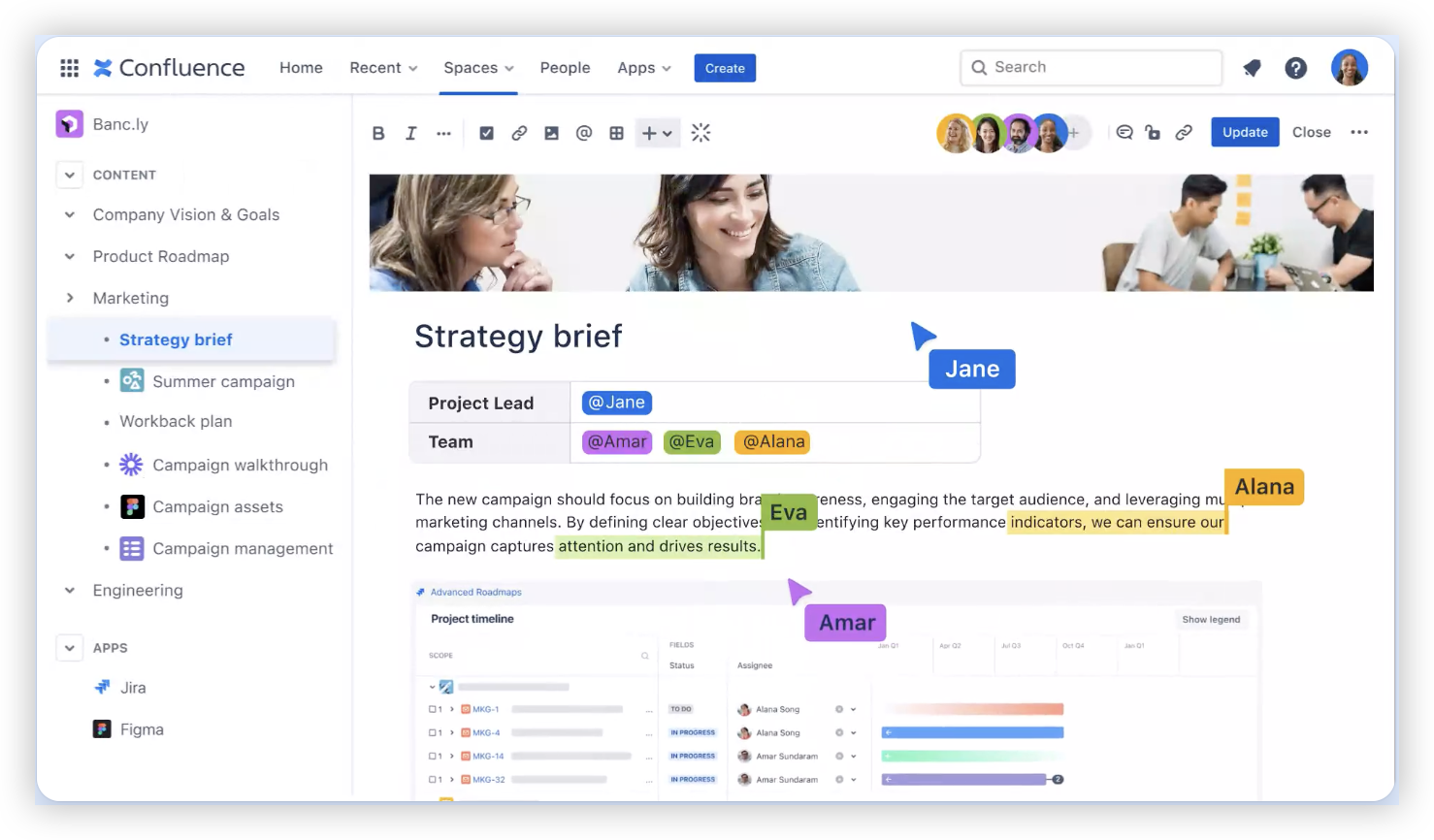
Jira and Confluence pricing usually depends on the number of users, selected plan, deployment method, storage needs, administration requirements, and optional apps. Jira focuses on project and issue management, while Confluence focuses on team knowledge and collaboration.
You can buy Jira and Confluence separately, or combine them in an Atlassian package. The right choice depends on how many people need each product and which features your team actually uses.
What You Are Really Paying For
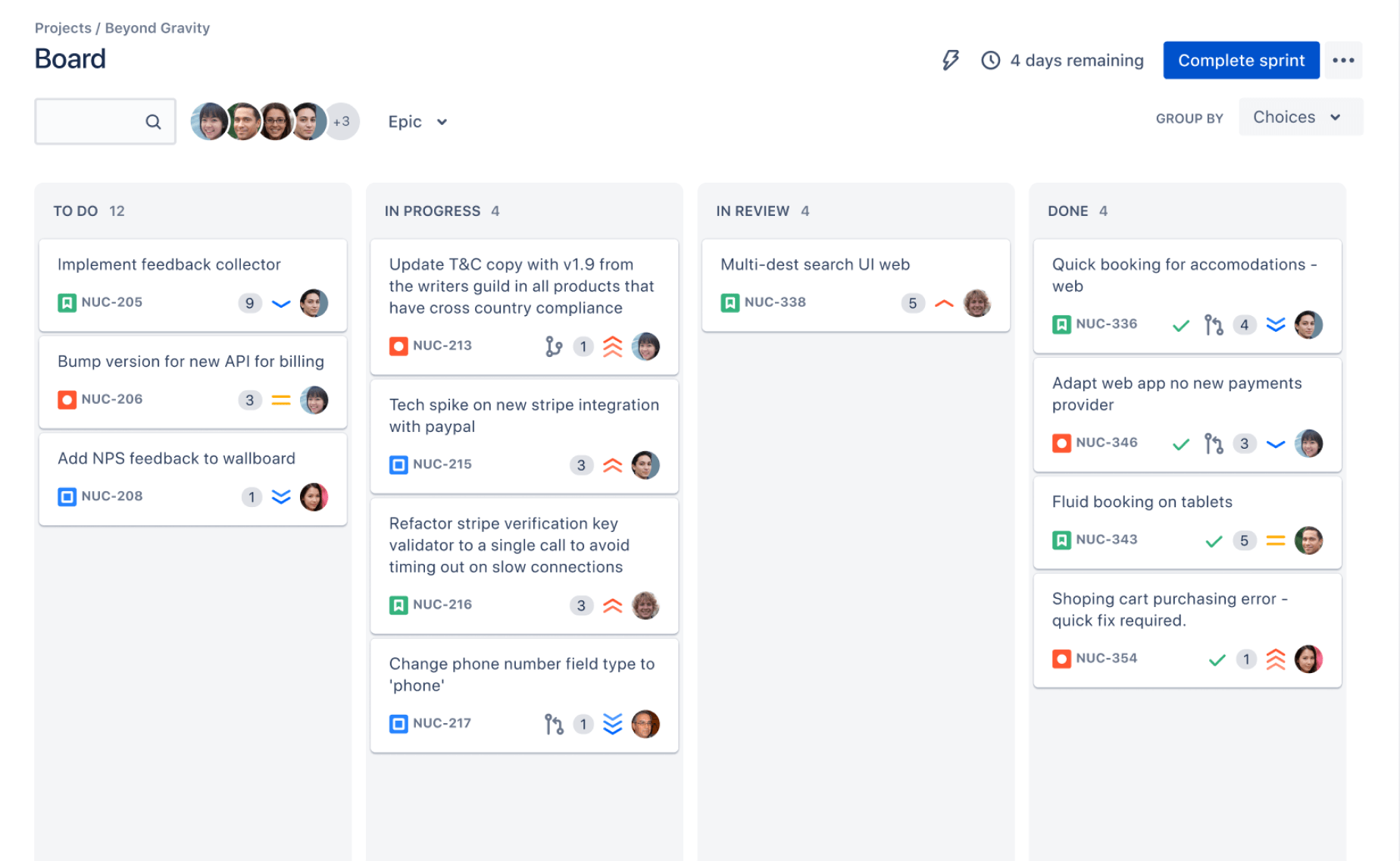
Jira pricing generally covers work management features such as projects, issues, workflows, boards, reports, automation, and access controls.
Confluence pricing generally covers pages, spaces, collaboration, permissions, search, templates, and knowledge management features.
When you use both products, the total cost can include:
- Jira subscriptions for project contributors and occasional collaborators.
- Confluence subscriptions for people who create or read team knowledge.
- Premium features required for administration, reporting, or governance.
- Marketplace apps for planning, testing, time tracking, or advanced reporting.
- Migration, configuration, training, and ongoing administration.
- Higher infrastructure and maintenance costs for self-managed deployments.
A Simple Annual Cost Formula
Start with a basic calculation before comparing feature lists:
Annual software cost = monthly subscription cost × 12 + app costs + implementation costs + administration costs.
For example, imagine a 60-person company. Forty people actively manage work in Jira, while all 60 read or contribute to Confluence. A combined subscription may appear efficient, but you should still check how each plan counts users.
Some products charge by a shared user pool. Others calculate each application separately. That difference can change the final bill, especially when project contributors and knowledge readers are different groups.
Pricing Tiers You Should Compare
| Cost area |
Questions to ask |
| Free plan |
How many people can join, and which limits affect daily work? |
| Standard plan |
Does it include the controls, storage, and collaboration features your team needs? |
| Premium plan |
Are advanced administration, planning, automation, or reliability features necessary? |
| Enterprise plan |
Do you need centralized governance, negotiated terms, or large-scale controls? |
| Marketplace apps |
Will extra tools add recurring costs for the same people? |
| Self-managed deployment |
Can your team support infrastructure, upgrades, security, and backups? |
How Jira and Confluence Plans Differ
The biggest difference is the work each product manages. Jira organizes tasks, issues, sprints, releases, and workflows. Confluence organizes written knowledge, project context, meeting notes, and internal guidance.
That distinction affects who needs access. A software engineer may need both products every day. A sales manager may only need selected Confluence spaces and occasional Jira visibility.
Jira Cost Drivers
Jira costs can rise when your team needs more than basic task tracking. Advanced workflows, automation rules, reporting, permissions, and planning features often become important as projects grow.
Consider a product team with 15 engineers, three product managers, four testers, and six business stakeholders. If every stakeholder receives a full license, the subscription reflects 28 people. If only the core team edits work items, a different access model may be more efficient.
Here's why: project tools often become expensive through broad access rather than heavy usage. Review every person who needs editing rights, reporting access, or simple visibility.
Confluence Cost Drivers
Confluence costs depend heavily on the number of people who need to view or create knowledge. A company may have many occasional readers but fewer regular authors.
Common knowledge areas include:
- Product requirements and release notes.
- Engineering standards and troubleshooting guidance.
- Onboarding and internal policies.
- Meeting decisions and project background.
- Customer research and go-to-market planning.
The challenge is that knowledge has a wide audience. Restricting access can reduce the bill, but it may also make important guidance harder to find.
When Buying Both Products Makes Sense
Jira and Confluence work well together when your team needs a clear connection between execution and context. A requirement can connect to a Jira work item, while a project page can summarize progress and decisions.
For example, a product launch page in Confluence might link to Jira tasks for design, development, testing, and release preparation. That connection reduces repeated updates across separate tools.
The combined approach makes sense when:
- Project teams actively maintain written context.
- Managers need progress views and background information.
- Engineers want work items connected to technical guidance.
- Your administrators can maintain permissions and integrations.
How to Calculate Your Real 2026 Budget
Use a role-based estimate instead of multiplying one advertised price by your total headcount. This approach shows where your spending actually comes from.
Step 1: Divide People by Access Needs
Create practical groups, such as:
- Full project contributors.
- Occasional project participants.
- Knowledge authors.
- Knowledge readers.
- External collaborators.
- Administrators and owners.
For example, a 100-person organization may have 45 project contributors, 20 occasional participants, 15 knowledge authors, and 100 knowledge readers.
You might be wondering: why separate authors from readers? Because the most affordable plan for one access pattern may not fit another.
Step 2: Map Features to Business Needs
List the capabilities you require before looking at plan names. Include workflow customization, automation, reporting, permissions, audit controls, storage, support, and deployment.
Then mark each capability as essential, useful, or unnecessary. This prevents a premium plan from becoming the default simply because it includes attractive extras.
Step 3: Add Adjacent Costs
Subscription fees are only one part of the budget. Add connected applications, consulting, training, migration, administration, and internal support time.
A small app fee can become significant when it charges for every Jira or Confluence user. Five separate apps may also create more maintenance work than your team expects.
Step 4: Model Growth
Calculate the cost at your current headcount, expected headcount, and likely upper range. A plan that fits 40 people may become inefficient at 85.
Use at least three scenarios:
| Scenario |
Planning question |
| Current state |
What will the team pay with today’s roles and access? |
| Growth state |
What happens after hiring, restructuring, or wider adoption? |
| Expansion state |
What happens when more departments join the workspace? |
Step 5: Validate the Live Quote
Subscription prices, feature limits, regional taxes, discounts, and packaging can change. Check the current commercial terms before approving a purchase.
Ask for clarification about annual billing, user bands, guest access, storage, premium support, migration assistance, and renewal terms. A written quote can reveal conditions that a public pricing page does not show clearly.
Hidden Costs That Can Change the Comparison
The cheapest subscription may not create the lowest total cost. Administration, customization, and duplicate work can outweigh a small difference in monthly fees.
Marketplace Extensions
Teams often add applications for test management, time tracking, roadmaps, portfolio planning, diagramming, reporting, or advanced forms.
Suppose a reporting extension costs a modest amount per person. If it applies to 80 licensed people, the annual total may exceed the original estimate.
Before adding an app, ask whether the requirement can be handled through native workflows, custom fields, automation, dashboards, or built-in reporting.
Administration and Governance
Large environments need owners who manage permissions, naming standards, templates, retention, onboarding, and access reviews.
Two connected products can also create duplicated administration. Someone must decide who can create projects, who can create spaces, and how teams should organize content.
Let me explain: the hourly cost of administration rarely appears in a subscription comparison. Yet an environment that takes several hours each week to maintain can affect your total technology budget.
Migration and Training
Moving existing project history and team knowledge requires planning. You may need to clean outdated material, redesign workflows, rebuild permissions, and teach new habits.
Training costs also rise when people must learn two different navigation systems. A unified experience can reduce that learning curve for smaller teams.
Integration Maintenance
Jira and Confluence integration is valuable, but connected workflows still need ownership. Changes to permissions, project structures, or page organization can break expected links.
Review important connections quarterly. Test critical project views, approval routes, notifications, and reporting dashboards after major configuration changes.
Jira and Confluence Compared With a Unified Platform
Buying two specialized products gives you depth in project tracking and knowledge management. A unified platform can reduce the number of subscriptions, interfaces, and administration patterns.
The better choice depends on your operating model. A large enterprise with established Atlassian expertise may value deep specialization. A growing team may prefer fewer systems and simpler ownership.
Side-by-Side Evaluation
| Evaluation area |
Separate Jira and Confluence |
Unified platform |
| Project management |
Strong issue, sprint, workflow, and release capabilities |
May combine project planning with related knowledge |
| Knowledge management |
Dedicated spaces, pages, templates, and collaboration |
Knowledge can sit closer to projects and workflows |
| Administration |
Two products, permissions, and configuration models |
One platform may simplify ownership |
| Customization |
Broad ecosystem and many extensions |
Fewer integrations may be needed for common workflows |
| Deployment |
Depends on the selected Atlassian offering |
Some platforms support cloud and self-hosted environments |
| Budget control |
Separate subscriptions can fit different user groups |
Consolidation may reduce overlapping costs |
The best part? You do not need to compare platforms only by monthly price. Compare the time required to administer, connect, explain, and improve them.
Natural Jira and Confluence Pricing Solution: ONES.com
ONES.com combines project management and knowledge management in one platform. ONES Project serves as a Jira alternative, while ONES Wiki serves as a Confluence alternative. They can also be sold separately.
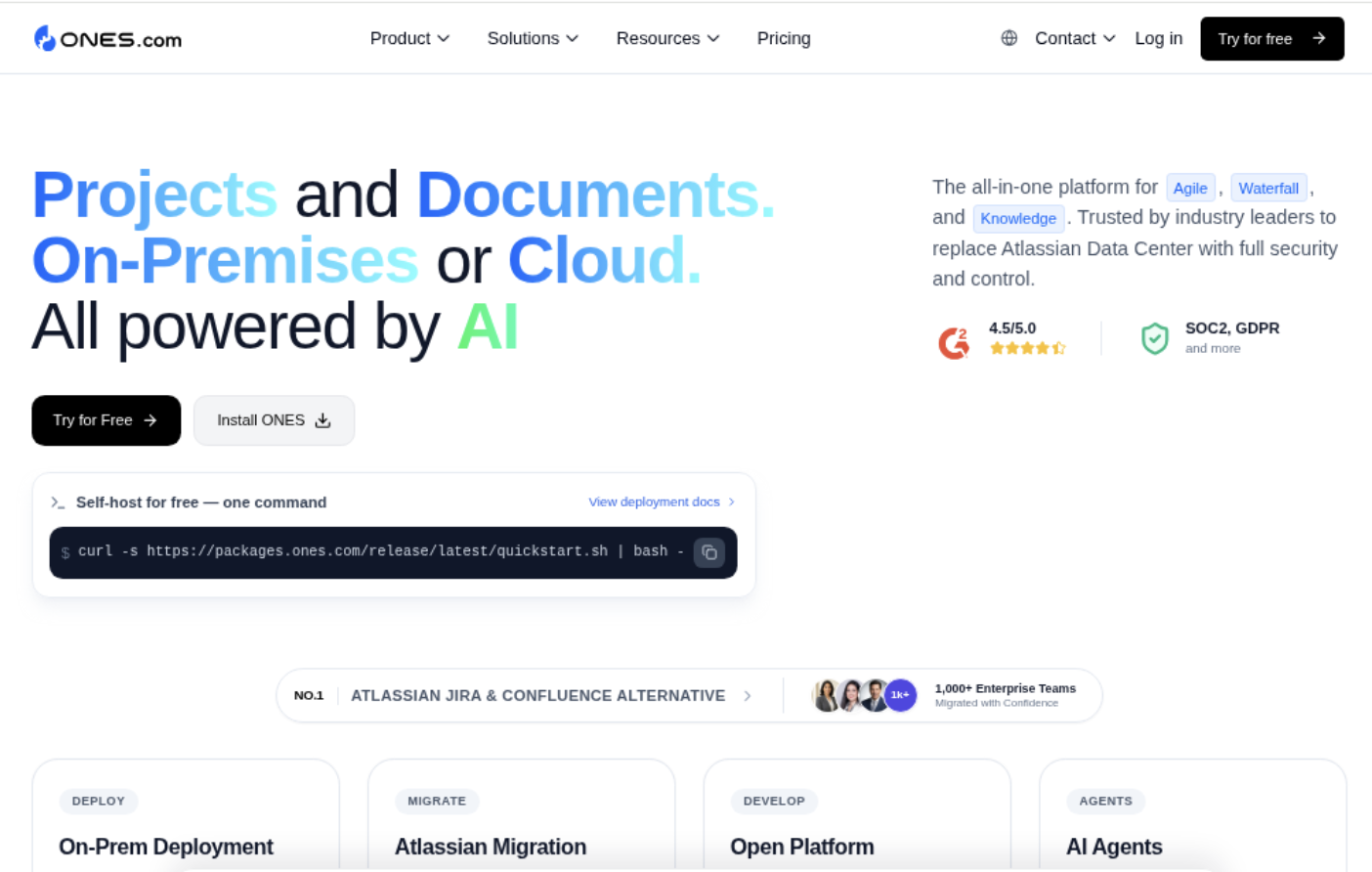
This approach can help teams evaluate project work, internal knowledge, permissions, and deployment needs through one operating model. It is especially relevant when separate subscriptions create duplicated administration or plugin costs.
Value Proposition
ONES.com gives teams a unified environment for planning work and organizing knowledge. It supports cloud, on-premise, private cloud, and air-gapped deployments.
Core Capabilities
- Disconnected project and knowledge tools: Use ONES Project and ONES Wiki within one platform. This keeps project context closer to the work and can reduce duplicated navigation.
- Jira migration concerns: Use Jira-compatible workflows in ONES Project. Teams can preserve familiar delivery patterns while evaluating a Jira alternative.
- Limited reporting: Use built-in reporting to track progress, workload, and delivery signals. This can reduce reliance on separate reporting extensions.
- Rigid processes: Configure custom workflows and fields for different teams. Product, engineering, marketing, and operations can follow distinct approval paths.
- Manual sprint planning: Use sprint management for iterative delivery. Teams can plan, monitor, and review work without maintaining a separate planning system.
- Repetitive administrative work: Apply automation to routine actions. Automatic transitions, notifications, and assignments can reduce manual upkeep.
- Plugin-heavy environments: Use native project and knowledge capabilities before adding extensions. Fewer plugins can simplify maintenance and reduce recurring costs.
- Cloud-only restrictions: Choose cloud, on-premise, private cloud, or air-gapped deployment. This gives regulated and restricted-network teams more control over location.
- Different feature levels by deployment: Use full feature parity between cloud and self-hosted versions. Your deployment choice does not have to remove core capabilities.
- Early-stage budget pressure: Start with the free plan for up to 30 seats. This gives a small team room to evaluate workflows before committing to a larger rollout.
Application Scenarios
Scenario one: a 25-person software team. Engineers, product managers, and testers need sprint planning, custom workflows, and technical knowledge in one environment. ONES.com can reduce the need to connect separate project and knowledge systems.
Scenario two: a regulated engineering organization. The team requires an on-premise or air-gapped deployment. ONES.com supports those deployment models while retaining feature parity with its cloud version.
Scenario three: a growing operations group. Several departments need different approval routes and custom fields. A unified platform can make those workflows easier to govern than multiple disconnected tools.
Common Challenges When Comparing These Products
Challenge 1: Comparing Different User Counts
Problem: Your Jira team and Confluence audience may have different sizes. A single headcount multiplier produces an unreliable estimate.
Solution: Group people by the access they need. Price project contributors, knowledge authors, readers, guests, and administrators separately.
Challenge 2: Choosing Premium Features Too Early
Problem: A premium tier may include useful capabilities, but your team may only need one of them.
Solution: Identify the exact requirement first. Then check whether a lower plan, native configuration, or a smaller extension can satisfy it.
Challenge 3: Ignoring Internal Administration
Problem: Your estimate includes subscriptions but excludes the time needed for access reviews, workflow maintenance, and team support.
Solution: Track administrative effort for one month. Multiply the weekly hours by your internal labor rate to create a more realistic comparison.
Challenge 4: Underestimating Growth
Problem: A low initial price can become expensive after hiring or wider adoption.
Solution: Model at least three headcount scenarios. Review the estimate whenever another department joins the environment.
Challenge 5: Forgetting Deployment Requirements
Problem: A cloud-only option may not fit security, residency, or restricted-network requirements.
Solution: Confirm deployment choices before comparing subscription tiers. An unsuitable deployment model can invalidate an otherwise attractive price.
FAQs About Jira and Confluence Costs
Are Jira and Confluence priced separately?
They can be purchased separately, although combined Atlassian packaging may offer a different commercial structure. Your total depends on how many people need each product and whether the same people use both.
Calculate each access group before choosing a bundle. A combined option may help when most project contributors also create and read knowledge, but separate subscriptions may fit teams with very different audiences.
Is Confluence included with Jira?
Do not assume that a Jira subscription automatically covers every Confluence capability. Packaging, plan levels, and promotional terms can change, so confirm the current offer before budgeting.
Also check whether the included access matches your needs. A team may require broad knowledge access even when only a smaller group actively manages projects.
Which product costs more for a growing team?
There is no universal answer. Jira may become more expensive when many people need project access, advanced planning, or premium controls. Confluence may become more expensive when the entire company needs knowledge access.
Compare the number of licensed people, required plan features, extensions, and administration effort. The product with more readers or contributors often has the larger impact.
How can I reduce the combined cost?
Begin by removing inactive accounts and reviewing access by role. Then audit extensions, unused projects, outdated spaces, automation rules, and premium features.
You can also reduce cost by standardizing workflows and templates. A clear operating model makes it easier to avoid customizations that require recurring maintenance.
Should a small team choose a unified platform?
A unified platform can be useful when a small team wants project tracking and knowledge management without maintaining separate systems. It may also simplify onboarding and administration.
However, evaluate feature depth, migration effort, deployment needs, integrations, and future growth. The lowest subscription is not automatically the best long-term decision.
How often should I review the comparison?
Review your estimate at least once a year and whenever your headcount, deployment requirements, or application mix changes.
For fast-growing teams, a quarterly review is more practical. Compare active access, plan usage, extension costs, and administrative effort before renewal discussions.
Conclusion
Jira and Confluence pricing is a total-cost question rather than a simple monthly subscription comparison. Count users by role, match plans to real requirements, include extensions, and model growth.
But here's the truth: the most expensive choice may be the environment that requires too many plugins, duplicated administration, or constant manual coordination.
Start with your access groups and essential capabilities. Then compare separate products with a unified option such as ONES.com, especially when deployment flexibility, native feature coverage, and simpler administration matter.
The right decision gives your team predictable costs and a practical way to connect project execution with shared knowledge.