Jira Annual Pricing: A 2026 Guide to Estimating Total Costs
Need to estimate Jira annual pricing accurately? Learn how to calculate tiers, upgrades, apps, taxes, and renewals. Read now to avoid budget surprises.
Jira annual pricing can look simple until you add user tiers, plan upgrades, marketplace apps, taxes, storage, and renewal changes. A monthly rate multiplied by 12 may give you a quick estimate, yet it can miss the number that finance actually needs.
That uncertainty creates awkward surprises. A team may budget for Jira Standard, then discover that Premium features, extra apps, or a higher billing tier push the yearly cost much higher. Large organizations face another complication: annual pricing is often quoted differently from self-serve plans.
But here’s the truth: you can estimate your Jira budget reliably with a repeatable calculation. Start with your paid user tier, multiply the annual per-user cost, add apps and taxes, then include a contingency for growth. This guide shows you how to do that for 2026.
How to Estimate Jira Annual Pricing in 2026
Jira annual pricing is the yearly cost of a Jira subscription after accounting for the selected plan, paid user tier, billing method, add-ons, taxes, and expected team growth.
For a practical estimate, use this formula:
Estimated annual cost = subscription cost + app costs + implementation costs + tax allowance + growth buffer
For a small or midsize team, the subscription is usually the largest part of the calculation. However, marketplace apps and Premium-only features can materially change your final budget.
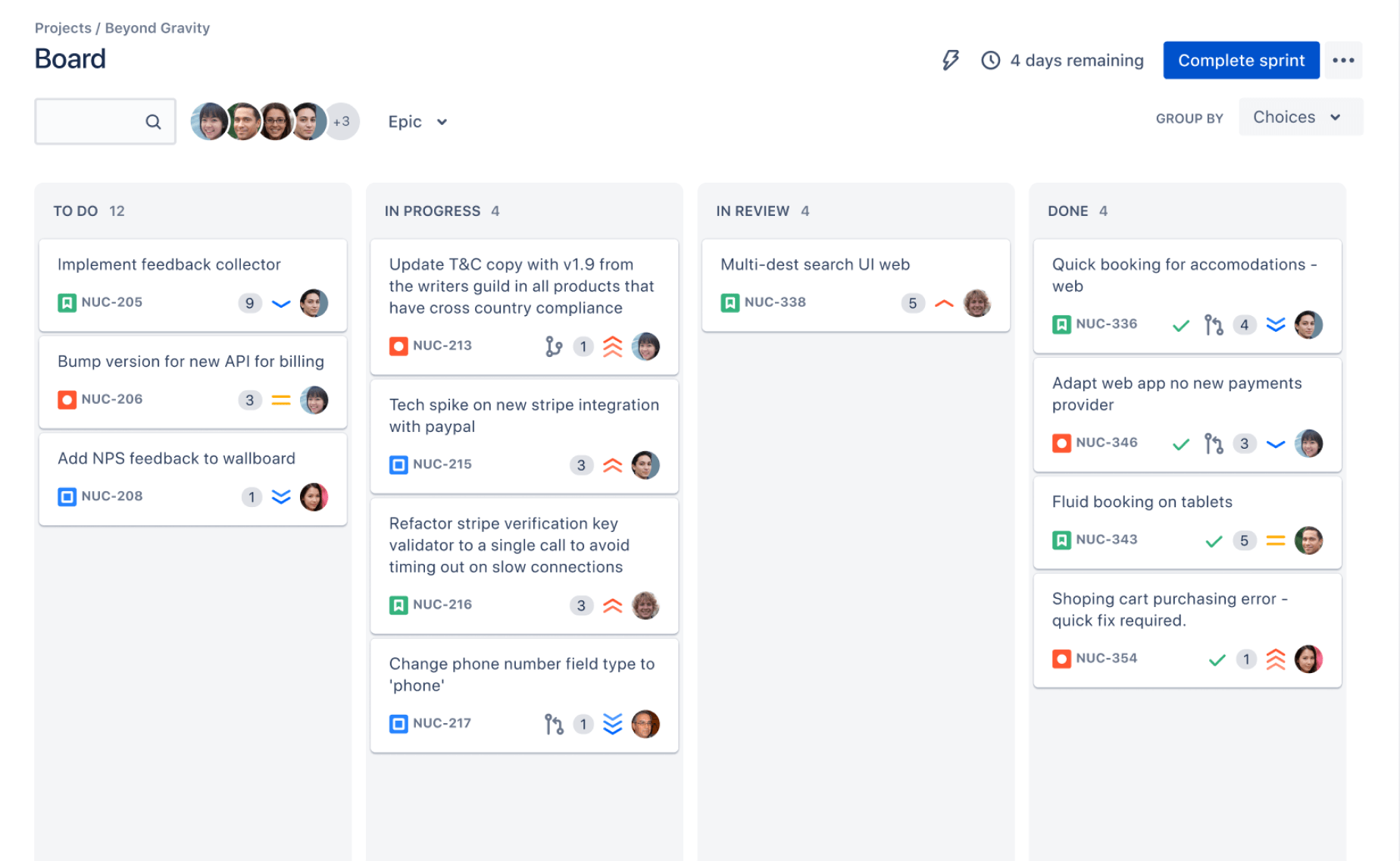
Step 1: Choose the Jira plan
Jira Cloud commonly offers Free, Standard, and Premium plans. Enterprise pricing is generally handled through a customized sales quote rather than a simple public checkout amount.
- Free: Suitable for small teams testing basic issue tracking and project coordination.
- Standard: A practical starting point for teams that need more users, administration, storage, and collaboration controls.
- Premium: Designed for organizations that need advanced planning, higher service expectations, and expanded administrative capabilities.
- Enterprise: Better suited to complex organizations requiring broader governance, security, support, and commercial terms.
Start with the plan that covers your operational requirements. Choosing the cheapest tier first can create a false saving if your team immediately needs paid extensions or a higher service level.
Step 2: Count billable users carefully
Your user count affects both the plan price and the billing tier. Count every person who needs regular access, including product managers, engineers, designers, testers, analysts, and administrators.
For example, a team with 18 employees may initially estimate 18 seats. If two contractors and a department manager also need access, the realistic count becomes 21. That difference may move the subscription into another pricing tier.
Use three numbers when planning:
- Current users: People who need access today.
- Committed users: People expected to join during the next renewal period.
- Reserve users: Additional capacity for hiring, contractors, or temporary project teams.
Annual billing often rewards careful seat planning. Paying for unused seats throughout the year can cost more than adding capacity later, while underestimating demand can create procurement delays.
Step 3: Separate monthly display prices from annual estimates
Pricing pages often display a monthly per-user figure because it is easy to compare. Annual billing can use different calculations, especially at higher user counts or within negotiated contracts.
For a quick estimate, multiply the displayed monthly rate by 12:
Monthly rate × paid users × 12 = preliminary annual subscription estimate
Then label the result as a planning estimate rather than a guaranteed invoice amount. Atlassian may apply tiered pricing, annual terms, promotional adjustments, regional taxes, or contract-specific conditions.
Step 4: Add marketplace apps and connected services
Jira rarely operates alone in a mature delivery environment. Teams may add time tracking, test management, portfolio planning, reporting, incident management, automation, or documentation tools.
Calculate each app separately:
Annual app cost = app rate × applicable user tier × 12
Some apps price by the number of Jira users. Others use active users, agents, administrators, or a separate license tier. Check each commercial model before combining the totals.
For example, a reporting app priced for 25 users may still charge according to the 25-user tier when only 17 people actively create reports. That pricing structure can make an apparently small add-on more expensive than expected.
Step 5: Include taxes, currency, and payment effects
Your final annual amount may include sales tax, value-added tax, foreign exchange costs, or payment processing effects. These items depend on your billing location and purchasing arrangement.
If your finance team works in euros, pounds, or another currency, create a small exchange-rate buffer. A five percent allowance can help avoid a budget shortfall caused by currency movement.
Step 6: Add a growth buffer
Team size rarely stays fixed for 12 months. Add a growth allowance when hiring plans, acquisitions, seasonal contractors, or new business units may increase access requirements.
A simple approach is to calculate the cost for your current seats, then create a second estimate with 10% to 20% more users. Compare both figures before approving the annual budget.
Illustrative Jira Cloud Annual Cost Examples
The following examples show how to build a budget. They use rounded planning rates rather than a guaranteed 2026 quote. Confirm the live amount at checkout or through your commercial representative before purchasing.
| Team size |
Plan scenario |
Illustrative monthly rate |
Subscription estimate |
| 10 users |
Standard |
$7.50 per user |
$900 per year |
| 25 users |
Standard |
$7.50 per user |
$2,250 per year |
| 50 users |
Standard |
$7.50 per user |
$4,500 per year |
| 25 users |
Premium |
$13.50 per user |
$4,050 per year |
| 50 users |
Premium |
$13.50 per user |
$8,100 per year |
These figures show why plan selection matters. A 25-person team could spend roughly $2,250 annually on a Standard planning estimate, or about $4,050 on a Premium estimate before apps and taxes.
Here’s why: the Premium decision is rarely about the subscription alone. You should compare the cost against the value of advanced planning, administration, scale, and reduced operational friction.
Example: a 15-person Standard team
Imagine a product team with 15 paid users and an illustrative Standard rate of $7.50 per user each month.
- Subscription: 15 × $7.50 × 12 = $1,350
- Reporting app: $300 annually
- Tax and currency allowance: $165
- Growth buffer: $200
- Estimated planning budget: $2,015
The actual invoice may differ because the app could use a different user tier or the annual subscription may use tiered billing. Still, the calculation gives finance a defensible starting point.
Example: a 60-person Premium team
Now consider a 60-person organization using an illustrative Premium rate of $13.50 per user monthly.
- Subscription: 60 × $13.50 × 12 = $9,720
- Testing and reporting apps: $2,400 annually
- Tax and currency allowance: $1,212
- Growth buffer: $1,000
- Estimated planning budget: $14,332
The add-ons represent a meaningful portion of the budget. This is common when Jira becomes the center of a wider delivery toolchain.
What Changes the Total Yearly Jira Budget?
The headline subscription price is only one part of your ownership cost. Four variables deserve attention before you approve an annual commitment.
User tiers and tiered billing
Jira pricing can change when your account crosses a user threshold. A team with 51 users may not pay exactly 51 times the rate shown for a 50-user tier.
That is why you should test several seat counts. Compare 50, 60, and 75 users rather than estimating only the current headcount.
Plan upgrades
A Standard plan may cover issue tracking, agile boards, workflows, and routine administration. Premium can become relevant when you need higher-scale planning or advanced organizational controls.
Compare the upgrade against your actual requirements. If only one department needs an advanced capability, a full-plan upgrade may be less efficient than changing the workflow or using a focused extension.
Marketplace applications
Apps can improve Jira, yet every additional subscription increases administration and renewal complexity. Three separate apps can also create overlapping functionality.
Before adding an app, check whether Jira already provides a sufficient native capability. Removing one unnecessary subscription may save more than negotiating a small discount.
Implementation and administration
Subscription cost does not cover the time required to design workflows, configure permissions, migrate projects, train teams, and maintain automation.
For example, a 40-person rollout may require an internal administrator, a project lead, and several training sessions. Treat that effort as part of the first-year budget.
Annual Billing Versus Monthly Billing
Annual billing can improve budget predictability because you plan one renewal cycle instead of twelve monthly charges. It may also fit procurement policies that prefer a single purchase order.
Monthly billing offers more flexibility when your team size is uncertain. A startup hiring rapidly may prefer monthly commitments while validating its process and user demand.
| Consideration |
Annual billing |
Monthly billing |
| Budget planning |
One planned renewal amount |
Recurring monthly variance |
| Seat flexibility |
Less flexible during the term |
Easier to adjust over time |
| Procurement |
Works well with annual purchasing cycles |
May require recurring payment approval |
| Growth risk |
Can include unused capacity |
Adapts more easily to changing demand |
| Best fit |
Stable teams with predictable access needs |
Changing teams or early-stage deployments |
The best part? You do not need to choose from habit. Estimate both options using your expected user changes, then compare flexibility against commitment.
How to Build a Finance-Ready Pricing Estimate
A clear estimate should explain every assumption. Finance teams need more than a single total because the amount may change when seats, apps, or tax treatment changes.
Use three planning scenarios
Create a low, expected, and high scenario:
- Low: Current users, existing plan, and no major add-ons.
- Expected: Current users plus planned hiring, required apps, and normal tax treatment.
- High: Faster growth, a higher plan, extra apps, and currency or tax pressure.
For example, your expected annual budget might be $8,000, while the high scenario reaches $11,000 after adding 20 users and Premium functionality.
Record the assumptions
Write down the user count, plan, currency, billing term, application list, tax treatment, and renewal date. This makes the estimate easier to review when the commercial quote arrives.
You should also record whether guest access, external collaborators, service accounts, and inactive accounts affect billing. Different services handle these categories differently.
Review the estimate quarterly
Annual billing does not mean annual planning. Review user growth and app usage every quarter so your next renewal does not become a surprise.
Remove unused apps before renewal. Check inactive accounts. Ask each department whether it still needs every paid capability.
ONES.com combines project management and knowledge management in one platform. ONES Project provides project planning and delivery capabilities as a Jira alternative, while ONES Wiki supports knowledge management as a Confluence alternative.
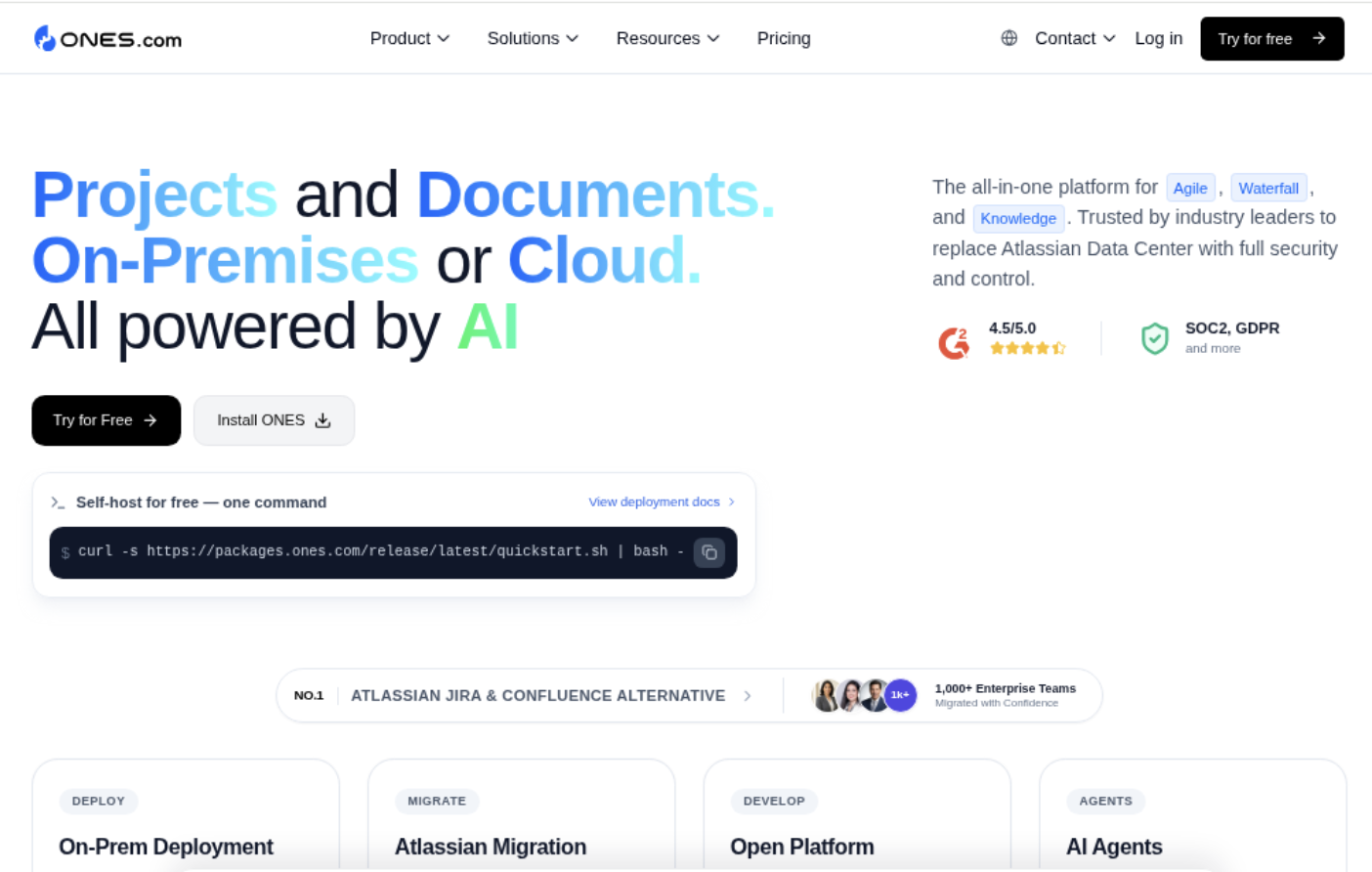
The products are sold separately, so you can select the capability that matches your needs. ONES.com offers a free plan for up to 30 seats and supports Cloud, On-Premise, Private Cloud, and Air-gapped deployments.
Core capabilities
Complex Jira-style workflows → Jira-compatible workflows → easier process migration
Teams with established issue states, approvals, and handoffs can preserve familiar delivery patterns. That reduces the disruption associated with replacing a project management system.
Plugin sprawl → native project capabilities → fewer separate subscriptions
When reporting, sprint planning, automation, custom fields, and workflow controls live within the platform, you may need fewer extensions. That can simplify administration and make annual cost forecasting clearer.
Rigid process requirements → custom workflows and fields → better operational fit
Different teams can configure processes around their work instead of forcing every project into one template. A product team, service team, and compliance team can each manage relevant fields and approvals.
Scattered project visibility → built-in reporting → faster status review
Built-in reporting helps managers review progress, risks, workload, and delivery trends without assembling multiple external views. This can reduce manual reporting effort.
Manual sprint coordination → sprint management → more consistent planning
Teams can organize backlogs, plan iterations, track progress, and review outcomes in a connected workflow. That supports repeatable agile practices across multiple projects.
Repetitive administration → automation → fewer routine actions
Automation can handle recurring transitions, notifications, assignments, and updates. The result is less manual maintenance for project leads and administrators.
Restricted-network requirements → self-hosted deployment options → stronger control over the environment
Organizations with strict infrastructure rules can choose On-Premise, Private Cloud, or Air-gapped deployment. ONES.com provides feature parity between its cloud and self-hosted versions.
Separate project and knowledge tools → ONES Project and ONES Wiki → connected work management
Teams that need both delivery tracking and knowledge management can use the products within the same broader platform, while purchasing them separately according to operational needs.
Application scenarios
A regulated engineering company: The team needs self-hosted deployment, custom approval workflows, and controlled access. An On-Premise or Air-gapped setup can support those infrastructure requirements.
A growing software team: The company wants sprint management, reporting, automation, and familiar Jira-compatible workflows without assembling many extensions. ONES Project can provide a consolidated environment.
A distributed product organization: Product planning, delivery work, and internal knowledge need stronger alignment. The organization can combine ONES Project with ONES Wiki while keeping the products separately purchased.
Common Challenges When Estimating Annual Jira Costs
Challenge: using the visible monthly rate as the final amount
Solution: Treat the monthly figure as a starting point. Add 12 months, the correct user tier, apps, taxes, and a growth allowance before presenting the estimate.
Challenge: forgetting contractors and external collaborators
Solution: Ask every project owner who needs regular access. Include contractors, consultants, temporary delivery staff, and managers who require reporting access.
Challenge: underestimating app expenses
Solution: List every connected application and identify its pricing basis. Some extensions use Jira seats, while others apply separate tiers or usage measures.
Challenge: paying for inactive accounts
Solution: Review access before renewal. Remove people who have left, reduce unnecessary permissions, and confirm whether occasional collaborators need full paid access.
Challenge: ignoring migration and administration effort
Solution: Budget for workflow design, permissions, training, rollout support, and ongoing administration. The first-year cost usually includes more than the subscription invoice.
FAQs About Jira Annual Pricing
Is Jira annual pricing cheaper than paying monthly?
Annual billing may provide better budget stability, yet it is not automatically cheaper for every team. The final result depends on user tiers, plan selection, discounts, tax treatment, and commercial terms. Monthly billing can be more practical when your team changes frequently. Compare both options using the same user count, app list, and expected growth so the comparison reflects your actual situation.
How do I calculate the yearly cost for a small Jira team?
Multiply the applicable monthly per-user rate by the number of paid users and by 12. Then add marketplace apps, taxes, currency allowances, and a growth buffer. A 15-person team using an illustrative $7.50 monthly rate would start with $1,350 annually. That amount remains a planning estimate until the final tier and checkout total are confirmed.
Does Jira charge for every person in a project?
Billing usually depends on the applicable user or access tier rather than the number of individual projects. However, access types and connected applications may have different rules. Count everyone who needs regular Jira access, including administrators, managers, contractors, and external collaborators. Review inactive accounts before renewal to avoid carrying unnecessary seats into another term.
What should I include besides the Jira subscription?
Include marketplace applications, taxes, currency effects, implementation, training, administration, integrations, and expected user growth. A team may also need a budget for workflow redesign or migration work. These costs can be modest for a small deployment and substantial for a large organization with complex permissions, automation, and reporting requirements.
When does Jira Premium make financial sense?
Premium may make sense when your organization needs advanced planning, higher-scale administration, or capabilities that reduce operational friction. Do not evaluate it only by comparing monthly rates. Estimate the cost of the plan, any extensions it could replace, administrative time, and the consequences of staying on Standard. The stronger option is the one that meets requirements at an acceptable total cost.
Can an alternative reduce the total cost of project management?
Possibly. A platform may reduce cost when it provides native capabilities that would otherwise require several paid extensions. Compare subscription price, migration effort, administration, deployment requirements, reporting, workflow flexibility, and support. A lower license price alone does not guarantee a lower total cost. The best comparison includes both the annual invoice and the work required to operate the platform.
Conclusion
Estimating annual Jira cost requires more than multiplying a displayed rate by 12. Start with your plan and paid user tier, then add apps, taxes, implementation, administration, and expected growth.
But here’s the truth: the most reliable estimate is a range. Build low, expected, and high scenarios, record every assumption, and review the numbers before renewal.
If your team wants a Jira alternative with Jira-compatible workflows, built-in reporting, automation, custom fields, sprint management, and self-hosted deployment options, ONES.com is worth evaluating alongside the commercial calculation.
The problem is unpredictable annual spend. The pressure comes from hidden add-ons, changing seats, and operational overhead. The solution is a complete ownership estimate that reflects how your team will actually work in 2026.