Jira API Pricing: 2026 Costs, Plans, Limits, and Usage Fees
Wondering how Jira API pricing works? Explore 2026 costs, plans, limits, and usage fees to budget integrations confidently. Click to discover.
Jira API pricing can look deceptively simple. You may expect a separate charge for every request, then discover that costs depend on your Jira plan, user count, deployment model, apps, and automation volume.
That uncertainty becomes expensive when a small integration grows into a company-wide workflow. A connector that works comfortably during testing can encounter rate limits, higher subscription tiers, marketplace fees, or infrastructure costs later.
Here’s the practical answer: Jira Cloud generally includes REST API access within your Jira subscription. You usually do not pay a separate per-request fee. Your total cost comes from the Jira plan, connected products, third-party apps, implementation work, and any extra infrastructure around the integration.
Jira API Pricing at a Glance
Jira API pricing usually means the cost of the Jira subscription that grants API access, plus related app, infrastructure, and implementation expenses. Jira Cloud generally does not charge a separate fee for every REST API request.
For a realistic budget, separate your costs into four layers:
- Jira subscription: Free, Standard, Premium, or Enterprise pricing.
- API usage: Usually included, subject to authentication rules and rate limits.
- Connected products and apps: Confluence, Jira Service Management, marketplace apps, and automation services may add fees.
- Integration operations: Hosting, monitoring, engineering time, security reviews, and maintenance.
Here’s why: the API itself is rarely the largest expense. A paid Jira plan, an automation platform, or the engineering effort needed to maintain a production integration usually has a greater effect on your total budget.
| Cost area |
What you may pay for |
What usually affects the amount |
| Jira plan |
Access to Jira and its API |
Users, plan level, billing term, region, and deployment type |
| API requests |
REST calls and integration traffic |
Rate limits, request patterns, and connected services |
| Marketplace apps |
Specialized integrations, reporting, time tracking, or automation |
App pricing model and licensed user count |
| Infrastructure |
Hosting, queues, logs, monitoring, and security controls |
Integration volume, uptime requirements, and architecture |
| Implementation |
Development, testing, maintenance, and support |
Workflow complexity and number of systems involved |
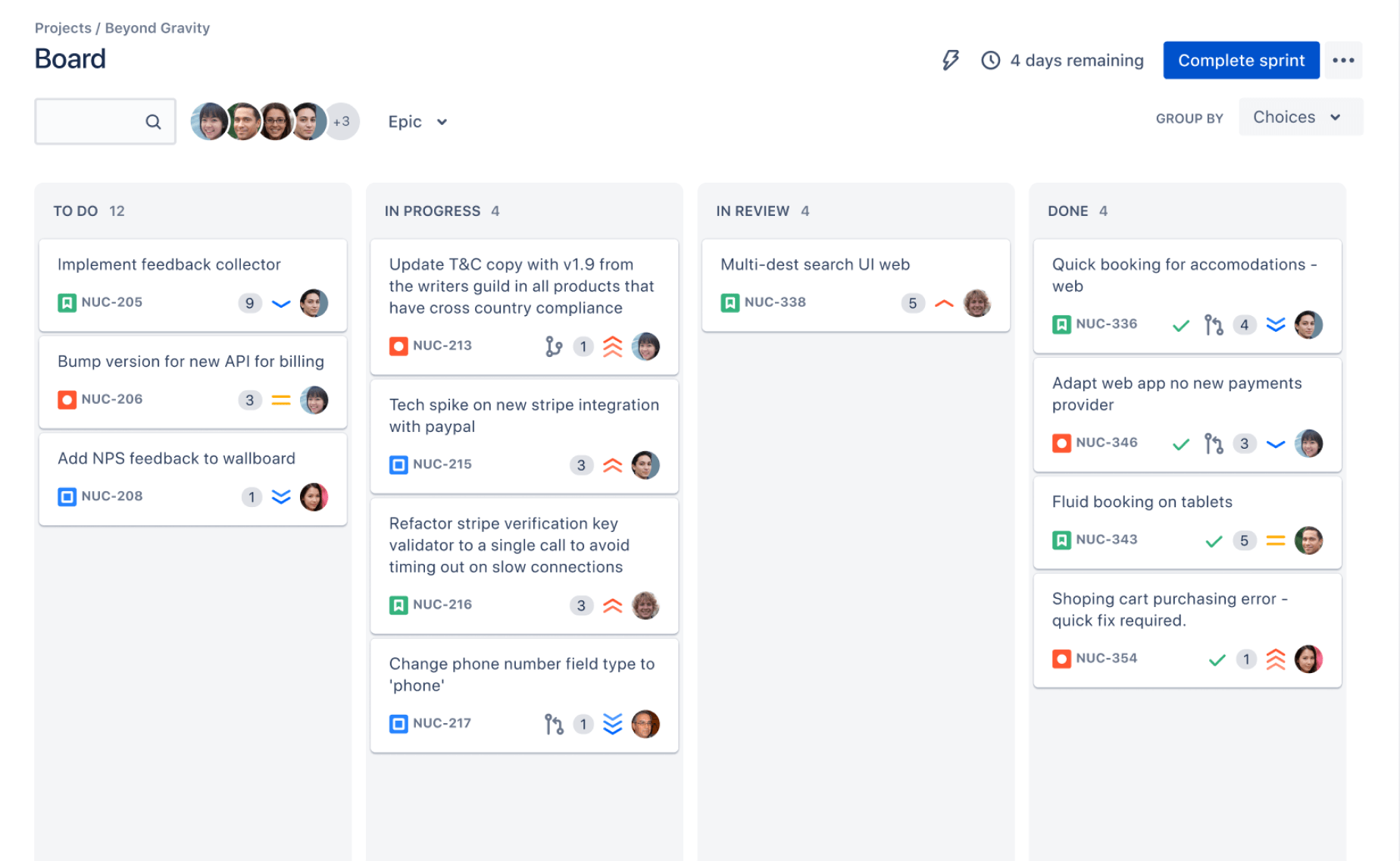
How Jira API Costs Work
The simplest way to estimate your budget is to calculate the Jira subscription first, then add the costs created by your integration architecture.
- Choose the Jira deployment. Decide whether you need Jira Cloud, Data Center, or another supported Atlassian deployment. API behavior, administration, and licensing differ between environments.
- Estimate licensed users. Count people who need Jira access, including agents, developers, service staff, contractors, and administrators.
- Select the required plan. Compare Free, Standard, Premium, and Enterprise features. Consider permissions, audit controls, uptime expectations, administration, and scale.
- Map every integration. List systems that will send or receive Jira information. Include CRM platforms, chat tools, reporting systems, CI/CD services, identity platforms, and internal applications.
- Estimate API traffic. Count scheduled synchronizations, webhook events, issue updates, searches, comments, attachments, and retry requests.
- Check rate-limit behavior. Design for bursts, pagination, retries, and backoff. A large request count can create operational work even when it creates no separate invoice.
- Add app and infrastructure fees. Include marketplace subscriptions, cloud hosting, queues, observability tools, and security services.
- Calculate maintenance effort. Budget for token rotation, API version changes, workflow changes, testing, and incident handling.
For example, imagine a team synchronizing Jira issues with an internal planning portal every five minutes. The Jira subscription is one cost. Hosting the synchronization service, storing logs, handling failures, and supporting the connection are separate costs.
The best part? A small traffic estimate can reveal architectural problems early. If your integration performs one request per issue every few minutes, replacing that pattern with webhooks and targeted queries may reduce traffic considerably.
Jira Plans and What They Mean for API Access
Jira plans determine the environment in which your API integration operates. API availability alone should not decide your plan. Your choice also affects administration, security, automation, reporting, support, and scale.
Free plan
The Free plan can suit a small team testing a simple integration. It is useful for prototypes, internal experiments, and low-risk workflows with modest collaboration needs.
Before relying on it for a production connection, check the current user cap, automation allowance, storage limits, permission controls, and support options. Free-plan restrictions can affect your workflow even when API calls remain available.
Standard plan
Standard is often the practical starting point for production teams. It generally provides more users, administration, collaboration features, and operational headroom than Free.
For API projects, review permission management, audit capabilities, automation allowances, and administrative controls. A connector may work technically on Free while still requiring Standard for governance.
Premium plan
Premium is designed for organizations that need greater scale, advanced administration, stronger service expectations, or more sophisticated workflow operations.
It can make sense when integrations support multiple departments, when automation volume is high, or when downtime has a material business impact. Premium pricing should be checked using Atlassian’s current calculator because the amount can vary by user count and billing arrangement.
Enterprise plan
Enterprise typically targets large organizations with complex governance, security, support, procurement, and administrative requirements.
You may need a negotiated quote rather than a public per-user price. Ask about API governance, support coverage, identity management, data residency, audit requirements, and deployment expectations during procurement.
Cloud versus Data Center
Jira Cloud usually offers the simplest path for a new API integration. Atlassian operates the environment, and your team connects through cloud endpoints using supported authentication methods.
Data Center can suit organizations that require greater control over hosting and administration. Its economics differ because licensing, infrastructure, upgrades, high availability, and operational staffing all become important.
API Limits, Rate Limits, and Usage Fees
Jira API calls are generally included with the relevant Jira subscription. That does not mean you can send unlimited traffic at any speed.
Atlassian can apply rate limits to protect service stability. Limits may depend on the product, endpoint, authentication method, tenant behavior, request pattern, and current platform policies.
What rate limiting looks like
Your application may receive an HTTP 429 response when it sends requests too quickly. The response can include guidance about when to retry.
A reliable integration should pause, respect retry timing, and avoid sending the same request repeatedly. Immediate retries can turn a temporary limit into a longer disruption.
What consumes API capacity
Common traffic sources include issue searches, individual issue retrieval, comments, transitions, worklog updates, user lookups, project metadata, changelog requests, and attachment operations.
A poorly designed synchronization can generate unnecessary volume. For example, polling 20,000 issues every minute creates far more traffic than receiving webhook events and requesting only changed records.
Does Jira charge per API request?
Jira Cloud generally does not use a simple pay-per-request model for standard REST API access. Your commercial agreement may still include product-specific terms, app charges, or enterprise arrangements.
Always confirm the current terms for the specific Jira product, deployment, and endpoint you plan to use. Pricing pages and technical limits can change independently.
How to reduce traffic
- Use webhooks for event-driven updates where practical.
- Request only the fields your integration needs.
- Use pagination instead of retrieving oversized responses.
- Cache stable project, user, and workflow metadata.
- Batch compatible operations when the endpoint supports them.
- Use exponential backoff after rate-limit responses.
- Track request volume by endpoint and integration.
Hidden Costs Around a Jira Integration
The subscription price is easy to see. Operational costs are easier to overlook, especially during a proof of concept.
| Hidden cost |
Example |
Budget question |
| Engineering |
Building OAuth, webhooks, field mapping, and retries |
Who will build and maintain the connection? |
| Hosting |
Running a worker, API service, or scheduled process |
What availability and scaling level is required? |
| Monitoring |
Logs, alerts, dashboards, and request tracing |
How quickly must failures be detected? |
| Security |
Secret storage, access reviews, and token rotation |
Which controls does your organization require? |
| Data transformation |
Mapping custom fields between applications |
How many workflows and field types must stay aligned? |
| Support |
Investigating failed syncs or permission errors |
Who handles incidents outside development hours? |
Let me explain with a common example. A sales team connects Jira with a CRM and estimates only the Jira subscription. Six months later, the team also needs historical synchronization, custom field mapping, duplicate detection, monitoring, and audit trails.
The API access may still cost nothing beyond the Jira plan. The integration itself now requires a more capable architecture and ongoing support.
How to Estimate API Usage Before Launch
You can create a useful estimate without knowing the exact future traffic. Start with events, then calculate the requests created by each event.
Example calculation
Suppose your integration handles 2,000 issue updates each day. Each update triggers one webhook, one issue lookup, one field transformation, and one write to another service.
That creates roughly 4,000 major operations daily before retries, scheduled reconciliation, metadata checks, and error recovery. If each operation requires multiple API calls, your actual request count will be higher.
Use this simple planning formula:
Estimated daily requests = events × calls per event + scheduled calls + retry allowance
For a monthly estimate, multiply the daily figure by your working days or calendar days. Then add a safety margin for launches, bulk changes, imports, and unexpected retries.
Questions that improve the estimate
- How many issues change during a normal day?
- How many projects participate in the integration?
- Does one event trigger one request or several?
- Will the integration perform full reconciliation?
- How often do scheduled jobs run?
- What happens after a timeout or failed request?
- Will users trigger bulk actions?
You might be wondering: do you need an expensive Jira plan for high API traffic? Usually, traffic alone does not determine the plan. Governance, users, product features, and operational requirements matter too.
Authentication, Apps, and Integration Architecture
Authentication affects security and maintenance more than direct API pricing. Jira Cloud integrations commonly use OAuth 2.0, API tokens, or app-based authentication, depending on the design.
Choose credentials according to the integration’s purpose. A personal token tied to one employee can create an outage when that person leaves or changes roles. A controlled app identity can provide clearer ownership and easier rotation.
Marketplace apps
A marketplace app may reduce development effort by providing a ready-made connector, reporting layer, synchronization engine, or automation feature.
That convenience creates a separate subscription. App pricing may depend on the Jira tier, licensed users, installation type, or contract terms. Compare the app fee with the engineering and maintenance cost of building the connection yourself.
Custom integration
A custom integration gives you control over field mapping, error handling, security, and business rules. It also leaves your team responsible for upgrades, testing, monitoring, and support.
For example, a custom service can ignore irrelevant issue changes and synchronize only approved transitions. A generic connector may be quicker to launch, though it may generate more traffic or require workarounds.
Webhooks and polling
Polling repeatedly asks whether anything changed. Webhooks notify your service when a relevant event occurs.
Webhooks often reduce unnecessary requests, though you still need scheduled reconciliation. A daily reconciliation job can catch missed events without forcing your integration to inspect every issue continuously.
Jira API Pricing Compared With Total Cost of Ownership
Two integrations can use the same Jira plan and have very different total costs. The difference comes from architecture, reliability expectations, and ongoing change.
| Approach |
Initial effort |
Ongoing considerations |
| Simple custom script |
Low for a narrow workflow |
Fragile credentials, limited monitoring, and manual recovery |
| Managed connector |
Moderate setup |
Recurring app fees and vendor-specific limitations |
| Custom integration service |
Higher engineering effort |
Greater control with continuing maintenance responsibility |
| Enterprise integration platform |
Lower coding effort for complex flows |
Platform subscription, usage tiers, and governance work |
Here’s a useful comparison. A small team may spend less with a connector subscription than with several months of custom development. A large team with unusual workflows may eventually save money by owning a focused integration service.
Calculate three figures before deciding:
- The first-year subscription and setup cost.
- The yearly operating and support cost.
- The cost of downtime, failed synchronization, and manual correction.
Practical Ways to Control Integration Costs
Cost control starts with design decisions. You do not need to reduce every request. You need to remove waste and make failures predictable.
Design around business events
Synchronize meaningful events, such as issue creation, approval, assignment, or completion. Avoid copying every minor change unless the receiving system truly needs it.
Keep mappings deliberate
Every synchronized field adds testing and maintenance work. Start with status, owner, priority, key dates, and links. Add custom fields only when they support a defined process.
Separate real-time and periodic work
Use event-driven updates for urgent changes. Use scheduled jobs for cleanup, reconciliation, and low-priority enrichment.
Measure before scaling
Track requests by endpoint, response code, latency, and workflow. A dashboard can show that one faulty job creates most of your traffic.
Plan for plan changes
Review the Jira plan whenever your user count, automation volume, compliance obligations, or integration scope changes. A plan that fits a 15-person team may become restrictive at 150 people.
Jira API Integration Solution: ONES.com
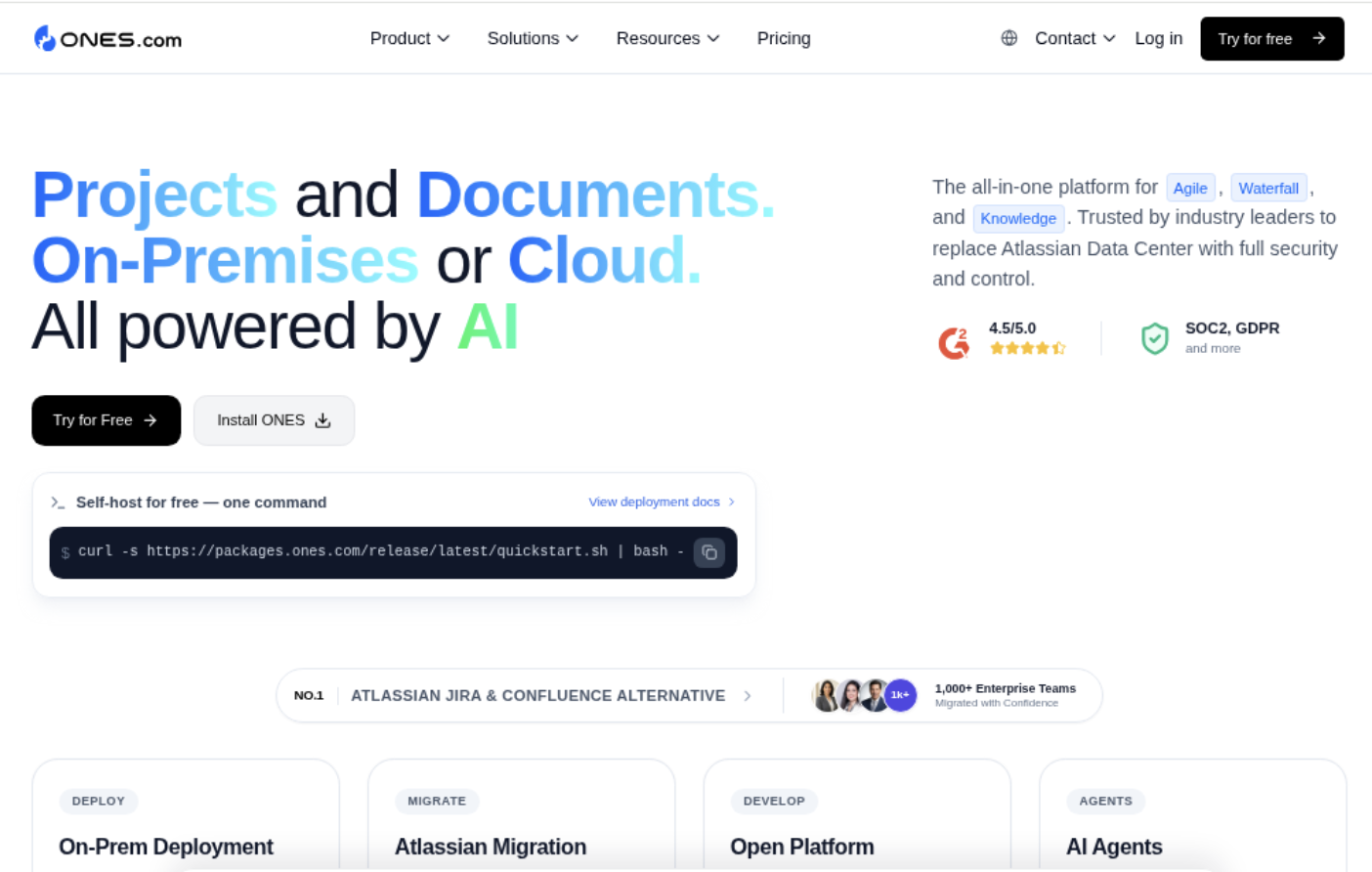
Value Proposition
ONES.com combines project management and knowledge management in one platform, powered by AI through ONES Assistant. ONES Project is a Jira alternative for teams that want project workflows, reporting, and deployment flexibility.
ONES Project and ONES Wiki are sold separately, allowing you to choose the project or knowledge product your team needs.
Core Capabilities
- Scattered project information → Unified project workspace → Teams can manage planning, execution, and reporting in one project environment.
- Complex Jira migration concerns → Jira-compatible workflows → Teams can preserve familiar issue-based processes while evaluating a different platform.
- Plugin-heavy reporting → Built-in reporting → Project leaders can review progress with native reporting instead of assembling every view through separate extensions.
- Rigid process rules → Custom workflows and fields → Teams can reflect approval paths, service processes, and department-specific requirements.
- Manual sprint administration → Sprint management → Agile teams can plan, monitor, and review sprint work in the same environment.
- Repetitive project actions → Automation → Teams can reduce routine transitions, notifications, and assignment tasks.
- Cloud-only constraints → Four deployment choices → Organizations can choose Cloud, On-Premise, Private Cloud, or Air-gapped deployment.
- Different capabilities across hosting models → Native feature parity → Self-hosted teams can access the same core feature level as cloud teams.
- High entry cost during evaluation → Free plan for 30 seats → A small team can test core project workflows before committing to a broader rollout.
Application Scenarios
Restricted-network engineering: A security-sensitive team can evaluate an air-gapped deployment for project planning and issue tracking. This approach supports restricted environments where public cloud access is unsuitable.
Approval-heavy product development: A product organization can configure custom workflows for requirements, reviews, development, testing, and release approval. Built-in reporting gives managers a consolidated progress view.
Self-hosted project operations: An organization with on-premise requirements can operate project management within its own environment. This can reduce dependence on multiple plugins while preserving familiar Jira-compatible workflows.
Common Challenges With Jira API Costs
Challenge: Pricing pages do not show your final bill
Solution: Separate the Jira subscription from app fees, hosting, engineering, support, and security work. Request a quote when your organization needs Enterprise terms or a large deployment.
Challenge: Rate limits appear during busy periods
Solution: Use webhooks, pagination, caching, request queues, and exponential backoff. Monitor HTTP 429 responses and identify which workflow creates traffic spikes.
Challenge: A personal credential becomes a dependency
Solution: Use an appropriately managed integration identity. Store credentials securely, rotate them on a schedule, and document ownership before launch.
Challenge: Custom fields increase maintenance
Solution: Define a controlled mapping catalogue. Record field types, allowed values, update direction, fallback behavior, and the team responsible for each field.
Challenge: A prototype becomes a critical service
Solution: Add monitoring, retry handling, reconciliation, alerting, and recovery procedures before business teams depend on the integration.
FAQs
Is Jira API access included in the subscription?
For Jira Cloud, standard REST API access is generally included with the Jira subscription. You typically do not pay a separate fee for each request. However, your integration still operates within authentication rules, rate limits, product terms, and plan restrictions. Connected apps, infrastructure, and implementation work can create additional costs.
Does Jira charge for every API request?
Jira Cloud generally does not use a straightforward per-request billing model for standard API calls. Rate limits can still restrict traffic, especially when an integration sends large bursts or repeats unnecessary requests. Check the current technical and commercial terms for your Jira product, deployment, endpoint, and contract before launch.
Which Jira plan is best for an API integration?
The right plan depends on more than API traffic. Review user count, permissions, automation, audit needs, support expectations, uptime requirements, and deployment preferences. A small internal prototype may fit Free, while a production integration may require Standard, Premium, or Enterprise controls.
How can I avoid Jira API rate limits?
Use webhooks for relevant events, request only necessary fields, paginate large responses, cache stable information, and queue outbound work. Add exponential backoff after HTTP 429 responses. A scheduled reconciliation process can improve reliability without constant polling.
Are Jira marketplace apps included in Jira pricing?
Usually, marketplace apps have their own subscription or licensing terms. The amount may depend on licensed users, the Jira plan, deployment model, or contract arrangement. Compare the recurring app cost with the engineering effort, maintenance responsibility, and operational risk of building a custom integration.
Can ONES.com replace Jira for API-driven project workflows?
ONES Project is a Jira alternative with Jira-compatible workflows, custom fields, sprint management, automation, and built-in reporting. It supports Cloud, On-Premise, Private Cloud, and Air-gapped deployments, with feature parity between cloud and self-hosted versions. Evaluate workflow fit, migration effort, API requirements, and deployment needs before choosing a platform.
Conclusion
Jira API pricing is usually tied to your Jira subscription rather than a separate charge for each REST request. Your real budget also includes apps, hosting, engineering, monitoring, security, and long-term maintenance.
Start with the plan, users, deployment model, and required governance. Then estimate event volume, design around webhooks, handle rate limits, and include operational costs.
But here’s the truth: the cheapest API plan can become expensive when the integration is fragile. A clear architecture protects your budget by reducing unnecessary traffic and manual recovery.
If you are comparing project platforms, ONES.com offers ONES Project as a Jira alternative with native workflow capabilities, multiple deployment options, and a free plan for up to 30 seats. The right choice depends on the workflows, controls, and operating model your team needs.