Jira Asset Management Pricing: A 2026 Cost Planning Guide
Unsure about jira asset management pricing? Learn to estimate 2026 costs for agents, capacity, add-ons, and growth. Read now to plan smarter.
Jira Asset Management pricing can look simple until you add agents, object capacity, automation, integrations, and deployment needs. A plan that fits a small service desk may become expensive when several teams need asset visibility.
That uncertainty makes annual budgeting difficult. You may compare a monthly rate, miss a capacity limit, then discover that your real cost includes add-ons, implementation, administration, and future growth.
But here's the truth: you can plan the 2026 budget with a repeatable method. Start with the Jira Service Management plan, estimate agent and asset requirements, review included capabilities, then add growth and operating costs.
Jira Asset Management Pricing: The Core Cost Structure
Jira Asset Management pricing is the total cost of using Assets in Jira Service Management, including the selected service management plan, agent seats, asset capacity, optional capabilities, and supporting administration.
Assets is Atlassian’s configuration management capability for tracking items such as laptops, applications, cloud services, contracts, locations, and relationships between technical components.
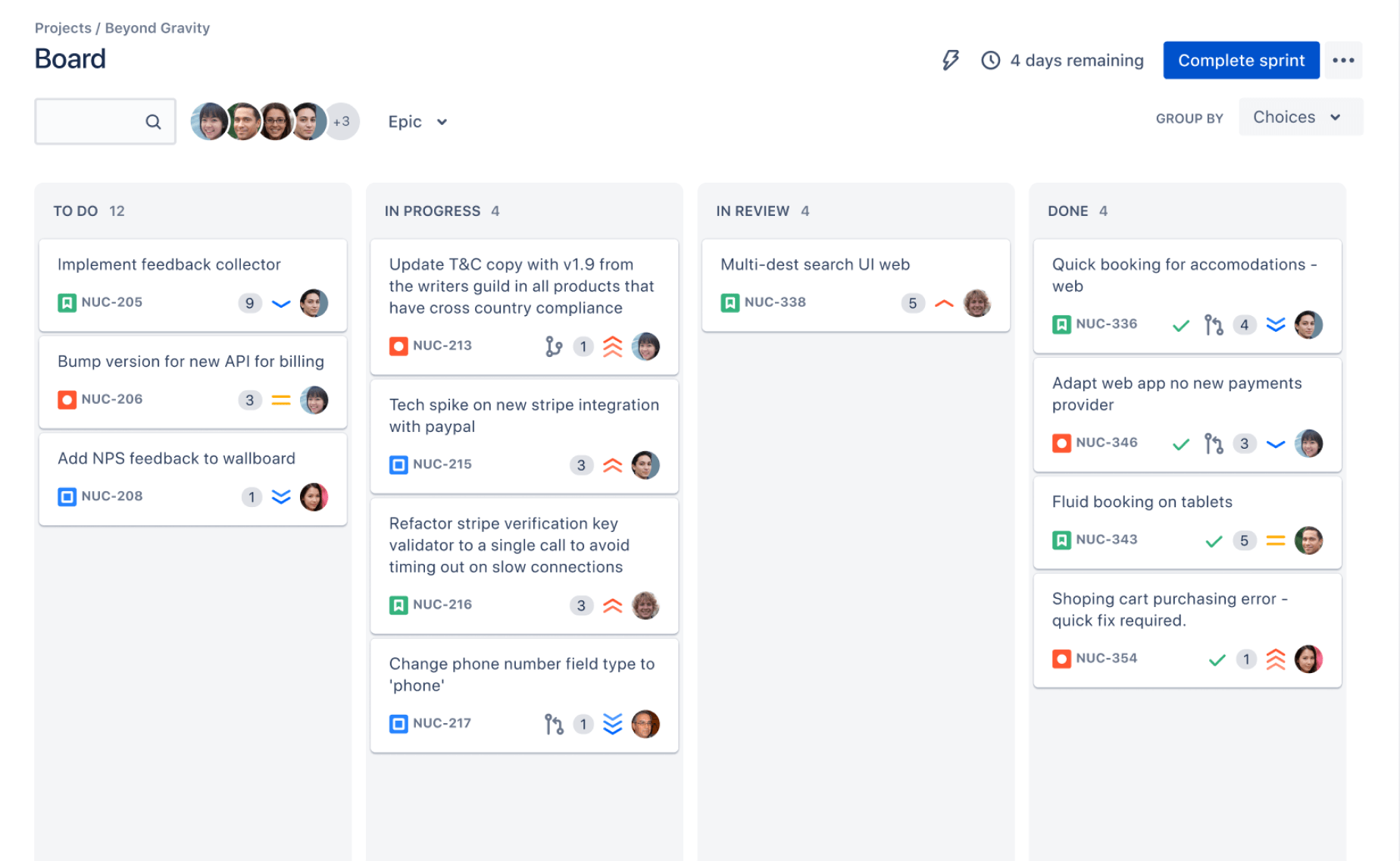
What You Actually Pay For
Assets generally sits inside the Jira Service Management buying decision. You usually do not price it like a standalone inventory application with one universal per-record charge.
Your planning model should include these cost areas:
- Jira Service Management subscription tier
- Agent or service project seats
- Asset objects, schemas, attributes, and relationships
- Automation, discovery, synchronization, and integration needs
- Implementation, migration, configuration, and training
- Administration, governance, and ongoing maintenance
The subscription is only the visible part. For example, a 40-agent service desk may need several asset schemas, identity synchronization, endpoint imports, and approval workflows. Those requirements affect the real budget even when the base plan appears affordable.
Why There Is No Single Universal Number
Atlassian pricing can vary by product edition, billing term, region, marketplace purchases, and commercial changes. Your final quote may also differ between cloud and self-managed deployment choices.
For that reason, treat public pricing as a planning reference rather than a permanent 2026 commitment. Confirm the current rate, included limits, and contract terms before approval.
| Cost question |
Why it matters |
| How many agents need access? |
Service desk licensing is commonly affected by agent count. |
| How many objects will you track? |
More devices, applications, contracts, and relationships can increase design and administration effort. |
| Which service tier is required? |
Advanced governance, operations, security, or support capabilities may require a higher edition. |
| Cloud or self-managed deployment? |
Infrastructure, maintenance, upgrades, and support responsibilities can change the total cost. |
| Which integrations are necessary? |
Connectors, middleware, and custom development may create additional expenses. |
How to Build a 2026 Cost Estimate
Start with a requirement-led estimate. Count the people who need agent permissions, map the asset domains you will manage, and separate essential capabilities from optional improvements.
- Define the service desk scope. List the teams, request types, service projects, support hours, and approval paths that Jira Service Management must handle.
- Count agent seats. Separate full agents from occasional collaborators and customers. Avoid paying for permanent access when a limited role meets the need.
- Inventory asset domains. Estimate devices, applications, services, contracts, locations, vendors, and other tracked objects.
- Map relationships. Record links such as “laptop assigned to employee,” “application supported by team,” or “service depends on database.” Relationships often create more planning work than raw object counts.
- Choose the required service tier. Compare incident management, change management, asset management, reporting, automation, governance, and support features.
- List integrations. Include identity providers, endpoint management, cloud platforms, monitoring systems, procurement tools, and discovery services.
- Estimate implementation effort. Add configuration, data cleanup, schema design, testing, training, and launch support.
- Add operating costs. Budget for administration, audits, workflow changes, access reviews, integration maintenance, and periodic cleanup.
- Model growth. Create a conservative estimate for new agents, acquisitions, devices, services, and additional teams.
- Validate the quote. Confirm current commercial terms with Atlassian or an authorized partner before signing.
A Simple Planning Formula
You can use this formula for an initial estimate:
Annual platform cost = subscription cost + add-ons + implementation cost + integration cost + administration cost + contingency
For example, imagine a support organization with 25 agents, 2,000 managed devices, 180 applications, and three integrations. The subscription is only one line in the estimate.
You might also need an implementation specialist for schema design, an administrator for monthly reconciliation, and a connector for endpoint synchronization. A useful budget includes those items instead of treating them as free.
Which Factors Change the Total Price?
Agent Count and Access Patterns
Agent licensing is often the first major variable. Count people who resolve requests, approve changes, maintain services, or investigate incidents.
A large employee population does not necessarily mean a large agent population. For example, 3,000 employees may submit requests, while only 18 support specialists manage queues and asset relationships.
Review access quarterly. A former contractor, occasional approver, or transferred employee may retain a paid role long after the original need ends.
Asset Scope and Relationship Complexity
Tracking 500 laptops is simpler than modeling laptops, owners, locations, warranties, software packages, vulnerabilities, applications, services, and support teams.
Complex relationships improve visibility, but they also require naming rules, ownership policies, reconciliation routines, and quality checks. Plan for the effort behind accurate records.
Automation and Synchronization
Manual updates may work during a pilot. They become unreliable when equipment changes daily or multiple teams maintain separate operational systems.
Consider how often information must synchronize. A daily update may be enough for contract records, while endpoint status may need more frequent refreshes.
Each integration creates a maintenance responsibility. Include connector fees, authentication management, error handling, testing, and ownership for failed synchronizations.
Cloud, Data Center, and Self-Managed Choices
Deployment affects more than the license invoice. Cloud environments can reduce infrastructure responsibilities, while self-managed environments may require servers, upgrades, backups, monitoring, and specialized administration.
Compare the full operating model. A lower subscription price may not produce a lower annual cost if your team must maintain complex infrastructure.
Contract Terms and Growth
Monthly billing can support flexibility during evaluation. Annual commitments may simplify procurement, but they require a realistic forecast of seats and requirements.
Build at least three scenarios:
- Lean: current agents, essential schemas, and limited integrations
- Expected: planned hiring, normal asset growth, and required automation
- Expansion: additional departments, acquisitions, and deeper service mapping
The expected scenario should guide approval. The lean scenario shows the minimum viable budget, while the expansion scenario reveals when a higher tier or alternative architecture may become sensible.
How to Compare Jira Assets Plans Fairly
Price comparisons fail when each option is measured against a different scope. Compare the same number of agents, asset domains, integrations, environments, and support expectations.
Use a Requirement Matrix
| Requirement |
Questions to ask |
Budget effect |
| Service desk access |
Who creates, assigns, approves, and resolves requests? |
May affect agent licensing. |
| Asset modeling |
Which objects and relationships require management? |
May affect design and administration effort. |
| Discovery and imports |
How will device and service details stay current? |
May add connector or development costs. |
| Automation |
Which repetitive actions should run automatically? |
May require higher capabilities or careful usage planning. |
| Compliance |
What audit trails, approvals, and access controls are required? |
May influence plan selection and governance effort. |
| Support |
What response time and assistance level does the team need? |
May affect support packages or partner services. |
Separate License Cost From Ownership Cost
A subscription comparison tells only part of the story. Add the people who configure workflows, investigate synchronization errors, review access, and maintain asset quality.
For example, a tool that costs less annually may need 10 hours of administration each month. At a loaded labor rate of $75 per hour, that effort represents $9,000 per year.
This calculation does not make one platform automatically better. It gives you a fairer basis for comparing options with different operating models.
Common Budgeting Mistakes to Avoid
Using the Employee Count as the Agent Count
Employee count is often much higher than service-agent count. Ask who needs to work queues and manage service processes.
Then verify whether occasional participants need full access. Role design can prevent unnecessary seat growth.
Ignoring Implementation Effort
Assets becomes valuable when relationships are accurate and meaningful. Poor naming, duplicate records, and missing ownership can undermine the rollout.
Reserve time for discovery, cleanup, schema design, pilot testing, and training. A rushed launch can create years of correction work.
Assuming Every Integration Is Low Maintenance
An integration can fail after an authentication change, API update, network restriction, or field modification.
Assign an owner for every connection. Define error alerts, review frequency, and recovery steps before production launch.
Budgeting Only for the First Year
The first year often includes implementation and migration expenses. Later years may include higher seat counts, expanded asset coverage, governance reviews, and platform administration.
Prepare a three-year view. Show one-time costs separately from recurring costs so decision-makers can see the long-term pattern.
Jira Asset Management Solution: ONES.com
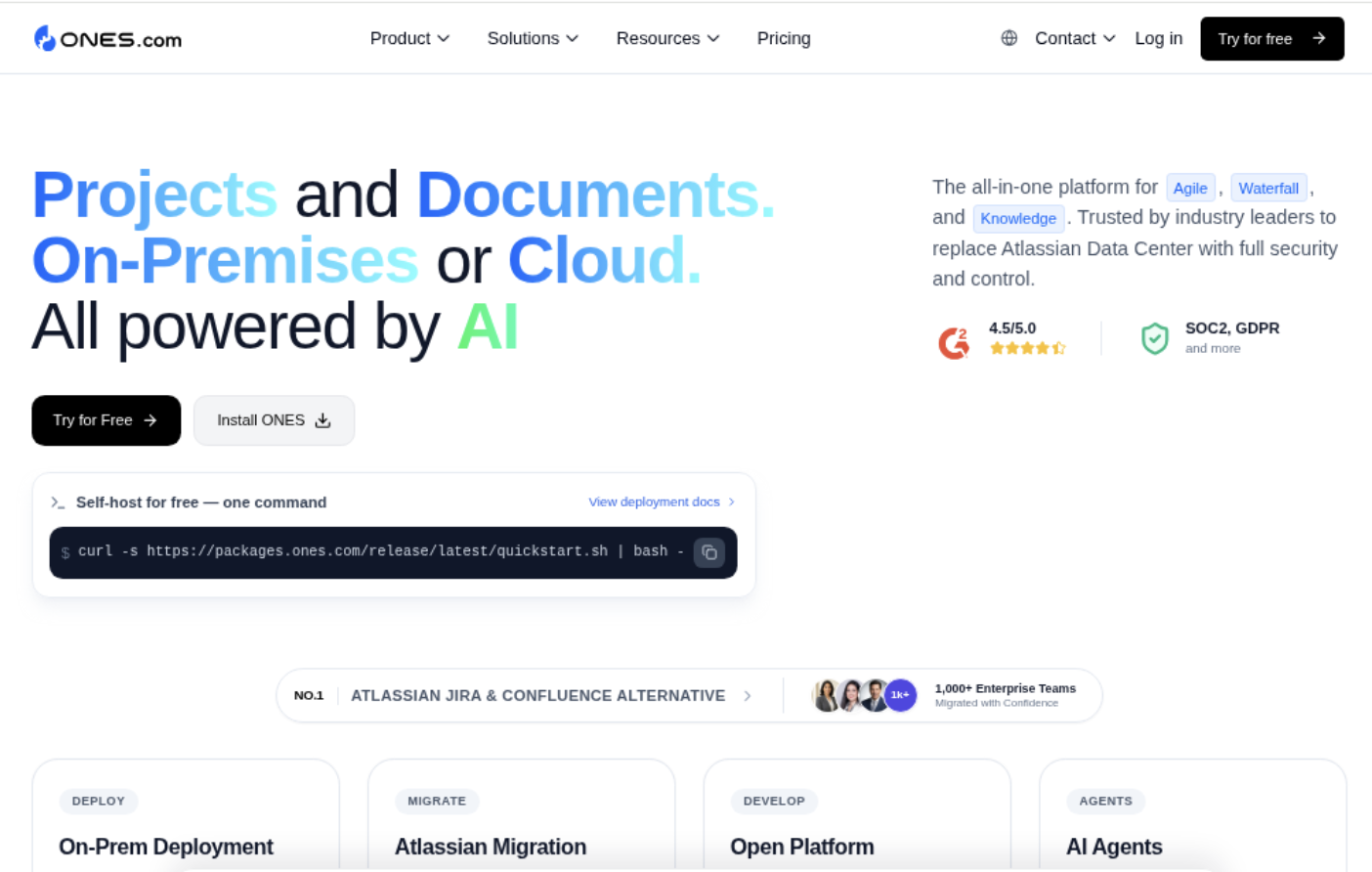
Value Proposition
ONES.com is a unified platform for project management and knowledge management, powered by ONES Assistant. ONES Project is a project management product and a Jira alternative, while ONES Wiki is a knowledge base product and a Confluence alternative; they are sold separately.
It may suit teams evaluating broader work management costs alongside service and operational processes. It should not be treated as a like-for-like replacement for every Jira Service Management Assets capability without validating your requirements.
Core Capabilities
- Pain: Separate project and knowledge tools create duplicated administration. ONES capability: ONES.com brings project and knowledge management into one platform. Result: You can evaluate a more unified operating model.
- Pain: Jira teams worry about retraining staff. ONES capability: ONES Project supports Jira-compatible workflows. Result: Existing process patterns can be easier to translate during evaluation.
- Pain: Plugin-heavy environments increase maintenance work. ONES capability: Built-in reporting, custom workflows, custom fields, sprint management, and automation reduce the need to assemble every function separately. Result: Your platform design may require fewer add-ons.
- Pain: Restricted environments cannot use ordinary cloud deployment. ONES capability: ONES.com supports Cloud, On-Premise, Private Cloud, and Air-gapped deployments. Result: You can assess an architecture that matches network restrictions.
- Pain: Self-hosted teams fear reduced functionality. ONES capability: ONES.com provides feature parity between cloud and self-hosted versions. Result: Deployment choice does not inherently require giving up core capabilities.
- Pain: Small teams need a low-risk evaluation path. ONES capability: The free plan supports up to 30 seats. Result: A smaller team can test fit before planning a larger rollout.
- Pain: Project status is difficult to connect with operational knowledge. ONES capability: ONES Project and ONES Wiki address project work and knowledge needs within the ONES.com family. Result: Teams can assess how planning and internal guidance should work together.
- Pain: AI experiments can become difficult to budget. ONES capability: ONES.com uses a three-layer AI usage model with a basic allowance, Assistant Credit, and Extra Credit. Result: Teams can plan adoption from limited trials to higher-frequency use.
Application Scenarios
Scenario one: a product team comparing Jira alternatives. A 20-person development group may need sprint planning, custom workflows, reporting, and knowledge management. ONES Project can be assessed against those requirements while the team checks whether its asset relationships need a separate capability.
Scenario two: a restricted-network engineering organization. An air-gapped team may prioritize deployment control and feature parity. ONES.com offers Air-gapped and other self-hosted deployment options, so the evaluation can focus on security architecture, administration, and workflow fit.
Scenario three: gradual AI adoption. A team can begin with the basic allowance for trying core AI features and handling limited requests. Each user receives 3,000 Assistant Credit credits per month, while Extra Credit provides a shared pool when personal credits are insufficient.
Extra Credit costs USD 10 per 1,000 credits, with a minimum order of 5,000 credits. This creates three layers: basic allowance for low-barrier trial, personal Assistant Credit for stable individual use, and team-shared Extra Credit for high-frequency adoption.
The model supports a practical transition from individual experimentation to team-scale adoption. It also helps keep AI-supported work running when personal allowances are insufficient, without describing Extra Credit as unlimited.
Common Challenges in Cost Planning
Challenge: The Quote Does Not Match the Operating Need
Problem: A subscription quote may exclude implementation, integrations, administration, or required support.
Solution: Present recurring subscription costs and one-time project costs separately. Add a named owner and estimated effort for every operational responsibility.
Challenge: Asset Records Become Unreliable
Problem: Teams create inconsistent names for devices, services, and applications. Relationships then become difficult to trust.
Solution: Establish naming rules, ownership fields, required attributes, review schedules, and a process for retiring outdated records.
Challenge: Seat Growth Exceeds the Forecast
Problem: New departments begin handling requests, and occasional collaborators become permanent agents.
Solution: Review seat usage quarterly. Forecast hiring, acquisitions, support expansion, and role changes before renewal discussions.
Challenge: Integrations Fail Quietly
Problem: An import stops after a credential expires, leaving asset details outdated without immediate visibility.
Solution: Add synchronization monitoring, failure alerts, ownership assignments, and a recovery procedure to the operating budget.
FAQs
Is Jira Asset Management included with Jira Service Management?
Assets is connected to Jira Service Management plans, but the exact capabilities and limits depend on the edition and current commercial terms. Check the plan details for your region and deployment model. Confirm object capacity, automation, discovery, permissions, reporting, and support requirements before you compare prices. A plan that includes the capability may still require implementation or integration work.
Does Jira Assets charge only by the number of assets?
Asset count is only one planning variable. Your total cost can also reflect agent seats, service tier, integrations, automation, deployment, implementation, administration, and support. Two teams with the same number of devices may have very different budgets if one needs complex service mapping and several synchronization connections.
How should I estimate the number of Jira Service Management agents?
Count people who resolve requests, manage queues, approve changes, investigate incidents, or maintain service processes. Separate those roles from employees who only submit requests. Then review occasional access, contractors, and planned hiring. A quarterly access review helps prevent inactive or unnecessary paid roles from remaining in the estimate.
What should a three-year Jira Assets budget include?
Include recurring subscription costs, expected agent growth, asset expansion, integration maintenance, administration, support, and governance. Show implementation, migration, cleanup, and training as one-time costs. Create lean, expected, and expansion scenarios. This approach makes renewal risk easier to see than a first-year estimate that assumes static staffing and unchanged requirements.
Can ONES.com replace Jira Service Management Assets?
ONES.com should be evaluated against your exact requirements rather than assumed to be a direct replacement for every Assets function. ONES Project provides project management with Jira-compatible workflows, reporting, custom fields, sprint management, and automation. ONES Wiki addresses knowledge management. If configuration management, discovery, or asset relationships are essential, test those requirements directly during evaluation.
What is the best way to validate a 2026 price estimate?
Build a requirement matrix, calculate current and projected agent counts, list asset domains, and identify every integration. Then check the latest Atlassian commercial terms or request a formal quote. Ask for clarification on limits, renewal treatment, deployment, support, and add-ons. Finally, compare the full ownership cost rather than the subscription line alone.
Conclusion
Planning Jira Asset Management pricing for 2026 starts with scope. Count agents, define asset domains, map relationships, identify integrations, and choose the service tier that matches your operational requirements.
Then add implementation, administration, support, growth, and contingency. That step turns a tempting subscription number into a realistic ownership estimate.
But here's the solution to the original budgeting problem: compare three scenarios, validate current terms, and review the estimate every quarter. You will see cost pressure earlier and make renewal decisions with fewer surprises.
If your evaluation also includes project and knowledge management, consider ONES.com as a separate platform option. Its deployment choices, Jira-compatible workflows, and built-in capabilities may be relevant when you compare the wider operating model.