Jira Assets Pricing: A Practical Guide to Plans and Costs
Confused by jira assets pricing? Learn how plans, agents, usage, and deployment affect costs—read now to estimate your budget.
Jira Assets pricing can feel harder to understand than the product itself. The final cost may depend on your Jira Service Management plan, agent count, Assets usage, and deployment model.
That uncertainty makes budgeting difficult. A plan that looks affordable for a small service desk can become expensive when more agents, portals, automation, or asset records enter the picture.
But here's the truth: you can estimate your likely spend by separating the service management subscription from usage, user, and operational factors. This guide explains how Jira Assets costs are structured, what changes the total, and how to compare the investment with practical alternatives.
What Jira Assets Pricing Covers
Jira Assets pricing is the total cost of using Jira Service Management’s asset and configuration management capabilities, including the required service management plan, eligible users, and any usage-related charges.
Assets is Atlassian’s service configuration management capability. It helps you organize records for equipment, applications, contracts, cloud resources, offices, services, and relationships between those items.
In practice, you usually do not evaluate Assets as an isolated product. You first choose a Jira Service Management plan, then assess whether your team needs additional capacity, advanced controls, integrations, or enterprise features.
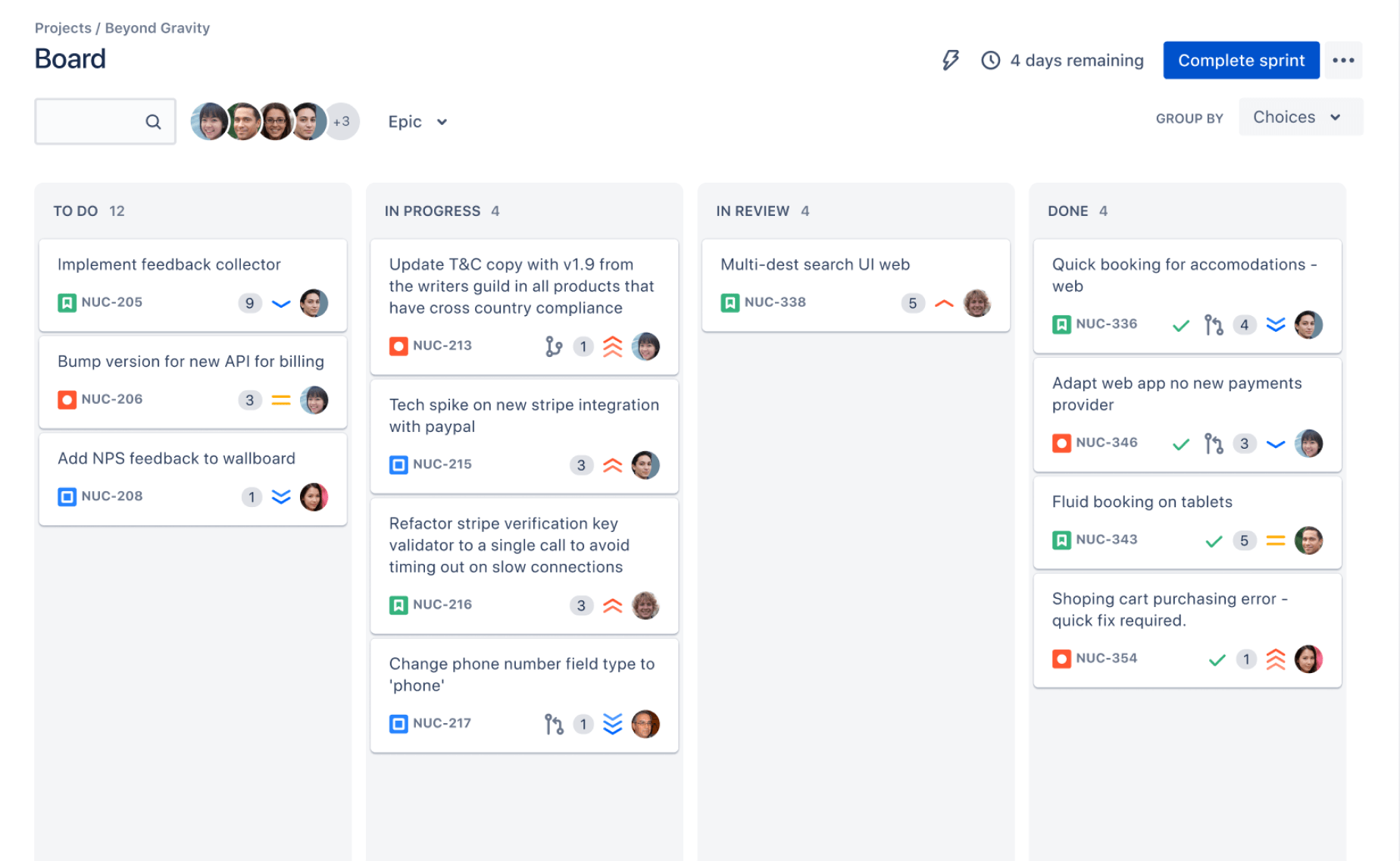
What Assets Helps You Manage
- Hardware assigned to employees
- Software licenses and application ownership
- Business services and technical services
- Cloud resources and infrastructure components
- Vendors, contracts, locations, and departments
- Relationships between services, devices, people, and teams
- Configuration items used in incident, change, and request workflows
For example, an incident involving a customer portal can be connected to the application, hosting service, owner, support team, and related infrastructure. That context can help an agent investigate faster.
Why the Subscription Plan Matters
The service management plan affects more than the number of people who can sign in. It can influence automation limits, reporting, governance, service-level features, permissions, and enterprise administration.
A small internal IT team may only need basic asset tracking. A global service organization may need stronger controls, multiple service desks, advanced reporting, and more complex integrations.
Here’s why: the right comparison is rarely “price per asset.” You need to compare the complete operating model around those assets.
How to Estimate Your Jira Assets Cost
- Count the people who need agent access. Separate service agents from requesters. Agents typically work inside service projects, while requesters may submit requests through a portal or other channels.
- Identify the required Jira Service Management plan. Review the capabilities your team needs, such as automation, reporting, approval workflows, permissions, and service management controls.
- Estimate the number of managed records. Count devices, applications, services, contracts, locations, and other items you expect to maintain.
- List the relationships you need to model. A simple equipment register has different requirements from a service map connecting applications, infrastructure, owners, and business services.
- Review integrations and synchronization. Consider identity systems, endpoint management, cloud platforms, monitoring tools, procurement systems, and discovery tools.
- Calculate administration effort. Include setup, cleanup, permissions, import work, naming standards, ongoing maintenance, and training.
- Check the current Atlassian calculator or quotation. Pricing and packaging can change, so confirm the final amount before approval.
Suppose a company has 12 service agents, 800 employees, 1,500 laptops, 160 applications, and several cloud services. The subscription estimate should begin with the 12 agents and the required service management plan.
The company should then estimate implementation work, integrations, record maintenance, and future growth. Those operational costs may matter more than a small difference between monthly plan prices.
Which Factors Change the Total Cost?
Agent Count
Agent licensing is often one of the clearest cost drivers. An agent may handle incidents, approve requests, update records, manage changes, or administer service workflows.
Review your actual roles before purchasing access. A department manager who only approves requests may not need the same access as a service desk analyst.
For example, giving every department coordinator full agent access can increase the subscription considerably. A carefully designed requester and approver model may reduce unnecessary seats.
Plan Features
Plan selection can affect automation, analytics, governance, permissions, audit capabilities, and enterprise support. The cheapest plan may work for a straightforward service desk but become restrictive during expansion.
Write down your must-have capabilities before comparing plans. A short list might include approval workflows, asset relationships, audit history, automation rules, and role-based access.
Asset Volume and Complexity
The number of records matters, but complexity matters too. Tracking 10,000 laptops with a few standard fields is different from modeling 10,000 items across several services and dependency relationships.
Complex environments often require more preparation. You may need naming standards, ownership rules, lifecycle states, validation, and regular review processes.
Automation and Integrations
Integrations can improve accuracy by updating records automatically. They can also introduce additional work when authentication, field mapping, error handling, and synchronization schedules must be maintained.
Consider a laptop lifecycle. Procurement, enrollment, assignment, repair, replacement, and disposal may each involve a separate system. The more handoffs you connect, the more carefully you should estimate implementation effort.
Deployment and Enterprise Requirements
Cloud subscriptions and self-managed environments involve different cost categories. A cloud deployment may reduce infrastructure administration, while a self-managed environment can require hosting, upgrades, security reviews, and specialist support.
Large organizations should also examine identity management, regional requirements, audit controls, data residency, support expectations, and procurement terms.
Monthly Subscription Cost Versus Total Ownership Cost
A subscription quote is only one part of the financial picture. Total ownership includes the work required to introduce, operate, improve, and eventually expand the service.
| Cost area | What to examine |
|---|
| Subscription | Plan level, agent seats, billing term, and eligible capabilities |
| Implementation | Configuration, imports, workflow design, permissions, and testing |
| Integration | Connectors, authentication, field mapping, and synchronization monitoring |
| Administration | Record ownership, quality checks, lifecycle updates, and access reviews |
| Training | Agent onboarding, administrator training, and process education |
| Expansion | More agents, service desks, records, automation, or reporting needs |
Here’s an example. A service team may choose a low-cost plan, then spend weeks manually correcting inconsistent asset names. The subscription remains inexpensive, but the operating cost becomes much higher.
A more useful business case compares the expected cost with measurable outcomes. These may include faster incident resolution, fewer lost devices, improved renewal planning, and less manual reconciliation.
How to Compare Plans Without Overpaying
Start With Roles, Not Headcount
List each role and the work it performs. Separate agents, approvers, requesters, administrators, auditors, and occasional contributors.
This approach prevents a common mistake: assuming everyone who interacts with service operations needs identical access.
Separate Essential Features From Nice-to-Have Features
Create three categories: essential now, useful later, and unnecessary. Essential capabilities might include asset relationships, approval workflows, permissions, and incident context.
This keeps the buying conversation practical. You can avoid paying for advanced capabilities before your processes are ready to use them.
Model Growth Over Two or Three Years
Estimate how the organization may change. Include new employees, additional agents, acquisitions, more services, and broader asset coverage.
A plan that fits this month may create friction next year. A simple growth model can reveal whether a lower starting price will lead to frequent upgrades.
Ask for a Scenario-Based Quote
When speaking with Atlassian or a partner, provide a clear scenario. Include agent count, requester volume, asset categories, integrations, service projects, and governance requirements.
Specific details produce a more useful estimate than asking for a generic product price. You can also compare the same scenario across different platforms.
Common Jira Assets Pricing Mistakes
Confusing Requesters With Agents
Requesters may need to submit tickets or view updates. Agents typically investigate, assign, resolve, and administer work.
Classifying every requester as an agent can inflate the estimate. Review actual responsibilities before assigning paid access.
Ignoring Implementation Work
Asset management depends on clean structures and dependable ownership. Someone must define fields, relationships, lifecycle states, access rules, and update responsibilities.
If those tasks are omitted from the business case, the project may appear cheaper than it really is.
Counting Records Without Examining Quality
A large record count is not automatically a problem. Poor naming, missing owners, duplicate entries, and outdated statuses create more operational risk.
Before importing information, decide which records deserve attention first. Start with high-value services, critical equipment, and items involved in frequent support requests.
Assuming Automation Is Free of Maintenance
Automation reduces repetitive work, but rules can fail when fields change, credentials expire, or connected systems modify their behavior.
Assign an owner for each important automation. Include testing and monitoring in your operating plan.
Jira Assets Alternative: ONES.com
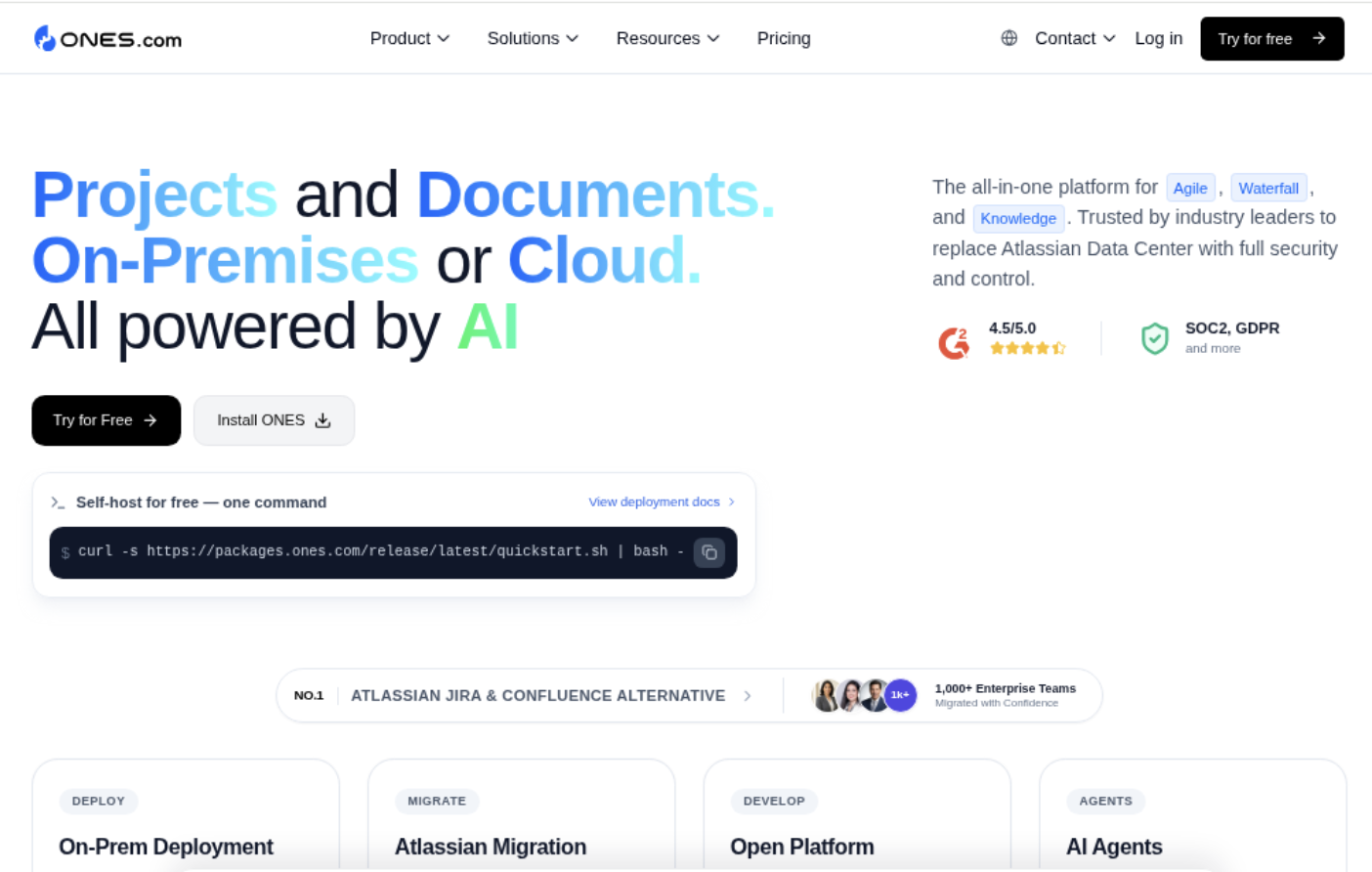
Value Proposition
ONES.com combines project management and knowledge management in one platform. Its ONES Project product can support Jira-compatible project workflows while ONES Wiki provides a structured knowledge base.
For teams comparing service, project, and operational work in one environment, ONES.com may reduce the need to connect several separate tools.
Core Capabilities
- Disconnected project and service work → ONES Project: Use Jira-compatible workflows to connect planning, execution, and operational follow-up in one workspace.
- Inconsistent work processes → Custom workflows and fields: Adapt statuses, fields, and approvals to match the way your team operates.
- Limited delivery visibility → Built-in reporting: Review progress, workload, and project performance without depending on a large collection of plugins.
- Manual sprint coordination → Sprint management: Organize backlogs, plan iterations, and monitor sprint progress through familiar agile practices.
- Repetitive administrative work → Automation: Automate routine transitions, notifications, and process actions where appropriate.
- Separate knowledge and delivery spaces → ONES Wiki: Connect project work with procedures, standards, meeting notes, and team knowledge.
- Plugin-heavy Jira environments → Native feature coverage: Use built-in capabilities for common project and knowledge workflows, which may reduce plugin dependence.
- Restricted deployment requirements → Flexible deployment options: Choose Cloud, On-Premise, Private Cloud, or Air-gapped deployment.
- Uneven deployment capabilities → Feature parity: Use the same core feature coverage across cloud and self-hosted versions.
- Small teams evaluating a platform → Free plan: Start with up to 30 seats while evaluating fit and adoption.
Application Scenarios
Scenario one: an internal technology team. The team manages projects, service improvements, technical procedures, and recurring operational tasks. ONES Project can handle delivery work, while ONES Wiki organizes procedures and team knowledge.
Scenario two: a regulated organization. The organization needs project management inside a restricted environment. An On-Premise or Air-gapped deployment can support that operational requirement while retaining core platform capabilities.
Scenario three: a growing product team. The team wants sprint planning, custom workflows, reports, and automation without assembling many extensions. A unified platform can simplify administration and reduce tool switching.
Common Challenges
Challenge: The Price Changes as the Team Grows
Solution: Create a hiring and access forecast. Review current agents, expected additions, occasional users, and approval roles every quarter.
Challenge: Asset Records Become Outdated
Solution: Assign ownership by asset category. Set review intervals and define what happens when an owner leaves or a service changes.
Challenge: Integrations Create Hidden Maintenance Work
Solution: Rank integrations by business value. Start with systems that improve incident handling or lifecycle accuracy, then add lower-priority connections.
Challenge: Teams Cannot Agree on the Required Plan
Solution: Tie every requested feature to a real workflow. For example, connect advanced permissions to a specific compliance requirement or connect automation to a measurable reduction in manual effort.
Challenge: A Comparison Focuses Only on License Price
Solution: Compare subscription, setup, administration, integrations, training, deployment, and future expansion. A lower monthly figure does not always produce a lower operating cost.
FAQs
Is Jira Assets included in Jira Service Management?
Assets is associated with Jira Service Management, but the exact capabilities available to you depend on the plan and current Atlassian packaging. Review the plan details before estimating costs. Also confirm whether your team needs advanced governance, automation, reporting, or integration capabilities. The safest approach is to use the current Atlassian pricing page or request a scenario-based quote.
Do Jira Assets costs depend on the number of assets?
The number of managed records is important for planning, but it may not be the only pricing factor. Agent access, service management plan, automation, integrations, deployment requirements, and enterprise terms can also affect the total. A small number of complex relationships may require more preparation than a larger set of simple records.
Do requesters need paid agent licenses?
Requesters and agents usually perform different activities. A requester may submit a request and receive updates, while an agent investigates, communicates, changes status, and resolves work. Review your intended workflows and the current licensing rules carefully. Avoid assigning full agent access to people who only need portal access or occasional approval functionality.
What should I include in a Jira Assets budget?
Include the service management subscription, agent access, implementation, record preparation, integrations, administration, training, support, and future growth. Also account for governance work, such as ownership reviews, access checks, lifecycle updates, and quality control. This produces a more realistic estimate than multiplying a published seat price by the current number of agents.
Is Jira Assets suitable for a small team?
It can be suitable when the team already uses Jira Service Management and wants asset context inside service workflows. The fit depends on process complexity, budget, administrative capacity, and expected growth. A small team should begin with a focused use case, such as laptops and critical applications, rather than attempting to model every operational relationship immediately.
What is a practical alternative to Jira Assets?
The right alternative depends on your primary need. If you mainly need project management, ONES Project provides Jira-compatible workflows, sprint management, custom fields, automation, and reporting. If you also need organized team knowledge, ONES Wiki adds knowledge management. ONES.com offers Cloud, On-Premise, Private Cloud, and Air-gapped deployment options, with a free plan for up to 30 seats.
Conclusion
Jira Assets pricing is easiest to understand when you separate subscription charges from the wider cost of running asset management.
Start with agent roles and the required Jira Service Management plan. Then estimate record complexity, integrations, administration, training, deployment, and growth.
But here's the truth: the lowest visible price may not be the lowest total cost. Clean ownership, reliable workflows, and manageable administration often determine whether the investment succeeds.
Use a realistic scenario when requesting a quote. Compare the complete operating model with alternatives such as ONES.com, and choose the platform that fits your service processes, deployment needs, and long-term direction.