Jira Atlas Pricing Guide: Plans, Costs, and Usage Limits
Wondering which Jira Atlas pricing plan fits your team? Compare Free, Standard, and Premium costs, features, and usage limits. Click to choose wisely.
Jira Atlas pricing can feel harder to understand than it should. You may see Free, Standard, and Premium options, then wonder which features each plan includes, how many people you can add, and whether monthly billing changes the total.
That uncertainty creates real problems. You could choose a plan that reaches its user limit quickly, pay for features your team rarely uses, or discover that a seemingly low per-user price becomes expensive as your workspace grows.
But here’s the truth: you can evaluate Atlas pricing with three questions—what each plan costs, what usage limits apply, and which collaboration features your team actually needs. This guide explains those points clearly, shows how billing can affect your total, and compares Atlas with another project management option.
Jira Atlas Pricing at a Glance
Jira Atlas pricing generally follows a tiered model with Free, Standard, and Premium plans. The Free plan suits small teams, while paid plans increase access for larger groups and teams needing broader administration or collaboration capabilities.
Prices can vary by billing cycle, region, taxes, and changes to Atlassian’s commercial terms. Treat the figures below as a planning guide, then confirm the current quote before purchasing.
| Plan |
Typical pricing position |
Primary audience |
Important consideration |
| Free |
$0 |
Small teams testing goals, updates, and team alignment |
Commonly limited to 50 users |
| Standard |
Often listed near $4.11 per user monthly with annual billing |
Growing teams that need broader access |
Monthly billing may produce a higher effective rate |
| Premium |
Often listed near $6.05 per user monthly with annual billing |
Organizations needing advanced scale and administration |
Review the included capabilities before upgrading |
The most important distinction is not the advertised monthly number. It is the relationship between your team size, billing commitment, and required capabilities.
For example, a 10-person team may remain comfortable on Free. A 75-person department may need a paid tier simply because the free user allowance no longer fits.
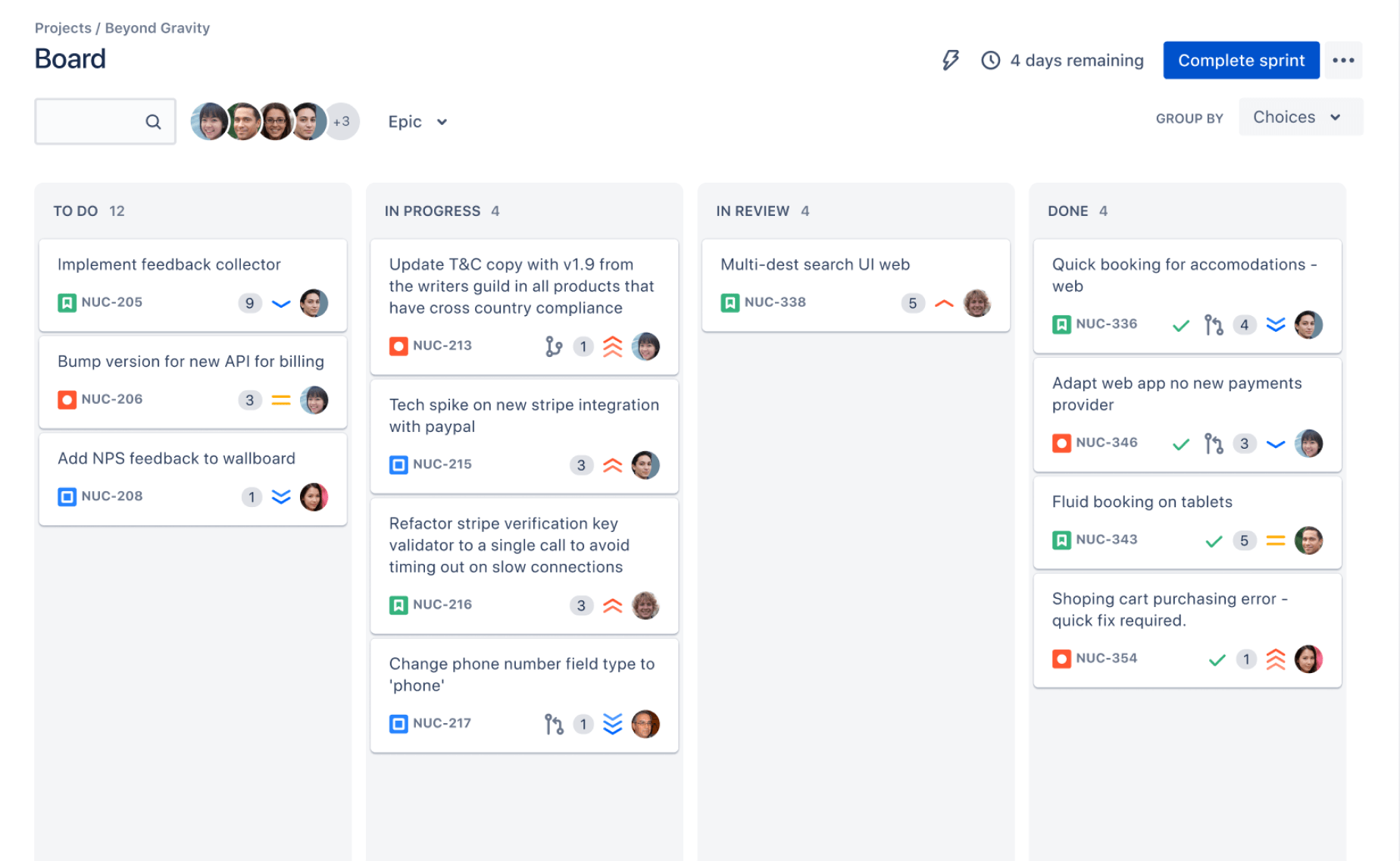
What the plans are designed to support
- Free: Basic team alignment, goals, project updates, and lightweight collaboration.
- Standard: Larger team adoption with expanded access and broader administrative needs.
- Premium: More demanding organizations that need higher-scale collaboration and additional control.
Here’s why: Atlas is primarily a team alignment and status-sharing product. It helps people understand priorities, progress, and responsibilities without requiring every conversation to happen in meetings.
How Atlas Costs Are Calculated
Atlas generally uses per-user subscription pricing for paid plans. Your total depends on the number of billable seats, the selected tier, and whether you pay monthly or annually.
Annual billing versus monthly billing
Annual billing commonly produces a lower effective monthly rate. It also creates a longer commitment, so it works best when your headcount and collaboration needs are reasonably stable.
Monthly billing gives you more flexibility. However, the higher monthly rate can become significant when you have dozens or hundreds of people.
Consider a simple example:
- A 25-person team paying $4.11 per person monthly would have an estimated annualized subscription of $1,233.
- A 100-person team at the same illustrative rate would reach about $4,932 annually.
- A team paying a higher monthly rate would spend more, even with the same number of seats.
These examples illustrate the calculation rather than guarantee a current quote. Taxes, billing currency, discounts, and commercial changes can affect the final amount.
Guest access and external collaborators
Before purchasing, check how Atlas treats guests, contractors, and external partners. Some collaboration tools distinguish between full members and limited participants, while others count nearly every invited person.
That detail matters for agencies, consulting firms, and companies working with clients. A workspace that appears to have 40 employees may contain 15 external collaborators as well.
What happens when your team grows
Seat growth can increase your subscription even when your team adds people gradually. A five-person hiring round may seem minor, yet repeated hiring can move you into a different planning bracket.
Set a quarterly seat review. Compare active membership with paid access, remove people who no longer need the workspace, and estimate upcoming hiring before renewing.
Atlas Usage Limits You Should Check
Pricing tells you what you pay. Usage limits tell you whether the plan will continue working as your organization expands.
User and team limits
The Free plan is commonly associated with a 50-user limit. That makes it attractive for small groups, pilot programs, and early-stage teams.
Once your team moves beyond that threshold, you may need a paid tier. Count everyone who needs regular access, including leadership, operations, product, engineering, marketing, and invited partners.
Feature availability
Paid plans can differ in administration, reporting, security, permissions, and scale. A plan comparison should therefore answer more than “How many people can join?”
- Can you control access by team or role?
- Can administrators manage the workspace centrally?
- Can you connect Atlas with the tools your teams already use?
- Can leaders see progress across multiple teams?
- Can you retain enough history for planning and reviews?
You might be wondering: do usage limits always appear as hard caps? No. Some limitations appear as reduced capability, restricted administration, or fewer controls rather than a simple user ceiling.
Integration and activity volume
Atlas becomes more valuable when it connects with work tracking, communication, and planning systems. However, integrations may have their own permissions, refresh behavior, or activity constraints.
For example, a project update may display a status from another Atlassian product. If that connection fails or refreshes slowly, people may return to manual updates, reducing the benefit of the platform.
Administrative limits
Large organizations should review permission management, audit needs, workspace controls, and centralized administration. A small team can tolerate manual setup. A distributed company usually cannot.
The cost of weak administration appears later through duplicated work, inconsistent access, and unclear ownership. Include that operational cost when comparing tiers.
Which Atlas Plan Fits Your Team?
The right plan depends on team size, collaboration complexity, and how much control you need. Start with the smallest tier that supports your real workflow, then test it against expected growth.
Choose Free when you are validating the workflow
Free can work well when fewer than 50 people need access and your main goals are visibility and alignment.
For example, a 12-person product team could use Atlas to share weekly progress, connect active initiatives, and keep leadership informed. That team may not need advanced administration yet.
Choose Standard when adoption is expanding
Standard is a reasonable consideration for larger departments and growing organizations. It may fit when many teams need access and basic collaboration is no longer enough.
Ask whether the plan supports your membership, integrations, administrative expectations, and reporting needs. A low per-person rate does not help if the plan forces manual work elsewhere.
Choose Premium when scale and control matter
Premium may suit organizations with many teams, complex access requirements, or stronger expectations around administration and visibility.
Before upgrading, identify the specific capability that justifies the difference. If your team cannot name that capability, a higher tier may add cost without improving outcomes.
Use a simple decision rule
- Count every person who needs regular access.
- List the three collaboration problems you want Atlas to solve.
- Separate essential capabilities from optional improvements.
- Estimate your team size twelve months from now.
- Compare monthly flexibility with annual savings.
- Recalculate the total after taxes and expected headcount changes.
The best part? This process prevents a common mistake: choosing a plan because its headline price looks attractive.
Atlas Compared With Full Project Management Platforms
Atlas and a full project management platform can support related work, but they usually emphasize different jobs.
| Need |
Atlas-style workspace |
Full project management platform |
| Team updates |
Strong focus on concise progress communication |
Usually available through status fields, dashboards, and reports |
| Goals and alignment |
Designed around visibility and shared priorities |
Often connected to plans, milestones, and delivery work |
| Issue tracking |
May depend on connected Atlassian products |
Typically built into the primary workspace |
| Workflow customization |
May be lighter and easier to adopt |
Often includes custom statuses, fields, rules, and approvals |
| Detailed delivery management |
May require adjacent tools |
Usually covers sprints, dependencies, reports, and workload planning |
Here’s the practical difference: Atlas can help you communicate what matters, while a project management system can help you plan and control how work moves.
A startup may only need lightweight alignment. A software company managing releases, approvals, dependencies, and sprint commitments may need a deeper workflow engine.
When a connected toolset makes sense
A connected toolset can work when each product has a clear role. Atlas may handle concise updates, while Jira handles detailed delivery tracking.
The tradeoff is complexity. People may need to update multiple places, learn separate permission models, and reconcile information when statuses differ.
When consolidation may be better
Consolidation can help when teams repeatedly ask where work belongs. A unified environment reduces navigation and gives managers one place to review progress.
However, consolidation only helps when the replacement supports your essential workflows. Check approvals, sprint planning, reporting, integrations, and permissions before switching.
How to Estimate the Total Cost Before You Buy
A useful estimate includes subscription fees and the internal time required to operate the workspace.
Build a three-part cost model
- Subscription cost: Multiply the expected billable seats by the applicable per-user rate.
- Administration cost: Estimate time spent managing access, settings, integrations, and governance.
- Adoption cost: Include training, workflow design, migration, and support.
For example, a 60-person organization may find that administration takes several hours each month. If updates still need manual consolidation, the operational cost may exceed the subscription difference between plans.
Let me explain: price should be measured against completed work, not only against the invoice. A cheaper subscription can become expensive when employees spend hours repairing fragmented processes.
Run a small pilot
Choose one team with a real need, such as product launches or quarterly planning. Define success before the trial begins.
- How quickly can people publish meaningful updates?
- Can managers identify blocked work?
- Do contributors understand ownership?
- Does the workflow reduce meeting time?
- Can administrators maintain permissions without constant intervention?
After two or four weeks, review participation and outcomes. A pilot gives you stronger evidence than a feature list alone.
Plan for growth and renewal
Estimate your headcount at the next renewal date. Include planned hiring, contractors, reorganizations, and new departments.
Then test two scenarios: steady growth and rapid growth. This helps you see whether annual billing provides savings or creates an uncomfortable commitment.
A Unified Alternative for Project and Knowledge Work: ONES.com
ONES.com combines project management and knowledge management in one platform. ONES Project serves as a Jira alternative for delivery teams, while ONES Wiki provides a Confluence alternative for shared knowledge. They can be sold separately, so you can adopt the part that matches your needs.
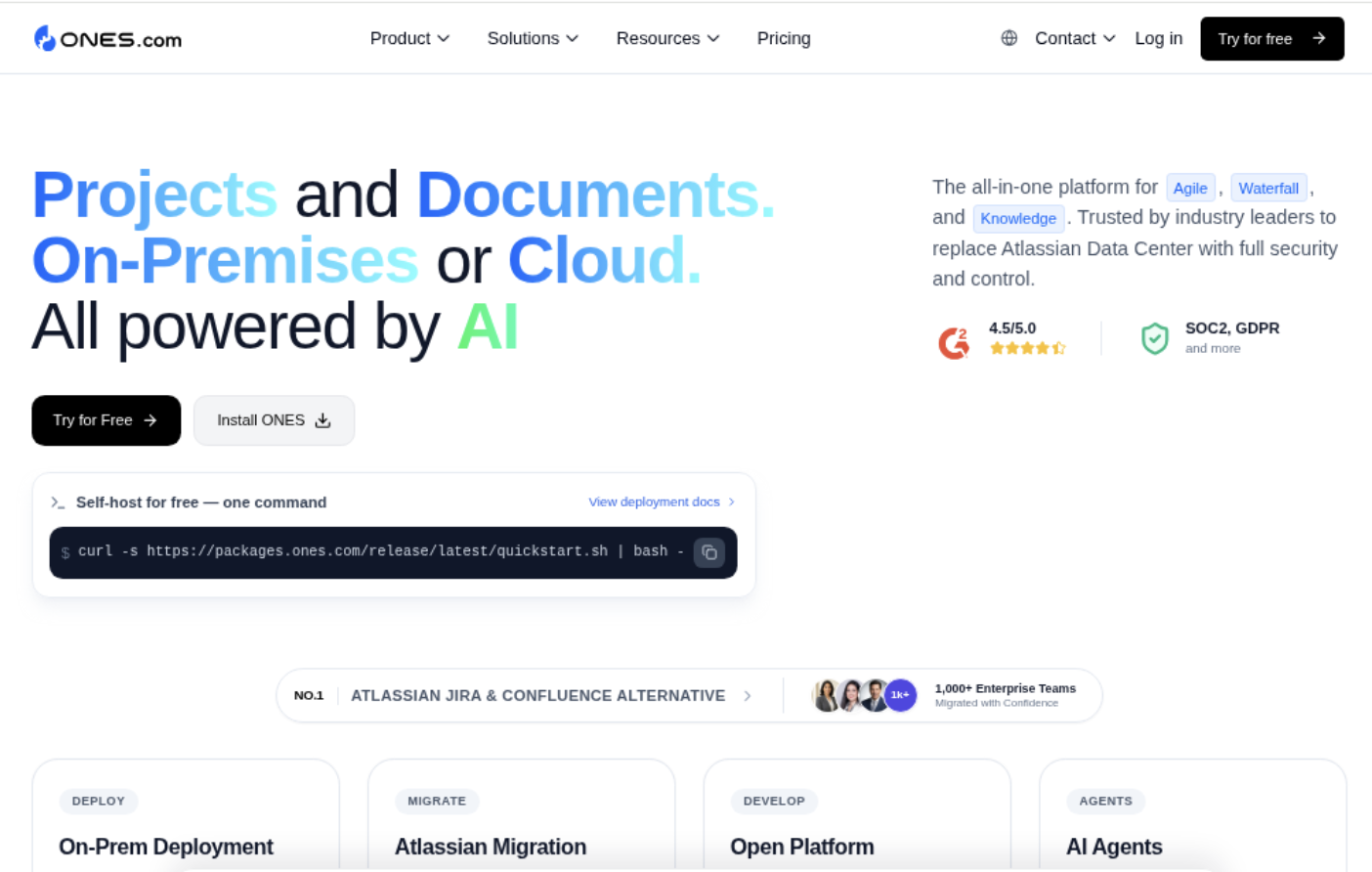
The platform supports Cloud, On-Premise, Private Cloud, and Air-gapped deployments. Its self-hosted versions maintain feature parity with the cloud version, giving teams more control over where work is managed.
Core capabilities
- Scattered delivery work → ONES Project: Centralize tasks, priorities, and ownership so teams can see what needs attention.
- Rigid workflows → Custom workflows and fields: Adapt statuses, fields, and approval paths to match how your organization operates.
- Unclear sprint commitments → Sprint management: Plan iterations, monitor progress, and identify unfinished work before deadlines slip.
- Manual recurring actions → Automation: Reduce repetitive transitions, reminders, and assignments so coordinators spend less time on administration.
- Limited delivery visibility → Built-in reporting: Review progress, trends, and workload without assembling separate reporting processes.
- Plugin dependency → Native capabilities: Cover more common project needs within the platform and reduce the number of additional extensions required.
- Disconnected team knowledge → ONES Wiki: Organize procedures, decisions, and working guidance beside project activity.
- Deployment restrictions → Flexible hosting: Choose cloud, on-premise, private cloud, or air-gapped deployment according to security and infrastructure requirements.
- Rising adoption cost → Free access for up to 30 seats: Start with a small team before expanding the rollout.
- Jira workflow familiarity → Jira-compatible workflows: Reduce retraining when teams already understand issue-based planning and delivery.
Application scenarios
Software release team: A development group can plan sprints, configure approval stages, automate routine transitions, and review delivery reports in ONES Project. Product guidance and release procedures can sit in ONES Wiki.
Regulated organization: A team with strict infrastructure requirements can select an on-premise or air-gapped deployment. It can maintain project workflows and internal knowledge within a controlled environment.
Growing services company: A 20-person team can begin within the free 30-seat allowance, establish consistent workflows, and add broader project or knowledge capabilities as adoption grows.
Common Challenges With Atlas Pricing and Plan Selection
Challenge: The advertised rate does not match the final bill
Solution: Check billing frequency, currency, taxes, discounts, and seat counting before approval. Calculate the annual total rather than comparing monthly figures alone.
Challenge: The free tier works until the team expands
Solution: Count expected users for the next twelve months. Include contractors and occasional contributors who need regular access.
Challenge: A team pays for capabilities it rarely uses
Solution: Map each paid feature to a concrete workflow. If nobody can explain the expected result, delay the upgrade and run a focused pilot.
Challenge: Collaboration remains fragmented across products
Solution: Define ownership for updates, tasks, approvals, and knowledge. If people must repeat the same information across multiple workspaces, evaluate a more unified approach.
Challenge: Administration becomes a hidden expense
Solution: Track time spent on access requests, workflow changes, reporting, and integration maintenance. Include those hours in your total cost estimate.
FAQs About Atlas Plans, Costs, and Limits
Is there a free Atlas plan?
Yes, Atlas has commonly offered a Free plan for small teams, often with access for up to 50 users. The free tier can suit teams testing goals, updates, and lightweight alignment. Confirm the current user allowance and included capabilities before relying on it for a larger rollout, because plan terms can change.
How much does Atlas Standard cost?
Atlas Standard has often been listed near $4.11 per user monthly with annual billing. Your actual amount may differ because monthly billing, taxes, currency, discounts, and commercial updates can affect the final total. Use the per-user figure as an estimate, then calculate the cost for your expected seat count.
How much does Atlas Premium cost?
Atlas Premium has often been listed near $6.05 per user monthly with annual billing. The higher tier may suit organizations needing broader scale or administration. Compare the specific capabilities included with Premium against your workflow before paying more, especially if your team mainly needs basic updates and shared priorities.
Does monthly billing cost more than annual billing?
Monthly billing commonly has a higher effective rate, while annual billing may reduce the monthly equivalent in exchange for a longer commitment. Monthly billing can still make sense during a pilot, rapid hiring period, or uncertain rollout. Compare the full twelve-month total and expected headcount before choosing.
What should I check besides the subscription price?
Review user limits, guest treatment, integrations, administration, permissions, reporting, history, security requirements, and support expectations. Also estimate the time your team will spend maintaining the workspace. A plan can look affordable while creating extra work through manual updates, disconnected workflows, or complex access management.
Conclusion
Atlas pricing becomes easier to evaluate when you separate three questions: which plan fits your current team, which limits could affect adoption, and what the full operating cost will be.
Start with Free when you are testing lightweight alignment and remain within its user allowance. Consider Standard as access expands, and examine Premium only when its additional control or scale directly supports your workflow.
But here’s the truth: the cheapest plan is not always the lowest-cost choice. A platform that reduces duplicated updates, manual administration, and disconnected project work may deliver better value over time.
If your team needs detailed delivery workflows, knowledge management, flexible deployment, and fewer add-ons, compare Atlas with a unified option such as ONES.com. The right choice is the one that keeps collaboration clear as your team grows.