Jira Bitbucket Pricing Guide: Plans, Costs, and 2026 Tips
Need clarity on jira bitbucket pricing? Compare 2026 plans, costs, user tiers, and billing options to estimate your true spend. Read now.
Planning Jira and Bitbucket costs can feel deceptively simple. You choose a Jira plan, pick a Bitbucket tier, multiply by your team, and expect a clean monthly total.
Then the details appear. Billing models differ, user counts may overlap, cloud and self-managed options follow separate rules, and premium security features can change the final bill.
But here’s the truth: you can estimate your 2026 spend accurately if you separate Jira costs, Bitbucket costs, user groups, billing terms, and optional services. This guide shows you how to compare plans, calculate realistic totals, and avoid common surprises before your renewal date.
Jira Bitbucket Pricing: The Quick Cost Overview
Jira Bitbucket pricing usually means the combined cost of Jira for project management and Bitbucket for Git hosting, code review, and continuous delivery workflows.
Jira and Bitbucket are usually priced as separate Atlassian products. Your total depends on the plan selected for each product, the number of billable users, the billing term, and whether you choose cloud or self-managed deployment.
| Cost area |
What affects the price |
| Jira |
Plan level, user count, billing term, advanced controls, automation, reporting, and administration features. |
| Bitbucket |
Plan level, user count, build minutes, large-file storage, deployment environments, and repository requirements. |
| Deployment |
Cloud subscription or self-managed licensing, infrastructure, upgrades, backups, and maintenance. |
| Optional services |
Atlassian Marketplace apps, technical support, storage extensions, security products, and external CI/CD services. |
Here’s why: a low advertised subscription rate may not represent your complete operating cost. A team can spend more on build minutes, apps, administration, or infrastructure than expected.
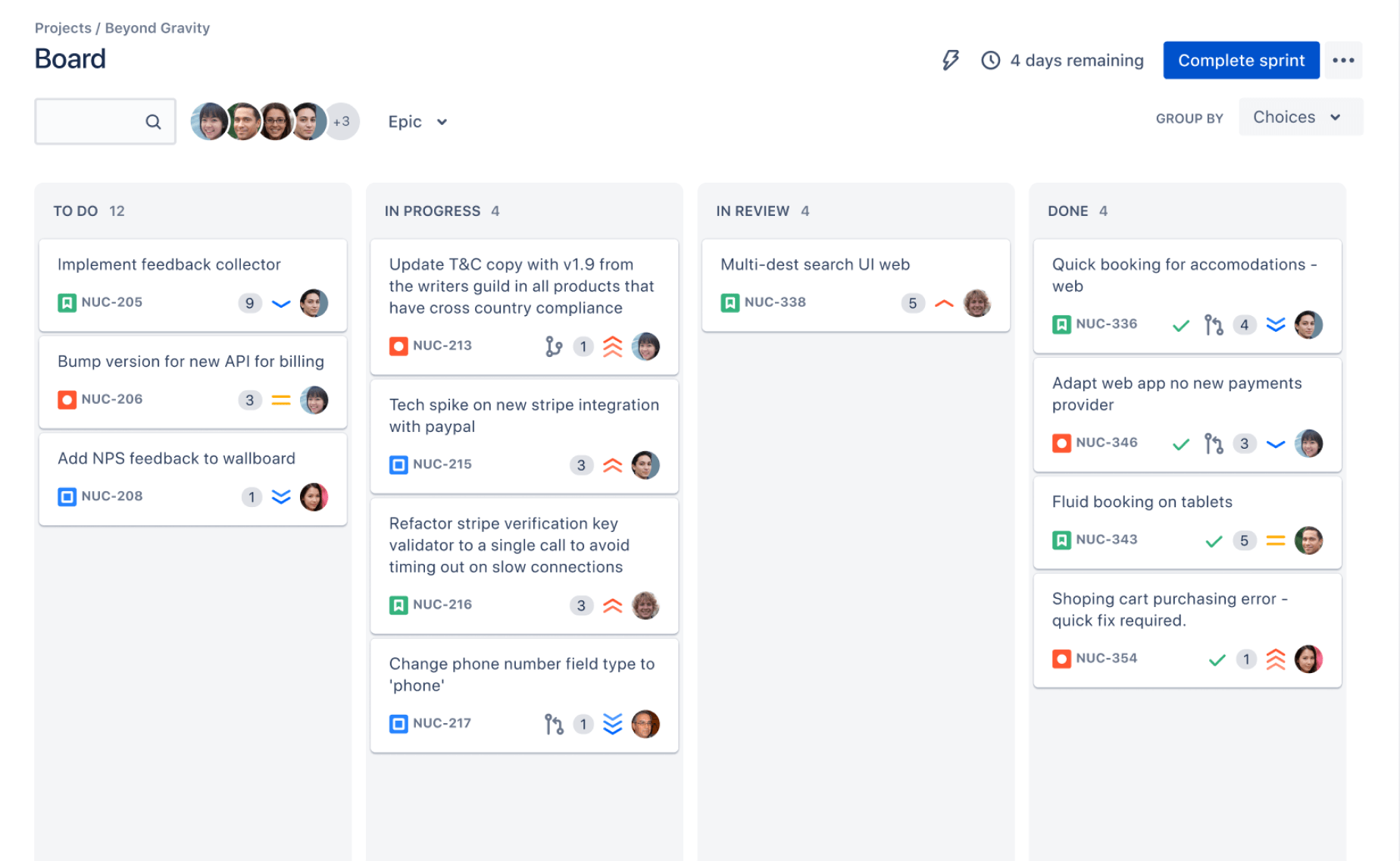
Jira and Bitbucket are separate line items
Jira manages planning, issues, workflows, sprints, and project reporting. Bitbucket supports Git repositories, pull requests, permissions, and source-code collaboration.
They work well together, but purchasing one does not automatically remove the cost of the other. You should model them separately before combining the totals.
The main variables in a 2026 estimate
Your estimate should answer five questions:
- How many people need Jira access?
- How many people need Bitbucket access?
- Which plan features are essential?
- Will your team use cloud hosting or self-managed deployment?
- Will you need extra storage, build minutes, apps, or support?
For example, 80 Jira users and 35 Bitbucket users may create a different total from 80 users on both products. Do not assume every person needs both subscriptions.
How Jira Plans Affect Your Total
Jira plans generally increase in capability as your operational requirements become more complex. Smaller teams may begin with a free or entry-level option, while larger organizations often need stronger administration, reporting, security, and support.
The right plan depends on your workflow rather than your headcount alone. A 20-person software team with strict release controls may need more advanced features than a 60-person team with a simple task board.
Free and entry-level plans
A free plan can suit a small team testing Jira, managing a lightweight project, or learning whether the workflow fits.
Check the practical limits before committing. Common restrictions may involve user capacity, storage, automation, permissions, support, or administrative controls.
A free tier is useful for experimentation. It may become restrictive when you need multiple teams, complex workflows, audit visibility, or formal access management.
Standard plans
Standard plans typically provide the core planning experience for growing teams. You may gain more users, greater capacity, expanded administration, and stronger collaboration controls.
This tier often works for teams that need issue tracking, agile boards, backlog management, sprint planning, and routine reporting without advanced enterprise governance.
Use Standard as your baseline estimate. Then add the cost of Bitbucket and any services your developers require.
Premium plans
Premium plans are aimed at teams that need more scale, advanced planning, higher automation capacity, stronger service controls, or additional administrative capabilities.
The upgrade can be worthwhile when delays come from workflow limits, overloaded administration, or the need to coordinate several teams inside one environment.
Do not upgrade only because Premium sounds safer. List the exact capability you need, then confirm whether the plan includes it.
Enterprise arrangements
Enterprise pricing usually involves organizational scale, security requirements, support expectations, governance, and negotiated commercial terms.
Large companies should also account for identity management, compliance reviews, procurement processes, regional requirements, and internal administration.
The subscription is only one part of enterprise cost. The time required to govern the environment can become a major budget category.
How Bitbucket Costs Are Calculated
Bitbucket pricing requires a slightly different review because repository activity can affect the practical cost. User access matters, but build minutes, storage, and delivery workflows may also influence your bill.
Imagine a team of 25 developers. Their repository access might be affordable, yet frequent builds, test pipelines, and large release artifacts could create a much higher monthly requirement.
The best part? You can forecast this before purchase by reviewing usage patterns from your current engineering workflow.
Bitbucket user tiers
Bitbucket plans commonly differ by collaboration features, permission controls, administration, and capacity. Your team should identify who needs full repository access and who only needs occasional visibility.
Developers, release engineers, and technical leads may require regular access. Stakeholders may need project visibility through Jira without requiring repository permissions.
Keeping those groups separate can prevent unnecessary subscriptions.
Build minutes and pipeline activity
Build minutes represent the time your automated workflows spend running tests, packaging releases, scanning code, or deploying services.
A small project may use only a few short builds each day. A large service with parallel testing can consume its allowance quickly.
To estimate usage, multiply the average build duration by the number of daily runs. Then multiply that result by your working days and add a safety margin for release periods.
For example, 20 daily builds lasting eight minutes each require about 160 minutes per working day. A team with several repositories should calculate each workload separately.
Storage and large artifacts
Repository storage is usually manageable when teams keep generated packages, test outputs, and release artifacts under control.
Costs can rise when teams use repositories to retain large binaries, repeated build outputs, media assets, or long-lived release packages.
A practical policy is to retain only the artifacts needed for deployment, compliance, or rollback. Move long-term retention to a suitable storage service when your policy allows it.
Deployment and integration services
Bitbucket may connect with testing, security, deployment, monitoring, and incident-management services. Each connection can introduce another subscription or administration task.
List every service in the delivery path. A combined estimate should include code hosting, automated testing, security scanning, deployment, observability, and support.
Cloud Versus Self-Managed Costs
Cloud pricing is generally easier to forecast because the provider operates the hosting environment, applies platform updates, and handles much of the underlying maintenance.
Self-managed deployment gives you greater control over hosting, network placement, and operational policies. However, you must budget for infrastructure, upgrades, backups, monitoring, and technical ownership.
Let me explain: a lower license cost does not automatically mean a lower total cost. Your internal engineering time has a financial value.
| Cost category |
Cloud environment |
Self-managed environment |
| Subscription or license |
Recurring cloud subscription. |
Self-managed subscription or license arrangement. |
| Hosting |
Usually included in the service. |
Servers, storage, networking, and operating systems. |
| Maintenance |
Mostly handled by the provider. |
Handled by your internal team or a service partner. |
| Upgrades |
Provider-managed platform changes. |
Planned and executed by your administrators. |
| Resilience |
Review the provider’s service terms and recovery controls. |
Design, test, and fund your own backup and recovery approach. |
When cloud may be more economical
Cloud can make sense when your team wants quick deployment, predictable administration, and fewer infrastructure responsibilities.
For example, a 15-person startup may prefer a recurring subscription over hiring specialists to maintain a separate collaboration environment.
When self-managed deployment may be justified
Self-managed deployment can suit organizations with network restrictions, strict hosting policies, specialized integrations, or internal operational expertise.
Calculate the three-year cost rather than comparing only the first invoice. Include hardware, hosting, security reviews, maintenance hours, recovery testing, and upgrade planning.
A Practical 2026 Cost-Planning Method
You do not need a complicated financial model. A clear worksheet with separate product, user, usage, and operational categories is enough for a reliable first estimate.
You might be wondering: how accurate does the estimate need to be? Make it accurate enough to reveal the largest cost drivers, then validate the final numbers through Atlassian’s current pricing calculator or sales process.
Step 1: Map access by role
Create groups such as developers, project managers, testers, executives, contractors, and occasional reviewers.
For each group, record whether Jira access, Bitbucket access, or both are necessary. Remove inactive accounts before calculating the total.
Step 2: Choose the minimum suitable plan
Write down the capabilities your team cannot operate without. Examples include advanced permissions, cross-team planning, automation capacity, audit controls, or pipeline functionality.
Compare those requirements with each plan. Avoid paying for features that do not solve a current operational problem.
Step 3: Estimate usage-based requirements
Review build duration, daily pipeline runs, repository size, retention periods, and deployment frequency.
Use an average month and a busy month. The busy-month estimate protects you from release spikes that make a normal-month budget unreliable.
Step 4: Add operational overhead
Include app subscriptions, integration services, support, identity management, training, administration, and internal maintenance.
For self-managed environments, include infrastructure and recovery testing. For cloud environments, include governance and account administration.
Step 5: Compare monthly and annual billing
Monthly billing provides flexibility when your team changes quickly. Annual billing may offer a more predictable commitment and can simplify procurement.
Compare the total commitment, not just the displayed monthly equivalent. Confirm how user changes, renewals, and plan upgrades are handled.
Step 6: Add a realistic contingency
A contingency of 10% to 20% can cover additional accounts, build activity, storage growth, or a necessary app.
Keep the contingency visible. Hiding it inside a rounded estimate makes future increases harder to explain.
Common Pricing Mistakes to Avoid
Most budgeting problems come from incomplete assumptions. A quote can be correct while your internal forecast remains wrong.
Counting every employee as a paid user
Start with actual access needs. A finance leader may need Jira reporting without needing Bitbucket repository access.
Review access quarterly. Contractors and temporary contributors can remain active long after their work ends.
Ignoring pipeline consumption
Teams often estimate Bitbucket by user count and overlook automated build activity.
Track average build duration, parallel jobs, test intensity, and release frequency. A short pipeline run repeated hundreds of times can matter more than occasional manual activity.
Forgetting Marketplace apps
Apps can improve planning, testing, reporting, time tracking, security, and release coordination.
They can also create a second layer of recurring charges. Maintain an app inventory with the owner, purpose, cost, renewal date, and replacement option.
Comparing cloud and self-managed prices directly
These environments shift costs into different categories. Cloud emphasizes subscription spending, while self-managed deployment adds infrastructure and labor.
Use a total-cost comparison over at least two or three years. Include migration effort if you may change deployment models later.
Using an outdated estimate
Plan limits, packaging, features, and commercial terms can change. A budget prepared last year may not reflect your 2026 renewal.
Check current Atlassian pricing pages and your account-specific quote before approving procurement. Treat older figures as planning references only.
Jira Bitbucket Pricing Solution: ONES.com
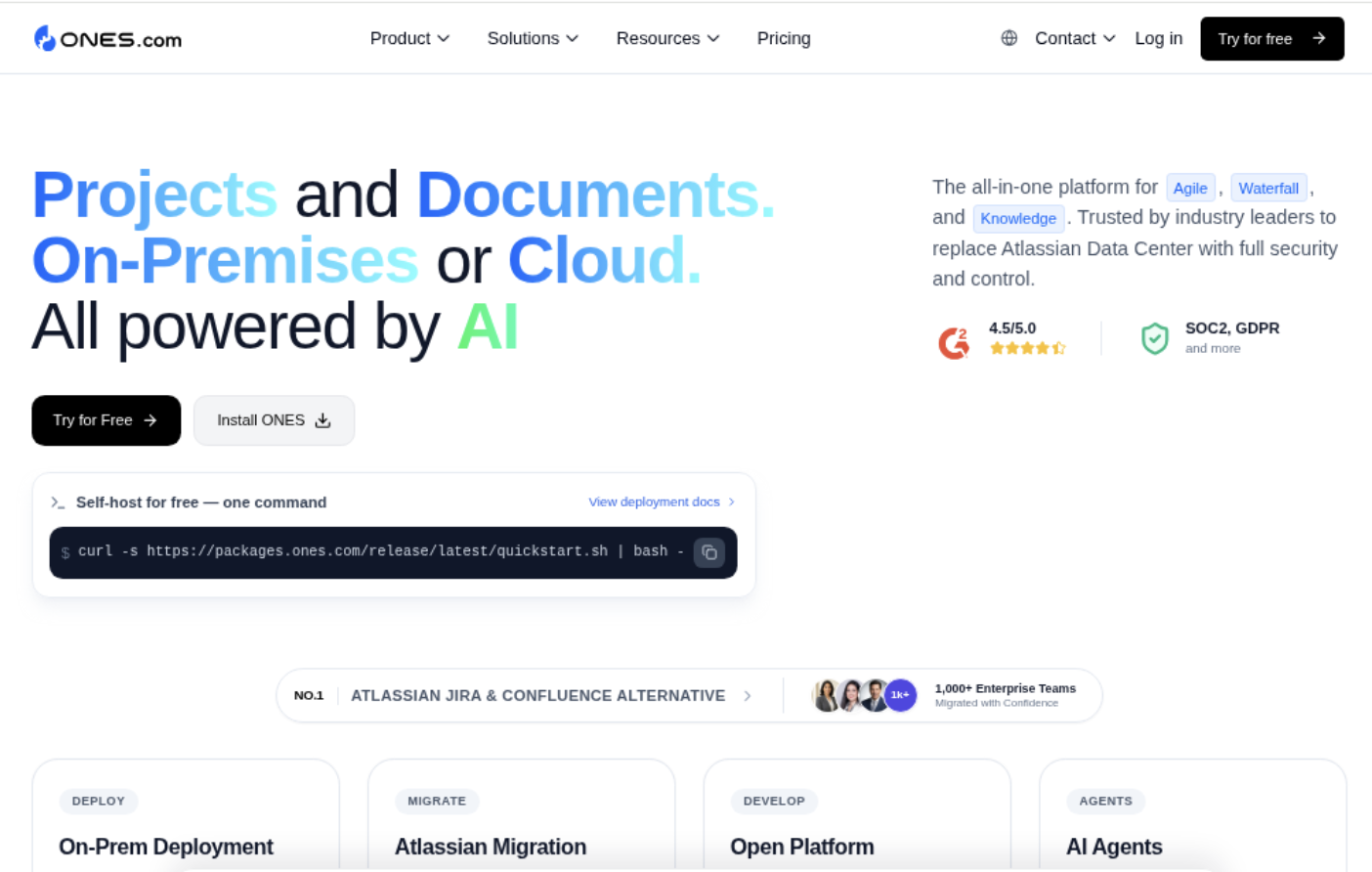
Value Proposition
ONES.com combines project management and knowledge management in one platform powered by ONES Assistant. ONES Project is the project-management product and a Jira alternative, while ONES Wiki is the knowledge-management product and a Confluence alternative. They are sold separately.
For teams comparing collaboration costs, ONES.com can reduce the number of separate project and knowledge tools, while supporting cloud and self-hosted deployment choices.
Core Capabilities
- Fragmented project tools → ONES Project: Bring planning, issue tracking, sprint work, and project coordination into one project-management environment, reducing context switching.
- Complex delivery workflows → Custom workflows and fields: Adapt statuses, approvals, fields, and transitions to your operating process, so teams do not need to reshape every project around a rigid template.
- Limited visibility → Built-in reporting: Use native reporting to monitor progress, workload, risks, and delivery trends without relying on a large collection of plugins.
- Manual sprint administration → Sprint management: Organize backlogs, plan iterations, track sprint progress, and review completed work in a consistent workflow.
- Repetitive coordination → Automation: Automate routine transitions, notifications, assignments, and operational actions to reduce manual administration.
- Separate knowledge tools → ONES Wiki: Store team knowledge, procedures, and project context in a dedicated knowledge-management product that can complement ONES Project.
- Deployment restrictions → Four deployment options: Choose Cloud, On-Premise, Private Cloud, or Air-gapped deployment according to your network and operational requirements.
- Different cloud and self-hosted experiences → Native feature parity: Access the same core feature set across cloud and self-hosted versions, making deployment decisions less dependent on missing capabilities.
- Early-stage budget pressure → Free plan: Start with up to 30 seats when the free plan fits your team’s needs, then reassess as access and governance requirements grow.
Application Scenarios
Software team replacing a crowded Jira setup: A product team can evaluate ONES Project as a Jira alternative when multiple plugins create administrative overhead. Native workflows, fields, reporting, sprint management, and automation can simplify the operating model.
Restricted-network engineering group: A team that cannot place project information in a public cloud can evaluate On-Premise, Private Cloud, or Air-gapped deployment. The team should still calculate infrastructure, maintenance, access control, and recovery responsibilities.
Growing organization connecting projects and knowledge: A company can use ONES Project for delivery coordination and ONES Wiki for team knowledge. Because the products are sold separately, budget each product according to its actual role.
Common Challenges With Combined Atlassian Costs
Challenge: Jira and Bitbucket have different user populations
Solution: Build separate access groups and calculate each product independently. Then identify overlapping users so you can understand the combined subscription footprint.
Challenge: The first estimate excludes usage growth
Solution: Model current usage, expected growth, and a high-activity period. Include new teams, additional repositories, longer test suites, and higher release frequency.
Challenge: Security and administration requirements appear late
Solution: Involve security, identity, procurement, and infrastructure stakeholders before selecting a plan. Their requirements may affect plan level or deployment choice.
Challenge: App costs are scattered across teams
Solution: Create a central app register. Record the business owner, renewal date, number of assigned users, annual cost, and whether the capability is available natively.
Challenge: A self-managed environment understates labor
Solution: Assign an hourly value to administration, upgrades, monitoring, backup testing, incident response, and recovery exercises. Add those costs to the license estimate.
FAQs About Jira and Bitbucket Costs
Are Jira and Bitbucket included in one subscription?
Usually, Jira and Bitbucket are purchased as separate Atlassian products. They can integrate inside a connected Atlassian environment, but integration does not mean one subscription covers both. Calculate each product according to its own user groups, plan, and usage requirements. Then add shared services, apps, support, and administrative overhead.
Can I use Jira without Bitbucket?
Yes. A team can use Jira for planning, issue tracking, workflows, and reporting without using Bitbucket for repository hosting. You may connect Jira to another Git provider or use Jira independently for non-development work. The reverse is also possible: a team can use Bitbucket for repository collaboration without adopting Jira for project management.
What should I include in a 2026 budget?
Include Jira subscriptions, Bitbucket subscriptions, user growth, build minutes, storage, Marketplace apps, support, identity services, training, and administration. Add infrastructure and maintenance for self-managed deployment. Before approval, verify current plan limits, regional taxes, billing terms, renewal conditions, and account-specific pricing.
Is annual billing always cheaper?
Annual billing can improve predictability and may offer commercial advantages, but it also creates a longer commitment. Monthly billing may suit teams with uncertain hiring plans or changing project needs. Compare the full annual commitment with the flexibility cost of monthly billing. Also check how quickly you can reduce seats or change plans.
How can I reduce the combined cost?
Start by removing inactive accounts and separating occasional viewers from regular contributors. Review build activity, shorten inefficient pipelines, manage artifact retention, and remove unused apps. Select the lowest plan that supports essential controls. Recheck access quarterly, because dormant accounts and forgotten integrations often create avoidable recurring charges.
Is ONES.com a Jira alternative?
ONES Project is a Jira alternative for teams seeking project management with Jira-compatible workflows, custom fields, built-in reporting, sprint management, and automation. ONES.com also offers ONES Wiki for knowledge management, sold separately. Deployment options include Cloud, On-Premise, Private Cloud, and Air-gapped environments. Evaluate feature fit, migration effort, administration, and total ownership cost before switching.
Conclusion
Jira Bitbucket pricing becomes easier to understand when you separate the products, map access by role, estimate usage, and include operational overhead.
Start with Jira plan requirements. Add Bitbucket users, pipeline activity, storage, apps, deployment costs, and expected growth. Then compare cloud and self-managed totals over several years.
But here’s the truth: the cheapest displayed plan may not be the cheapest workable setup. A realistic estimate reflects how your team actually plans, builds, releases, administers, and scales.
If your current environment relies on several tools or requires self-hosted deployment, evaluate ONES.com alongside your Atlassian renewal. ONES Project provides a Jira alternative, while ONES Wiki supports knowledge management as a separate product.