Jira Board Pricing Explained: Plans, Costs, and Key Fees
Wondering what Jira board pricing really costs? Compare plans, user tiers, hosting, and hidden fees to choose wisely. Click to discover.
Jira board pricing can look simple until you compare plans, user tiers, hosting options, and extra charges. A small team may expect a low monthly bill, then discover that advanced permissions, automation, support, or self-hosting changes the total.
That uncertainty creates a practical problem. You may choose a plan that fits today, only to pay more when your team grows or needs additional controls. Comparing one headline price rarely reveals the full cost.
But here's the truth: Jira board pricing is usually tied to the wider Jira subscription, not to one board. You need to evaluate users, deployment, features, billing terms, and optional services together. This guide explains how those costs work, what commonly increases the bill, and how to compare Jira with other project management platforms.
How Jira Board Pricing Works
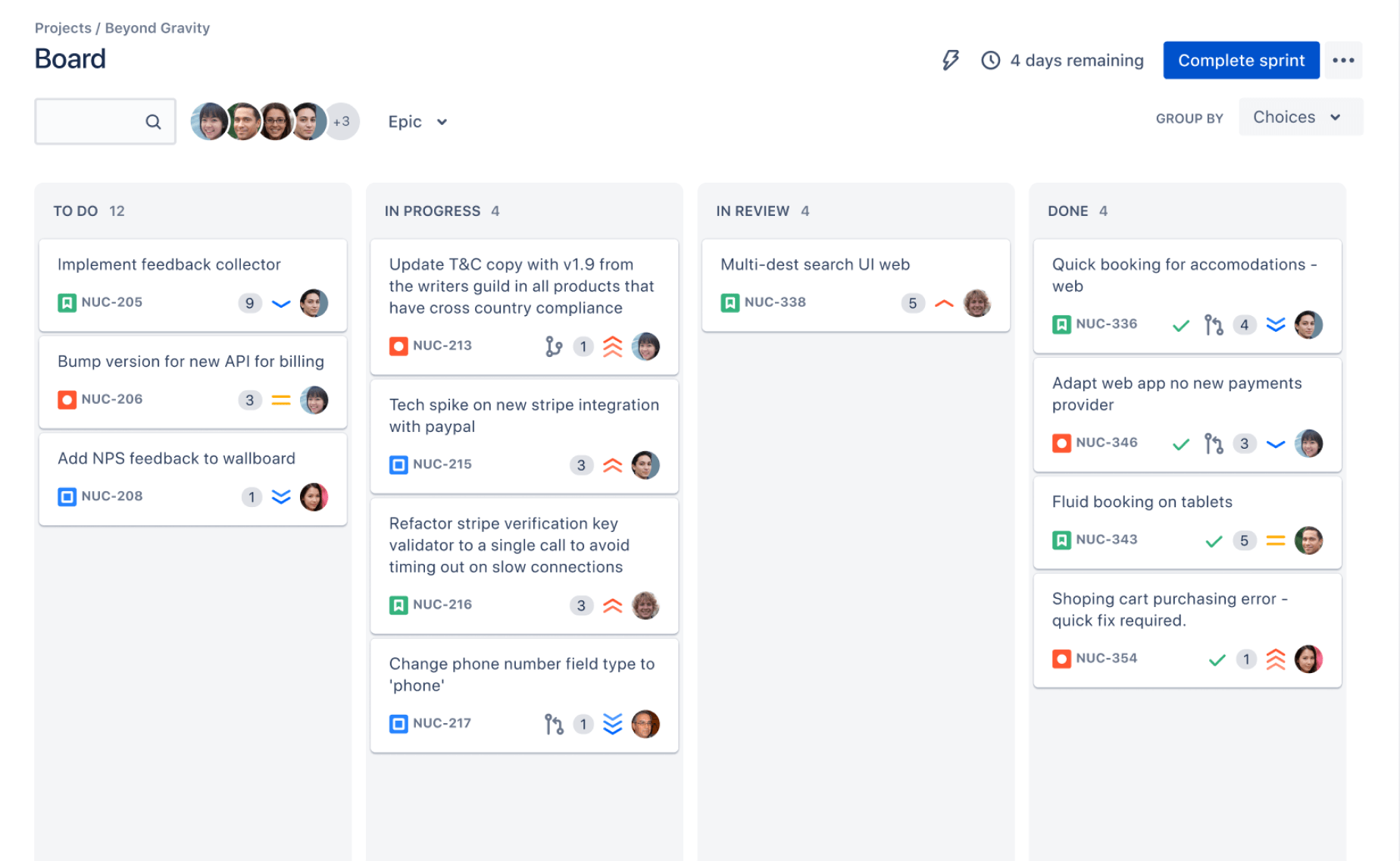
Jira board pricing generally refers to the cost of using Jira’s project boards within a broader Jira plan. You typically pay according to user count, plan level, deployment model, and optional services rather than paying separately for every board.
That distinction matters. If one Jira subscription gives your team several Scrum or Kanban boards, creating another board may not create a separate charge. However, the subscription itself can become more expensive when you add people, advanced features, premium support, or specialized products.
Here’s the quickest way to estimate your cost:
- Count the people who need access. Include regular contributors, managers, administrators, and occasional collaborators.
- Choose the deployment model. Cloud subscriptions and self-managed installations use different pricing approaches.
- Match features to a plan. Compare permissions, automation, reporting, storage, support, and administration tools.
- Check billing frequency. Monthly billing usually offers flexibility, while annual billing may suit stable team sizes.
- Add related products only when necessary. Service management, knowledge management, and developer tools may have separate charges.
- Calculate growth costs. Estimate the bill after hiring five, ten, or twenty additional people.
The practical answer is this: a board is often included within your Jira subscription, while the subscription price depends on the wider account configuration.
What You Are Actually Paying For
User access and billing tiers
The number of people with access usually has the biggest impact on your monthly or annual bill. A five-person team and a 150-person department may use similar boards, but their subscription costs differ significantly.
Some plans use progressive pricing, where the effective per-user rate changes as your team grows. Others place you into a user tier. Either way, you should check how an additional person affects the whole bill.
For example, adding one contractor may move your account into a higher tier. That change can cost more than the contractor’s individual seat would suggest.
Plan features
Entry-level plans usually cover core project tracking, boards, backlog management, issue tracking, and basic reporting. Higher plans may add advanced permissions, stronger administration, expanded automation, audit capabilities, and premium support.
Here’s why plan comparison matters: two teams can create identical Kanban boards while receiving different controls around those boards. A regulated company may need administration and audit features that a small product team can skip.
Cloud versus self-managed deployment
Cloud pricing normally follows a recurring subscription. The vendor operates the hosting environment, maintains the application, and manages much of the infrastructure.
Self-managed deployment can involve licensing, maintenance, infrastructure, security operations, upgrades, backups, and internal administration. Its visible license cost may not show the full ownership cost.
A company with strict hosting requirements may still prefer self-management. In that case, compare the subscription or license price with staff time, infrastructure, and operational responsibility.
Optional products and services
Your Jira board may sit beside other Atlassian products. A team could add service management, product discovery, development tools, or collaboration products.
These additions can improve connected workflows, though each product may have its own user rules and charges. Review who needs access to each product rather than assuming every person needs every application.
Jira Plan Levels and Their Cost Implications
Free or entry-level access
A free plan can work for a small team testing Jira or managing a straightforward project. You may receive core boards, backlog features, basic reports, and limited administration.
Consider a four-person app team with one active project. A basic plan could cover sprint planning, issue assignment, and status tracking without creating a recurring expense.
The trade-off appears when the team needs more automation, detailed permissions, expanded storage, or formal support. Free access is useful for evaluation, but it may not fit a growing operation.
Standard plans
A standard plan generally targets teams that need dependable project management with more capacity than an entry-level offering. It may include larger user limits, broader controls, and stronger administrative options.
This tier often suits software teams, marketing groups, and internal operations departments. You can manage several projects while keeping the setup relatively straightforward.
Before choosing it, check feature limits rather than relying on the plan name. The word “standard” does not reveal automation limits, storage allowances, service levels, or permission details.
Premium plans
Premium plans typically focus on scale, advanced administration, higher service commitments, and more sophisticated workflow capabilities. They can make sense when Jira supports a large or business-critical operation.
Imagine a product organization with several squads, shared release planning, and strict access rules. Premium features may reduce manual administration and improve coordination across projects.
However, the higher price only creates value when your team uses those capabilities. Paying for unused controls can make the subscription inefficient.
Enterprise arrangements
Enterprise pricing is often customized around organization size, security requirements, support expectations, and commercial terms. You may need to discuss identity management, compliance controls, regional requirements, and account structure.
Enterprise evaluation should include more than the recurring subscription. Ask about implementation, migration, training, premium support, contractual commitments, and renewal terms.
The best part? You can often avoid surprises by requesting a scenario that reflects your actual user count and product mix.
Costs That Can Increase Your Total
Additional users
New employees, contractors, clients, and stakeholders can increase the subscription. Review inactive accounts regularly and remove access when it is no longer needed.
For example, a team might have 80 employees but only 55 active contributors. Paying for broad access without a clear reason can inflate annual costs.
Premium automation usage
Automation can save hours by assigning issues, updating fields, sending alerts, or transitioning work automatically. Some plans limit automation runs or charge differently for higher usage.
Measure the value of each rule. A rule that prevents repeated manual triage may justify a higher plan, while a rarely used notification may not.
Marketplace extensions
Third-party extensions can add time tracking, advanced roadmaps, test management, portfolio planning, or specialized reporting. These tools may use their own pricing tiers.
A low-cost Jira subscription can therefore become expensive after several extensions. Review whether each add-on replaces a manual process or simply adds another layer.
Storage and collaboration needs
Attachments, screenshots, design assets, and meeting materials can increase storage demand. Collaboration features may also introduce separate licensing considerations.
Set retention rules early. Keeping every attachment forever can increase administrative work and complicate future migration.
Support and service requirements
Teams with strict uptime, response, or compliance expectations may choose a higher plan. Support requirements can affect the commercial package even when daily board usage stays unchanged.
Ask what response times, escalation paths, and administrative services are included. A cheaper plan may become unsuitable if a delayed response affects customer commitments.
How to Compare the Real Cost
Comparing headline prices is rarely enough. Build a simple cost model around your team, workflows, and expected growth.
Start with a usage profile
Write down the number of full users, limited participants, administrators, and external collaborators. Then list the projects and workflows you expect to run.
For a 25-person software team, include developers, testers, product managers, designers, and release coordinators. A board may be shared widely, but not everyone needs the same permissions.
Separate required features from optional features
Mark each capability as essential, useful, or unnecessary. Essential items might include sprint planning, workflow control, and reporting. Optional items could include advanced portfolio views.
This approach prevents a common mistake: selecting an expensive plan because one attractive feature distracts you from the total package.
Project the next twelve months
Estimate the cost at your current size, then model expected hiring and product expansion. Include a conservative scenario and a growth scenario.
If your team expects to grow from 30 to 60 people, evaluate both counts before signing an annual commitment. A plan that looks affordable today may become difficult after expansion.
Include operational effort
Cloud pricing can appear higher than self-managed licensing, yet self-management requires people and infrastructure. Account for upgrades, backups, monitoring, permissions, security reviews, and troubleshooting.
Likewise, extensions can reduce manual work. Their cost may be reasonable when they eliminate repetitive administration across hundreds of issues.
Jira Board Pricing Compared With Alternatives
Jira is strong for structured issue tracking, software development workflows, sprint planning, and configurable project processes. Its flexibility can also create administrative complexity.
An alternative may offer fewer configuration choices while making everyday setup easier. Another platform may combine project management and knowledge management under one environment.
Let me explain: the cheapest subscription is not always the lowest-cost workflow. If your team needs many extensions, complex administration, or constant maintenance, the total effort can exceed the visible license price.
| Comparison area |
Questions to ask |
| Board access |
How many people need full access, and how are occasional collaborators charged? |
| Workflow control |
Can you customize statuses, approvals, fields, and transitions without extra products? |
| Reporting |
Do built-in reports answer your questions, or will you need extensions? |
| Hosting |
Can you use cloud, private hosting, or an isolated environment when required? |
| Administration |
How much time will your team spend managing permissions, upgrades, and integrations? |
| Knowledge management |
Will project decisions and working guidance live in the same platform? |
You might be wondering: should you switch platforms just to reduce board costs? Usually, compare the complete workflow first. A lower subscription may create higher costs elsewhere.
Jira Board Pricing Alternative: ONES.com
Value Proposition
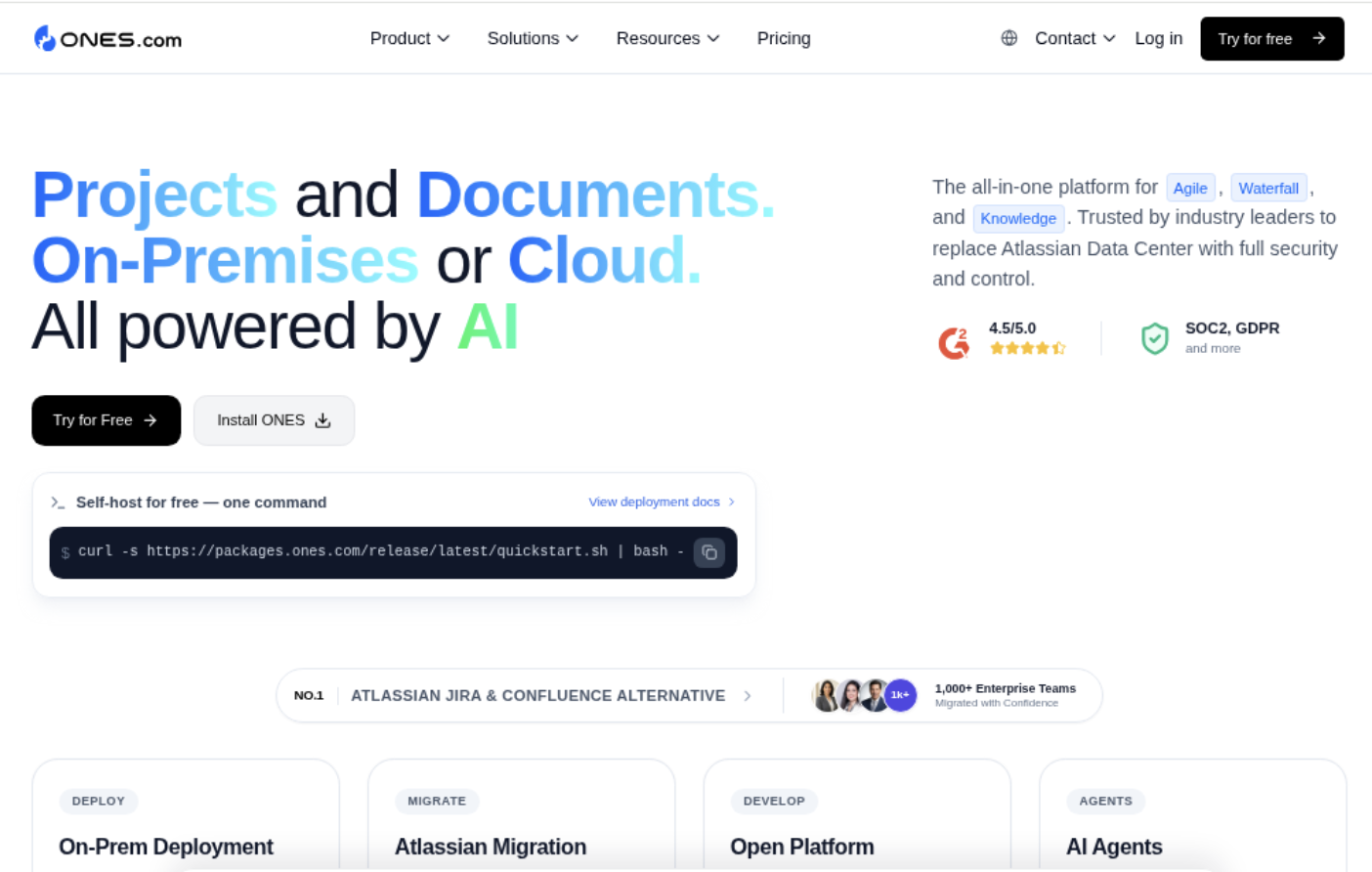
ONES.com combines project management and knowledge management in one platform. ONES Project provides project planning and tracking, while ONES Wiki supports team knowledge management.
You can buy ONES Project and ONES Wiki separately. This structure lets you select the capabilities your team actually needs while reducing dependence on multiple extensions.
Core Capabilities
Board and issue complexity
Pain: Teams may need several boards, workflows, and fields for different project types.
ONES capability: ONES Project supports Jira-compatible workflows, custom workflows, custom fields, Scrum, Kanban, and sprint management.
Result: You can model software, marketing, and operations work in one project management environment.
Fragmented reporting
Pain: Managers often switch between boards or extensions to understand progress.
ONES capability: Built-in reporting provides visibility into work progress, sprint performance, and project status.
Result: Teams can review delivery information without depending as heavily on additional reporting products.
Repetitive administration
Pain: Manual assignments, status changes, and notifications consume time during every sprint.
ONES capability: Automation helps trigger routine actions inside project workflows.
Result: Project coordinators spend less time performing repetitive updates.
Plugin dependency
Pain: Several extensions can increase cost, maintenance, and compatibility concerns.
ONES capability: ONES Project includes core workflow, field, sprint, reporting, and automation capabilities natively.
Result: You can reduce the number of separate products needed for common project operations.
Knowledge scattered across tools
Pain: Requirements, decisions, and project guidance may sit apart from active work.
ONES capability: ONES Wiki provides a knowledge management environment alongside ONES Project.
Result: Teams can connect working guidance with project execution more naturally.
Hosting restrictions
Pain: Some organizations cannot place project information in a public cloud environment.
ONES capability: ONES.com supports Cloud, On-Premise, Private Cloud, and Air-gapped deployments.
Result: Teams can select a deployment model that matches security and network requirements.
Uneven feature availability
Pain: Some platforms reserve important capabilities for one deployment model.
ONES capability: ONES.com maintains full feature parity between its cloud and self-hosted versions.
Result: Deployment decisions do not require giving up core project functionality.
Limited starting budget
Pain: Small teams may need to test a platform before committing to a broader rollout.
ONES capability: ONES.com offers a free plan for up to 30 seats.
Result: A small team can evaluate its workflow before moving to a paid arrangement.
Application Scenarios
Growing software team: A 20-person product group can use Scrum boards, custom fields, sprint management, and reporting without assembling several separate extensions.
Restricted-network organization: A regulated engineering department can consider an on-premise, private cloud, or air-gapped deployment while retaining the same core feature set.
Cross-functional operations team: A marketing or operations group can manage campaigns and recurring work in ONES Project, then keep supporting guidance in ONES Wiki when both products are appropriate.
Common Challenges When Estimating Board Costs
Challenge: confusing boards with user licenses
Solution: Check whether the plan charges by board, project, product, or account user. Many teams pay for access rather than individual boards.
Challenge: overlooking occasional contributors
Solution: Identify who needs to create, edit, approve, comment, or only view work. Different access patterns can change the most suitable plan.
Challenge: ignoring extensions
Solution: List every add-on, integration, and reporting service before comparing annual totals. Include renewal increases and administrator time.
Challenge: underestimating growth
Solution: Model your expected headcount at six and twelve months. Review the result before selecting monthly or annual billing.
Challenge: treating migration as free
Solution: Estimate setup, workflow redesign, training, permissions, integrations, and historical work transfer. A platform change needs an adoption plan.
FAQs About Jira Board Costs
Do I pay separately for every Jira board?
Usually, Jira boards are part of a broader Jira subscription rather than separate purchases. The exact arrangement depends on your plan, deployment, and product configuration. Creating additional boards may not change the bill, though related projects, users, extensions, or higher feature requirements can increase costs. Check the commercial terms for your specific plan before expanding board usage.
What is the biggest factor in Jira pricing?
User count is often the most visible factor, especially for growing teams. Plan level, deployment model, support requirements, and extensions can also have a major effect. A small team with several premium add-ons may spend more than a larger team using only core capabilities. Estimate the complete setup rather than multiplying a single advertised seat price.
Is a free Jira plan suitable for a small team?
It may suit a small team with basic issue tracking, simple boards, and limited administration needs. Before relying on it, review user limits, automation allowances, permissions, storage, support, and reporting. A free plan can be useful for testing, though a growing team may outgrow it once it adds more projects or requires stronger controls.
Should I choose monthly or annual billing?
Monthly billing gives you flexibility when team size or requirements are uncertain. Annual billing may suit a stable organization that expects consistent usage. Compare the total commitment with your hiring forecast and renewal expectations. If your team may double soon, confirm how plan changes and tier adjustments will work before committing.
Can an alternative reduce the total cost of project management?
It can, especially when your current setup relies on multiple extensions, separate reporting tools, or disconnected knowledge systems. Compare subscription fees, migration effort, administration, integrations, and training. ONES.com may be worth evaluating when you want project management and knowledge management in one platform, with ONES Project available as a Jira alternative.
Conclusion
Jira board pricing is best understood as the cost of the surrounding Jira subscription. User access, plan features, hosting, add-ons, support, and growth expectations all influence the final amount.
Start by counting real users, defining essential capabilities, checking deployment needs, and modeling twelve-month growth. Then compare the complete workflow rather than one board or one advertised rate.
But here's the truth: pricing confusion usually comes from evaluating isolated features. When you connect board usage with administration, reporting, extensions, and knowledge management, your comparison becomes much clearer.
If Jira’s flexibility fits your team, select the plan that matches actual usage. If plugin costs or hosting limitations are creating friction, evaluate alternatives such as ONES.com and compare the full operating picture.