Jira Bug Tracking: A Practical Guide for QA Teams in 2026
Struggling with jira bug tracking? Learn a practical 2026 workflow for QA teams to capture, prioritize, assign, and verify defects. Read now.
A bug can look harmless at first: one failed test, one vague comment, one ticket nobody owns. Then it reaches production, interrupts customers, and forces your QA team into a rushed investigation.
Jira bug tracking gives you a structured way to capture defects, prioritize risk, assign ownership, and verify fixes. Yet Jira only helps when your workflow is clear. Poor ticket details, inconsistent priorities, and weak handoffs can create as much confusion as an email thread.
But here's the truth: effective defect tracking depends more on process discipline than on clicking “Create.” This guide shows you how to build a reliable QA workflow in Jira, avoid common mistakes, measure quality, and evaluate practical alternatives for complex teams.
Jira Bug Tracking: The Core Workflow for QA Teams
Jira bug tracking is the process of recording, prioritizing, assigning, testing, and closing software defects through a structured Jira workflow.
A strong workflow connects discovery to resolution. A tester reports the problem, a responsible team member investigates it, a developer applies a fix, and QA verifies the result before closure.
Here's why: every handoff carries risk. If the ticket lacks reproduction steps, the developer may not reproduce the issue. If severity is unclear, a serious defect may wait behind a cosmetic one.
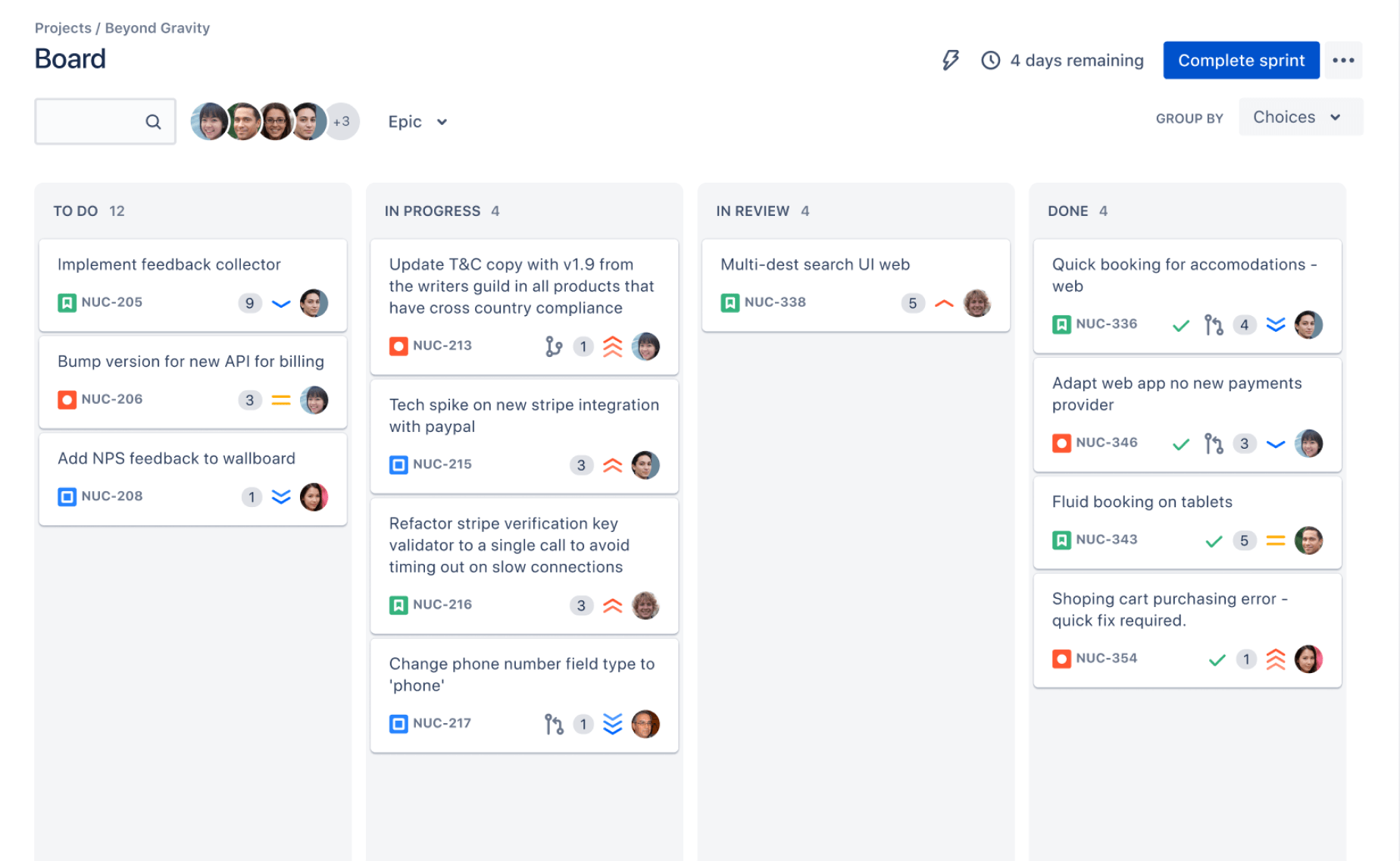
What a complete defect lifecycle includes
- Detection: A tester, customer, monitoring system, or developer identifies unexpected behavior.
- Reproduction: QA confirms the behavior and records reliable steps to trigger it.
- Registration: The team creates a Jira bug with the relevant context, evidence, and environment details.
- Triage: The team evaluates impact, urgency, ownership, and release risk.
- Investigation: A developer or technical owner identifies the likely cause and proposes a fix.
- Implementation: The fix is developed, reviewed, and connected to the Jira issue.
- Verification: QA tests the fix and checks for related regressions.
- Closure or reopening: The issue closes after successful verification or returns to active work when the defect remains.
Recommended Jira issue fields
Every field should help someone make a decision. Avoid collecting details that nobody uses, because excessive form requirements slow reporting and reduce accuracy.
- Summary: Describe the failure and affected area in a short sentence.
- Description: Explain what happened, what you expected, and what actually occurred.
- Steps to reproduce: List the actions required to trigger the defect.
- Environment: Include the browser, operating system, device, application version, and test environment.
- Severity: Describe the technical or customer impact.
- Priority: Indicate how quickly the team should address the issue.
- Component: Identify the affected product area, service, or feature.
- Assignee: Name the person responsible for the next action.
- Labels: Add consistent terms for filtering and reporting.
- Linked work: Connect the bug to a story, test activity, release, or related defect.
Severity and priority are different
Severity describes the effect of a defect. Priority describes the order in which your team should address it. A payment failure may be high severity and high priority. A minor spelling error may have low severity and low priority.
These values can differ. A severe issue affecting a rarely used internal screen might wait, while a moderate issue on a highly visible sign-up page may receive immediate attention.
| Severity example |
Possible priority |
Reasoning |
| Application crashes during checkout |
Highest |
Customers cannot complete purchases. |
| Incorrect report total for a small internal team |
Medium |
The result matters, but the audience and immediate risk are limited. |
| Misaligned icon on one browser |
Low |
Functionality remains available. |
How to Create a High-Quality Jira Bug
The fastest way to improve defect tracking is to improve the first ticket. A useful bug lets another person understand the problem without scheduling a meeting with the reporter.
The best part? You can create this quality with a repeatable template. Your QA team should not rely on memory when reporting defects during a busy release cycle.
1. Write a specific summary
Use a summary that identifies the action, condition, and failure. “Login broken” gives little direction. “Password reset returns a blank page after an expired link” gives the team a clear starting point.
Keep the summary short enough for board views and search results. Put secondary details in the description.
2. Explain expected and actual behavior
Separate the intended result from the observed result. This distinction helps developers determine whether the issue is a defect, a requirement gap, or an environment problem.
For example:
- Expected: After selecting “Save,” the new shipping address appears in the address list.
- Actual: The page displays a success message, but the address disappears after refresh.
3. Add reliable reproduction steps
Number each action in the order it occurs. Include account conditions when they matter, such as a new customer, an administrator, or a user with an empty cart.
- Sign in with a standard customer account.
- Open the account settings page.
- Select “Add shipping address.”
- Complete every required field.
- Select “Save.”
- Refresh the page.
Then state the result after the final action. If the defect appears only sometimes, include the approximate frequency and any pattern you noticed.
4. Describe the environment
A defect that appears in Chrome on Windows may not appear in Safari on iOS. Include enough environment detail to narrow the investigation.
Useful details include application version, browser version, operating system, device type, test environment, account role, language, and feature flags.
5. Add concise evidence
Use a screenshot for visual problems, a screen recording for interaction problems, and relevant logs for technical failures. Remove personal information and secrets before adding anything to the ticket.
Evidence should support the explanation rather than replace it. A screenshot cannot tell a developer which actions occurred before the error.
6. Link the defect to related work
Connect the bug to the affected story, epic, release, test activity, or related defect. These links help your team understand scope and identify repeated failures.
For example, a failed checkout test can link to the checkout story and the release under test. A duplicate defect can link to the original issue instead of creating another independent investigation.
Designing a Jira Workflow for QA and Development
Your workflow should reflect decisions, not merely mirror job titles. Each status should answer a practical question: Who acts next, and what evidence allows the issue to move forward?
Let me explain: a long list of statuses often hides uncertainty. A small team may need only “Open,” “In Progress,” “Ready for QA,” “Verified,” and “Closed.” A regulated product may require additional review and approval states.
A practical workflow
- Open: The defect is reported and awaits triage.
- Triaged: The team has confirmed priority, severity, ownership, and scope.
- In Progress: Investigation or implementation is underway.
- Ready for Review: The change is ready for code review or technical validation.
- Ready for QA: The fix is available in a test environment.
- In Verification: QA is testing the fix and related areas.
- Closed: The issue is resolved and meets closure criteria.
- Reopened: Verification found that the defect persists or returned.
Set transition rules
Transitions should have simple conditions. For example, an issue should not move to “Ready for QA” until the responsible developer has identified the build or release containing the fix.
A transition into “Closed” may require a verification note, test result, and confirmation that the original acceptance condition now passes.
Define ownership clearly
Assign one person for the next action. A team name can show responsibility at a group level, but a named owner prevents tickets from remaining untouched.
Ownership can change throughout the lifecycle. QA may own triage, development may own implementation, and QA may own verification. The ticket should always make the current handoff visible.
Use automation carefully
Automation can reduce routine work. A workflow might notify QA when a fix reaches the test environment or assign an issue to a verification queue after development completes.
However, automation should not hide decisions. Automatically closing an issue after a pull request merges can create false completion if QA still needs to test the behavior.
Managing Triage, Priorities, and Release Risk
Triage is where your team turns a list of defects into an action plan. A short, consistent review is usually more effective than an occasional meeting that attempts to solve every issue at once.
You might be wondering: how often should QA teams triage? Review new high-impact issues daily during active development, then use a broader session for release planning and recurring patterns.
A simple triage sequence
- Check whether the issue is reproducible.
- Confirm that the behavior violates a requirement, acceptance condition, or expected product rule.
- Identify affected customers, workflows, platforms, and releases.
- Look for duplicates or related defects.
- Set severity and priority using team definitions.
- Assign the next action to a named owner.
- Decide whether the issue belongs in the current release, a later release, or further investigation.
Use a risk-based priority model
A useful model considers impact, frequency, exposure, and recovery cost. A defect affecting every customer deserves more attention than one affecting a rare administrative flow.
For example, a slow search response that affects 2% of sessions may deserve urgent work if those sessions represent high-value customers. Numbers do not replace judgment, but they make the discussion more consistent.
Separate defects from questions
Some reports describe unclear requirements rather than confirmed defects. Create a separate investigation or clarification path when the team cannot determine the intended behavior.
This prevents the defect queue from becoming a general-purpose inbox. It also gives product and QA a place to resolve ambiguity without assigning an artificial severity.
Prepare for release decisions
Before release, review unresolved defects by severity, affected feature, customer exposure, and available workaround. A release decision should show what remains open and why the remaining risk is acceptable.
A release dashboard might show 42 open defects, but that number alone says little. Forty low-impact visual issues may be less concerning than one unresolved payment failure.
Reporting and Metrics That Help QA Teams
Metrics should support decisions, not reward teams for producing more tickets or closing issues quickly. Choose measures that reveal delays, recurring weaknesses, and release risk.
Here's why: a team can reduce average resolution time by closing easy issues first while serious defects wait. Pair speed measures with quality and risk measures.
Useful defect metrics
| Metric |
What it shows |
Question to ask |
| Open defects by severity |
Current risk concentration |
Are serious issues accumulating? |
| Time to triage |
How quickly new reports receive a decision |
Are tickets waiting without ownership? |
| Time to resolution |
How long issues remain active |
Where do handoffs slow down? |
| Reopen rate |
How often fixes fail verification |
Are requirements or test conditions unclear? |
| Defect escape rate |
Issues found after release |
Which test gaps reach customers? |
| Defects by component |
Areas with repeated problems |
Where should the team invest in prevention? |
Read trends instead of isolated numbers
A single week can be misleading. Compare several releases or sprint cycles to identify direction. If reopened defects rise after a workflow change, investigate the handoff between development and QA.
For example, a team may reduce open defects from 80 to 50 while increasing escaped defects. The smaller queue looks positive, but the release outcome suggests that closure quality needs attention.
Build reports for different audiences
QA leads may need aging, reopen rates, and component trends. Developers may need unassigned defects and items waiting for verification. Product leaders may need release risk and customer impact.
One crowded dashboard rarely serves everyone well. Create focused views with a clear decision attached to each report.
Common Jira Bug Tracking Mistakes
Most tracking problems come from unclear agreements rather than missing features. Your team can prevent many of them by defining conventions before the next release.
Vague summaries
“Button issue” does not tell anyone which button, action, or failure occurred. Use a summary such as “Export button downloads an empty report for filtered results.”
Missing reproduction conditions
“It failed during testing” cannot guide an investigation. Include the account role, test environment, sequence of actions, and observed result.
Mixing several defects together
One ticket covering a broken filter, a slow page, and a layout problem makes ownership and verification unclear. Create separate issues when the problems have different causes or fixes.
Closing without verification
A merged change is not proof that the defect is resolved. QA should test the original scenario and check nearby behavior that the change may affect.
Overusing labels and custom fields
Inconsistent labels create noisy reports. Define a small vocabulary, explain when each term applies, and review unused fields before adding new ones.
Jira Bug Tracking Solution: ONES.com
Value Proposition
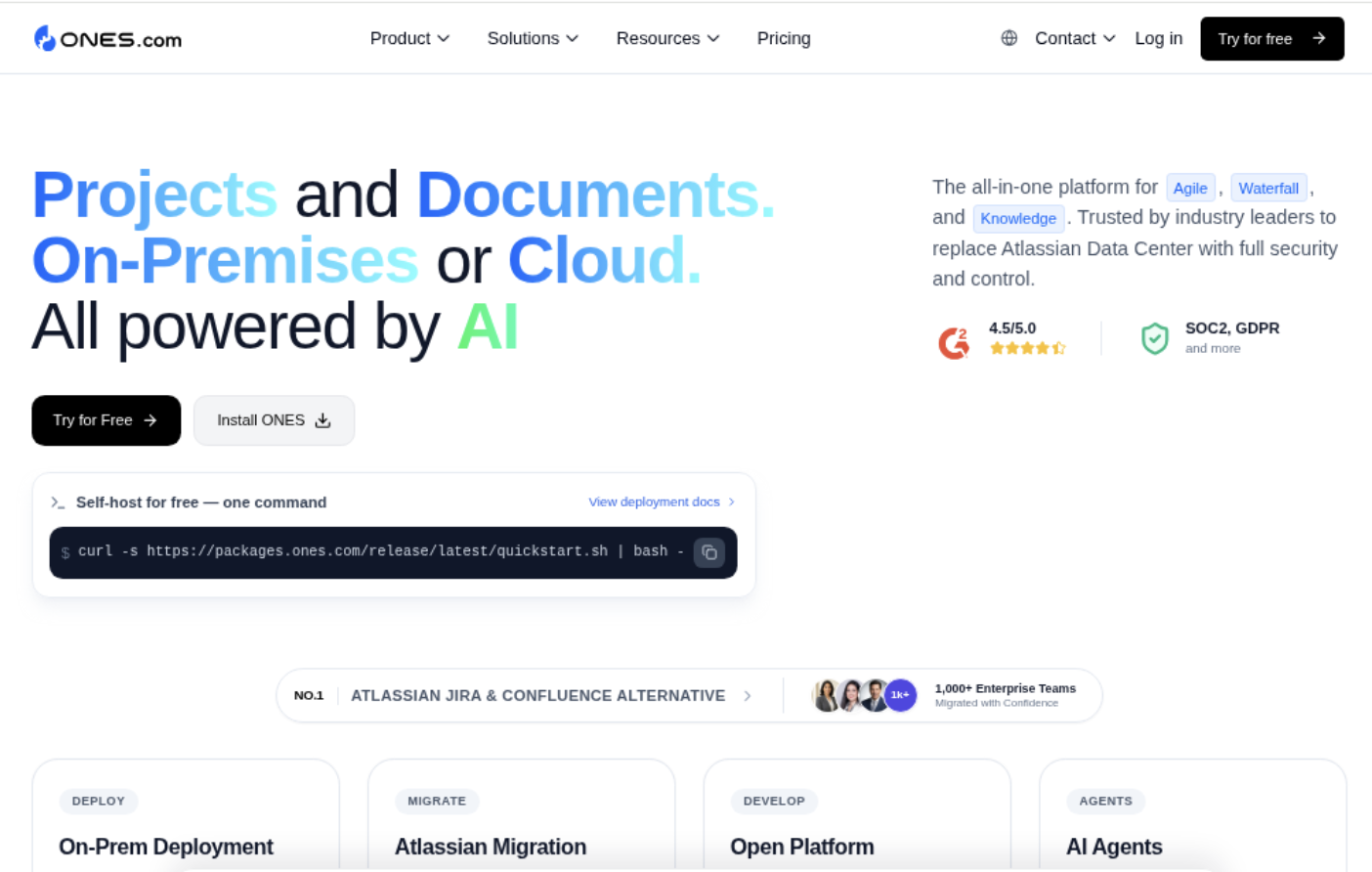
ONES.com combines project management and knowledge management in one platform powered by ONES Assistant. ONES Project provides project and defect workflows as a Jira alternative, while ONES Wiki supports knowledge management as a Confluence alternative. The products are sold separately.
For QA teams, the practical value is centralized work tracking, configurable workflows, built-in reporting, and deployment flexibility without relying on a large collection of plugins.
Core Capabilities
- Scattered defect work → ONES Project unifies issue tracking, sprint planning, and project views → QA and development can follow the same work status.
- Jira migration concerns → Jira-compatible workflows help teams preserve familiar delivery patterns → Teams can reduce process disruption during evaluation or transition.
- Rigid defect forms → Custom workflows and custom fields capture severity, environment, component, and verification details → Reports reflect your QA process.
- Hidden release risk → Built-in reporting surfaces issue aging, sprint progress, and unresolved work → Leads can review delivery risk without assembling separate views.
- Manual recurring actions → Automation handles routine assignments, notifications, and transitions → Teams spend less time maintaining status updates.
- Plugin-heavy workflows → Native project management capabilities reduce dependence on extra extensions → Administrators have fewer disconnected configuration points.
- Restricted deployment requirements → ONES.com supports Cloud, On-Premise, Private Cloud, and Air-gapped deployments → Teams can align hosting with security and network requirements.
- Different hosting experiences → The cloud and self-hosted versions provide full feature parity → A deployment decision does not require giving up core capabilities.
- Small-team adoption barriers → The free plan supports up to 30 seats → A QA group can evaluate the workflow before broader adoption.
Application Scenarios
Growing product team: A QA group can configure severity, environment, and verification fields, then connect defects to sprint work. Built-in reporting helps the lead review aging issues before release planning.
Restricted-network engineering team: A team that cannot use public cloud services can evaluate an On-Premise, Private Cloud, or Air-gapped deployment. The workflow can still support custom fields, sprint management, and automation.
Organization consolidating collaboration: A company using separate project and knowledge tools can use ONES Project for defect work and ONES Wiki for team guidance, with each product selected separately according to operational needs.
Common Challenges and Practical Solutions
Challenge: Defects arrive without enough detail
Solution: Use a short reporting template with summary, expected behavior, actual behavior, reproduction steps, environment, severity, and evidence. Make only essential fields mandatory.
Challenge: Triage decisions vary by person
Solution: Write severity and priority definitions with examples. Review borderline cases together and record the decision so later reports follow the same standard.
Challenge: Tickets remain open after development finishes
Solution: Add a distinct verification state, assign QA ownership during handoff, and define the evidence required before closure.
Challenge: Reports show volume but not risk
Solution: Group issues by severity, age, component, release, and customer impact. Review trends over several cycles instead of relying on one total count.
Challenge: Automated transitions create false completion
Solution: Automate notifications and routine routing, but keep human approval for triage, verification, and closure when those decisions affect release risk.
FAQs
Is Jira suitable for software bug tracking?
Yes. Jira can support defect reporting, ownership, prioritization, workflow states, sprint planning, links to related work, and reporting. Its effectiveness depends on how your team defines fields, transitions, and closure rules. A small team may need a simple workflow, while a regulated or distributed team may require additional approvals and audit details.
What should every Jira bug report include?
Include a specific summary, expected behavior, actual behavior, reproduction steps, environment details, severity, priority, affected component, and responsible owner. Add screenshots, recordings, or logs when they clarify the problem. Remove personal information and secrets before sharing evidence.
What is the difference between a bug and a task in Jira?
A bug represents unexpected behavior that needs investigation or correction. A task represents planned work that may not involve a defect, such as updating test coverage or configuring an environment. Keeping these issue types separate improves reporting because defect trends do not become mixed with routine delivery work.
When should a Jira bug be closed?
Close the issue after QA verifies the original failure no longer occurs, the expected behavior works, and relevant regression checks pass. The responsible person should also record the tested build or environment when that detail matters. If the problem remains or returns, reopen the issue with fresh evidence.
Can a QA team use Jira for regression testing?
Jira can coordinate regression work by linking defects to stories, releases, and test activities. However, the exact testing experience depends on your configuration and any connected testing capability. Define which checks are required for each release, then make the results visible through issue links, fields, or reporting views.
What is a practical Jira alternative for QA teams?
ONES Project is a Jira alternative that supports custom workflows, custom fields, sprint management, automation, built-in reporting, and Jira-compatible workflows. ONES.com offers Cloud, On-Premise, Private Cloud, and Air-gapped deployment options, with feature parity between cloud and self-hosted versions. Teams can evaluate whether its workflow and hosting model fit their QA requirements.
Conclusion
Reliable defect tracking starts with a clear lifecycle: report the issue, confirm it, triage its risk, assign ownership, implement the fix, verify the result, and close it with evidence.
Use specific summaries, reproducible steps, consistent severity rules, focused reports, and a workflow that makes every handoff visible. Review trends instead of celebrating a smaller ticket count alone.
But here's the truth: a tool cannot repair an unclear QA process by itself. Jira can support disciplined bug tracking, while platforms such as ONES Project can offer a Jira alternative with native workflows, reporting, automation, and flexible deployment options.
Start with one improvement this sprint: standardize the bug template, clarify triage definitions, or require verification before closure. Small workflow changes can prevent major release surprises.