Jira Certification: A Step-by-Step Study Guide for 2026
Ready for Jira certification in 2026? Follow this step-by-step guide with practical labs, weekly planning, and exam tips. Click to discover!
Preparing for Jira certification can feel like a moving target. Exam names shift, Jira Cloud changes regularly, and many study plans bury you in theory without showing how administrators actually work.
That uncertainty creates expensive mistakes. You may spend weeks memorizing menus, overlook workflow schemes, or book an exam before you can troubleshoot a permission problem under pressure.
But here's the truth: a practical study plan can make your preparation far more predictable. You need the right certification path, a clear weekly schedule, hands-on Jira practice, and a final review focused on real administration decisions.
This guide gives you that structure for 2026. You will learn how to choose an exam, build a study routine, practice efficiently, avoid common traps, and judge your readiness before scheduling.
Jira Certification Study Guide: Your Step-by-Step Plan
Jira certification validates your ability to configure, administer, or use Jira in a professional setting. The exact exam path depends on your role, Jira edition, experience, and the current Atlassian certification catalog.
Use the following sequence to turn a broad goal into a practical preparation plan.
- Choose the certification that matches your role. Decide whether your work centers on Jira administration, project configuration, service management, software delivery, or broader Atlassian operations. A certification aligned with your daily responsibilities will make practice more relevant.
- Check the current exam blueprint. Review the latest objectives, question format, time limit, prerequisites, and retirement notices. Certification details can change, especially as cloud features evolve.
- Measure your starting point. List the Jira tasks you can perform without help. Include project creation, permission troubleshooting, workflow editing, automation, dashboards, reports, and user management.
- Build a practice environment. Use a safe Jira Cloud site or an approved self-managed installation. Create sample projects, users, roles, issue types, workflows, fields, boards, and reports.
- Create a weekly study schedule. Reserve time for concepts, guided practice, troubleshooting, and review. A consistent 45-minute session often produces better retention than one long weekend session.
- Practice configuration decisions. Ask why you would use a scheme, field context, workflow condition, permission, or automation rule. Certification questions often test judgment rather than menu recognition.
- Use timed practice carefully. Work through realistic questions after learning each domain. Record why an answer is correct and why the alternatives fail.
- Run a readiness check. Rebuild common configurations from a blank project, explain your choices aloud, and complete a timed practice session without relying on notes.
- Schedule the exam when your skills are stable. Give yourself enough time to review weak areas. Booking too early can turn normal uncertainty into avoidable pressure.
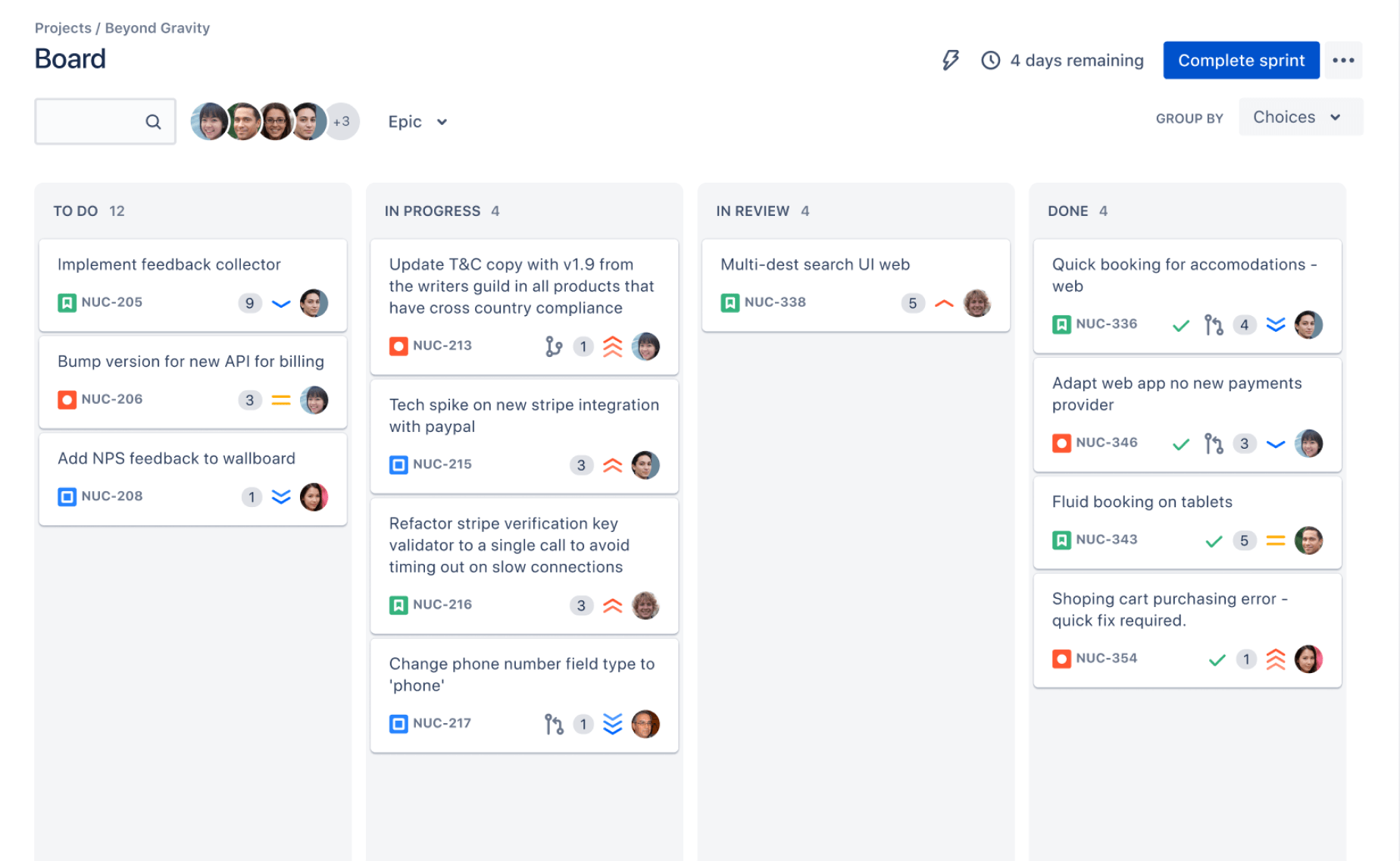
How to Choose the Right Jira Exam
Your first decision is the certification family. An administrator who manages workflows and permissions needs a different preparation route from someone who designs software delivery processes.
Start with your current job. If you manage users, schemes, workflows, custom fields, screens, and automation, an administration-focused credential may fit best. If you plan agile work inside Jira, a project or agile-focused path may be more suitable.
Here's why: certification has the greatest career value when it confirms work you already perform or want to perform next. A credential far removed from your responsibilities can take longer to prepare for and may be harder to demonstrate in interviews.
Match the exam to your daily responsibilities
- Jira administrators: Focus on configuration, access control, workflows, schemes, automation, and governance.
- Project administrators: Study boards, project settings, issue types, fields, notifications, roles, and reporting.
- Agile delivery professionals: Review backlog management, sprint planning, estimation, boards, releases, and team reports.
- Service management specialists: Explore request types, queues, SLAs, portals, approvals, and service workflows.
- Team leads and managers: Learn dashboards, reports, roadmaps, permissions, and practical governance.
Check whether the current exam targets Jira Cloud, Jira Data Center, or a broader Atlassian capability. Cloud and self-managed environments can share core concepts while differing in administration details.
What to Study for a Jira Administration Credential
Most preparation plans should cover four areas: configuration, access, delivery workflows, and operational control. The balance depends on your chosen exam blueprint.
Project and issue configuration
Practice creating projects and selecting suitable project templates. Learn how issue types, screens, fields, field contexts, and schemes affect what people see when they create or update work.
For example, a development project may need Bug, Story, Task, and Epic issue types. A support project may require Request, Incident, Problem, and Change. The correct setup depends on the work pattern.
Workflows and workflow schemes
Understand statuses, transitions, conditions, validators, and post-functions. Practice designing a workflow that prevents incomplete work from moving forward.
Try a simple approval flow. A request could move from Open to In Review, then to Approved or Rejected. Add a validator that requires an approver before the transition succeeds.
Permissions and access control
Study project roles, permission schemes, global permissions, issue security, and group membership. Learn to trace access problems from the person, through the group and role, to the final permission rule.
Let me explain: a person may belong to the correct group and still lack access if that group has no project role or the issue security level excludes them.
Boards, backlogs, and reports
Practice creating board filters, configuring columns, managing quick filters, and adjusting swimlanes. Review sprint reports, velocity charts, control charts, cumulative flow diagrams, and release reporting.
Do not memorize report names alone. Learn what question each report answers. A velocity chart helps with sprint planning, while a cumulative flow diagram can reveal growing work in progress.
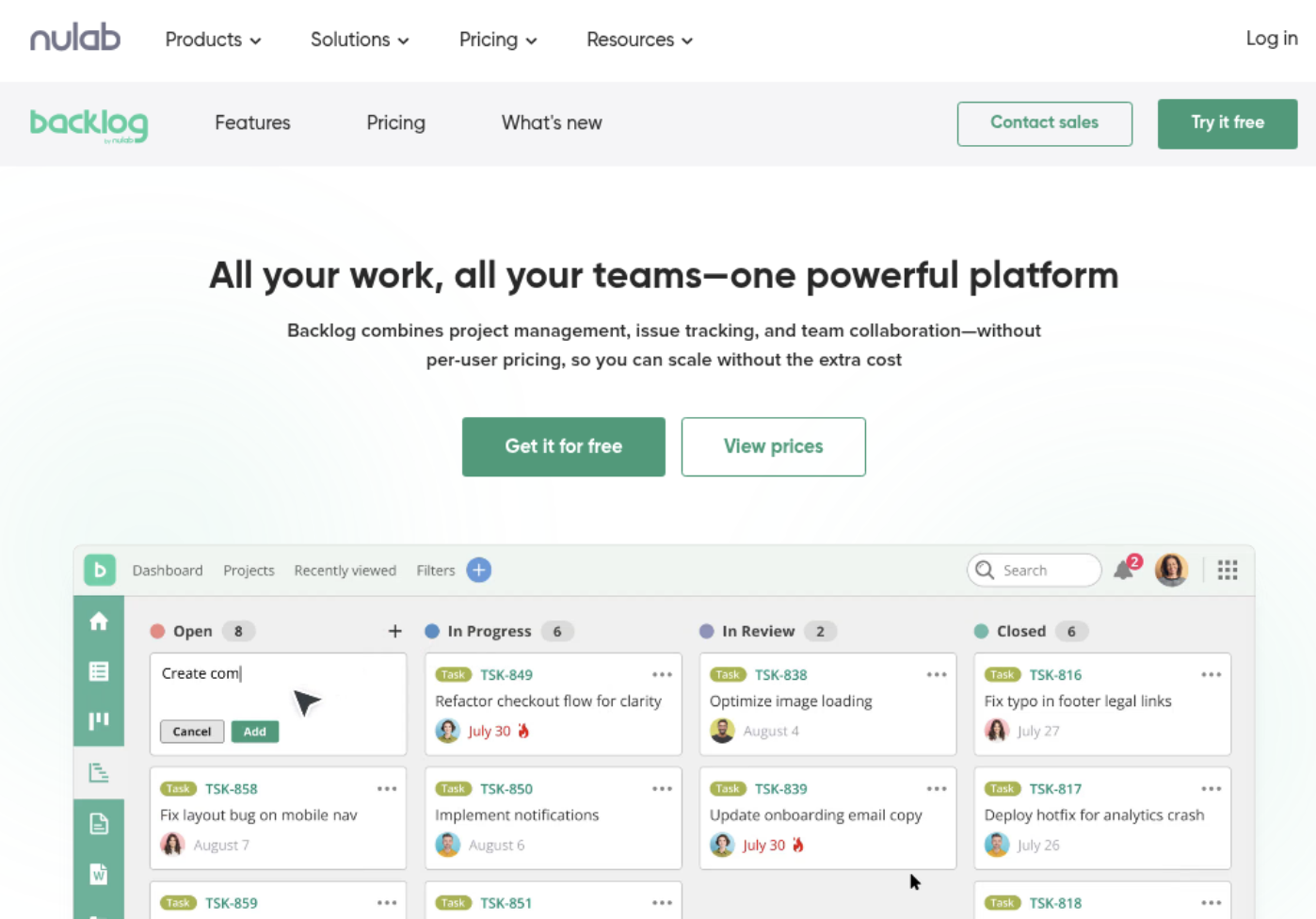
Automation and notifications
Create rules that respond to events, apply conditions, and perform actions. Examples include assigning work when it enters a queue, adding a label after approval, or notifying a team when priority changes.
Check rule scope, actor permissions, branching logic, and audit results. A rule that works in one project may create unwanted activity when its scope is too broad.
An Eight-Week Preparation Schedule
An eight-week plan works well when you have some Jira experience and can study several hours each week. You can compress it for intensive preparation or extend it if you are new to administration.
| Week | Primary focus | Practical assignment |
|---|
| 1 | Exam scope and baseline skills | Review objectives and rate your confidence in each domain. |
| 2 | Projects, issue types, and fields | Build two projects with different work structures. |
| 3 | Workflows and screens | Create a workflow with approval and validation steps. |
| 4 | Permissions and security | Test access for administrators, contributors, and limited viewers. |
| 5 | Boards, sprints, and reports | Run a short sprint and interpret three reports. |
| 6 | Automation and notifications | Create rules, review audit results, and fix one deliberate error. |
| 7 | Weak areas and timed questions | Complete practice questions and explain each answer. |
| 8 | Final review and readiness | Rebuild key configurations and complete a full timed session. |
Keep a short study log after every session. Record the feature you practiced, the mistake you made, and the rule that would prevent it next time.
The best part? This turns vague revision into visible progress. If your notes repeatedly mention permission schemes, you know exactly where to spend your next session.
Use active recall instead of passive reading
Close your learning material and explain a concept from memory. Then test yourself with a scenario such as, “Why can a user view an issue but fail to transition it?”
Active recall exposes weak understanding faster than rereading. It also resembles the mental work required during the exam.
Hands-On Practice That Builds Exam Confidence
Jira certification rewards practical reasoning. Build small environments that force you to make decisions, then deliberately introduce problems you must diagnose.
Build a realistic project
Create a fictional product team with a backlog, three user groups, two roles, and a release target. Add a workflow for development work and another for approval-heavy requests.
Give each group different access. Then test the experience from each role. This simple exercise connects configuration choices to everyday team behavior.
Practice troubleshooting scenarios
- A contributor cannot transition an issue.
- A field appears on one screen but not another.
- An automation rule runs twice.
- A report shows fewer issues than expected.
- A user can browse a project but cannot view a particular issue.
- A board excludes work that appears in the project search.
For every problem, write the steps you would follow. Start with the symptom, identify the likely control, test one change, and confirm the result.
Compare configuration choices
Ask yourself when a project role is preferable to a broad group, or when a field context is safer than adding another custom field. These comparisons develop the judgment exam questions often demand.
For example, a field context can limit a field to selected projects and issue types. That may keep forms cleaner than creating separate fields for every team.
Exam-Day Tactics and Final Review
Review the exam rules several days before your appointment. Confirm identification requirements, testing software, room conditions, permitted materials, and rescheduling terms.
On exam day, read every scenario carefully. Pay attention to words such as “first,” “best,” “least administration,” and “most secure.” Those terms can change the correct choice.
You might be wondering: should you answer every question immediately? Answer the clear questions first. Mark uncertain items, eliminate weak choices, and return with the remaining time.
Use a three-pass approach
- First pass: Answer questions you understand immediately.
- Second pass: Compare plausible options and identify the feature that controls the scenario.
- Third pass: Review marked questions, wording, and unanswered items.
Avoid changing an answer without a clear reason. Your first choice is often correct when it comes from a well-understood configuration principle.
Plan for the period after certification
Certification is a milestone rather than the end of your learning. Jira evolves through new cloud capabilities, interface updates, automation changes, and administration controls.
Keep practicing with real scenarios. Review release changes, improve your team’s configuration standards, and record decisions that may affect future administrators.
Jira Certification Support: ONES.com
ONES.com combines project management and knowledge management in one platform, with AI support through ONES Assistant. ONES Project is the project management product and can serve as a Jira alternative, while ONES Wiki supports knowledge management as a Confluence alternative. They are sold separately.
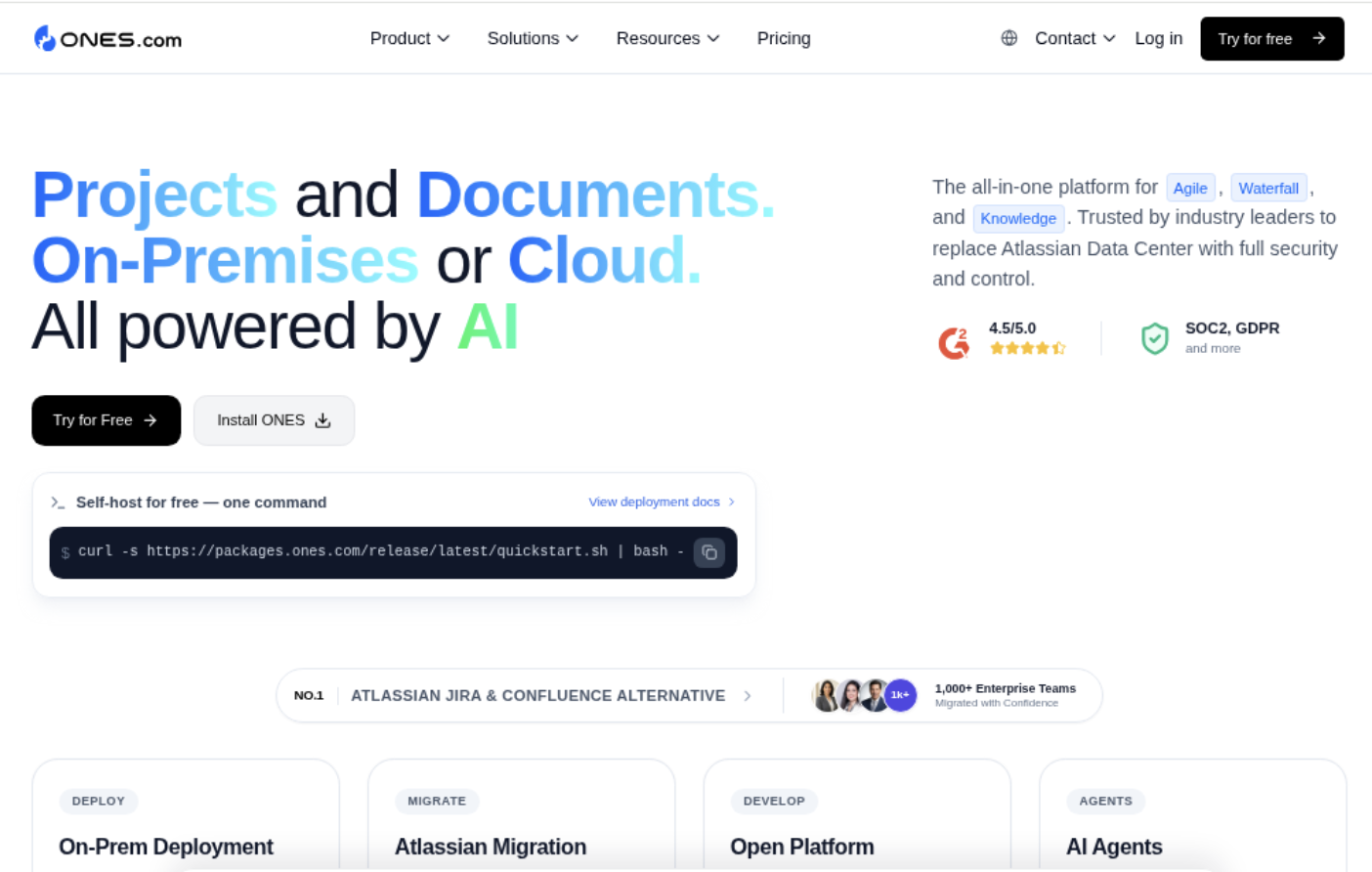
For certification preparation, the value is practical: you can organize study work, capture configuration notes, track lab tasks, and manage review activities in one connected workspace.
Value Proposition
ONES.com can give a certification learner a structured place to manage study milestones and preserve reusable administration knowledge. It supports Cloud, On-Premise, Private Cloud, and Air-gapped deployments, with feature parity between cloud and self-hosted versions.
Core Capabilities
- Scattered study tasks → ONES Project task management → Create milestones for exam domains, labs, practice sessions, and final review.
- Unclear ownership → ONES Project assignments and roles → Give each study activity a clear owner when you prepare with colleagues.
- Hard-to-track progress → ONES Project reporting → Use built-in reports to see completed work, overdue practice, and remaining effort.
- Changing preparation plans → ONES Project custom workflows → Move topics through Planned, Practicing, Needs Review, and Ready states.
- Repeated manual updates → ONES Project automation → Trigger reminders or status changes when a review task reaches a milestone.
- Disconnected study notes → ONES Wiki knowledge management → Organize explanations for permissions, workflows, schemes, automation, and reports.
- Conflicting team conventions → ONES Wiki structured knowledge spaces → Give your study group a consistent place for examples and administration decisions.
- Restricted-network requirements → ONES.com deployment options → Use an on-premise, private cloud, or air-gapped deployment where cloud access is unsuitable.
- Too many plugins → ONES Project native capabilities → Use built-in workflow, field, sprint, reporting, and automation functions with fewer add-ons.
Application Scenarios
Individual preparation: Create an eight-week project with one milestone per exam domain. Attach practice tasks, mark weak areas, and maintain a knowledge space for explanations you can revisit.
Team preparation: Assign different lab scenarios to colleagues. Each person records the configuration steps and troubleshooting results, while a coordinator tracks overall readiness.
Enterprise enablement: An organization can use an on-premise or air-gapped deployment for internal training. Administrators can manage study work and maintain reusable operating guidance within controlled infrastructure.
Common Challenges and Practical Solutions
Challenge: Choosing an exam before understanding the scope
Solution: Compare the current exam objectives with your daily responsibilities. Build a small skills matrix and identify gaps before paying for an appointment.
Challenge: Memorizing labels without understanding relationships
Solution: Draw the chain from user, group, role, permission scheme, and issue security. Then test it with three different personas.
Challenge: Avoiding hands-on practice
Solution: Schedule lab work as a required study task. Recreate common configurations from a blank project instead of watching demonstrations only.
Challenge: Getting overwhelmed by Jira changes
Solution: Separate stable concepts from interface details. Permissions, workflows, fields, and reporting principles remain useful even when menu labels move.
Challenge: Misreading scenario questions
Solution: Underline the goal, constraints, and scope in each question. Decide whether it prioritizes security, simplicity, maintainability, or speed.
FAQs
How long does it take to prepare for Jira certification?
Preparation time depends on your experience and the exam level. A Jira administrator with regular hands-on work may need six to eight weeks. Someone new to Jira may need several months. Plan more time for practical labs than for reading. You are ready when you can configure common features, troubleshoot access issues, and explain your choices without relying heavily on notes.
Is practical Jira experience required?
It may not be a formal requirement for every exam, but practical experience makes preparation much easier. Jira concepts connect through workflows, schemes, roles, screens, fields, and permissions. Create a safe practice environment if your job does not provide one. Even a small project with a few users can reveal configuration problems that theory alone may hide.
Should I study Jira Cloud or Jira Data Center?
Choose the environment named in your exam objectives and the environment used in your target role. Many core administration ideas overlap, but deployment, upgrades, infrastructure, and feature availability can differ. Review the current exam details before studying deeply. If your work involves both environments, separate shared concepts from platform-specific behavior.
Are practice questions enough to pass?
Practice questions are useful for checking knowledge and timing. They cannot replace hands-on configuration. A strong plan combines exam questions with realistic tasks, such as building a workflow, testing permission access, configuring a board, and troubleshooting automation. After each question, explain why the correct option works and why the other choices create a weaker result.
What should I do if I fail the exam?
Review the score feedback and identify the weakest domains. Avoid immediately repeating the same study routine. Spend several sessions rebuilding the related configurations and explaining them aloud. Then use fresh practice questions under timed conditions. A failed attempt can show you where your mental model is incomplete, especially when you treat the result as a diagnostic rather than a final judgment.
Conclusion
A successful Jira certification plan combines the right exam choice, a realistic schedule, hands-on configuration, targeted troubleshooting, and careful exam-day habits.
Start by matching the credential to your role. Then study projects, workflows, permissions, boards, reports, automation, and governance through practical scenarios.
But here's the truth: reading alone will not show whether you can solve a configuration problem under pressure. Build a practice environment, track your weak areas, and repeat the tasks that still feel uncertain.
With that approach, certification becomes more than an exam target. It becomes proof that you can make sound Jira decisions and support teams with confidence in 2026.