Jira Certifications: A 2026 Guide to Choosing the Right Path
Unsure which jira certifications fit your career? Compare paths, roles, and skills in this 2026 guide. Click to choose the right credential now.
Choosing among Jira certifications can feel surprisingly difficult. The names look similar, exam objectives overlap, and the wrong choice can leave you studying administration skills when your job requires project delivery or service management.
The confusion becomes expensive when you spend weeks preparing for a credential that does not match your daily work. Hiring managers may also struggle to understand what each certification proves, especially when your experience covers several Jira responsibilities.
But here's the truth: you can choose confidently by starting with your target role, then matching it to the Jira environment, exam level, and practical skills involved. This guide explains the main certification paths, how to prepare, what each credential can do for your career, and how to compare Jira expertise with broader project management platforms.
How to Choose the Right Jira Certification Path
Jira certifications are professional credentials that validate practical skills in Jira administration, project configuration, service management, or related Atlassian products. The right choice depends on your role, the Jira edition you use, and the responsibilities you want next.
Start with your career goal. A project administrator needs different skills from a Jira site administrator, while a service management specialist works with queues, request types, SLAs, and knowledge workflows.
- Identify your target role. Decide whether you want to manage projects, administer Jira, support service teams, configure workflows, or lead Atlassian operations.
- Check your Jira environment. Confirm whether your organization uses Jira Cloud, Jira Data Center, Jira Service Management, or several products together.
- Map your daily responsibilities. Write down the tasks you perform, such as permissions, workflows, automation, dashboards, issue screens, or service queues.
- Review the current Atlassian certification catalog. Exam names, retirement dates, delivery methods, and renewal policies can change, so check the official certification pages before registering.
- Choose a credential that supports your next step. Select the certification that proves skills you will use within the next six to twelve months.
- Build practical evidence alongside exam knowledge. Practice in a safe Jira environment and keep examples of workflows, permission models, reports, and automation rules you have configured.
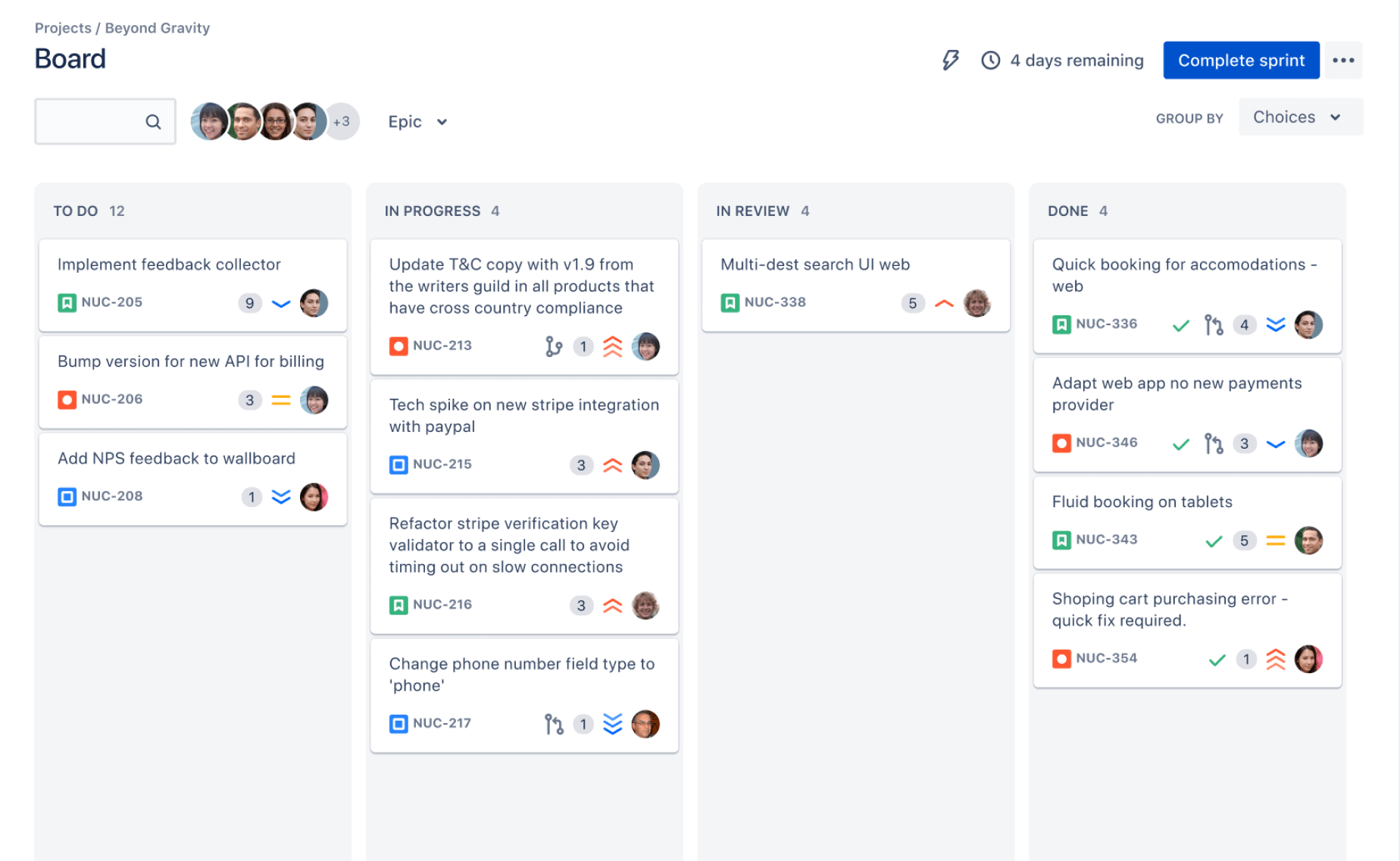
Match the credential to your career direction
Think of certification as a bridge between your current responsibilities and your next role. If you configure boards and workflows for several teams, a project administration path may fit. If you control global settings and access, a Jira administration path may be stronger.
For example, a scrum master who manages sprint boards may benefit from Jira administration knowledge. However, someone who designs company-wide permission schemes and integrations needs deeper platform administration skills.
Separate product knowledge from role knowledge
Knowing how to create an issue is basic product knowledge. Knowing when to use an issue type, how to structure workflows, and how to prevent reporting problems requires role-specific judgment.
Certification exams usually test both areas. You may need to recognize a feature and decide how it should be applied in a realistic team scenario.
Use the current exam page as your final checkpoint
Certification pages can change as Atlassian updates cloud functionality and retires older credentials. Exam codes, prerequisite guidance, renewal rules, and available delivery formats may differ by certification.
You might be wondering: should you trust an old study guide? Use it for background, but compare every objective with the current exam page before you schedule an attempt.
The Main Jira Certification Directions
Jira credentials generally fall into several practical directions. The labels may change over time, but the underlying skill areas remain useful when planning your career.
| Career direction |
Typical responsibilities |
Best fit for |
| Jira project administration |
Projects, workflows, fields, boards, screens, versions, and reports |
Project administrators, delivery leads, and experienced Jira power users |
| Jira site administration |
Global settings, users, groups, permissions, schemes, and platform governance |
Jira administrators and Atlassian platform owners |
| Jira Service Management |
Request types, queues, SLAs, portals, approvals, assets, and service processes |
ITSM specialists, service desk leads, and support operations teams |
| Agile delivery with Jira |
Sprints, backlogs, estimation, releases, planning, and team reporting |
Scrum masters, product owners, and delivery managers |
| Atlassian platform leadership |
Governance, adoption, integration planning, standards, and operating models |
Platform managers, consultants, and transformation leaders |
Project administration
This path suits people who configure Jira for individual teams or projects. You may work with issue types, workflows, custom fields, screens, boards, sprint settings, releases, and reports.
A useful example is a delivery team that needs separate workflows for bugs, product work, and urgent operational tasks. The administrator must support those differences without creating confusing reporting.
Site administration
Site administration affects the wider Jira environment. You may manage groups, global permissions, notification schemes, application access, configuration standards, and user lifecycle processes.
These responsibilities require careful judgment because a small permission change can affect hundreds of people. A site administrator must understand both Jira settings and organizational governance.
Jira Service Management
Service management credentials focus on how people request help and how teams fulfill those requests. Relevant skills include portals, request types, queues, SLAs, approvals, automation, incident handling, and knowledge workflows.
For example, an employee asking for laptop access should follow a different route from a production outage. Good service configuration makes that distinction clear from the moment the request arrives.
Agile delivery
Agile-focused learning helps you use Jira for planning and delivery. You may work with backlogs, sprint goals, estimation, versions, releases, velocity trends, and team dashboards.
This direction can help a scrum master or product owner improve team habits. However, it may not cover the deeper administrative controls expected from a platform administrator.
How Jira Certification Levels Differ
Certification value depends on the depth of skill it demonstrates. A beginner may need product fluency, while an experienced administrator must understand consequences, governance, and troubleshooting.
Foundational knowledge
Foundational learning helps you navigate Jira, understand common terminology, and support everyday team activity. You should know how issues, projects, boards, backlogs, workflows, and reports connect.
This level works well for a new Jira user, coordinator, or professional moving into an Atlassian environment. It can also expose gaps before you attempt a more advanced exam.
Intermediate administration
Intermediate study focuses on configuration choices. You may need to understand workflow conditions, validators, post-functions, field contexts, screen schemes, permission schemes, and automation behavior.
Here's why: real Jira problems rarely come from one setting alone. A field may exist, yet remain hidden because a screen, context, or permission does not support it.
Advanced platform responsibility
Advanced work involves scale, governance, migration planning, performance considerations, integration design, and organizational standards. It also requires communication because platform decisions affect many teams.
A senior administrator might reject a custom workflow that works for one team but creates inconsistent reporting across the company. Certification can support this judgment, but practical experience remains essential.
What to Study Before Taking an Exam
Build your preparation around four areas: product concepts, configuration practice, scenario judgment, and exam technique. Reading alone rarely prepares you for decisions involving trade-offs.
Learn the Jira vocabulary
Start with core terms such as projects, issue types, schemes, workflows, boards, filters, permissions, screens, fields, versions, components, and automation rules.
Then connect each term to a practical example. A workflow controls status movement, while a board determines how a team views and manages work. Confusing those roles causes configuration errors.
Practice configuration safely
Use a practice environment where you can create projects, change settings, and test outcomes without disrupting a working team. Rebuild common scenarios instead of clicking through menus without a goal.
For example, create a software project with bug triage, sprint delivery, release reporting, and a restricted workflow for production issues. Then test what different roles can see and change.
Study cause and effect
Ask what happens after each configuration choice. If you add a required field, where will people see it? If you restrict an issue, will automation still run? If you alter a workflow, what happens to existing work?
This approach helps you handle scenario questions. It also produces better administrators because you learn to predict consequences before making changes.
Use hands-on review sessions
Reserve short sessions for specific topics. One session can cover permissions, another can cover workflows, and another can focus on reports and dashboards.
Keep a simple learning log with the concept, the configuration you tested, the result, and any question that remains. Reviewing mistakes is often more valuable than rereading familiar material.
How to Build a Practical Study Plan
A realistic plan gives you enough repetition without turning preparation into an exhausting second job. A six-week schedule works for many working professionals, although your experience may require more time.
| Week |
Focus |
Practical activity |
| 1 |
Role and exam objectives |
Choose the credential and list unfamiliar topics |
| 2 |
Jira navigation and core concepts |
Create projects, issues, boards, filters, and reports |
| 3 |
Configuration |
Practice workflows, fields, screens, permissions, and schemes |
| 4 |
Automation and reporting |
Build rules, dashboards, notifications, and release views |
| 5 |
Scenario review |
Solve configuration problems and explain your choices |
| 6 |
Final assessment |
Review weak areas and complete timed practice questions |
Set a weekly outcome
Give every study session a result you can verify. “Understand workflows” is vague. “Create a workflow with an approval step and explain its conditions” gives you a clear finish line.
Use realistic constraints, such as separate permissions for contractors, team members, and project leads. Constraints force you to think like an administrator.
Review mistakes by category
When you miss a practice question, classify the mistake. It may involve terminology, configuration logic, product limits, or poor reading of the scenario.
Patterns matter. If you repeatedly confuse global and project-level settings, spend focused time comparing their scope and consequences.
Prepare for scenario wording
Exam questions may describe a business problem and ask for the most suitable configuration. Look for clues about scale, security, reporting, maintenance, and user experience.
The quickest-looking option is not always the strongest answer. A configuration that solves today’s issue but creates long-term administration work may be less suitable.
How to Choose Between Cloud and Data Center Skills
Choose the environment that matches your work. Jira Cloud changes frequently and emphasizes managed administration, configuration, access control, automation, and integrations through available cloud capabilities.
Data Center environments may involve infrastructure coordination, deployment planning, application compatibility, performance considerations, and controlled upgrades. The administrative mindset can therefore differ even when the user interface feels familiar.
When Cloud experience is the priority
Cloud experience suits organizations adopting managed platforms, distributed teams, and teams that want faster access to new capabilities. You should still understand governance because cloud configuration can spread quickly across many projects.
For example, a shared automation rule can improve consistency, but an overly broad rule may create unwanted updates across several teams.
When Data Center experience matters
Data Center skills matter when your organization operates a self-managed environment or has strict control over upgrades, infrastructure, and network access.
Professionals in regulated or isolated environments may need to coordinate with security, infrastructure, and operations teams. Certification preparation should reflect those dependencies.
Why environment alignment matters
A credential that matches your workplace is easier to apply after the exam. You can immediately test concepts through real configuration work and build stronger examples for interviews.
If your employer is planning a migration, learning both environments can be valuable. Start with the platform used today, then study the differences that affect your planned transition.
How Employers Evaluate Jira Certifications
A credential can help your application get attention, but employers usually assess it alongside practical experience. They want to know whether you can keep Jira useful, secure, maintainable, and understandable.
Show outcomes, not only badges
Describe the problem you solved and the result. For example, explain how you simplified a workflow, reduced manual routing, improved sprint reporting, or clarified permission boundaries.
A strong interview example might say that a team had inconsistent issue statuses, so you redesigned the workflow, mapped existing work, and improved reporting without interrupting delivery.
Explain your design decisions
Employers may ask why you created a custom field, chose a permission scheme, or used automation. Explain the trade-off, maintenance requirement, and effect on reporting.
The best answer shows that you considered both immediate usability and long-term administration.
Connect Jira to business operations
Jira administration is more valuable when it supports a business process. A service queue should help resolve requests. A release dashboard should help teams make decisions. A workflow should reflect real approval or delivery steps.
Use concrete outcomes such as shorter routing time, fewer duplicate fields, clearer ownership, or more reliable release visibility.
Jira Certifications Solution: ONES.com
ONES.com is a unified platform for project management and knowledge management, powered by ONES Assistant. ONES Project provides project management capabilities, while ONES Wiki provides knowledge management capabilities, and you can purchase them separately.
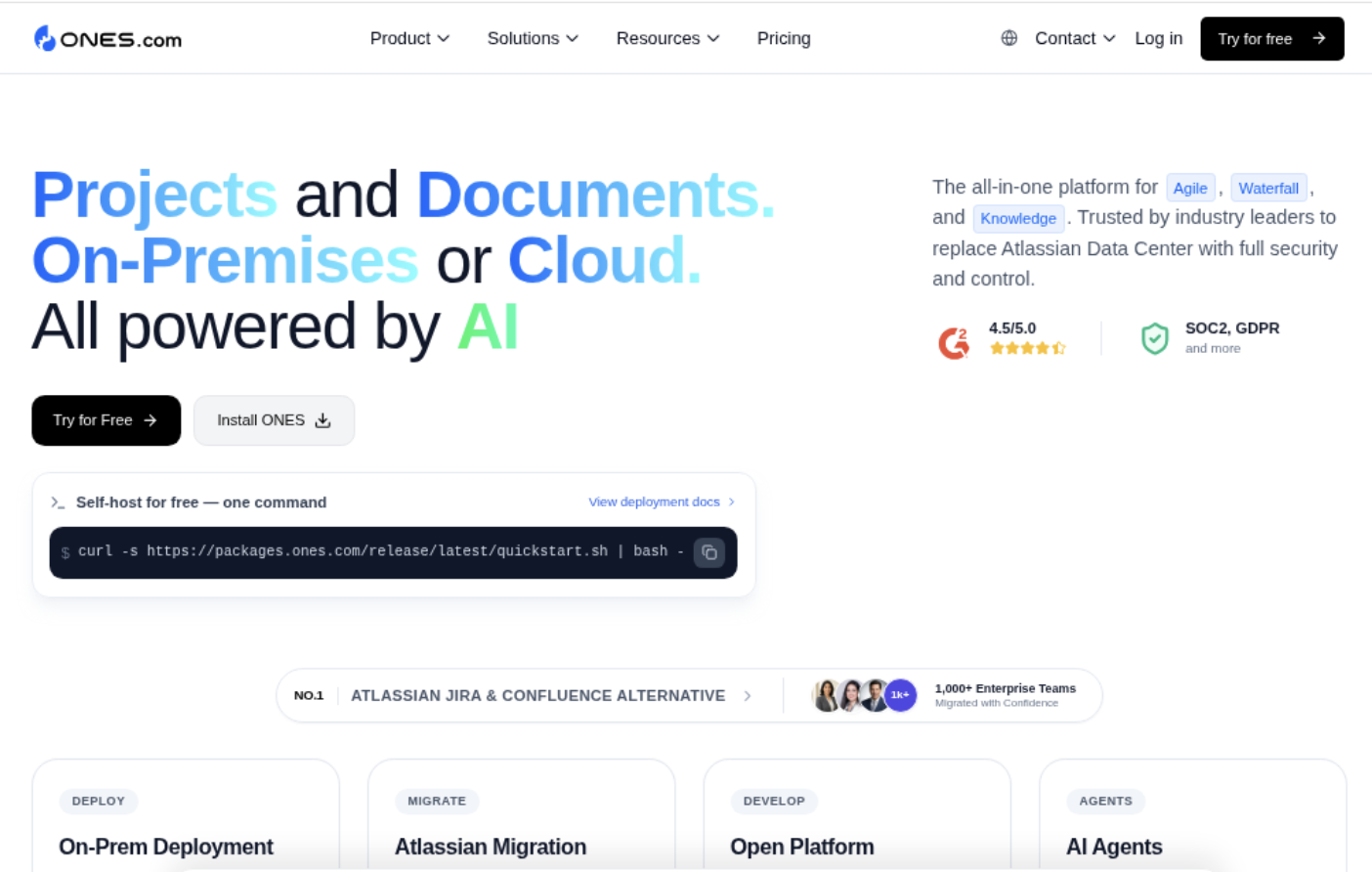
Value Proposition
If you are learning Jira administration because your teams need clearer delivery processes, ONES.com gives you another environment for applying those principles. It supports Jira-compatible workflows, built-in reporting, custom configuration, and self-hosted deployment choices.
Core Capabilities
Scattered project work → ONES Project → clearer delivery control
When tasks, sprints, and ownership are spread across disconnected tools, teams lose context. ONES Project brings project work into a unified workspace, helping teams track priorities and delivery progress in one place.
Rigid workflows → Custom workflows and fields → better process fit
When a team’s process does not match standard issue flows, people create workarounds. ONES Project supports custom workflows and custom fields, so teams can reflect approval, engineering, or operational steps more accurately.
Manual sprint coordination → Sprint management → more predictable planning
When sprint planning depends on separate notes and repeated updates, commitments become difficult to review. Sprint management features help teams organize backlogs, assign work, and monitor progress through a shared process.
Limited visibility → Built-in reporting → faster status reviews
When leaders rely on manually assembled updates, important risks can appear late. Built-in reporting gives teams a consistent way to review progress, workload, status, and delivery trends.
Too many plugins → Native feature parity → simpler administration
When essential capabilities require multiple extensions, maintenance and compatibility work increase. ONES.com provides native capabilities across core project management needs, reducing reliance on additional plugins.
Restricted deployment needs → On-premise, private cloud, and air-gapped options → stronger control
When security or network requirements limit public cloud use, deployment flexibility becomes important. ONES.com supports Cloud, On-Premise, Private Cloud, and Air-gapped deployments.
Jira transition concerns → Jira-compatible workflows → easier adoption
When teams worry about changing familiar practices, compatible workflow concepts can reduce the learning curve. Teams can carry over familiar project structures while evaluating a different platform.
Different platform versions → Full feature parity → more consistent administration
When self-hosted and cloud editions behave very differently, training and governance become harder. ONES.com provides full feature parity between its cloud and self-hosted versions.
Application Scenarios
Scenario one: a regulated engineering team. The team needs sprint planning, custom workflows, and an air-gapped deployment. ONES Project can support the project process while meeting restricted-network requirements.
Scenario two: a growing product organization. Several teams need consistent reporting and Jira-compatible workflows, but administrators want fewer plugins. Built-in reporting and native configuration can reduce platform complexity.
Scenario three: a company expanding knowledge practices. The company wants project work and internal knowledge management under one platform family. It can use ONES Project and ONES Wiki separately while maintaining a connected operating model.
Common Challenges When Pursuing Jira Credentials
Challenge: choosing a credential by title alone
A title may sound relevant while covering a different responsibility. Read the objectives and compare them with your weekly tasks.
Solution: Create a role map with three columns: tasks you perform, skills the exam tests, and skills your target job requires. Choose the path with the strongest overlap.
Challenge: relying on memorization
Memorizing menu locations will not prepare you for questions about permissions, workflow behavior, or reporting consequences.
Solution: Recreate realistic situations. Ask what happens when a user lacks permission, an issue bypasses a status, or a required field is missing from a screen.
Challenge: studying an outdated exam version
Cloud features and certification requirements can change. An older guide may explain concepts well while missing current objectives.
Solution: Verify the current exam page, objectives, delivery rules, and renewal information before you begin serious preparation.
Challenge: ignoring communication skills
Administrators often explain changes to project leads, service agents, developers, and executives. Technical knowledge alone may not resolve resistance.
Solution: Practice explaining each configuration decision in plain language. Include the reason, expected benefit, user impact, and support plan.
Challenge: treating certification as the final goal
A credential can validate knowledge, but it does not replace experience with real teams, competing priorities, and imperfect processes.
Solution: Pair study with a small improvement project. Build a workflow, dashboard, service queue, or permission model, then record what changed and why.
FAQs About Jira Certifications
Which Jira certification should I start with?
Start with the credential that matches your intended responsibility. Choose project administration if you configure team-level Jira processes. Choose site administration if you manage users, permissions, and global settings. Consider Jira Service Management if your work centers on service desks, SLAs, queues, and request fulfillment. Review the current Atlassian catalog before registering because names and requirements can change.
Are Jira certifications worth it for experienced administrators?
They can be valuable when you need formal validation, career mobility, or a structured review of your knowledge. Experienced administrators may benefit most when they use certification preparation to identify gaps in governance, automation, permissions, or cloud administration. The credential becomes stronger when paired with examples of improvements you delivered for real teams.
How long does it take to prepare?
Preparation time depends on your experience, exam scope, and access to a practice environment. A professional who configures Jira every week may need several focused weeks. A new administrator may need longer to learn terminology and build practical confidence. Study regularly, test each concept, and use practice results to guide your schedule.
Can I prepare without managing a production Jira environment?
Yes, although hands-on practice is important. Use a safe practice environment to create projects, workflows, screens, fields, permissions, reports, and automation rules. Then test different roles and scenarios. You can learn many configuration principles without risking a live team’s work, provided you compare your practice with the current exam objectives.
Should I choose Cloud or Data Center preparation?
Choose the environment that matches your current role or next job. Cloud preparation suits organizations using managed Jira and frequent platform updates. Data Center preparation is more relevant when your team manages infrastructure, upgrades, network controls, and self-hosted operations. If a migration is planned, learn the current environment first and then study the differences affecting the transition.
Conclusion
The best Jira certification path starts with your target role, not the most impressive-sounding title. Match the credential to your environment, daily responsibilities, and next career move.
Prepare through hands-on configuration, scenario practice, and careful review of current exam objectives. Then connect your credential to measurable outcomes such as clearer workflows, stronger permissions, better reporting, or faster service fulfillment.
But here's the truth: certification alone cannot solve a confusing project process. It gives you structured knowledge. Your practical judgment turns that knowledge into better work.
If your organization is also comparing project management platforms, evaluate how familiar workflows, native capabilities, reporting, deployment choices, and administration effort support your teams. ONES.com can provide another environment for applying those principles through ONES Project and ONES Wiki.