Jira Cloud: A Practical Guide for Smarter Team Workflows
Struggling to control busy team workflows? This Jira Cloud guide helps you plan, prioritize, track, and ship work smarter. Read now to learn.
Jira Cloud can bring order to busy product and engineering teams. It helps you plan work, track progress, manage releases, and connect daily tasks to larger goals.
Yet many teams open a project, add a few issues, and quickly lose control. Backlogs become crowded, workflows become unclear, and dashboards show activity without revealing what needs attention.
That creates slower decisions, repeated status meetings, and unfinished work hiding behind vague priorities. The platform is rarely the real problem. The challenge is designing a workflow people can follow consistently.
Here’s the practical solution: set up Jira Cloud around your team’s actual delivery process. This guide explains the essential concepts, gives you a usable workflow structure, and shows how to avoid common mistakes.
Jira Cloud: A Practical Workflow Overview
Jira Cloud is Atlassian’s hosted project and issue management platform for planning, tracking, and delivering work online. It helps teams manage tasks, bugs, stories, sprints, releases, approvals, and reporting without maintaining the underlying infrastructure.
You can use it for software development, product management, service operations, business projects, and cross-functional planning. The exact setup depends on how your team moves work from an idea to completion.
Here’s why: Jira Cloud works best when it reflects a clear operating model. Your issue types, statuses, fields, rules, boards, and dashboards should answer practical questions.
- What work is planned?
- Who owns each item?
- What is blocked?
- What needs review?
- What should the team deliver next?
- Which patterns are slowing delivery?
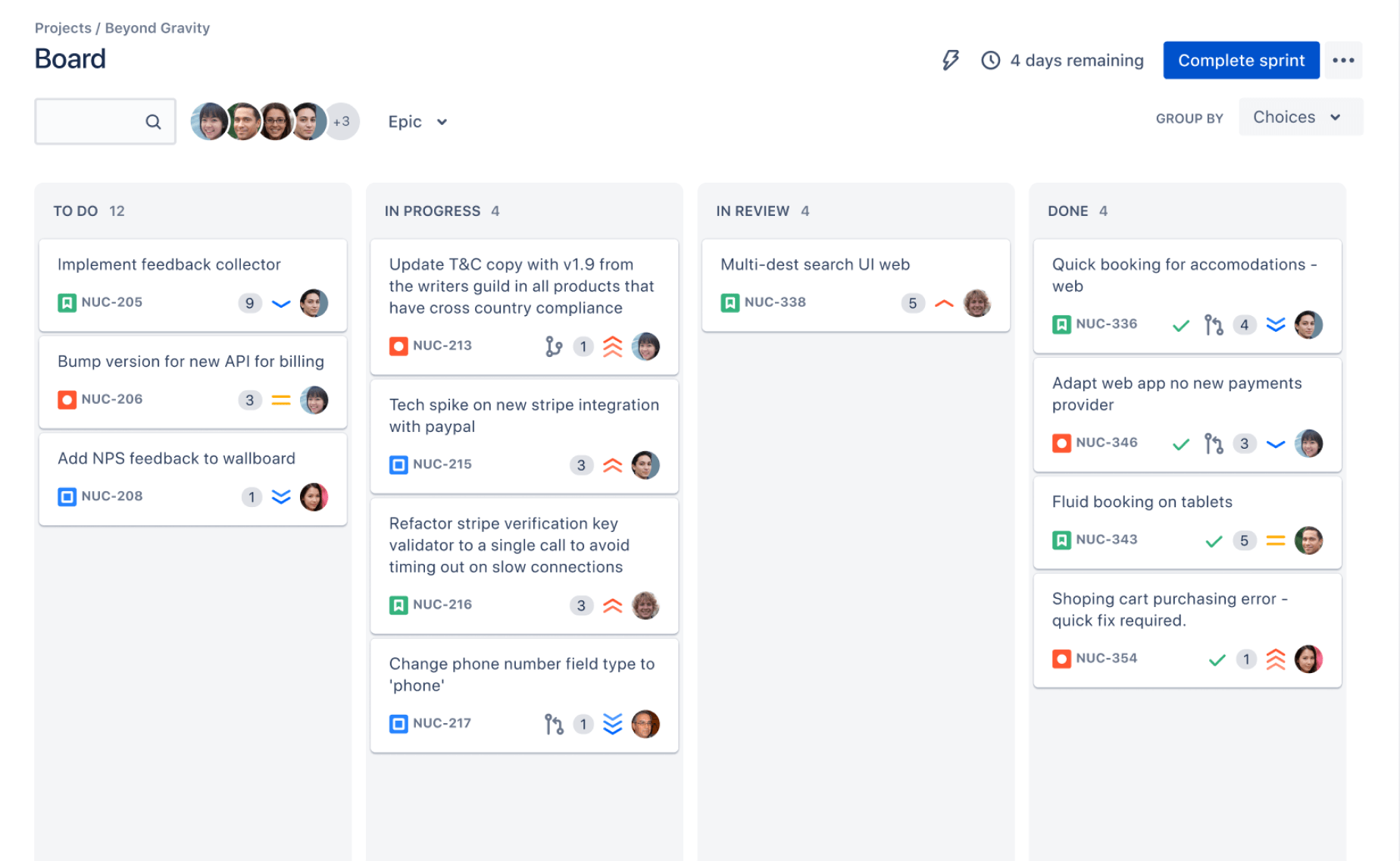
A simple workflow might use Backlog, Selected for Development, In Progress, Review, and Done. A regulated team may need extra approval and testing stages.
The goal is visibility without unnecessary administration. Every added field or status should help someone make a better decision.
1. Design the Work Structure Before Creating Projects
Start by deciding how your team will represent work. Jira Cloud gives you flexibility, but too many choices can create confusion.
Choose a Project Model
A project usually groups related work under a shared configuration, team, or objective. You might create separate projects for a mobile product, a platform team, customer support, and internal operations.
Use a separate project when the team needs different permissions, workflows, release cycles, or reporting. Keep related work together when people share priorities and delivery rules.
For example, a product group with web, mobile, and API specialists might use one project if they plan against the same roadmap. Separate projects may be more practical when each group has independent leadership and release schedules.
Define Issue Types
Issue types should describe meaningful levels of work. A common hierarchy includes:
- Epic: a large outcome that spans multiple pieces of work.
- Story: a user-facing capability or requirement.
- Task: a planned piece of work that may not be user-facing.
- Bug: a defect requiring investigation or correction.
- Sub-task: a smaller activity supporting a parent issue.
Avoid creating an issue type for every department or meeting. If two types follow the same workflow and require the same reporting, one type may be enough.
Set Useful Fields
Fields should capture information that affects prioritization, ownership, delivery, or reporting. Useful examples include priority, component, target release, customer impact, effort estimate, and approval status.
Here’s the catch: every mandatory field increases the effort required to create an issue. Require only information that someone will actually use.
For a production bug, severity and affected version may matter. For a routine internal task, those fields may add friction without improving decisions.
2. Build a Workflow People Can Follow
A workflow represents how work moves through your team. It should reflect real decisions rather than every temporary activity.
Use Statuses for Meaningful States
Each status should answer a clear question. In Progress means someone is actively working. In Review means the work is ready for another person to assess.
A status such as Waiting for John usually creates a personal dependency that becomes difficult to report. A better approach uses a general status like Blocked and records the responsible party or reason in a field.
A compact workflow often looks like this:
- Capture the request in the backlog.
- Clarify the goal, scope, and acceptance conditions.
- Prioritize the item for upcoming work.
- Assign it during planning.
- Move it through active delivery and review.
- Validate the result.
- Close it when the agreed outcome is complete.
Separate Workflow States from Team Activities
A team may perform research, design, coding, testing, and deployment. Those activities do not always need separate statuses.
For example, research can happen while an item remains in In Progress. Creating separate statuses for every activity can make boards longer and reports harder to interpret.
Use a separate status when the state changes ownership, decision rights, or expected action. A review stage deserves its own status because another person must evaluate the work.
Add Controls at the Right Points
Transitions can require fields, approvals, comments, or checks. These controls are useful when they protect quality without slowing routine work.
For a release-related change, you might require a release version and approval before moving an issue to ready for deployment. For a small internal task, the same controls would be excessive.
The best part? You can start with a simple workflow and improve it after observing real bottlenecks.
3. Plan Work with Backlogs, Boards, and Sprints
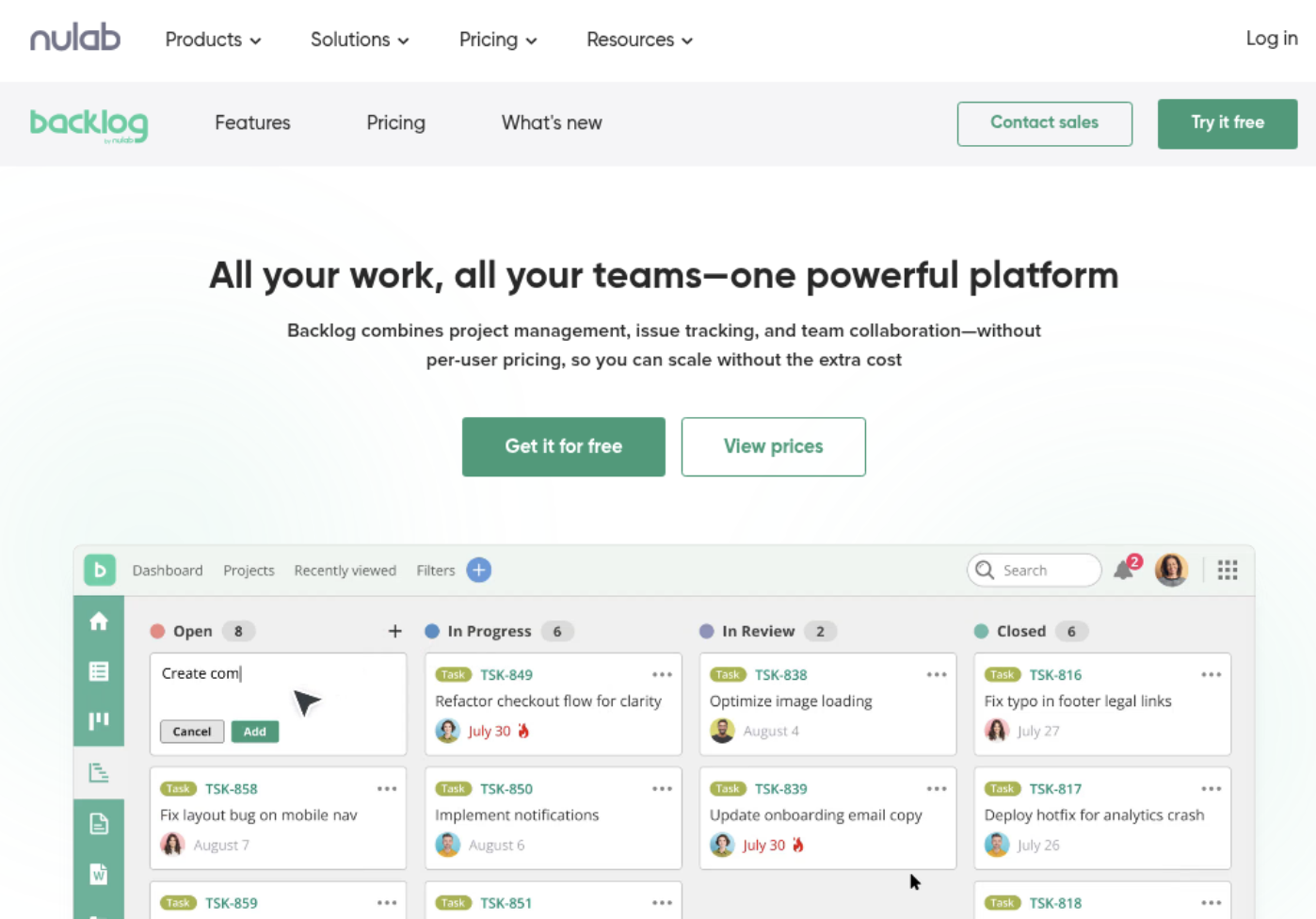
Jira Cloud gives teams several views of the same work. A backlog supports prioritization, a board shows flow, and a sprint creates a short delivery window.
Keep the Backlog Decision-Ready
A backlog is useful when the top items are clear enough to discuss and plan. Lower items can remain rough until they become important.
Each high-priority item should explain the intended outcome, expected behavior, and relevant constraints. A short example is stronger than a vague request:
“Allow account owners to export monthly usage as a CSV file” gives the team more direction than “Add reporting improvements.”
Review the backlog regularly. Remove duplicates, close abandoned requests, split oversized items, and reorder priorities when business conditions change.
Use Sprints for a Real Commitment
A sprint should represent work the team believes it can complete within a defined period. It should not become a storage area for every item someone hopes to touch.
Before starting a sprint, check capacity, dependencies, unresolved questions, and unfinished work from the previous cycle. During the sprint, protect the team from unnecessary priority changes.
If urgent work enters frequently, reserve a small capacity buffer or create a clear escalation rule. Otherwise, sprint performance will reflect interruption rather than delivery capability.
Make Board Columns Easy to Read
A board should show where work is and what needs attention. Too many columns create visual noise.
For instance, Selected, In Progress, Review, and Done may be enough for a small product team. A larger team may add Testing or Ready for Release.
Set work-in-progress limits when too many active items create delays. If six engineers have twelve items open, starting more work will rarely solve the problem.
4. Connect Planning to Delivery
Jira Cloud becomes more valuable when planning information stays connected to execution. A roadmap, epic, sprint, release, and completed issue should tell parts of the same story.
Break Large Goals into Deliverable Pieces
Start with an outcome, then break it into capabilities and tasks. For example, an objective to reduce checkout abandonment could include payment retry handling, clearer error messages, and mobile performance improvements.
Each piece should have a clear owner and completion condition. If an epic remains open for months with no measurable progress, it may be too broad.
Use Releases as Delivery Checkpoints
Versions or releases help you group work intended for a shared delivery point. They can support launch planning, communication, and follow-up.
A release view may show that eight issues remain open, three are blocked, and two lack an owner. That information helps you adjust scope before the planned launch.
Track Dependencies Explicitly
Dependencies become risky when they exist only in conversations. Link related issues and describe the required sequence.
For example, an application change may depend on an API update. Linking those items lets the team see why one task cannot finish independently.
Let me explain: dependency visibility does not eliminate risk. It gives you time to manage the risk before it becomes a missed commitment.
5. Improve Reporting Without Creating Noise
Reports should help you decide what to do next. A dashboard filled with charts can still fail if nobody knows which action each chart supports.
Match Reports to Questions
Use a report based on a specific management question:
- What is slowing delivery? Review cycle time, aging work, and blocked items.
- Will the release be ready? Review remaining scope, unresolved defects, and dependency status.
- Are priorities changing too often? Compare planned work with added or removed items.
- Is the team carrying too much work? Review active items and work-in-progress trends.
A sprint report can support a retrospective. A cumulative flow diagram can reveal growing queues. A control chart can show whether delivery time is becoming more predictable.
Use Dashboards for Different Audiences
A delivery team may need blocked issues, review queues, and sprint progress. An executive may need release status, major risks, and progress against outcomes.
One dashboard rarely serves both audiences well. Create focused views that show only the information needed for a particular decision.
Interpret Metrics Carefully
A rising issue count does not automatically mean productivity is improving. A faster closure rate may reflect smaller tasks, lower quality checks, or incomplete follow-up.
Pair quantitative trends with team discussion. If cycle time rises, ask whether requirements changed, review capacity fell, or urgent work interrupted planned delivery.
Natural Jira Cloud Alternative: ONES.com
Value Proposition
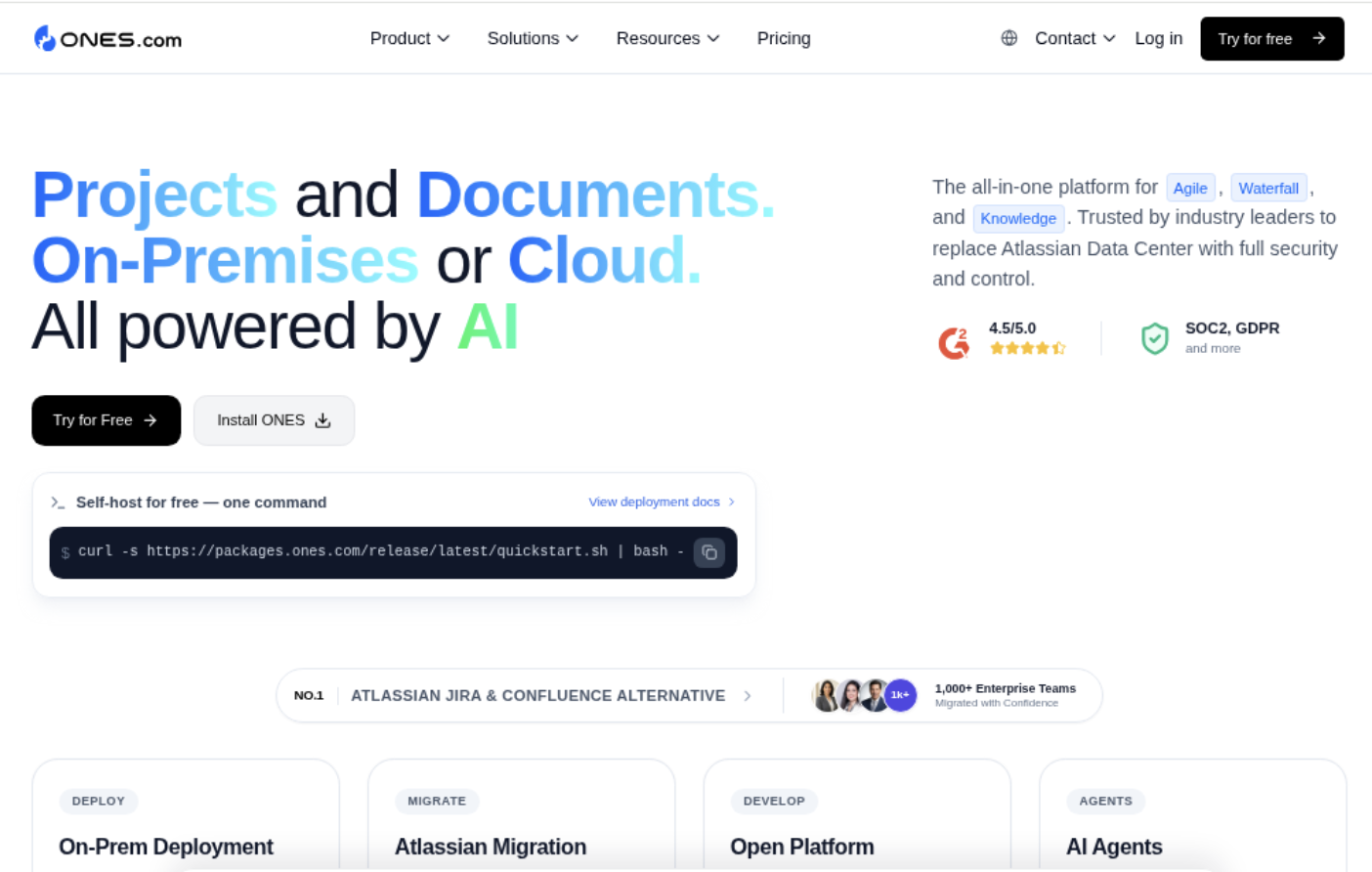
ONES.com is a unified platform for project management and knowledge management, powered by AI through ONES Assistant. ONES Project is the project management product and a Jira alternative, while ONES Wiki supports knowledge management as a Confluence alternative.
ONES Project and ONES Wiki are sold separately. Teams can choose the product that matches their immediate workflow needs while keeping deployment and collaboration requirements in view.
Core Capabilities
1. Fragmented planning creates disconnected work
ONES capability: ONES Project brings planning, issue tracking, sprint management, and delivery reporting into one project workspace.
Result: Your team can connect backlog items, active work, releases, and progress views without relying on several unrelated systems.
2. Plugin-heavy setups increase maintenance
ONES capability: ONES Project includes custom workflows, custom fields, automation, and built-in reporting.
Result: You can support common project requirements with native capabilities and reduce dependence on additional plugins.
3. Teams need familiar delivery patterns
ONES capability: ONES Project supports Jira-compatible workflows, issue tracking, sprint planning, and common agile practices.
Result: Teams moving from Jira can preserve familiar planning concepts while adapting the configuration to their own process.
4. Complex approval paths become difficult to manage
ONES capability: Custom workflows and transition controls help define review, approval, testing, and release stages.
Result: Each item can move through an intentional process with clearer ownership and fewer informal handoffs.
5. Self-hosted deployment may be essential
ONES capability: ONES.com supports Cloud, On-Premise, Private Cloud, and Air-gapped deployments.
Result: Organizations with security, network, or regulatory constraints can select a deployment model that fits their operating environment.
6. Inconsistent environments create operational risk
ONES capability: ONES.com provides full feature parity between its cloud and self-hosted versions.
Result: You can choose a hosting approach without giving up core project management capabilities.
7. Teams need reporting inside the workflow
ONES capability: Built-in reporting helps teams monitor progress, workload, delivery trends, and project health.
Result: Managers can review project conditions in the same environment where teams plan and execute work.
8. Smaller teams need a low-risk starting point
ONES capability: ONES.com offers a free plan for up to 30 seats.
Result: A small team can evaluate its workflow and collaboration needs before planning a larger rollout.
Application Scenarios
Software teams changing project platforms: A development group can map its existing backlog, sprint cadence, issue types, and approval stages into ONES Project. Jira-compatible workflows reduce the learning curve, while native reporting and automation can simplify administration.
Restricted-network engineering: An organization working in an air-gapped environment can use the self-hosted deployment option. The team can manage issues, workflows, and reporting inside its controlled network.
Project and knowledge coordination: A product organization can use ONES Project for delivery work and ONES Wiki for team knowledge. Since the products are sold separately, the organization can adopt each capability according to its priorities.
Common Challenges and Practical Fixes
Challenge: The backlog becomes a holding area
Why it happens: Teams add requests without reviewing priority, ownership, or relevance.
Fix: Set a regular backlog review. Clarify the top items, archive abandoned requests, merge duplicates, and keep lower-priority items lightweight until they become important.
Challenge: Work stays in progress too long
Why it happens: People start too many items, encounter dependencies, or wait for review.
Fix: Set practical work-in-progress limits. Review aging items during daily coordination and focus on finishing before starting more work.
Challenge: Statuses mean different things to different people
Why it happens: The workflow was created without shared definitions.
Fix: Write a short meaning for each status. Explain what entry conditions, exit conditions, and expected actions apply to each stage.
Challenge: Dashboards show activity without insight
Why it happens: Teams track counts instead of decisions.
Fix: Assign a question to every report. If a chart does not change a planning, staffing, prioritization, or risk decision, remove it from the main dashboard.
Challenge: Automation creates unexpected changes
Why it happens: Rules overlap, trigger each other, or update issues without clear ownership.
Fix: Give every automation rule a clear purpose and owner. Test it with representative issues, record its trigger conditions, and review its activity after launch.
FAQs
What is Jira Cloud used for?
Jira Cloud is used to plan, track, and manage work across software, product, service, and business teams. You can create issues, organize backlogs, run sprints, manage releases, assign ownership, and review delivery reports. Teams can configure workflows for different processes, such as bug fixing, feature development, approvals, or operational requests.
Is Jira Cloud suitable for teams outside software development?
Yes. Its issue and workflow model can support marketing campaigns, legal requests, operations, finance projects, and internal services. The setup should match the work. A marketing team may track campaign stages, while an operations team may track requests, approvals, and completion checks.
How should a small team begin?
Start with one project, a short list of issue types, and a simple workflow. Define ownership, priority, and completion clearly. Run the process for several weeks before adding custom fields or complex automation. This gives you real evidence about what the team needs and prevents unnecessary administration.
What is the difference between a board and a backlog?
A backlog is a prioritized collection of planned or potential work. A board gives you a visual view of selected work as it moves through workflow stages. The backlog helps you decide what should happen next. The board helps you see what is happening now and where work may be stuck.
How can teams improve Jira reporting?
Begin with decisions rather than charts. Choose reports that explain delivery speed, blocked work, release readiness, workload, or changing priorities. Keep dashboards focused for their audience. Review metrics alongside team context because numbers alone cannot explain why delivery changed.
When should a team consider a Jira alternative?
Consider an alternative when your current setup requires excessive plugins, lacks a needed deployment option, creates reporting gaps, or becomes difficult to administer. Compare workflow support, migration effort, hosting choices, permissions, reporting, automation, and long-term maintenance before switching.
Conclusion
Jira Cloud works best when your team designs the workflow before filling it with work. Start with a clear project structure, meaningful issue types, concise statuses, and a backlog that supports real decisions.
Then connect planning to delivery through sprints, releases, dependencies, dashboards, and regular reviews. Keep metrics tied to action, and improve the workflow when evidence shows a bottleneck.
But here’s the truth: a project platform cannot repair unclear ownership or shifting priorities by itself. It can make those problems visible, giving you a better chance to resolve them.
If Jira Cloud becomes difficult to maintain, compare alternatives such as ONES Project. Its Jira-compatible workflows, native reporting, automation, deployment flexibility, and self-hosted options may fit teams seeking a more controlled project management environment.