Jira Cloud Premium Pricing: 2026 Cost Guide for Your Team
Wondering about jira cloud premium pricing? Learn to estimate 2026 team costs, compare plans, and avoid hidden fees. Read now to plan smarter.
Jira Cloud Premium pricing can feel simple until your team grows, adds apps, or needs advanced controls. A small calculation error can turn a reasonable estimate into a frustrating annual bill. That uncertainty gets worse when monthly and annual plans show different totals, or when Atlassian’s progressive pricing model changes the effective rate across seat bands. But here’s the truth: you can estimate your Jira Premium cost with a clear seat count, billing term, and allowance for extras. This guide explains how the pricing model works, what affects your total, and how to compare Premium with other project management options. You’ll also see practical examples for small teams, growing departments, and larger organizations.
Jira Cloud Premium Pricing at a Glance
Jira Cloud Premium pricing is the cost of Atlassian’s advanced Jira Cloud plan, calculated mainly by the number of users, billing term, applicable taxes, and optional add-ons.
Premium usually costs more than Standard because it adds higher service limits, advanced administration, stronger planning support, and enhanced reliability features. Your final bill depends on your current seat count and the billing option you choose.
Here’s the quickest way to estimate your budget:
- Count the people who need Jira access.
- Choose monthly or annual billing.
- Check the current Premium rate for your seat band.
- Add applicable taxes and marketplace subscriptions.
- Allow for expected team growth during the term.
Atlassian can update prices and packaging, so treat published calculator results as the final check before purchase. For budgeting, calculate a range rather than relying on one figure.
| Cost factor |
Why it matters |
| Licensed seats |
Premium cost rises as more people need access. |
| Billing term |
Monthly billing offers flexibility, while annual billing can provide more predictable budgeting. |
| Seat band |
Per-user rates can vary as your account enters a different pricing tier. |
| Marketplace apps |
Connected apps often add separate subscription charges. |
| Taxes and currency |
Your invoice may differ from the displayed regional price. |
| Growth |
New hires, contractors, and collaborators can increase the total during the term. |
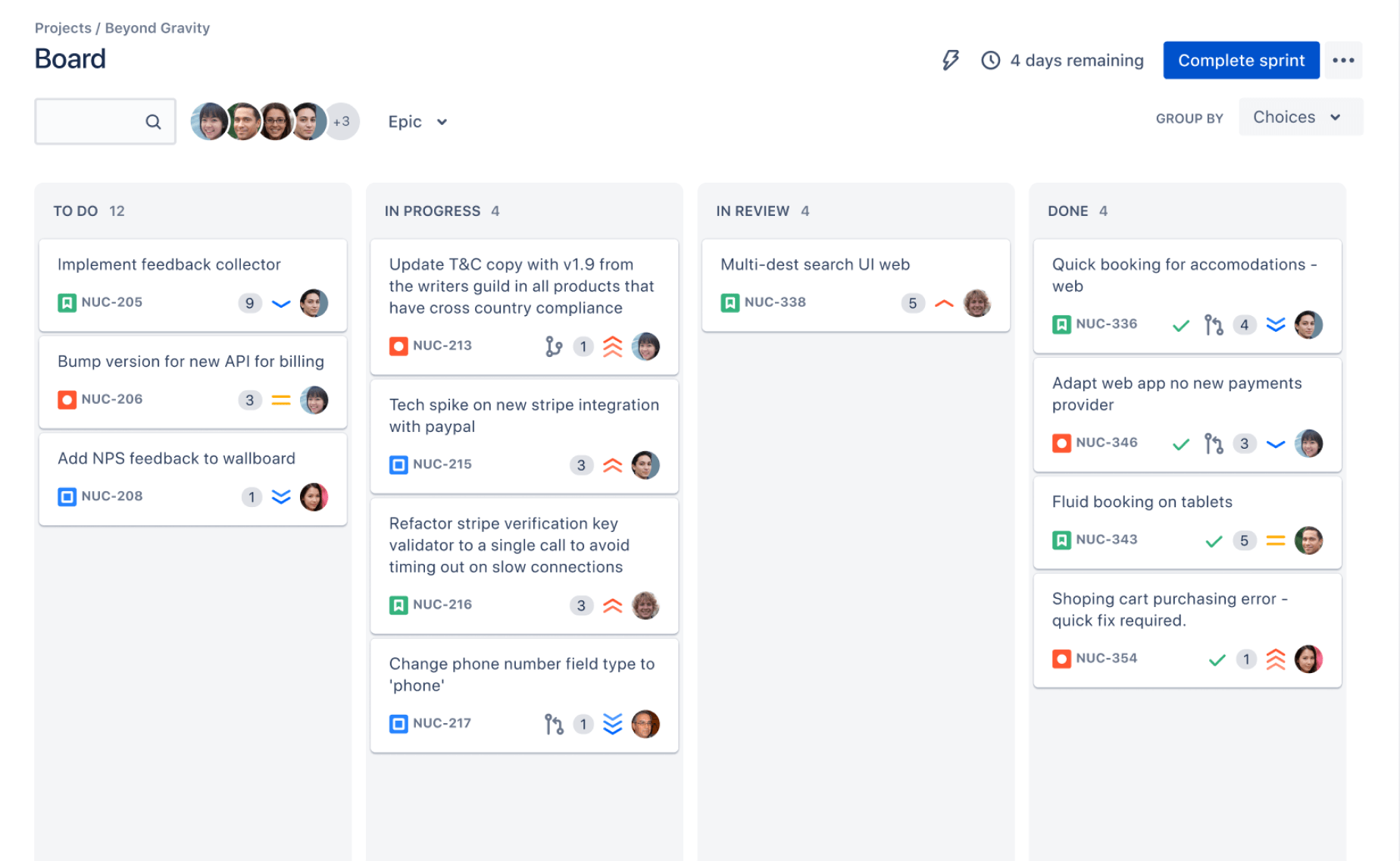
What Premium adds over Standard
Jira Premium is designed for teams that need more capacity and stronger coordination than the Standard plan provides. It commonly includes advanced planning features, expanded automation allowances, higher limits, and administrative controls.
Premium also supports teams that need stronger continuity during service interruptions. Its reliability features can matter when Jira supports release planning, incident response, or customer-facing commitments.
For example, a ten-person product team may manage comfortably on Standard. A 150-person engineering organization with several active programs may value Premium because planning and administration become more demanding.
The price you see is not always the total you pay
Your subscription charge is only one part of the total cost. A realistic budget should include apps, implementation work, administration time, training, and possible consulting support.
Consider a 40-person team that adds a test management app, a time tracking app, and a reporting extension. Those subscriptions may create a larger budget difference than the upgrade from Standard to Premium.
The best part? You can separate these costs into three groups:
- Core subscription: Jira Premium seats.
- Connected services: Marketplace apps and integrations.
- Operating costs: Administration, migration, training, and support.
How to Calculate Your Team’s Jira Premium Budget
You can build a useful estimate in five steps. The calculation does not need to be complicated, but each assumption should be visible.
1. Establish the active seat count
Start with people who need regular access. Include engineers, product managers, delivery leads, testers, service teams, and administrators.
Then separate occasional collaborators. Some people may need view access, while others need permission to create, edit, transition, or report on work.
Example:
- 26 engineers
- 5 testers
- 4 product managers
- 3 delivery managers
- 2 administrators
This team needs 40 active seats for planning purposes. Add a modest growth allowance if hiring is expected during the contract term.
2. Select the billing period
Monthly billing works well when headcount changes quickly or you are testing Premium with a limited group. Annual billing suits teams with stable staffing and approved yearly budgets.
Compare both options using the same seat count. Otherwise, you may mistake a billing-term difference for a plan-price difference.
| Billing choice |
Useful when |
Main consideration |
| Monthly |
You expect frequent staffing changes. |
The annualized total may be higher. |
| Annual |
You have stable usage and budget approval. |
Changing the plan can require more planning. |
3. Apply the current Premium rate
Use Atlassian’s current pricing calculator for your region and seat band. Multiply the displayed rate by your planned number of users when the calculator uses a simple per-user view.
Some Atlassian plans use progressive pricing. In that structure, different portions of your seats may receive different rates. The calculator is more reliable than multiplying one visible rate across every seat.
Here’s why: a 101-seat account may not behave like a 100-seat account with one extra seat. Pricing bands can change the marginal cost.
4. Add related subscriptions
List every app connected to Jira. Common examples include test management, service management, time tracking, advanced roadmaps, analytics, and collaboration tools.
Each app can use its own pricing model. Some charge by users, while others use agents, sites, usage, or feature packages.
A simple planning formula looks like this:
Estimated annual budget = Jira Premium subscription + app subscriptions + taxes + implementation and administration costs.
5. Model growth and access changes
Calculate at least three scenarios:
- Current state: today’s active seats.
- Expected state: planned hiring and team changes.
- High state: a realistic upper range for the contract term.
For example, a team with 40 seats today might budget for 48 seats after expected hiring. That approach reduces surprise costs during a product launch.
Monthly Versus Annual Billing
The right billing term depends on predictability, cash flow, and how quickly your team changes. Neither option suits every organization.
When monthly billing makes sense
Monthly billing gives you room to adjust. It can suit a startup, a consulting group, or a department running a short evaluation.
Suppose you are onboarding 15 contractors for a six-month delivery project. Monthly billing may prevent you from committing to a larger annual seat count.
Monthly plans also make it easier to test adoption. You can observe whether teams actually use advanced planning and administration features before making a longer commitment.
When annual billing makes sense
Annual billing can simplify procurement and budgeting. It may also provide better commercial value, depending on the current pricing rules and account size.
It fits a stable organization with an established Jira operating model. You can forecast the subscription alongside hiring, renewal, and application costs.
However, annual billing requires a careful seat review. Paying for unused seats throughout the term can reduce the value of any discount.
A practical decision method
Compare the cost of flexibility against the cost of unused capacity. Then ask three questions:
- How many people may join or leave during the term?
- Can procurement approve a yearly subscription?
- Will your team use Premium capabilities consistently?
If headcount is uncertain, start with a controlled group. If adoption is already strong, annual planning may be more efficient.
What Drives the Total Cost Beyond Seat Count?
Seat count receives the most attention, yet several operational factors can change the real cost of Jira Premium.
Marketplace applications
Apps can improve testing, reporting, capacity planning, approvals, or time tracking. They can also create a second layer of subscription management.
For instance, a 60-person engineering team may add three apps. Each app may charge according to the same 60-user range, even when only half the team uses it.
Review app assignments before renewal. Remove inactive subscriptions and confirm whether every licensed person still needs access.
Administration and governance
Premium can support more sophisticated operations, but someone still needs to manage projects, permissions, workflows, fields, automation, and reporting.
A growing company may need a dedicated Jira administrator. Smaller teams may assign that work to a delivery lead or operations specialist.
Estimate administration time using real activities. A weekly permission review and monthly workflow cleanup can reveal more than a general support estimate.
Migration and training
Moving from another platform often requires planning, mapping, testing, and team education. These activities can influence the first-year budget.
For example, migrating 20 active projects with custom workflows takes more effort than creating a new Jira site for one team.
Training also affects adoption. If people do not understand boards, issue types, dashboards, or automation, you may pay for capabilities that remain unused.
Currency, taxes, and procurement rules
Displayed prices can vary by billing country and currency. Taxes may appear during checkout or on the final invoice.
Large organizations should also review purchase orders, vendor registration, renewal notices, and internal approval requirements.
Is Premium Worth It for Your Team?
Premium becomes easier to justify when its capabilities solve a measurable operating problem. The question is less about having more features and more about reducing friction.
Premium may fit when planning has become difficult
A single team can often manage work with basic boards and reports. Several teams working across shared releases need more coordination.
Imagine four product groups contributing to one mobile release. Without cross-team planning, dependencies can remain hidden until testing begins.
Premium can make sense when planning visibility, coordination, and capacity become recurring problems.
Premium may fit when service continuity matters
Some teams depend on Jira for incident work, release coordination, and operational decisions. A higher service tier may provide reassurance for those workflows.
Ask what a prolonged interruption would cost. If missed release milestones affect customers, the value of stronger continuity may exceed the subscription difference.
Premium may not fit every team
A small team with simple workflows may gain little from an upgrade. Standard may cover basic issue tracking, boards, and reports.
Run a capability review before upgrading. Record the specific problem, the Premium capability that addresses it, and the expected result.
| Business need |
Possible reason to consider Premium |
Validation question |
| Cross-team delivery |
More advanced planning and coordination. |
Do dependencies regularly cause delays? |
| Growing administration |
Stronger controls for larger environments. |
Are permissions and workflows becoming difficult to govern? |
| Operational reliance |
Greater emphasis on service continuity. |
What would an interruption cost your team? |
| Automation demand |
More room for automated processes. |
Would automation remove repeated manual work? |
Ways to Control Jira Premium Spending
You can reduce avoidable cost without removing capabilities your teams genuinely need.
Audit seats before renewal
Review inactive accounts, occasional collaborators, and people who changed departments. A quarterly review can prevent old access from becoming a recurring charge.
Do not remove access automatically. Confirm whether a person needs historical visibility, reporting access, or participation in upcoming work.
Separate creators from viewers
Some stakeholders need updates without managing work items. Match permissions to responsibilities where the plan allows it.
For example, an executive may need dashboards and reports. A developer may need full project access. Those roles should not be treated as identical.
Measure app adoption
List every connected app and identify active teams. If an app supports five people while charging for 80, investigate its licensing model.
You may discover that a native Jira capability covers the need. You may also find that a heavily used app delivers enough value to keep.
Limit unnecessary customization
Custom workflows and fields can improve control, yet excessive customization increases administration effort.
Use a simple review rule: keep a customization when it supports a clear decision, compliance requirement, or delivery process. Retire it when nobody relies on it.
Review alternatives during renewal planning
A renewal is a useful moment to compare total ownership costs. Include administration, apps, hosting preferences, and migration effort.
Switching platforms only for a lower subscription can create expensive disruption. Compare the full operating picture first.
Jira Premium Alternative: ONES.com
Value Proposition
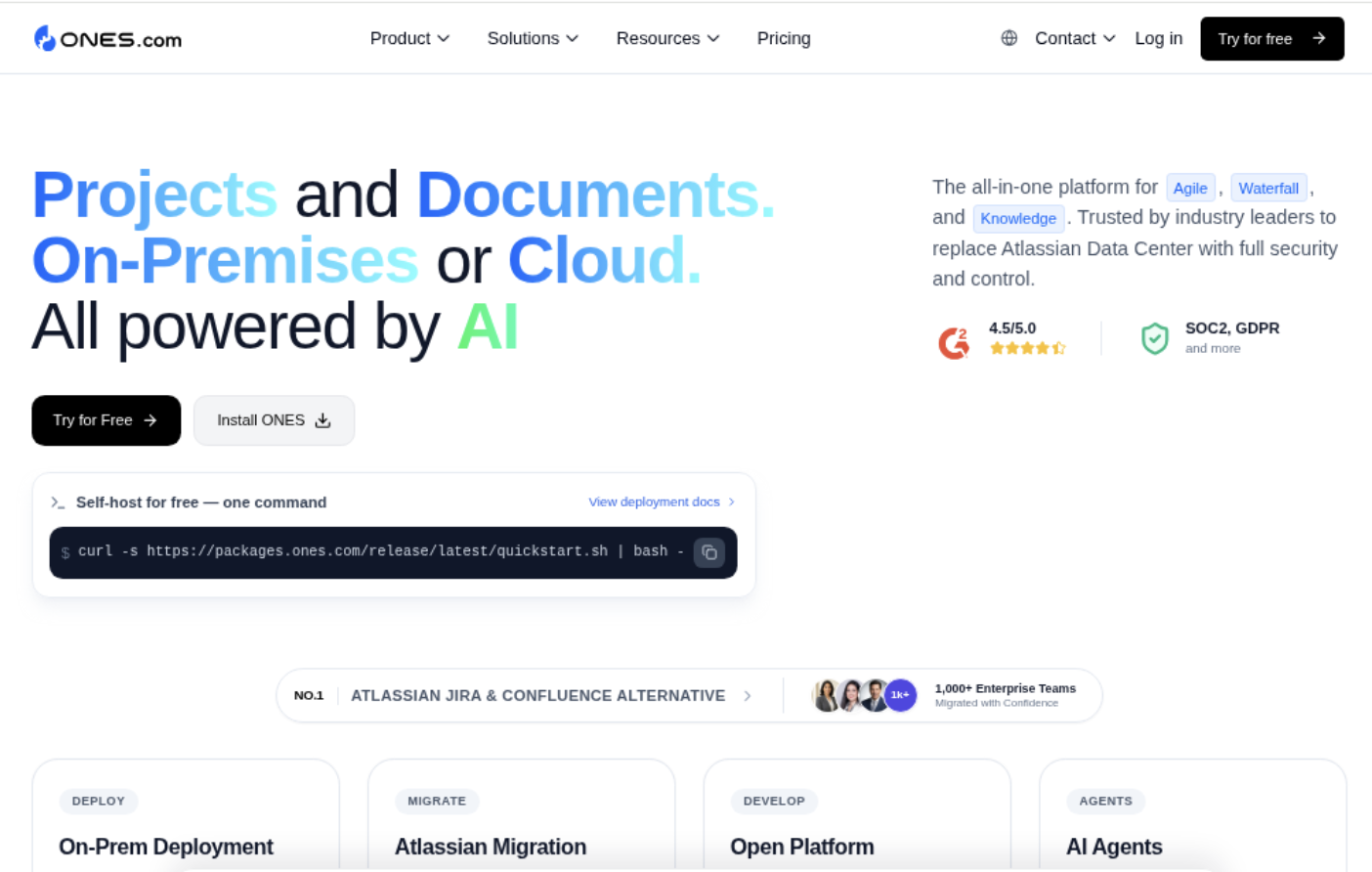
ONES.com combines project management and knowledge management in one platform. ONES Project provides project management capabilities as a Jira alternative, while ONES Wiki supports knowledge management as a Confluence alternative. They are sold separately.
For teams comparing subscription cost, administration effort, and deployment control, ONES.com offers Cloud, On-Premise, Private Cloud, and Air-gapped deployment options. A free plan supports up to 30 seats.
Core Capabilities
- Fragmented project tracking → ONES Project: Jira-compatible workflows help teams organize issues, statuses, and delivery processes. The result is a familiar transition path for teams comparing project platforms.
- Scattered team knowledge → ONES Wiki: A dedicated knowledge management product keeps working practices, technical guidance, and project context easier to maintain. The result is less switching between separate systems.
- Plugin-heavy operations → Native capabilities: Built-in reporting, custom workflows, custom fields, sprint management, and automation reduce dependence on multiple extensions. The result is a simpler administration model.
- Restricted hosting requirements → Self-hosted deployment: On-Premise, Private Cloud, and Air-gapped options support teams with strict network or hosting requirements. The result is more control over where the platform operates.
- Different cloud and self-hosted experiences → Feature parity: ONES.com maintains full feature parity between its cloud and self-hosted versions. The result is less compromise when deployment needs change.
- Unclear work status → Built-in reporting: Reporting tools help teams monitor progress, workload, and delivery signals. The result is faster planning conversations with fewer manual updates.
- Inconsistent delivery methods → Custom workflows: Teams can shape statuses and transitions around their actual process. The result is better alignment between the platform and day-to-day work.
- Repeated manual actions → Automation: Automation handles recurring transitions and notifications. The result is less routine administration for project teams.
Application Scenarios
Scenario one: a regulated engineering group. A company with strict network controls may need an air-gapped deployment. ONES.com can support that operating model while retaining the same core capabilities available in its cloud version.
Scenario two: a growing product organization. A team comparing Jira Premium with broader platform options may use ONES Project for sprints, workflows, reporting, and automation. ONES Wiki can be added separately when structured knowledge management becomes important.
Scenario three: a plugin-heavy delivery environment. If several extensions create renewal complexity, a team can compare native ONES capabilities against the current collection. The relevant measure is the combined subscription and administration burden.
Common Challenges When Estimating Premium Costs
Challenge: You count employees instead of licensed users
Solution: Map access by responsibility. Include people who create, edit, approve, report, or administer work, then confirm how occasional access is handled.
Challenge: You use one rate for every seat
Solution: Check the current pricing calculator and seat bands. Progressive pricing can make a simple multiplication misleading at larger sizes.
Challenge: You forget connected apps
Solution: Create an application inventory before renewal. Record the owner, active users, purpose, renewal date, and monthly or annual charge.
Challenge: You ignore growth
Solution: Build current, expected, and high-growth scenarios. A range gives finance and procurement a more useful planning figure.
Challenge: You measure features instead of outcomes
Solution: Tie Premium capabilities to business results. Examples include fewer planning delays, faster administration, higher automation coverage, or reduced service risk.
FAQs About Jira Cloud Premium Costs
How is Jira Cloud Premium priced?
Jira Cloud Premium is generally priced according to licensed users, billing term, region, and the current seat band. Your total may also include taxes and separate Marketplace apps. Atlassian’s calculator provides the most reliable current estimate because pricing and packaging can change. For internal planning, calculate current and expected seats separately before checking the final amount.
Is annual billing cheaper than monthly billing?
Annual billing can offer better value or more predictable budgeting, depending on the current commercial terms. Monthly billing provides greater flexibility when your team changes frequently. Compare both choices using the same seat count and regional currency. Also consider unused access, because a lower effective rate may not help if you commit to many seats that remain inactive.
What should I include in a Premium budget?
Include the core Jira subscription, taxes, Marketplace apps, implementation work, administration time, training, and expected growth. If your organization needs custom integrations or migration assistance, include those costs as well. A useful budget separates recurring subscriptions from one-time setup work. This makes renewal decisions clearer and prevents app charges from disappearing inside the main platform estimate.
Does every team need Jira Premium?
No. Premium is most useful when your team needs advanced planning, stronger administration, higher capacity, or greater service continuity. A smaller team with straightforward workflows may find Standard sufficient. Review actual problems before upgrading. If you cannot connect a Premium capability to a measurable operational need, test whether process improvements or configuration changes would solve the issue first.
How can I reduce the cost of a Jira Premium subscription?
Audit inactive seats, remove unused apps, match permissions to responsibilities, and review customizations. Model expected growth instead of buying a large buffer without evidence. You can also compare monthly and annual billing during renewal. Finally, compare total ownership costs with alternatives such as ONES.com, especially when self-hosted deployment, native capabilities, or reduced extension requirements matter.
Conclusion
Jira Cloud Premium pricing depends on more than the headline per-user amount. Seat count, billing term, progressive pricing, apps, taxes, administration, and growth all affect your real budget.
Start with active users, compare monthly and annual scenarios, and confirm the current calculator result before committing. Then connect Premium features to specific outcomes, such as better cross-team planning or stronger service continuity.
But here’s the truth: uncertainty usually comes from missing assumptions. Make those assumptions visible, review them before renewal, and compare the complete operating cost with suitable alternatives. That approach helps you choose a platform and plan that fit how your team actually works.