Jira Cloud Premium Pricing per User in 2024: Complete Guide
Wondering about jira cloud premium pricing per user 2024? Compare plans, user bands, taxes, and apps to estimate your true cost—read now.
Jira Cloud Premium pricing can look simple until you compare monthly billing, annual commitments, user bands, taxes, and added apps. A per-user figure may seem affordable, yet the final annual bill can surprise you.
The confusion grows when your team includes occasional users, contractors, administrators, or people who need access only during releases. You may also compare an advertised rate with an invoice that uses different seat rules.
Here’s the practical answer: Jira Cloud Premium cost in 2024 was commonly advertised at about US$17 per user per month for smaller teams. Your real cost depended on billing frequency, seat count, promotions, taxes, and connected Atlassian products.
Jira Cloud Premium pricing per user in 2024: the short answer
Jira Cloud Premium pricing per user in 2024 generally started at approximately US$17 per user per month for smaller teams on monthly billing. Annual billing used a different calculation and could reduce the effective monthly rate.
Atlassian’s final quote could vary because Jira Cloud pricing uses progressive user tiers. The rate for a small team may differ from the effective rate for a larger organization.
| Pricing factor |
What it can change |
| Billing cycle |
Monthly billing gives flexibility, while annual billing requires a longer commitment. |
| Licensed users |
Billing usually follows the highest number of users assigned access during the billing period. |
| Team size |
Per-user economics can change as you move into larger pricing bands. |
| Tax and currency |
Regional taxes, currency conversion, and invoicing arrangements can affect the final amount. |
| Marketplace apps |
Third-party apps can add separate charges to your Jira subscription. |
| Premium features |
Advanced administration, support, storage, and continuity capabilities distinguish Premium from lower tiers. |
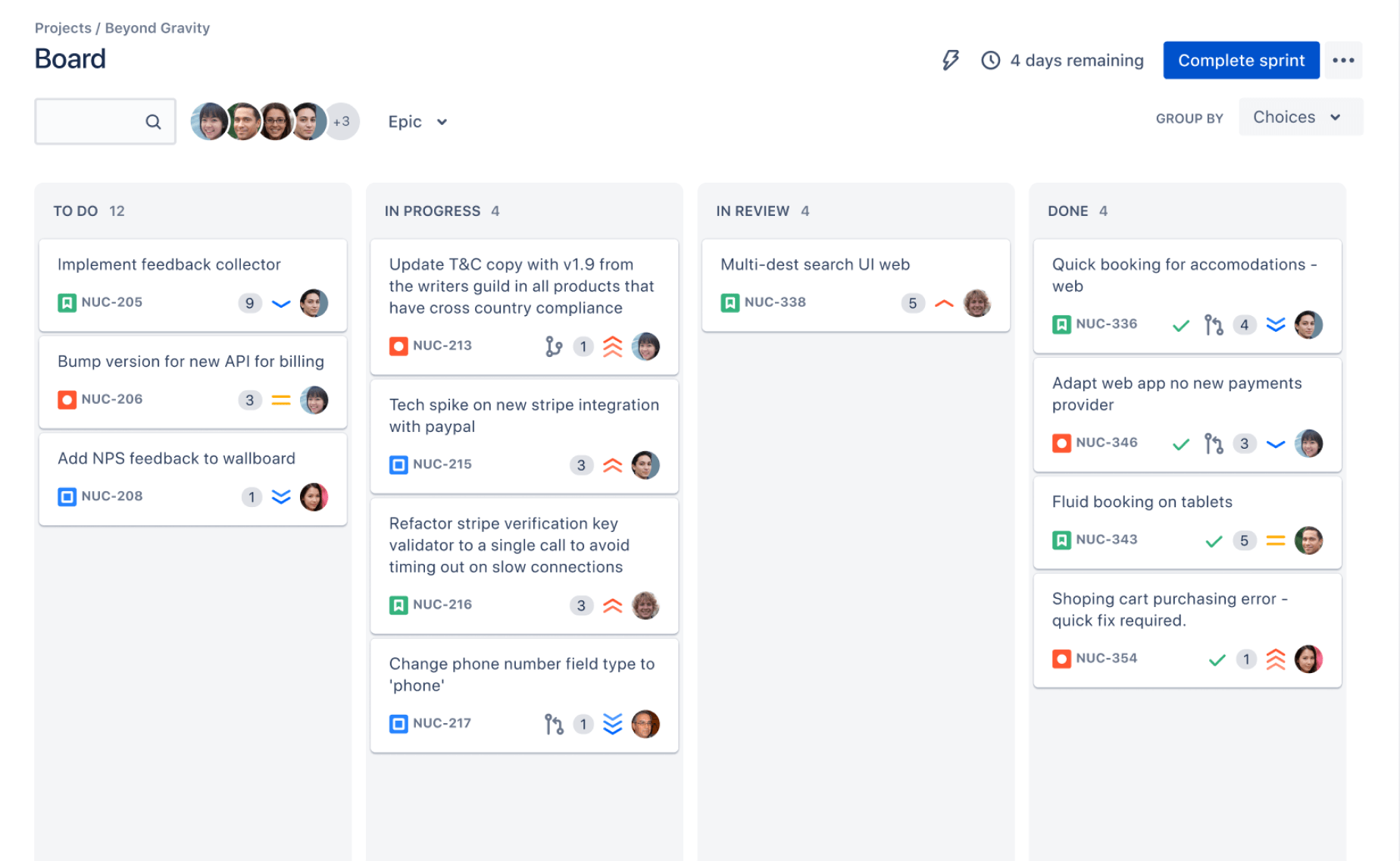
What the advertised rate actually means
The headline rate is a planning figure, not always the amount you will see on an invoice. Atlassian can calculate subscriptions using seat bands and billing rules.
For example, a team may plan for 25 people at US$17 each. The simple estimate is US$425 per month before taxes and add-ons.
That estimate can change if 28 accounts remain active, if an app adds a separate fee, or if annual billing uses a different tier calculation.
Monthly versus annual billing
Monthly billing suits teams that expect headcount changes. You can adjust access more frequently and avoid a large upfront commitment.
Annual billing can make forecasting easier. It may also offer a lower effective monthly price, depending on your team size and the commercial terms available at that time.
Here’s why: annual subscriptions often use a user band. Adding a few people may move the subscription into a higher band for the commitment period.
How to calculate your expected Premium bill
Use a simple planning model before requesting a quote. Separate the base Jira subscription from taxes, apps, and related Atlassian products.
- Count people who need access. Include engineers, product managers, testers, delivery leads, and administrators.
- Choose monthly or annual billing. Monthly billing supports changing teams, while annual billing supports steadier budgets.
- Multiply seats by the indicative Premium rate. For example, 25 seats multiplied by US$17 equals US$425 monthly.
- Add a growth allowance. A 10% to 20% planning buffer can help cover hiring and temporary access.
- List connected apps separately. Marketplace subscriptions may carry their own user counts and charges.
- Include taxes and currency effects. Your payment region can change the final amount.
- Compare the estimate with Atlassian’s current calculator. Historical 2024 pricing should not replace a live quotation.
Example: a 25-person team
Imagine a software team with 25 people. The indicative calculation uses US$17 per user each month.
| Item |
Example calculation |
| Jira Premium seats |
25 users |
| Indicative monthly rate |
US$17 per user |
| Estimated subscription |
US$425 per month |
| Estimated twelve-month equivalent |
US$5,100 before taxes and extras |
| Potential additions |
Marketplace apps, taxes, currency adjustments, and extra products |
This example helps with early budgeting. It does not replace the price shown for your region, billing cycle, and user band.
Example: a growing team
Suppose 25 people need access today, but hiring plans could add 15 people within six months. A 40-seat forecast is more useful than a 25-seat snapshot.
You should compare two scenarios:
- Pay monthly and add seats as the team grows.
- Commit annually after confirming the expected user band.
The better option depends on hiring certainty, cash flow, procurement rules, and the cost of changing plans later.
What Jira Cloud Premium included in 2024
Premium sat above Standard and targeted teams that needed more scale, administration, continuity, and operational control.
The exact feature set could change over time. However, Premium commonly appealed to organizations evaluating advanced support, higher service expectations, and larger working groups.
Key capability areas
- Higher operational scale: Premium supported larger Jira environments than entry-level plans.
- Advanced administration: Administrators received more controls for managing a growing organization.
- Continuity planning: Premium included capabilities designed to support service continuity and recovery planning.
- Premium support: Support commitments and service expectations were stronger than lower tiers.
- Automation capacity: Higher plans could provide greater room for rules and recurring workflow actions.
- Reporting and planning: Larger teams could use advanced planning and reporting capabilities where available.
Let me explain: Premium was not simply a faster version of Standard. Its value depended on whether your team needed the extra controls and capacity.
When Premium made financial sense
Premium could be sensible when downtime created serious delivery risk. A release team handling regulated work may value continuity controls more than a small startup.
It could also help when administrators spent hours managing workarounds. If Premium reduced manual effort across hundreds of users, the subscription could support a stronger business case.
When Standard may have been enough
A small team with straightforward workflows may not have needed Premium. Ten people tracking product issues and sprint work might find Standard adequate.
Compare the annual Premium increase with the value of its capabilities. If no one uses advanced administration or continuity features, the higher tier may add little practical benefit.
What changes the real cost beyond the per-user rate?
The seat price is only one part of your Jira budget. Four other areas can materially change the total.
Active access and account management
Unused accounts can increase your bill or consume seats that another colleague needs. Review access regularly, especially after contractors finish assignments.
A monthly access review can identify inactive accounts. For example, removing eight unused seats at US$17 each represents approximately US$136 in monthly planning value.
Marketplace applications
Jira teams often add tools for test management, time tracking, roadmaps, reporting, or service operations. These subscriptions can use separate pricing rules.
Review each app’s billing model before approving it. Some apps charge by Jira users, while others use active users or a fixed tier.
Currency, tax, and procurement
A US-dollar estimate may not match your local invoice. Value-added tax, sales tax, withholding requirements, and currency conversion can affect the amount paid.
Procurement may also require a reseller, purchase order, or annual commitment. Those steps can influence the final commercial arrangement.
Related Atlassian products
Jira Premium does not automatically cover every Atlassian product. Confluence, Jira Service Management, and other subscriptions can create separate charges.
Build a product-by-product budget. This prevents a Jira Premium estimate from being mistaken for the cost of your wider collaboration environment.
How to decide whether Premium is worth it
Start with business risk instead of the plan label. Ask what problem the upgrade should solve and how often that problem affects your team.
Use a value test
- What operational risk would the additional capabilities reduce?
- How many hours could stronger administration save each month?
- Would service disruption affect revenue, compliance, or customer commitments?
- Do your current workflows require more capacity?
- Could a simpler process solve the issue without an upgrade?
For example, a 50-person engineering group may justify Premium if administrative overhead delays releases. A five-person group may need only better workflow design.
Compare three budget scenarios
| Scenario |
Best fit |
Budget question |
| Lean |
Stable team with basic project needs |
Can Standard handle the work without costly workarounds? |
| Premium |
Growing team with stronger control and continuity needs |
Will the extra capabilities reduce risk or administration? |
| Alternative platform |
Team seeking broader project and knowledge management |
Could one platform reduce app overlap and administration? |
Review the decision after real usage
Schedule a review after one quarter. Check adoption, automation activity, administrative effort, and incidents affecting delivery.
The best plan is the one that fits actual work. A feature that nobody uses should not drive your renewal decision.
Jira Cloud Premium alternatives for cost-conscious teams
You may prefer Jira because of its ecosystem, agile workflows, and marketplace. Still, an alternative can make sense when you want fewer subscriptions or a self-hosted option.
The comparison should include more than license price. Examine migration effort, workflow compatibility, reporting, security, deployment choices, and the time required for administration.
Questions to ask during a comparison
- Can the alternative support your current issue workflows?
- Can teams customize fields, statuses, permissions, and approvals?
- Does it support cloud, private hosting, or restricted-network deployment?
- Can you migrate historical work without rebuilding every project?
- Does it include knowledge management, or will you need another product?
- How many plug-ins are required for essential capabilities?
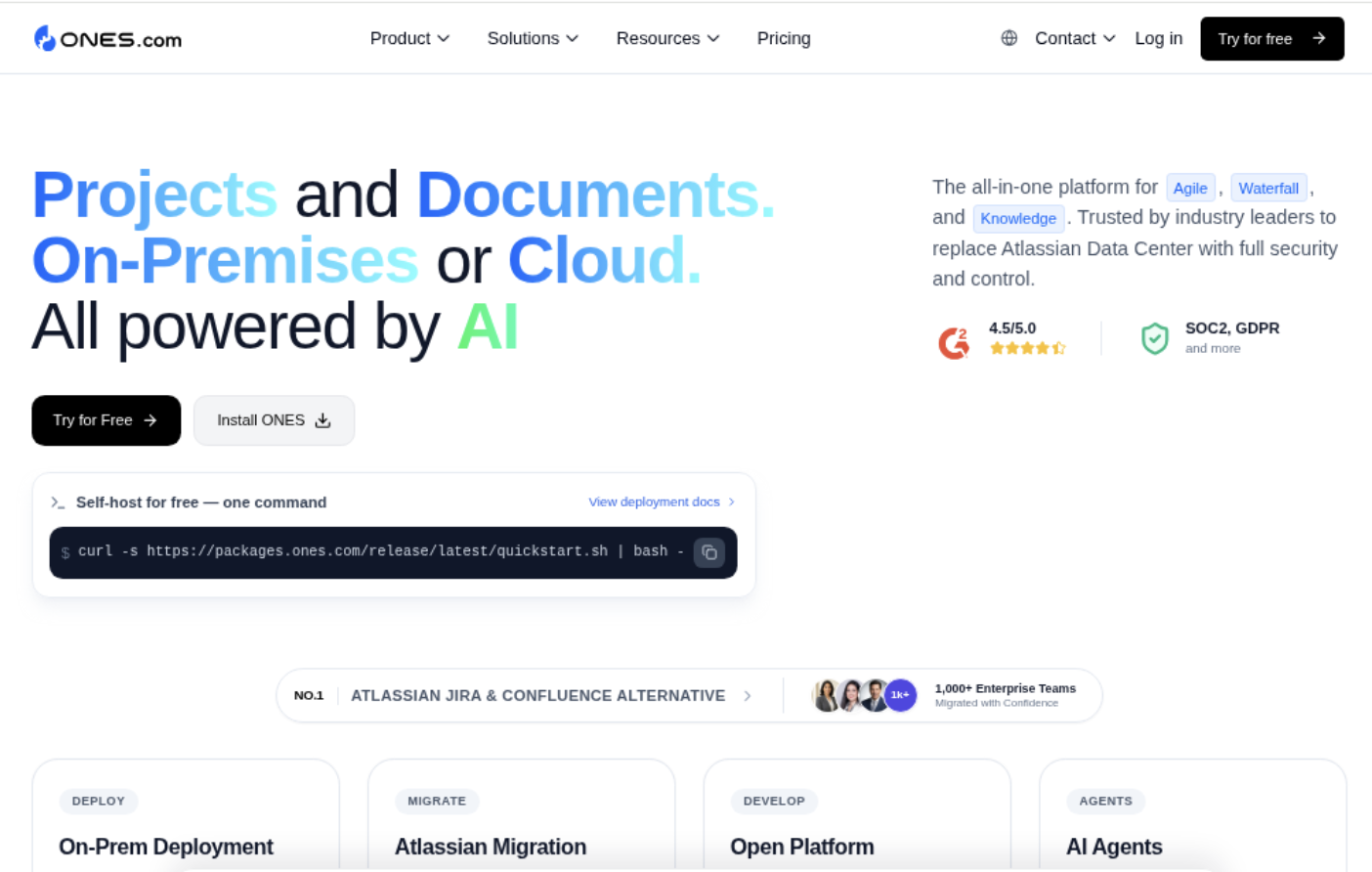
Value Proposition
ONES.com combines project management and knowledge management in one platform. It can suit teams comparing Jira Premium with a broader workspace that reduces reliance on multiple plug-ins.
ONES Project serves as the project management product and a Jira alternative. ONES Wiki serves as the knowledge base and a Confluence alternative. They are sold separately.
Core Capabilities
- Scattered project and knowledge tools → Unified workspace: ONES.com connects project work with knowledge management, reducing context switching between separate systems.
- Complex migration concerns → Jira-compatible workflows: ONES Project supports familiar project workflows, which can reduce retraining during a platform evaluation.
- Heavy plug-in dependence → Native capabilities: Built-in reporting, custom workflows, custom fields, sprint management, and automation can reduce the number of extensions required.
- Restricted hosting requirements → Flexible deployment: You can choose Cloud, On-Premise, Private Cloud, or Air-gapped deployment.
- Different cloud and self-hosted experiences → Feature parity: ONES.com maintains full feature parity between its cloud and self-hosted versions.
- Separate team sizes and adoption stages → Free starting option: The free plan supports up to 30 seats, which can help smaller teams evaluate the platform.
- Fragmented planning → Sprint and workflow controls: Teams can manage iterative delivery through sprint planning and customizable workflow structures.
- Disconnected reporting → Built-in reporting: Project stakeholders can review progress using reporting capabilities within the project environment.
Application Scenarios
Scenario one: a growing engineering team. A 25-person team comparing Jira Premium can test whether ONES Project covers sprint planning, approvals, custom fields, and reporting without adding several extensions.
Scenario two: a restricted-network organization. A regulated team may need an air-gapped or on-premise deployment. ONES.com offers those deployment choices while preserving feature parity with its cloud version.
Scenario three: project and knowledge alignment. A product group can use ONES Project for delivery work and ONES Wiki for team knowledge. The products remain separate, while the platform supports a connected operating model.
Common challenges when budgeting Jira Premium
Challenge: treating the headline rate as the final bill
Solution: Add seat growth, taxes, apps, currency effects, and related products to your estimate. Keep the headline rate as a starting point only.
Challenge: counting employees instead of licensed users
Solution: Review who actually needs Jira access. Contractors, executives, testers, and occasional collaborators may require different access decisions.
Challenge: overlooking annual billing rules
Solution: Compare monthly and annual quotes using the same seat count. Check how added users affect the commitment.
Challenge: upgrading without a measurable reason
Solution: Connect Premium capabilities to a business outcome. Track reduced administration, improved continuity, or greater operational capacity.
Challenge: comparing only license prices
Solution: Include migration, training, plug-ins, hosting, support, and administration. A lower subscription can cost more when the surrounding work is larger.
FAQs
How much did Jira Cloud Premium cost per user in 2024?
The commonly advertised rate for smaller teams was about US$17 per user per month. Your actual amount could differ because of seat bands, billing frequency, region, taxes, promotions, and connected apps. Treat that figure as a historical planning reference rather than a current quotation. Check the live Atlassian pricing calculator before purchasing or renewing.
Was annual billing cheaper than monthly billing?
Annual billing could provide a lower effective monthly rate, but the result depended on the user band and commercial terms. It also required a longer commitment. Monthly billing offered more flexibility when your team size changed frequently. Compare both options using your expected peak user count, not only the number of people who need access today.
Does Jira Premium include Marketplace apps?
No. Marketplace apps generally have separate subscriptions and billing rules. A reporting, testing, time-tracking, or service-management app can increase your total technology cost. Review each app before creating your budget. Also check whether the app charges all Jira users or only its active users.
Can a small team justify Jira Premium?
Yes, if the team needs Premium capabilities that reduce meaningful operational risk. A small organization handling regulated releases may value continuity and administration controls. However, a small team with simple workflows may not receive enough benefit from the upgrade. Compare the additional annual cost with measurable time savings and risk reduction.
What should I compare when evaluating a Jira alternative?
Compare workflow compatibility, migration effort, reporting, automation, permissions, deployment choices, support, and knowledge management. License price matters, but plug-ins and administration can change the total cost. Ask your team to test its daily work, such as planning a sprint, changing an approval flow, and producing a delivery report.
Is ONES.com suitable for teams comparing Jira Premium?
ONES.com can suit teams seeking a Jira alternative with project management and knowledge management options. ONES Project supports project workflows, sprint management, automation, custom fields, and reporting. ONES.com also offers Cloud, On-Premise, Private Cloud, and Air-gapped deployments. Evaluate the separate ONES Project and ONES Wiki products against your team’s requirements.
Conclusion
Jira Cloud Premium pricing per user in 2024 was commonly estimated at about US$17 monthly for smaller teams. That figure was only the starting point.
Your final budget depended on billing cycle, user bands, taxes, apps, currency, and related Atlassian products. Calculate several scenarios before choosing monthly or annual billing.
But here’s the truth: the cheapest license is not always the cheapest operating model. Review administration, plug-ins, continuity needs, and migration effort alongside the subscription.
If Jira Premium fits your requirements, confirm the current quote. If you want broader project and knowledge management or flexible hosting, compare ONES.com and other alternatives against the same practical criteria.