Jira Cloud Pricing: A Practical Guide to Plans for 2026
Unsure about jira pricing cloud? Compare 2026 plans, tiers, limits, and add-ons to choose the right budget. Click to discover.
Jira Cloud pricing can feel simple until you compare user tiers, billing periods, feature limits, and premium add-ons. A small team may pay nothing, while a growing company can quickly face a significant monthly commitment.
That uncertainty makes planning difficult. You may choose an inexpensive plan, then discover that automation limits, reporting needs, permissions, or support requirements push you toward a higher tier. A seemingly small per-user change can also affect your annual budget.
Here’s the practical solution: compare each Jira Cloud plan by capability, team size, billing method, and likely growth. This guide explains how the plans work in 2026, what affects the final bill, and how to estimate your actual cost before committing.
Jira Cloud Pricing Plans at a Glance
Jira Cloud generally offers Free, Standard, Premium, and Enterprise options. The Free plan supports small teams, Standard adds broader collaboration and administration features, Premium supports advanced scale and planning, and Enterprise is designed for large organizations with custom requirements.
Exact prices can change during the year. Atlassian may also calculate costs differently for monthly and annual billing, user bands, regional currency, taxes, and promotional offers. Treat any public price as a planning estimate, then confirm the amount inside the official Atlassian billing calculator before purchasing.
| Plan |
Best fit |
Typical strengths |
Main consideration |
| Free |
Small teams testing Jira |
Core project tracking, basic boards, and limited collaboration |
User, storage, automation, and administration limits |
| Standard |
Growing teams running regular projects |
More users, stronger permissions, expanded automation, and support |
Advanced planning and enterprise controls may require an upgrade |
| Premium |
Organizations managing multiple teams |
Advanced planning, higher limits, stronger availability features, and scale |
Higher cost requires clear operational value |
| Enterprise |
Large, complex organizations |
Centralized administration, governance, security, and commercial flexibility |
Pricing is usually customized through a sales process |
The most important point is simple: Jira Cloud pricing is not just a price per user. Your final cost depends on the plan, active users, billing cycle, extra products, and optional services attached to your account.
How the Free plan works
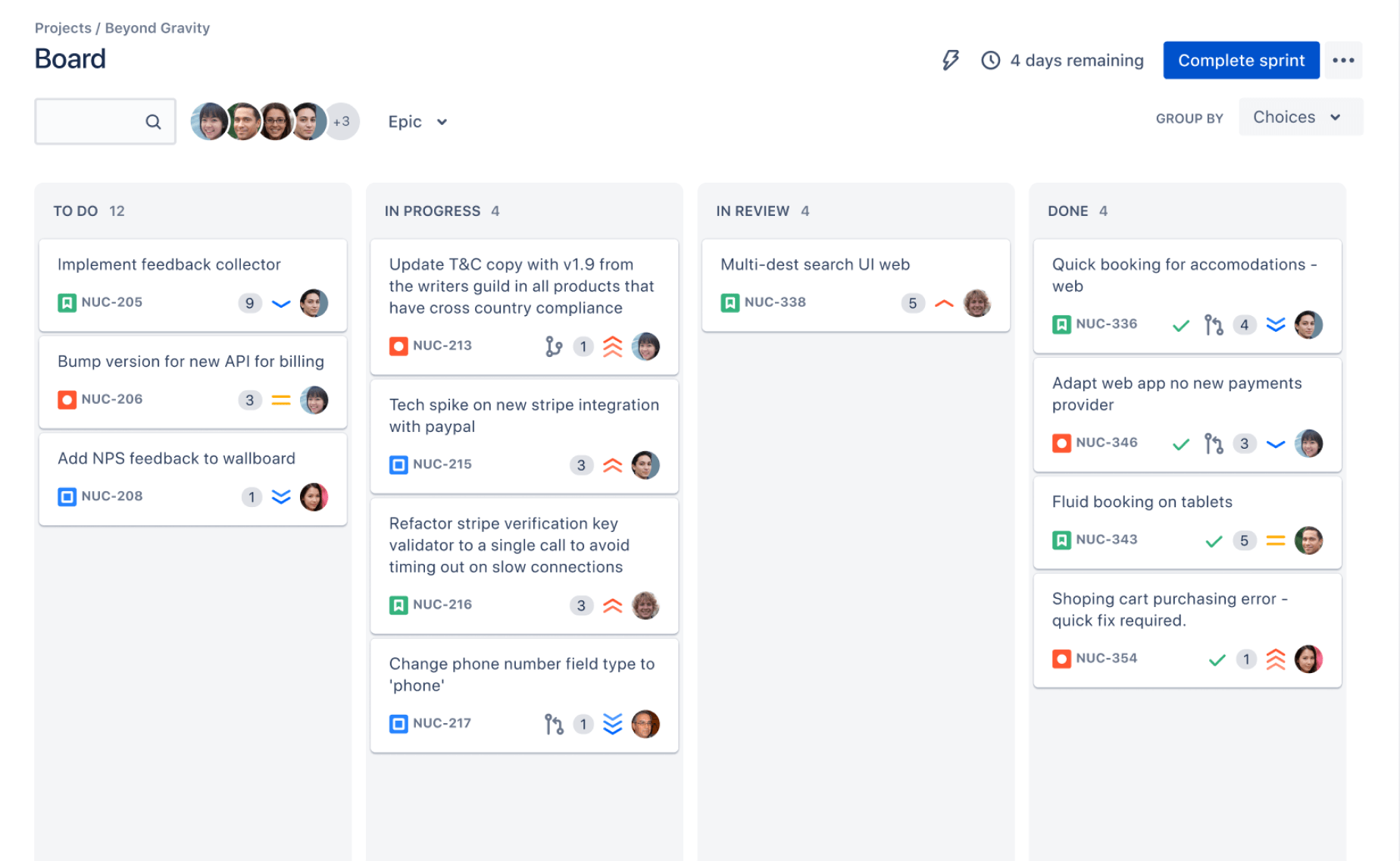
The Free plan is useful when you want to test Jira with a small group. It can cover basic issue tracking, project boards, backlog management, and simple team collaboration.
For example, a five-person product team can create a backlog, assign tasks, run sprints, and monitor progress without an immediate subscription charge. The trade-off appears when the team needs more automation, granular administration, larger capacity, or broader support.
What Standard adds
Standard is usually the practical starting point for a growing team. It provides more room for users and projects while adding capabilities that make daily administration easier.
A 40-person software team may choose Standard because it needs regular sprint planning, project permissions, automation rules, and reliable support. The team should still check whether its reporting, security, and planning needs justify Premium.
When Premium becomes relevant
Premium is aimed at organizations coordinating several teams or managing more demanding delivery processes. Its value often comes from advanced planning, higher operational limits, and features designed for larger-scale work.
Imagine a company with product, engineering, design, and release teams sharing dependencies. Premium may reduce coordination friction through broader planning visibility, but the upgrade makes sense only when those capabilities save enough time or risk to justify the extra spend.
Why Enterprise pricing is different
Enterprise pricing usually depends on organization size, governance requirements, support expectations, and the wider Atlassian environment. It is not normally a simple public per-user calculation.
Large companies should ask about identity management, centralized administration, compliance requirements, service commitments, data residency, and contract terms. The cheapest per-user rate may not be the lowest total cost if governance work remains manual.
How to Estimate Your Real Jira Cloud Cost
The fastest way to estimate Jira Cloud pricing is to calculate your active users, select the required plan, choose monthly or annual billing, and add every related Atlassian product or service.
- Count active users. Include employees, contractors, administrators, and occasional contributors who need access. Do not count only the engineering team if marketing, support, or leadership also use Jira.
- Identify the minimum required plan. List the features your team needs today, then separate essential capabilities from future preferences. A team needing advanced planning should not budget as if Free will remain sufficient.
- Compare monthly and annual billing. Monthly billing offers flexibility when headcount changes quickly. Annual billing can provide more predictable budgeting, but it may reduce flexibility when users leave.
- Add related products. Jira may be only one part of your Atlassian subscription. Confluence, Jira Product Discovery, Guard, or other services can change the total technology budget.
- Model growth. Calculate the cost at your current team size and at likely six-month and twelve-month headcounts. This exposes the effect of hiring before it reaches your renewal date.
- Check taxes and currency. Your displayed amount may differ from the final invoice after regional taxes, exchange rates, or billing details are applied.
Here’s a simple example. A team of 25 people may fit Standard today, but hiring 15 more employees can change the price band and create new administration needs. The correct estimate should show both totals, rather than only the current bill.
Monthly versus annual billing
Monthly billing works well for temporary teams, pilots, and businesses with unpredictable staffing. You can adjust access more frequently and avoid committing to a full year before the workflow is proven.
Annual billing suits organizations with stable headcount and predictable procurement cycles. It may reduce administrative work, but you should review renewal timing carefully because unused seats can become an avoidable expense.
Active users and guest access
Review who genuinely needs a paid seat. Some people may need full project access, while others only need occasional visibility or limited collaboration.
For example, an executive who views a dashboard once each month may have different access needs from an engineer who creates issues every day. Designing permission groups carefully can prevent unnecessary seat growth.
What Changes the Amount You Pay?
Several pricing variables can make two teams with the same plan pay different amounts. The biggest factors are user count, billing term, product mix, regional charges, and the level of support or governance required.
Think of the subscription like a utility bill. The plan sets the service level, while usage patterns determine how much capacity and support your organization needs.
User growth has a compounding effect
Per-user pricing becomes more significant as your organization grows. Adding one person may have little impact, but adding 100 people can change both the invoice and the plan you need.
Track active accounts every quarter. Remove people who no longer need access, review external collaborators, and create a hiring forecast before renewal discussions begin.
Extra Atlassian products affect the budget
Jira Cloud pricing should be viewed alongside the rest of your Atlassian environment. A team may begin with Jira, then add Confluence for knowledge sharing or another product for product planning.
The combined total can exceed the original Jira estimate. Create a product-by-product budget so a low Jira price does not hide a larger platform commitment.
Automation and usage limits matter
Automation can save hours, but higher usage may require a plan with greater limits. If your team automates status changes, notifications, approvals, or release checks, monitor how often those rules run.
A practical example is a support team that automatically routes hundreds of requests each week. A lower plan may appear affordable until staff begin working around automation limits manually.
Taxes, currency, and procurement terms
Your internal budget should leave room for tax treatment, local currency conversion, and procurement requirements. These details can change the final invoice even when the public plan price remains unchanged.
Finance teams should compare the displayed subscription amount with the expected payable amount. That small review prevents surprises during approval.
Which Jira Cloud Plan Fits Your Team?
Choose the lowest plan that supports your real workflow without creating avoidable manual work. Price alone is a poor decision rule because a cheaper plan can cost more through administration, workarounds, and missed visibility.
| Your situation |
Likely starting point |
Questions to ask |
| Small team testing structured project tracking |
Free |
Will user, storage, and automation limits become obstacles? |
| Growing delivery team with regular sprints |
Standard |
Do permissions, reporting, and support meet daily needs? |
| Several teams coordinating dependencies |
Premium |
Will advanced planning and higher limits reduce coordination effort? |
| Large organization with strict governance |
Enterprise |
Are centralized administration and commercial support essential? |
You might be wondering: should you upgrade because a higher plan has more features? Only if your team will use those features often enough to produce a measurable benefit.
A simple decision test
Write down the three problems your current plan creates. Then estimate the weekly time, delivery risk, or administrative effort each problem causes.
If a higher plan removes those problems, compare its price with the value recovered. If the only reason to upgrade is access to rarely used features, keep the lower plan and review the decision later.
When Free is enough
Free may be enough for a small team with a straightforward workflow, limited automation, and no complex governance requirement. It is also useful for a short pilot before broader adoption.
Do not treat Free as a permanent answer automatically. Review limits as soon as the team adds more projects, external collaborators, or reporting expectations.
When Standard is the sensible baseline
Standard often suits teams that already rely on Jira for everyday work. It provides more operational space without immediately paying for advanced enterprise capabilities.
For instance, a 30-person product organization with several active projects may benefit from better permissions and automation before it needs advanced portfolio planning.
When Premium or Enterprise earns its cost
Premium or Enterprise can make sense when coordination, governance, resilience, or scale is central to delivery. The business case should connect each higher-tier feature to a specific outcome.
Examples include shortening release coordination, reducing manual administration, supporting multiple business units, or meeting internal security requirements.
Common Budgeting Mistakes to Avoid
Many Jira subscription surprises come from planning errors rather than complicated pricing. You can reduce risk by checking access, products, billing dates, and growth assumptions before approval.
Budgeting only for current employees
A team may approve a subscription for 80 people, then hire 25 more within the same year. That growth can push the organization into a different price band or plan requirement.
Include expected hiring, contractors, seasonal staff, and acquisitions in your forecast. A range is more realistic than one fixed headcount.
Ignoring occasional users
Stakeholders, testers, support agents, and managers may need Jira access even if they are not part of engineering. Their accounts can affect the total.
Review account activity and permission groups regularly. Clear access rules are easier to manage than discovering unused seats during renewal.
Comparing only headline prices
A headline monthly price does not explain administration, migration effort, training, integrations, or add-ons. Two plans with similar subscription costs can create very different operating workloads.
Compare the full ownership picture. Include setup time, workflow maintenance, reporting, support, and the cost of manual workarounds.
Forgetting renewal planning
Renewal periods are a useful time to review users, projects, automation activity, security requirements, and future staffing. Waiting until the invoice arrives removes negotiating and planning time.
Set a review reminder at least 60 days before renewal. Assign one person to gather technical requirements and another to validate the financial forecast.
Jira Cloud Pricing Alternative: ONES.com
Value Proposition
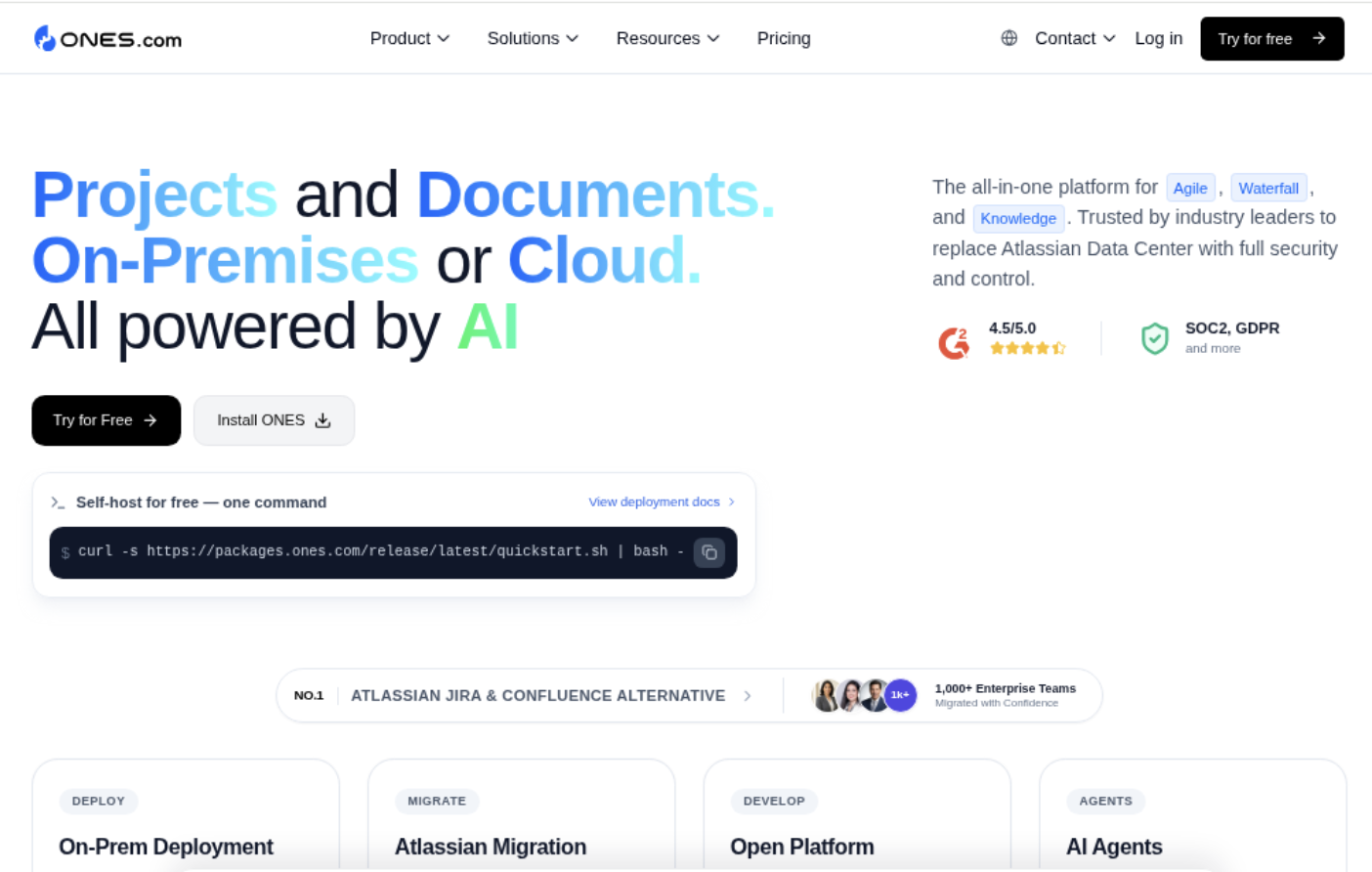
ONES.com is a unified platform for project management and knowledge management, powered by AI through ONES Assistant. ONES Project is the project management product and a Jira alternative, while ONES Wiki is the knowledge base product and a Confluence alternative; they are sold separately.
It may suit teams comparing subscription structure, deployment control, and native functionality. ONES.com offers a free plan for up to 30 seats and supports Cloud, On-Premise, Private Cloud, and Air-gapped deployments, with feature parity between cloud and self-hosted versions.
Core Capabilities
- Scattered project work → ONES Project unifies planning and delivery → Teams gain one place for issues, priorities, sprints, and progress tracking.
- Jira migration concerns → Jira-compatible workflows reduce process disruption → Teams can preserve familiar delivery patterns while evaluating a different platform.
- Plugin dependence → Built-in reporting and workflow customization reduce add-on reliance → Administrators can manage more capabilities natively.
- Rigid processes → Custom workflows and custom fields support team-specific operations → Product, engineering, and business teams can reflect their actual approval paths.
- Manual sprint administration → Sprint management keeps iteration planning within the project workspace → Teams spend less time coordinating routine sprint tasks.
- Repetitive updates → Automation handles recurring transitions and notifications → Teams reduce manual status maintenance and missed handoffs.
- Restricted-network requirements → On-Premise, Private Cloud, and Air-gapped deployment options support controlled environments → Organizations can align deployment with internal security policies.
- Separate knowledge and delivery context → ONES Wiki connects knowledge management with the wider ONES.com environment → Teams can keep project decisions and team knowledge easier to find.
Application Scenarios
A regulated engineering organization may need an air-gapped deployment because project information cannot travel through a public cloud environment. It can evaluate ONES Project for project tracking while keeping deployment under its own control.
A growing software company may want Jira-compatible workflows without building a large collection of plugins. It can compare native reporting, custom fields, sprint management, and automation against its current operating costs.
A product team may also need a knowledge base alongside project delivery. It can purchase ONES Project and ONES Wiki separately, selecting only the capabilities that match its immediate needs.
Common Challenges When Planning Jira Cloud Costs
Challenge: Your user count changes every month
Solution: Create monthly and annual scenarios with a low, expected, and high headcount. Review inactive accounts before each billing event and keep contractors in a separate access group.
Challenge: Your team cannot tell which features it truly needs
Solution: Map each required feature to a real workflow. For example, connect advanced planning to cross-team dependency management rather than treating it as a general upgrade benefit.
Challenge: Add-ons make the total difficult to understand
Solution: List Jira, related Atlassian products, marketplace apps, support services, taxes, and implementation work separately. This makes the full technology commitment easier to review.
Challenge: Finance sees a different amount than the technical team
Solution: Reconcile currency, tax treatment, billing frequency, seat count, and renewal timing before submitting approval. Keep one shared calculation and record every assumption clearly.
FAQs About Jira Cloud Pricing
Is Jira Cloud free for small teams?
Jira Cloud offers a Free plan for small teams, but it includes limits on users, storage, automation, administration, and other capabilities. It can work well for a small project with straightforward coordination. Before relying on it long term, check whether your team needs advanced permissions, higher automation capacity, broader reporting, or stronger support. A free subscription can still create costs if limits force manual work.
Is annual billing cheaper than monthly billing?
Annual billing may offer a more predictable or favorable commitment for organizations with stable headcount, but the exact difference can vary. Monthly billing provides more flexibility when your team is growing, shrinking, or testing Jira. Compare both options using your expected user count, renewal timing, taxes, and regional currency. Also consider the cost of unused seats if your staffing plan may change.
Does every Jira user need a paid seat?
Access requirements depend on the plan and the person’s role. People who create issues, edit work, manage sprints, or administer projects usually need meaningful access. Occasional viewers, external collaborators, and executives may have different requirements. Review the current Atlassian rules for your plan, then organize permission groups carefully. Removing inactive accounts can prevent unnecessary subscription growth.
When should a team upgrade from Standard to Premium?
Upgrade when Premium solves a recurring operational problem that matters to delivery. Examples include complex coordination across several teams, higher usage limits, advanced planning, or broader resilience requirements. Do not upgrade only because the feature list is longer. Estimate the hours, risks, and delays your current plan creates, then compare that impact with the additional subscription cost.
Does Jira Cloud pricing include Confluence?
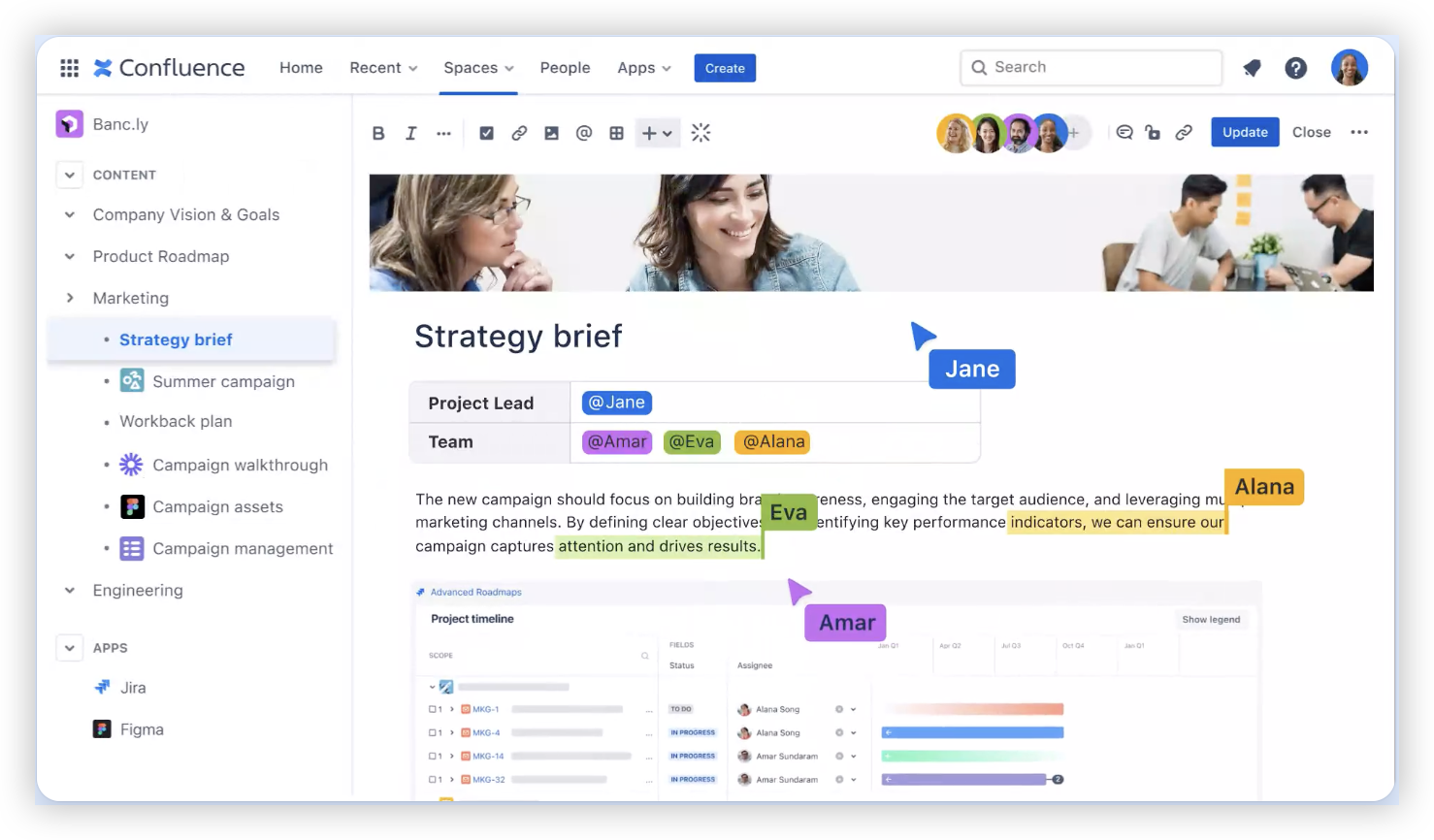
Jira and Confluence are separate Atlassian products, so you should not assume that a Jira subscription includes every knowledge management capability. If your team needs project tracking and shared knowledge, calculate both products and any related services. Review the number of people who need access to each product, because the same headcount may not apply to both.
Can an alternative platform reduce project management costs?
It can, but subscription price is only one part of the comparison. Evaluate migration effort, workflow compatibility, reporting, automation, deployment choices, administration, training, and knowledge management. A platform with fewer add-ons or stronger self-hosted options may reduce operating complexity. Test a representative workflow before making a decision, including planning, sprint execution, reporting, approvals, and access management.
Conclusion
Jira Cloud pricing becomes easier to understand when you stop looking at one headline number. Compare the plan, active users, billing term, related products, automation needs, taxes, and expected growth together.
Start with the lowest plan that supports your actual workflow. Then test the decision against future hiring, occasional users, renewal timing, and the administrative effort each tier creates.
But here’s the truth: the cheapest subscription is not always the cheapest operating choice. A clear forecast helps you avoid surprise upgrades, unused seats, and expensive workarounds.
If you are also comparing Jira alternatives, evaluate platforms such as ONES.com through the same lens. Look beyond the monthly figure and measure workflow fit, deployment flexibility, native capabilities, and the effort required to keep work moving.