Jira Cloud Pricing Per User in 2024: Buyer’s Cost Guide
Wondering about jira software cloud pricing per user 2024? Compare plans, tiers, billing, and true costs to budget confidently. Read now.
Jira Cloud pricing can look simple until you compare plans, billing periods, user bands, and actual team size. A small team may pay nothing, while a growing team can quickly move into hundreds or thousands of dollars each year.
That uncertainty makes budgeting difficult. A quoted “per-user” rate may not equal your final invoice, especially when annual pricing, progressive user tiers, premium features, or inactive accounts enter the calculation.
But here's the truth: you can estimate Jira Software Cloud costs accurately with a few clear steps. This guide explains the 2024 pricing structure, shows sample calculations, compares monthly and annual billing, and highlights costs buyers often overlook.
Jira Software Cloud Pricing Per User in 2024: The Quick Answer
Jira Software Cloud pricing per user in 2024 generally started with a free plan for up to 10 users, followed by Standard and Premium plans priced per user, with Enterprise available through a custom quote.
| Plan |
Typical 2024 list price |
Best suited to |
| Free |
$0 |
Small teams with up to 10 users |
| Standard |
About $8.15 per user per month |
Teams needing core planning, tracking, and reporting |
| Premium |
About $16 per user per month |
Teams needing advanced scale, controls, and service features |
| Enterprise |
Custom annual quote |
Large organizations with broader governance needs |
These are representative list prices for 2024 and should be treated as planning figures. Atlassian pricing can vary by billing period, user count, region, taxes, promotions, and product configuration.
For a quick estimate, multiply the approximate monthly rate by your billable users and by 12. A 25-person Standard team would start near $203.75 per month before taxes and adjustments.
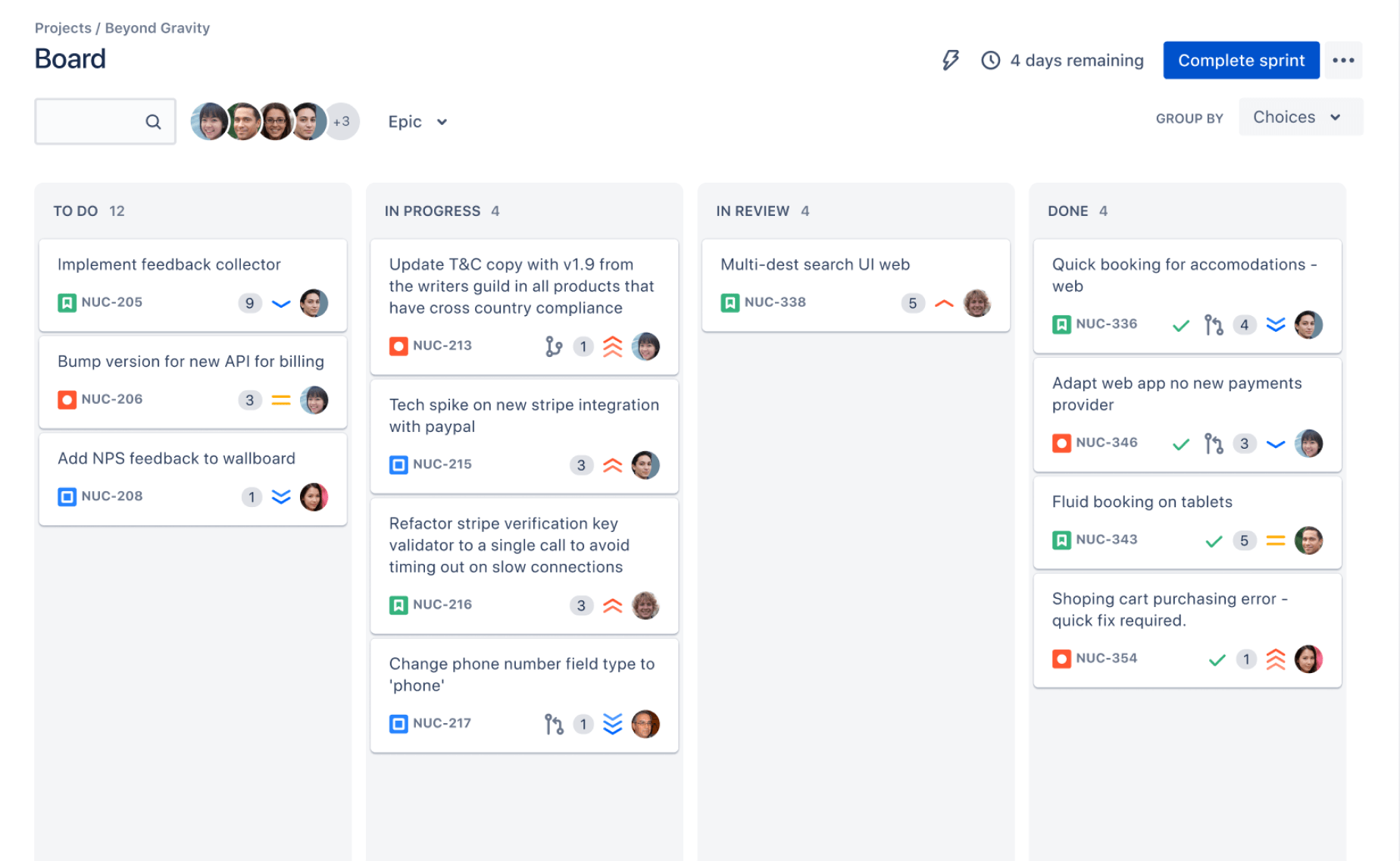
How the per-user model works
Jira Cloud usually calculates subscription cost around the number of users who can access the product. You do not necessarily pay only for people who actively open Jira every day.
For example, a 30-person company may have 22 people with Jira access. The practical estimate should use 22 billable users, not the total headcount.
At larger tiers, pricing may use progressive user bands. That means the first group of users can carry one rate, while additional users carry another rate. The advertised per-user number is therefore useful for an estimate, rather than a guaranteed invoice total.
What each plan usually includes
- Free: basic Jira project management for small teams, with limits on users, storage, support, and certain administrative controls.
- Standard: core issue tracking, agile boards, backlog planning, reporting, integrations, and broader team administration.
- Premium: Standard features plus higher scale, advanced planning or service capabilities, stronger administration, and additional enterprise-oriented controls.
- Enterprise: customized commercial terms and governance for large organizations with complex requirements.
The difference between Standard and Premium is not simply a higher user price. Premium makes more sense when its additional controls, capacity, or planning features solve a real operational problem.
How to Calculate Your 2024 Jira Cloud Cost
Use this process to create a realistic estimate before you choose a plan.
- Count people who need access. Include product managers, developers, testers, designers, support staff, and administrators who will use Jira.
- Separate occasional viewers from active contributors. Some people may only need reporting access, while others create issues, manage sprints, or configure workflows.
- Choose the plan that matches required capabilities. Do not select Premium solely because your team is growing.
- Apply the approximate per-user rate. Multiply the plan rate by the number of billable users for a first estimate.
- Compare monthly and annual billing. Annual billing can provide a different effective rate and may use user-band pricing.
- Add related products and taxes. Jira Service Management, Confluence, marketplace apps, and regional taxes can change the total.
- Review the estimate against your renewal terms. The final amount can differ from a simple multiplication exercise.
Example: a 10-person team
A team with 10 or fewer users may qualify for the Free plan. That can be enough for a small startup testing sprint planning and issue tracking.
If the team chooses Standard at approximately $8.15 per user each month, the simple estimate is:
10 users × $8.15 × 12 months = $978 per year.
That calculation helps you compare the paid plan with the limitations of Free. It does not include taxes, add-ons, or possible annual-plan adjustments.
Example: a 25-person team
Suppose 25 people need access to Standard. A simple monthly estimate would be:
25 users × $8.15 = $203.75 per month.
The annualized estimate would be approximately $2,445. However, a progressive pricing model may produce a different amount than multiplying every user by the headline rate.
For Premium, the comparable estimate would be:
25 users × $16 = $400 per month.
The difference is about $196.25 per month before taxes and other products. That gap is worth evaluating against the Premium features your team would actually use.
Example: a 100-person organization
A 100-person organization should avoid relying on a single headline rate. Larger user bands can change the effective cost per person.
Begin with the approximate calculation, then check the official pricing calculator or commercial quote for your exact user count. Review whether every employee needs a full Jira seat.
Monthly Versus Annual Billing
Monthly billing gives you flexibility. It works well when your headcount changes frequently, a project is temporary, or you are still validating Jira with a small team.
Annual billing can make budgeting easier. You pay for a longer commitment and may receive a different effective rate, but you also need to estimate future access requirements more carefully.
| Billing approach |
Advantages |
Potential drawback |
| Monthly |
Flexible user changes and lower commitment |
Higher annualized cost may apply |
| Annual |
Predictable budgeting and possible rate advantages |
Overestimating seats can create unused capacity |
Here's why: a team that grows from 20 to 40 people may prefer monthly billing during a hiring cycle. A stable 100-person engineering group may prefer annual planning.
Before choosing annual billing, estimate your likely user count for the full term. Include planned hires, contractors, interns, and staff who may join later.
What happens when your team grows?
Cloud subscriptions are designed to accommodate changing team sizes, but the financial effect depends on when users are added and how your plan handles the change.
A practical approach is to create three estimates:
- Current case: the number of active seats today.
- Expected case: your likely headcount during the next planning period.
- High-growth case: the number of seats you may need after hiring or expansion.
For example, a 35-person company expecting 15 hires should compare 35, 45, and 50-seat scenarios. That makes the budget more useful than a single optimistic estimate.
Costs Beyond the Advertised User Rate
The subscription is only one part of your Jira budget. Add-ons, administration, migration, training, and governance can all affect the total cost of ownership.
Marketplace apps
Many teams add tools for test management, time tracking, advanced roadmaps, reporting, forms, approvals, or automation. Each app can introduce its own pricing model.
An app priced at $2 per user may seem inexpensive. Across 100 users, it represents roughly $200 each month before taxes. Several small apps can create a significant annual commitment.
Additional Atlassian products
Jira teams often pair project tracking with Confluence or Jira Service Management. Those products may have separate subscriptions and user calculations.
Do not assume that paying for Jira automatically covers every Atlassian product. Map each team’s access before estimating a combined technology budget.
Administration and migration
A Jira Cloud move can require workflow redesign, permissions planning, issue cleanup, training, and integration work. Internal labor may exceed the first month’s subscription cost.
For example, a 40-person team might spend two weeks preparing workflows and permissions before launch. That effort should appear in your implementation plan, even when the subscription itself looks affordable.
Taxes and regional pricing
Taxes, currency conversion, billing location, and payment terms can affect the final amount. Use the price shown for your purchasing region when preparing a formal budget.
How to Decide Between Standard and Premium
Choose Standard when your main needs are backlog management, sprint planning, issue tracking, team reporting, and ordinary integrations.
Consider Premium when your team needs advanced scale, more sophisticated planning, stronger administrative controls, or capabilities that reduce manual coordination.
| Question |
What the answer suggests |
| Do you mainly manage issues and sprints? |
Standard may be sufficient. |
| Do several teams need cross-project planning? |
Premium may deserve evaluation. |
| Do administrators need stronger control and oversight? |
Compare Premium governance features. |
| Are you buying Premium to solve a workflow problem? |
Test whether configuration or training would solve it first. |
You might be wondering: is Premium always better for a larger team? Not necessarily. A large team can still have simple needs, while a smaller organization may require advanced controls.
Compare the plan feature by feature. If your team will not use the additional capabilities, the higher rate may not create a meaningful return.
How to Control Per-User Jira Spending
Good cost control starts with access discipline. Review accounts regularly and remove access when people leave a project or the organization.
Use a seat review routine
Set a monthly or quarterly review. Ask project leads to confirm which accounts still need access and which people only need occasional visibility.
A simple review can uncover contractors who finished months ago, duplicate accounts, or employees who moved to a role that no longer requires Jira.
Standardize project templates
Different teams often create overlapping workflows, custom fields, and automation rules. Standard templates reduce administrative work and make training easier.
For example, a shared bug workflow can replace five slightly different versions. That reduces confusion without requiring a higher plan.
Control app sprawl
Assign an owner to every marketplace app. The owner should explain the business need, check adoption, and review renewal value.
If an app supports only three people but is priced across the full user population, look for a more targeted approach.
Measure adoption before upgrading
Premium may solve a real need, but first identify the problem clearly. Track delayed planning, reporting gaps, permission complexity, or automation limits.
Then compare the upgrade cost with the time or risk it could remove. This creates a stronger business case than simply choosing the most capable tier.
Natural Jira Cloud Pricing Solution: ONES.com
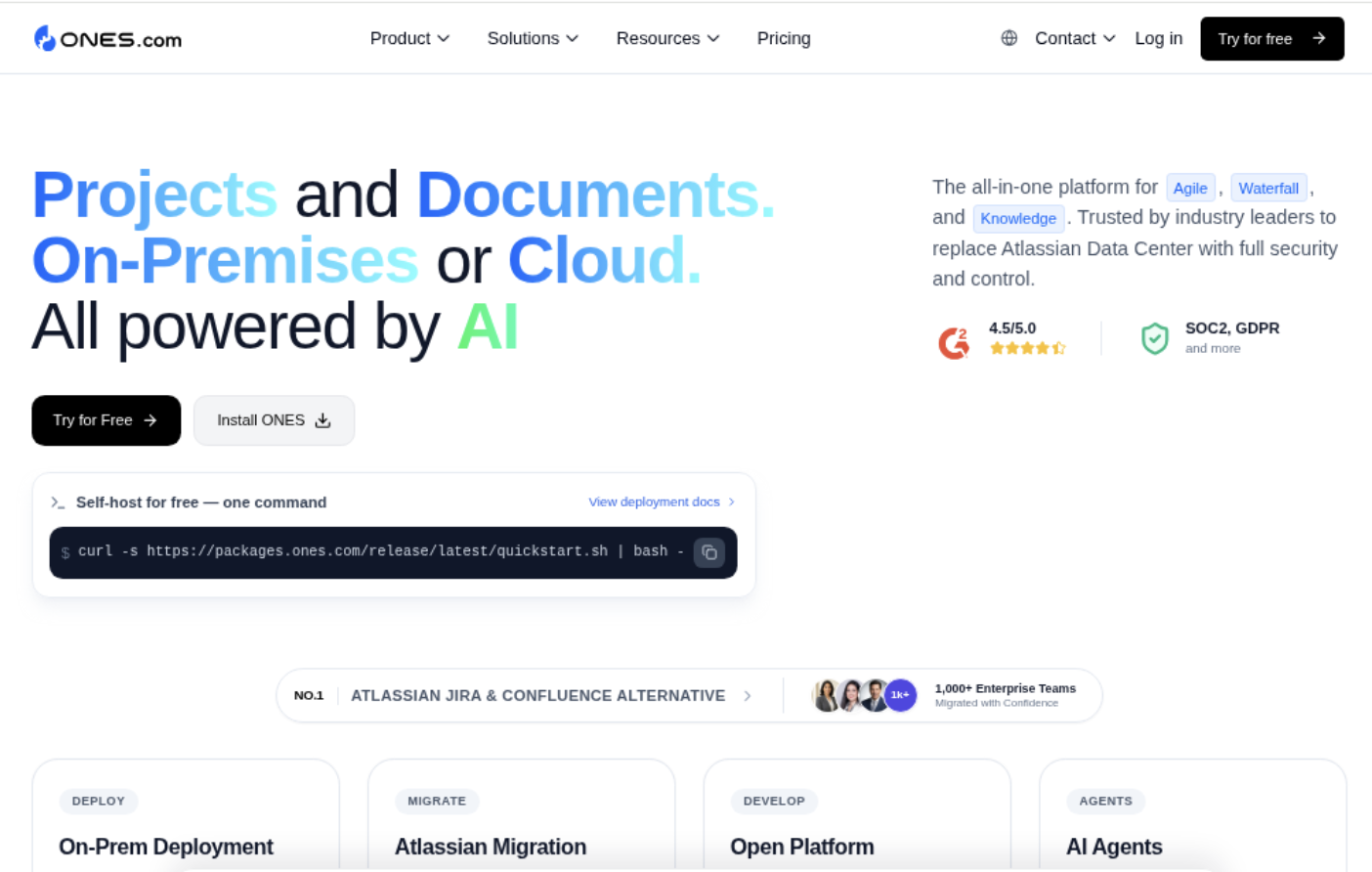
Value Proposition
ONES.com combines project management and knowledge management in one platform. ONES Project is a Jira alternative for teams that want structured planning, reporting, and workflow management with fewer separate plugins.
It is available in Cloud, On-Premise, Private Cloud, and air-gapped deployments. The free plan supports up to 30 seats, and the self-hosted versions maintain feature parity with the cloud version.
Core Capabilities
- Too many disconnected tools: ONES.com combines project work and knowledge management, helping teams keep planning and team guidance in one environment.
- Complex Jira migration concerns: ONES Project supports Jira-compatible workflows, making it easier to map familiar issue and delivery processes.
- Limited reporting visibility: Built-in reporting helps teams monitor progress without depending on several reporting plugins.
- Rigid process requirements: Custom workflows and custom fields let teams reflect approval, development, testing, and release practices.
- Unclear sprint execution: Sprint management supports backlog refinement, sprint planning, active delivery, and review routines.
- Manual repetitive work: Automation can handle recurring transitions, notifications, and routine process actions.
- Plugin-heavy administration: Native capabilities can reduce the number of separate extensions your team must maintain.
- Restricted hosting requirements: On-Premise, Private Cloud, and air-gapped deployment options support organizations with tighter infrastructure or compliance needs.
- Separate project and knowledge environments: ONES Project and ONES Wiki are available as separate products, while ONES.com provides the broader platform experience.
Application Scenarios
Scenario one: a growing software team. A 60-person engineering organization can use sprint management, custom workflows, and built-in reporting without assembling the same process through multiple plugins.
Scenario two: a regulated organization. A company that cannot place project work in a public cloud can evaluate On-Premise, Private Cloud, or air-gapped deployment options.
Scenario three: a cross-functional delivery group. Product, engineering, and support teams can coordinate project execution while maintaining related team knowledge through ONES Wiki.
Common Challenges When Estimating Jira Cloud Costs
Challenge: confusing the headline rate with the final invoice
Solution: Treat the published per-user price as a starting point. Check your exact user band, billing period, location, taxes, and product combination before approval.
Challenge: paying for inactive accounts
Solution: Review access regularly. Remove former contractors, inactive collaborators, and people who no longer participate in Jira work.
Challenge: overlooking add-on subscriptions
Solution: Create a complete subscription inventory. Include Jira, related Atlassian products, marketplace apps, implementation services, and renewal increases.
Challenge: upgrading without a defined need
Solution: Link every upgrade to a measurable requirement. Examples include cross-team planning, administrative controls, automation capacity, or reporting needs.
Challenge: underestimating internal effort
Solution: Budget time for workflow design, permissions, training, integration maintenance, and ongoing administration. A low subscription price does not remove operational work.
FAQs About Jira Cloud Per-User Pricing
Is Jira Cloud free for small teams?
Jira Cloud offers a Free plan for small teams, commonly covering up to 10 users. The plan can work for basic project tracking and agile planning. It includes limits that may affect storage, support, administration, and advanced capabilities. Review those limits before treating Free as a permanent choice. A growing team may need Standard once it requires broader controls, more capacity, or stronger reporting.
What was the typical Jira Standard price in 2024?
The commonly advertised Jira Standard list price in 2024 was about $8.15 per user per month. Your actual amount could differ because of user bands, annual or monthly billing, regional taxes, promotions, and account-specific terms. Use the figure for an initial estimate, then confirm the exact calculation for your seat count and billing arrangement.
What was the typical Jira Premium price in 2024?
The commonly advertised Jira Premium list price in 2024 was about $16 per user per month. Premium generally targeted teams needing capabilities beyond core project tracking, such as higher scale, advanced planning, or additional administrative controls. Compare the features you will use with the added cost. A larger team does not automatically need Premium.
Does Jira charge for every person in my company?
Jira generally charges according to the number of users who have access, rather than total company headcount. Someone who does not need Jira access should not require a seat. However, access rules and product-specific permissions can affect billing. Review your account carefully, especially when contractors, external collaborators, or related Atlassian products are involved.
Is annual billing cheaper than monthly billing?
Annual billing can provide a different effective rate and more predictable budgeting, but the result depends on your user band and commercial terms. Monthly billing offers more flexibility when your team size changes. Compare both approaches using your expected user count, not only today’s seats. Also consider whether unused annual capacity could offset any pricing advantage.
Should I include Jira apps in my budget?
Yes. Marketplace apps can materially increase your annual Jira cost, particularly when they price across many users. Include test management, time tracking, reporting, automation, forms, and planning apps in your estimate. Assign an owner to each app and review adoption before renewal. A small monthly add-on can become a substantial annual expense across a large team.
Conclusion
Jira Cloud pricing per user in 2024 usually followed a simple path: Free for small teams, Standard at approximately $8.15 per user monthly, Premium at approximately $16, and Enterprise through a custom quote.
But here's the truth: the headline rate is only the beginning. Your actual budget depends on billable access, user bands, billing frequency, related products, marketplace apps, taxes, and implementation effort.
Start with your current and expected seat counts. Compare monthly and annual billing, review every add-on, and connect each plan upgrade to a real operational need.
If you need a Jira alternative with native project management capabilities, built-in reporting, custom workflows, automation, and flexible deployment options, ONES.com is worth evaluating alongside your 2024 cost model.